Strings attached: Lebanon’s economic rescue tied to its openness to Israelhttps://en.majalla.com/node/330893/business-economy/strings-attached-lebanon%E2%80%99s-economic-rescue-tied-its-openness-israel
The ongoing talks between Lebanon and Israel in Washington are important to both countries for political and security reasons, but there is also a critical economic aspect to the discussions that has received far less focus. As preparations move towards substantive negotiations, US President Donald Trump said the United States would support Lebanon during the reconstruction phase, citing the presence of “good partners”. In a speech before the Turning Point USA movement in Arizona this month, Trump said: “We can make Lebanon great again.” Days earlier, the Lebanese and Israeli ambassadors in Washington had met, the first official bilateral meeting in years.
Diplomatic contacts are now intensifying. US envoy to Syria Tom Barrack (who also serves as ambassador to Türkiye and knows Lebanon well) reiterated at the 2026 Antalya Diplomacy Forum that “achieving prosperity, rather than waging wars, is the only path to establishing peace”. He added that “diplomacy and economic consensus represent the real and fundamental solutions,” in remarks addressing Hezbollah and the usefulness of ceasefire arrangements.
There are proposals to establish an economic zone on the Lebanese side of the border with Israel, to replace the current security zone or buffer zone that Israel has said it wants. First raised last year, the premise is that investment can replace conflict and that stability can summon capital, an idea that underlies many of Trump’s political initiatives. The United Nations’ Interim Force in Lebanon (UNIFIL) is expected to withdraw from southern Lebanon by the end of 2027, so diplomats want to understand the next phase when it does. Under the American plan, peace between Lebanon and Israel would lay the groundwork for economic expansion.
One question concerns the possible incentives the US may offer Lebanon, with Washington’s goal being to entice the state to finally rid itself of Hezbollah's influence. Targeted humanitarian and economic programmes could be designed to foster integration into state institutions and broader society. The US-based foreign policy analyst Saeed Bustani told Al Majalla that “something akin to a Marshall Plan is being prepared for Lebanon as part of the evolving negotiations”.
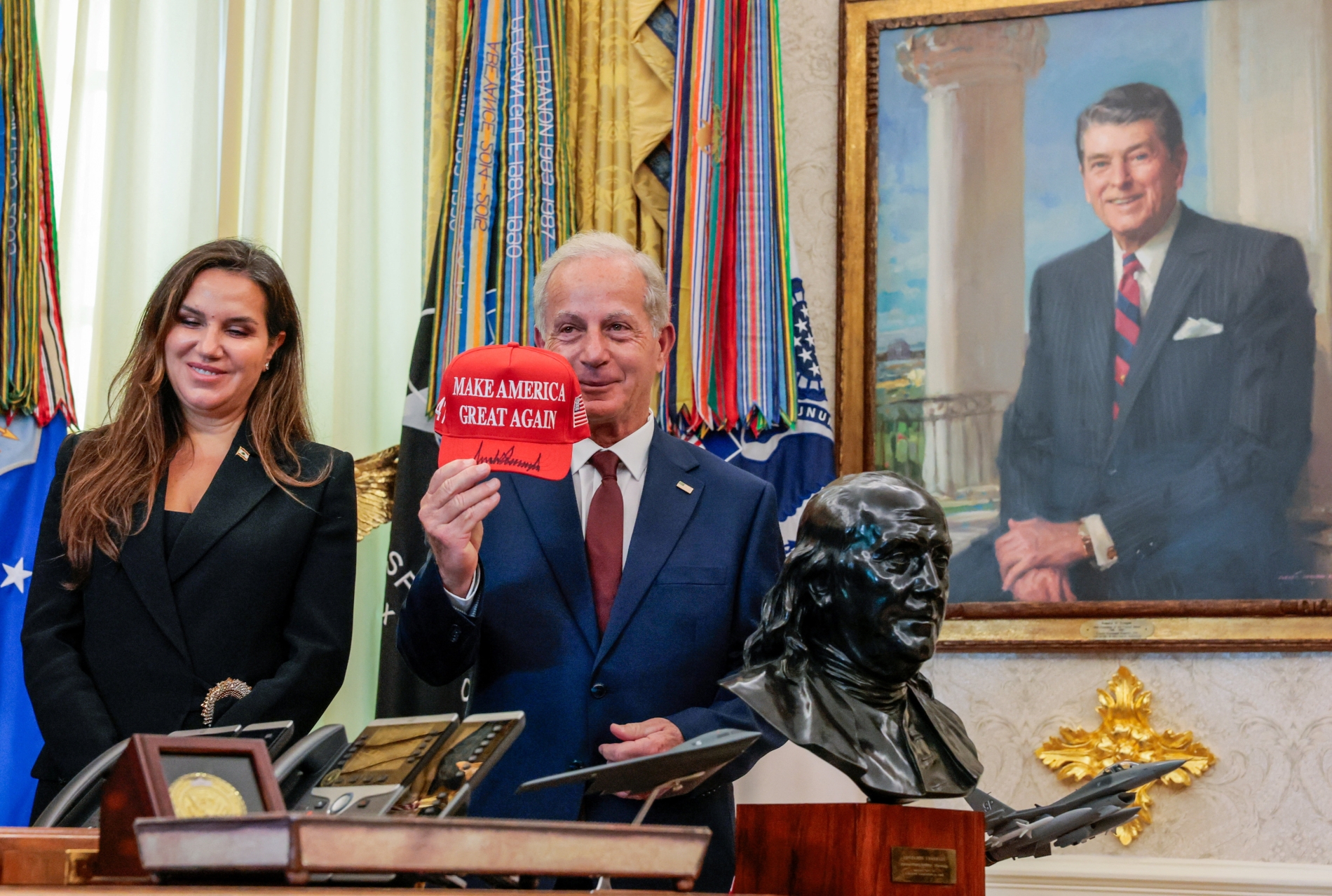
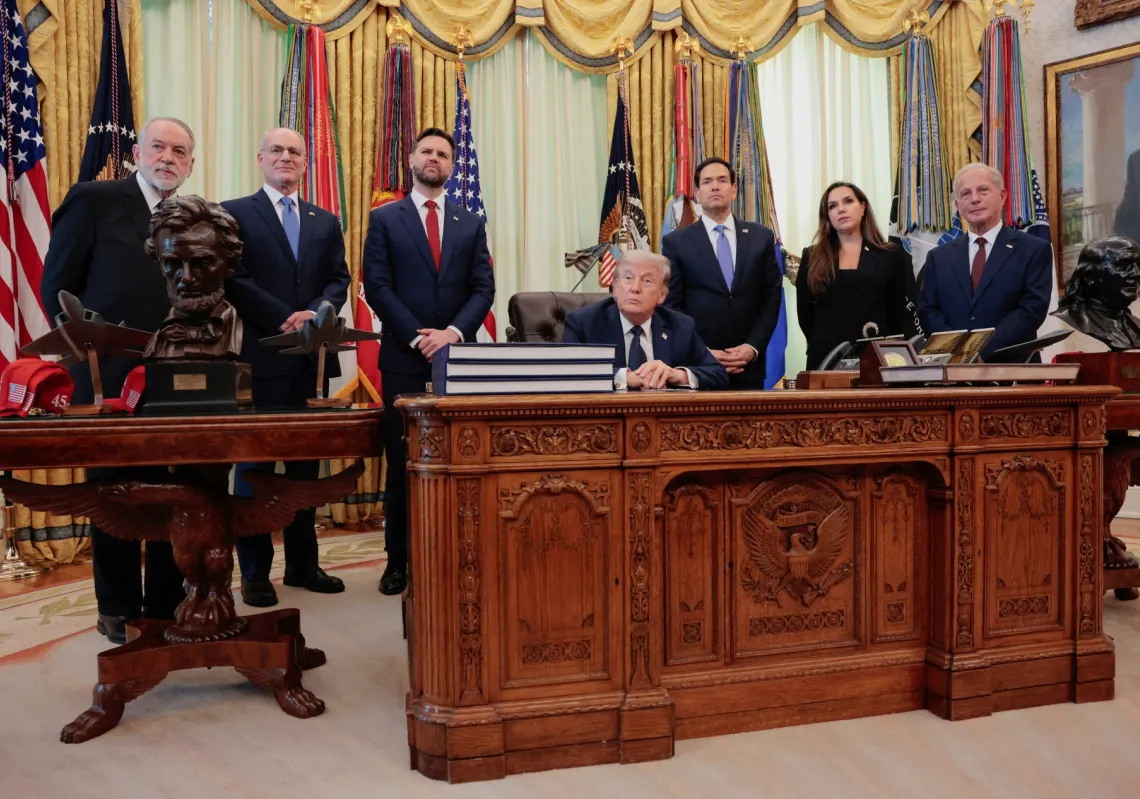
US Ambassador to Lebanon Michel Issa holds a "Make America Great Again" hat signed by President Donald Trump next to Lebanon Ambassador to the US Nada Hamadeh Moawad in the Oval Office at the White House on 23 April 2026.
Strings attached
At the close of the World Bank and International Monetary Fund (IMF) spring meetings in Washington, Lebanese Finance Minister Yassin Jaber also spoke of the recovery phase and the two institutions’ financial and economic support for Lebanon, alongside continued work on reform priorities. He stressed the importance of prioritising World Bank-funded projects worth more than $1.3bn and suggested that, without US backing, Lebanon would not have been confident dealing with the World Bank.
Informed diplomats say Lebanon’s economic rescue is conditional and tied to its openness towards Israel. The mere return of a diplomatic horizon between Lebanon and Israel—however limited and fragile—is seen as an important economic development that could determine whether Lebanon remains trapped in a vicious cycle of conflict, decline, and dependence.
Proponents of a peace deal argue that by reducing security risks with Israel, Lebanon can move from a volatile frontier into a regional hub like the UAE.
A lasting peace would not, by itself, pour billions of dollars into Lebanon, but it could alter the context in which requests for support are assessed. For international financial institutions and investors, there is a vast difference between financing a country likely to experience future conflict and one that seems set for stability. This is the peace dividend: a lower cost of risk, with direct effects on interest rates, insurance, financing, tourism, capital stability, and projects.
Reconstruction is a priority—Lebanon needs investment in its infrastructure, energy, water, transport, health, and education sectors—but with Israel's history of attacking the country since the 1970s, those who may invest are understandably concerned that the products of their outlays could be reduced to rubble within months.
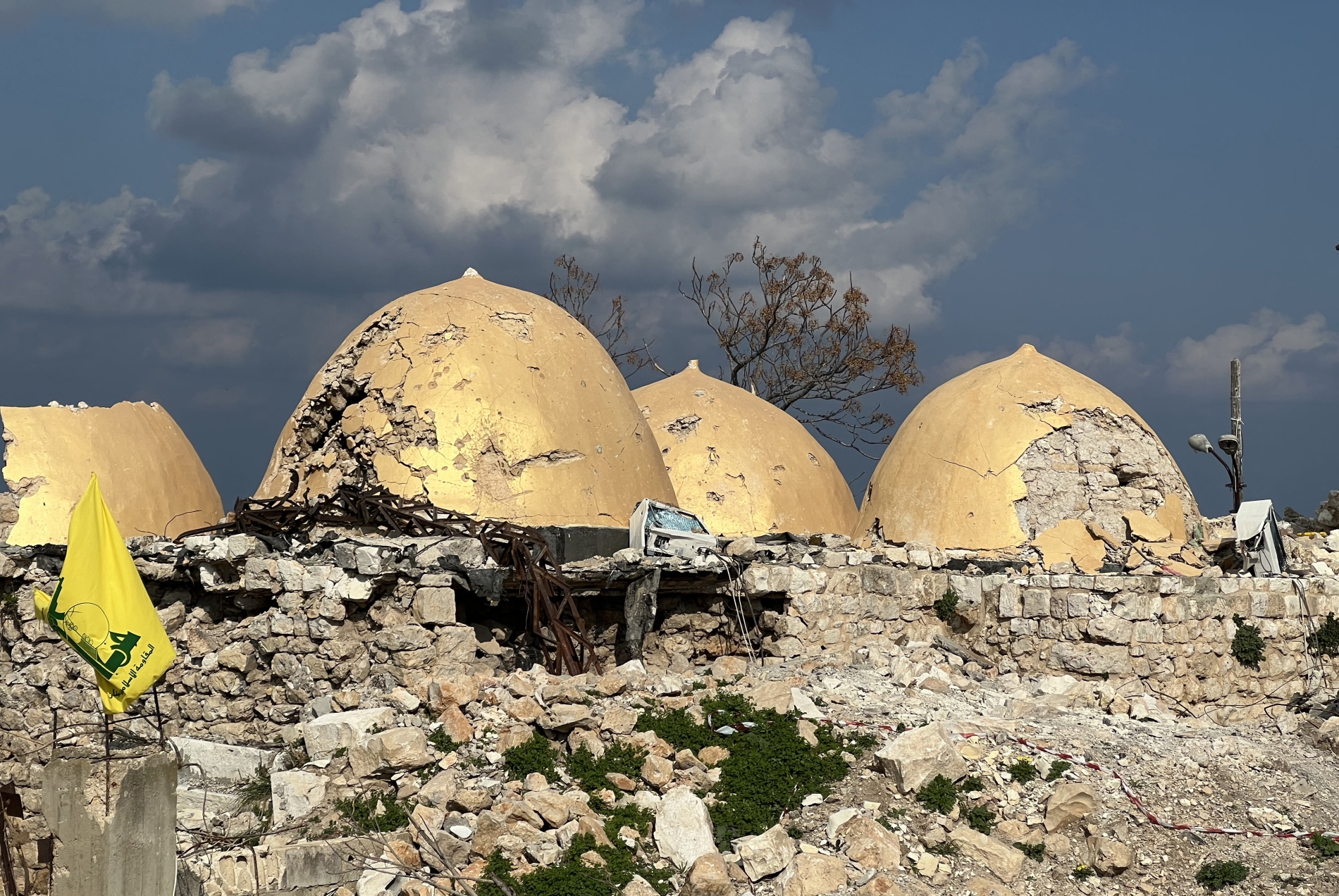
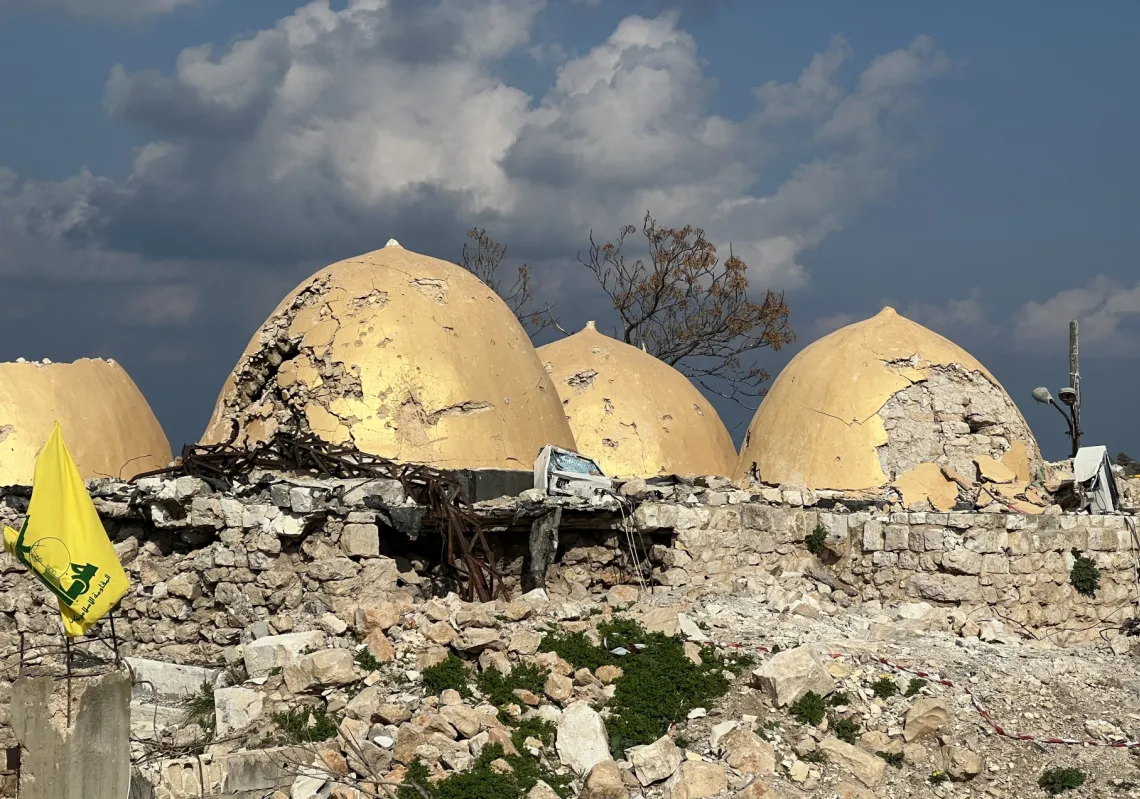
A Hezbollah flag is placed in front of the shrine of Shamoun al-Safa, built within a castle in the village of Shamaa in southern Lebanon's Tyre governorate, on 31 January 2025, which was heavily damaged by Israeli bombing.
Israeli incentives
Israel has economic incentives for peace, too. Although Lebanon is not a large market, stability along Israel's northern border would reduce the economic costs of conflict in sectors such as tourism and agriculture. The longer there is peace, the more likely it is that Israelis and Lebanese could cooperate in areas such as infrastructure, water, energy, and services. On 3 December 2025, Lebanese Prime Minister Nawaf Salam said peace with Israel could pave the way for the normalisation of relations and the establishment of economic ties, but that this was still a distant prospect.
Lebanon's economy recorded growth in 2025, a modest step towards long-term recovery. Estimates also point to a decline in the current account deficit (to 15.8% of GDP) in 2025, supported by higher service exports and remittance inflows. This reflected a revival in tourism, early signs of macroeconomic stabilisation, and gains from the base effect after years of severe contraction. But foreign direct investment was only $655mn in 2023, according to the IMF (compared with $2.65bn in 2018 and $1.9bn in 2019).
Proponents of a peace deal argue that by reducing security risks with Israel, Lebanon can move from a volatile frontier market into a regional hub not unlike the United Arab Emirates in the Gulf. Israeli technology and cybersecurity firms could draw on Lebanon's prized human capital, while its agritech (agricultural technology) firms could invest in the Bekaa Valley. Gulf investment in Lebanon could follow, with sovereign wealth funds interested in infrastructure projects such as ports and renewable energy projects. Up to $11bn could come from the World Bank, while up to $10bn could flow from the IMF and the European Union.
Israeli ambitions
Economist Mohammad Moussa said the current Israel-Lebanon negotiations will undoubtedly have an economic dimension. During earlier rounds in Naqoura (when the current head of the negotiating delegation, Ambassador Simon Karam, served as a civilian negotiator within the Mechanism Committee), the Lebanese post-session statements stuck to the language of security, whereas the Israeli statements openly addressed economic considerations.
Speaking to Al Majalla, Moussa said Israel had economic ambitions in Lebanon, from water to offshore oil and gas. Several offshore exploration areas in Lebanon's exclusive economic zone (EEZ) have caught Israel's eye, including Block 8, about 70km from Lebanon's southern coast, where French energy giant TotalEnergies is prospecting, and Block 9, also in Lebanon's southern EEZ, which is being explored by Total, Italian firm Eni, and QatarEnergy. Lebanese negotiators will be aiming to shield these blocks from Israeli encroachment. The two countries have disagreed in the past regarding natural gas in the Mediterranean, not least over ownership of the lucrative Karish field.
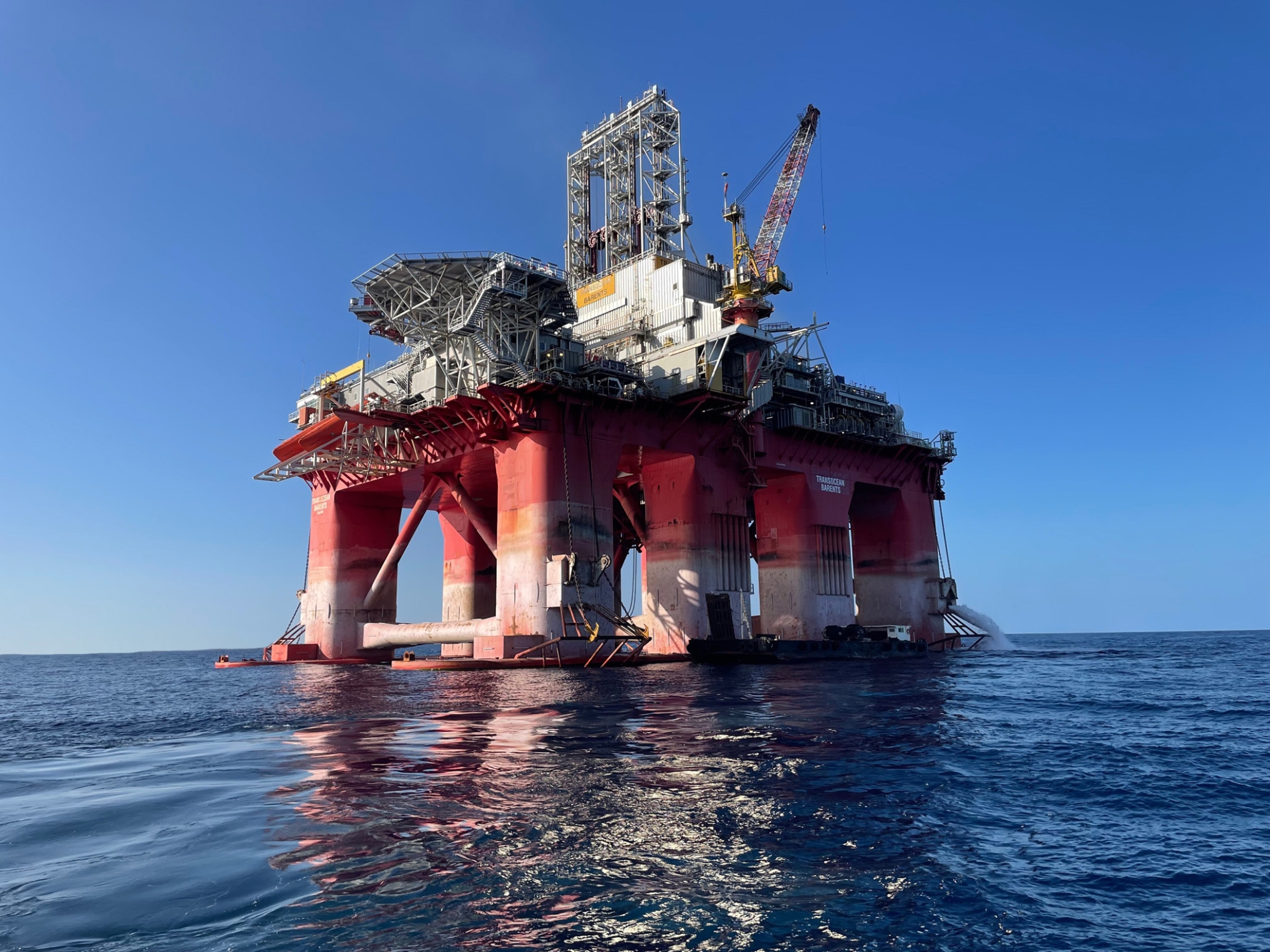
This undated image, released by Total Energies, shows the Transocean Barents drilling rig, which arrived at its position in the Mediterranean Sea on 16 August 2023.
Hard currency access
A Lebanon-Israel peace agreement with dispute resolution mechanisms could make the financing and development of offshore projects more feasible and offer Lebanon a long-term means of securing hard currency. It would also attract the bigger energy companies to engage in exploration, drilling, and extraction. This will require the firm consolidation of Lebanon's maritime rights.
Another vital economic resource is freshwater. The Middle East is suffering desertification compounded by climate change, and many think that the next war will be fought over water, which could soon be more precious than oil. In this equation, southern Lebanon has a trump card: it contains a vast network of springs. The Wazzani, Hasbani, and Litani rivers therefore carry increasing strategic weight. Securing these resources is essential, underscoring the need to resolve all land border and maritime boundary disputes.
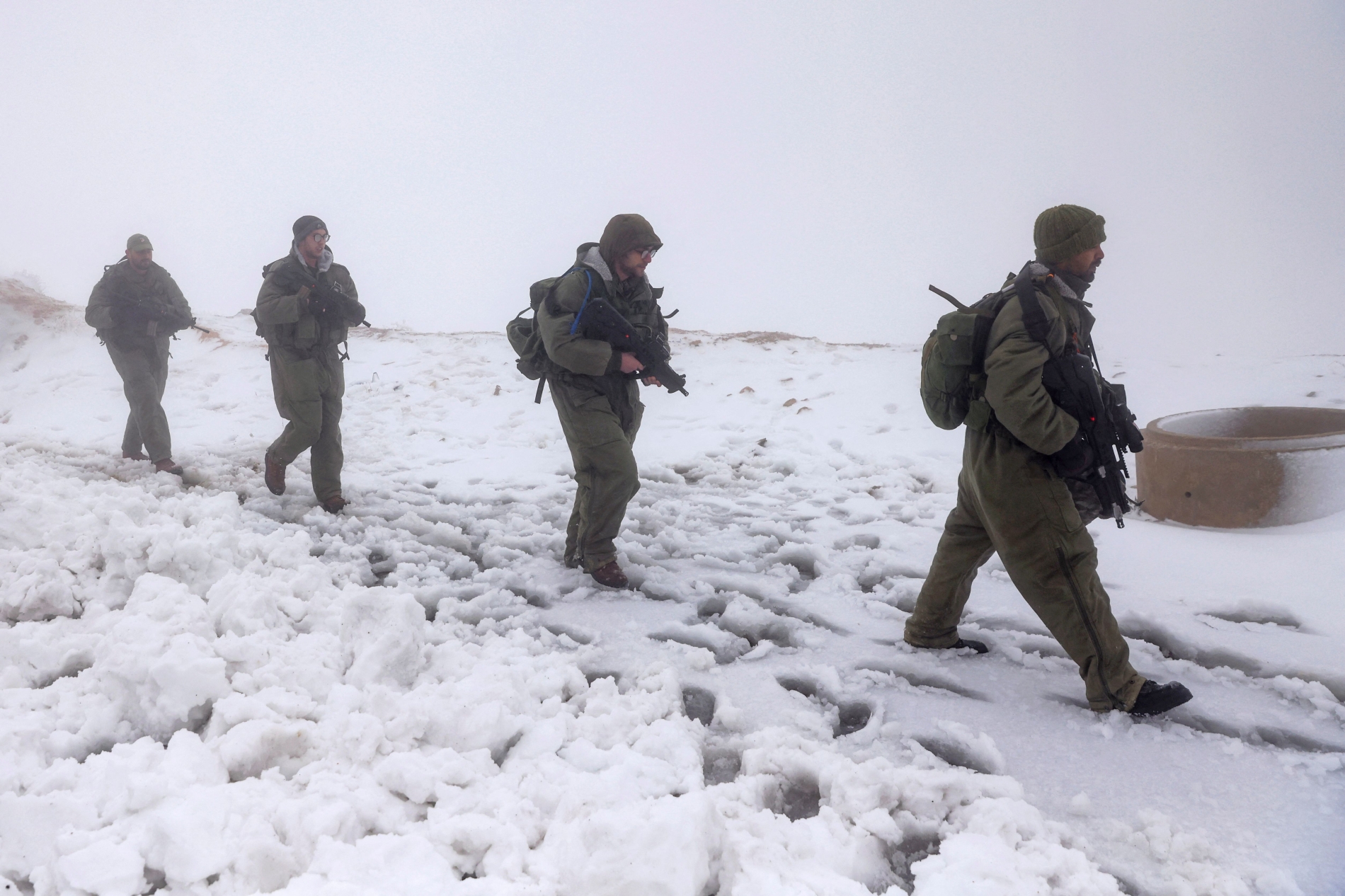
Moussa also points out that Israel continues to occupy Mt. Hermon, a substantial portion of Jabal al-Sheikh, where tourist infrastructure is being actively developed. Stability in northern Israel thus feeds directly into broader development plans, linking the region to Mt. Hermon. In this light, Trump's reference to an economic zone in southern Lebanon appears far from incidental. Moussa thinks Israel wants to draw Lebanon into a framework in which economic incentives eclipse strategic considerations.
Israeli soldiers patrol on the top of the Mount Hermon near the border with Lebanon in the Israel-occupied Golan Heights on 20 November 2023.
For Israel, stability along its northern frontier will strengthen its role as a gas supplier to global markets, notably in its quest to fill a European supply gap following Russia's 2022 invasion of Ukraine. Should gas be found in Lebanese fields, Israel would seek to integrate it into its own network, benefiting from transit fees, commissions, and associated services. In this way and others, the security and economic dimensions of the negotiations are inseparable.
Mohieddine Al-Shahimi, a political analyst in Paris, said Lebanon benefits from stability to preserve sovereign rights and facilitate the return of displaced citizens. Conditions in the south of the country are difficult, with 8% of Lebanese territory now occupied by Israel, up to the Litani River. Al-Shahimi believes that Lebanon cannot enter substantive peace negotiations without reference to the Arab Peace Initiative. A priority would be the restoration of confidence in the national currency and renewed trust in investment and the economy.
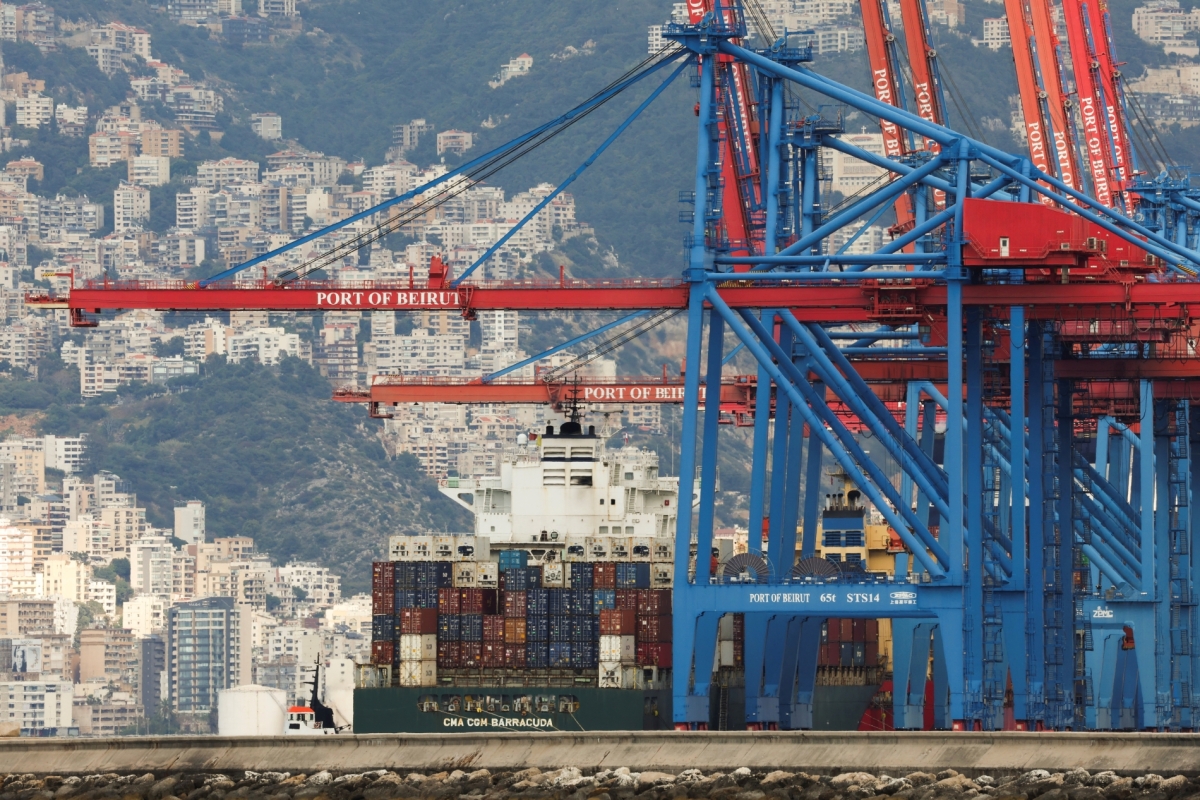
Iran's control over what enters and exits the Strait of Hormuz may present Lebanon with an opportunity, some think, as Gulf suppliers and European clients seek alternative routes not just for oil and gas but also for goods, fertilisers, organic materials, and industrial raw materials. Lebanon could benefit as one such alternative route, said Al-Shahimi. "The ports of the south, Tripoli, and Beirut could contribute to the new plans for supply chains in the region, and the Lebanese coast can serve as a suitable platform… It could be a historic step, if Lebanon grasps the opportunity."