US-Israel attack Iran but end goal remains unclear
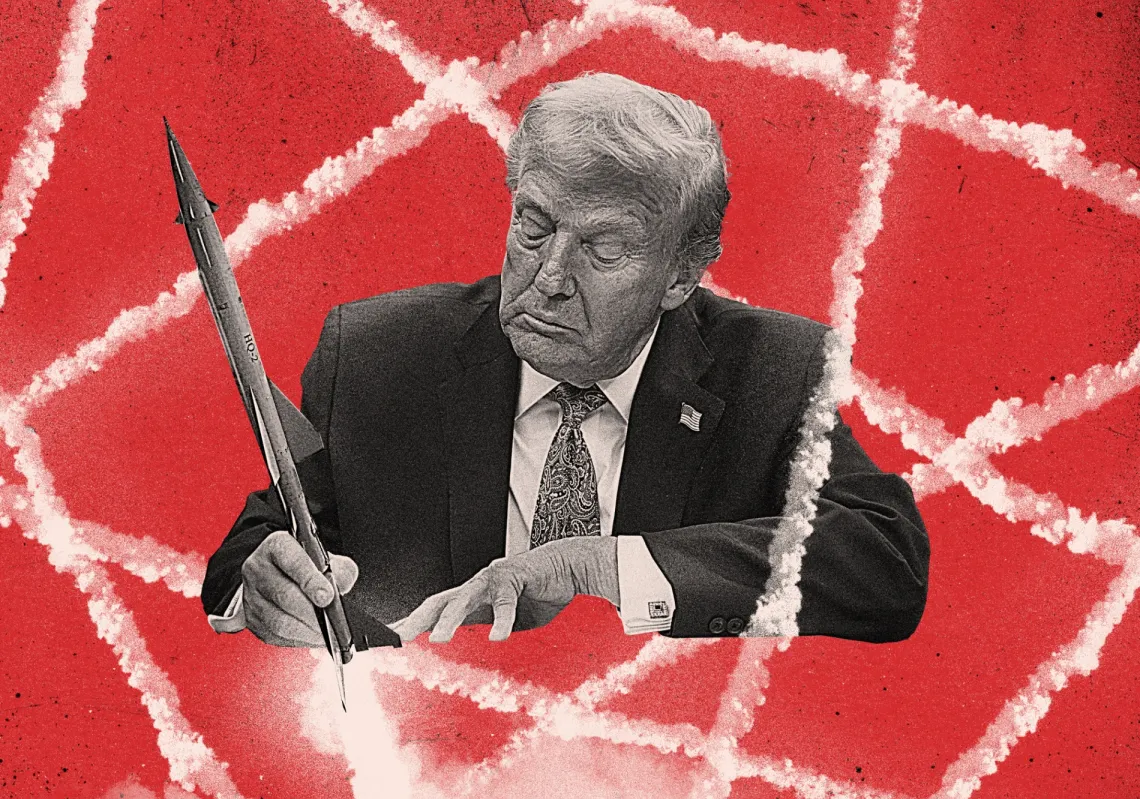
Military strategists have long warned that war should be waged only if those waging it know what they want to achieve. Herein lies a problem: Washington’s war aims in Iran are incoherent.
ATTA KENARE / AFP
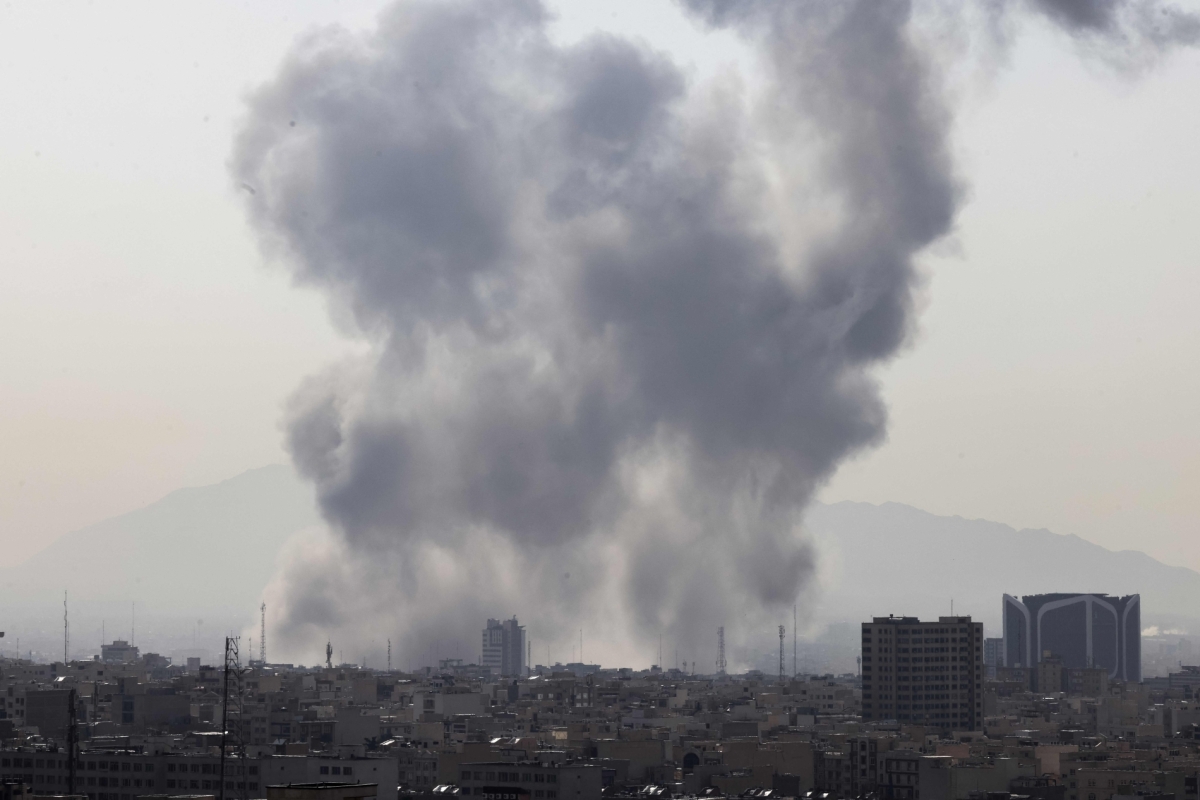
A plume of smoke rises following a reported explosion in Tehran on 28 February 2026 as US and Israeli attacks on the country commence.
US-Israel attack Iran but end goal remains unclear
United S President Donald Trump says the US has begun “major combat operations” in Iran after Israel also said it had launched missile attacks against the country.
Multiple explosions have been heard in Iran’s capital, Tehran, while blasts have also been reported in several other locations across the country.
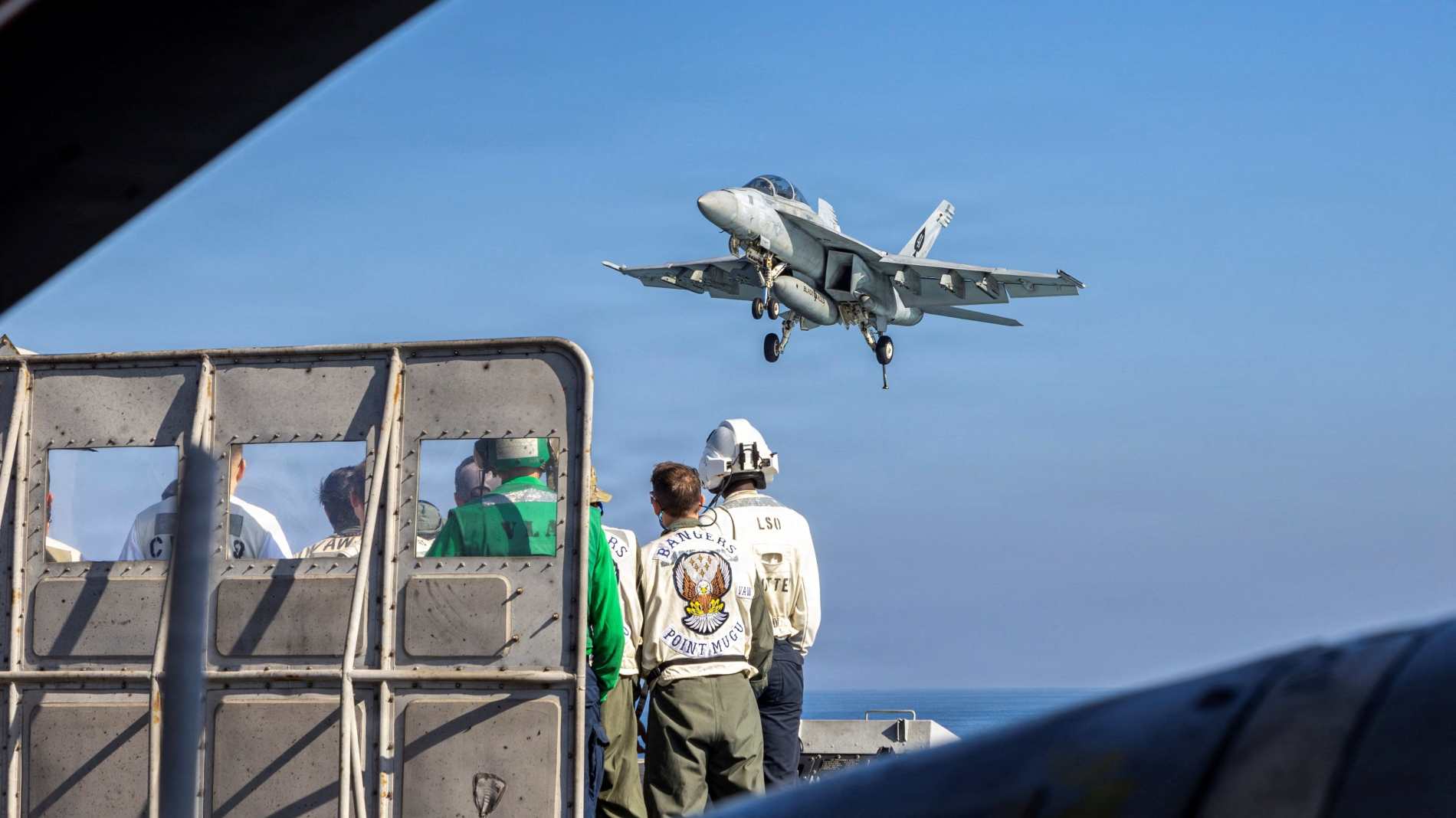
For weeks, the US has been moving attack assets to the region in the biggest assemblage of military might to the Middle East in decades, as talks between Iranian leaders and US envoys in Europe were underway. Two aircraft carrier strike groups led by the USS Abraham Lincoln and the USS Gerald R. Ford have positioned scores of American fighter jets in Iran’s vicinity, ready for deployment.
As he has before, US President Donald Trump once again reiterated that he will not allow Iran to possess nuclear weapons, posting on social media that “if no agreement is reached, it will be a very bad day for Iran”. American and Iranian delegations met in Geneva just two days ago, on 26 February, in talks brokered by Oman, and were set to meet in Vienna for discussions described as “technical”.
Following the strikes, it is unclear whether the US has a plan for what comes next. In his book On War, he wrote: “No one starts a war—or rather, no one in his senses ought to do so—without first being clear in his mind what he intends to achieve by that war and how he intends to conduct it. The political object is the goal, war is the means of reaching it, and means can never be considered in isolation from their purpose.”
An F/A-18F Super Hornet prepares to land on the deck of the USS Abraham Lincoln (CVN 72), a Nimitz-class aircraft carrier, in the Arabian Sea, on 15 February 2026.
No coherent answer
Gen. Dan Caine, Chairman of the Joint Chiefs of Staff, has given Trump a range of options, from limited strikes designed to strengthen the negotiating hand to a sustained campaign aimed at toppling the Islamic Republic outright, but also clearly warned of the grave risks involved.
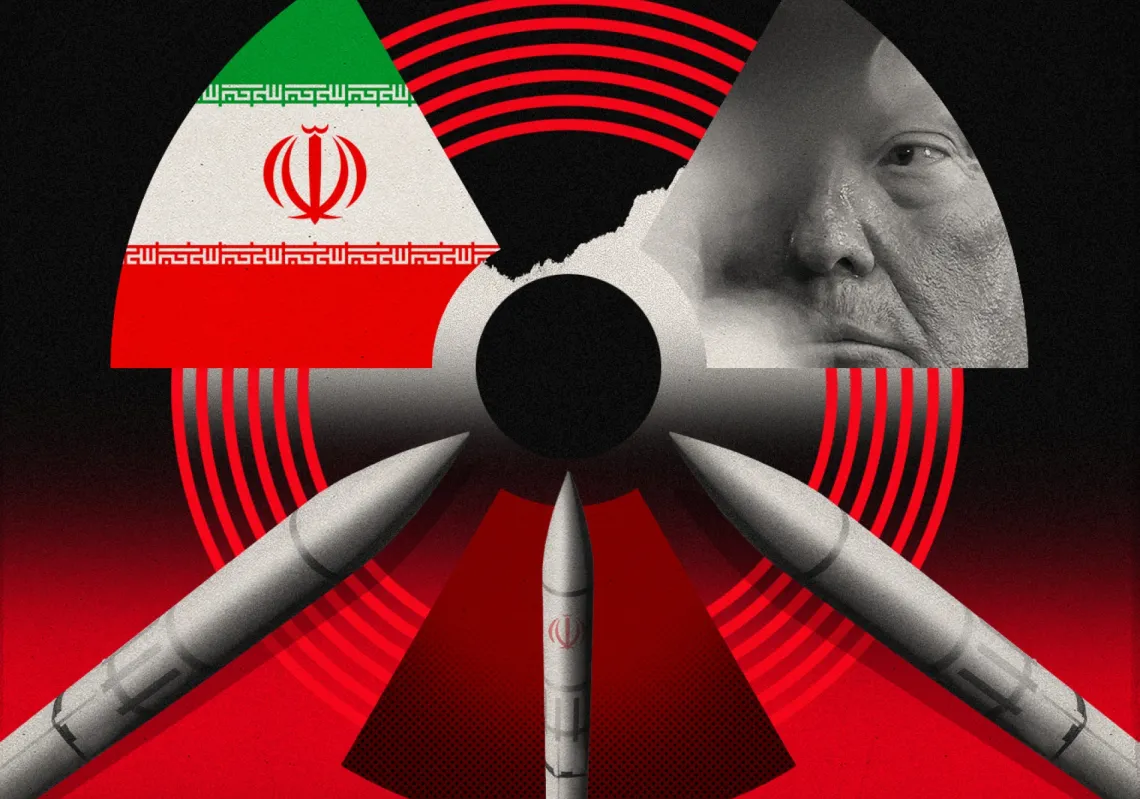
The issue is not a lack of military options; it is that the administration cannot agree on the political objective that war would seek to achieve. Washington has voiced four aims over recent months that appear to be mutually incompatible: the complete relinquishment of Iran’s nuclear programme, the dismantlement of its ballistic missile capabilities, regime change, and ending support for its proxy network.
These objectives differ so fundamentally in scale and character as to be irreconcilable with a single operation. As the 12-Day War of June 2025 demonstrated, regime change cannot be achieved through limited strikes upon nuclear installations and military sites. Equally, a campaign aimed at overthrowing the regime is incompatible with the pursuit of a nuclear accord.
The political object is the goal, war is the means of reaching it, and means can never be considered in isolation from their purpose
Military strategist Carl von Clausewitz in his 1832 book 'On War'
A means to an end?
Ret. Gen. Joseph Votel, formerly of US Central Command (CENTCOM), said: "It is vital to define clearly what the end state is. That becomes the metric for the degree of achievement." Judging by public statements from American leaders, the end state in Iran remains undefined. As Clausewitz himself would say: the means have been severed entirely from their purpose.
Whilst American strategy drifts in ambiguity, Iran's preparations seem full of purpose. In mid-February, the Islamic Revolutionary Guards Corps (IRGC) Navy conducted an exercise in the Strait of Hormuz, a crucial maritime chokepoint, rehearsing a 'saturation attack' by swarms of fast assault craft, while also successfully testing a new shipborne air defence missile, the Sayyad-3G.
Shortly after, Iran, Russia, and China conducted a joint naval exercise in the Gulf of Oman, a political signal directed unmistakably at Washington. Alongside that, Iran is close to buying the CM-302 supersonic anti-ship cruise missile from China. This missile would threaten American naval assets in the region, but for the United States, the most profound difficulty is not tactical but structural.
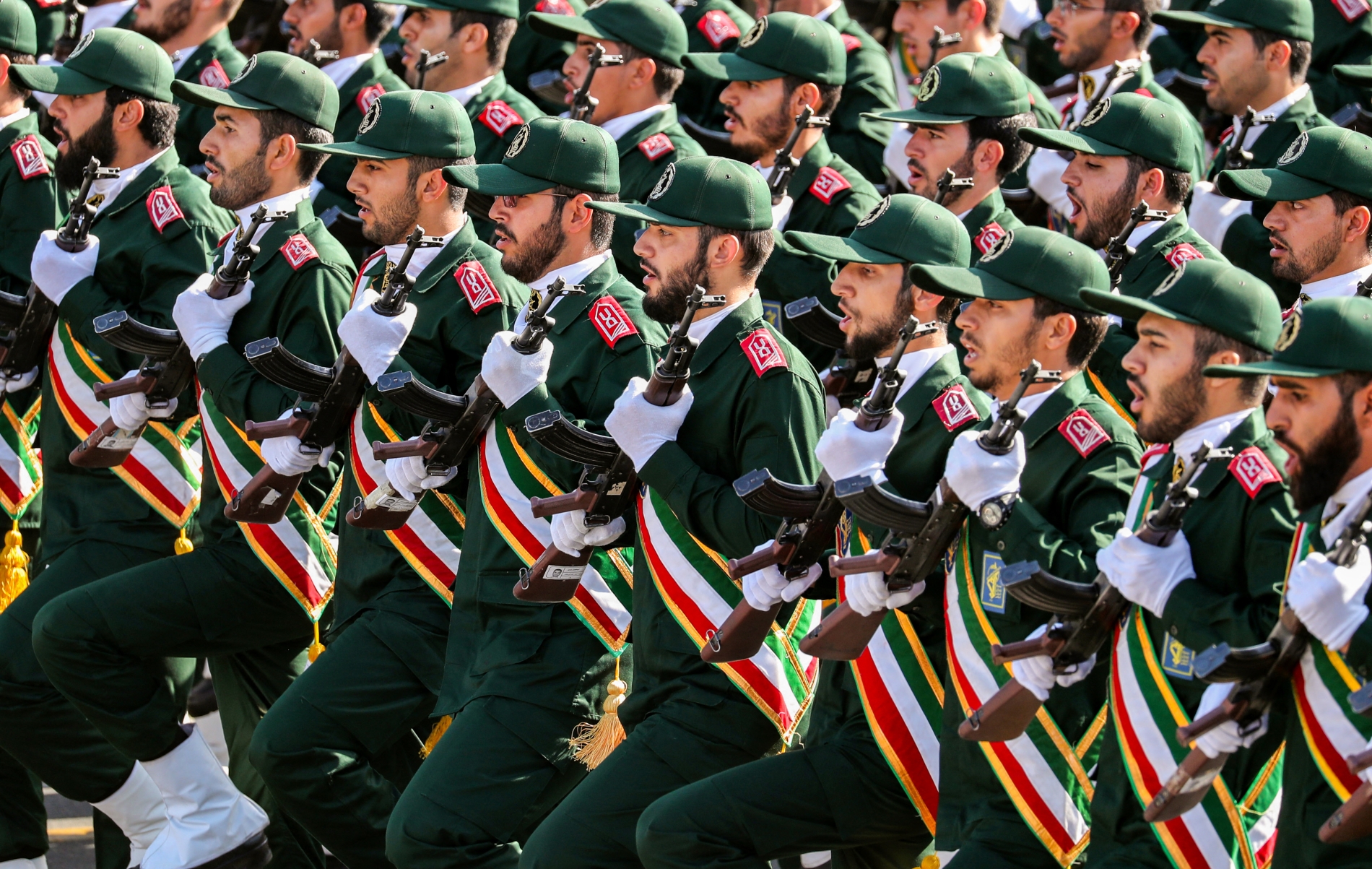
Members of Iran's Revolutionary Guards Corps (IRGC) march during the annual military parade marking the anniversary of the outbreak of the devastating 1980-1988 war with Saddam Hussein's Iraq, Tehran, on 22 September 2018.
Intricately bound
Within Iran, there exists what analysts have termed a "military-bonyad complex"—an amalgamation of the IRGC and the revolutionary religious foundations (bonyads) that effectively control much of Iran's economy. Forged from the confiscations of the 1979 Revolution and hardened by the Iran-Iraq War of 1980-88, repeated Western sanctions, and the constitutional reorientation of the (former Iranian President) Mahmoud Ahmadinejad era, this complex has grown more dominant with each adversity it has endured.
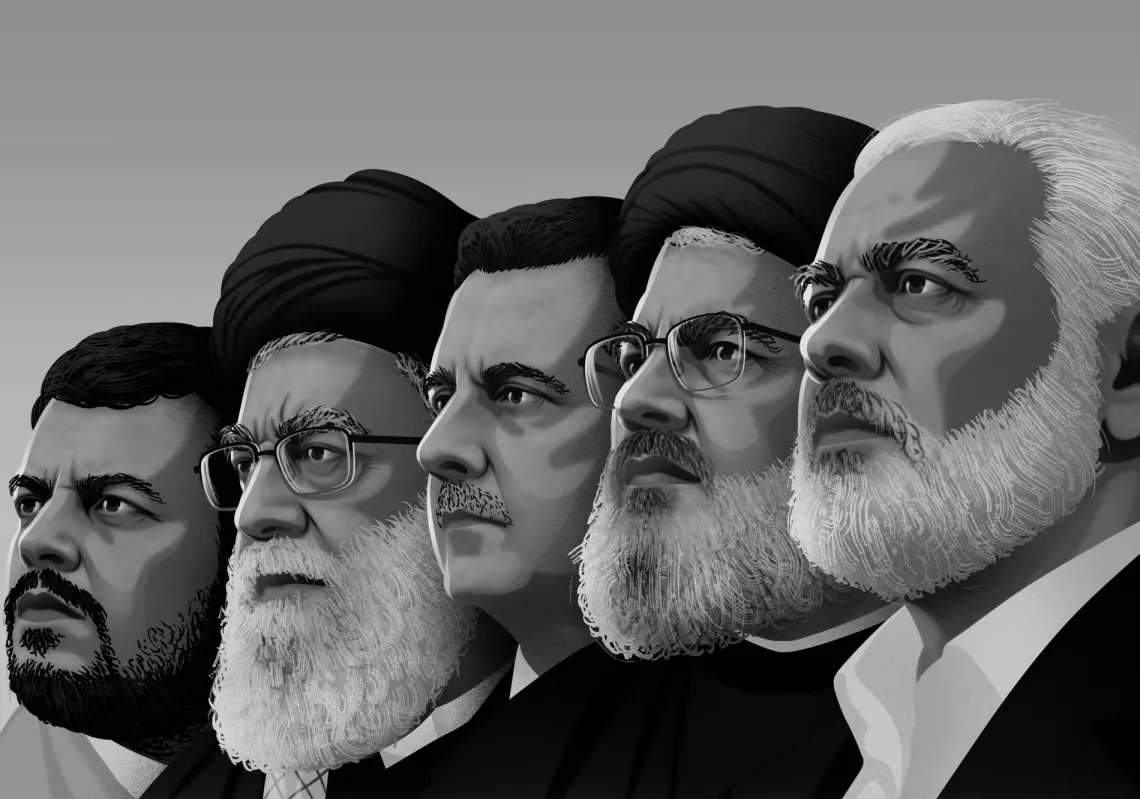
Its institutions answer solely to the Supreme Leader Ali Khamenei. They are accountable to neither parliament nor government. The IRGC's engineering conglomerate, Khatam al-Anbiya, alone oversees hundreds of enterprises spanning infrastructure, oil production, and construction. This illustrates how the IRGC is not merely Iran's supreme military command; it is also the country's principal bank, telecoms operator, oil developer, and—through the Basij militia—instrument of internal repression.
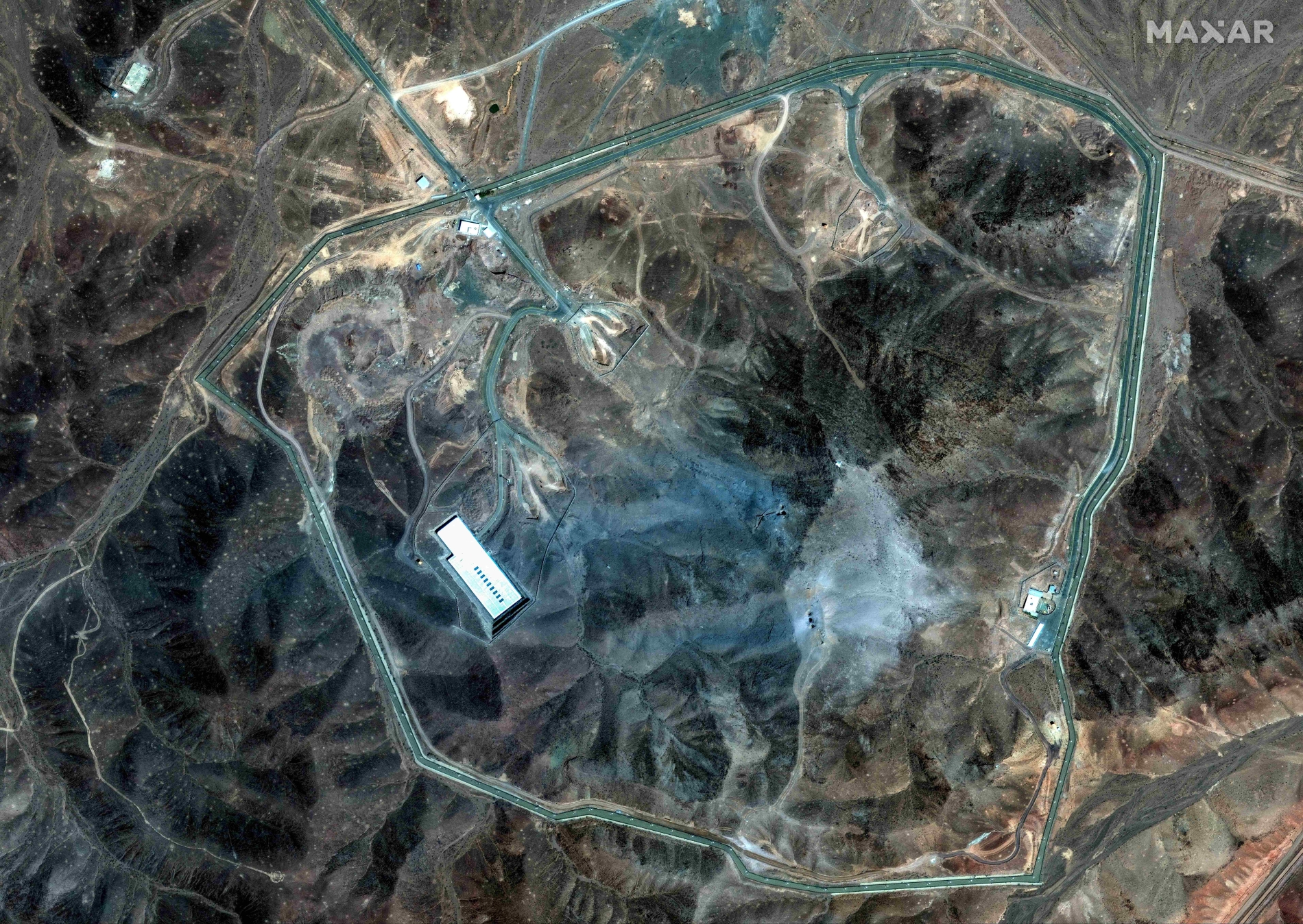
Were Khamenei and senior IRGC commanders to be eliminated by American military action, the 'morning after' would not free Iran but trigger a ferocious power struggle within the IRGC itself. In short, this tripartite system of religious authority, military force, and socio-economic dominance cannot be dismantled from the air, in the same way that American bombers struck nuclear facilities at Fordow, Natanz, and Isfahan in 2025. Iran's nuclear facilities were not obliterated in the way that Trump inferred in the hours after the operation, and satellite imagery shows reconstruction efforts underway.
An aerial photo of the Fordow complex taken after it was bombed by US aircraft.
Attack and defence
Having to defend America's Al Udeid Air Base in Qatar against Iranian ballistic missiles in June 2025 was costly, requiring an unprecedented number of Patriot interceptors. Israeli intelligence assessments suggest that the US has a limited stockpile of missiles needed for its defence. Iran's asymmetric doctrine of saturation attacks exploits this, employing ballistic missiles and inexpensive drones designed to exhaust a costly American inventory.
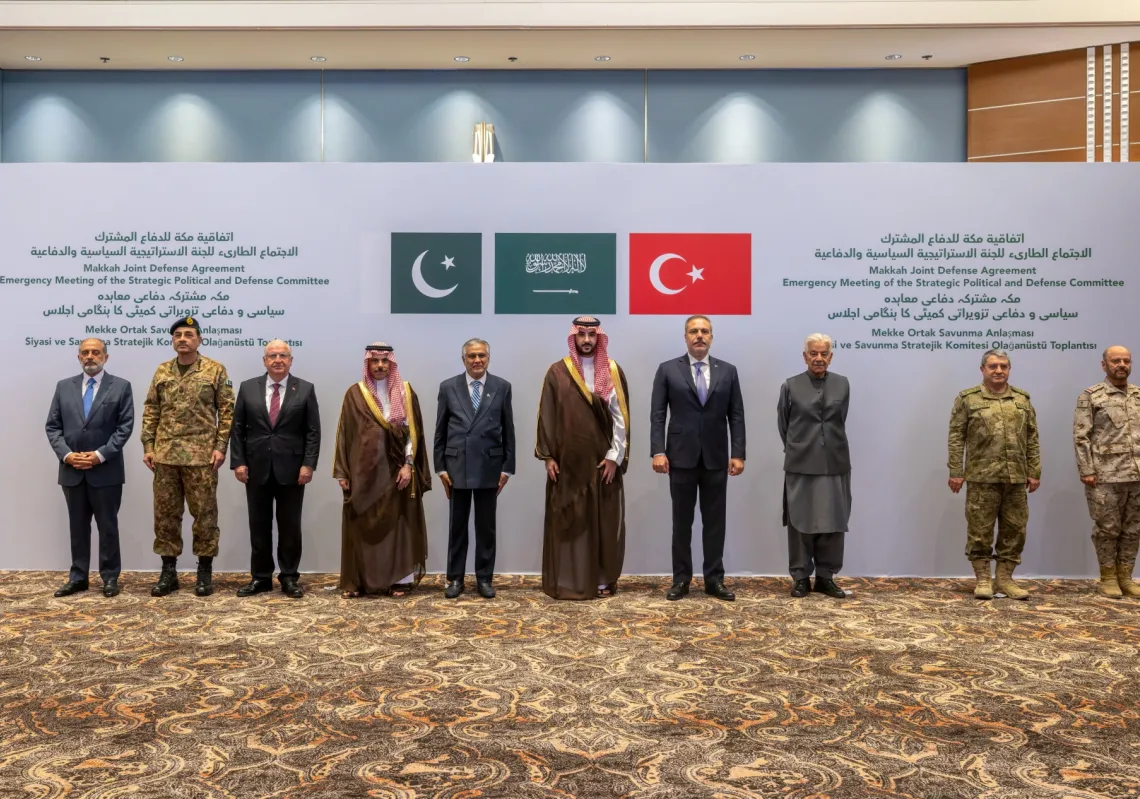
Alongside this is Washington's inability to call on regional partners such as Saudi Arabia, the United Arab Emirates, and Qatar, who are uneasy about the Americans using their bases or airspace to attack Iran. This leaves Israel as the sole active collaborator. This factors into assessment of costs. What would the costs be in any US military action against Iran? Gen. David Petraeus observed of Operation Midnight Hammer in June that the absence of any aircraft malfunction was a near-miracle, adding that this level of good fortune may not be repeated a second time.
America's revered World War II leader, General Douglas MacArthur, once said: "In war, there is no substitute for victory." It follows, paradoxically, that commencing a war without a settled definition of victory is among the most perilous acts a state can undertake. The US has not yet attacked Iran for reasons of timidity, but because it cannot articulate what 'victory' looks like. It is not the destruction of facilities, because Iran has shown that it can rebuild. It is not regime change, because the IRGC's complex cannot be dismantled from the air, and there is no American appetite for a ground war.
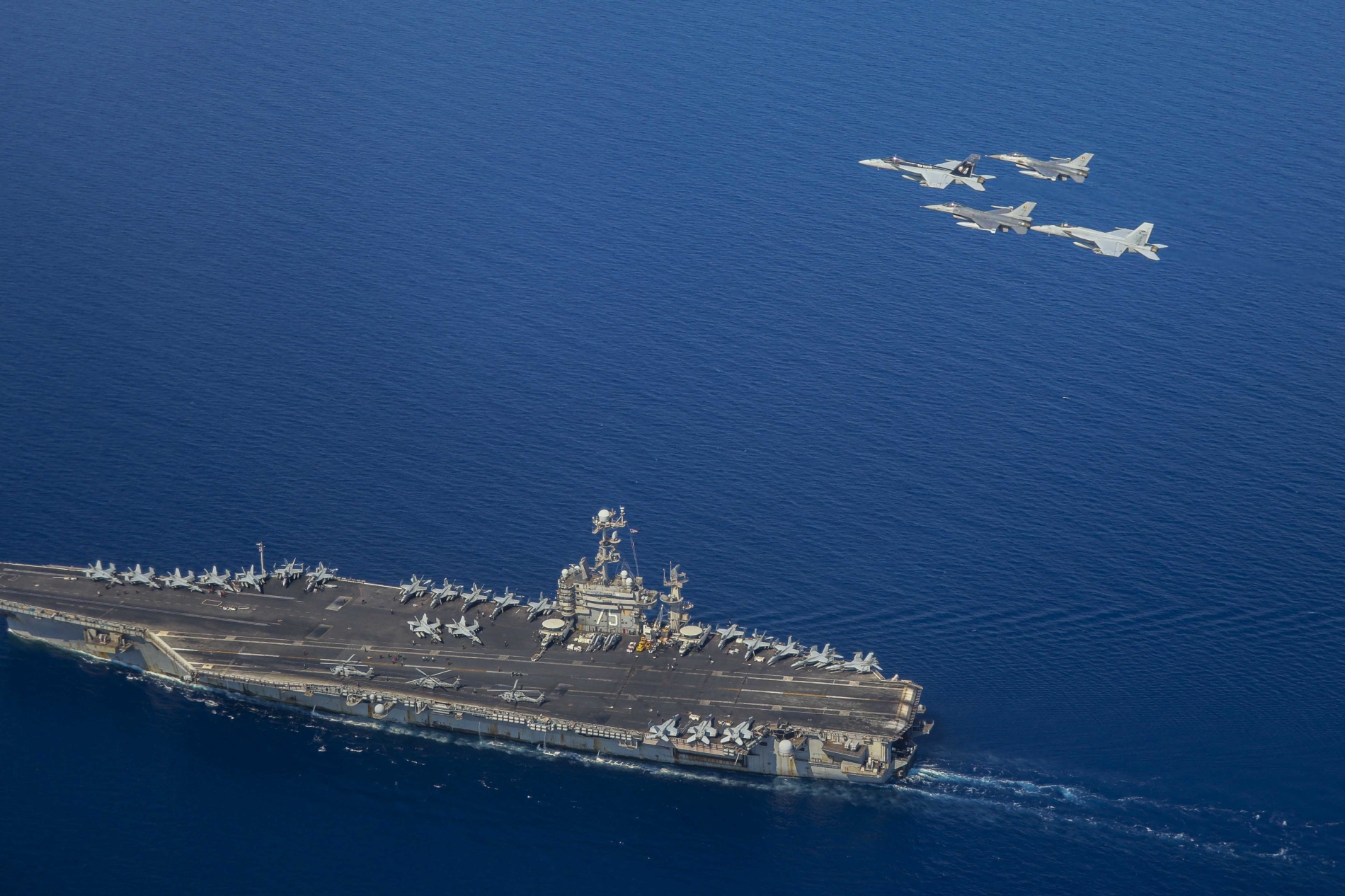
This file photo shows US Navy F/A-18E Super Hornets, attached to Carrier Air Wing 1 (CVW-1) and Belgian Air Force F-16s flying over the Nimitz-class aircraft carrier USS Harry S. Truman (CVN 75) in the Mediterranean Sea.
Weary of war
If Gen. Caine appears to be a reluctant warrior, it is because he embodies the principles that Clausewitz and MacArthur taught, pressing the political leader (Trump) for an answer to the question: what is this war intended to achieve? Remaining in suspension until an answer is forthcoming would seem to be the rational choice. Yet suspension is neither safe nor stable. A huge military build-up with no clear objective generates its own political pressures and risks inadvertent escalation. In effect, no-one is left holding the fuse.
Since 22 February, university students in Iranian cities such as Tehran, Mashhad, and Shiraz have taken once again to their campuses in protest, mourning the victims of the massacres of early January. Former Crown Prince Reza Pahlavi (based in the US) has conveyed his support to them. It may well be that these voices—rather than any American sortie—hold the more decisive clue to the future of Iran.