Refugees in Egypt: economic burden or opportunity?

Half of all child refugees in Egypt are not in school despite being eligible. Experts think a new law may make things worse in a country with stretched budgets. Is the solution to let them work?

Al Majalla

Refugees in Egypt: economic burden or opportunity?

Amid unprecedented regional upheaval, Egypt has become a principal host for refugees across the Middle East and North Africa, but the country’s increasing financial pressure has added an urgency to the mix, and the issue has now moved far beyond the bounds of a temporary humanitarian concern.

Successive regional crises—from Sudan and Syria to the Horn of Africa and Palestine—has led to the continued arrivals, but while there are international funding contracts, the Egyptian state faces a delicate balancing act between its humanitarian obligations and finite national resources. Policymakers are scratching their heads over how to transform millions of refugees from a latent cost into an organised economic asset.

According to the United Nations High Commissioner for Refugees (UNHCR), 1.05 million refugees and asylum-seekers are registered in Egypt, but most are not. Egyptian authorities say there are 9 million foreign nationals in the country, a figure that includes refugees, migrants, and those legally residing in the country. Questions over the true figures highlight the absence of a comprehensive national database.

The Egyptian state is responsible for providing essential services to refugees, foremost among them healthcare and education. Refugees benefit from national health programmes, including vaccination campaigns and presidential initiatives. Refugee children are admitted to public schools, stretching budgets.

Education problem

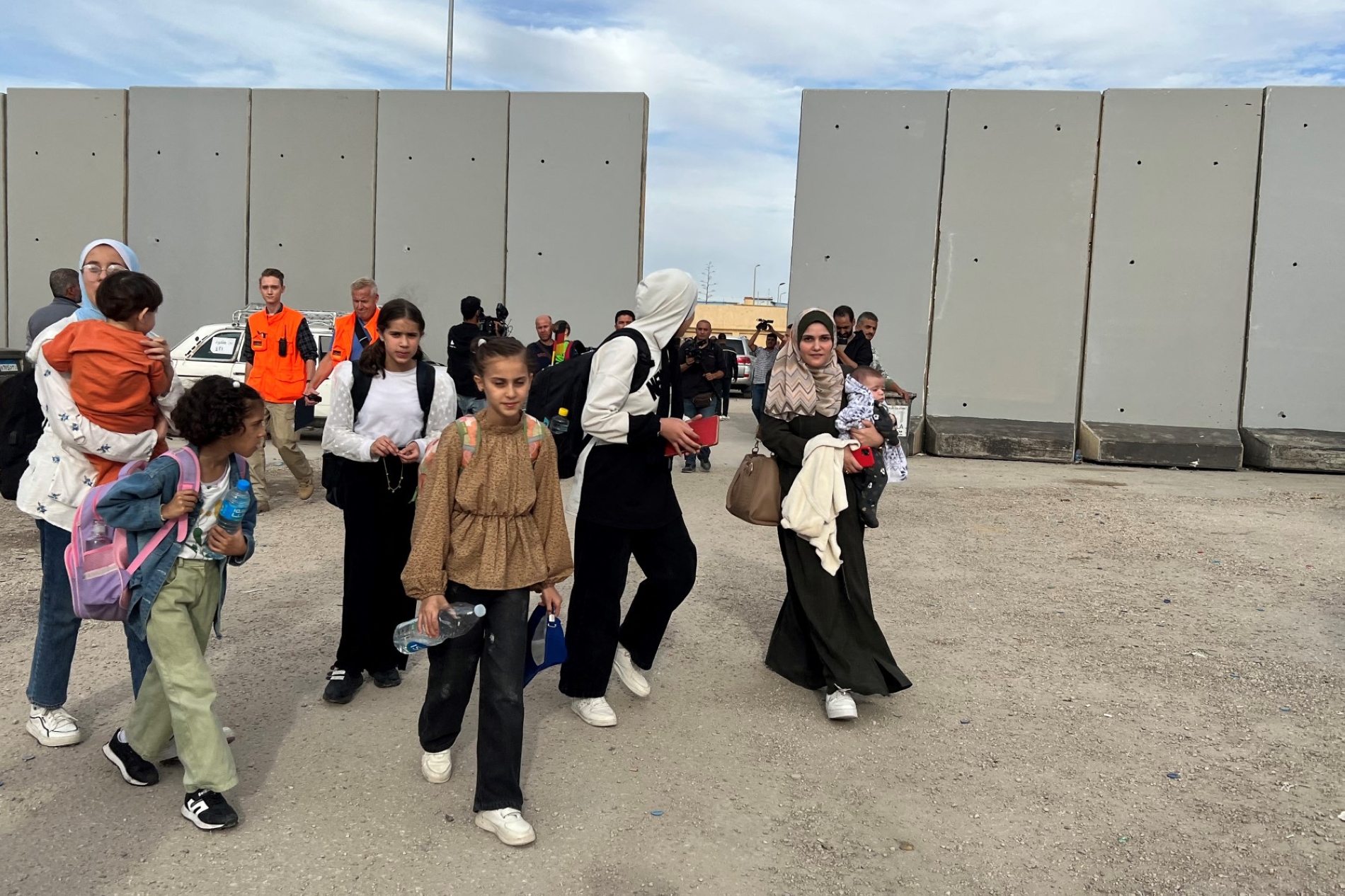
By October 2024, the UN said there were 246,000 refugees and asylum-seekers of school age in Egypt, but nearly half fall outside the formal education system. A separate study reports that 9,000 children arrive in Egypt every month, almost half of whom do not enrol in school. These figures exclude 100,000 Palestinians who entered Egypt from Gaza in 2023 without registering with UNHCR. According to a diplomatic source in Cairo, most cannot get legal residency or access to public education.
AFP
Displaced Palestinian families enter through the Rafah crossing after the Gaza war, on 22 November 2023.

The cost to Egypt of hosting the refugees cannot be accurately calculated without detailed official reporting, but there is a cumulative strain on the system that requires long-term planning. Law No. 164 of 2024, known as the Foreigners’ Asylum Law, is an effort to address the problem. It legally defines a refugee and establishes a Permanent Committee for Refugee Affairs under the authority of the Prime Minister.

The significance of this statute is that it represents a move towards structured institutional governance. Responsibility for registering refugees and administering their affairs is transferred from the United Nations High Commissioner for Refugees (UNHCR) to a national authority. This gives the state control over its refugee data (including numbers, nationalities, grounds for asylum, and material needs), which in turn lays the groundwork for more coherent and effective policymaking.

The law also enshrines core rights for refugees, including access to healthcare, education, and employment, as well as the right to establish or join companies. This lets refugees work in the formal economy, transforming dependency into productivity.
The UNHCR recently announced that it would scale back support for refugees and asylum-seekers in Egypt owing to a severe funding crisis

Speaking to Al Majalla, Egyptian parliamentarian Samira El Gazzar described the legislation as "a strategic transformation". Financial support, she said, could be channelled directly into the state budget, rather than routed through international organisations, at a time when UNHCR assistance has been significantly curtailed.

Drawing criticism

Ashraf Milad, a lawyer and expert affiliated with the African Commission on Human and Peoples' Rights, told Al Majalla that the executive regulations for the asylum law have yet to be issued. Drafting them is a challenge because it needs to align with international expectations to attract further grants and support. A full transition from UNHCR management to state administration will take years, he said.

Egypt's new law has drawn criticism from human rights advocates. Concerns focus on provisions relating to detention or deportation, as well as on what some regard as insufficient safeguards to protect fundamental rights in line with international standards. This illustrates the state's difficulty in reconciling sovereignty and security with its legal and humanitarian commitments. The UNHCR recently announced that it would scale back support for refugees and asylum-seekers in Egypt owing to a severe funding crisis at the United Nations. 

AFP
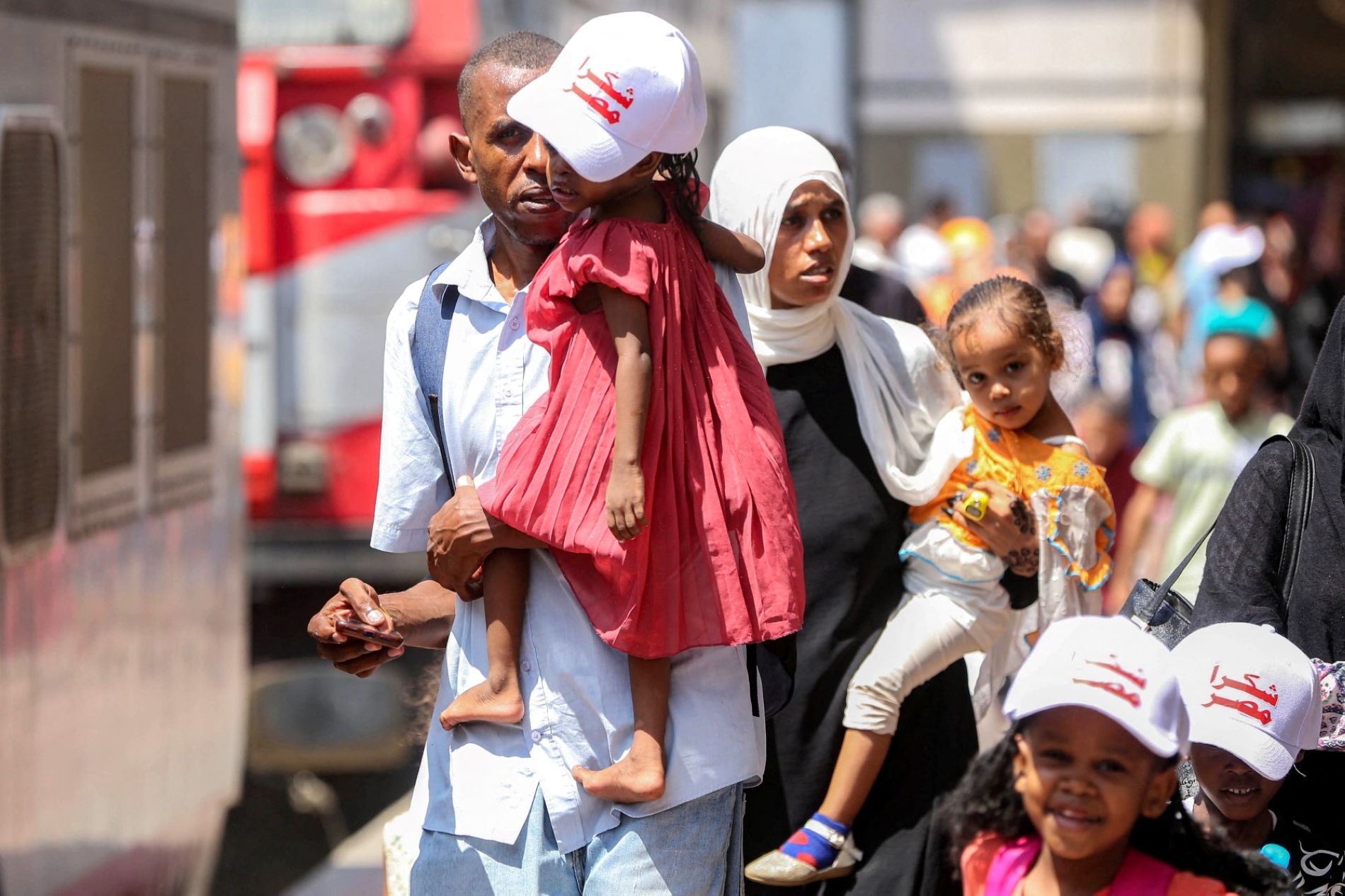
Sudanese refugees upon their arrival in the Aswan region of Egypt, on 28 July 2025.

Last year, the agency secured less than half of the $135mn required to support 939,000 registered refugees and asylum-seekers from Sudan and elsewhere who are living in Egypt. It now says it only has 29% of the required funding, leaving a shortfall of $97mn. The deficit has forced the UNHCR to reduce essential services, including all medical assistance except for life-saving emergency interventions.

In an interview with Al Majalla, economist Yasser Al-Alam argued that one of the most formidable challenges lies in the lack of data. This means that assessments of the economic burden (and therefore of what is needed) are imprecise. Refugees, he observed, have access to public health services on equal footing with Egyptian citizens, intensifying demand and squeezing state finances without international compensation.

Al-Alam said Egypt was now the largest host country for Sudanese refugees, with 1.5 million Sudanese nationals now living there, representing 73% of all registered refugees and asylum-seekers in the country.

Reframing the crisis

Last March, a spokesperson said that the government would work with United Nations agencies to calculate the economic cost borne by the state as a consequence of refugee and migrant populations. The declared objective is to reframe the refugee crisis as a development opportunity through structured economic integration, while pressing the international community to shoulder its moral and financial obligations. 

AFP
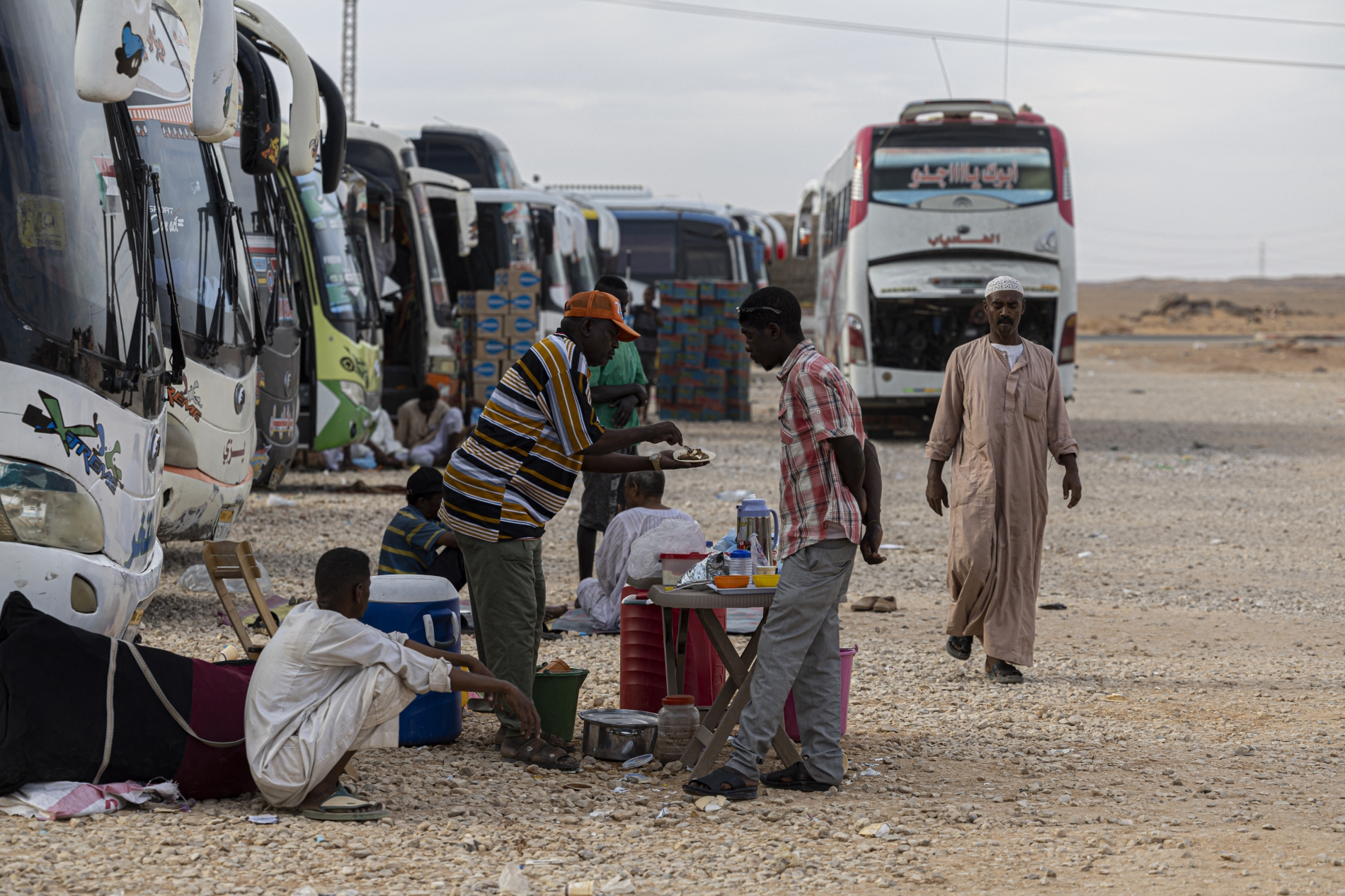
Sudanese drivers wait by their buses upon arrival at the Egyptian village of Wadi Karkar near Aswan on 14 May 2023, after fleeing war-torn Sudan.

Parliamentarian Samira El Gazzar said: "The 'refugee economy' has become one of the most contentious issues in the Egyptian public sphere, particularly in light of the state's policy of integration rather than encampment." Refugees benefit from indirect price support (subsidies) on essential goods and fuel, so this adds to a wider pressure.

El Gazzar said refugees can be productive economic actors through the formalisation of the parallel economy. Many run thriving enterprises, including restaurants, handicrafts, and small-scale manufacturing. Bringing such activities under regulatory oversight would broaden the tax base and create employment opportunities for Egyptians.

But human rights lawyer Ashraf Milad noting that the European Union had given $8.8bn to Egypt to cover costs, adding that refugees often display remarkable entrepreneurial skill in areas like food production, confectionery, furnishings and fashion, so they contribute commercially. He pointed to districts such as Faisal, Ard El Lewa and Ain Shams, where local economies have evolved in part to meet refugee demand. Others continue to work within the informal sector, despite inspections.

In Egypt, the debate concerns costs and returns. Abroad, it revolves around burden sharing. Within parliament and the executive, it centres on rights and obligations. The outcome will depend largely on the state's capacity to provide transparent and reliable data and to craft an equitable model of economic integration that safeguards refugee dignity while alleviating pressure on citizens.

font change