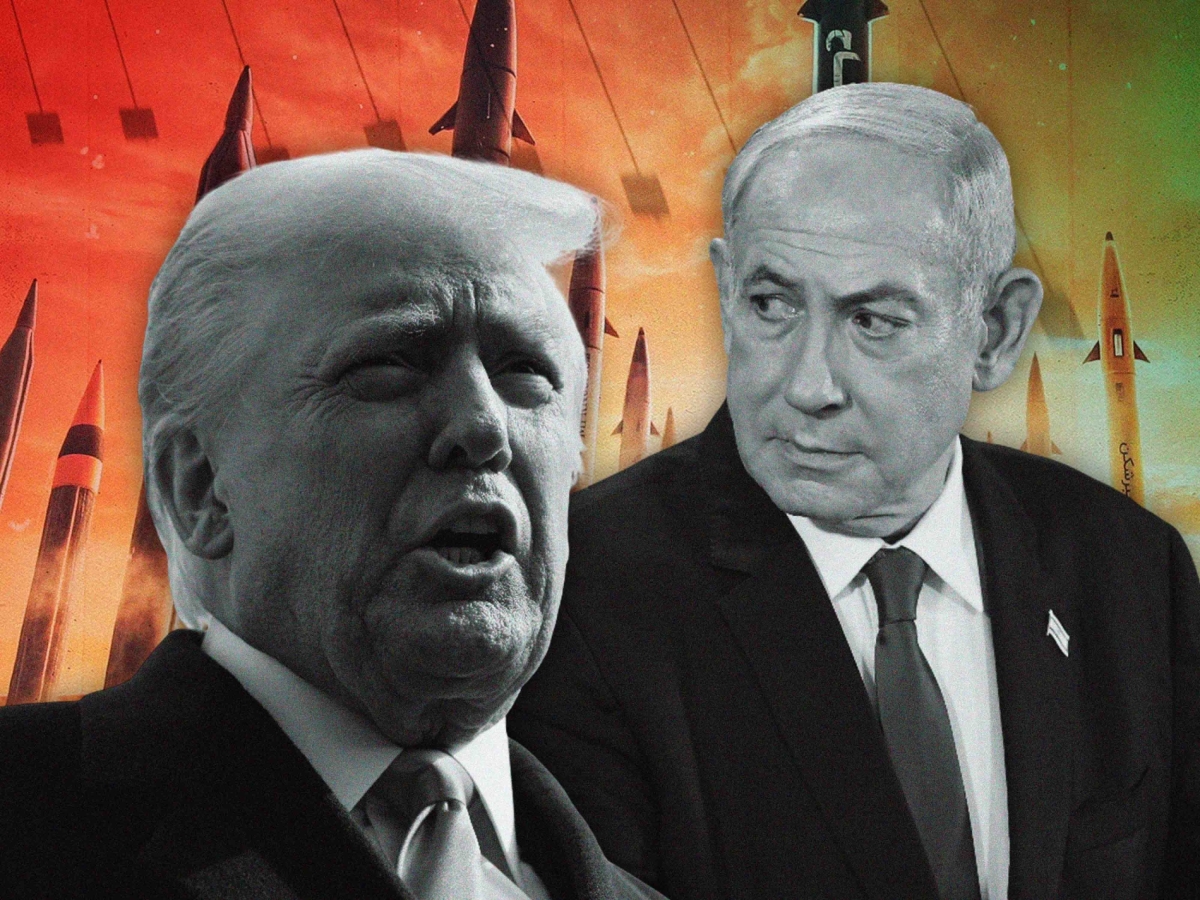
His meeting with Trump on 11 February, moved up a full week from its original date and just after talks began between Iran and the US, isn’t a routine consultation between allies—it’s an intervention
As Israeli Prime Minister Benjamin Netanyahu was in Washington this week for the seventh meeting between him and US President Donald Trump, he carried with him intelligence files, a track record of bypassing American diplomacy when it suits him, and a deep conviction that the United States is about to make a deal that could leave Israel vulnerable. The meeting with Donald Trump on 11 February, moved up a full week from its original date and just after talks began between Iran and the US, isn’t a routine consultation between allies—it is an intervention.
The meeting comes after weeks of tension following Iran’s crackdown on mass protests that took place earlier in January and December. At the time, Trump had called on Iranians to take over state institutions, saying “help was on its way".
But the help never came. Instead, the US seemingly backed down on its earlier aggressive posture and is currently exploring a potential deal with the Islamic Republic. And while Washington did dispatch an armada of ships and aircraft to the region, Israel appears to be worried that the US could quietly drop some important conditions—particularly when it comes to Tehran’s ballistic missile programme.
Why so urgent?
Netanyahu requested the meeting be brought forward from 18 to 11 February, just days after the first round of US-Iran indirect talks concluded in Oman. The apparent urgency to meet President Trump in person likely stems from two main factors. The first is a surprising sense of self-confidence the Iranians are displaying: As it faces the prospect of US strikes at a moment when the regime is at its weakest point, the Islamic Republic is not budging.
Instead of accommodating Washington, Iran has moved to change the venue of the talks from Türkiye to Oman, sidelined other Arab countries that were supposed to have a role and launched a series of provocations in the Gulf, including by boarding tankers and flying drones in the direction of a USS carrier group stationed in the Arabian Sea.
Furthermore, Iran has repeatedly stated that it was only willing to negotiate on its nuclear programme, dashing efforts also to limit stockpiles of ballistic missiles and support for Iranian proxies across the region. Even on the nuclear file, Iran appears unwilling to discuss a full dismantling of its programme (zero enrichment) and is floating the idea of getting full sanction relief for concessions that Israel views as minimal.
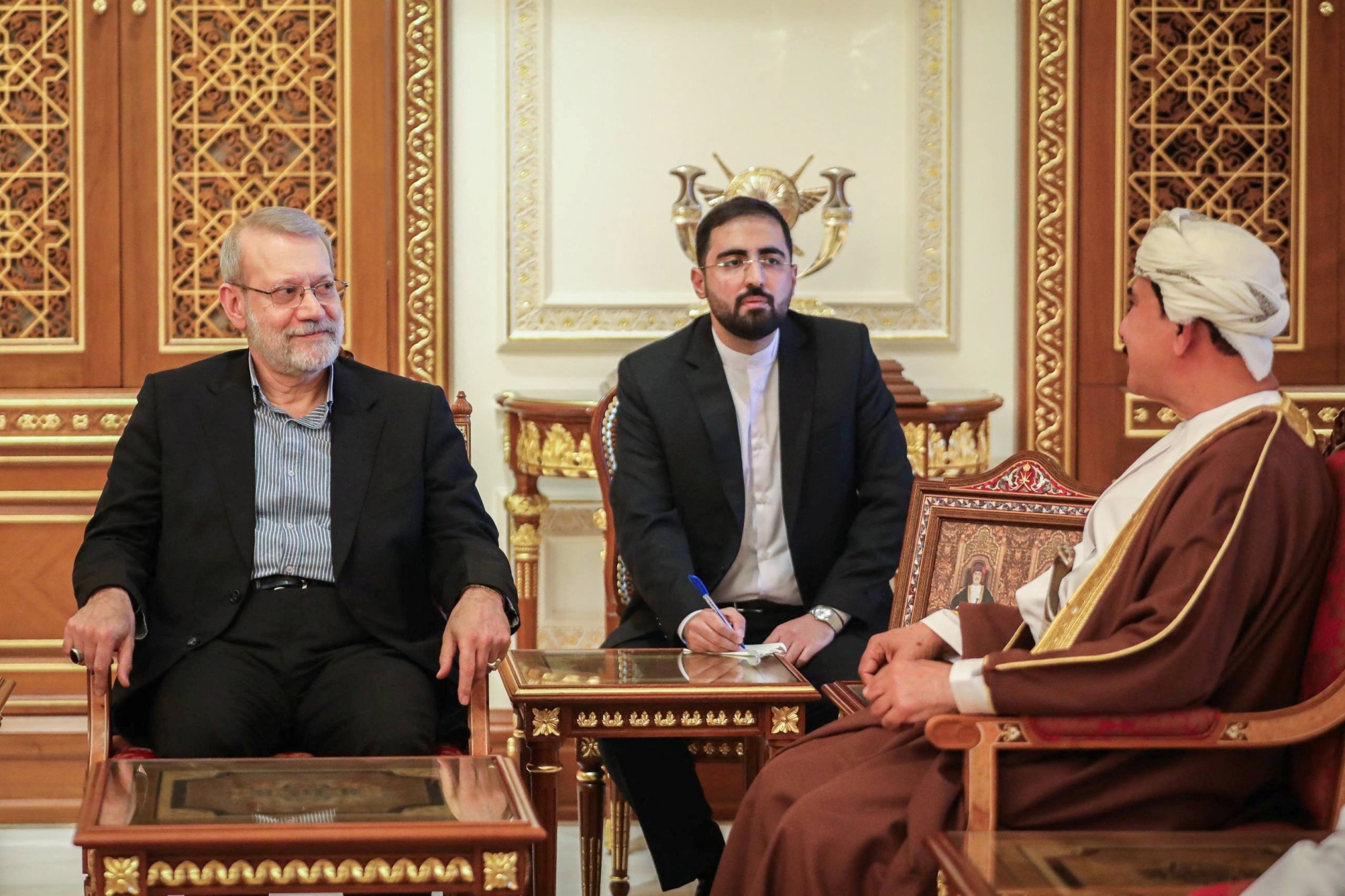
Secretary of the National Security Council, Ali Larijani meets with the Minister of the Royal Office in the Sultanate of Oman, Sultan bin Mohammed al Numani, in Muscat, Oman, on 10 February 2026.
This amount of bravado would be notable under any circumstances, but it is especially striking after a year in which the regime’s fortunes have deteriorated so dramatically. Tehran has seen its key proxy (Hezbollah) hammered by Israeli strikes, while its main regional ally, Bashar al-Assad, was toppled in a lightning offensive by the Syrian opposition and fled the country.
And during the 12-day war, Israel took out virtually all of its air defences, a chunk of its ballistic missile arsenal, and saw one of its main deeply-buried nuclear sites (Fordow) be targeted by US B-2 bombers. To top it off, it then faced a wave of protests not seen since 2009. Yet the regime is displaying defiance in the face of yet another potential catastrophe: renewed US strikes that could, this time, be aimed at collapsing the regime itself.
Iran's surprising display of self-confidence has unsettled Israel, which could explain the urgency of Netanyahu's meeting with Trump
This purported self-confidence may stem from the perception that the Islamic Republic's strategy has worked in the short term. As Trump claimed he was "locked and loaded" and ready to attack in mid-January, Iran's regime crushed the protests. At the time, Washington likely delayed a planned strike with the aim of deploying more military assets to the region to face Iranian missile strikes against US bases in the region and potential Iranian attempts to close the critical Strait of Hormuz. That time was used to silence Iranian streets with the hope that, faced with a fait accompli, Trump would prefer a deal to an attack.
It was a gamble, but one that appears to have worked. Though anger is still boiling below the surface, the country's streets are seemingly silent. More importantly, Trump is purportedly back at the negotiating table.
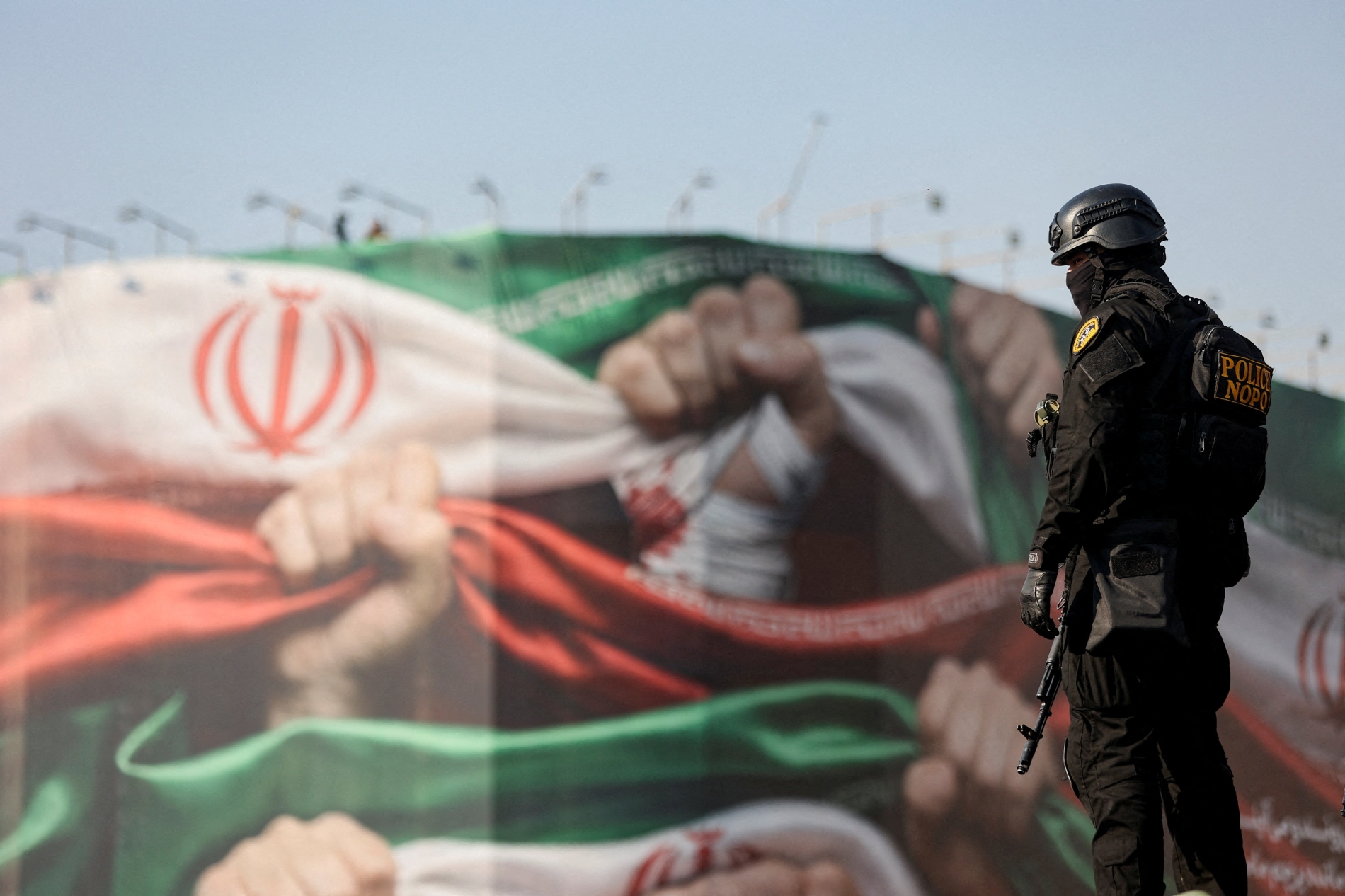
An Iranian policeman stands during a pro-government rally in Tehran, 12 January 2025.
Projecting strength
And while Tehran surely understands the situation is dire, it is using this short-term "win" to project an image of strength and defiance that Supreme Leader Ayatollah Ali Khamenei likely feels is his only way to survive. He remembers that during the last days of the Shah's rule, the decision taken by Iran's pre-revolution ruler to appease protesters backfired. In Khamenei's mind, defiance is less risky than compromise—whether that is crushing protests or harassing ships in the US armada.
To Iranian observers, this approach is hardly surprising. This purported policy of defiance has been a hallmark of the regime—and often backfired as Iran overplayed its hand. But at the same time, Israel knows Iran should not be underestimated, and neither should Trump's appetite for a deal. In the wake of the Oman talks, Trump described them as "very good" and promised more sessions "early next week".
Trump's upbeat characterisation of the talks didn't sit well with Netanyahu. The Oman talks focused primarily on agreeing on a framework for further negotiations, and Iran's Foreign Minister Abbas Araghchi said the two sides were discussing "the requisite foundations for the resumption of both diplomatic and technical negotiations". That language, to Netanyahu's ears, means the parameters of a deal are changing, and he wants a say in it. Against his backdrop, the urgency of Netanyahu's White House visit becomes apparent—he wants to shape any decisions regarding negotiations, lest Trump agree to scale back the demands that were laid out by US Envoy Steve Witkoff last month when he said: "There are four issues—nuclear enrichment, missiles …, the actual material that they have, which is roughly 2,000 kilogrammes, which is enriched anywhere between 3.67% and 60%," he said, adding, "and the proxies, of course."
Witkoff's conditions are in line with Netanyahu's, whose office put out a statement saying, "Any agreement must not only prevent Iran from attempting to rearm itself with nuclear weapons and eliminate any possibility of uranium enrichment but also restrict ballistic missiles and ensure the cessation of support and funding for terrorism by the Axis of Evil."
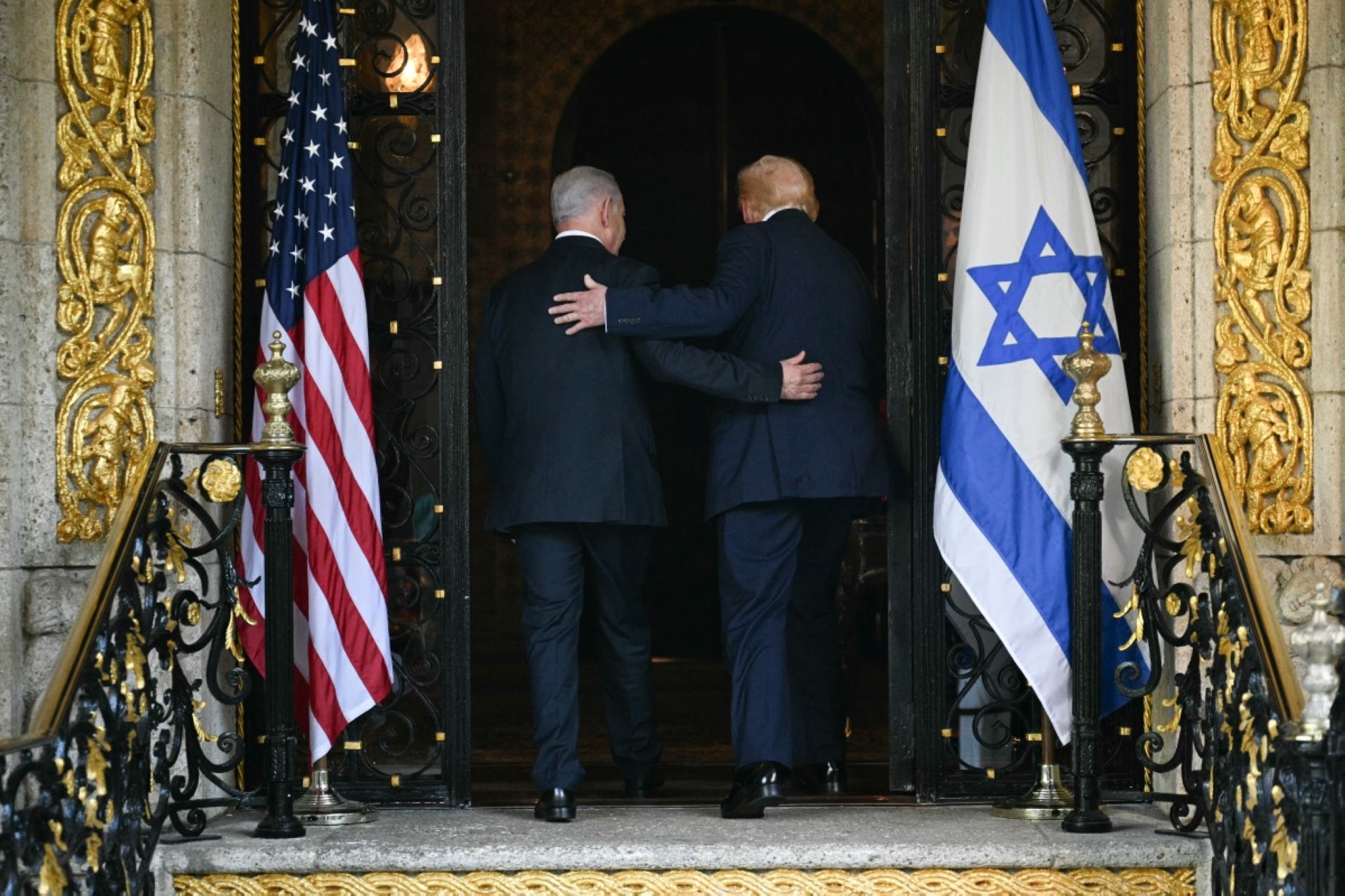
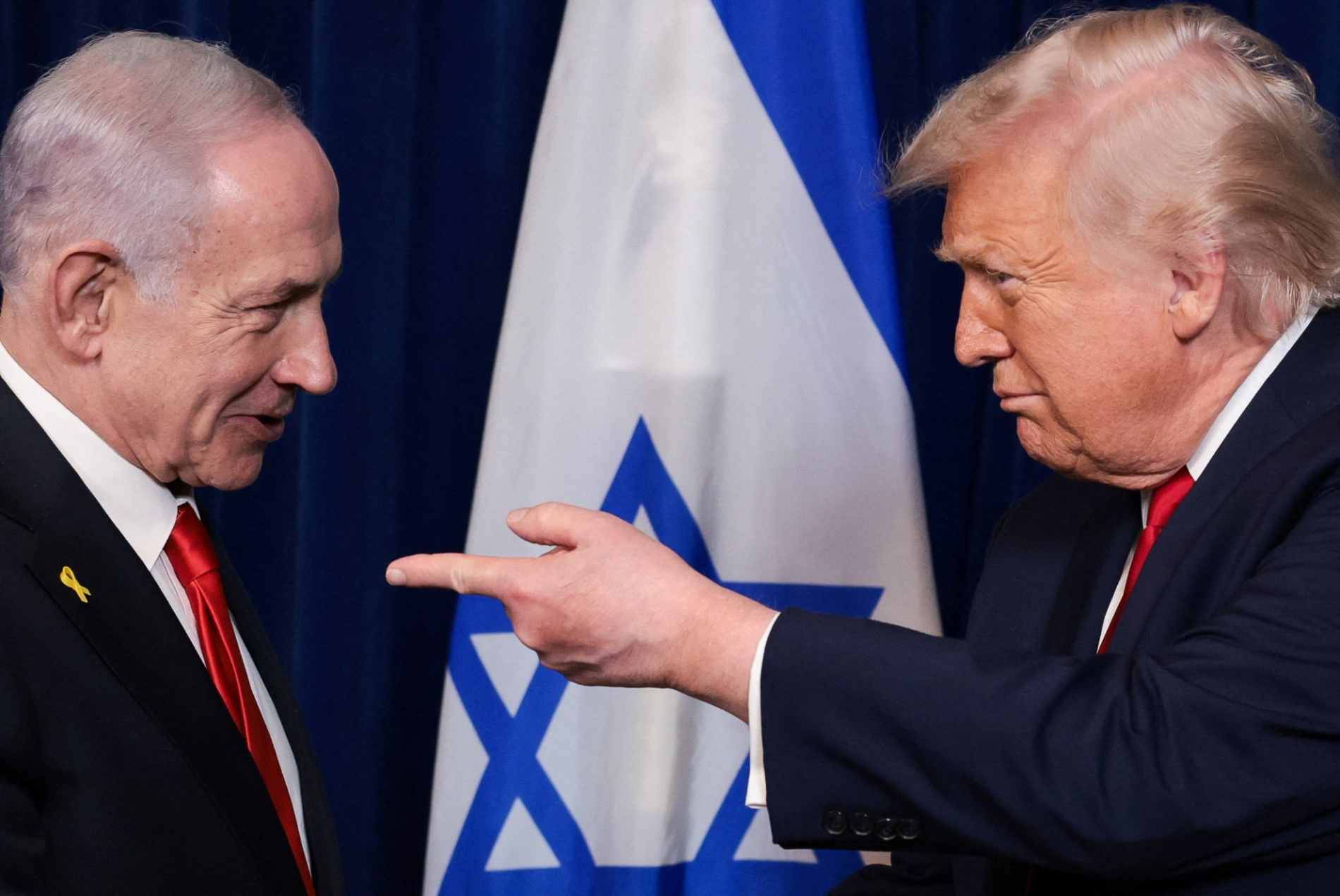
US President Donald Trump (R) and Israeli Prime Minister Benjamin Netanyahu (L) at Trump's Mar-a-Lago residence in Palm Beach, Florida, on 29 December 2025.
Maximalist by design
These demands are maximalist by design. Netanyahu fears that Trump will only address the nuclear file, pocket a narrow agreement, and declare victory, leaving Iran's ballistic missile programme and proxy networks intact—something that still unsettles Israel despite their military superiority.
According to Israeli media, Netanyahu will deliver in person the same intelligence briefing he gave US envoy Steve Witkoff during his visit to Israel on 3 February, which asserts that Iran could ramp up production, if not stopped either by force or through negotiations. He hopes to convince Trump to impose far more stringent conditions than Iran can accept. Meanwhile, an unnamed source close to the prime minister explained that the Israeli PM wants to ensure Trump receives the information accurately, without it being filtered through intermediaries. In other words, Netanyahu does not trust the bureaucratic chain to convey the urgency he feels.
Operational, not ceremonial
Another tried-and-tested way to pile on pressure is to foster uncertainty. The White House decided this meeting would be closed to the media, with no press conference planned before or after. This is a notable departure. In previous visits, Trump and Netanyahu held joint press conferences, sometimes using them to stage-manage their alliance for domestic and regional audiences. The decision to seal this meeting off suggests something different is at play.
Netanyahu is also bringing a deliberately small delegation: his military secretary, Major General Roman Gofman, and acting National Security Council head Gil Reich. This makes it seem like a working meeting, not a state visit. The composition signals that the conversation will be operational and intelligence-heavy, not ceremonial. When you strip a delegation down to generals and intelligence coordinators, you are preparing for a conversation about threats, not toasts.
The Israeli newspaper Yedioth Ahronoth claimed that both sides wanted to avoid publicising any rifts between Trump and Netanyahu regarding a potential deal with Iran. That may be true, but joint appearances can also serve the opposite purpose: not concealment, but a deliberate show of unity. An alternative explanation is that Netanyahu wants the details of the meeting to be as opaque as possible, to foster uncertainty, in the hope that it will spook Iran into being more willing to compromise.
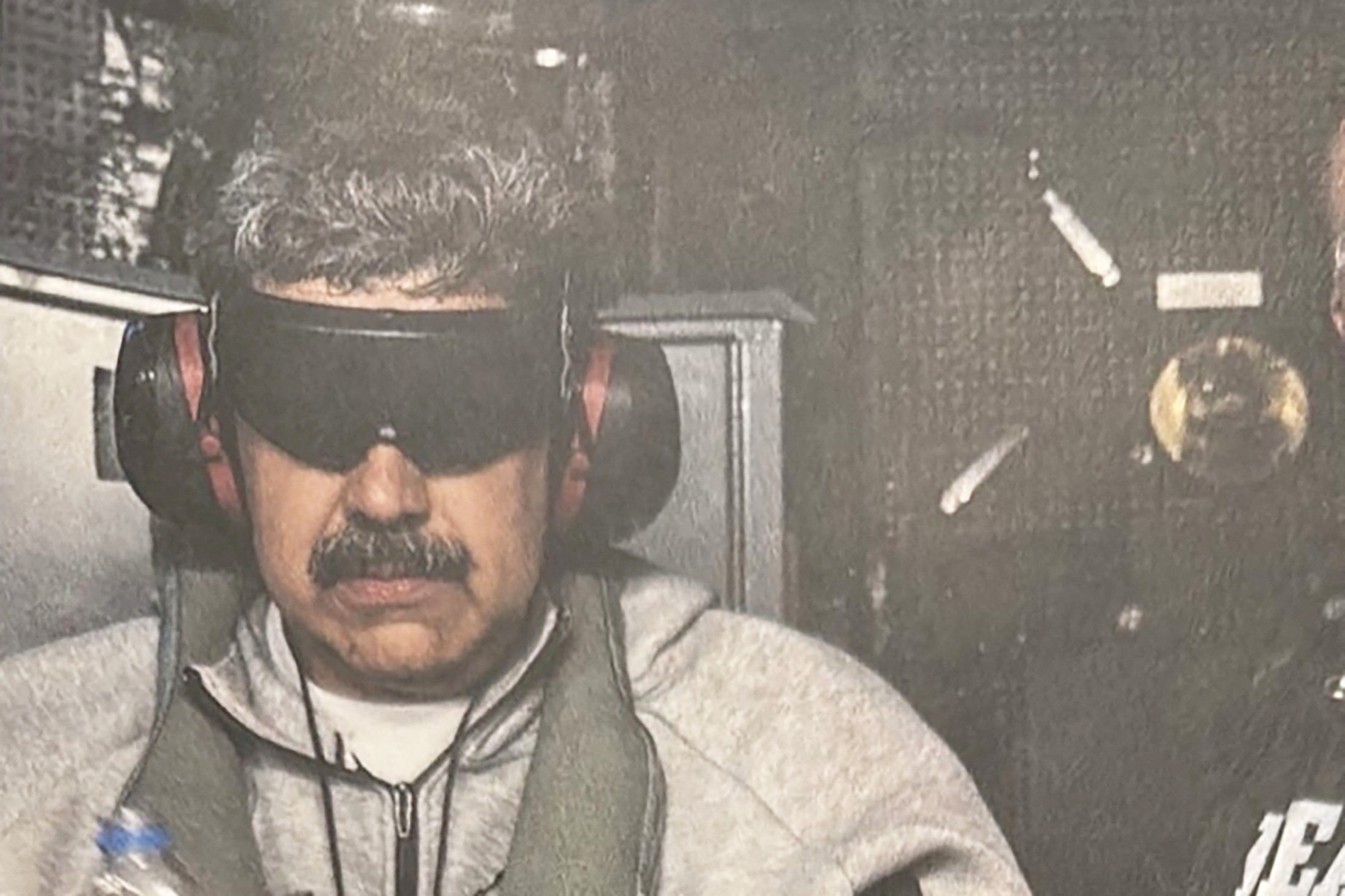
The obvious complication is Trump himself, who prefers negotiations as spectacle—played out on camera—rather than quietly negotiated in back rooms. Yet he has also shown himself to be a gifted bluffer and quite hard to read, especially for overconfident autocrats (as Venezuela's Nicolás Maduro discovered during that fateful night in Caracas when US forces seized him from his residence).
A photo posted by US President Donald Trump shows Venezuelan President Nicolas Maduro aboard the USS Iwo Jima aircraft carrier after the US military seized him on 3 January 2026.
The Netanyahu playbook
What makes this meeting especially consequential is the pattern it fits into. Netanyahu has a well-documented playbook for American diplomacy on Iran: shaping, stalling, and ultimately bypassing.
In February 2025, during his first meeting with Trump in the new term, Netanyahu presented four scenarios for striking Iran, ranging from a unilateral Israeli attack to a US-led assault. Throughout spring 2025, while Trump pursued diplomacy with a 60-day deadline, Netanyahu remained publicly supportive but privately sceptical, ultimately waiting out the deadline before launching the strikes that became the 12-Day War. Even after US bombers joined the campaign, Washington reportedly urged Tel Aviv to scale back operations as Israeli forces pushed deeper into Iran's command structure.
In December 2025, at Mar-a-Lago, Netanyahu raised the possibility of "round two" strikes. In January 2026, he continued pushing for a second round. Now, in February, he is rushing to Washington to "present our approach around our principles on the negotiations".
The pattern is unmistakable. For all the (repeated) talk of a rift between the two leaders, and despite real tensions and differences, Netanyahu has managed to get his way, more or less. He positions Israel as the indispensable partner whose security equities cannot be ignored, and preserves Israel's freedom of military action as the backstop if diplomacy fails or produces an outcome he finds unacceptable.
At the same time, Israel knows that a "limited deal" could well restrain its freedom of manoeuvre both diplomatically and militarily: Netanyahu can hardly criticise Trump the way he did his predecessors, and a deal may entail a de facto ban on Israeli attacks inside Iran.
US President Donald Trump points his finger towards Israeli Prime Minister Benjamin Netanyahu during a press conference after meeting at Trump's Mar-a-Lago club in Palm Beach, Florida, on 29 December 2025.
What next
Regardless of Netanyahu's intervention, the space for an agreement between Washington and Tehran remains narrow. The Iranian regime has little more to offer than a constrained nuclear deal, and even that comes at a moment when Israel's strikes have already set back Iran's nuclear infrastructure and shifted the immediate threat landscape toward missiles and militias. Any deal, moreover, will be signed at the expense of Iranian protesters. Trump will not want to go down in history as the US president who rehabilitated the Islamic Republic.
Yet force is not the obvious endpoint either. Iran retains leverage, particularly the capacity to strike Gulf energy infrastructure and choke critical sea lanes in ways that would send shockwaves through global markets and land squarely on American voters' radar. That nightmare scenario is precisely what drives regional powers to lean on Trump in turn, and these are not amateur diplomatic players. They understand his rhythms and his preference for being seen as the dealmaker who avoids the war his predecessors couldn't.
What emerges, then, is likely to be a slower-burning crisis than was initially expected. Both Washington and Tehran will probe, test resolve, and incrementally raise the temperature while searching for an off-ramp that doesn't look like surrender. Netanyahu's task in Washington is to ensure that as the dial turns, Israel remains the dominant voice in Trump's ear.