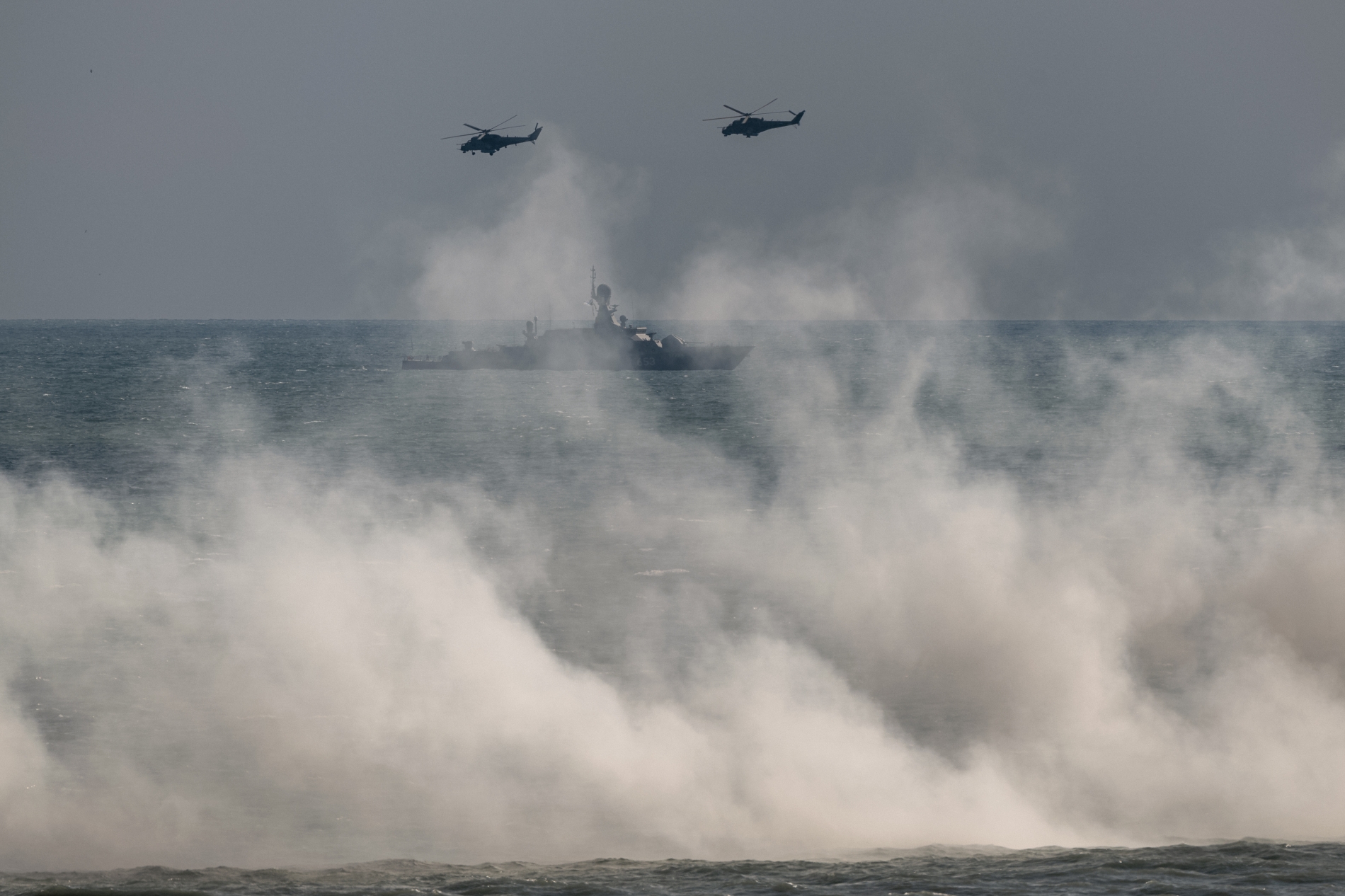

The United States’ Armed Forces (USAF) are moving all their pieces into position for a strike on Iran, but what kind of strike and to what end remain to be seen. Troop compositions are sufficient for a strike to eliminate Iran’s civilian and military leadership, for example. Intelligence has been increased, submarine and surface naval ships are being deployed, and aircraft are being moved to airfields in the region.
Yet there are big questions that remain unanswered. What are the goals of this buildup? What level of force will be needed? And will any intervention involve Israel? In retaliation, Tehran would likely launch medium-range ballistic missiles against facilities in Israel and possibly against US bases in the Middle East, so anti-missile systems are being activated to intercept them.
One option is for the US and Israel to prolong the pressure on Iran with their combined military threat, exhausting Iranian troops and harming the Iranian economy. Both the US and Israel bombed Iran from the air during the so-called 12-day war in June 2025 and did so with impunity after Israel clinically disabled Iranian air defences at the start of the operation. Iran’s response was to launch hundreds of ballistic missiles, but the vast majority of these were shot down in mid-air.
Had Tehran not sought to de-escalate that brief war, its armed forces would have chosen to strike the refuelling tankers that made it possible for Israel to operate over Iranian skies so far from home. In any new conflict, however, that may change, so the US will keep its main forces at a distance and protect its ships from Iranian missiles. US military bases in the region are within range, as is Israel and Gulf oil infrastructure. Iran’s supreme leader, Ayatollah Ali Khamenei, recently said, “The Americans should know that if they start a war, this time it will be a regional war.”
Uneven contest
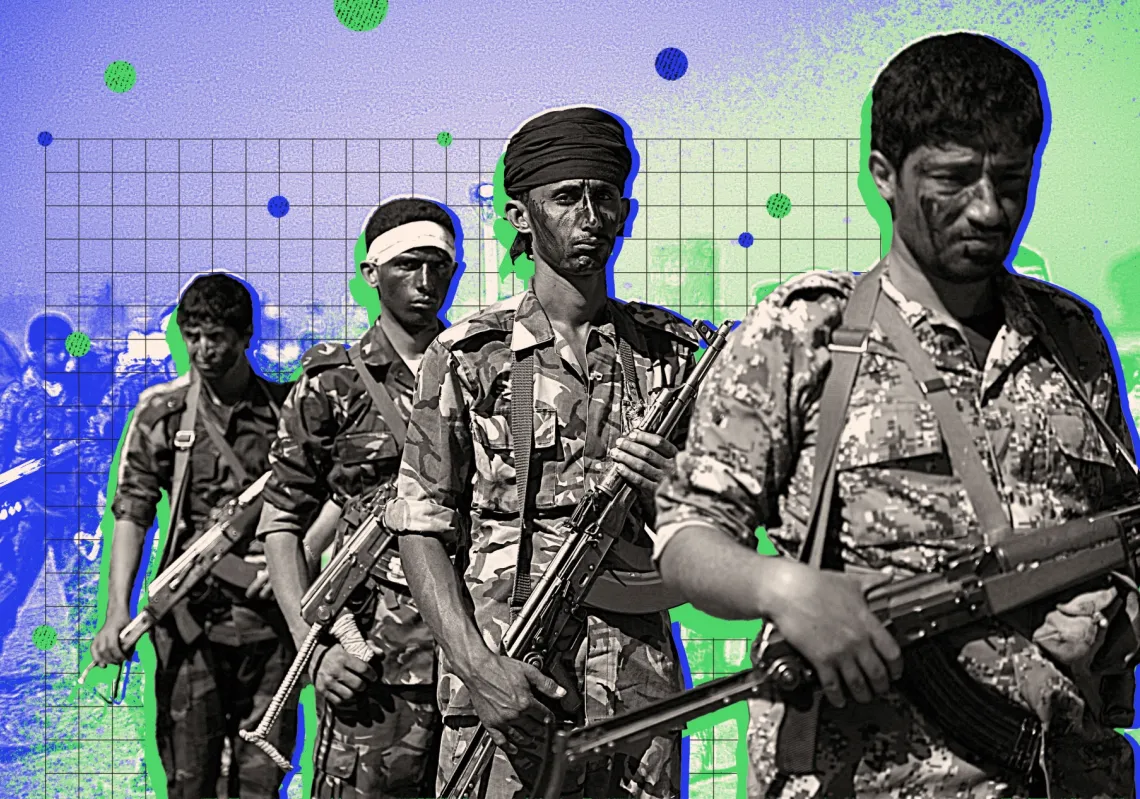
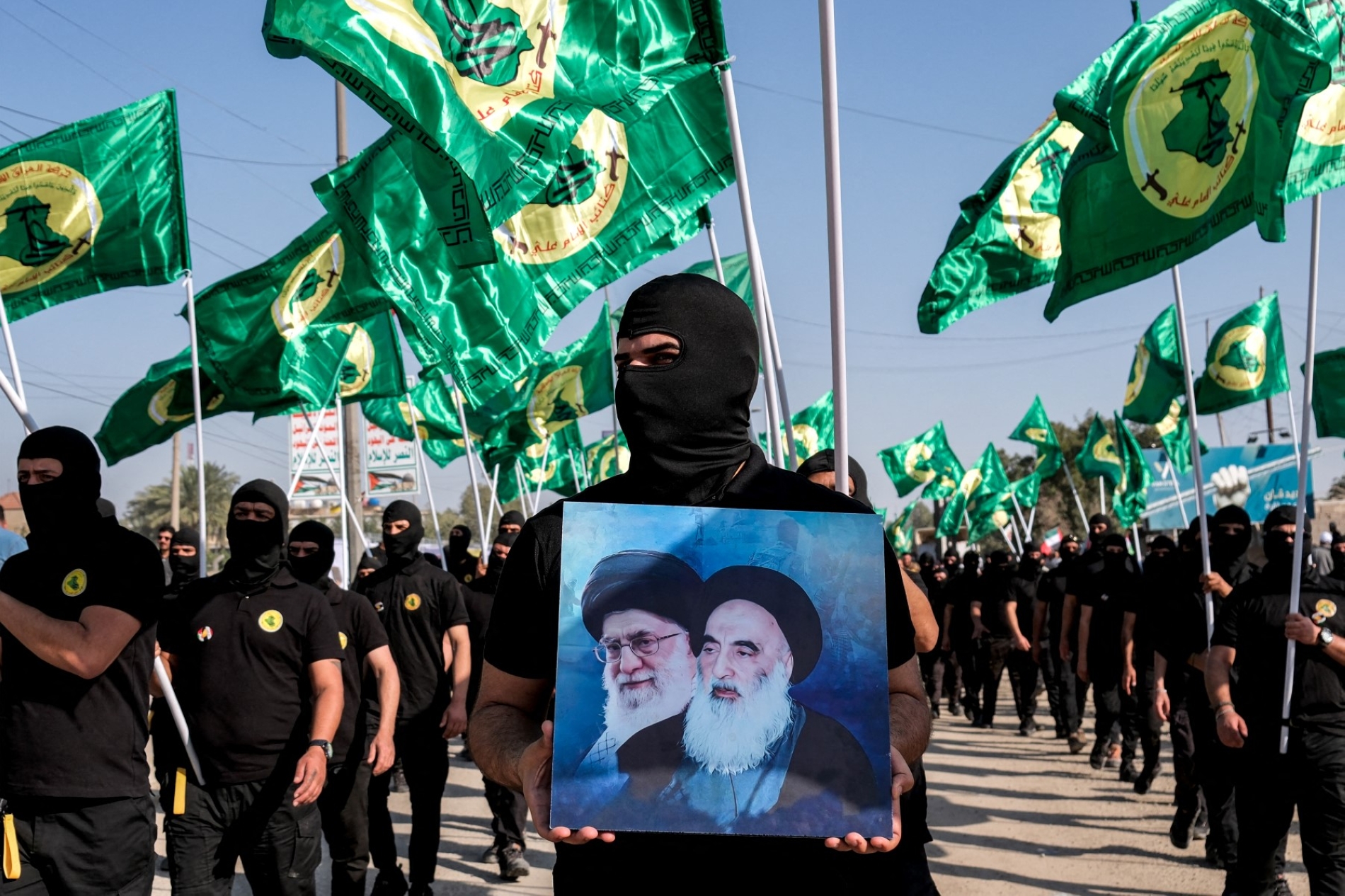
Iran has assets in Iraq in the form of proxy forces, including Harakat Hezbollah al-Nujaba, Kataib Hezbollah, and the Badr Organisation. Saraya Awliya al-Dam, a pro-Iranian group in Iraq, showcased its underground base with tactical missile launchers, which include Iranian AbabilArman guided missiles with an 86km range. Yet the combined American-Israeli military might is so great that few expect Iran to win.
Decapitating Iran’s military and political leadership cannot be ruled out, but it is clear that this alone would not necessarily lead to regime change, especially given the weakness of the Iranian opposition. Furthermore, the Islamic Revolutionary Guards Corps (IRGC) will have seen how US forces intervened in Venezuela last month and taken measures to protect against a similar scenario in Iran. That may even involve purging all Iranian reformers.