Pressure builds on Venezuela after Trump appoints himself 'acting president'. With Colombia, Mexico and Cuba seemingly also in the line of fire, they will be closely watching what happens in Caracas.
For more than a century, Latin America has served as a testing ground for competing visions of sovereignty, intervention and hemispheric order. Recent statements by the United States president, Donald J. Trump, placing Venezuela, Colombia, Mexico and Cuba on notice have revived tensions that many in the region had hoped were consigned to history.
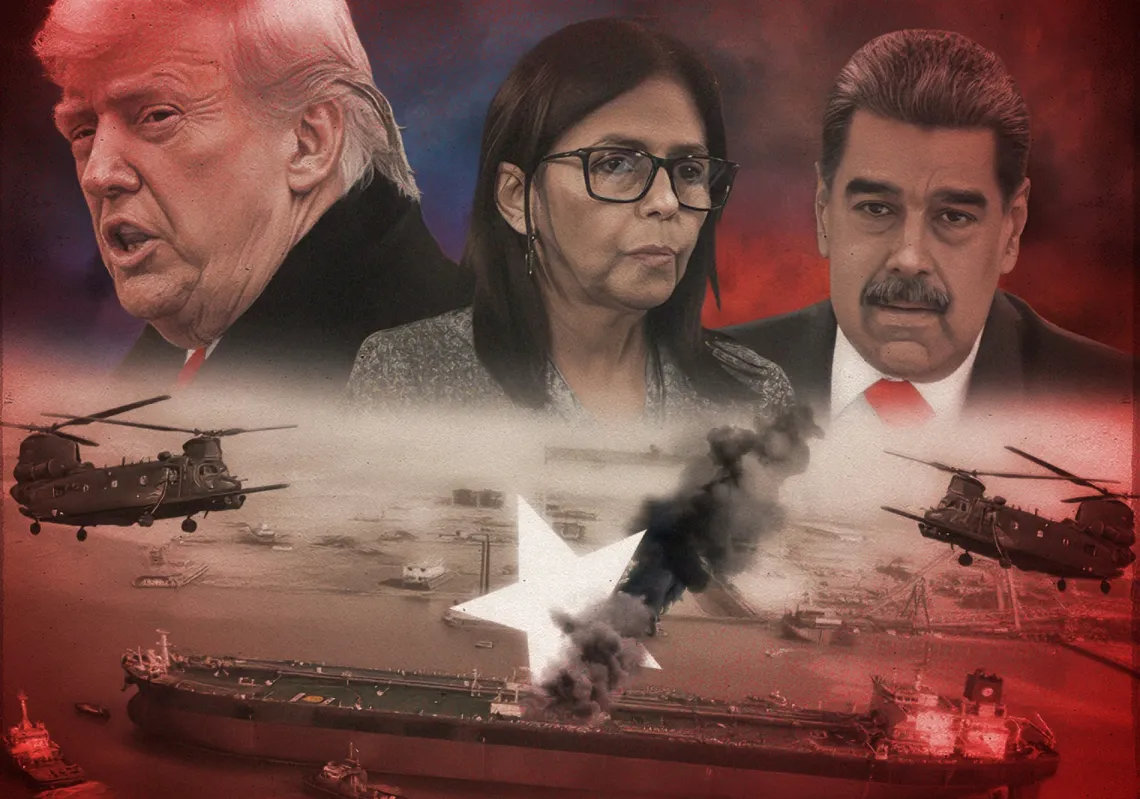
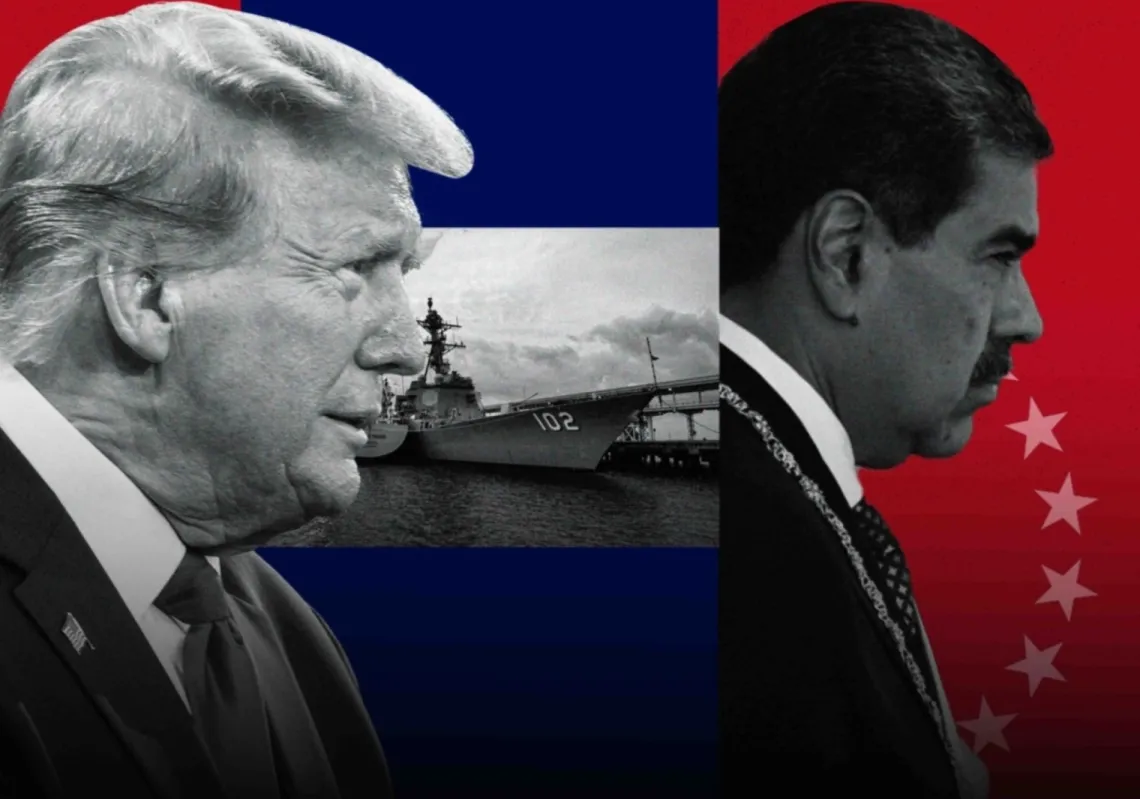
Most recently, Trump posted a cryptic image on Truth Social showing his official portrait labelled “Acting President of Venezuela”. The post left people guessing what exactly he meant. Did it signal a political shift amid the deepening US-Venezuela crisis?
Before that, the US seizure of Venezuelan President Nicolás Maduro had been just that. Following his "capture", his Chavismo government remained intact, and his vice president, Delcy Rodríguez, was swiftly sworn in as interim leader. At the time, the White House signalled it would work with the Delcy, but Trump also warned she could "pay a very big price, probably bigger than Maduro" if she "doesn't do what's right".
These statements and moves raise deeper questions about international law, regional autonomy and the resilience of non-intervention norms in the Western Hemisphere.
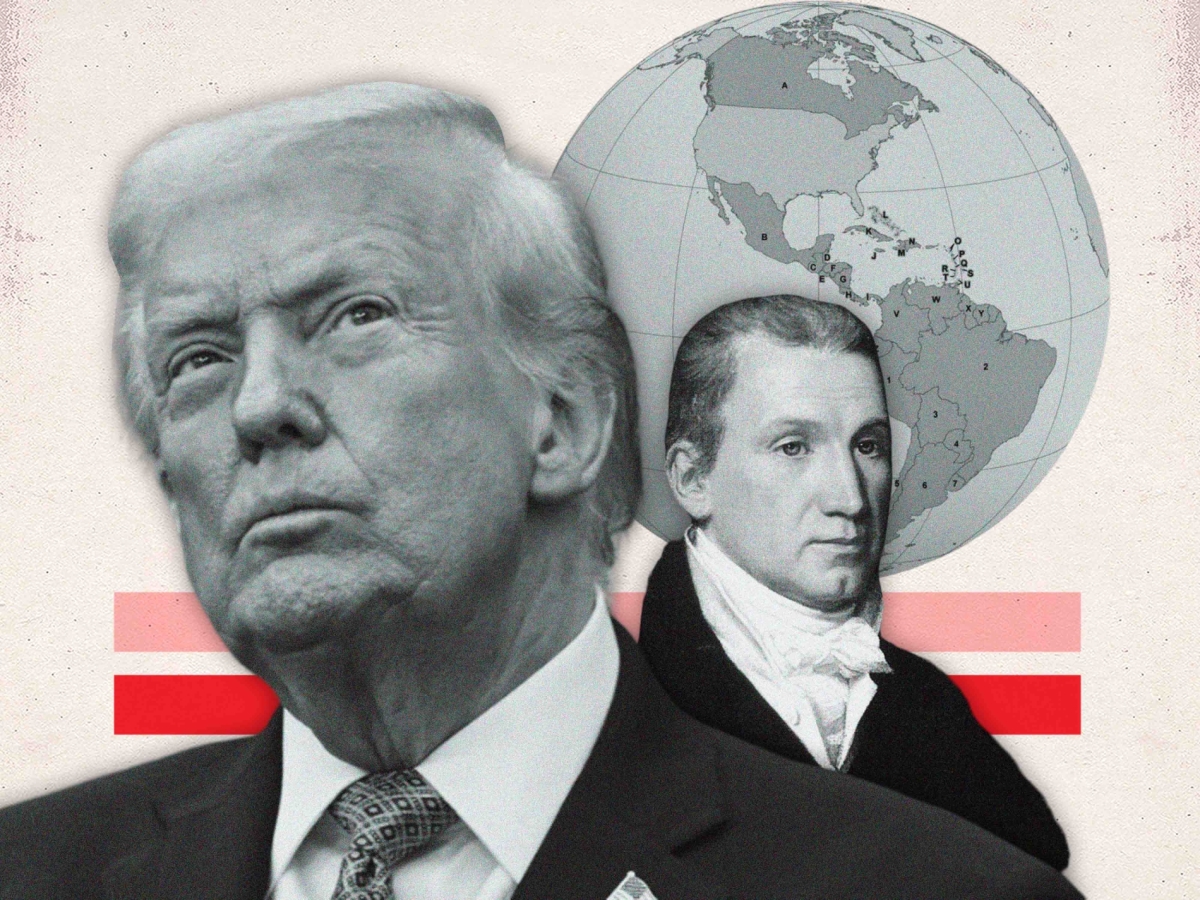
At the centre of this unease lies what commentators and some analysts have begun to refer to informally as the "Donroe Doctrine". The term, a blend of Donald and Monroe, was popularised by media outlets such as the New York Post in mid-2025 to describe President Trump’s assertive foreign policy posture toward the Americas, particularly following the US strike on Venezuela.
This is not a doctrine codified in law or articulated in official policy texts. Rather, it is a descriptive label used by journalists and analysts to capture a perceived shift in the United States regional behaviour. In common usage, the term signals an emphasis on hemispheric dominance, resistance to external influence from powers such as China, and a readiness to deploy coercive economic, legal and diplomatic tools.
The label draws on the legacy of the Monroe Doctrine of 1823, articulated by President James Monroe to oppose European colonial intervention in the hemisphere. Contemporary references to Donroe do not imply the emergence of a new legal rule. Instead, they frame an assertive reinterpretation of older spheres-of-influence ideas, shaping how sovereignty is experienced in practice rather than how it is defined in law. This distinction is key to understanding how legal debates have emerged around recent US actions.
From hemispheric doctrine to enforcement practice
International legal scholar Alonso Gurmendi Dunkelberg, a specialist in the law governing the use of force, does not engage with the Donroe label itself. His work instead examines the afterlife of the Monroe Doctrine in international legal argument, situating contemporary United States practice within broader debates over the unwilling or unable standard. This contested concept is used to justify extraterritorial action where a state is deemed incapable of addressing perceived security threats within its territory. Under such reasoning, sovereignty is no longer treated as absolute but becomes subject to external assessment and response.
This logic sits uneasily alongside Latin American legal traditions articulated by early jurists such as Alejandro Alvarez, an international lawyer and later judge at the Permanent Court of International Justice. Writing in the early 20th century, Alvarez argued that sovereign equality and non-intervention were foundational principles of regional international law, particularly for states exposed to the coercive power of stronger actors.
Taken together, the experiences of Cuba, Mexico and Colombia reveal how pressure directed at a single state can reorder an entire region
These ideas later crystallised in legal positions such as the Calvo Doctrine, which rejected diplomatic or military intervention before the exhaustion of domestic legal remedies, and the Montevideo Convention of 1933, which codified state equality and non-involvement as regional norms. Legal historian Frank Griffith Dawson documents how Latin American states repeatedly resisted attempts to subordinate sovereignty to external enforcement mechanisms, thereby shaping enduring contributions to international legal thought.
Seen in this light, contemporary debates around Donroe reflect not a new doctrine but a renewed tension between long-standing non-intervention principles and newer practices that condition political behaviour on external judgements of security, governance and alignment. This tension becomes visible when enforcement tools are applied to Venezuela.
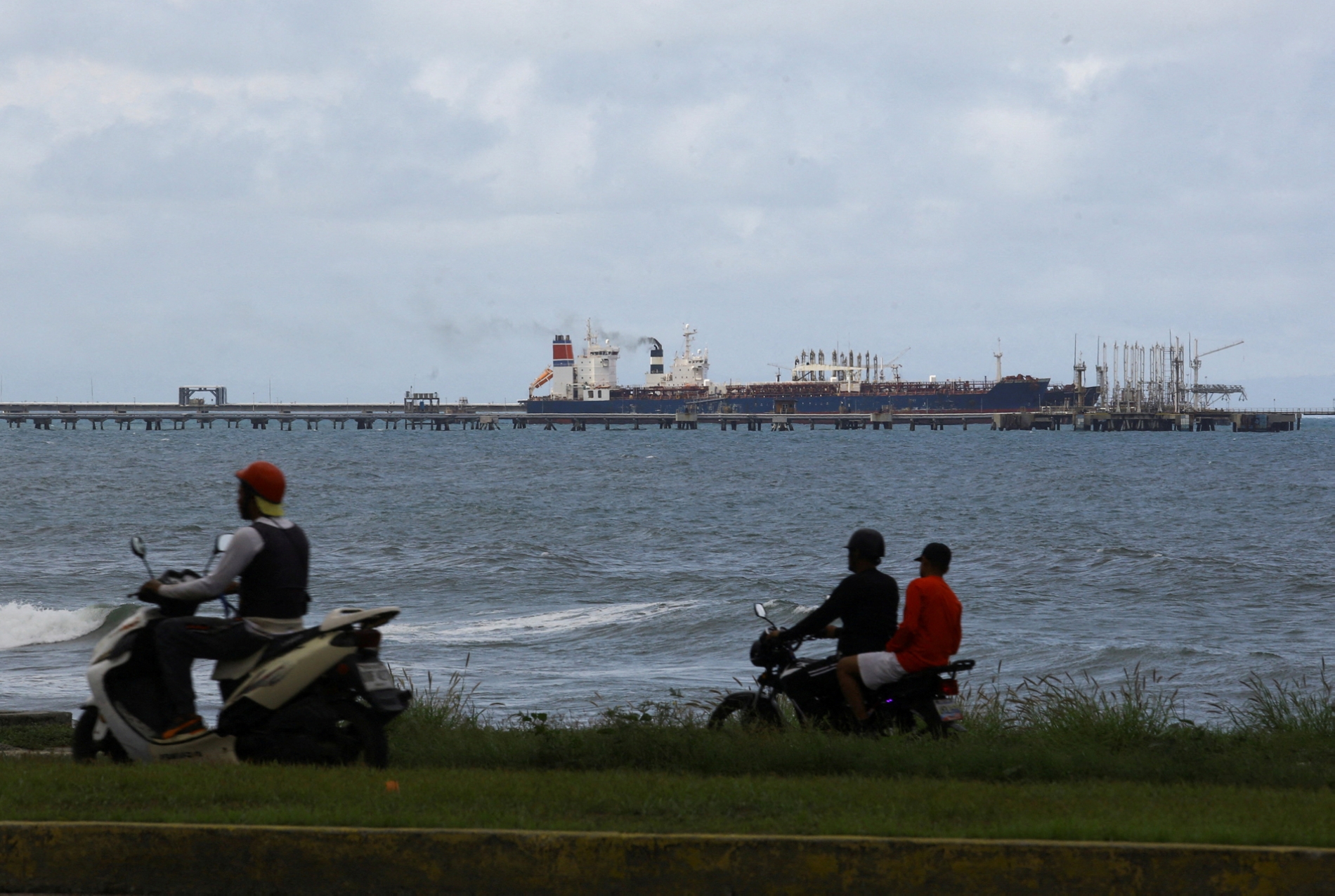
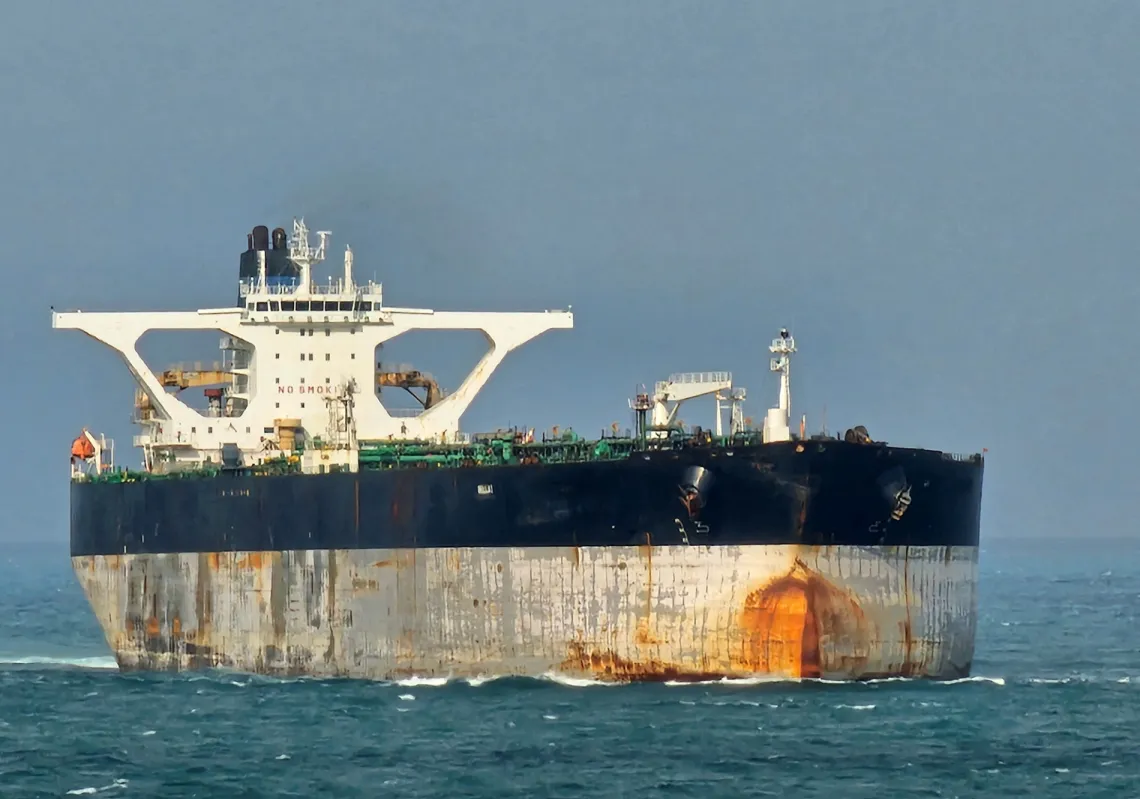
Huge ships transporting Venezuelan oil, which is subject to US sanctions, near the Venezuelan city of Puerto Cabello, on 29 December 2025.
Venezuela and the mechanics of contemporary coercion
Venezuela illustrates how enforcement-oriented pressure now operates in practice. Multiple sanctions regimes, asset seizures and extraterritorial measures have become central instruments through which political outcomes are pursued, regardless of how objectives are publicly framed. Legal scholar Stephen Townley argues that such practices blur the boundary between lawful coercion and unlawful interference, widening discretion while weakening accountability.
Crucially, pressure applied to Venezuela is not confined to its borders. Within what analysts describe as a Donroe-style approach, enforcement is intended to shape behaviour across a wider regional field. This spillover effect gives recent United States actions their broader hemispheric significance and helps explain why neighbouring states have become increasingly attentive to developments in Caracas.
Energy dependence and Cuba's exposure to regional pressure
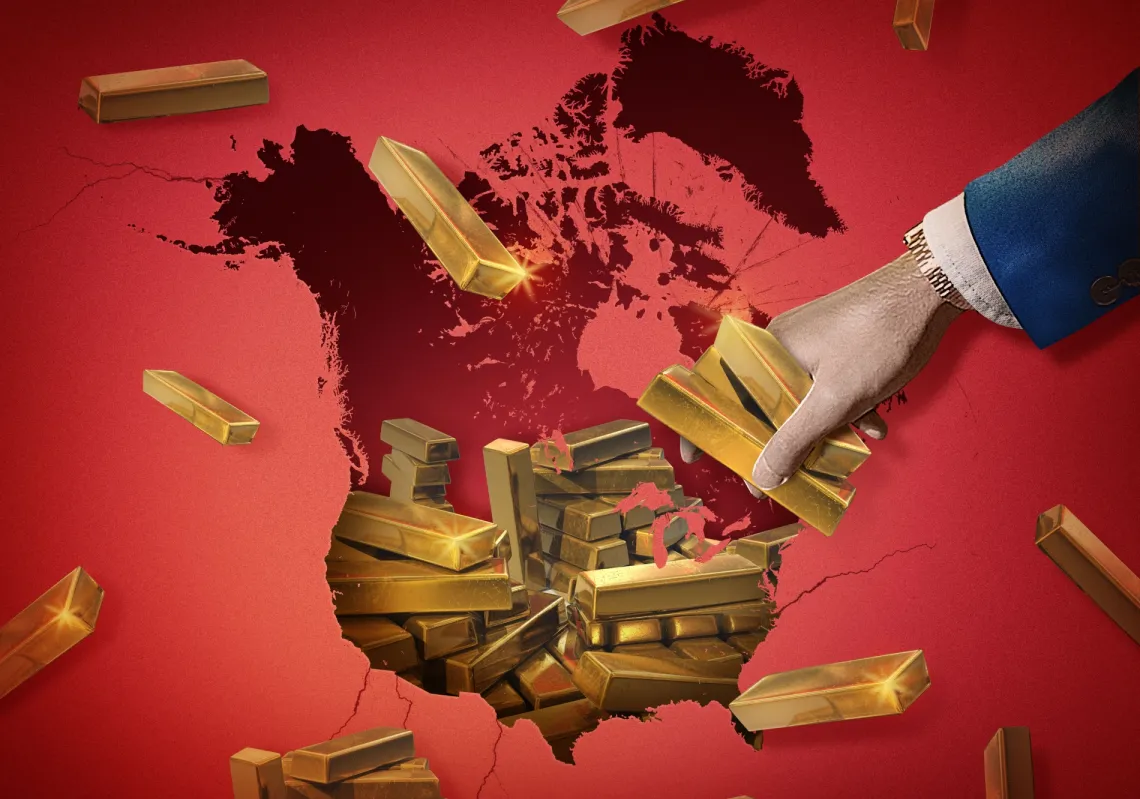
Cuba faces the most immediate and tangible exposure to pressure stemming from Venezuela's structural energy dependence. According to data published by the United States Energy Information Administration in 2022 and 2023, Venezuela historically supplied approximately 58% of Cuba's imported crude oil, with Mexico accounting for a further 31% in 2023. Despite modest diversification efforts, this configuration leaves Havana acutely vulnerable to disruptions in Venezuelan supply.
In an environment shaped by enforcement-driven policy, energy relations risk being reframed from commercial exchange into markers of political alignment. Pressure on Caracas to restrict exports would therefore extend beyond the intended target, functioning as indirect leverage over a third state whose economic stability remains closely tied to external energy flows.
US officials have hardened their rhetoric against Cuba in recent weeks.
"THERE WILL BE NO MORE OIL OR MONEY GOING TO CUBA – ZERO! I strongly suggest they make a deal, BEFORE IT IS TOO LATE," Trump posted on his Truth Social on Sunday, but did not elaborate on his suggested deal.
"Cuba lived, for many years, on large amounts of OIL and MONEY from Venezuela," Trump added.
For his part, US Senator Lindsey Graham said that Cuba's "days are numbered," following Maduro's seizure.
"Just wait for Cuba. Cuba is a communist dictatorship that has killed priests and nuns, they have preyed on their own people, their days are numbered," Graham told reporters Sunday on Air Force One while traveling with US President Donald Trump.
"We're going to wake up one day, I hope in 2026, in our backyard we're going to have allies in these countries doing business with America, not narco-terrorist dictators killing Americans," he added.
Any sustained interruption would deepen Cuba's existing economic fragility, converting legal and economic pressure applied to one government into humanitarian stress for another. This outcome sits uneasily with Latin American legal traditions that resist indirect forms of intervention. The Calvo tradition does not deny all external influence, but it rejects coercive practices that bypass domestic legal processes or impose extraterritorial pressure through economic constraint.
Cuba's position illustrates how conditional enforcement reverberates across borders, creating secondary effects that reshape regional relationships. It is this dynamic, where exposure varies by degree rather than kind, that becomes more complex in Mexico's case, where energy cooperation intersects with strategic alignment.
Mexico navigates stabilisation and strategic alignment
Mexico occupies a more ambiguous and deliberate position. Unlike Cuba, it does not face immediate material vulnerability, yet it is increasingly exposed to political and legal pressure generated by enforcement directed at Venezuela. Its growing role as a supplementary energy supplier highlights how economic cooperation can become entangled with expectations of strategic alignment.
Mexico's posture is shaped by long-standing constitutional commitments to non-intervention and diplomatic autonomy, as well as a dense strategic relationship with Washington. Cooperation with Caracas, whether in energy or regional diplomacy, therefore carries legal and normative significance beyond its economic value. What appears as regional stabilisation from one perspective may be interpreted externally as misalignment.
International relations scholars Max Paul Friedman and Tom Long describe this approach as soft balancing, whereby states seek to preserve autonomy through institutional positioning and legal principle rather than open confrontation. Under a Donroe-style logic, however, such manoeuvring becomes increasingly constrained, as neutrality itself is subject to external evaluation.
Mexico thus finds itself navigating competing expectations. Participation in regional energy stabilisation and diplomatic engagement risks being assessed through an enforcement-oriented lens that narrows policy discretion. While Mexico has publicly resisted external pressure and reaffirmed its commitment to non-intervention, the persistence of alignment-based expectations suggests that legal autonomy may face growing strain.
These dynamics mirror, in a different register, the pressures confronting Colombia. Where Bogotá encounters security alignment demands, Mexico faces diplomatic and legal ones. Together, they illustrate how enforcement-centred regional strategies generate differentiated but converging constraints on sovereignty.
Colombia and the narrowing of security autonomy
Colombia faces a related but distinct form of spillover from pressure applied to Venezuela. Rather than energy dependence, the central dynamic in Bogotá concerns security alignment and sovereign defence. In the wake of the United States operation that captured Venezuelan President Nicolás Maduro, Colombian leaders responded with explicit warnings about defending national territory against any foreign aggression, invoking the right to self-defence under international law.
President Gustavo Petro publicly rejected what he described as United States aggression and indicated that Colombia would defend itself if attacked. This response underscores how enforcement-centred rhetoric can trigger security reflexes that prioritise deterrence and readiness over diplomatic de-escalation.
When instability in Venezuela is framed as a transnational security threat, coordinated enforcement becomes the implied response. This places Colombia at the frontline of compliance expectations, particularly regarding border control, intelligence cooperation and migration management. At the same time, it strains Bogotá's commitments to negotiated peace processes and regional autonomy in security policy.
Colombia's posture may yield short term domestic political gains, particularly among constituencies sceptical of United States intervention. Yet it also risks narrowing diplomatic manoeuvrability and hardening bilateral divides. In seeking to uphold sovereignty, Colombia may find its room for mediation and legal flexibility increasingly constrained by the very dynamics it aims to resist.
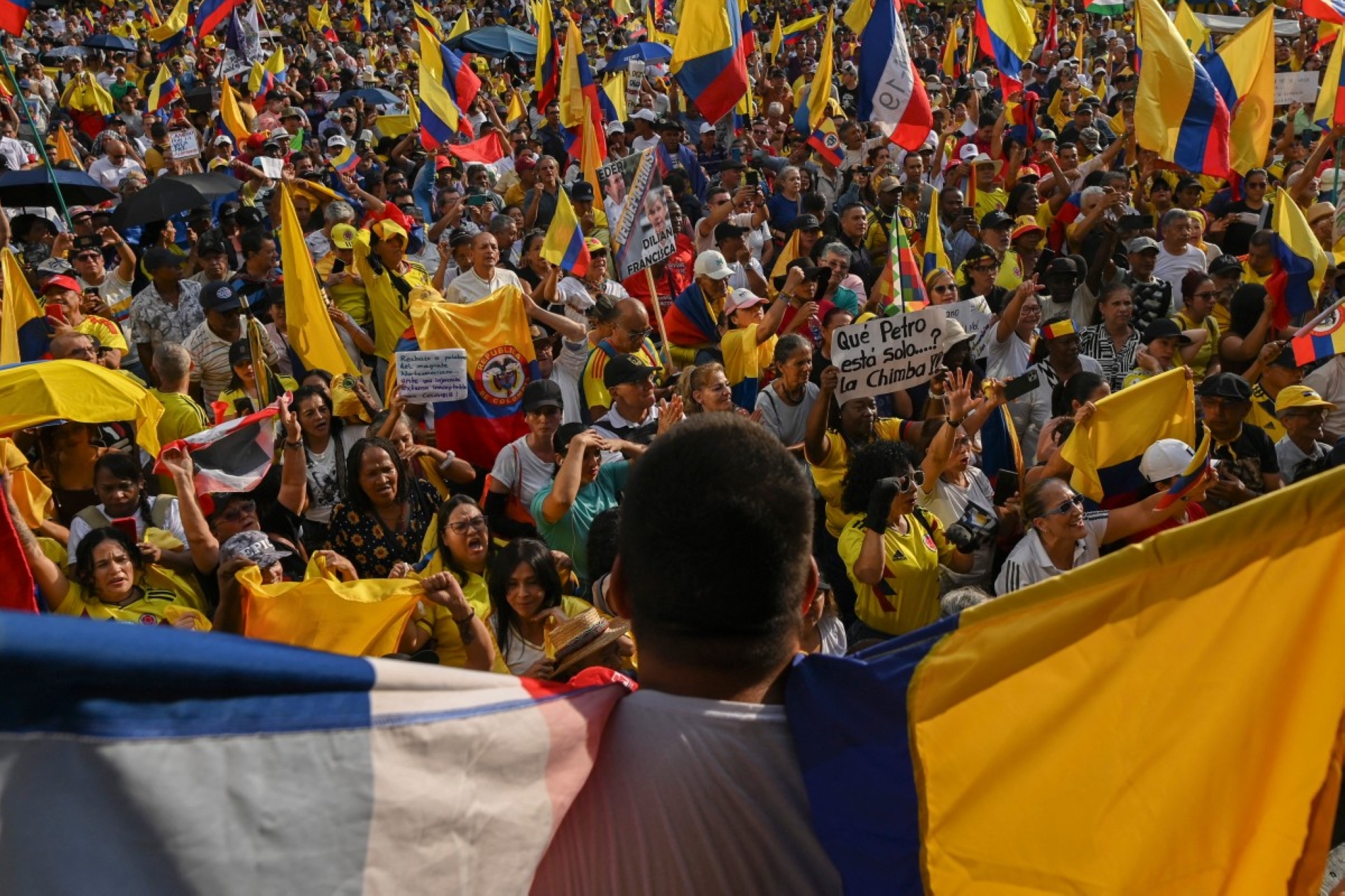
People hold Colombian flags during the March for Sovereignty and Democracy against US President Donald Trump's threats to Colombia's President Gustavo Petro in Cali, Colombia, on 7 January 2026.
Conditional sovereignty and its regional effects
Taken together, the experiences of Cuba, Mexico and Colombia reveal how pressure directed at a single state can reorder an entire region. Energy dependence, diplomatic autonomy and security policy become interconnected sites of assessment, where authority is no longer exercised solely through domestic institutions but increasingly measured against external expectations of alignment.
What is described as the Donroe Doctrine thus reflects not a revival of hemispheric order but a reconfiguration that prioritises compliance over consent. By embedding coercion within legal and administrative processes, it alters the relationship between law and power across the region. The risk is not only instability, but a gradual erosion of the legal confidence that underpins cooperation itself.
As enforcement expands, even pro-Western constituencies risk alienation, not through ideological opposition but through legal disillusionment. When authority is treated as conditional, trust weakens among allies as well as adversaries, undermining the normative foundations on which regional cooperation depends.
Whether this approach consolidates influence or accelerates fragmentation remains uncertain. What is clear is that pressure framed as law carries consequences far beyond its immediate targets, reshaping how authority, equality and autonomy are understood throughout the Americas.