After Maduro: what next for Venezuela?

The US could be secretly negotiating with elements in the government to take charge. The alternative is state and popular resistance, which sets the stage for more military action and insurgency.

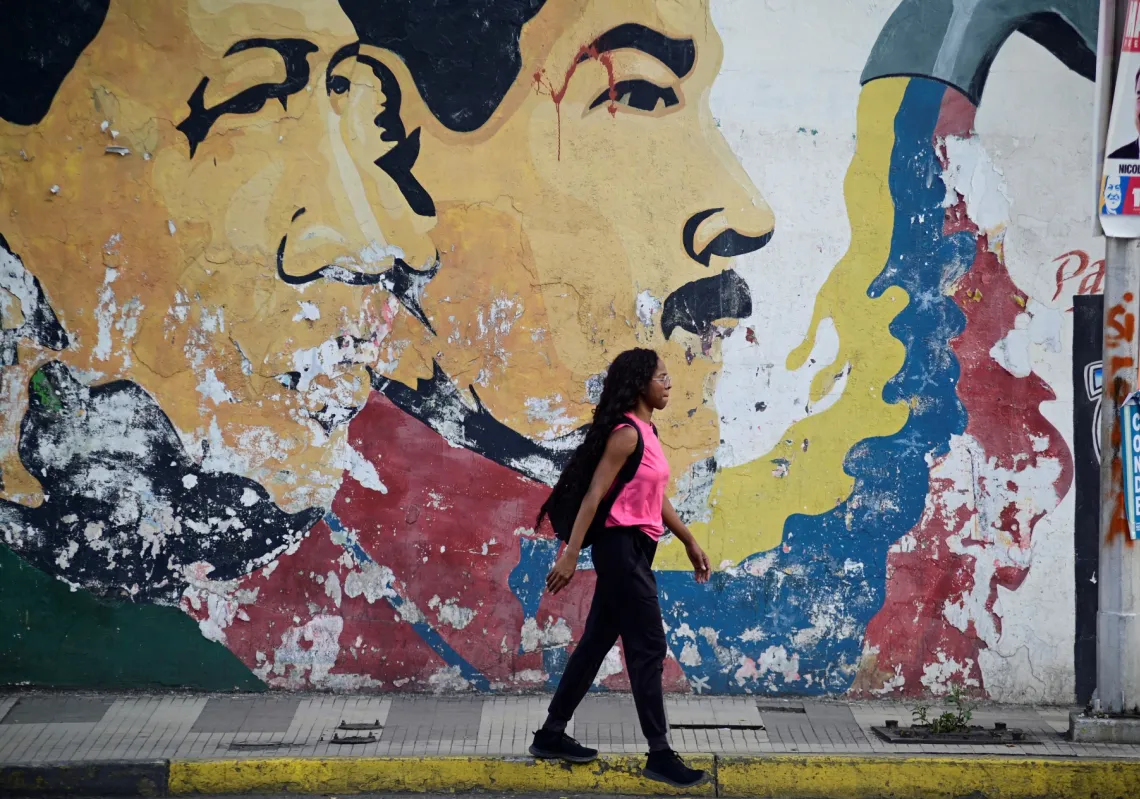
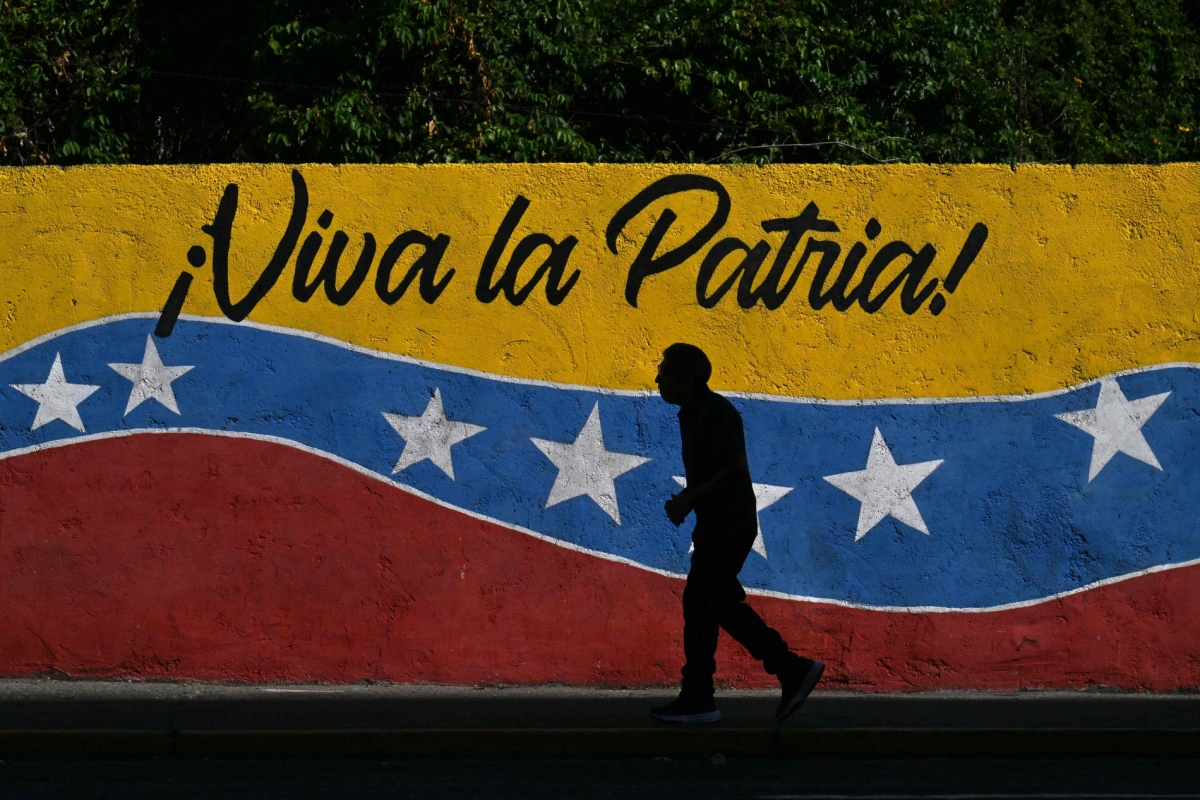
A man walks past a mural depicting the Venezuelan national flag and reading "Long live the motherland!" in Caracas on 4 January 2026, a day after Venezuela's president Nicolas Maduro was abducted by the US.
Juan BARRETO / AFP
A man walks past a mural depicting the Venezuelan national flag and reading "Long live the motherland!" in Caracas on 4 January 2026, a day after Venezuela's president Nicolas Maduro was abducted by the US.

After Maduro: what next for Venezuela?

In a clinically decisive military operation in Venezuela in the early hours of Saturday morning, US special forces quickly disabled communications in the capital, Caracas, and in the important military areas of Miranda and La Guaira, before entering the highly guarded compound in which President Nicolás Maduro and his wife, Cilia Flores, were sleeping.

The couple was apprehended before they could barricade themselves in a steel safe room. They were then taken by helicopter to a nearby US military vessel, before being transported by plane to New York City, where they will appear before a judge on charges relating to drug smuggling, according to an indictment issued by the US Department of Justice.

The indictment alleges that since 1999, Maduro and his associates have worked with international drug trafficking networks, including Mexico’s Sinaloa cartel and Los Zetas, traffickers in Colombia, and Venezuela’s Tren de Aragua gang, to ship narcotics to the United States. It also states that military elites enriched themselves by providing protection and logistical support to the smugglers.

Pressure to prosecution

According to the charges, Maduro routinely arranged diplomatic passports for leading drug traffickers while he was foreign minister from 2006-08, letting them move drug sale proceeds from Mexico to Venezuela on private aircraft under diplomatic cover. US investigators say Maduro and Flores helped traffic cocaine that had previously been seized by Venezuelan authorities, moving it through special state-backed groups.

It also claims that they ordered kidnappings, beatings, and killings of those who refused to pay for the drugs or sought to disrupt their operations. These allegations add to an earlier set of charges brought against Maduro and several of his aides in March 2020 during US President Donald Trump’s first term.

Maduro denied the accusations, and the US increased pressure on him, including by offering a large reward for any assistance leading to his capture. Venezuela’s Cartel de los Soles (Cartel of the Suns) was designated a terrorist organisation, while the International Criminal Court (ICC) began investigating allegations that Venezuelan authorities were guilty of torture, sexual violence, and arbitrary arrests.

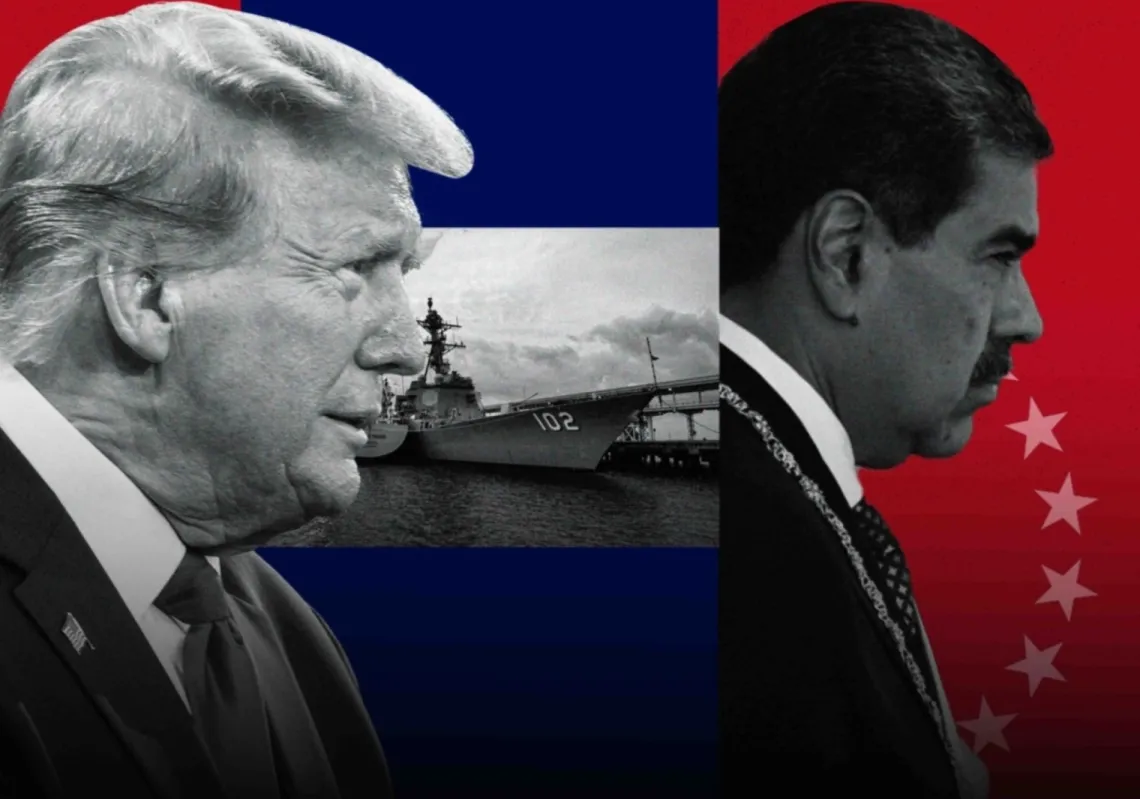
When the sword finally fell after weeks of military build-up off the Venezuelan coast, power to Caracas was cut as rapid and synchronised airstrikes targeted La Carlota Air Base and the army command at Fort Tiuna. A few hours later, Trump announced on social media that Maduro and his wife had been detained and exfiltrated from the country.

US intelligence agencies believe Flores is the financial mastermind who manages the overseas accounts for Cartel de los Soles—a network that includes military figures. By insisting that the operation was carried out with US law enforcement under a Justice Department narcoterrorism warrant, Trump said no formal Congressional mandate was required. Several lawmakers disagree, however, saying this was an ‘act of war’.

Clearing the way for oil

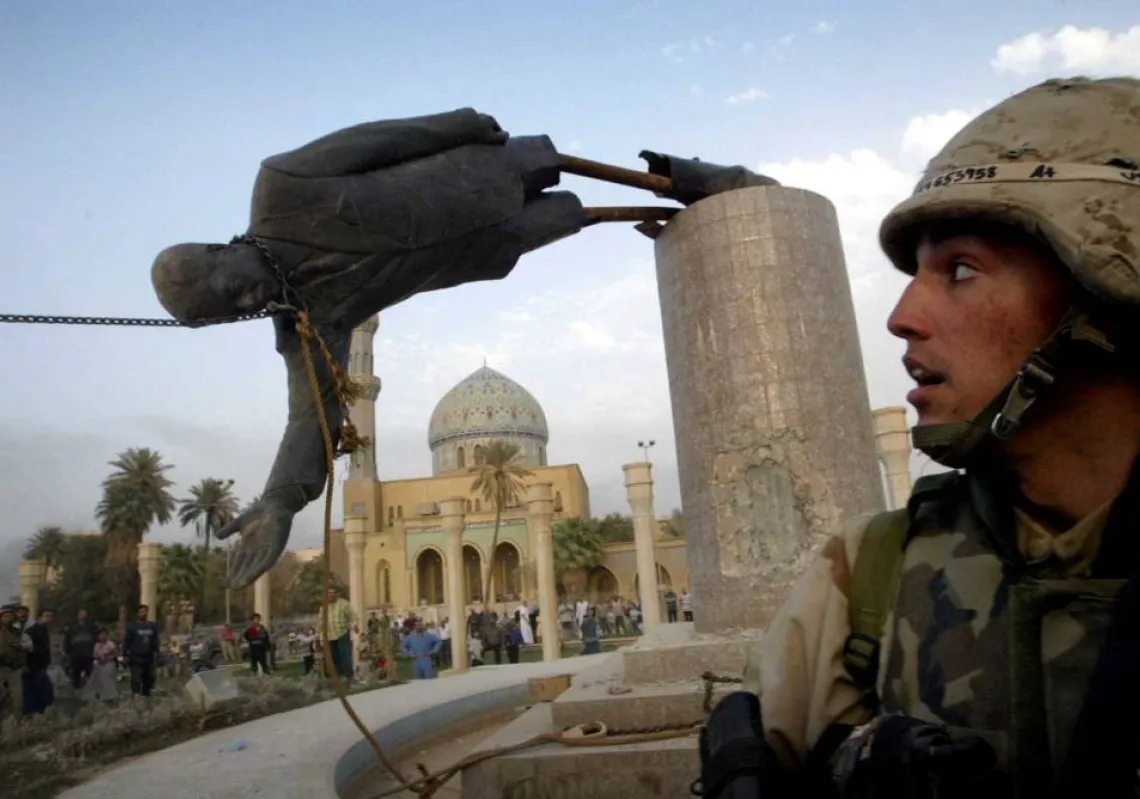
Unlike the 2003 US invasion of Iraq, which included large numbers of ground forces, the Caracas operation was limited to strikes on command and control sites and the presidential compound. It was presented as the culmination of a four-month US campaign that has included the bombing of small boats accused of smuggling, and latterly, the seizure of oil tankers transporting Venezuelan oil, after the US imposed a blockade. A day before the strikes, Maduro appeared on Venezuelan TV, accusing Washington of seeking to steal his country’s oil.

Chairman of the US Joint Chiefs of Staff Gen. Dan Caine said the operation was conducted under the cover of darkness and included nearly 150 aircraft launched from 20 air bases across the Western Hemisphere, some carrying members of a special recovery force that included law enforcement officers. These aircraft flew low over the water, protected by other aircraft, drones, and bombers, which disabled Venezuelan air defences, clearing a corridor for the helicopters heading to Maduro.

It also clears the way for the US to access the highly prized 55,000 sq. km. The Orinoco Belt, which crosses central Venezuela along the eastern section of the Orinoco River, is rich in extra-heavy crude oil. The belt is widely assumed to be the largest single hydrocarbon accumulation in the world, with more than one trillion barrels of oil, more than 300 billion barrels of which are thought to be recoverable.

Oil extraction in Venezuela peaked at around 3.5 million barrels per day (bpd) in the 1970s but has fallen steadily over the years, averaging only around 1.1 million bpd last year. Reasons cited include mismanagement and a lack of investment in the country’s oil infrastructure. US oil giants, including ExxonMobil and ConocoPhillips, were active in the country for years, until the oil industry was nationalised in the 2000s by Maduro’s popular socialist predecessor, Hugo Chávez.
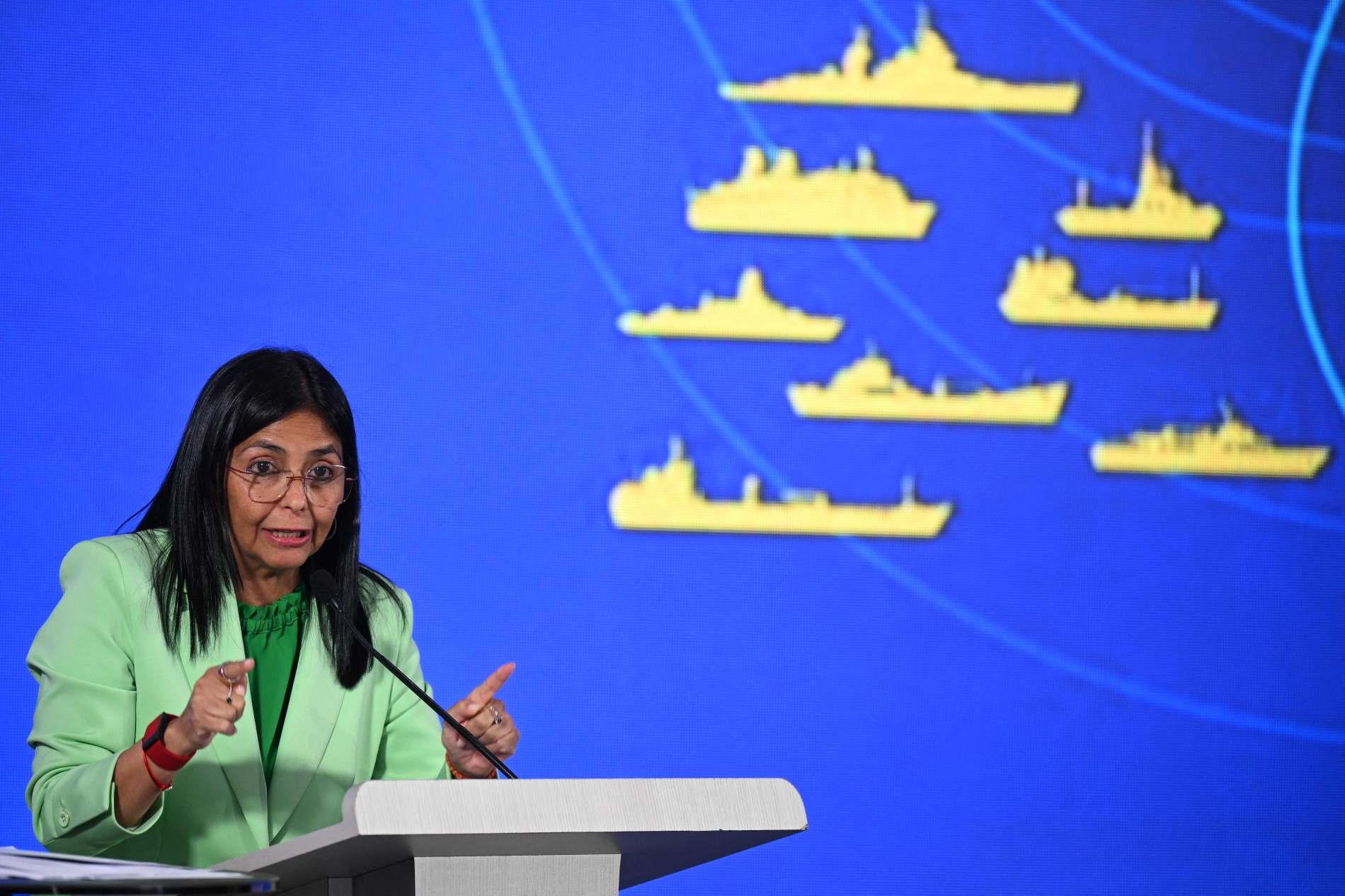
Rodríguez must now walk a tightrope to avoid giving the impression that she has betrayed Maduro, while at the same time avoiding the risk of defying Trump

Managing a hemisphere

With Maduro now in US custody, Venezuela is being run by the former vice-president Delcy Rodríguez, who was sworn in as interim president by the country's Supreme Court within hours of Maduro's capture being confirmed. At a press conference in Florida on 3 January, Trump said she had spoken to US Secretary of State Marco Rubio and was "essentially willing to do what we think is necessary to make Venezuela great again".

Trump added: "I think she was quite gracious... We can't take a chance that somebody else takes over Venezuela that doesn't have the good of the Venezuelan people in mind."

Many had expected him to side with opposition leader María Corina Machado, who recently won the Nobel Peace Prize and who has praised Trump in recent months (unlike Rodríguez). However, at the press conference, he appeared to rule that out, suggesting that Machado does not enjoy sufficient popularity to govern.

Taking questions, Trump said the US would "run" Venezuela on an interim basis and would essentially take over the country's oil industry, with American firms investing "billions of dollars". Rodríguez must now walk a tightrope to avoid giving the impression that she has betrayed Maduro, while at the same time avoiding the risk of defying Trump.

In her public address, she described Maduro's capture as "a terrible act that violated the law" and called for his return. Venezuela's defence and interior ministries are still being run by Maduro allies, but they may feel they now have limited time. While scant on details, Trump said a "team" would administer the country. 

Federico PARRA / AFP
Venezuela's Vice President Delcy Rodriguez speaks during a press conference in Caracas on 8 September 2025.

Monroe Doctrine

The broader picture for foreign policy analysts is Trump's central reference to the 1823 Monroe Doctrine. This holds that any intervention in the political affairs of the Americas by foreign powers is a potentially hostile act against the United States. "It was a big deal," said Trump. "It was very important, but we forgot about it. We don't forget about it anymore. Under our new National Security Strategy, American dominance in the Western Hemisphere will never be questioned again."

This places greater emphasis on Central and South America, with the focus now turning to states with whom Washington does not see eye-to-eye, such as Colombia and Cuba, whose left-wing leaders may feel they have been put on notice. Beyond America's near-abroad, the Venezuelan operation also sends strong international signals to Iran, Russia, and China, all of whom had an interest in Venezuela.

If US companies are to return to Venezuela to invest the billions that Trump spoke of, Washington will need to revise the sanctions on Caracas, including the ban on Venezuela's use of the SWIFT international payments system. If the US assumes control of Venezuela's oil resources, it remains unclear how exports and revenues will be handled. Some have suggested that oil sale proceeds could be placed in an escrow account that is then made accessible only to an elected government.

Reuters
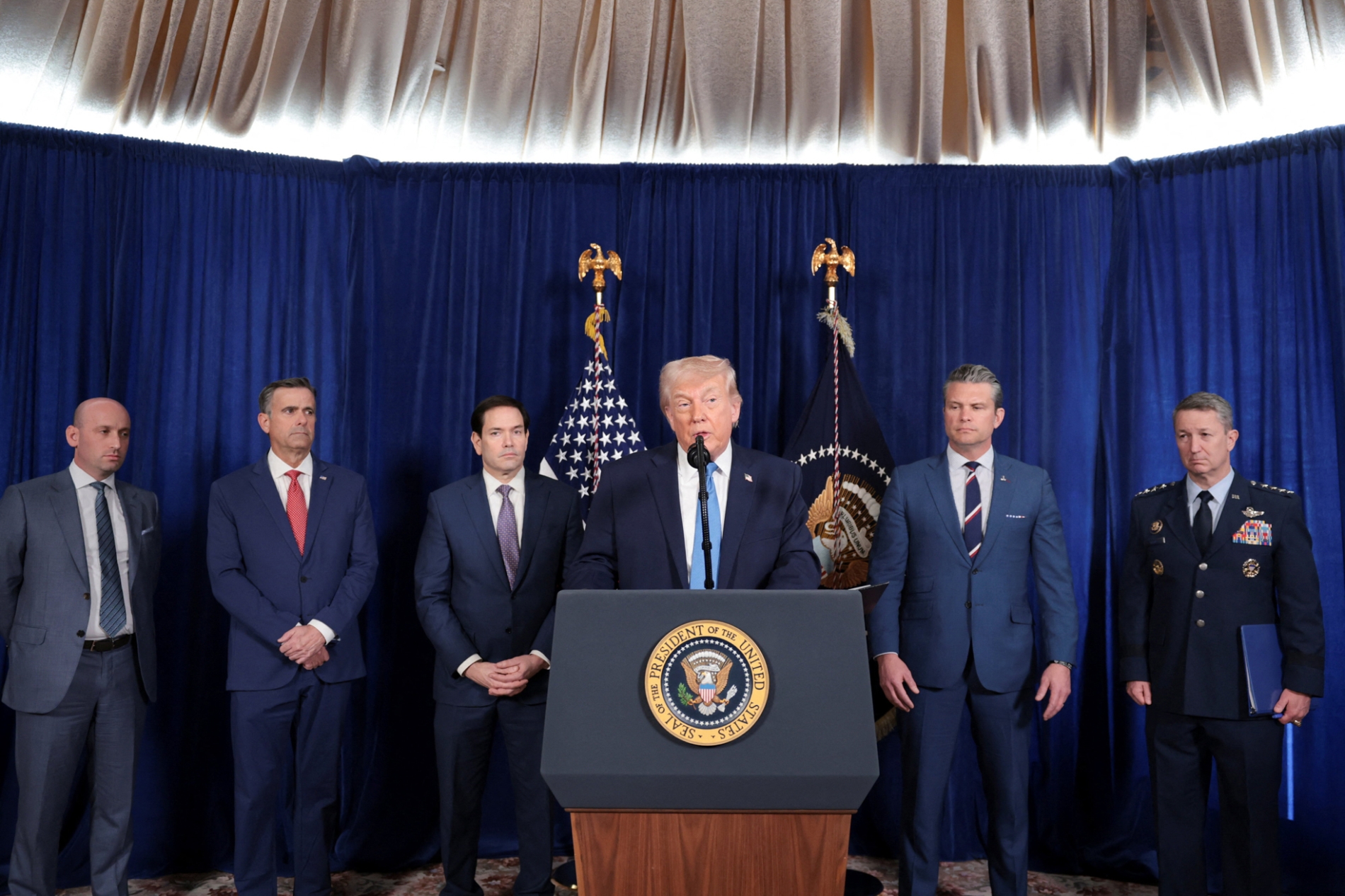
US President Donald Trump held a press conference with the Secretaries of Defence and State following the US strike that targeted Venezuela on 3 January 2026.

Reading the implications

For American allies in alliances such as NATO, recent US actions near Venezuela have been likened to acts of piracy. These, and the abduction of a serving head of state, would appear to be the final nail in the coffin of multilateralism and international law. The global order now appears to be an old-fashioned colonialism, with the strong preying on the weak, and with leaders who refuse to fall in line being taken in the dead of night.

The repercussions within Venezuela will be painful. Even if it can avoid the kind of systemic collapse, fragmentation, and disintegration seen in Iraq and Afghanistan, it will take many years for any benefits to filter down to the population. This therefore becomes a litmus test for the strategy of American primacy in the region, and whether it yields the kind of genuine strategic advantages Trump and his team will be hoping for, one of which may be for China and Russia to readjust their own strategies towards their allies.

For now, Trump's team may be betting that Maduro's capture causes panic and alarm within the Caracas establishment, with acolytes and apostles facing the prospect of their own prosecutions, just like Maduro and his wife. They may seek a negotiated safe exit, a limited amnesty, or exile in exchange for handing over power. The White House could be secretly negotiating with elements of the Venezuelan government to take charge. The alternative is state and popular resistance, which sets the stage for more US military action and insurgency.

font change