In an interview with Al Majalla, the senior US diplomat says that while the US may no longer play the role of world policeman, it is not isolationist either
TASOS KATOPODIS / AFP
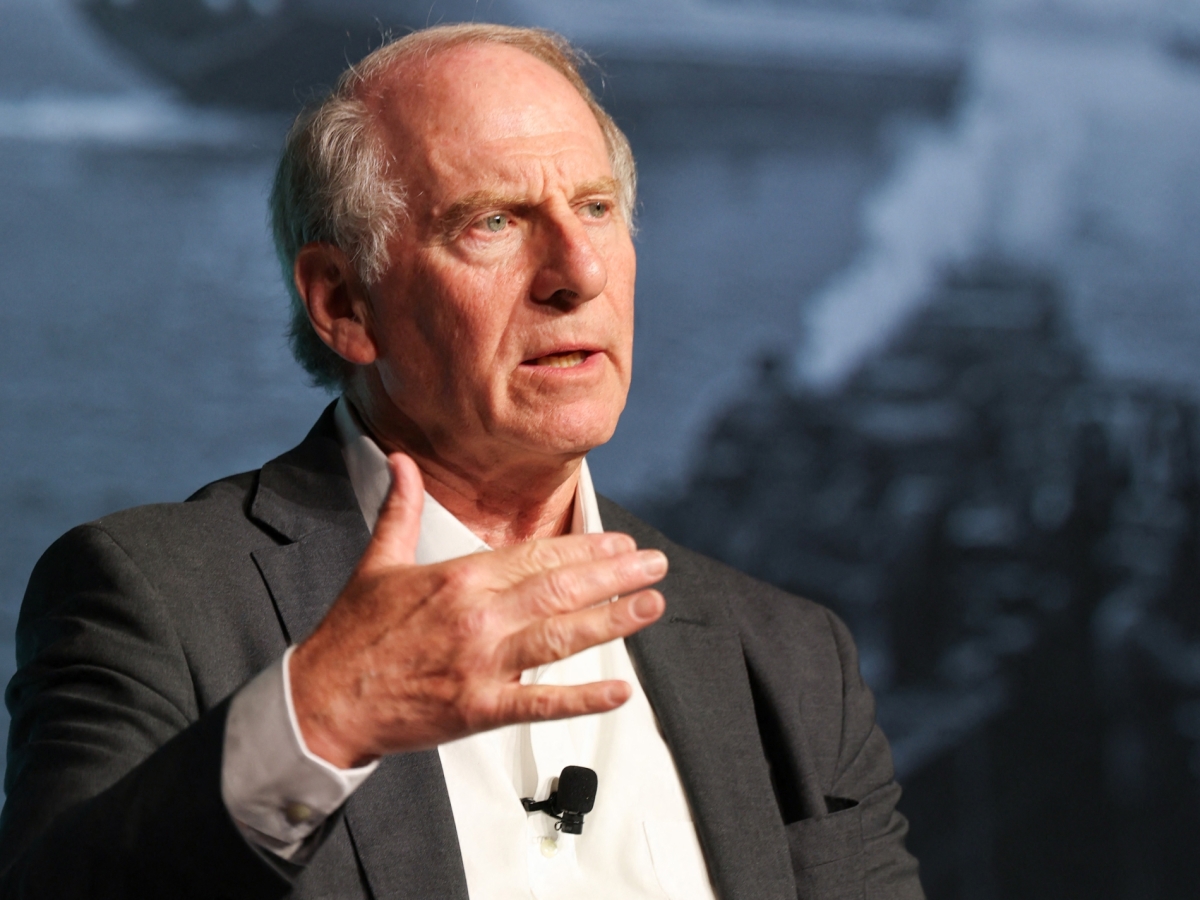
Richard N. Haass, Senior Counsellor, Centerview Partners, speaks onstage during the Reindustrialise Conference 2025 on 17 July 2025, in Detroit, Michigan.
For more than half a century, US diplomat Richard N. Haass has navigated Washington’s corridors of power, focusing on foreign policy. Today, he is an authoritative guide to America’s changing role in world affairs. Speaking to Al Majalla in mid-November about the changes in the Middle East over the past two years, he offered a diagnosis of a major inflexion point redefining America’s global identity, influence, principles, and strategy.
Haass is a good brain to pick. President of the Council on Foreign Relations until recently, he was also director of policy planning at the US State Department and a senior advisor to the then Secretary of State Colin Powell from 2001 to 2003, during which time he was also the US Special Envoy to Northern Ireland, where he contributed to the peace process, earning the State Department’s Distinguished Service Award.
In his analysis, Haass diverges from the familiar rhetoric of American decline or retreat, instead offering a more nuanced assessment of a historic repositioning. The United States may no longer play the role of world policeman, but according to Haass, it is not isolationist either. Still a formidable power, it is recalibrating its strategic compass, moving away from the expansive 80-year-old model of global engagement toward a more selective, economic, interest-based approach.
Shifting emphasis
At the heart of this transition is a striking reorientation toward the Western Hemisphere, aka ‘America’s backyard,’ including Latin America and the Caribbean, a policy development not seen for 200 years. For Haass, this shift does not necessarily entail abandoning the Middle East or Europe, but the world has changed: energy no longer drives engagement as it once did, and military intervention is no longer the default.
The emphasis has shifted toward economic cooperation, security containment, and calibrated crisis management, rather than transformational ambitions. Haass cautions that this carries risks. American hesitation and the lack of any coherent long-term strategy could invite instability, he says, citing the Palestinian issue as a case in point; a lack of US engagement could let Hamas resurface.
Haass's outlook isn't shaped by nostalgia but by concern for the future. The US is at a crossroads. It can either navigate the transition with wisdom through diplomacy, alliances, and a sober articulation of national interests, or risk the descent into a fragmented global order, in which spheres of influence proliferate, and the foundational norms of post-war international relations erode.
The US may no longer play the role of world policeman, but according to Haass, it is not isolationist either
US diplomat Richard N. Haass
Within this new paradigm, Latin America assumes critical importance as a proving ground for a reimagined American foreign policy. The question for Haass is whether Washington can effectively integrate its tools of influence—military, economic, and diplomatic—without reverting to outdated models of dominance. Can it compete with China and Russia while upholding its democratic ideals? Can it avoid overextending, as it did in Iraq, or compromising its principles?
Haass addresses these questions with measured restraint. He offers no definitive blueprint for the emerging world order. Rather, he emphasises that we are living through a moment in which the outlines of history are still being drawn. It seems clear that the era of near-unquestioned US primacy is at an end. As Haass says, what comes next remains to be seen.
His analysis of regional affairs offers insight into the thinking of one of America's foremost foreign policy minds, reflecting not only on the Middle East but also on the future of the United States itself. Haass portrays a nation no longer confident in its unchallenged power yet still influential—if it can read its historical moment clearly and strike a balance between its internal priorities and its global responsibilities.
Here is the interview in full:
A security-for-oil formula long governed the 80-year US-Saudi strategic alliance. Today, this equation is becoming increasingly outdated. Can they recalibrate their alliance?
The relationship has broadened. In many respects, it mirrors the transformation of Saudi Arabia itself, which is no longer built solely on energy. The US now produces vast quantities of (its own) gas and oil. While Saudi Arabia remains an important producer, it is no longer the swing supplier it once was, because the dynamics of global energy markets have changed. I believe both countries now see one another through a wider economic lens and a more comprehensive strategic perspective. The recent visit of Crown Prince Mohammed bin Salman to Washington came within this evolving context.
How do you view that visit?
The focus was on strengthening the bilateral relationship. The sale of advanced F‑35 aircraft and new security arrangements were part of the agenda, as were Saudi investments in the US, technology transfers, and US investments inside Saudi Arabia. Taken together, these developments reflect a relationship that is both expanding and deepening.
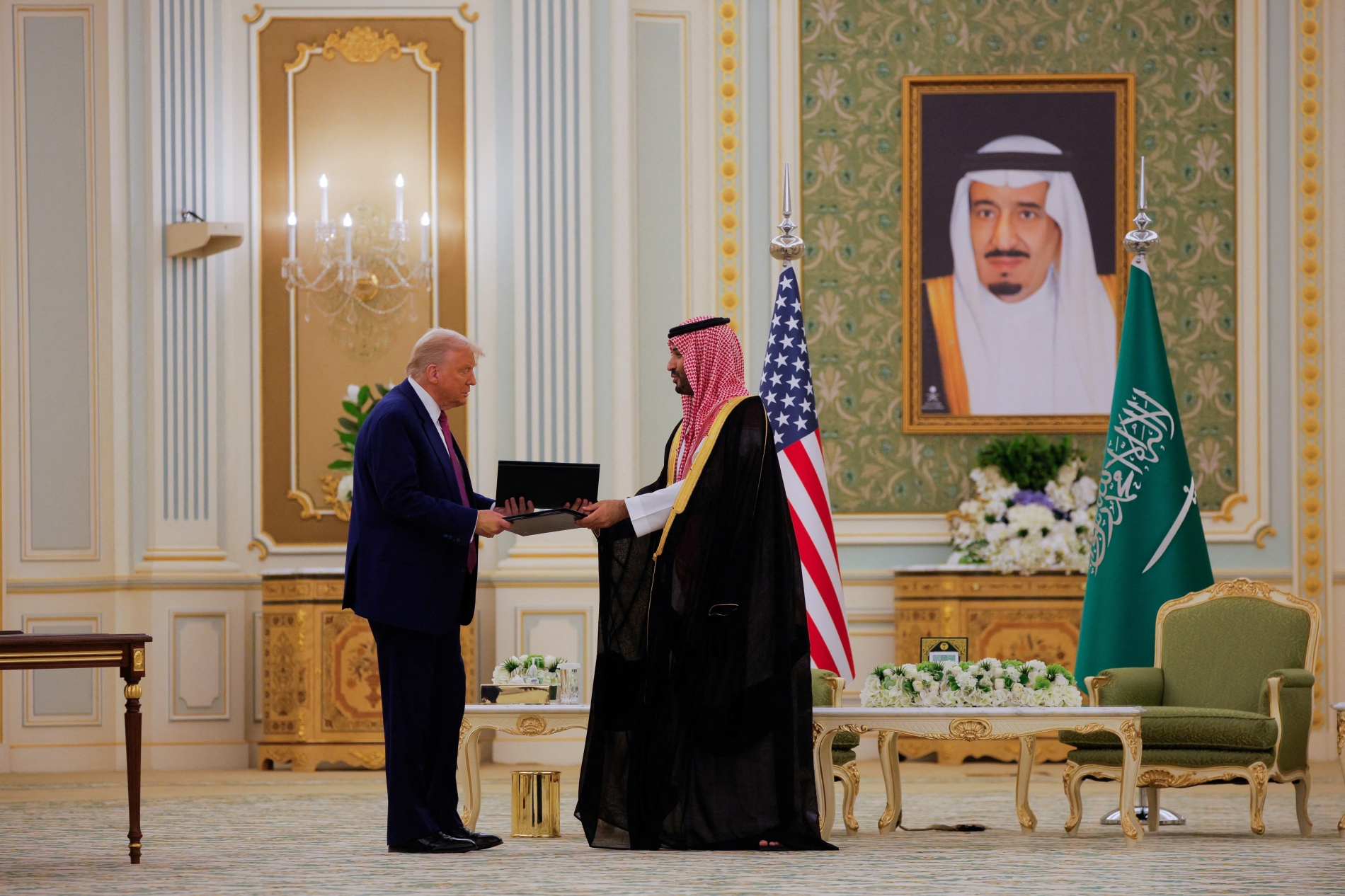
US President Donald Trump and Saudi Crown Prince and Prime Minister Mohammed Bin Salman exchange a Memorandum of Understanding (MOU) during a ceremony at the Royal Court in Riyadh, Saudi Arabia, on 13 May 2025.
From the Saudi side, it is part of what might be described as a 'Saudi First' policy, with a greater emphasis on domestic development and ties with the US, with less direct involvement in certain regional crises. Notably, this visit came shortly after the UN Security Council adopted the 20‑Point Plan for Gaza. Reports suggest that the Saudis are seeking to detach their future from the region's continual upheavals, to focus on their own security and development.
It remains an open question as to whether they will agree on Saudi participation in the Gaza plan. My reading is that, at this stage, Riyadh will not join a stabilisation force, nor will it contribute freely to Gaza's reconstruction. If past behaviour is any indication, the Saudis will want to see tangible progress toward establishing a Palestinian state before making any firm commitments.
Can Trump's 20-point Gaza peace plan actually be implemented?
You'd have to be an optimist. So far, we've seen the return of the hostages, the freeing of Palestinian prisoners, and a very uneasy, tenuous, incomplete ceasefire. To get beyond this will be difficult, particularly if it requires—quote—the "disarming of Hamas". I have some experience with the process of 'disarming'. I was the US Envoy for Northern Ireland. There, we called it 'decommissioning'. It's difficult to bring about and difficult to verify. I'm sceptical of Hamas's willingness to participate in a process of disarmament, I'm sceptical of any ability to verify it—if they claim they have—and I worry that not enough is being done to marginalise Hamas politically.
You'd have to be an optimist to think that the 20-point Gaza peace plan can be implemented
US diplomat Richard N. Haass
I think the idea that everything has to be done in the security realm before anything can be done in the political realm is a mistake. It needs to be done simultaneously, because the way to reduce Hamas's influence is not simply through militarily weakening them—that's happened. It's through showing that there's a better path to achieving their political goals, and that's a path through moderation, compromise, and diplomacy, rather than the path Hamas chose. But the approach of this agreement is more sequential than simultaneous. I hope I'm wrong, but I question whether it will go far.
What are the main differences between the two models, Gaza and Northern Ireland?
What was essential in Northern Ireland was that the British demonstrated that the paramilitary groups, principally the Provisional IRA (Irish Republican Army), could not shoot their way to power or achieve their goals through force. That was shown through the British police and military for more than three decades. Yet, at the same time, (the then Prime Minister) Tony Blair and (his chief-of-staff) Jonathan Powell introduced a diplomatic path, which led to the agreement in 1998 and provided a serious roadmap for Northern Ireland.
So, it was the combination of the two—frustrating those who want to use force, while opening a serious political diplomatic pathway. It wasn't going to give them everything they wanted as soon as they wanted it, but it gave them more than they would ever get by using force. We don't have an analogous situation in Gaza. So far, at least, the Israelis have the military dimension, but because of the physical nature of Gaza, I don't believe that it can accomplish as much as the British did in Northern Ireland.
More importantly, there has been no real introduction of a political or diplomatic component. If you look at the 20-point plan, talk about a Palestinian state is extremely vague. It raises more questions than it answers. Hamas is uninterested in a two-state outcome, as is the current Israeli government. So, the impediments to diplomatic progress in this situation are considerably greater than they were in Northern Ireland.
Recently, you wrote that establishing a Palestinian state is in Israel's interests. Why?
I wrote in Foreign Affairs recently that a properly conditioned Palestinian state that did not constitute a security threat to Israel would be good for Palestinians and Israelis. If Israel wants to have security, be a Jewish country, be a democracy, and have good relations with the West, it would benefit from there being a Palestinian state—or at least showing that Israel was not the impediment to a Palestinian state.
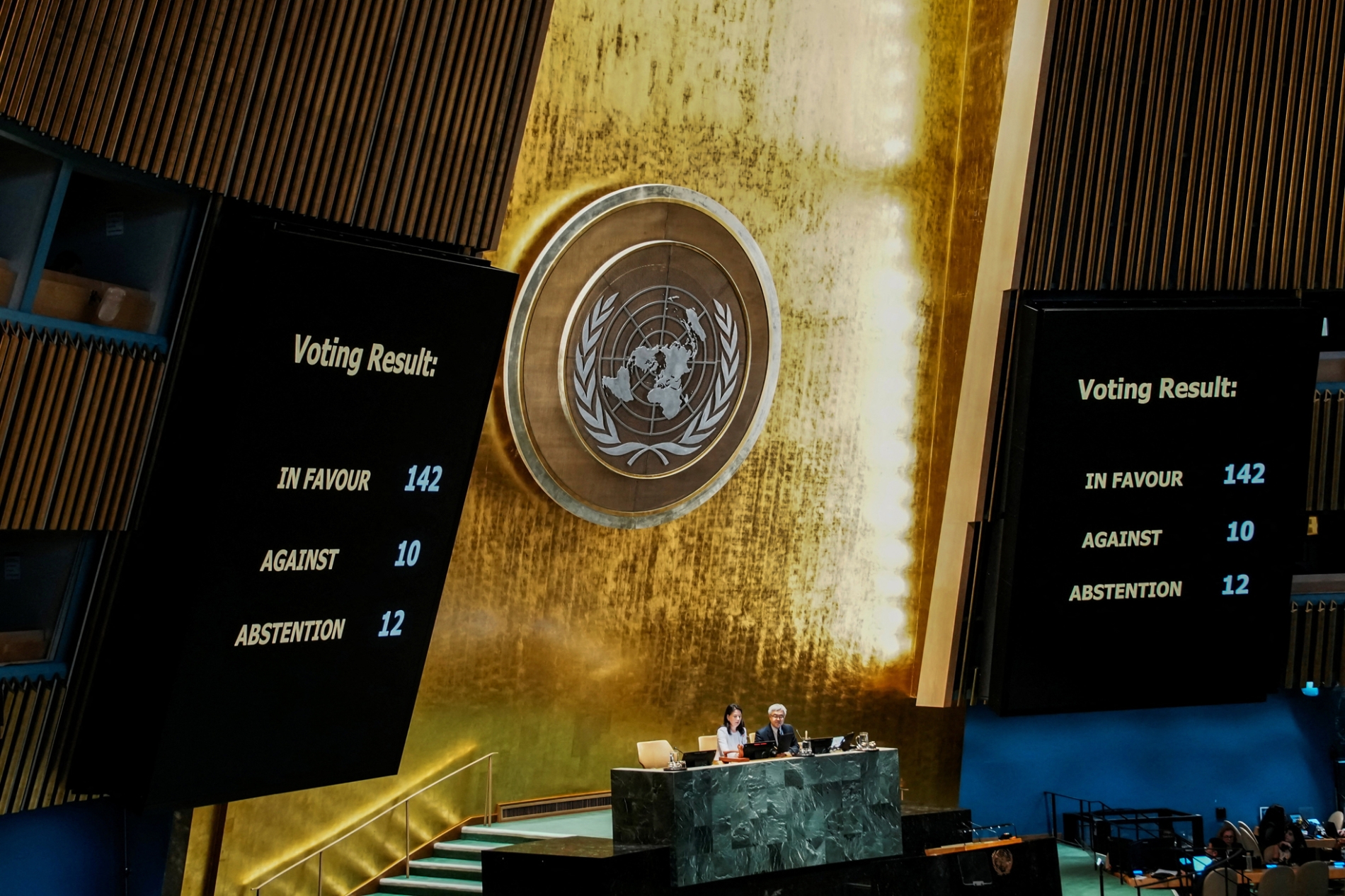
Screens show the number of votes as members of the United Nations General Assembly vote on the Palestinian issue and the implementation of the two-state solution, at the UN headquarters in New York on 12 September 2025.
The Palestinians had been given opportunities in the past and have kicked them away, so their own behaviour makes a Palestinian state impossible. But right now, it is the Israelis who are not checking that box. They're not putting forward a process that could lead to a Palestinian state. And again, if one wants Israel to be a secure, prosperous Jewish democracy embedded in the West, it has a far better chance of accomplishing that goal if there is a good-faith effort to create a Palestinian state.
That's the argument I made. I wanted to change the conversation. When people talk about a Palestinian state, you hear that it would be "good for Palestinians". It's almost portrayed as if Israel will have to pay a price. It'd be good for Israelis, too, if the (Palestinian) state were properly conditioned. Time will tell if my suggestion enters the conversation more broadly. My guess is that in Israel, after the election next year, there'll be more of a conversation about some of these issues.
To what extent did the October 7 change the Middle East?
The Hamas attack on Israel changed the Middle East largely because of Israel's response to it. It seriously hardened Israeli opinion about Palestinians. But what has happened since is strategically the most significant. The past two years have been the most important two years in the Middle East since 1967 or 1948.
Look at what's happened in Syria, look at the weakening of Hezbollah and of Hamas, and of Iran. This has been a truly historic two years. It's changed the geopolitical map of the region in Israel's favour. It's weakened the hand of Iran and its proxies, exposing the limits of Iranian power. It's created opportunities for others, such as Türkiye, to increase their power. But the principal beneficiary is Israel. But going forward, will they capitalise on this advantage or squander it? Time will tell.
From Washington's standpoint, what is the best way to benefit from this strategic shift in the Middle East?
By continuing to normalise relations between Israel and its neighbours. But I don't see additional normalisation, without significant progress being made on the Palestinian front, both in Gaza and the West Bank, so the principal way to take advantage of this is to emphasise diplomacy right now. We talked about the 20-point plan. My concern about it is that it is too sequential. Security first, then diplomatic…it's too vague. I don't believe this Israeli government is politically prepared to take advantage of this opening.
Will the US play a larger role? I don't know if it's prepared to. A lot more would have to be done to flesh out the ideas about what is a fair, reasonable, desirable settlement. It would mean discouraging the expansion of (Israeli) settlements. Again, I don't believe that this Israeli government is prepared to take advantage of the opportunities that have been created.
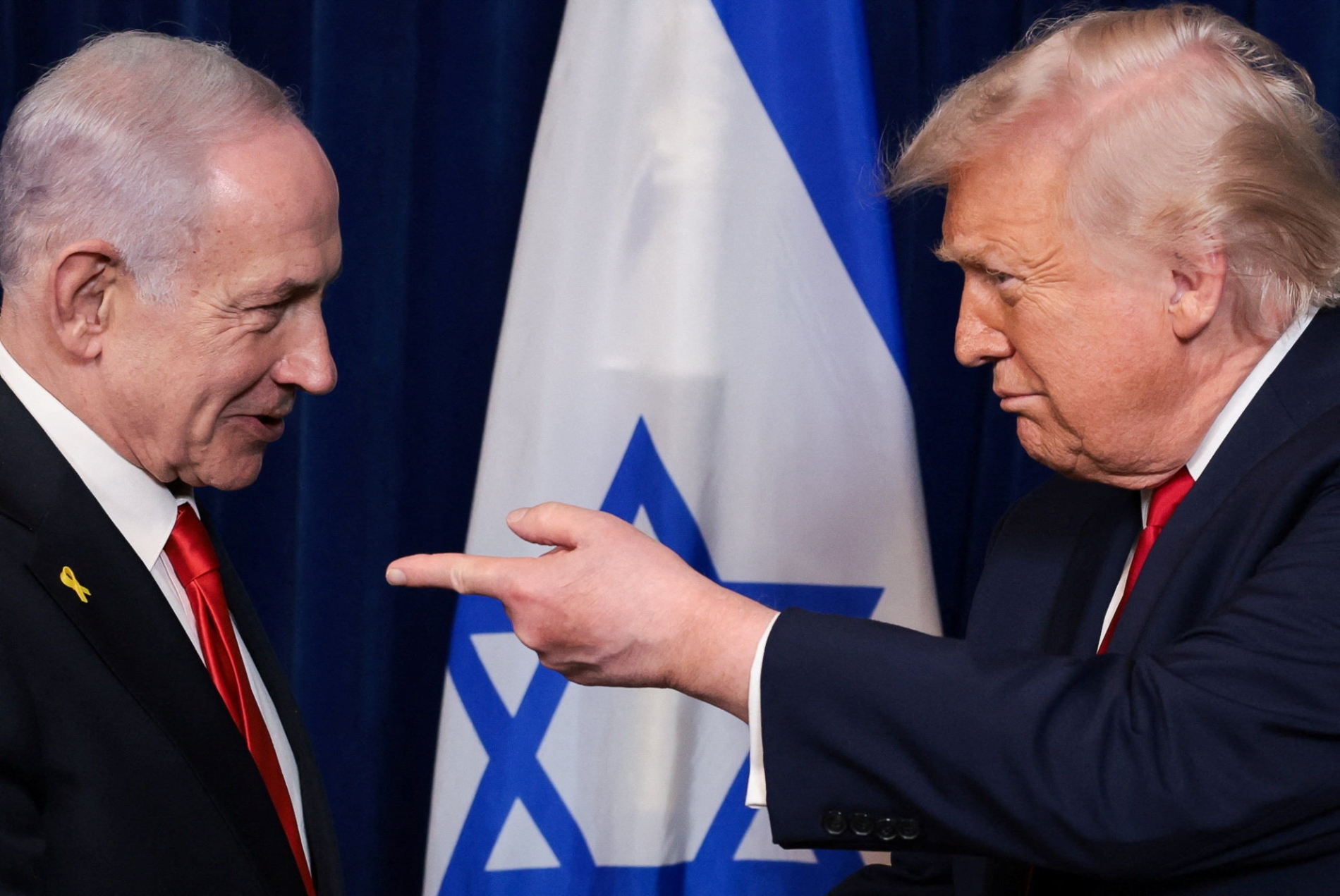
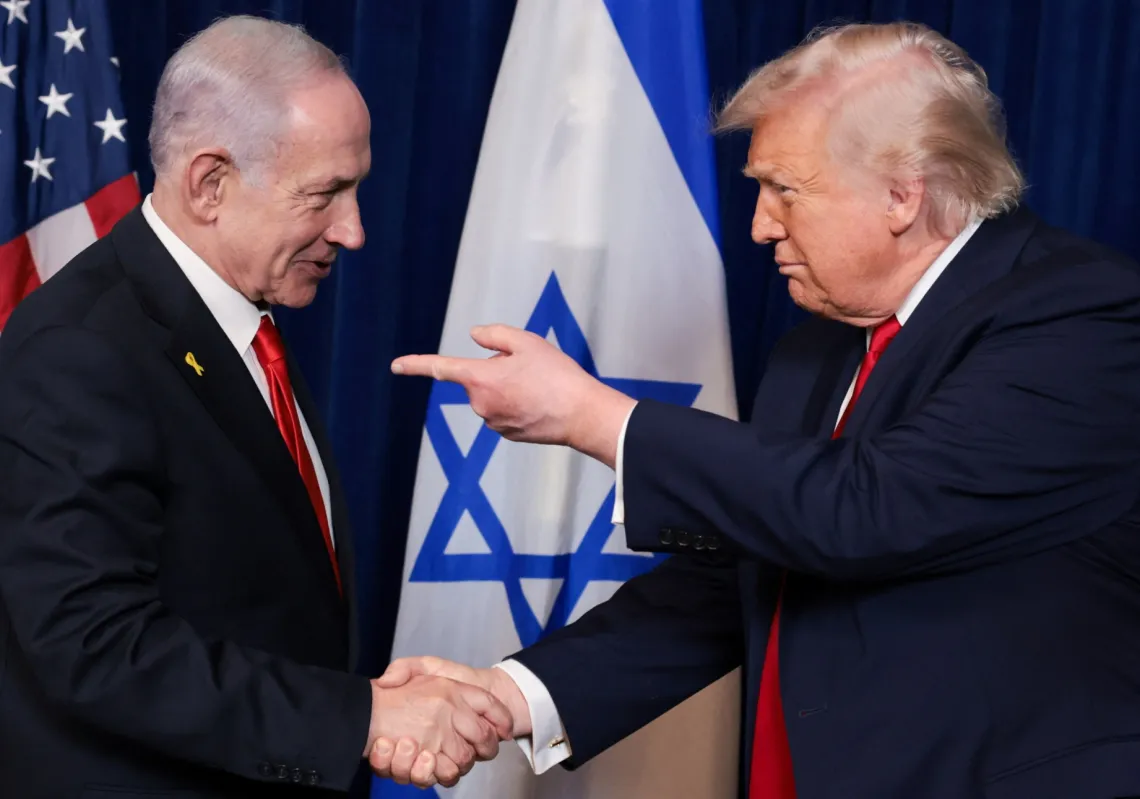
US President Donald Trump points his finger towards Israeli Prime Minister Benjamin Netanyahu during a press conference after meeting at Trump's Mar-a-Lago club in Palm Beach, Florida, on 29 December 2025.
It is now up to the United States. It's an open question about the scale of the ambitions the US will pursue, but it's a bit like riding a bicycle: if you don't pedal forward, you roll backwards. This may involve Hamas restrengthening and reconstituting, while Israel drifts even further to the right. To use a different metaphor, windows don't stay open forever. The last two years opened a window, and my view is that we should take advantage of it.
You've talked about a weakened Iran. In your view, what was more damaging to Tehran, the collapse of the Assad regime or the weakening of Hezbollah?
I think the latter. For 50 years, the Assad regime was a reality that Israel had largely learned to coexist with. There were certain rules of the road, certain understandings. A kind of 'modus vivendi' had developed between the two. Hezbollah was a much bigger strategic problem for Israel. It tied down a large part of the Israeli military, and because of all the rockets it possessed, it allowed Iran to deter Israel from doing certain things against Iran itself. By severely weakening Hezbollah, Israel came close to eliminating the principal instrument of Iranian foreign policy against Israel. This was a truly critical, historic development.
That was one of two big developments. The other was exposing the weakness of Iran itself. Iran could not defend its own territory. Israel could act with considerable freedom, and of course, its nuclear programme has now been pushed back. The debate now is about how best to capitalise on it.
One element of the debate is about the potential for regime change or systemic change there. I would like to see it, but I'm sceptical. The other concerns the nuclear programme, which has been set back significantly, but not eliminated. I haven't seen evidence, but my bet is that Iranians conclude that the events of 2025 might not have happened had they had a strong nuclear weapons capability.
So, the North Korea model?
Absolutely. My guess is that Iran will now go to great lengths to reconstitute a nuclear weapons programme, that they will do it in a way that we don't learn about it, and in a way that US or Israeli military forces cannot reach it, whether deep underground, or at undisclosed locations, no cooperation whatsoever with the IAEA (International Atomic Energy Agency). It won't happen immediately; we're talking years, but one has to think in years when it comes to national security and foreign policy. That is my concern.
The past two years have been the most important two years in the Middle East since 1967 or 1948.
US diplomat Richard N. Haass
It's an interesting foreign policy issue: whether we should be prepared to talk to Iran in an effort to prevent the re-emergence of a nuclear weapons programme, about what we might offer Iran in exchange, such as sanctions relief and so forth. I haven't thought that through, but I'd worry about US/Israeli foreign policy that leaves all the initiative to Iran.
Yes, Iran has been shown to be weak, but I don't want to wake up in 5-10 years' time to find that it has reconstituted a nuclear programme. My instinct—and again, I've not thoroughly thought this through—is to design a diplomatic initiative with Iran that essentially says 'we're open to a limited economic relationship with you, but here's what we require on the nuclear front that can be verified by the IAEA'. In principle, I'd be open to such a conversation.
Are you happy with how US diplomacy is being conducted in the Middle East?
Am I happy? I'm rarely happy! I wake up in the morning, and I worry! But I applaud the role the United States played in finally bringing a ceasefire in Gaza. I'm concerned about the structure of the 20-point plan and have questions about how prepared the administration is to follow up on it. Left to its own devices, it's not going to succeed.
More broadly, it's not clear where the Middle East fits in American national security. There are three or four principal theatres or regions in the world: Asia-Pacific, Europe, the Middle East, and Latin America. Yes, this administration has been somewhat involved in the Middle East, such as joining in the attack on Iran and the diplomacy over Gaza, but there are real questions about what comes next.
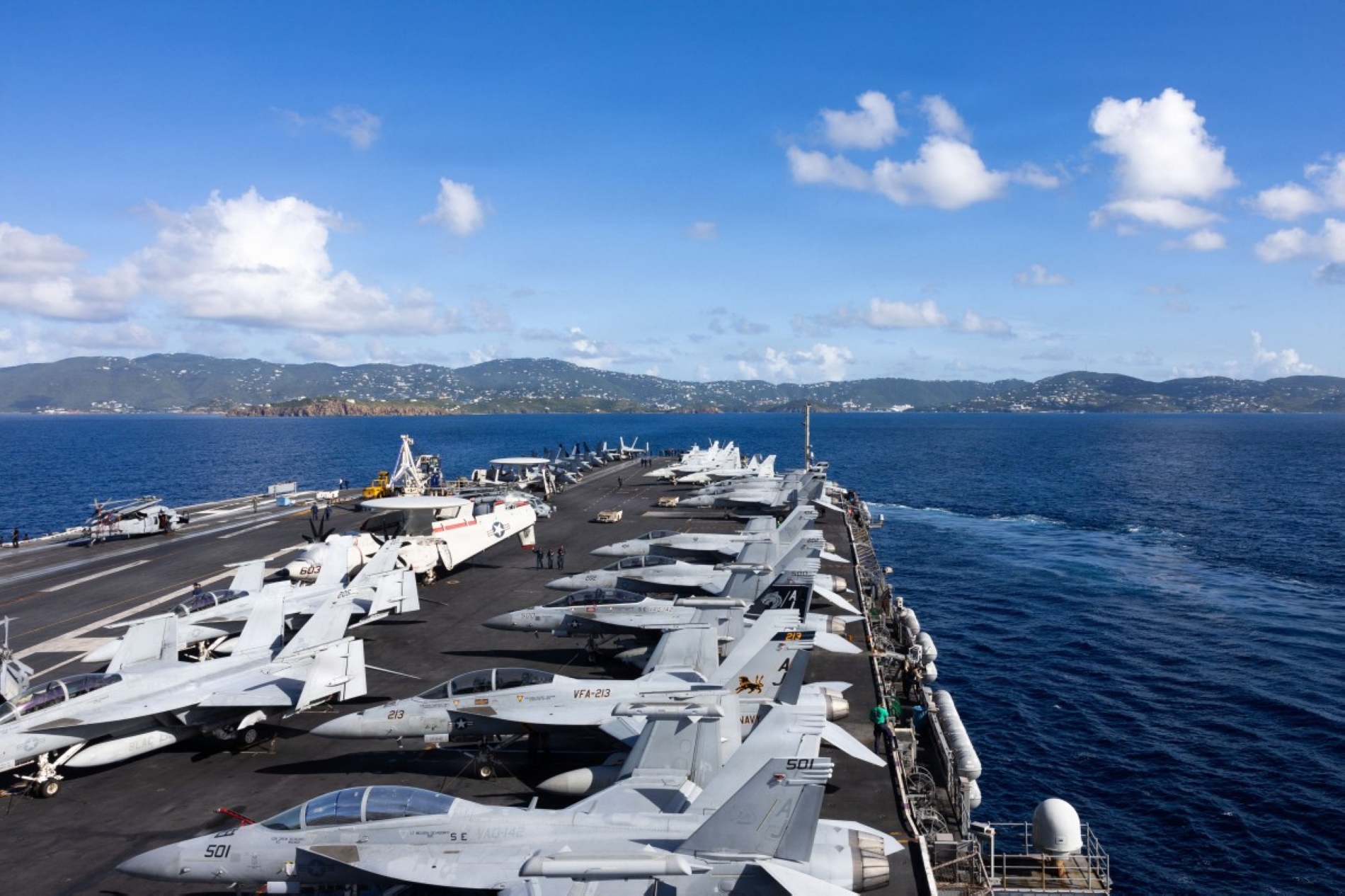
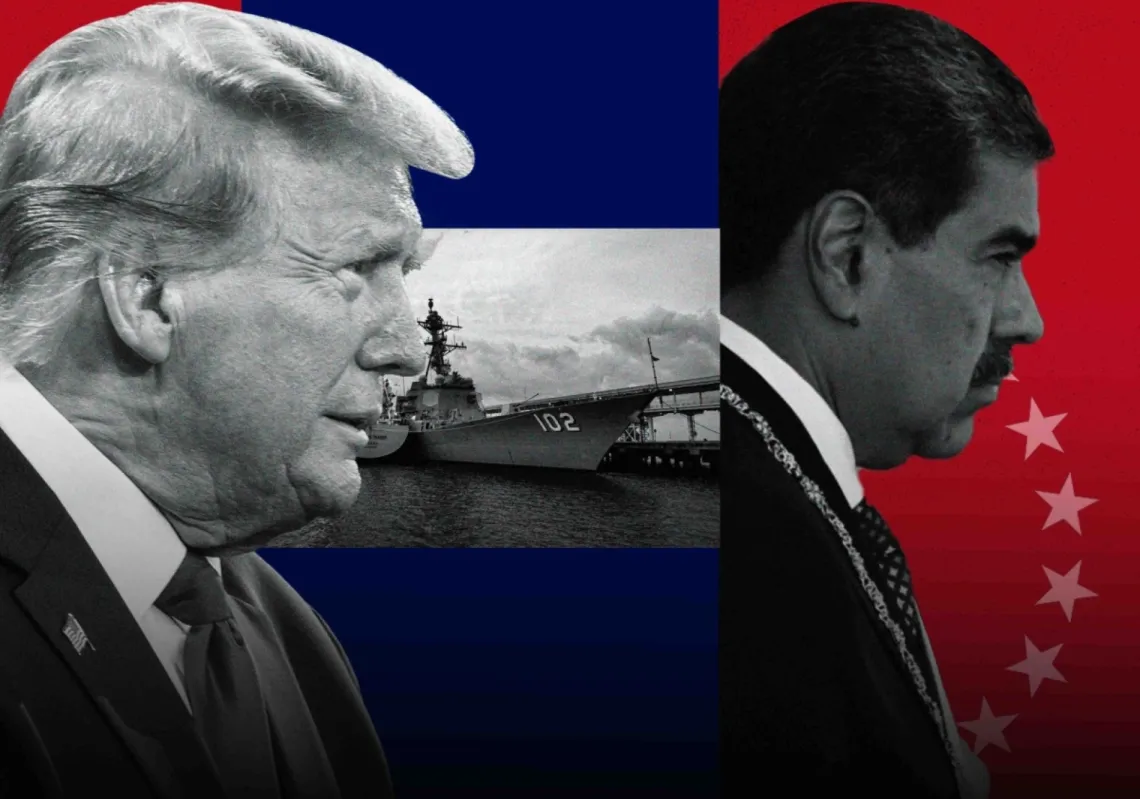
In the meantime, we've pulled back from Europe, there are questions about what we're prepared to do in Asia, and there's a much greater emphasis on the Western Hemisphere, with an aircraft carrier and 15,000 US troops near Venezuela, so America's approach to the world is clearly evolving. It's not obvious how much attention the Middle East will get, whether military, diplomatic, or economic. What we seem to be seeing is a greater emphasis on the economic. It's an open question as to what the US is prepared to do militarily or diplomatically down the road.
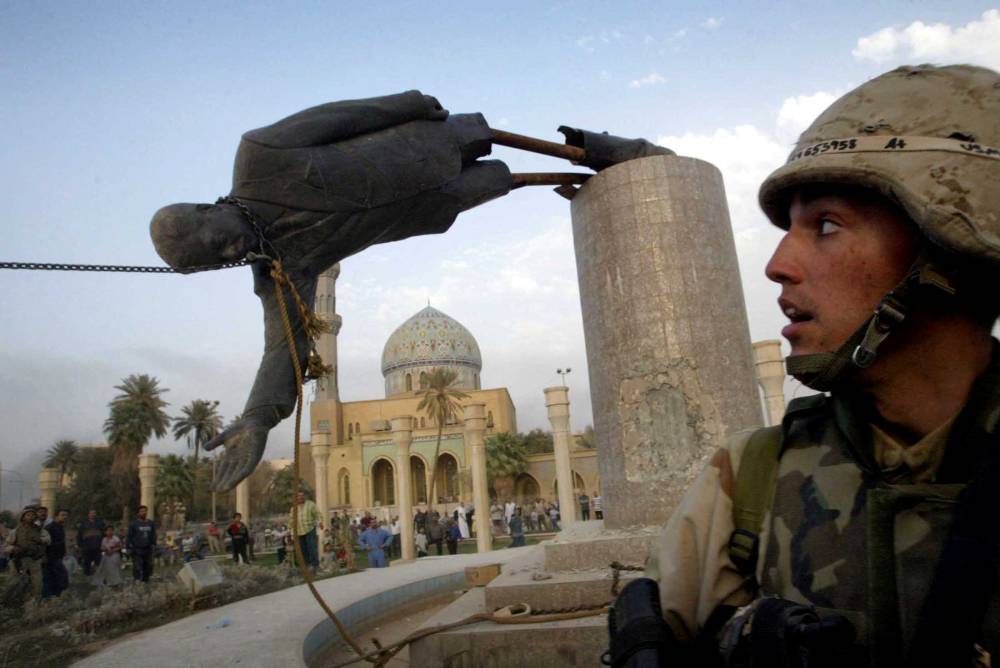
A US soldier watches as a statue of Iraq's President Saddam Hussein falls in central Baghdad's Firdaus Square, in this file photo from 9 April 2003.
The US has been involved in the Middle East for the last 25 years in wars, not least with the invasion of Iraq. Are you satisfied with America's legacy in the region?
No. I thought then—and think now—that the 2003 Iraq war was a historic error. It was an unfortunate war of choice and a textbook example of American overreach that, in some ways, destabilised the region. It was also very helpful to Iran and soured a lot of Americans on interventionist foreign policy. More recently, we erred in Afghanistan, but that's a different conversation.
I don't think we've done enough to promote Israeli-Palestinian diplomatic progress. The Abraham Accords were a useful accomplishment, but October 7 shattered the myth that you can sideline or ignore the Palestinian issue. The US has been way too passive, looking the other way when it comes to Israeli settlements, so I wish it were involved in a more sustained way in the region, diplomatically.
The whole 'fracking revolution' (a process enabling the capture of subterranean hydrocarbons) in some ways left us less dependent on events in the Middle East. It freed us up a bit from what was going on in this part of the world.
As you said, America's focus is shifting. Is it now more policeman or empire?
My sense is increasingly neither. I wrote a book years ago called The Reluctant Sheriff. Right now, US foreign policy is hard to describe in a single word. It is more reluctant, certainly, in terms of military intervention and commitments to alliances. There's a new and unprecedented emphasis on economic interests. It's become more unilateralist in its behaviour; it's very suspicious of global arrangements. And, as we discussed, there's a surprising emphasis on the Western Hemisphere, which we haven't seen in 200 years. So this is a US foreign policy very much in flux.
This handout photo from the US Navy shows the aircraft carrier USS Gerald R. Ford (CVN 78) arriving in St. Thomas, US Virgin Islands, on 1 December 2025.
It's different in significant ways. I harbour profound doubts about the wisdom of a lot of it, but it's potentially the biggest departure in American foreign policy in a century. We've had enormous continuity for 80 years, since World War II, when the US was heavily involved in Europe and in Asia. Is that still the case? If not, what do we choose to do? History is unfolding. It's too soon to write it, but the fact that we're having this conversation today tells me that a lot of the 'givens' or assumptions of the last 80 years may not hold going forward.
If the Trump administration is truly isolationist, as some would characterise it, then why did it attack Iran and deploy aircraft carriers in the Caribbean Sea?
I don't think Trump's foreign policy is isolationist. What you're seeing is a shift in focus, which is something different. It's a shift in how the US carries out its foreign policy. There is now much less focus on Europe, much more focus on the Western Hemisphere, greater emphasis on economic interests, and a tendency to act more unilaterally, rather than collectively. That's a very different foreign policy, but I don't think isolationist is an accurate description of it.
Is the US now acting as a regional power, rather than a global superpower?
It's too soon to make such a statement. It could prove to be right , but it's premature to conclude that. We still have a military with global reach and a global presence, with all sorts of relationships and interests. There's been a consistent deference to Russia and Europe. We'll see what evolves with China. Trump will reportedly visit China in the first half of 2026. We'll see what comes out of his summit with Xi Jinping.
It's a question of emphasis, moving to a world of so-called 'spheres of influence.' In this, the US focuses on its neighbourhood, while Russia and Europe battle it out in theirs. For their part, China, Japan, South Korea, and Australia—with a degree of American participation—will be working to strike a balance in their part of the world. It's possible that we're looking at a world in which the American footprint is smaller going forward.
It's possible that we're looking at a world in which the American footprint is smaller going forward
US diplomat Richard N. Haass
Is the world unipolar, multipolar or bipolar? Some talk about a G2, comprising America and China.
I don't like phrases like 'G2' because power is much too broadly distributed. As to your question, I can't really answer because it's still very much being determined. It's been 35 years since the end of the Cold War. This has largely been a period of US primacy. Today, we're moving into something else, but it's too soon to say with confidence what that is. It could go in lots of different ways.
What are some scenarios?
The US could try to re-establish dominance. There could be a new Cold War involving the US and China, or the US, Russia, and China. You could have a 'spheres of influence' model, or you could have a truly disorderly world, with growing violence, where no one actor can maintain order. We know what we're moving away from, but we don't know exactly what we're moving towards.
As I say, history is unfolding. For eight decades, we woke up every morning and had a pretty good idea of what the world would look like. Changes would occur, but within certain parameters and structures. Today, it is those parameters and structures themselves that could be changing, so there's much greater potential for big change now than at any time since World War II.
The US, Russia, China, and others have some big decisions to make. They need to absorb these changes. They need to think them through. It's not obvious to me that any of the major actors has decided what their foreign policy or national security policy will be for the next decade or the next few decades. It's a moment of transition. We just don't know what we're transitioning to.
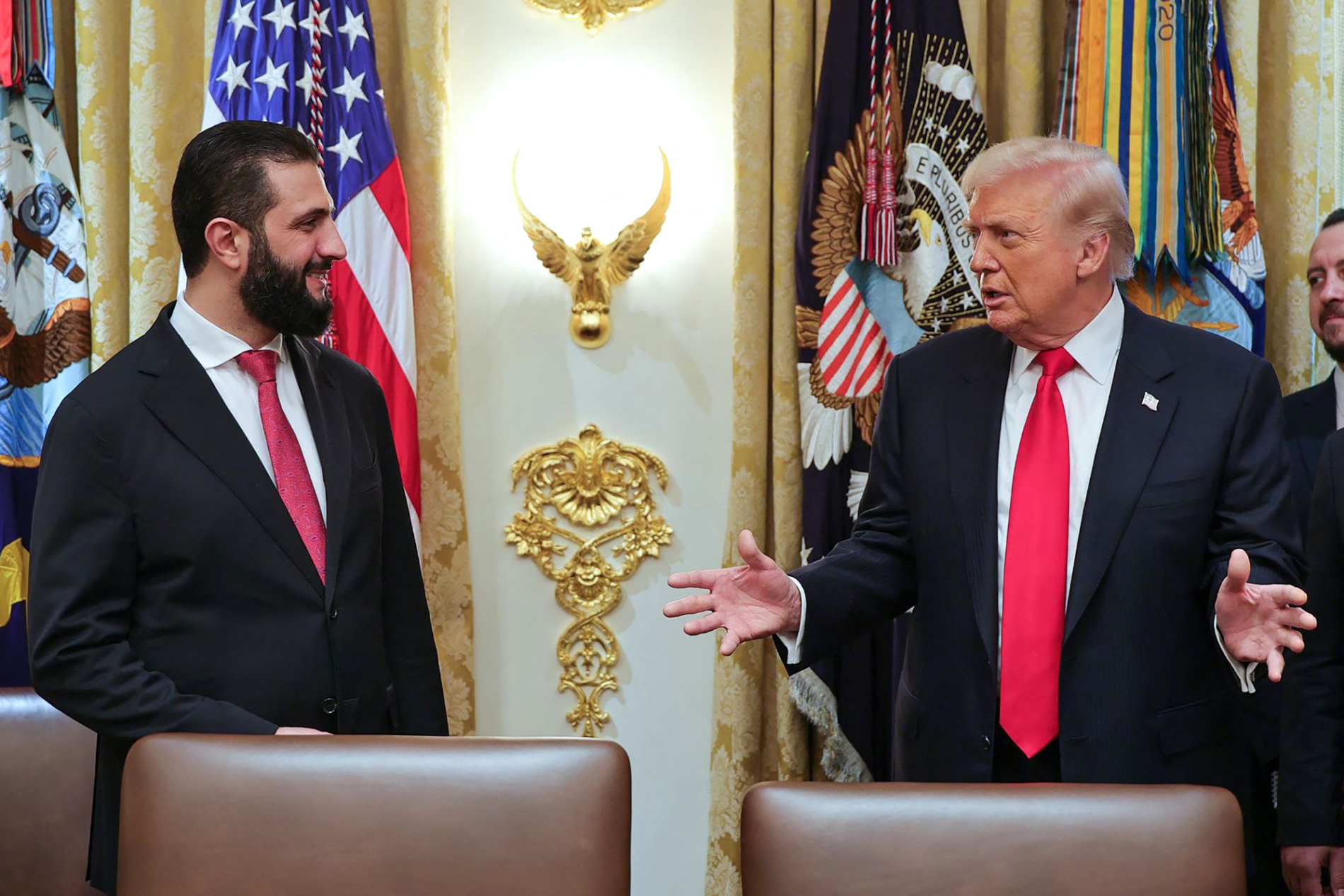
US President Donald Trump and Syrian President Ahmed al-Sharaa at the White House, Washington, on 10 November 2025.
Trump has now met Syrian President Ahmed al-Sharaa, a former Al-Qaeda leader, three times. What do you make of this?
I'm both a historian and a diplomat, so, in principle, I support meeting people—I've never thought of diplomacy as a favour, but as a tool, as an instrument. When I think about Trump meeting al-Sharaa, my question is: what is it we're asking for? What are the conditions? What is it that we want from Syria's new leaders as a prerequisite for interaction?
It seems to me that we've been very generous in reaching out to them. If I'd been advising, I'd have required certain demonstrations of behaviour beforehand to get a meeting, with certain requirements in order to move forward. While it may turn out fine, I thought the path we took was insufficiently conditional. I'd have structured it more.
If we were to map out the structure of the 'new Middle East,' what would it look like, and where would it fit as a part of a new world structure?
I find it hard to speak about the Middle East as a single region now. You have very weak regional institutions and such a large range of countries, from those with large populations and big troubles, like Egypt, to those with small populations and great wealth, like those in the Gulf, to failed states like Libya, to 'quasi-failed' states like Lebanon and Yemen, so I find it very hard to generalise about the Middle East.
It's a region in the geographical sense, but not quite in the economic or geopolitical sense. It's uneven, so it's very hard to make generalisations. I first went to the Middle East in 1971. Since then, the centre of gravity in the region has shifted. For much of my career, the centre of the Middle East was Egypt, Lebanon, Syria, Jordan, Iraq… Today, the centre of gravity has moved to the Gulf. That, to me, is a historic change.
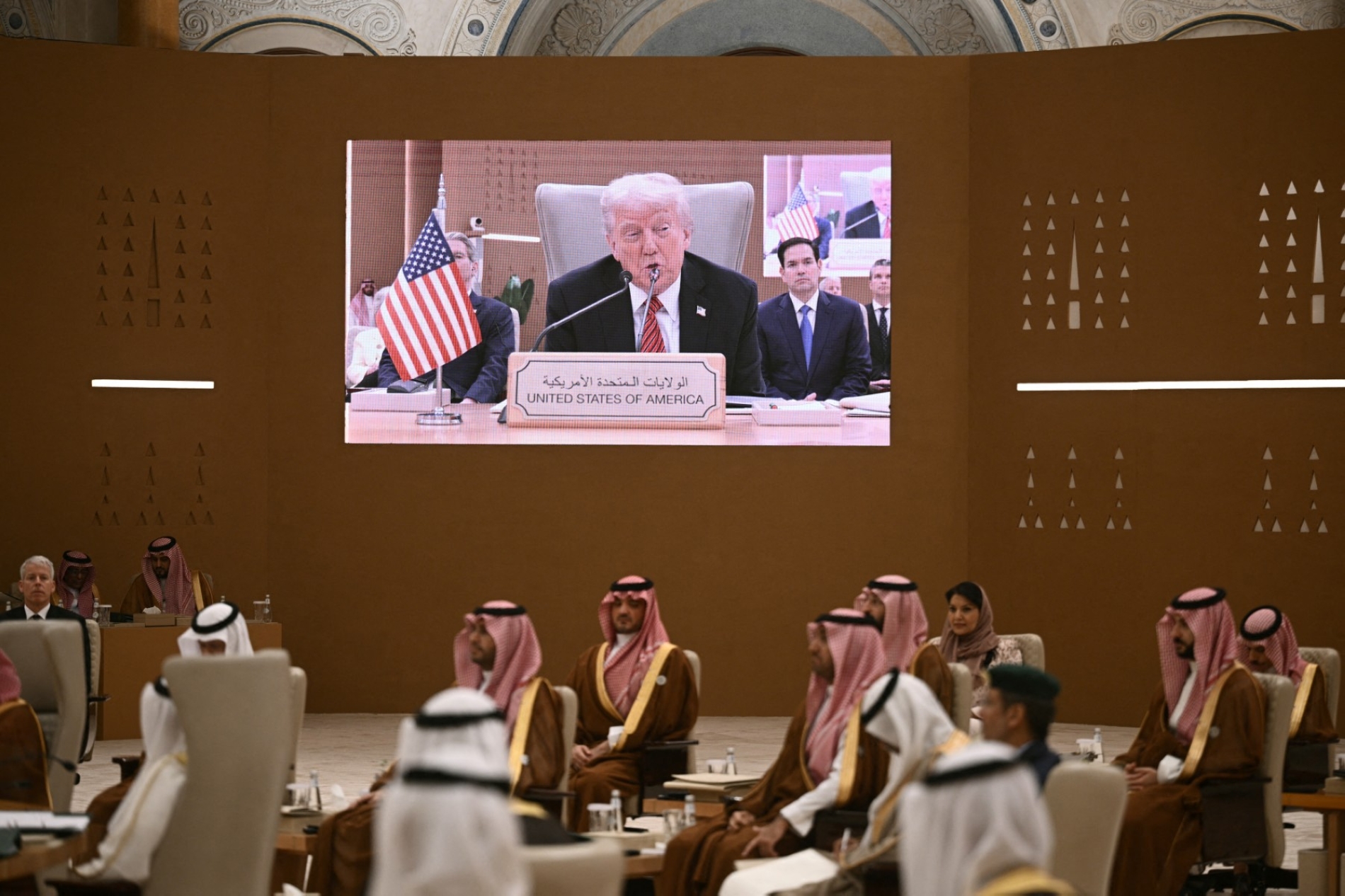
US President Donald Trump addresses a meeting of the six-nation Gulf Cooperation Council (GCC) leaders in Riyadh on 14 May 2025.
It's a very different Middle East. Its relations with the rest of the world are also changing. The region has never been home to a great power; rather, it was where the great powers intervened and competed. Obviously, you had the US and the Soviet Union during the Cold War, then you had local actors, medium powers, Israel, Iran, Egypt, Türkiye, and some non-state actors like Hezbollah could have an impact.
The relationship of the Middle East to the rest of the world now is a bit less central. Energy is still important, but there are other big producers, and over the next 50 years, the role of alternatives will become more significant. And as you know, some countries in the Middle East have real governance problems. They're not functioning well, so they can't impact beyond their borders.
Increasingly with the Saudis, the UAE and others, the interaction is economic, and the big challenges for them are development and modernisation, planning for an economy that can no longer depend on oil and gas supplies. So, I think this year in the Middle East, the focus will be more on economic modernisation than political modernisation. The region has always been interesting, and remains so, just in different ways.