Nicolás Maduro: the Venezuelan president in Trump's crosshairs has been capturedhttps://en.majalla.com/node/328274/profiles/nicol%C3%A1s-maduro-venezuelan-president-trumps-crosshairs-has-been-captured
Nicolás Maduro: the Venezuelan president in Trump's crosshairs has been captured
After months of hints and speculation about regime change, Trump announced on 3 January that the US had captured him after a series of attacks across the country
Eduardo Ramon
Nicolás Maduro: the Venezuelan president in Trump's crosshairs has been captured
The US has attacked Venezuela and captured its President Nicolas Maduro, who has been taken out of the country, President Donald Trump said on Saturday. At the time of publishing, there had not been any confirmation from Caracas.
"The United States of America has successfully carried out a large-scale strike against Venezuela and its leader, President Nicolas Maduro, who has been, along with his wife, captured and flown out of the country," Trump said in a Truth Social post.
The US hasn't carried out a direct intervention in Latin America since the invasion of Panama in 1989 to depose military leader Manuel Noriega.
Earlier, several parts of Venezuela were attacked, including the capital and three surrounding states, as Caracas accuses Washington of carrying out what it described as a “military aggression”.
In a statement, the Venezuelan government said it “rejects, repudiates and denounces before the international community” what it called an attack by the US on “Venezuelan territory and population” in civilian and military locations in the country's capital, as well as in the states of Miranda, Aragua and La Guaira.
The statement follows reports that at least seven explosions were heard in Caracas just before 2am local time on Saturday, followed by the sound of low-flying aircraft.
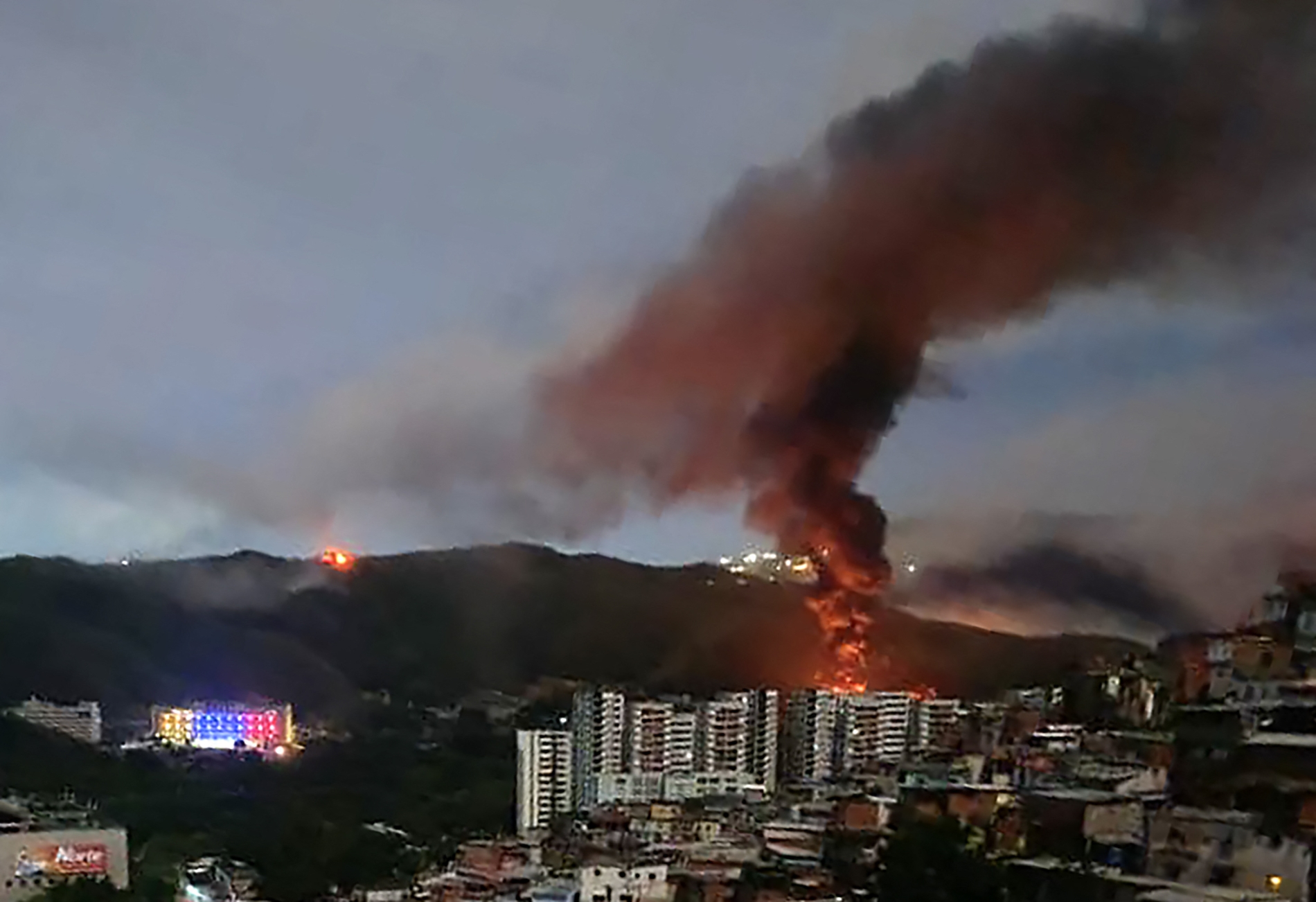
Fire at Fuerte Tiuna, Venezuela's largest military complex, is seen from a distance after a series of explosions in Caracas on 3 January 2026.
At the time, it had been reported that Maduro had ordered the activation of national defence plans “at the appropriate time and circumstances”, in line with the constitution and national security laws, but later a government official admitted they didn't know where Maduro was.
The apparent attacks come after months of rapidly escalating tensions between the Trump administration and Venezuela.On 14 November, US Defence Secretary Pete Hegseth announced a new military and surveillance campaign in the Western Hemisphere dubbed “Operation Southern Spear,” to pummel “narco-terrorists.”
“The Western Hemisphere is America’s neighbourhood— and we will protect it,” Hegseth wrote on social platform X.
President Trump ordered action — and the Department of War is delivering.
Today, I’m announcing Operation SOUTHERN SPEAR.
Led by Joint Task Force Southern Spear and @SOUTHCOM, this mission defends our Homeland, removes narco-terrorists from our Hemisphere, and secures our...
Earlier in November, Trump had tasked the CIA with carrying out covert operations in Venezuela aimed at clamping down on illegal flows of migrants and drugs, although observers contend he may be looking to curb the expanding influence of China and Russia in Latin America, as well as to usurp Venezuela’s vast oil and mineral reserves.
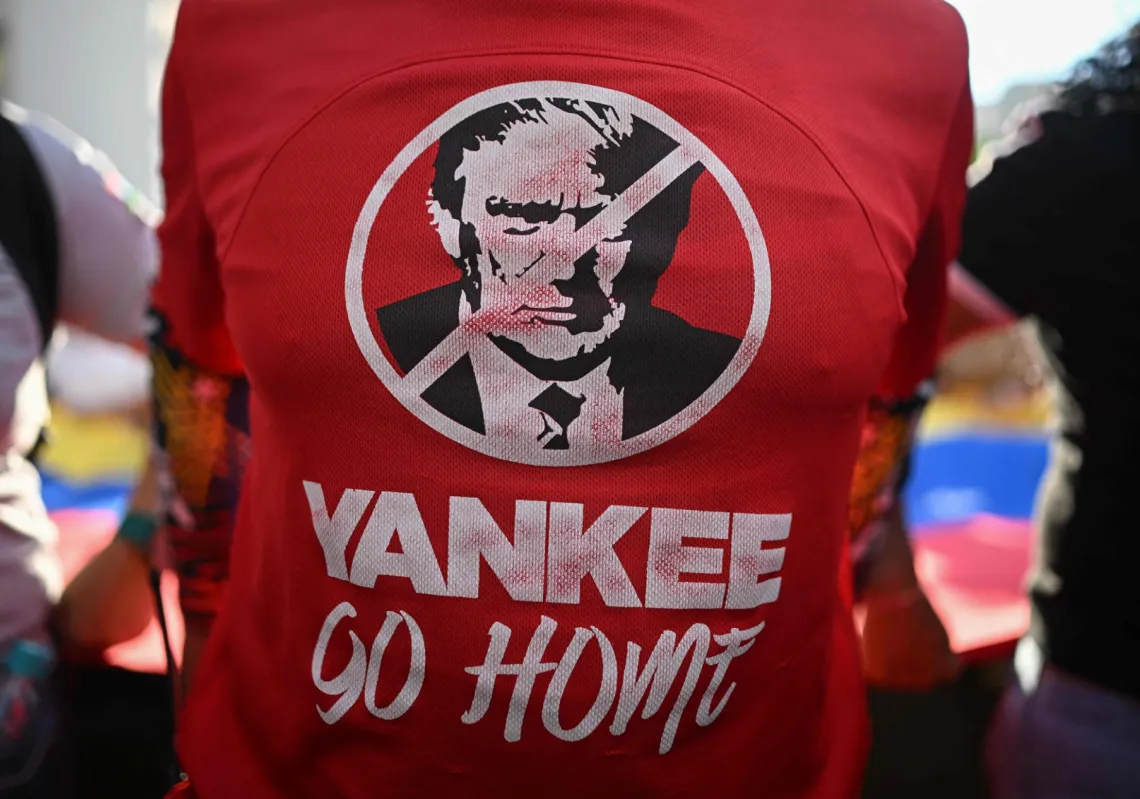
Soon after, Venezuela announced what it called a major nationwide military deployment in response to the presence of growing United States naval forces off its coast. “We tell the American empire not to dare: We are prepared,” Foreign Minister Yvan Gil saidat an event in Caracas.
The escalation raised the alarm in Caracas, where officials believed the US was using these operations as a pretext to force Maduro out of power. Lending credence to these suspicions, Rep. Mario Diaz-Balart, a Florida Republican, insisted that Maduro was down to three options: “Get out, rot in jail for the rest of his life like Noriega, or end up like Soleimani (a reference to the Iranian Quds Force leader assassinated by the US in 2020),” the lawmaker, an outspoken supporter of Venezuela’s political opposition, said in an interview he posted on social media, late last year.
Here, Al Majalla profiles Maduro, tracing his rise to power and the events that led to this point.
A decade after former Venezuelan President Hugo Chávez’s death, Nicolás Maduro was looked upon as the country's improbable survivor. His government, born of revolution, lived on scarcity, repression and ritual; a system that persists precisely because it has outlasted belief.
Maduro blended religious devotion with nationalist defiance, depicting his rule as a sacred mission against imperial enemies
For more than ten years, Maduro has presided over one of Latin America's most entrenched political, social and economic crises. When he inherited the presidency from Chávez in 2013, Venezuela was still sustained by revolutionary language and the promise of social transformation. Today, it is a country marked by repression, mass migration and institutional decay. And up until 2, January 2026 Maduro remained in power. His longevity can be chalked up to a combination of populist performance, authoritarian control and pragmatic adaptation.
Improbable rise
Maduro's rise was improbable but far from accidental. Born in Caracas in 1962 into a working-class family, he spent his early years as a bus driver and trade union organiser. Those years in the capital's streets shaped a politician who learned to engage, negotiate and survive within hostile environments. For him, politics became a matter of endurance rather than ideology.
In the 1980s, he joined the Socialist League, a small Marxist group later aligned with Chávez's Bolivarian movement. Maduro's reliability and discretion soon made him a trusted figure in the emerging revolutionary circle. When Chávez came to power in 1998, Maduro's reputation as a disciplined operative positioned him for continuous advancement.
By 1999, he had entered the National Constituent Assembly, helping draft the constitution that would become the foundation of the Bolivarian state. He later served as a member of parliament and then as Speaker of the National Assembly. In 2006, he was appointed Minister of Foreign Affairs, a role through which he strengthened Venezuela's alliances with Cuba, Russia, China and Iran. His calm, low-profile style earned Chávez's personal trust. In 2012, he became Vice President, and upon Chávez's death in 2013, the chosen successor. One month later, he narrowly won the presidency.
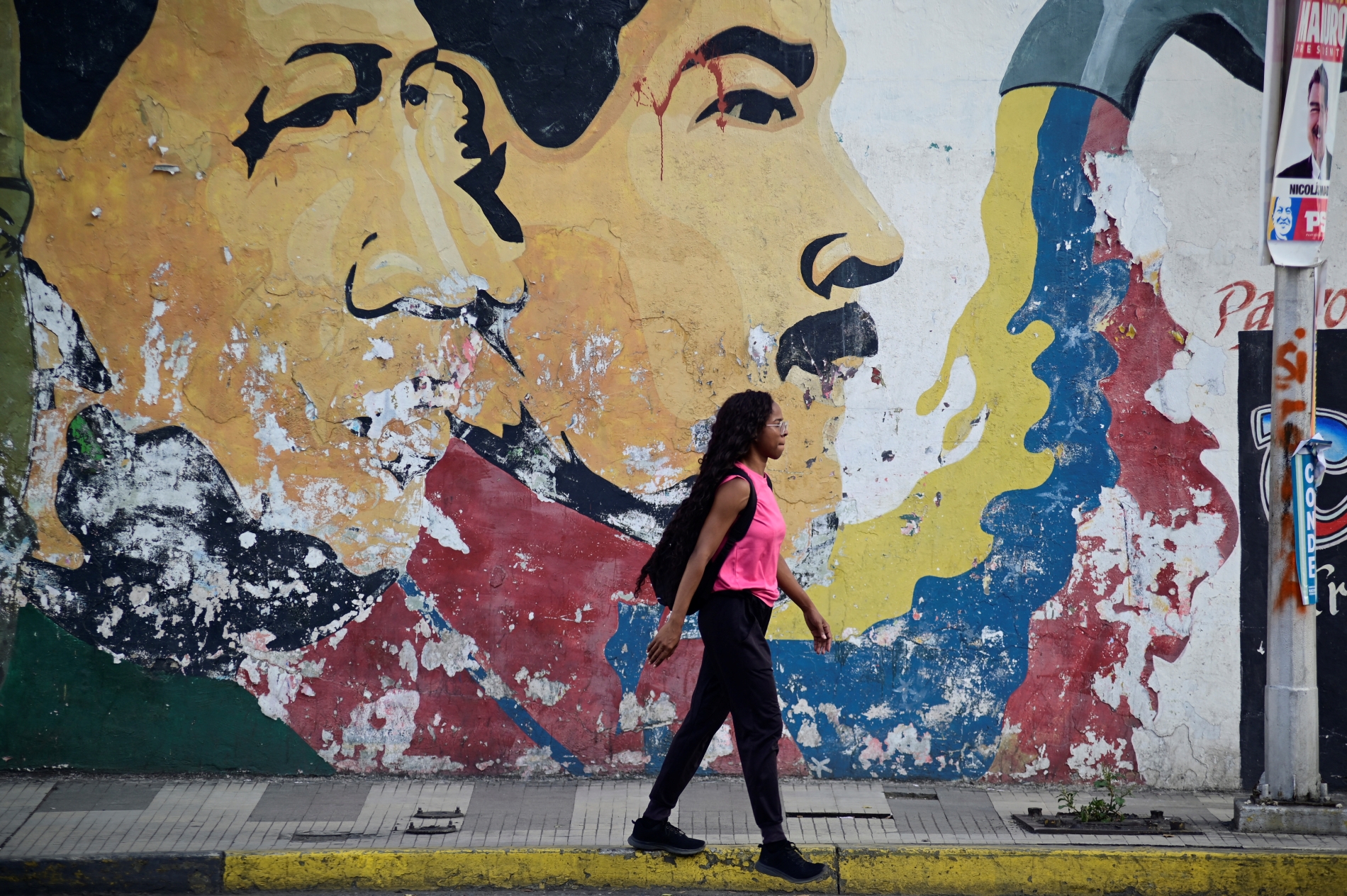
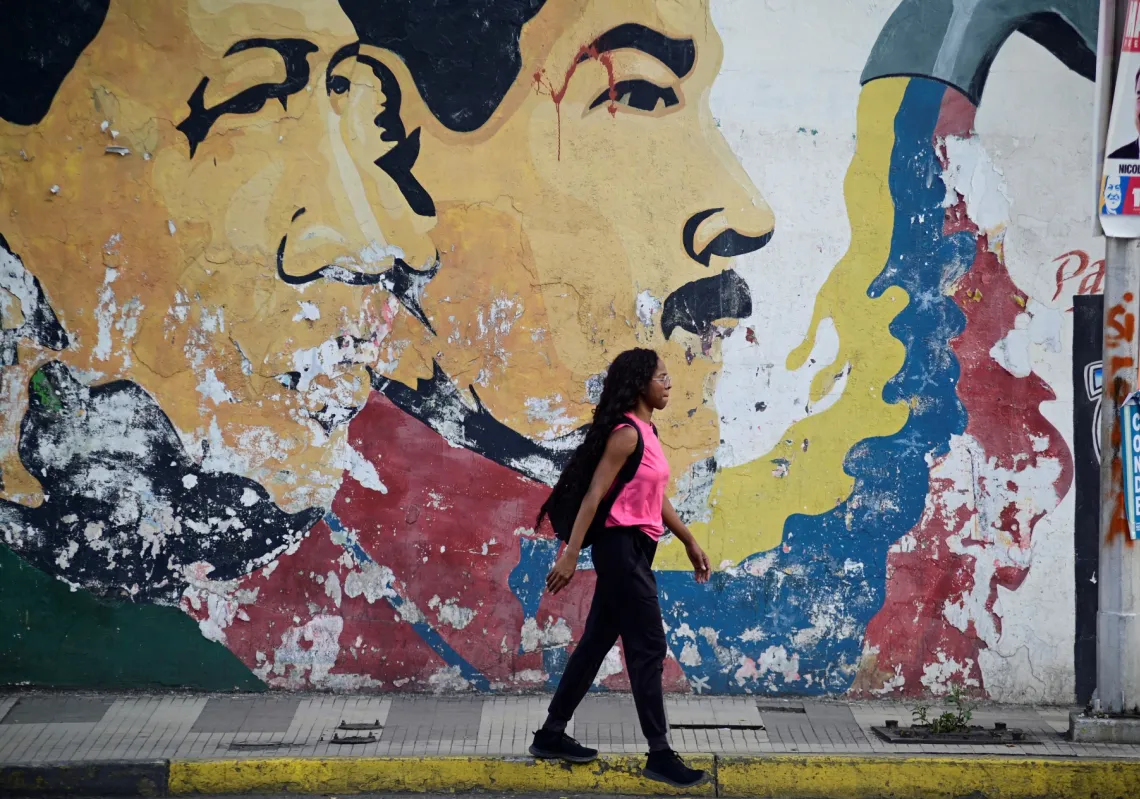
A woman walks past a mural depicting late former Venezuelan President Hugo Chavez and Venezuelan President Nicolas Maduro in Caracas, Venezuela July 27, 2024.
Political analyst Imdad Oner argues that Maduro's political identity cannot be separated from Chávez's shadow. He inherited not only the symbols and slogans of the Bolivarian Revolution but also its contradictions. While Chávez's populism was theatrical and mobilising, Maduro's was defensive and grounded in fear. Oner calls him "a populist without popularity," a leader who deploys revolutionary language not to inspire but to survive.
Maduro's populism thrived on the rhetoric of siege. By framing Venezuela's collapse as the product of foreign aggression, particularly from the United States, he turned the crisis into a loyalty test. His speeches blended religious devotion with nationalist defiance, depicting his rule as a sacred mission against imperial enemies. The narrative had proved durable, sustaining a shrinking yet committed base even as living standards continued to fall.
The mechanics of survival
Maduro's longevity, however, relies on transforming the Venezuelan state into an apparatus of control. Comparative politics scholar Javier Corrales (2023) describes this process as "autocratisation," the gradual dismantling of democratic institutions while preserving the appearance of elections and legality.
Under Chávez, the concentration of power had already begun, but Maduro intensified it. He fused the executive, the ruling party and the armed forces into a single organism in which loyalty outweighs competence. Corrales argues that this marks a transition from revolutionary populism to bureaucratic authoritarianism. His socialism is not about redistribution but about survival through selective inclusion and repression.
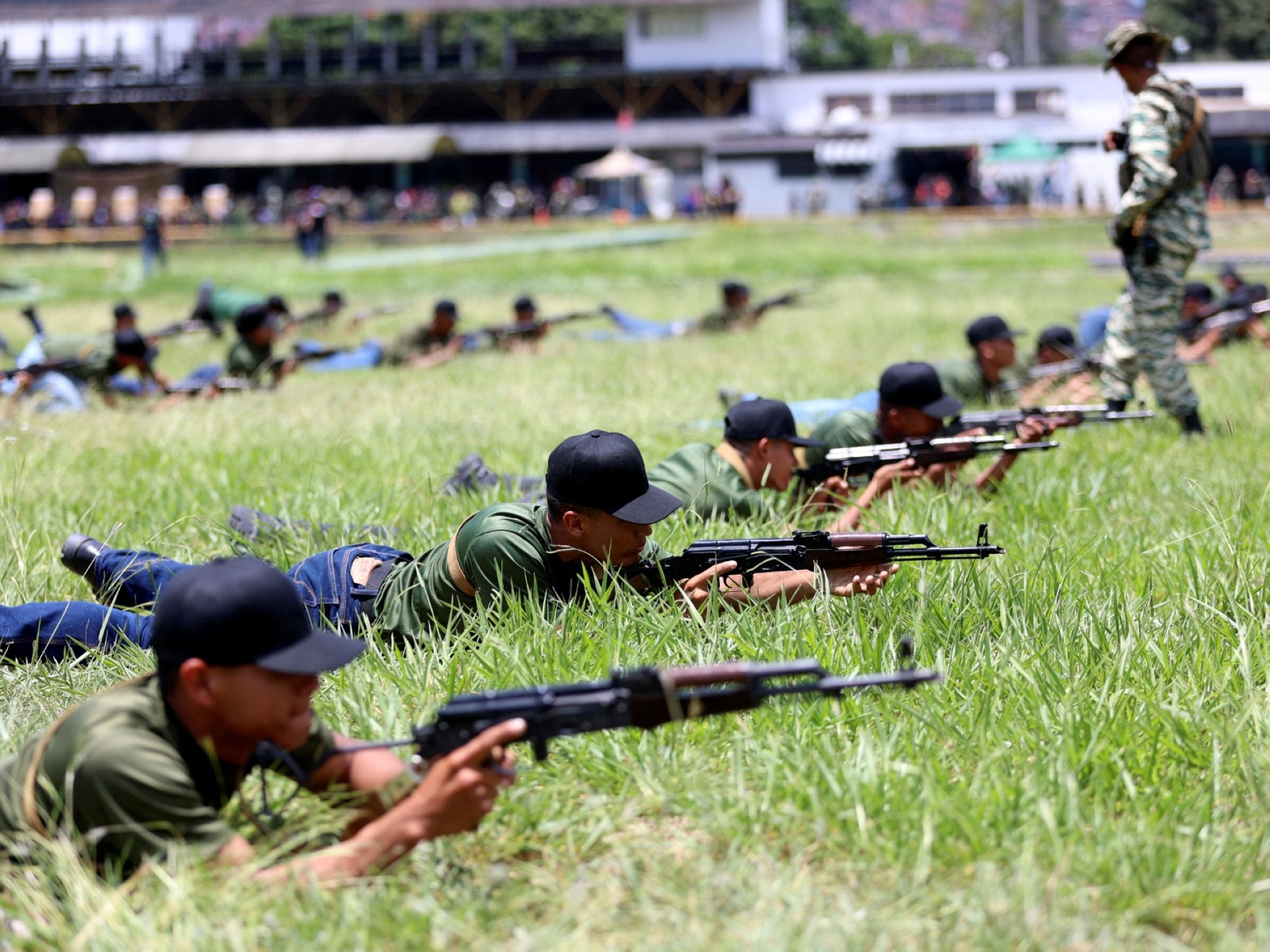
Members of the Bolivarian National Militia participate in a military training at Fuerte Tiuna in Caracas on September 13, 2025.
This system rests on three central mechanisms. First, the militarisation of politics. Once a professional institution, the armed forces are now embedded across government and industry. Senior officers run ministries, state enterprises, and food distribution networks and are rewarded with privileges and protection from prosecution.
Second, the fusion of the ruling party and the state through the United Socialist Party of Venezuela (PSUV). It operates more as an extensive network of patronage and surveillance than as an ideological movement. Access to employment, benefits and basic goods often depends on political affiliation.
Third, selective repression. Dissent is managed rather than eliminated. Opposition leaders are harassed or co-opted, the press is constrained, and civic organisations are weakened. Yet elections continue in tightly choreographed form, maintaining the illusion of democratic legitimacy.
Tropical Leninism
If Chávez embodied revolutionary populism and Corrales views Maduro as the architect of bureaucratic control, historian Andreas Kappeler (2024) described Maduro's rule as "Tropical Leninism," an adaptive system that converts ideological weakness into political strength.
Kappeler argued that Maduro's government was neither a continuation of Chávez's socialism nor a conventional dictatorship. Instead, it was a hybrid regime in which ideology became instrumental—a means of consolidating personal and institutional power. Like Lenin, Maduro presided over a single-party structure that fuses state and party, subordinates the military and equates dissent with treason. Unlike Lenin, however, his revolution didn't seek transformation; it existed to perpetuate itself.
According to Kappeler, this tropical form of Leninism "thrived in scarcity, patronage and the exhaustion of ideology." The state's weakness became its primary resource. Citizens relied on government networks for food, employment and security, binding their survival to political loyalty. Patronage replaces persuasion, and control is maintained through necessity rather than belief.
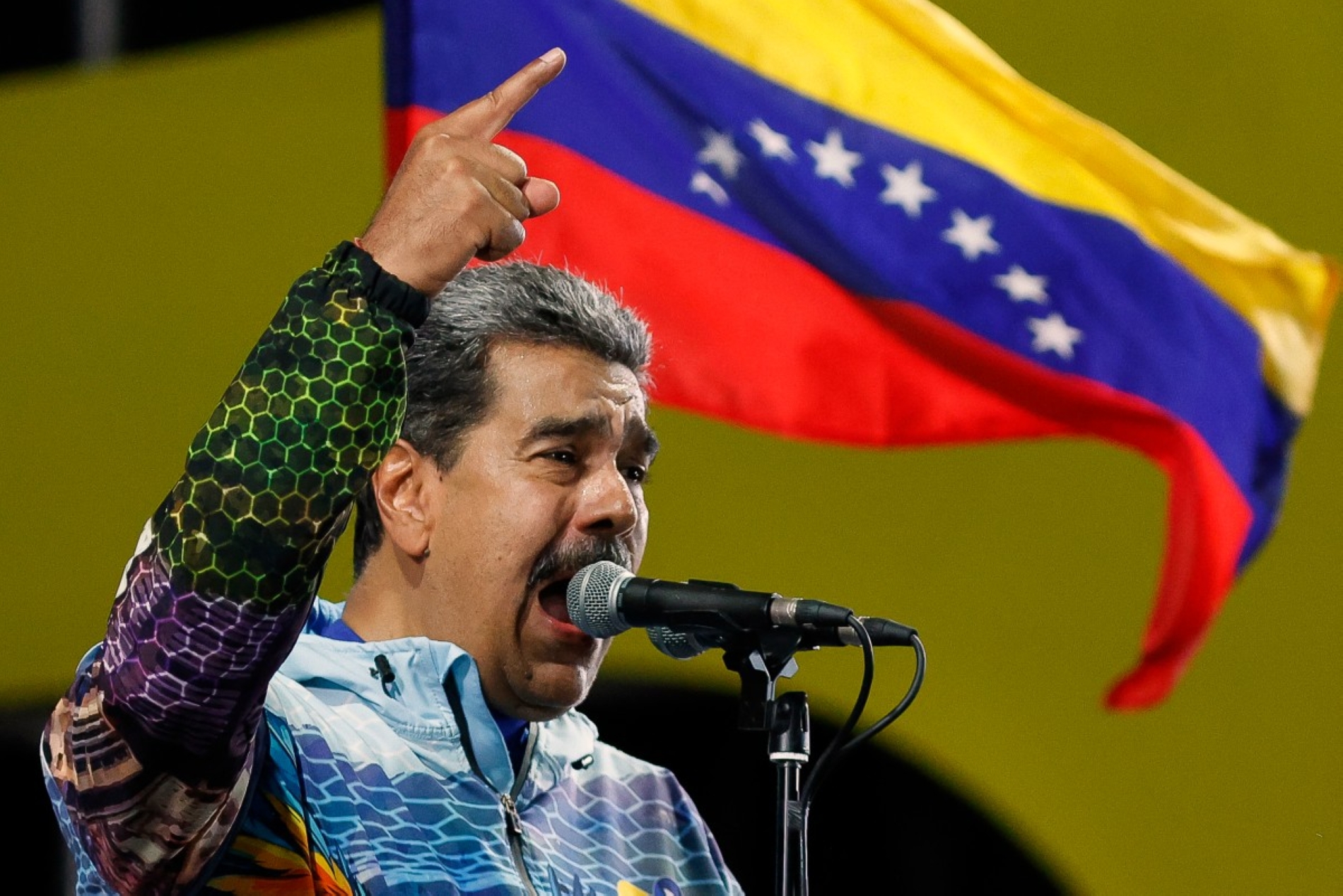
Venezuela's President Nicolas Maduro speaks to supporters during the closing campaign rally of the ruling United Socialist Party of Venezuela (PSUV) ahead of the parliamentary and regional election in Caracas on 22 May 2025.
The revolutionary symbols—red banners, marches, and anti-imperialist speeches—remained, but their significance waned. Chavismo became a ritual without conviction, a vocabulary of power detached from the ideals it once promised.
Assets and challenges
Maduro's central challenge was ruling a society that no longer believed in the cause. The charisma and mass participation that defined Chávez's era faded, giving way to dependency and fatigue. Programmes such as the Local Committees for Supply and Production distribute basic goods to registered supporters, ensuring loyalty through scarcity.
Meanwhile, the opposition was weakened by internal divisions and disillusionment. International sanctions and diplomatic isolation reinforced its siege narrative. Each foreign condemnation was presented as proof that Venezuela's revolution was under attack. Kappeler referred to this as "reactive legitimacy," a dynamic in which external pressure strengthens domestic control. In this logic, isolation becomes a political asset.
Maduro's greatest political asset was his capacity to adapt. Unlike Chávez's ideological fervour, his leadership was transactional and flexible. Over the past decade, he reshaped Chavismo to function without oil wealth, mass enthusiasm or strong geopolitical allies.
Economically, he allowed limited liberalisation, tolerating dollarisation and private commerce while maintaining political control over key sectors. Politically, he alternated between negotiation and coercion, using dialogue to divide opponents and repression to prevent defection. Ideologically, he preserved the language of socialism but emptied it of redistributive purpose.
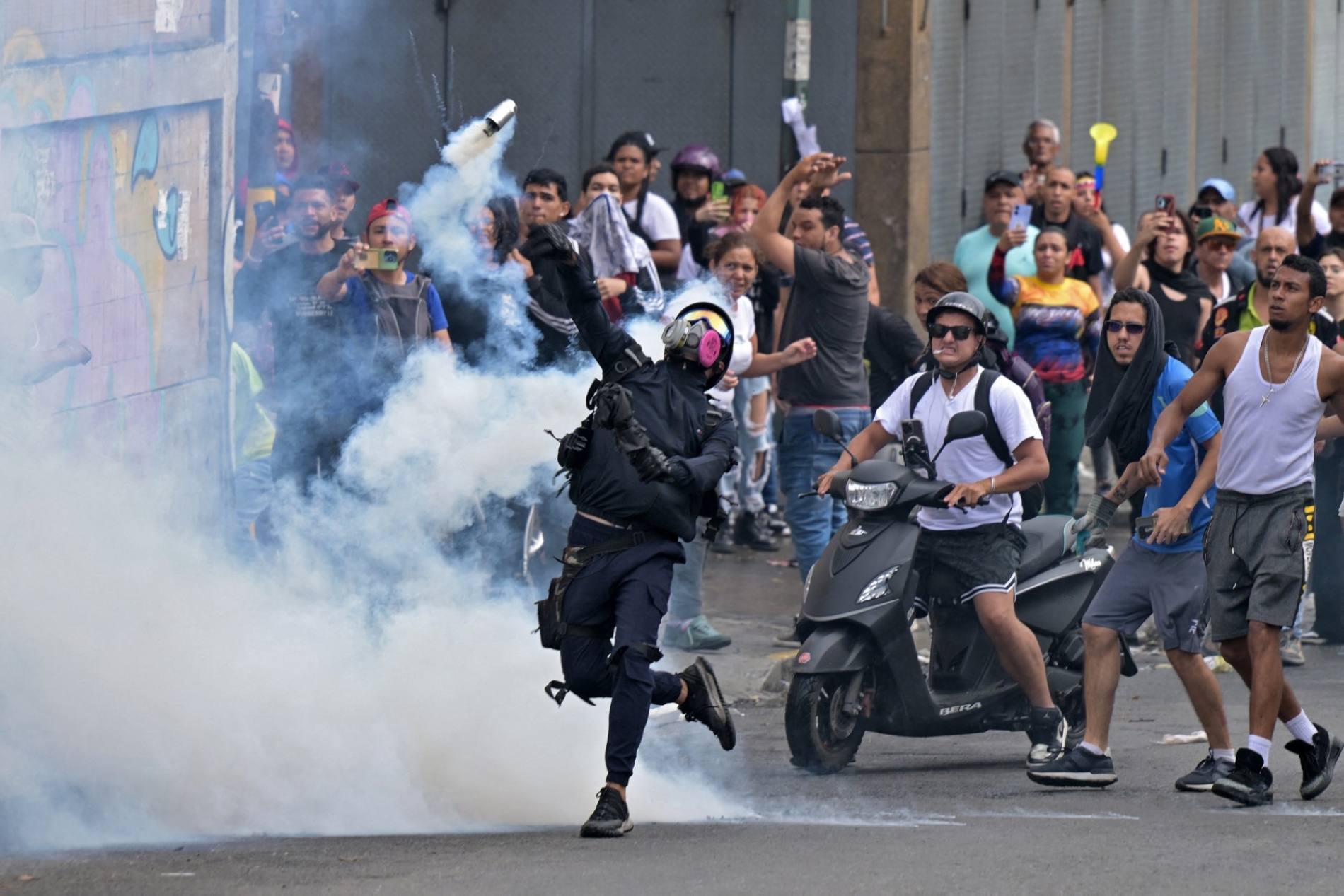
Opponents of Venezuelan President Nicolas Maduro's government clash with riot police during a protest in the Catia neighbourhood of Caracas on 29 July 2024, a day after the Venezuelan presidential election.
Corrales described this as governance through selective inclusion and repression—a balancing act that rewards loyalty and neutralises threats. Oner sees it as the final phase of populism, a model that no longer inspires but enforces conformity. Kappeler interprets it as the culmination of Leninist adaptation, where ideology functions as a technology of power rather than a guide for change.
Taken together, these analyses reveal a political order that persisted not through ideological conviction but through control. In such a landscape, legitimacy becomes less a matter of public support than of managed endurance. As society grew weary and the state turned further inward, the government tightened the conditions of daily life around loyalty. What remained was a political order sustained by pressure, scarcity and isolation. And it was within this constricted terrain that Maduro's most effective instrument comes into focus: his ability to adapt faster than the crisis surrounding him.
Venezuela under Maduro persevered for so long not through strength but through exhaustion, a system that turned crisis into routine and loyalty into survival.