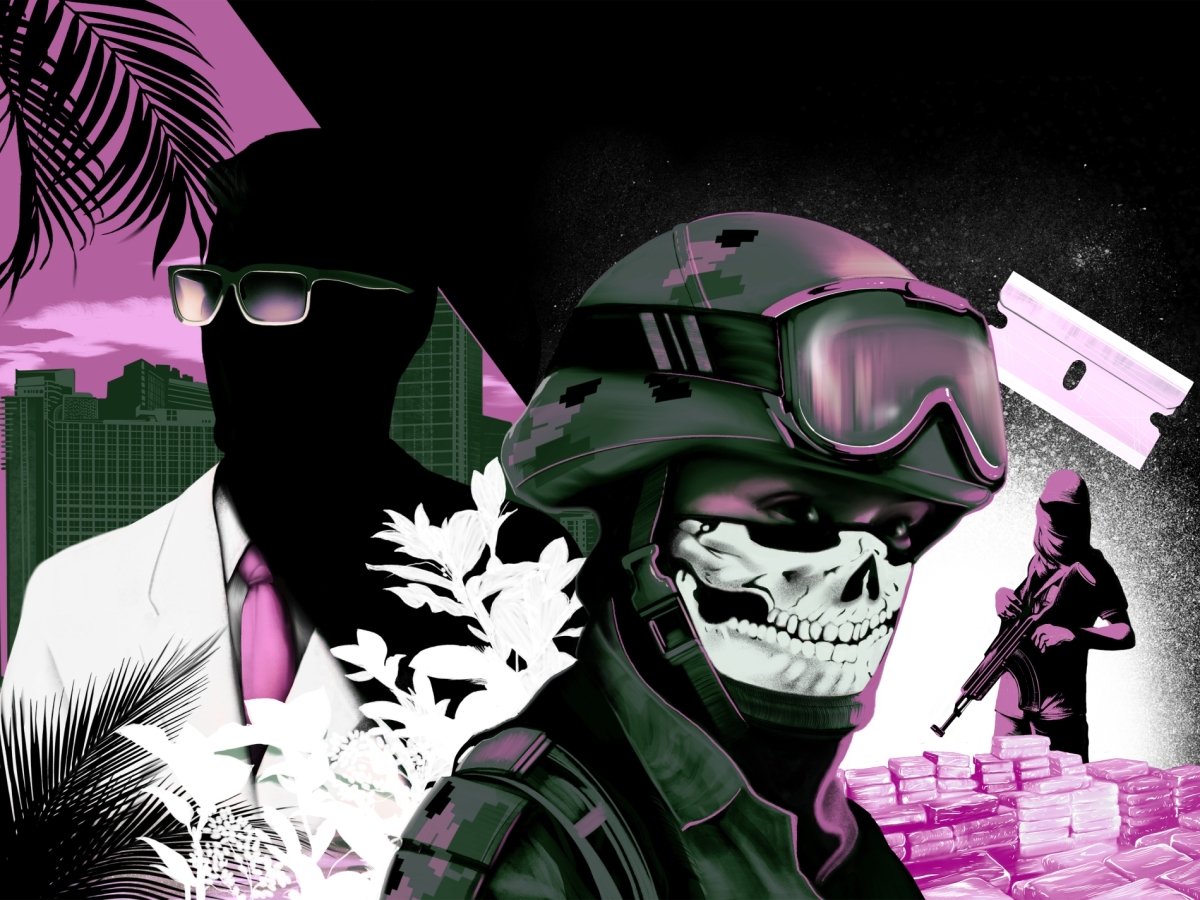
The evolution of Latin America’s drug cartels

What began as a locally rooted trade in coca leaves and opium evolved into a transnational system of cartels that challenged governments, corrupted institutions, and destabilised countries

Jay Torres

The evolution of Latin America’s drug cartels

For much of the last century, the illicit drug trade has shaped the economic, political, and social landscape of Latin America. What began as a small, locally rooted trade in coca leaves and opium evolved into a transnational system of cartels that challenged governments, corrupted institutions, and altered the course of regional security. From the industrial might of Colombia’s Medellín cartel to the decentralised networks of Mexico and Venezuela today, the region’s illicit economy reflects profound historical roots intertwined with global markets and fragile governance.

The shift from concentrated criminal empires to fragmented and militarised networks was not accidental; it mirrored the region’s political transitions, economic pressures, and the international demand that sustained them. Understanding this transformation is crucial to grasping how organised crime has adapted to state weakness and global opportunity. How did Latin America’s cartels evolve from centralised powerhouses into fluid, transnational systems operating across the hemisphere?

Drug economy origins

Latin America’s modern drug economy emerged gradually from the region’s rural economies, weak state institutions, and dependence on agricultural exports. Coca—a plant long cultivated in the Andes for traditional use—became the foundation of a global cocaine industry as demand from the United States and Europe surged after World War II. In parts of Peru, Bolivia, and Colombia, drug production became a survival strategy for communities excluded from formal markets and tolerated by governments that lacked the means or will to enforce prohibition.

The Cold War deepened the US involvement in Latin America’s domestic affairs. Anti-communist priorities were soon tied to anti-narcotics efforts, framing the region’s drug economies as both a moral and security threat.

When the US Drug Enforcement Administration was created in 1973, it signalled the beginning of a decades-long militarised campaign against the drug trade. Yet by the late 1970s, Colombia had already become the world’s principal cocaine supplier, with the Medellín and Cali cartels turning illicit trafficking into an industrial enterprise. Their control over production, transport, and distribution networks transformed them into political actors as much as criminal ones, foreshadowing the conflicts to come.

Could the early US focus on eradication and enforcement have paradoxically strengthened these criminal empires by raising profits and driving producers further underground? The answer continues to shape debates about today’s failed “war on drugs.”
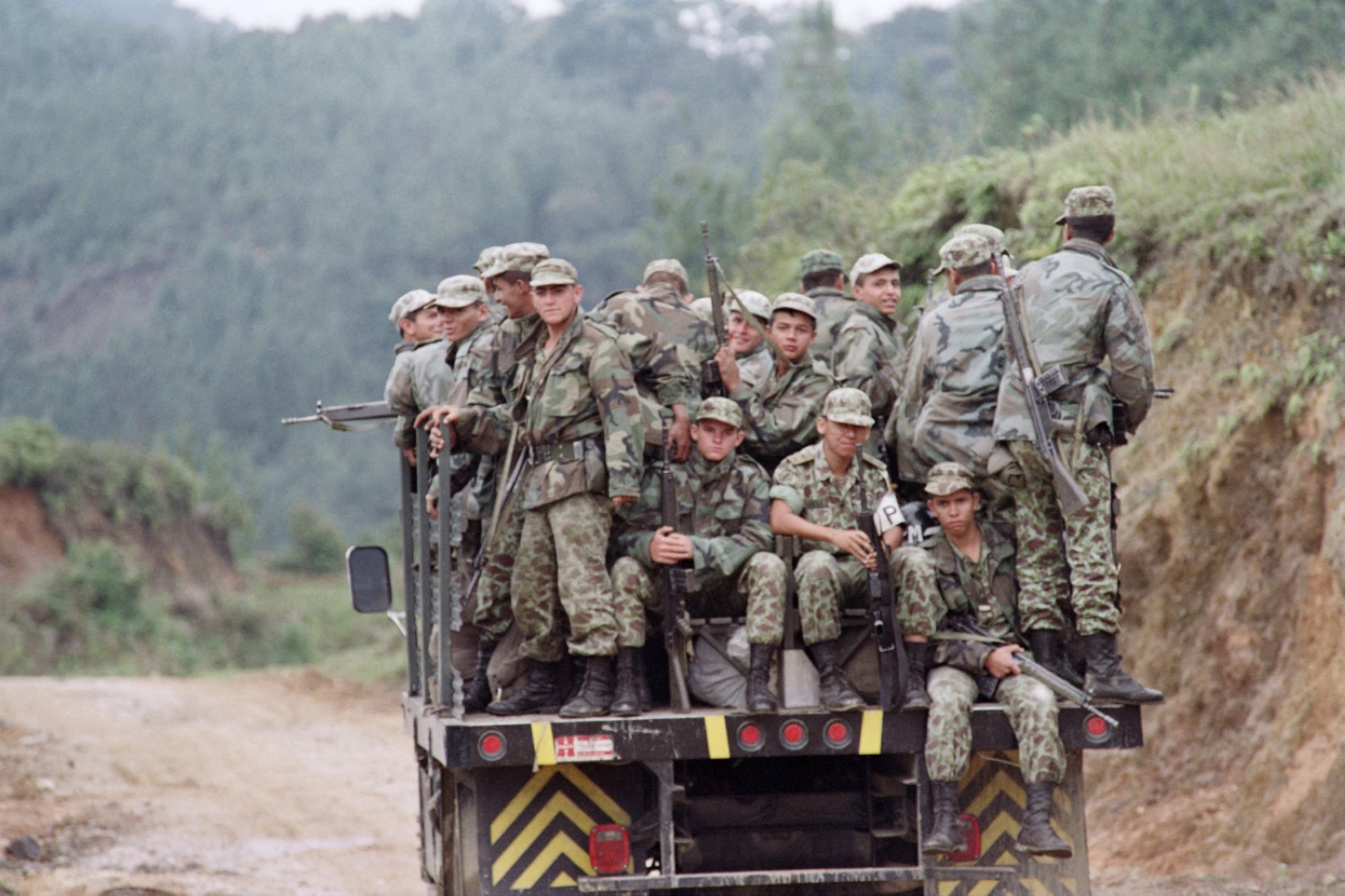
Felipe AMILIBIA / AFP
Columbian military relief troops ride a truck on their way to the prison where drug kingpin Pablo Escobar is being held in the Medellin region on 22 June 1991.

Fragmentation and militarisation

The collapse of Colombia’s major cartels in the 1990s did not end the trade; it simply diversified it. Smaller, more flexible criminal organisations emerged across the region, expanding into Mexico, Central America, and the Caribbean. These groups operated through alliances rather than rigid hierarchies, making them harder to dismantle.

In Mexico, the state’s militarised response launched in 2006 sought to crush organised crime through overwhelming force. Thousands of troops were deployed, cartel leaders captured or killed, yet each removal produced new rivals. The country became a mosaic of competing criminal enclaves, violence escalated, and the boundary between law enforcement and warfare blurred.

Elsewhere, guerrilla movements such as Colombia’s FARC and Peru’s Shining Path turned to drug trafficking to fund their operations. The trade became less about ideology and more about survival, binding political insurgency and organised crime together. In marginalised areas where state presence was minimal, cartels filled the void. They provided employment, protection, and even rudimentary social services, forming what analysts call narco-governance. For many communities, cartels became both predator and provider, a sign of how gravely state authority had withdrawn.

Reclaiming legitimacy in such territories poses one of the greatest challenges for modern Latin American states. Can governments restore trust and authority where organised crime has become the default form of governance?

Across Latin America, cartels became both predator and provider, a sign of state authority erosion

Today's cartel landscape

Today's Latin American cartels no longer resemble the rigid hierarchies of the past. They function more like diversified corporations, multi-sectoral, globally connected, and highly adaptive. According to the United Nations Office on Drugs and Crime (UNODC, 2023), while cocaine production remains high, the sharpest growth is seen in synthetic drugs such as methamphetamine and fentanyl, which are easier to conceal and far more profitable. The shift from agricultural crops to chemical production has made the trade more mobile and less dependent on traditional cultivation zones.

Cartels have also diversified beyond narcotics. Illegal mining, human trafficking, fuel theft, and extortion have become lucrative side enterprises, forming a criminal economy that in some countries rivals legitimate business. These groups have spread across borders, creating transnational webs of crime and influence.

A striking example is Venezuela's Tren de Aragua. As documented by InSight Crime (2024) and the International Crisis Group (2025), this network has evolved from a prison gang into a regional criminal enterprise spanning Colombia, Peru, and Chile. Its growth has been driven by Venezuela's state collapse, mass migration, and porous borders, conditions that allow organised crime to thrive.

Corruption and political complicity remain central to this system. In many parts of the region, politicians and law enforcement officials depend on criminal networks for funding or control, obscuring the lines between state and cartel. Where governance becomes transactional, accountability fades.

Reversing this entanglement between politics and organised crime will demand more than enforcement. It will require restoring credible institutions, rebuilding civic trust, and offering viable alternatives to illicit economies. Can Latin American states regain public confidence while confronting criminal systems that now sustain entire communities? 

ALFREDO ESTRELLA / AFP
Members of the Mexican Special Forces arrive at Ciudad Juárez Airport on 28 March 2008. The Mexican government sent some 2,000 soldiers to combat drug traffickers.

Policy responses 

After five decades of the so-called "war on drugs," most governments and international organisations recognise that the military approach has failed. Despite massive spending and the loss of countless lives, trafficking endures, violence persists, and new substances enter the market.

In response, several Latin American countries have begun to shift course. Some, like Colombia and Uruguay, have experimented with harm reduction, partial legalisation, and social reinvestment. The United Nations has called for "shared responsibility," urging a move away from punishment to prevention through coordinated approaches linking development, health, and law enforcement. The logic is simple: drug markets cannot be dismantled without addressing the poverty, inequality, and institutional weakness that sustain them.

The International Crisis Group (2025) has echoed this argument, warning that indiscriminate crackdowns often exacerbate violence by fracturing cartels into smaller, more volatile groups. What is needed instead is regional cooperation, targeted law enforcement, and long-term social investment.

Yet the question remains whether these reforms can deliver the stability that decades of coercion have failed to achieve. Can diplomacy, inclusion, and sustained regional coordination succeed where militarised campaigns have only perpetuated the cycle of violence? Or is Latin America destined to repeat a pattern where every crackdown reshapes rather than resolves the problem?

ALFREDO ESTRELLA / AFP
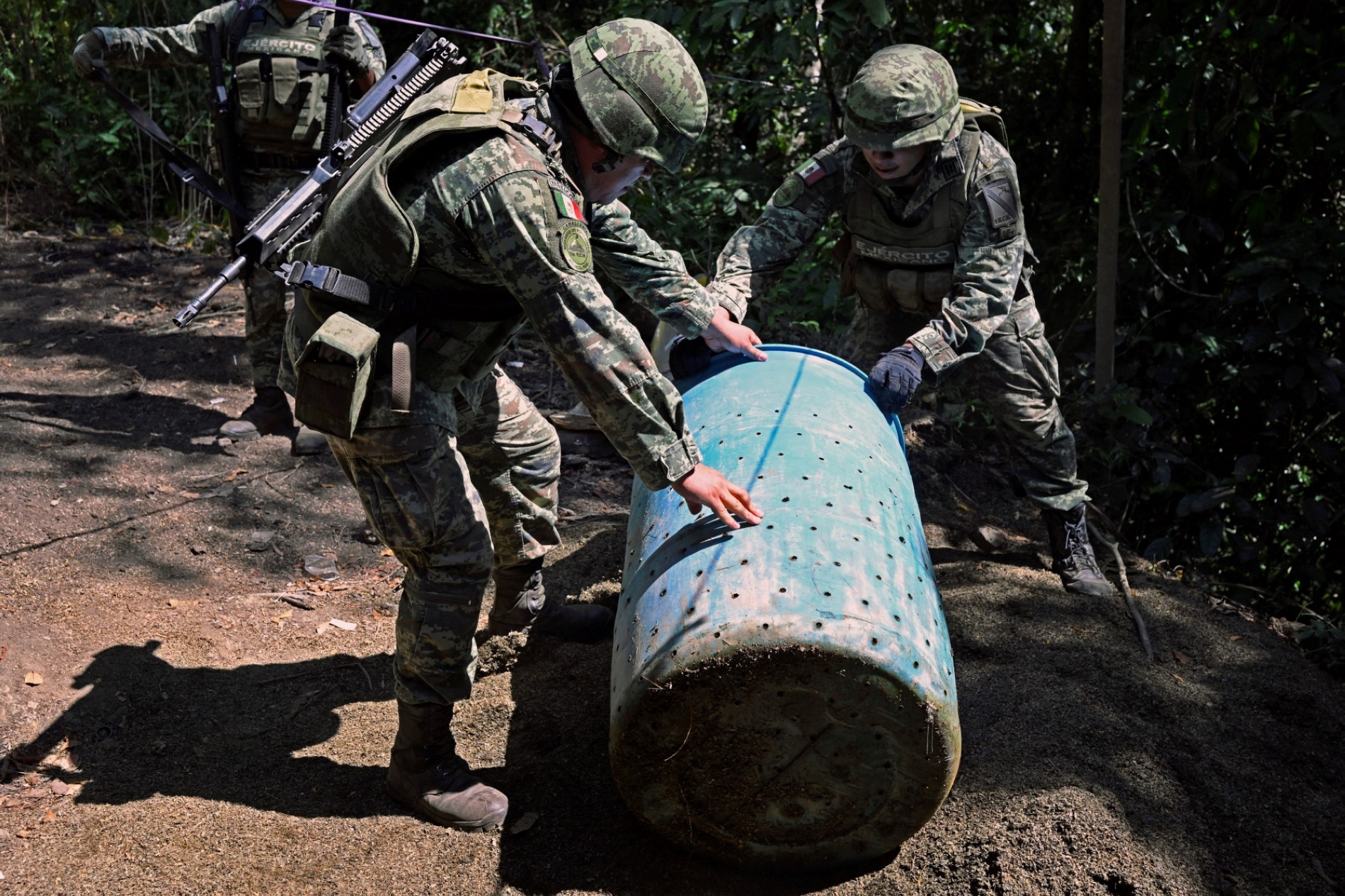
Mexican soldiers destroy an illegal coca leaf processing lab during an operation in the mountainous area of Atoyac de Alvarez municipality, Guerrero state, Mexico, on 2 March 2023.

Breaking the cycle

From the coca fields of the Andes to the synthetic laboratories of northern Mexico, the story of Latin America's drug cartels is one of adaptation and endurance. Each stage of the so-called "war on drugs" has generated unintended consequences: the collapse of empires gave rise to networks, militarisation bred fragmentation, and repression fostered new forms of criminal governance. Today, the region faces a landscape where crime and politics are intertwined, and where the line between state and cartel is increasingly indistinct.

Latin America's challenge is not merely to combat trafficking but to rebuild governance and legitimacy in the territories it has lost. This requires governments to provide what cartels have long supplied: economic opportunity, basic security, and social belonging. Without these foundations, criminal networks will continue to occupy the vacuum left by the state.

The lesson of history is clear. Every attempt to eradicate the trade by force has only compelled it to evolve. Perhaps the question is no longer how to win the "war on drugs," but whether the region can envision a peace that renders such a war unnecessary.

font change

Related Articles