Syria's return to the world stage hinges on reform

Syria’s future will hinge not on speeches delivered to international audiences but on Sharaa's ability to build durable stability and restore trust at home

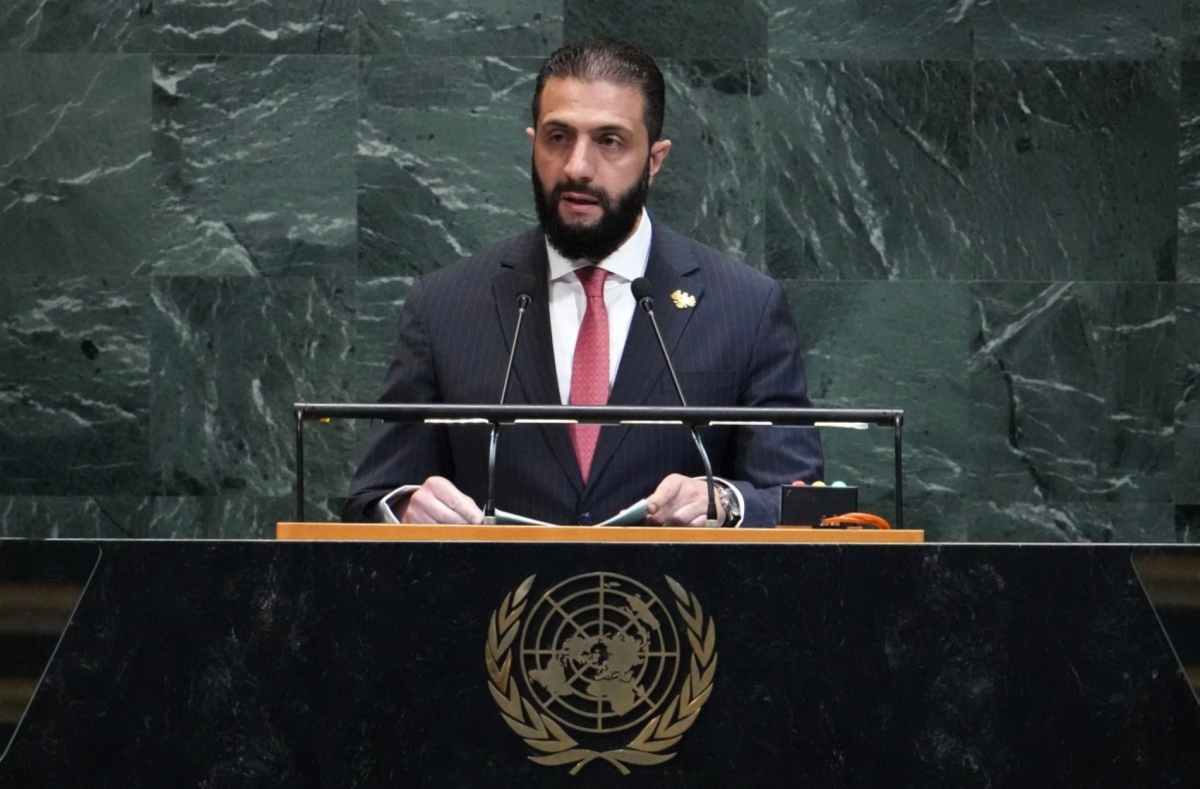
Syrian President Ahmed al-Sharaa speaks during the General Debate of the United Nations General Assembly at the UN headquarters in New York City on September 24, 2025.
TIMOTHY A. CLARY / AFP
Syrian President Ahmed al-Sharaa speaks during the General Debate of the United Nations General Assembly at the UN headquarters in New York City on September 24, 2025.

Syria's return to the world stage hinges on reform

President Ahmed al-Sharaa’s visit to the United States to address the UN General Assembly was the clearest sign yet of his success in restoring Syria’s diplomatic standing. After more than a decade of isolation, Syria is no longer viewed as a pariah.

Achieving this major shift in such a short time is nothing short of extraordinary. But sustaining it now hinges on a far tougher challenge: stabilising Syria’s fractured domestic landscape. The expected deal to repeal the Caesar Act in exchange for a four-year reform package makes the link explicit: sanctions relief will only follow meaningful political change inside Syria.

Al-Sharaa acknowledged as much in his UN address, declaring that Syria’s new chapter is titled “Peace, Prosperity, and Development.” To reinforce the message, his government unveiled an internationally-backed roadmap to resolve the conflict in Sweida—deliberately timed to coincide with his visit—as a tangible sign that change is underway.

Yet Sweida’s roadmap is more than a local initiative. It is a proving ground. If implemented successfully, it could serve as a model for reconciliation and consolidate Syria’s reintegration into the international system. Failure, however, would cast serious doubt on al-Sharaa’s ability to stabilise and hold the country together—risking the return of the very international pressure he has worked so hard to defuse.
AFP
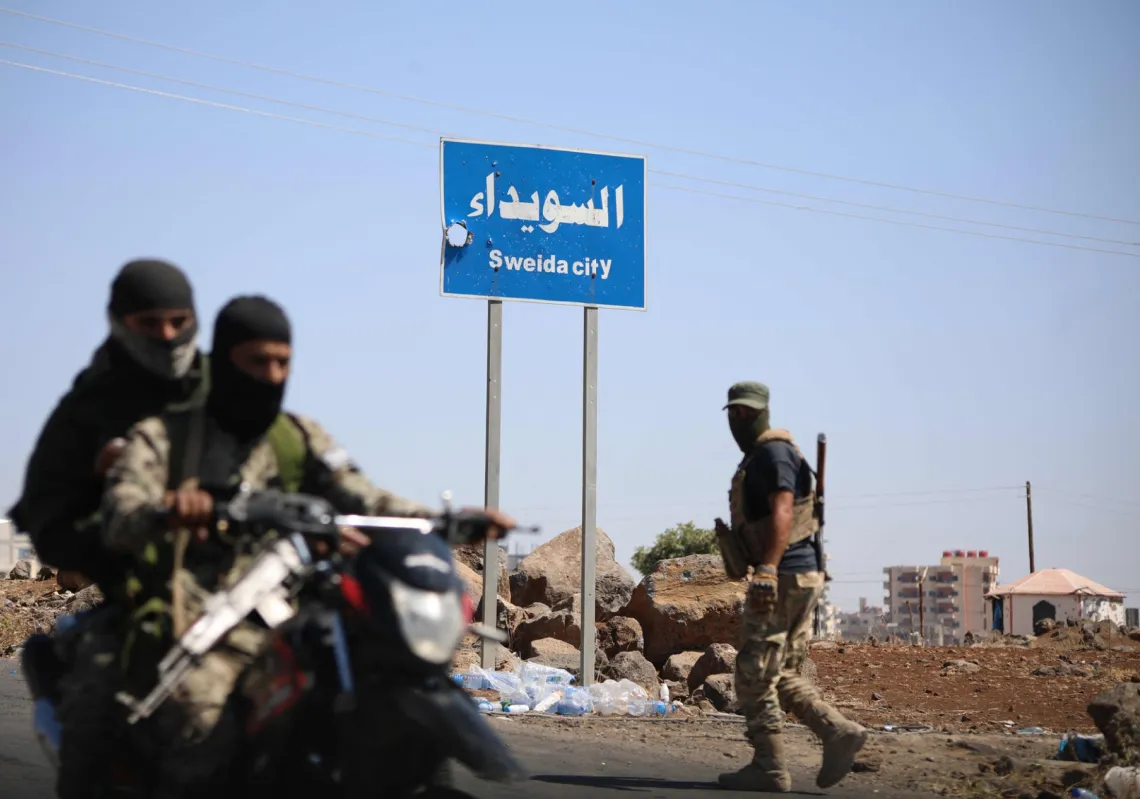
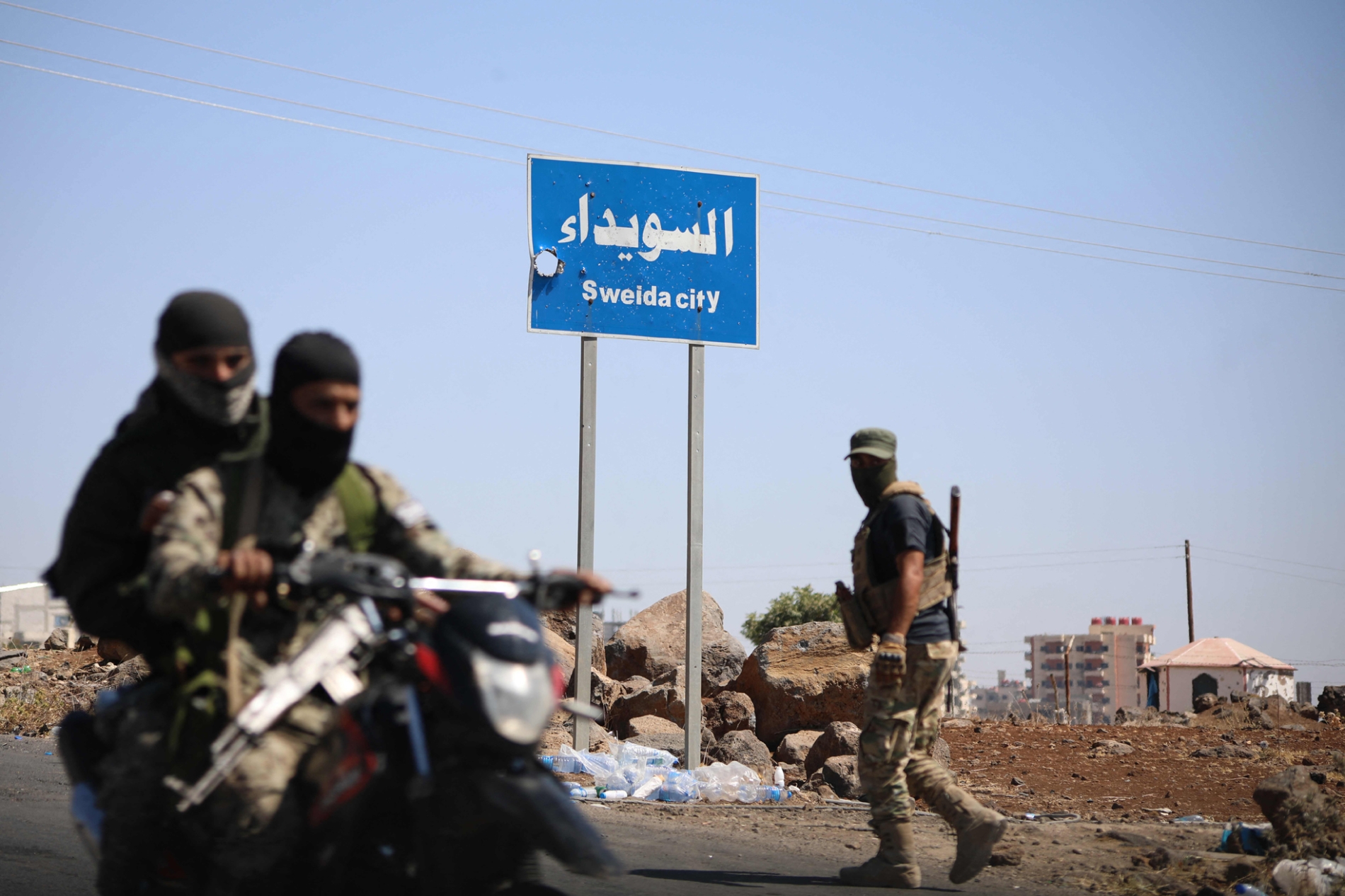
Fghters from Bedouin tribes in western Sweida city on July 19, 2025.

Sweida’s roadmap

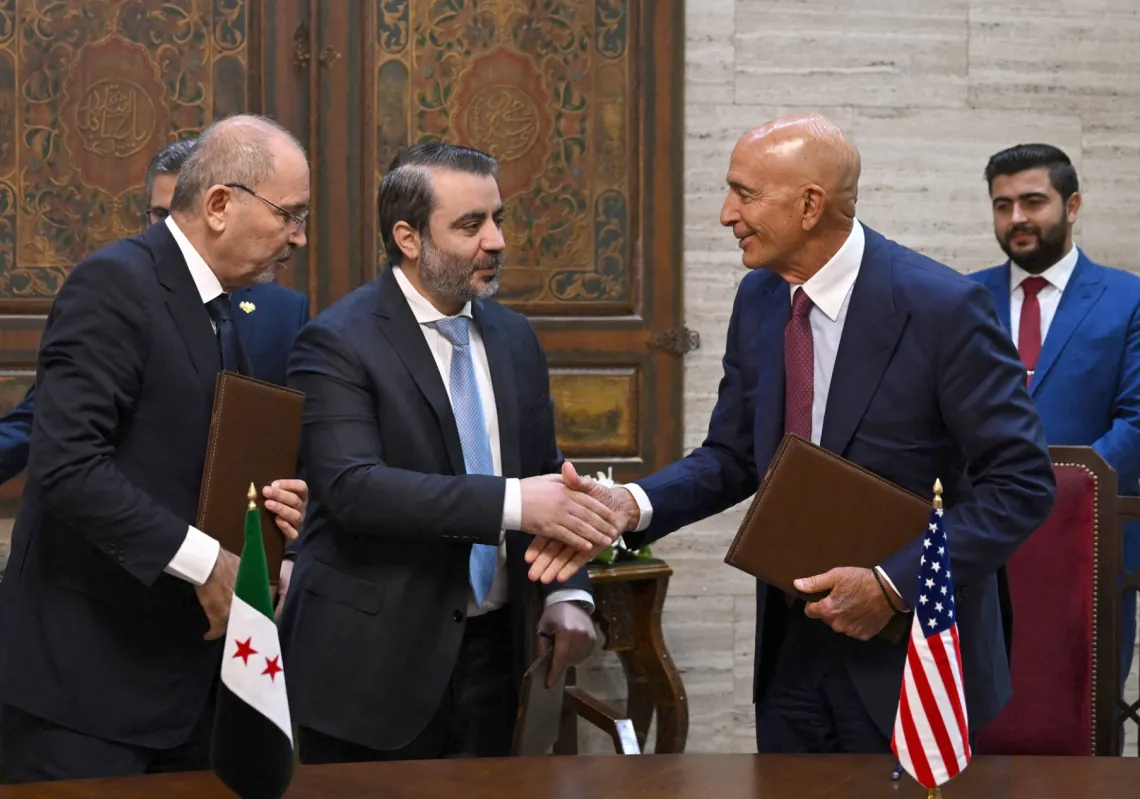
The tripartite agreement signed on 16 September by Syria, Jordan, and the United States lays out a 13-point roadmap aimed at ending the crisis in Sweida following the violent clashes in July. Anchored in the principles of national unity and equal citizenship, the roadmap outlines steps to rebuild trust between Damascus and the province through an independent investigation into recent violence, accountability for perpetrators, the return of displaced residents, withdrawal of armed forces, deployment of trained police, restoration of essential services, and a local reconciliation process among Sweida communities.

Politically, the agreement calls for expanding local governance and community engagement, albeit within the framework of Syrian state sovereignty. Implementation and oversight will be jointly facilitated by the US and Jordan, who will also work to mobilise the international funding required to support the rollout of the roadmap. Importantly, the agreement includes a provision to pursue a security arrangement addressing Israel’s concerns in southern Syria—an acknowledgement of the broader regional stakes that underscore this effort.

While the agreement has been welcomed by regional and international actors, it was firmly rejected by Sweida’s de facto authorities. The Supreme Legal Committee, aligned with Druze spiritual leader Sheikh Hikmat al-Hijri, dismissed the roadmap as contradictory and lacking credibility. It argued that accountability measures under Syrian jurisdiction cannot be trusted, since the state is both a party to the conflict and the arbiter of justice.
The Sweida roadmap is more than a provincial initiative—it is a test of whether President Sharaa can translate international diplomacy into domestic stability

The committee also view proposed reforms—such as the creation of local councils and joint police forces—as thinly-veiled attempts to reassert government control rather than genuine decentralisation. Instead, it called for international accountability mechanisms and reaffirmed Sweida's right to self-determination.

But the rejection will come as no surprise to those who brokered the deal. The roadmap was drafted and announced without the formal participation of Sweida's de facto authorities. The apparent logic was to secure agreement with Damascus first and involve local actors later in the implementation phase. But that strategy raises a critical question: how can the plan succeed if Sweida's de facto authorities reject it outright?

Damascus has nonetheless pressed ahead. It appointed Suliman Abdul Baqi, leader of the Druze faction Ahrar al-Jabal, as head of the Sweida security directorate. But Suliman's close alignment with Damascus makes him unacceptable to al-Hijri's camp. Rather than easing tensions, these moves risk inflaming them further, particularly if pro-Damascus forces attempt to impose control on Sweida without consensus, thereby heightening the risks of sliding back to violence. 

Repealing the Caesar Act

With the agreement to repeal the Caesar Act on the horizon, the stakes of this standoff have grown even higher. Although no official confirmation has been issued, multiple reports suggest that US lawmakers have reached a deal to lift the sanctions in exchange for a four-year reform programme. According to leaked details, the repeal would be tied to the National Defence Authorisation Act and take effect no later than the end of 2025.

The framework sets conditions directly tied to the Sweida crisis, including demonstrable progress by transitional authorities in providing security for religious and ethnic minorities and ensuring their representation in government. It also requires the launch of investigations into rights violations and a commitment to prosecute those responsible for serious abuses since January 8, 2024—including perpetrators of massacres against religious minorities.

Progress on these issues would be monitored through biannual reports from the US Secretary of State to Congress, verifying measurable advances by the Syrian government. If Syria fails to meet the benchmarks over any 12-month period, Congress reserves the right to reinstate sanctions.

Social media
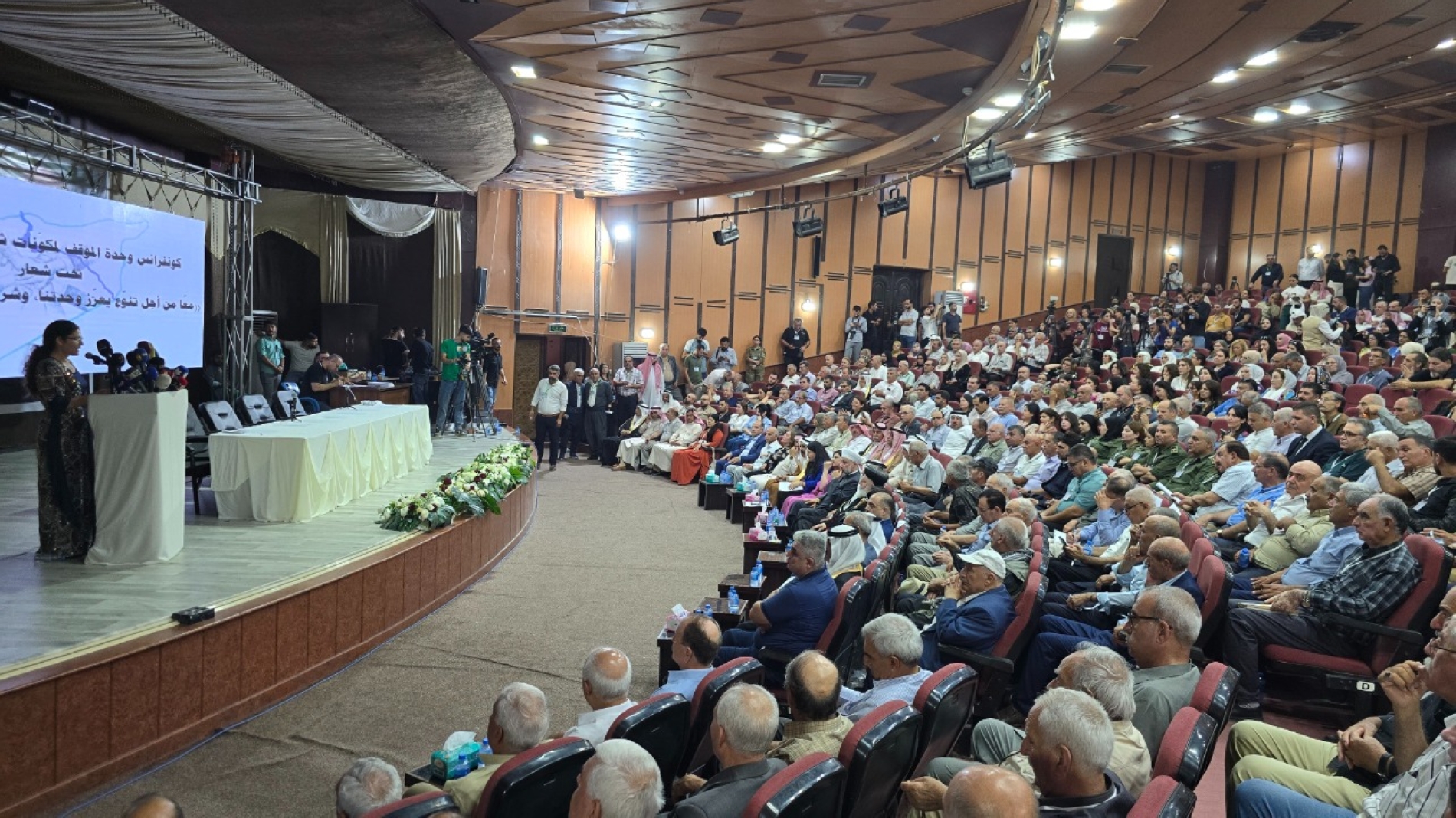
The "Unity of Position" conference, held by the Syrian Democratic Forces (SDF) in Hasakah on August 8, 2025.

Strings attached

The repeal of the Caesar Act would mark a turning point, potentially unlocking new investment and easing Syria's economic freefall. But it comes with strings attached.

Once announced, the process would magnify local political dynamics while imposing a potential deadline for progress. That applies not only to the crisis in Sweida but also to unresolved standoffs elsewhere—most notably in northeast Syria, where talks between Damascus and the Kurdish-led Syrian Democratic Forces remain stalled. Any renewed clashes in Sweida or the northeast, or prolonged paralysis in efforts to reintegrate them, could trigger the reimposition of sanctions.

For al-Sharaa, the roadmap is therefore more than a provincial initiative—it is a test of whether he can translate international diplomacy into domestic stability. His trip to Washington and New York symbolised the dramatic shift from isolation to cautious re-engagement, but symbolism will not suffice. If he can stabilise Sweida, deliver justice for rights abuses, and offer minorities a credible stake in governance, he could not only secure sanctions relief but also lay the foundation for genuine national recovery. If he fails—if violence reignites, if accountability is absent, if reconciliation stalls—Syria risks sliding back into isolation, sanctions, and economic suffocation.

What makes this moment especially consequential is that its impact extends well beyond Syria's borders. Regional actors are watching to see whether Damascus can stabilise the country, while Washington is testing whether limited engagement can deliver measurable results. For both, the roadmap is as much an opening as it is a warning: progress must be tangible, not rhetorical. It ties al-Sharaa's personal credibility to Syria's ability to contain disputes, rebuild institutions, and reunite its people.

This is the defining test of al-Sharaa's presidency. Diplomacy abroad cannot substitute for legitimacy at home, and promises made in New York will count for little if they cannot be translated into real change on the ground. His legacy—and Syria's future—will hinge not on speeches delivered to international audiences but on his ability to build durable stability and restore trust at home.

The world is watching, but far more important are the Syrians themselves, who have heard promises before and will judge him only by results.

font change