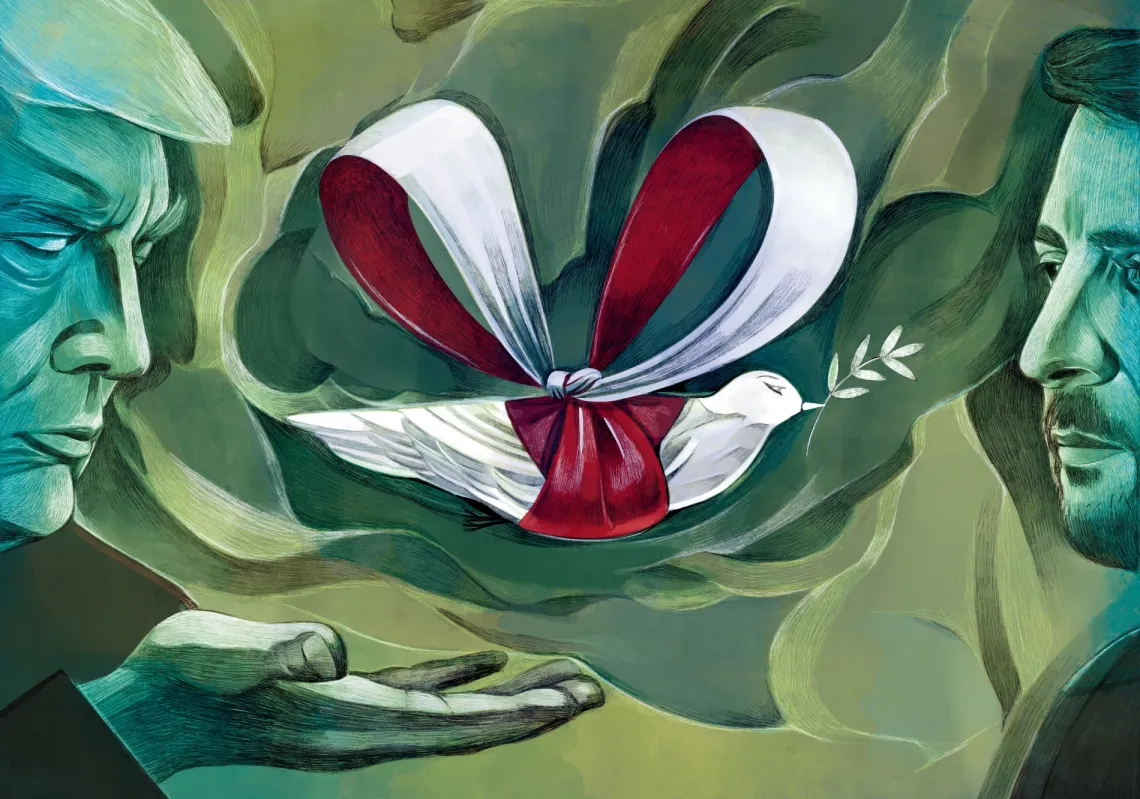
De-escalation is in the overwhelming interest of most countries in the region and the world, and we could see many extend a hand to help bring the conflict to an end
Israel's strikes on Iran have turned a simmering rivalry into a volatile confrontation, fuelling fears of a wider regional war with unpredictable consequences
His vocal criticism of Trump's immigration tactics has seen him emerge as one of the president's most prominent opponents, prompting speculation that he may have presidential ambitions
Trump and Netanyahu disagree on whether to use military force to stop Iran's nuclear programme, and Israel's punishing attack on Iran places the region on a worrisome trajectory
While Israel's attack dealt a severe blow to Iran's military and nuclear infrastructure, the long-term impact remains uncertain as Tehran's potential for retaliation introduces new risks
Each side's actions carry risks of misjudgment, miscalculation, and the possibility that the conflict could escalate beyond the planned declared limits
Tensions reach a boiling point as an IAEA report finds Tehran in breach of its nuclear obligations. Meanwhile, US personnel are ordered out of the region in a sign that escalation may be imminent.
A US envoy wants the institutions of western Libya to accommodate the son of an eastern warlord as Libyan president. Is this another doomed effort to unite the feuding factions, or could it work?
As the FIFA World Cup 2026 shows, identity, belonging, and tension combine to make football fandom unlike any other sport. So, what is going on in fans' brains?
Beijing's duty-free access for African exports promises mutual economic gains, but more importantly, it deepens its strategic influence across the continent