A US Middle East posture that makes strategic sense

A strategy that prioritises capability, specialisation and access over footprint, capacity, and dispersion would be beneficial to all involved parties

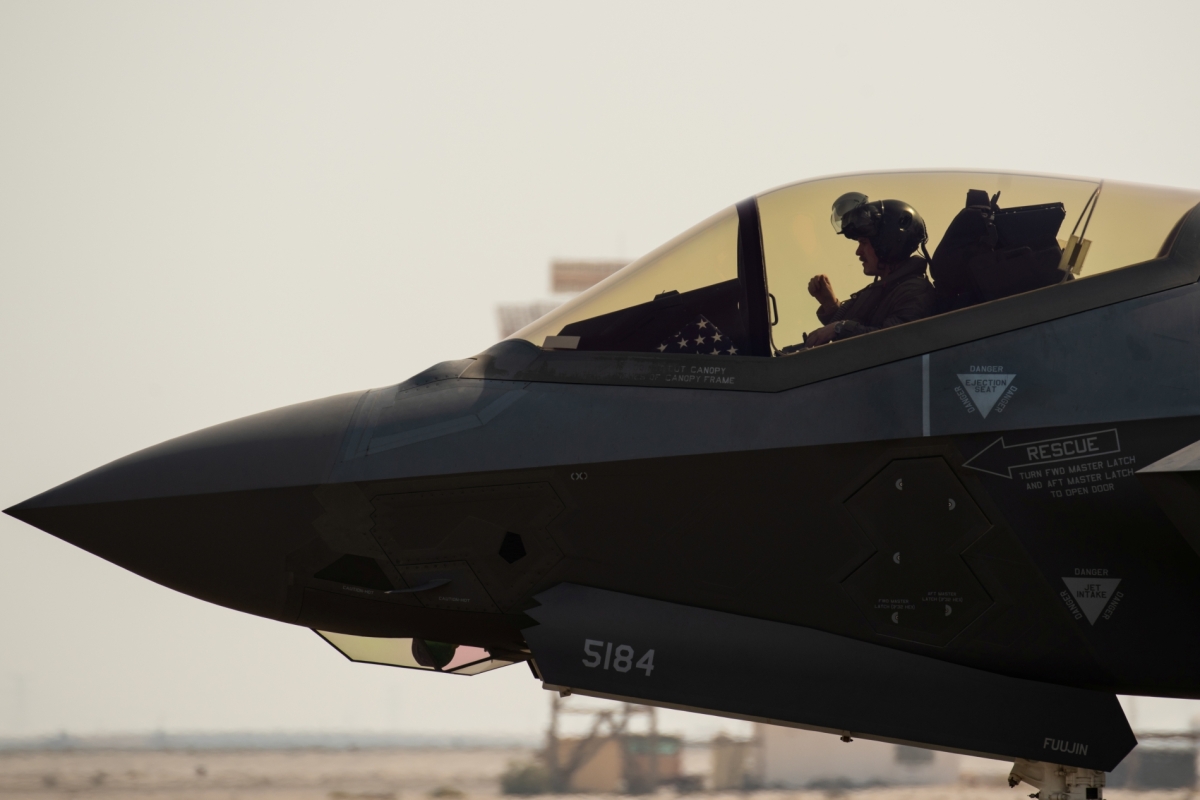
An F-35A Lightning II taxis after exercise Agile Lightning, at Al Dhafra Air Base, Abu Dhabi, United Arab Emirates, in this picture released by the US Air Force on 7 August 2019.
Chris Thornbury/US. Air Force/Handout via REUTERS
An F-35A Lightning II taxis after exercise Agile Lightning, at Al Dhafra Air Base, Abu Dhabi, United Arab Emirates, in this picture released by the US Air Force on 7 August 2019.

A US Middle East posture that makes strategic sense

Any serious discussion of America’s military presence in the Middle East has to go beyond debating how big that presence should be or what shape it should take. The United States is stuck in the Middle East with a bloated footprint that is increasingly hard to defend, physically and politically, precisely because American decision-makers let posture dictate strategy rather than the reverse.

There is no point in asking whether US forces in the region should grow, shrink, or disappear until Washington honestly answers what that posture is meant to achieve and which strategy it is meant to serve.

We have long suspected that the US military presence in the Middle East is too large and too exposed to Iranian missile and drone attacks. The US-Israeli war against Iran has proven us right. When US personnel have to leave their bases mid-conflict and take shelter in Gulf hotels, you have a force protection problem. Iran has not only killed and harassed American troops but also struck critical nodes of US military infrastructure, including Al Udeid Air Base in Qatar and the US Navy’s Fifth Fleet headquarters in Bahrain. That we have reached this point is remarkable, and a damning indictment of US deterrence in the region.

But the response to such Iranian attacks shouldn’t simply be to trim the US presence, close a few bases here and there, disperse the forces, and/or operate from outside the region. Such a knee-jerk reaction, while guaranteed to be politically popular in Washington, doesn’t address the broader strategic challenge facing the United States in the Middle East: how to more effectively achieve enduring objectives in that still strategically vital part of the world without undermining a US global strategy that emphasises other priority theatres such as the Western Hemisphere and the Indo-Pacific.
REUTERS/Ann Wang
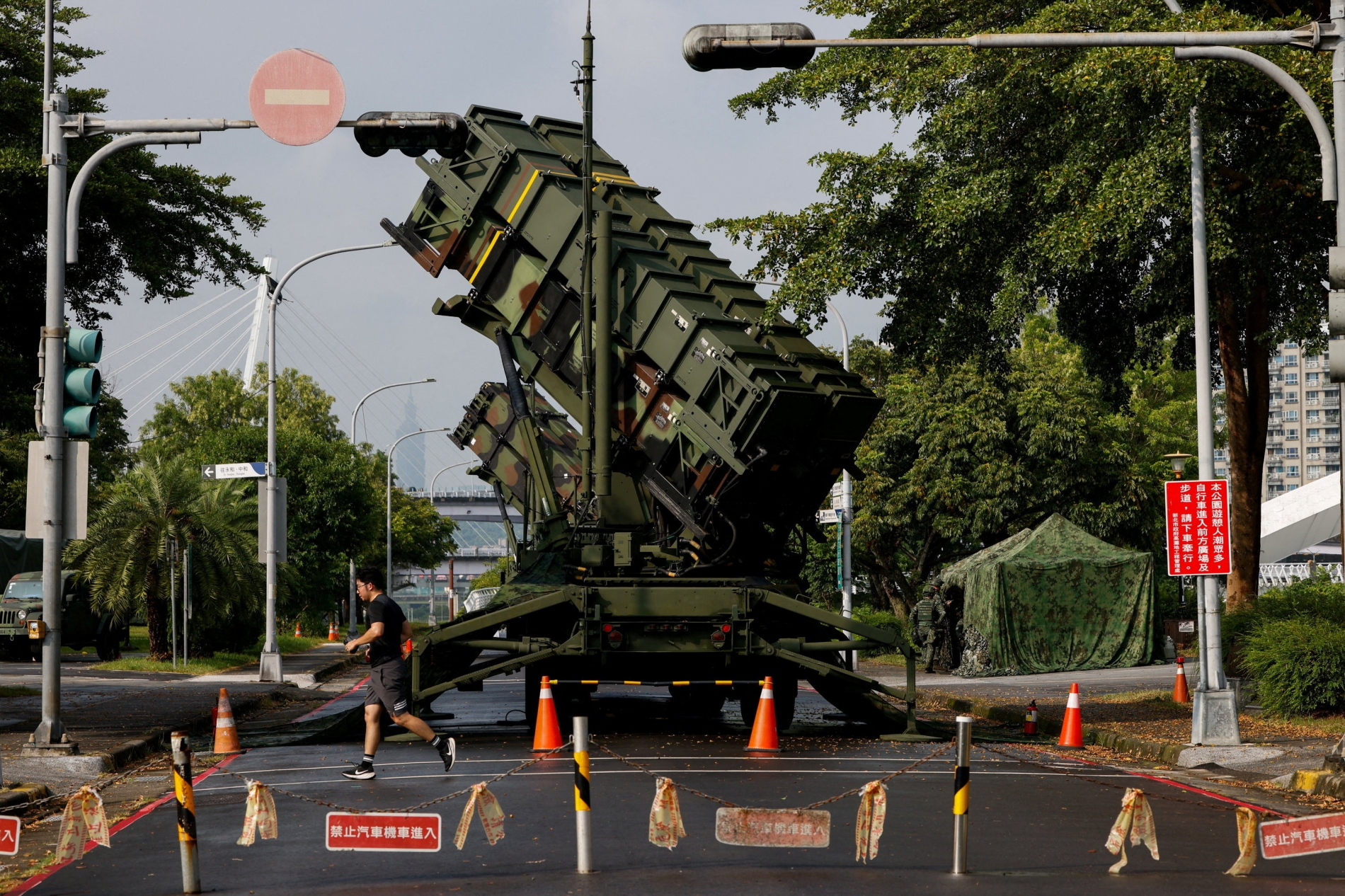
A Taiwanese military Patriot missile system is deployed in a local park during the annual Han Kuang military exercises in New Taipei City, Taiwan, on 6 August 2026.

The strategy that makes the most sense, and has made the most sense since at least 9/11, is to enable regional partners to play more effective and constructive security roles. No one in Washington has bothered to put that approach to a real test. Doing so will require the United States to get far more serious about moving away from the role of security guardian or guarantor, which has looked increasingly unpromising of late, and toward the role of facilitator and integrator.

The goal is not for the United States to subcontract Middle East security to its regional partners, or to China for that matter. The first would be unrealistic and the second dangerous. The United States has long-term interests in the region, namely freedom of commerce and navigation, the nonproliferation of weapons of mass destruction, and counterterrorism, and it must be able to defend them independently of its partners’ proclivities and abilities. But the aim is for Washington to secure those interests together with its regional partners, so that the burden on the US military is reduced.

The question, then, is what kind of US posture is best suited to meeting those objectives while promoting a security architecture that puts greater responsibility in the hands of partners. The answer is a posture that prioritises capability, access, and specialisation over footprint, capacity, and dispersion. Let’s take each in turn.
It is time the US committed to sending to the region the right kind of personnel to help partners develop effective, sustainable military capability

Possible postures

US forward-deployed capability in air power, naval power, and special operations will remain indispensable for maritime security, counterproliferation, and counterterrorism missions. However effective partner militaries in the region become, it is hard to believe they will be able, at least anytime soon, to secure critical maritime chokepoints and stop Iran from acquiring nuclear weapons on their own. (The resurgence of an Islamic State-like transnational terrorist organisation cannot be ruled out. But it is less likely in the foreseeable future, thanks to the much-improved counterterrorism capabilities of regional countries and the lessons learned from that horrific experience.)

Those missions demand considerable warfighting capacity, and only the United States possesses it. America's regional partners can pack a punch with their modern air forces, but they lack the intelligence and aerial capabilities needed to strike hard, deep, often, and with precision.

That is why access will remain crucial for the United States in the region. Without it, the US military would have to operate from outside partner territory, which complicates logistics, reduces efficiency, and undermines effectiveness. Some countries, like Bahrain and Qatar, are more generous than others in allowing the US military to conduct operations from their territory. With most other partners, however, gaining access is a constant battle.

Russ Scalf/REUTERS
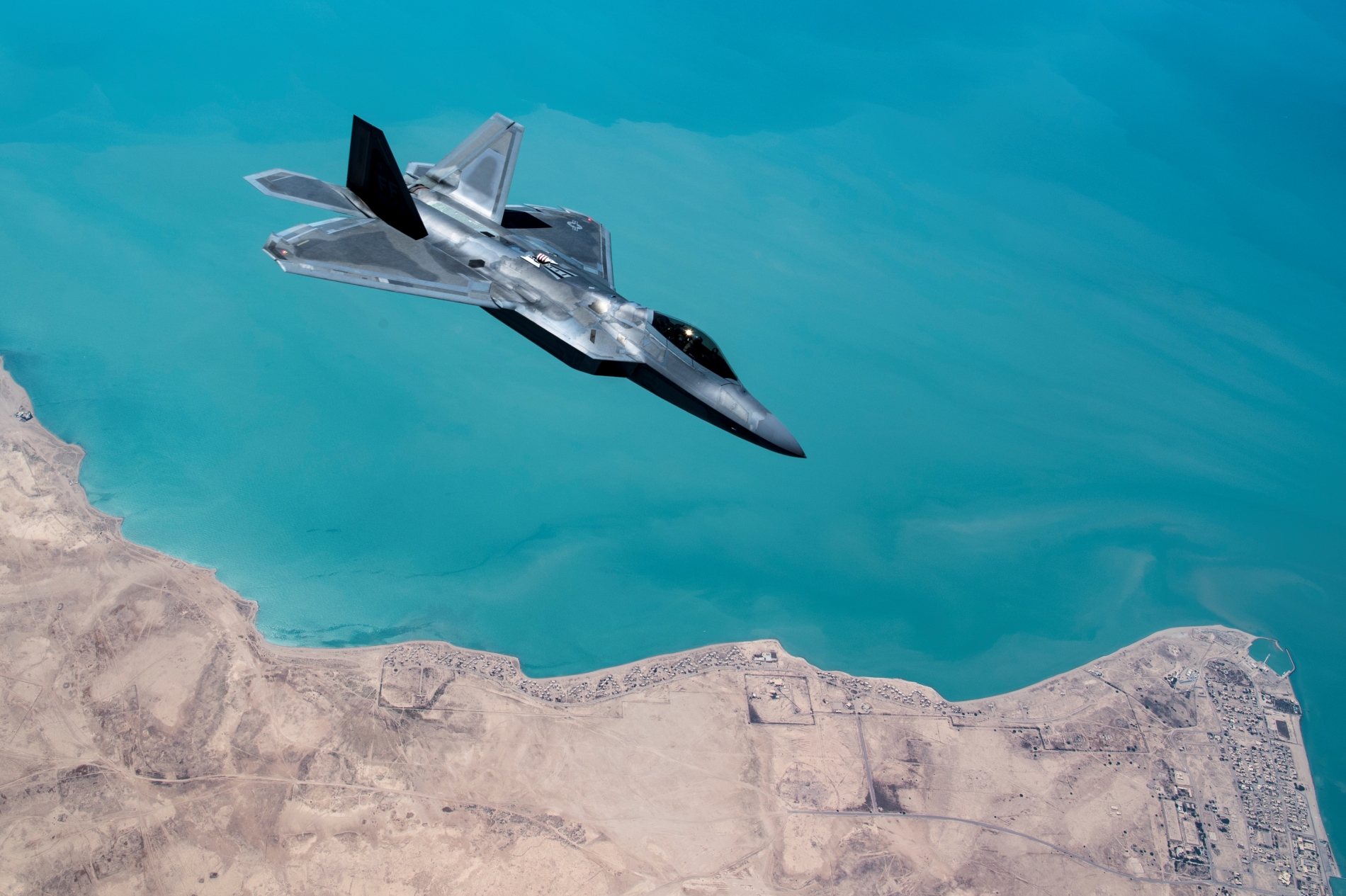
A US F-22 Raptor, based out of Al Udeid Base in Doha, Qatar, during a combat air patrol mission over an undisclosed location in Southwest Asia, on 13 September 2019.

Partner concerns about US access are, for the most part, legitimate. Granting Washington unlimited access could provoke Iran and invite attacks on their territory, which is precisely what has happened throughout the war. Iran's message to Jordan and the Gulf Arab states is disingenuous but powerful: if you let US forces stationed on your soil strike us, we will retaliate against you. It is powerful because Iran has acted on its threats, hoping to push Jordan and the Gulf Arab states to further restrict or deny US military access. It is disingenuous because Iran would have attacked those countries even if the United States did not have a single base in the region. Such strikes are an essential part of Tehran's asymmetric strategy and remain its most effective response to a US attack.

By specialisation, I mean giving US personnel the right expertise and experience to carry out the invaluable mission of security cooperation with partners. It is time Washington committed to sending to the region not just warfighters, but the right kind of personnel to help partners develop effective, sustainable military capability. Asking American soldiers with no proper training in security cooperation to advise and assist partners as they reform, and even transform, their militaries is like asking an engineer to fix your sink. You need a plumber for that job, not an engineer.

And on the rare occasions when regional partners are lucky enough to work with qualified US personnel on security cooperation, those personnel soon move on to their next assignment.

Given the aerial threat of Iran, the most important area where security cooperation can produce strategic dividends is air and missile defence

Objective-tied timelines

Security cooperation is a people business built on trust, especially in the Arab world. The moment American officers develop a rapport with their hosts, they have to pack their bags and start over somewhere else. That is why I stress longevity in this mission: it takes time to cultivate those relationships, and more time still to plan and develop capability. To be sure, American advisers cannot stay indefinitely, and some kind of rotation process is necessary. But the timeline of each assignment must be tied to clearly defined objectives and benchmarks.

Given the aerial threat of Iran, the most important area where security cooperation can produce strategic dividends is air and missile defence. American advisers should be there not only to counsel partner countries on which weapons to buy from the United States but also to share expertise on how to upgrade regional cooperation and coordination. We have seen the fruits of better cooperation throughout the war with Iran. The Gulf countries have countered the majority of Iranian missiles and drones by acquiring more interceptors and, just as importantly, by connecting sensors, command centres, and weapons across national boundaries.

US Central Command has played a critical supporting role. It has enabled US and regional personnel to share threat warnings, plan multinational exercises and coordinate defensive responsibilities. It has also pressed its Gulf partners to build a fuller, shared air picture by improving how national operations centres exchange warning data and coordinate with one another.

Andrew Caballero-Reynolds/REUTERS
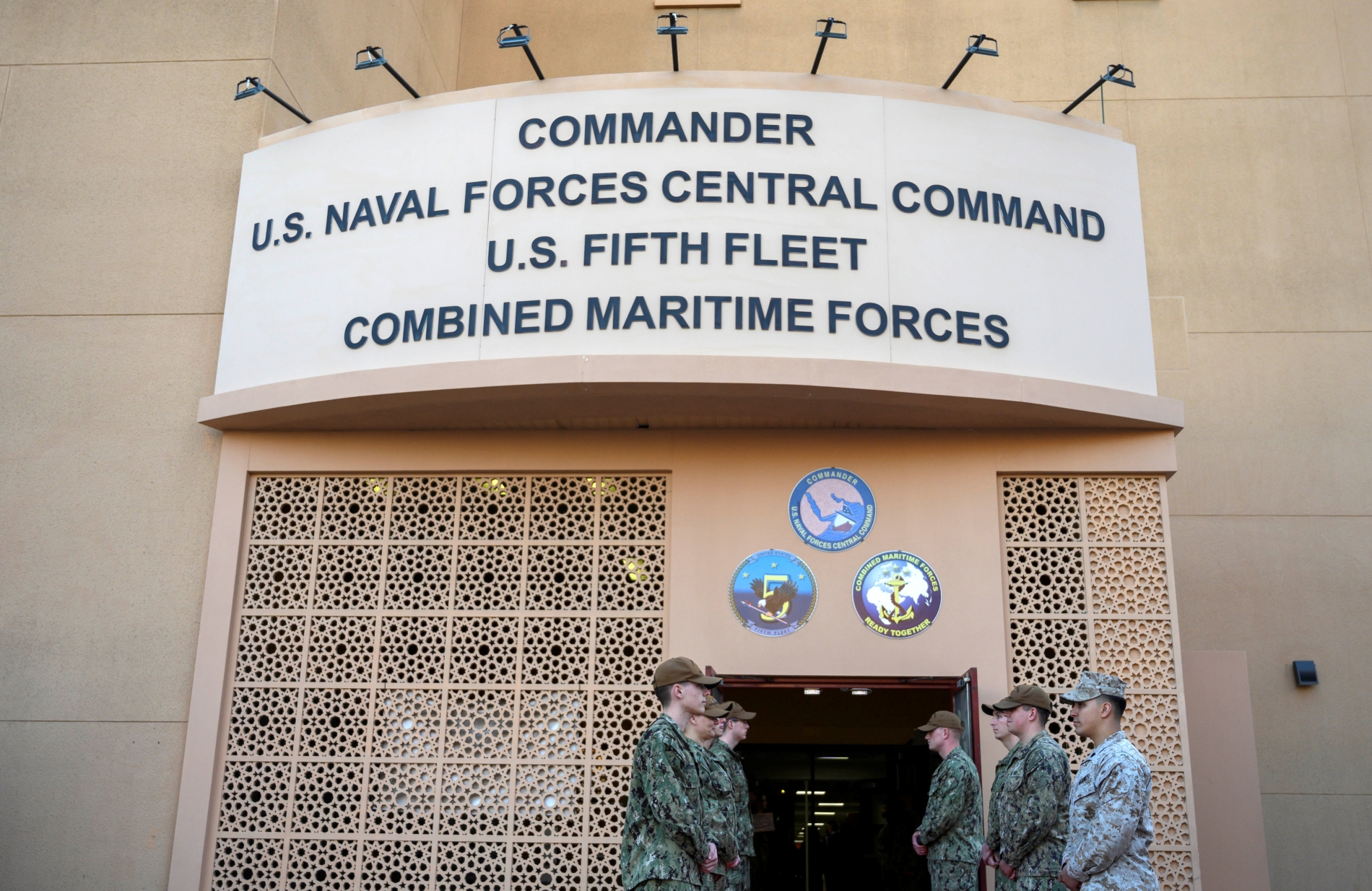
US Navy personnel stand at attention at the entrance to US 5th Fleet, Combined Maritime Forces in Manama, Bahrain, on 11 January 2019.

Of course, it's not all perfect. Interoperability and political willingness to deepen cooperation remain obstacles, but compared with where air and missile defence cooperation in the region stood before the war, it's infinitely better.

The lesson of the war with Iran is not that the United States should stay or go. It is that posture is a means, not an end, and that Washington has spent far too long treating it as the latter. A force structure built on habit, inertia, and the politics of presence has proven expensive to sustain and exposed to attack. Starting with the question of how many troops and bases to keep flips the logic. The right place to start is a clear-eyed definition of what the United States needs to achieve in the Middle East and which of those objectives only it can secure.

Once that question is answered honestly, the contours of a sound posture come into focus. It favours capability over footprint, access over capacity, and specialisation over dispersion. It keeps the air, naval, and special operations capabilities needed to protect maritime chokepoints, block an Iranian bomb, and fight terrorism. It invests in the people and the staying power that effective security cooperation demands. And it shifts the United States from guarantor to facilitator and integrator, with partners carrying more of the load. Air and missile defence have already shown what that looks like in practice. When partners connect their sensors, command centres, and weapons, they stop a great many missiles and drones that a lone defender would not.

None of this is easy, and none of it will be popular with those who equate American commitment with the number of flags flying over bases. But the alternatives are worse. Trimming forces without a strategy is retreat in disguise, and keeping them in place without one is complacency that Iran has already shown it can punish. Washington can keep counting troops, or it can start counting results. A posture that cannot be tied to a strategy is not strength. It is a target.. 

font change