Syria takes aim at the militias backed by Iran

While Damascus is focused on border reinforcements, weapons interceptions, drone monitoring, and improved coordination with Baghdad, Tehran is working out how to respond

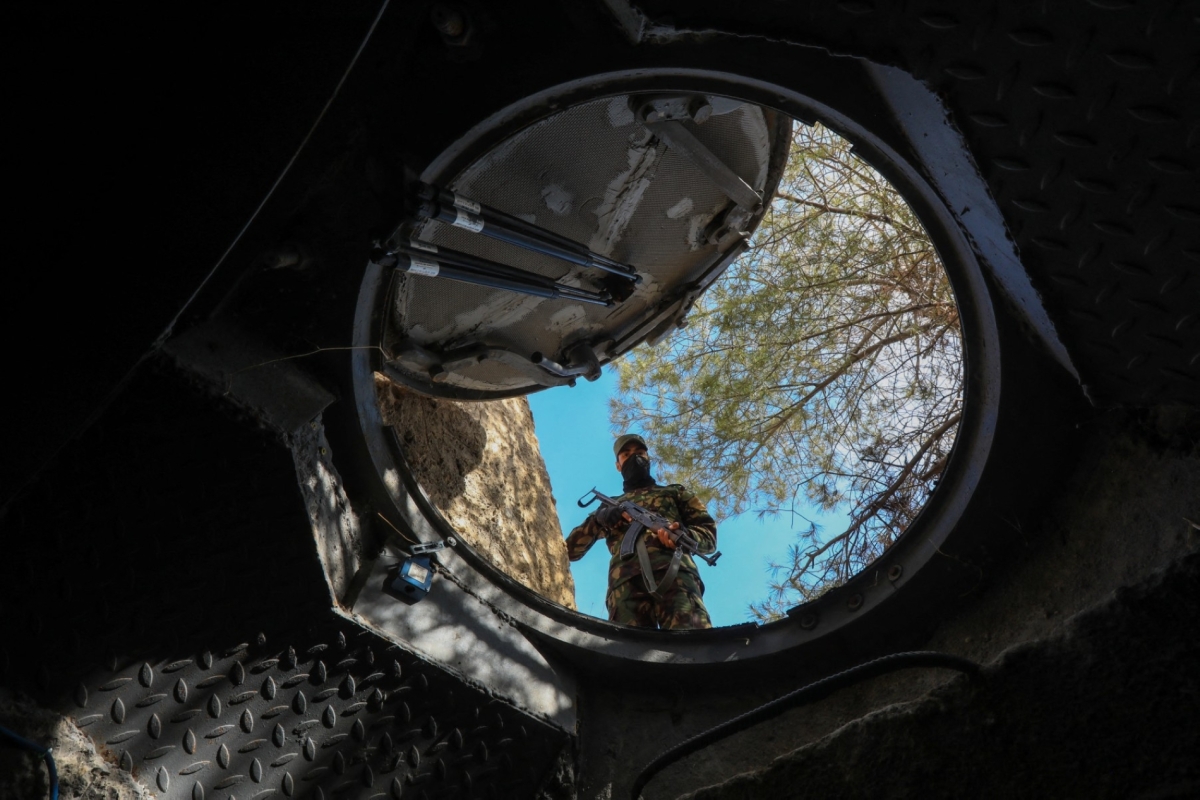
A member of the security forces of Syria's new authorities looks at an entrance to a tunnel of ousted president Bashar al-Assad's feared younger brother Maher's private offices on the outskirts of Damascus on 21 January 2025.
Bakr ALKASEM / AFP
A member of the security forces of Syria's new authorities looks at an entrance to a tunnel of ousted president Bashar al-Assad's feared younger brother Maher's private offices on the outskirts of Damascus on 21 January 2025.

Syria takes aim at the militias backed by Iran

The Syrian government is strengthening its military and security capabilities for border control, with Iranian-linked cells in the crosshairs. This includes groups affiliated with Hezbollah in Lebanon, as well as Iraqi militias operating inside Syria and along its frontiers. Dozens of new military outposts are being established along the borders with Iraq and Lebanon, amidst unconfirmed reports that Syria is preparing to send fighters to Yemen to support the Saudi-led coalition’s campaign against the Houthis.

Military reinforcements are one element of the Syrian strategy. Damascus is also improving communications with Baghdad and Beirut, hoping to reach a point where Syria no longer needs to act alone to protect its territory and borders. Iraqi Prime Minister Ali al-Zaidi’s visit to Damascus is believed to have helped strengthen bilateral political, economic, and security relations. For Iran and its proxies, the growing closeness between the governments of Iraq and Syria is an unwelcome development.

Damascus knows that it's only a matter of time until Iran intervenes to counter this shift, especially if it decides to send troops to fight the Houthis in Yemen, so security measures have been tightened. On 9 November, Syrian Foreign Minister Asaad al-Shaibani said the military agreement recently signed with Saudi Arabia contained no provision for deploying Syrian forces to Yemen, adding that any decision to do so would be announced publicly. Two days earlier, on 7 November, the Syrian Arab News Agency (SANA) quoted a diplomatic source as saying that the agreement with Riyadh was confined to “training, the exchange of expertise and military consultations”.

Rumoured deployment

Syria’s priorities remain consolidating domestic security, reconstruction, and economic recovery, but several esteemed international news agencies (including Reuters, Agence France-Presse and the Associated Press) have suggested that Damascus is preparing to send thousands of fighters to line up against the Houthis. Al Majalla contacted several Syrian officials regarding these reports. While none confirmed that Syrian fighters would be sent to Yemen, they did hint that Syrian military personnel were preparing to fly to Saudi Arabia.

Deployment to the Gulf doesn't necessarily mean they will be sent to Yemen; it could be for training programmes. One source, that did not want to be named, said any decision to send Syrian fighters to fight the Houthis would depend on how military cooperation between Damascus and Riyadh develops. The Saudis are in a three-way mutual defence pact with Pakistan and Türkiye, called the Mecca Alliance. Syria may later join it.

Gulf financial support, especially Saudi capital, will be key to Syria’s economic and military rebuild, which is why some Syrians close to Damascus security circles told me they would not be surprised if Syrian troops did eventually get involved in the conflict in Yemen. The fact that relations between Damascus and Riyadh are at their strongest in decades could also sway Syria's decision to get militarily involved.

Syria’s improved relations with the Gulf states have not gone unnoticed by Iran and its allied militias. Tehran spent billions of dollars and sacrificed countless lives supporting the Assads’ rule in Syria, especially that of Bashar al-Assad since he took over from his father in 2000. Under the Assads, Syria became a smuggling corridor supplying Iran’s main proxy, Hezbollah. Yet since December 2024, Syria’s new leaders have hung up the ‘Not Welcome’ sign and are now bracing for a complex period of confrontation with Iran and its interests, not least along its borders.
BAKR ALKASEM / AFP
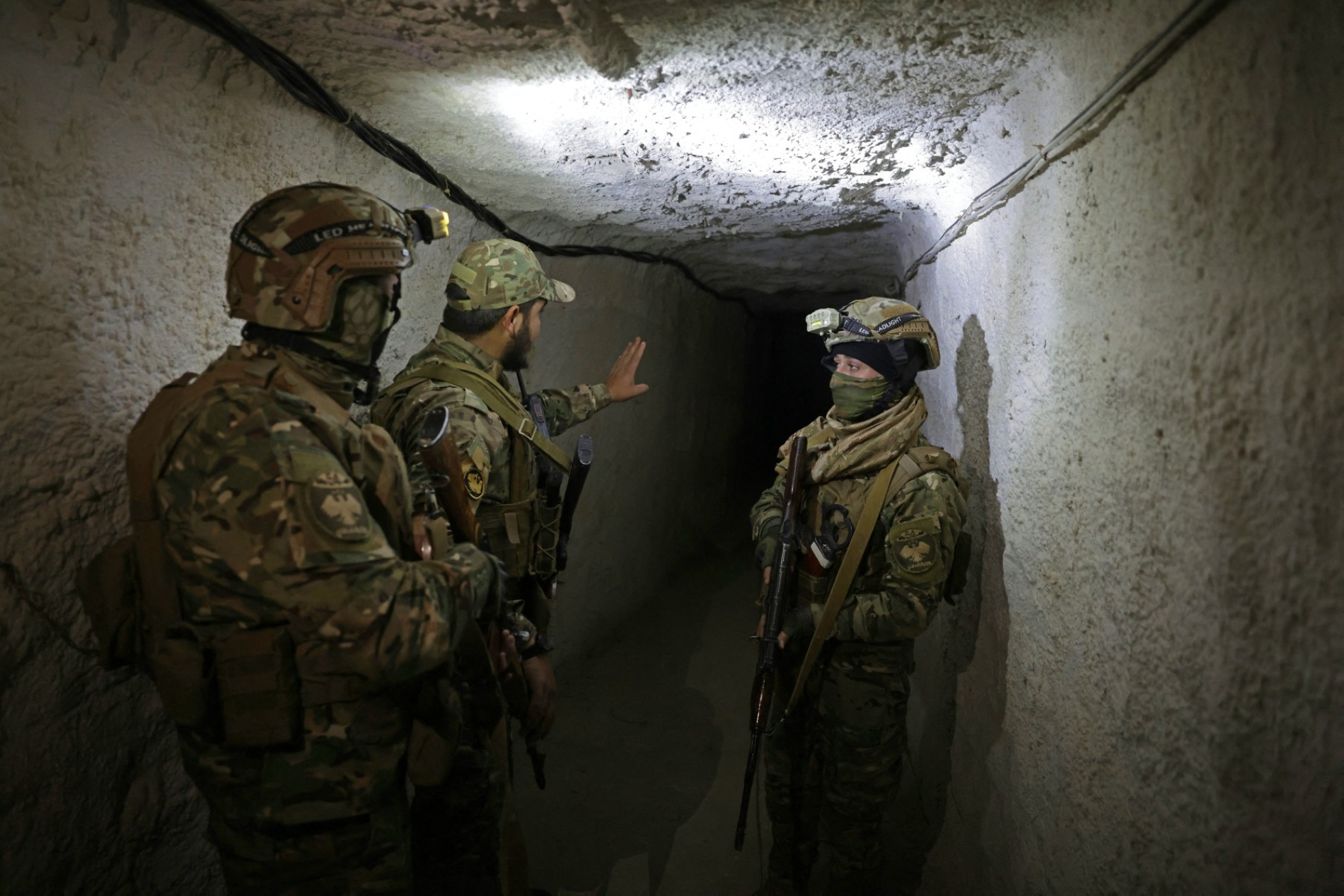
Syrian army soldiers inspect a tunnel on the Syrian–Lebanese border in the rural area of Al Qusayr on 1 April 2026.

Rising tensions

Tensions between Damascus and Hezbollah further rose after Syrian authorities announced on 3 November that they had arrested a Hezbollah-affiliated cell accused of plotting an attack on the Homs oil refinery, after an intelligence-led operation that included “meticulous surveillance,” according to the Interior Ministry. It added that explosive devices were seized and confiscated. Analysts say this may herald a new approach from the Lebanese group, targeting Syria’s strategic energy infrastructure.

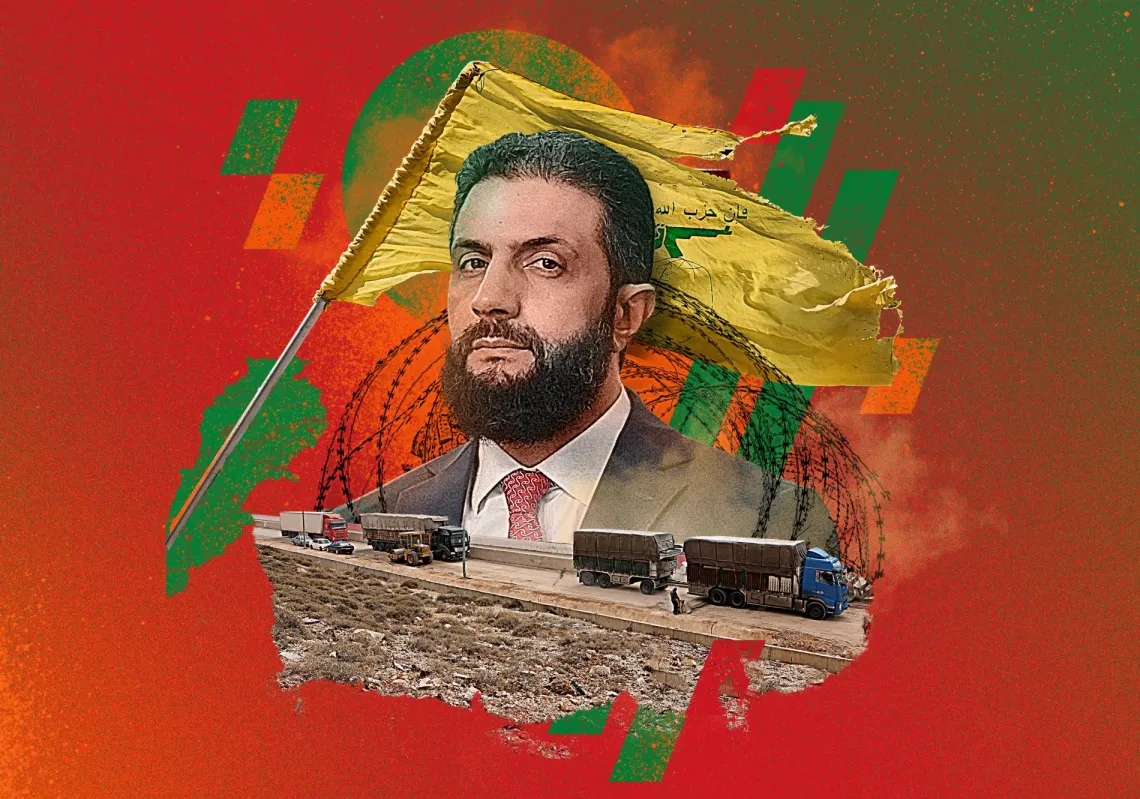
Since Bashar al-Assad fled to Russia almost two years ago, Hezbollah has sought to undermine the new government and draw Syria into a war with Israel, which would serve the group’s interests and advance Iran’s ambitions to foment instability across the Middle East in pursuit of its regional objectives. When it became clear that Syria would no longer serve as a transit corridor and a weapons depot for the Lebanese group, Hezbollah’s weapons went into overdrive, as it sought to remove the arms it held there.

Syrian authorities believe that some of Hezbollah’s weapons stockpiles may still be in the country; likewise, weapons intended for Iran-backed militias in Iraq. Shipments intercepted by Damascus since December 2024 have contained weapons of varying sophistication, including Konkurs anti-tank missiles, Grad rockets, mines, bombs, rifles, ammunition, and detonators. The smuggling networks also handle funds destined for Hezbollah and consignments of narcotics manufactured in Lebanon.
Since Bashar al-Assad fled almost two years ago, Hezbollah has sought to undermine the new government and draw Syria into a war with Israel

Border surveillance

Syrian authorities are conducting round-the-clock operations to intercept drug shipments and dismantle trafficking networks, with new seizures and arrests almost every week. According to Syria's Anti-Narcotics Directorate, 157 security operations were carried out against drug trafficking and distribution networks in October 2026, resulting in 30 active networks being dismantled. Authorities seized 4.3 million Captagon pills, 582kg of hashish, 7kg of crystal meth, and 28,000 tablets.

Hezbollah is trying to rebuild its networks inside Syria, recruiting both former operatives and new members. It hopes to establish new, less conventional smuggling networks with no apparent organisational links to Hezbollah, since its established networks are now vulnerable to surveillance and prosecution. It seeks operatives capable of carrying out bombings, assassinations, and acts of sabotage inside Syria, as well as recruits to launch operations against neighbouring countries from Syrian territory.

Among those reinforcing Hezbollah's ranks in Lebanon are Syrians who could be prosecuted at home for their record of abuse during the Assad era. Some are later sent back into Syria after training to carry out operations on Hezbollah's behalf. According to the Interior Ministry's statement earlier this month, members of the arrested cell had received training at camps in Lebanon.

Saudi NewsAgency/REUTERS
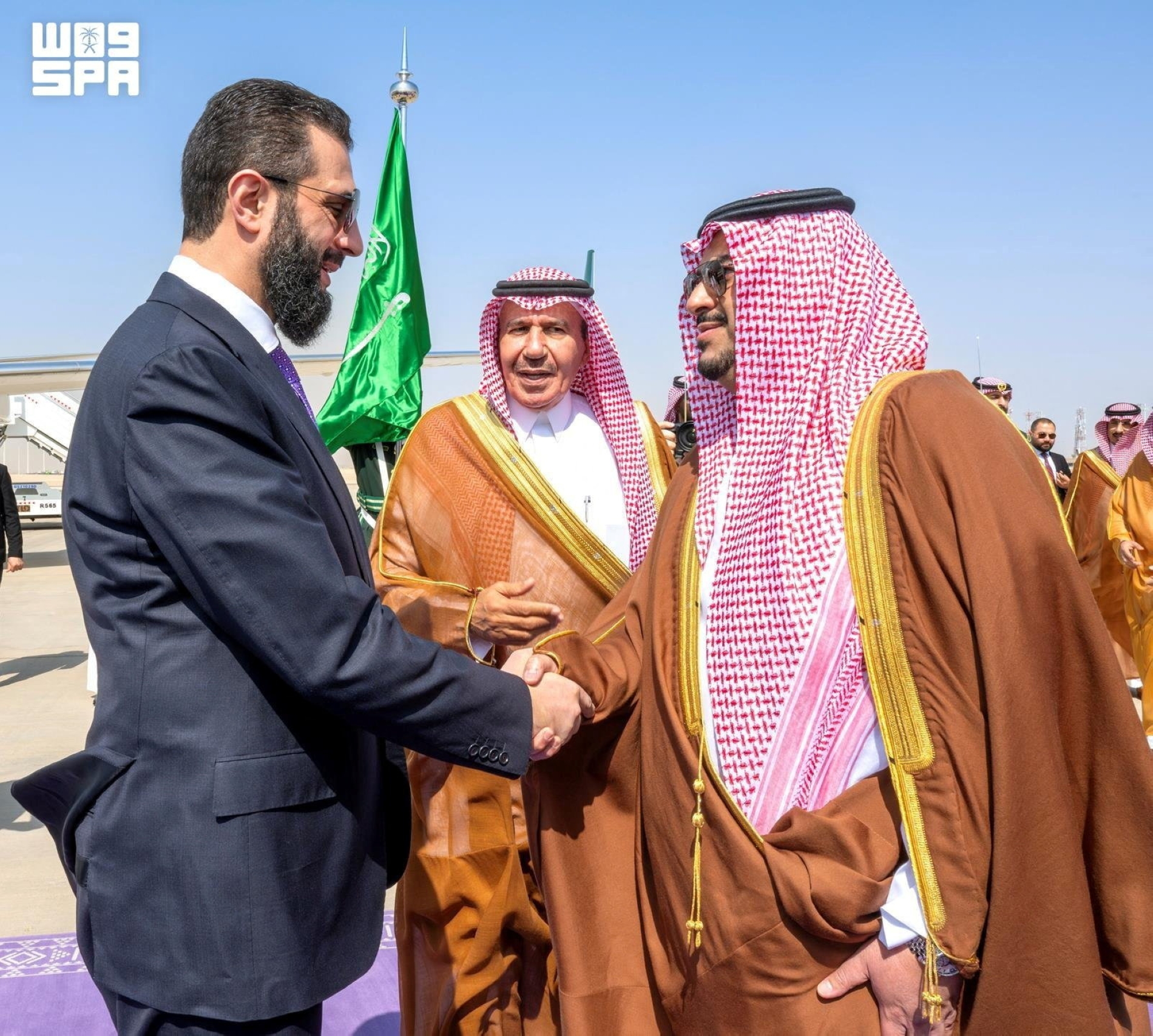
Syrian President Ahmed al-Sharaa is received by Deputy Governor of Riyadh Prince Mohammed bin Abdulrahman bin Abdulaziz Al Saud as he arrived to meet Saudi Crown Prince Mohammed bin Salman, in Riyadh, on November 4, 2026.

Transit route

Stability in Syria would deprive Iran and Hezbollah of their most important strategic corridor in the Middle East. With Syria returning to the Arab fold and strengthening its relations with the Gulf states, Hezbollah would find itself increasingly confined to Lebanon, deprived of the transit routes needed for the supply of Iranian and Iraqi weapons, funds, and narcotics.

In response, Hezbollah has targeted cities, religious institutions, and prominent religious figures to inflame sectarian tensions. In April, for example, Syrian authorities announced the arrest of a cell that was allegedly planning an attack in Damascus "by planting an explosive device outside the home of a religious figure near the Mariamite Cathedral in the Bab Touma district".

Iran has quietly warned Syria's government that if it intervenes against Hezbollah in Lebanon, Tehran would respond by targeting Syrian cities and activating its cells to carry out attacks inside Syria. Al Majalla understands that the Syrian authorities have been monitoring hundreds of individuals suspected of belonging to militias, tracking their movements and infiltrating their cells, and that this has helped thwart planned attacks in Damascus, Deir ez-Zor, Homs, southern Syria, and even Hasakah province, where those involved sought to exploit existing tensions.

In May, Syria's Interior Ministry announced simultaneous security operations in Damascus, Aleppo, Homs, Tartous, and Latakia that led to the dismantling of a Hezbollah cell whose members had received intensive specialist training in Lebanon. According to the ministry, one of those arrested was the Hezbollah official directly responsible for overseeing assassination operations. It is understood that the cell was preparing to kill senior Syrian government figures.

REUTERS/Karam al-Masri
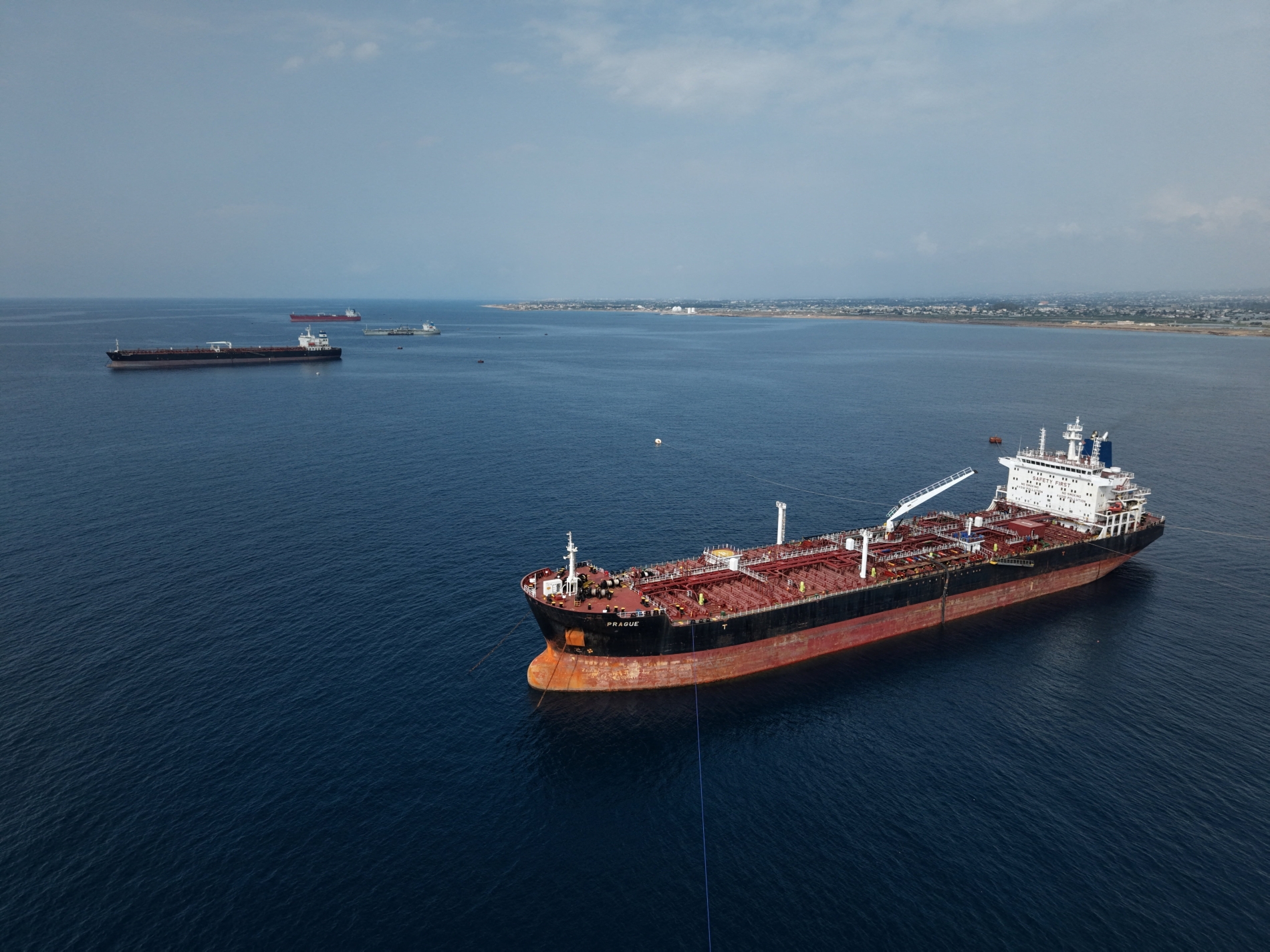
A drone view shows fuel vessels docked at the Baniyas oil terminal in Baniyas, Syria, on 12 October 2026.

The bigger picture

Among the geopolitical factors influencing events is the transit of oil to export markets. Oil-producing Middle Eastern states including Iraq, Kuwait, Saudi Arabia, and the United Arab Emirates have long used ships travelling through the Strait of Hormuz from the Arabian Gulf to markets including Asia and Europe. However, as a result of the US-Israeli war against Iran that began on 28 February, the Iranians have effectively closed both the Strait of Hormuz and the Bab al-Mandab Strait, the latter acting as a gateway between the Red Sea and the Gulf of Aden, which is now controlled by the Iran-backed Houthi militia in Yemen.

Tehran increasingly thinks that Syria (which borders Iraq and has a Mediterranean coast) may emerge as an alternative transit corridor for Arab oil. Iran sees this as a threat that weakens its leverage. This may explain why Hezbollah and its affiliates have been targeting Syria's energy sector, including 22 attacks on Syrian oil pipelines in recent months. Others think Hezbollah's actions may relate more to Syrian authorities' successful interception of dozens of smuggling operations along the border, which has placed the group under mounting pressure.

Earlier this week, the Syrian government sent reinforcements to its border with Lebanon. In recent weeks, it has sent reinforcements to its border with Iraq to counter the threat posed by Iran-backed militias deployed along the frontier, partly in response to reports of Syrian involvement in Yemen. Al Majalla understands that the Syrian authorities are fully aware of Tehran's intentions, having received numerous warnings through Iraqi intermediaries that any intervention against Iran's proxies in Yemen or Lebanon would elicit a strong response, including attacks on Syria itself.

Damascus wants to establish strong security ties with Iraq to prevent threats from armed groups supported by Iran. Al-Zaidi seems willing to cooperate

Pre-emptive measures

The reinforcements along Syria's borders with Iraq and Lebanon thus appear intended to forestall any operations by militias acting on Iran's behalf. The Syrian army has established around 50 permanent military outposts along the Syria-Iraq border over the past two weeks, together with several other temporary, mobile positions. They are designed to prevent infiltration and smuggling, either of weapons or personnel. Drones are also being used to monitor the stretches of territory between military positions.

In Deir ez-Zor and Homs, the Syrian army has appointed new commanders with experience in border protection and combating smuggling. Following Iraqi Prime Minister Ali al-Zaidi's visit to Damascus in late October, Syrian soldiers and guards have increased contact with their Iraqi counterparts. An Iraqi source told Al Majalla that Iraq's border guards are now in daily contact with the Syrian side through a joint coordination centre. Brig. Gen. Hassan Abdul Ghani is understood to represent Syria on matters relating to border security.

Damascus wants to establish strong security ties with Iraq to prevent threats from armed groups supported by Iran, and to avoid having to act unilaterally along the border, which could undermine trust. Al-Zaidi seems willing to cooperate. He has made changes to the intelligence services and military along the border, and used legal measures against figures linked to Tehran who have obstructed his efforts to bring all weapons in Iraq under state control.

 Iraqi Prime Minister's Media Office/REUTERS
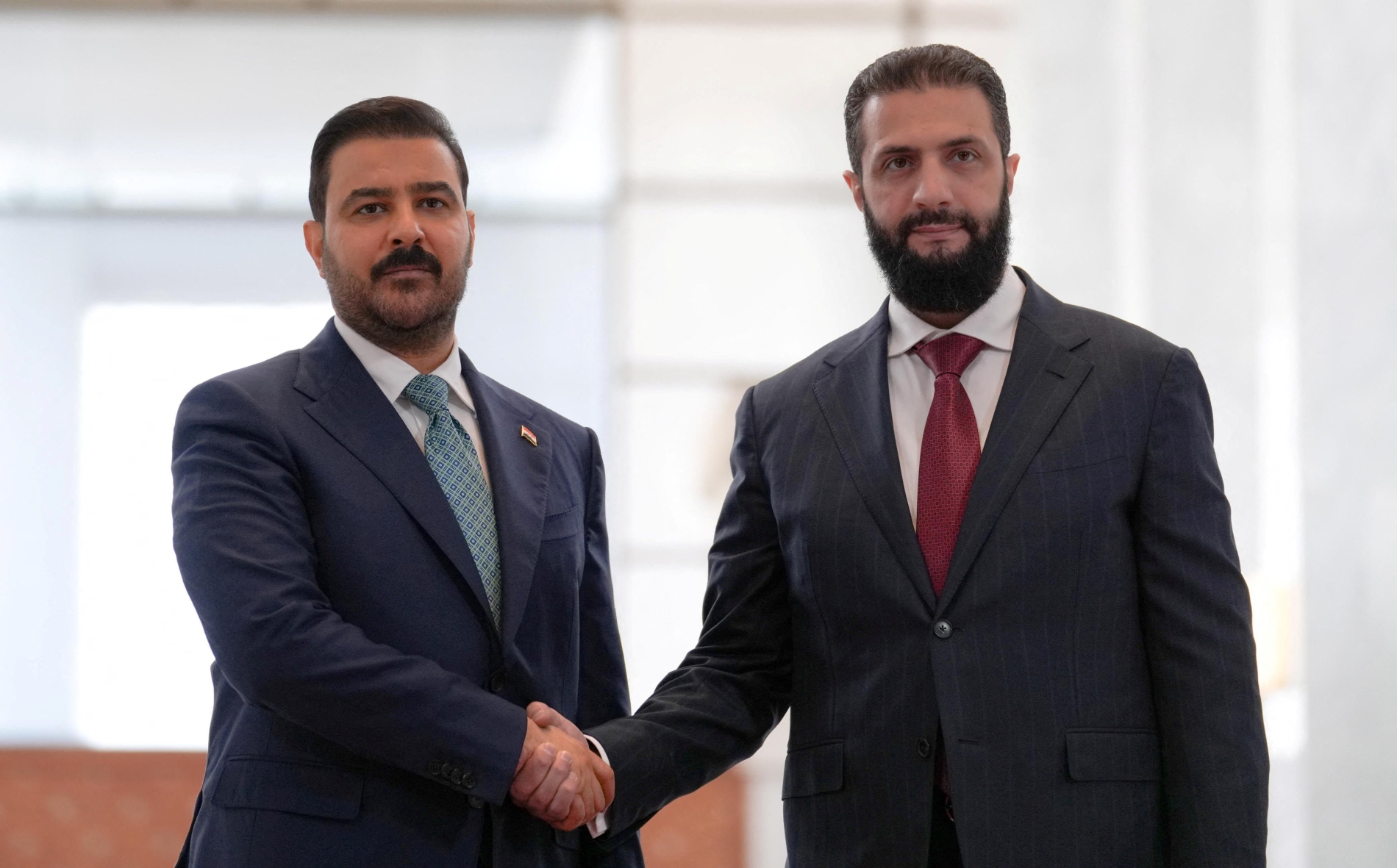
Iraq's Prime Minister Ali al-Zaidi meets Syrian President Ahmed al-Sharaa in Damascus, Syria, on 28 October 2026.

Moving into position

Some Iraqi militias, including Harakat al-Nujaba and Kataib Hezbollah, have been reinforcing their positions along the Syrian frontier. These groups oppose Baghdad's policies and continue to pursue their agendas at odds with the government. Al Majalla understands that Iraq's Kataib Hezbollah has transferred dozens of fighters, weapons, and rockets to various locations in Iraq's western Anbar province over recent weeks. Anbar is a tribal region from where Islamic State grew more than a decade ago. In March, a base in Anbar was bombed by the US, targeting Iraqi militias fighting for Iran.

The deployment of Kataib Hezbollah fighters and weapons to Anbar could suggest preparations for attacks, or the group may just be moving weapons out of the major Iraqi cities into more remote areas ahead of any deadline to surrender weapons to the state. Kataib Hezbollah's movements coincided with similar deployments by another group, Harakat Hezbollah al-Nujaba, whose commanders have sworn absolute loyalty to Iran's Supreme Leader, heightening Syrian concerns and prompting reinforcements from Damascus to the border region.

The Syrian government would ideally want to pursue a foreign policy that avoids confrontation and recognises that it cannot secure its borders through its own efforts alone. In Baghdad and al-Zaidi, it may have found a partner.

font change