Algeria’s Niger deployment comes with serious risks
As well as being a vast expanse of desert, the Sahel is a test for Algiers because of its proxy warfare and armed groups adapting drone technology. The biggest risk is that Algeria gets sucked in
AFP
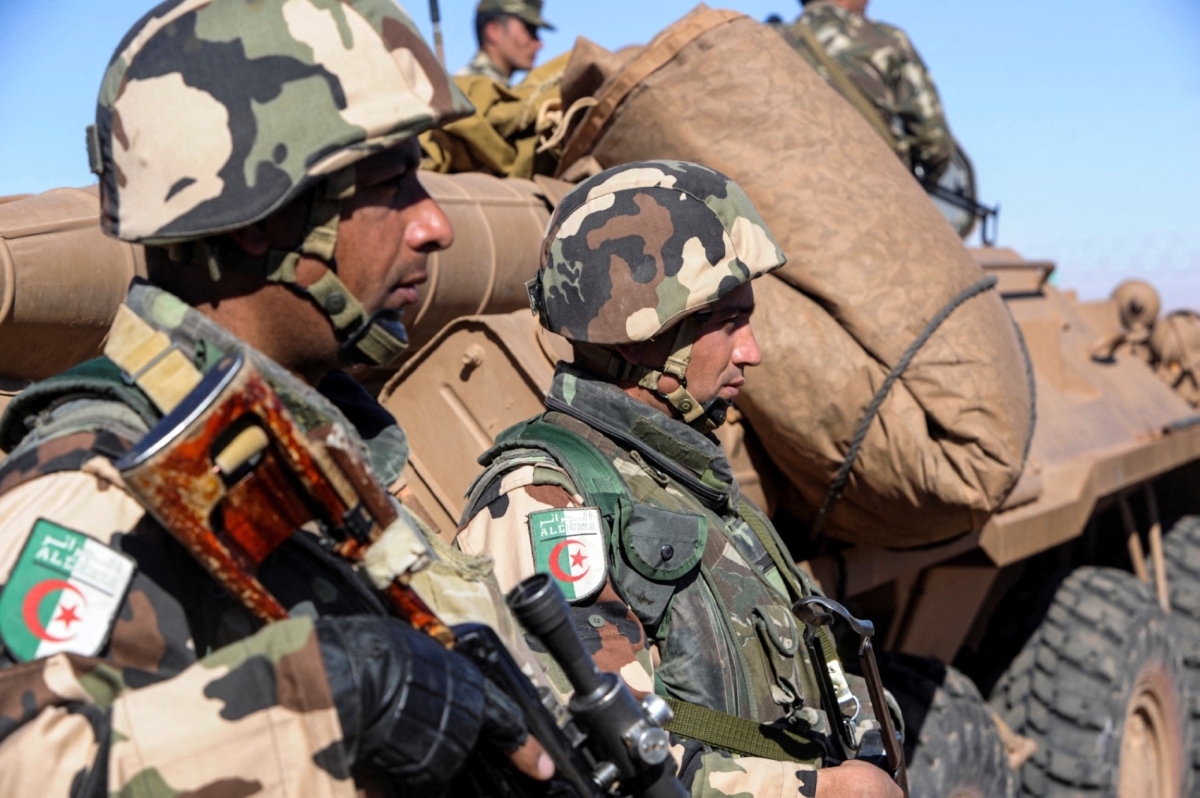
Algerian soldiers stand guard at the Tiguentourine gas complex in In Amenas, Algeria, on 31 January 2013.
Algeria’s Niger deployment comes with serious risks
For the first time since 1973, an Algerian military convoy has crossed into neighbouring Niger, after parliamentary approval was given for the deployment of the army beyond the country’s borders. In agreement with Nigerien authorities, the troops have begun securing oil-tanker convoys and protecting the key investments of Algeria’s state oil company Sonatrach in the area around Kafra oilfield.
The deployment reflects a defence doctrine aimed at safeguarding Algeria’s strategic hinterland and pre-empting emerging threats along its southern frontier, as both parliamentary chambers endorsed President Abdelmadjid Tebboune’s request to send troops to Niger. Algeria has long been reluctant to deploy its armed forces abroad, in keeping with the principles that have shaped its foreign policy, but constitutional amendments adopted in 2020 created the legal basis for such deployments, subject to approval by a two-thirds majority in each chamber.
Although parliament’s authorisation was unspecific, diplomatic and media reports have pointed to a likely troop deployment destination, with former Algerian ambassador Amar Belani suggesting on Facebook that they may be deployed to the Madama military outpost in northern Niger, near the Libyan border. Once a French military stronghold, Madama was expanded during Operation Barkhane (2014-22) against Islamist militants.
Its military value lies in its command of the surrounding Sahelian expanse and the overland routes that cross the region’s porous borders. Madama is 263km from the Al-Wigh military base in Libya’s Fezzan region, which is a major installation associated with forces loyal to Field Marshal Khalifa Haftar. It serves as a major logistical and operational hub in south-western Libya.
Algeria's military deployment follows several months of gradual rapprochement with Nigerien leaders
On-off relationship
Algeria's military deployment follows several months of gradual rapprochement with Nigerien leaders in the capital, Niamey. Relations deteriorated earlier this year when Niger recalled its ambassador from Algiers in solidarity with Mali and Burkina Faso after Algeria downed a Malian drone. Military cooperation resumed in late August, when Algeria dispatched military aircraft to the Nigerien capital following an attempted mutiny against the government of Gen. Abdourahamane Tiani. The rapprochement culminated on 21 October, when Niger's Defence Minister Salifou Mody signed a military cooperation protocol in Algiers, just four days before the Algerian parliamentary vote.
Saifeddine Kaddache, an Algerian researcher in economics and geopolitics, said the deployment had "strategic implications well beyond a conventional military presence," adding: "It gives Algeria a direct geopolitical instrument for reinforcing stability in Niamey and establishing effective constraints on attempts to undermine the current Nigerien government. In terms of the regional balance of power, this presence represents a genuine restructuring of the security equation... Algeria seeks to restore its influence on the ground in the Sahel."
Security and economic investment are closely intertwined. Protecting energy infrastructure, whether it be oilfields, pipelines, or power generation facilities under Algerian operational supervision, is essential to the success of these projects. Sonatrach and Niger's Sonidep have already begun drilling four exploratory wells in the Kafra oilfield. The exploration licence covers more than 23,000 sq. km. in the Agadez region, near the Algerian border. The investment complements the Trans-Saharan Gas Pipeline project, which aims to transport Nigerian natural gas through Niger to Algeria and onward to European markets.
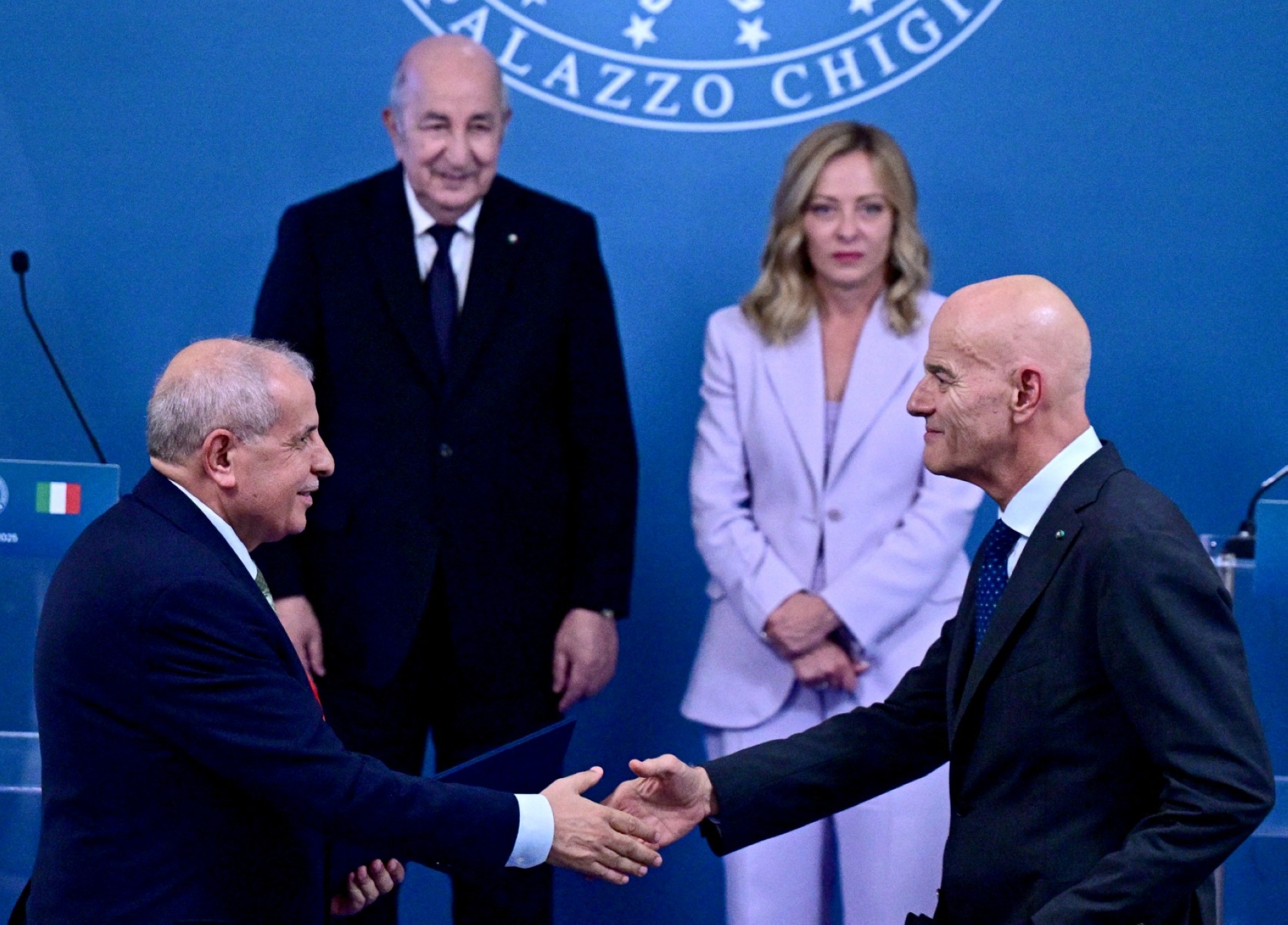
Eni CEO Claudio Descalzi shakes hands with Sonatrach head Rachid Hachichi following the signing of an agreement, in the presence of Algerian President Abdelmadjid Tebboune and Italian PM Giorgia Meloni in Rome on 23 July 2025.
Serious challenges
This is far from straightforward, given the complex security conditions across the Sahel, where supply lines stretch across vast expanses of desert. Omar al-Ansari, a Nigerien political activist, said the Algerian troop deployment was "intended to protect energy facilities and shared interests", but that it "faces serious challenges on the ground, chief among them the armed groups operating in northern Niger, whose networks extend across the borders into Chad and Libya, and who exploit the Salvador Corridor for their movements and smuggling operations".
The Salvador Corridor is also called the Salvador Triangle. It is a notorious smuggling hotspot in the Sahara Desert where the borders of Libya, Niger, and Algeria meet. It occupies a commanding position at the crossroads of overland routes linking Libya's south-western Fezzan region with the heart of the Sahel. Security analysts regard it as one of the busiest arteries of illicit trade and transnational trafficking, particularly in weapons, narcotics, and fuel. It is also used by armed groups and extremist organisations moving between southern Libya and northern Niger.
The triangle has once again drawn attention after a surge in the activities of armed groups and criminal networks across central and eastern Niger. This is redrawing the threat map along the frontier belt adjoining Algeria and Libya. Among the most significant threats are the Islamic State in the Greater Sahara and Boko Haram cells. Both have exploited the region's reduced international military presence. Organised crime groups are also entrenched through networks of mutual support and overlapping interests that sustain the trafficking of Libyan weapons, narcotics, and fuel, with kidnapping for ransom another profitable activity.
Any Algerian troop deployment to Madama would be sensitive because it used to be a key outpost of France until Niger ordered its forces out
Evolving tactics
A further source of concern is the growing tendency of insurgent groups to target energy infrastructure. For instance, the Patriotic Liberation Front, led by Mahmoud Salah, has attacked the oil pipeline linking Niger to Benin. It shows how energy corridors and joint regional projects across the Sahara are now being targeted by insurgent movements. Al-Ansari noted "the evolving combat tactics" of these groups, "particularly their use of motorcycles and drones". The challenge is compounded by the desert terrain and the difficulty of securing supply lines over long distances.
The growing use of drones has altered the nature of warfare in the Sahel. They have become central to combat operations and are no longer confined to aerial surveillance. Local actors and armed organisations have increasingly adopted the technology, as have extremist groups and criminal networks. Inexpensive drones are modified to carry explosive devices or to monitor the movements of regular armed forces. Across the vast desert expanses of the Sahel, this gives armed groups a tactical advantage, making it more difficult for state troops to operate in the region.
Perhaps the greatest challenge facing Algeria's troops in Niger lies in the number of foreign powers active in the Sahel, each pursuing different agendas. Al-Ansari said: "This convergence raises legitimate concerns that Algeria's role could clash with those of other regional and international powers, potentially leading to competition on the ground or misunderstandings." To avoid this, Algiers has established coordination channels with Russia and Türkiye, but others, such as Morocco and France, remain at odds.
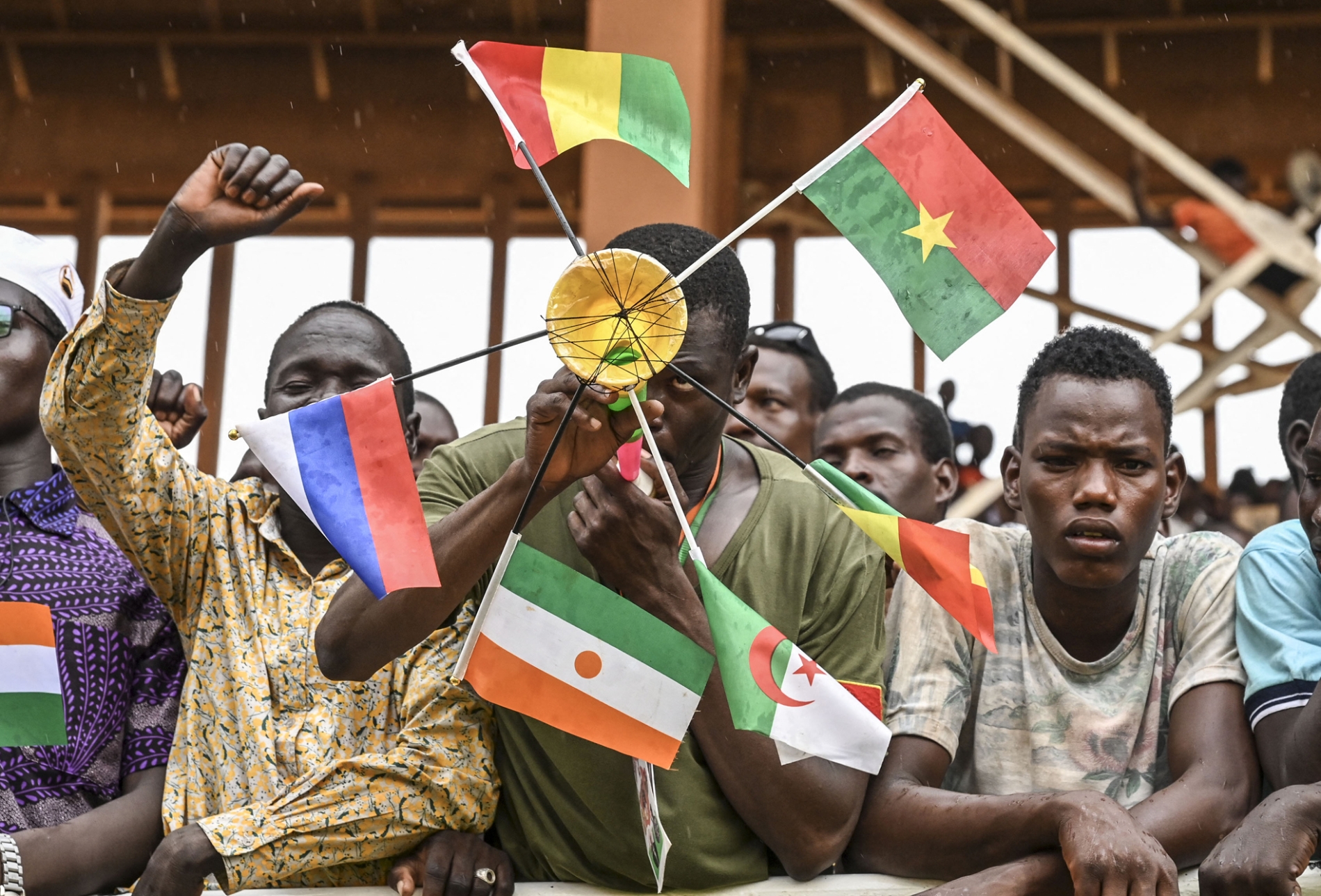
Supporters wave the flags of Mali, Burkina Faso, Algeria, Niger, and Russia at General Seyni Kountché Stadium in Niamey, on 26 August 2023.
Not seeking domination
Russia's Africa Corps (the successor to the mercenary Wagner Group) works with the military authorities governing Niger, Mali, and Burkina Faso, while Türkiye also engages militarily across the region, but relations with Morocco and France are challenging, and any Algerian deployment to Madama would be sensitive because until recently it was a key outpost for France's Operation Barkhane. French forces were ordered out by Niger.
Despite these obstacles, al-Ansari thinks the Algerian army's "accumulated experience in counterterrorism and border security gives it the ability to maintain a delicate balance" between competing interests, adding: "Algeria has not come to Niger seeking domination or deeper polarisation; it has come in response to an official request, driven by geographical proximity and clearly defined common interests."
Algerian ambitions to expand its energy investments in the Sahel have come up against the difficult realities of the region's geography and armed groups. It now faces a serious test of its troops' capabilities, including the ability to adapt to unconventional drone warfare. Whether Algiers can protect its investments without being drawn into the Sahel's proxy rivalries will depend less on conventional military power than on its capacity to navigate a multi-actor competition in which non-state groups set the tempo.