History suggests one clear expectation. Whatever panel eventually forms is likely to fault more officers than ministers
JACK GUEZ / AFP
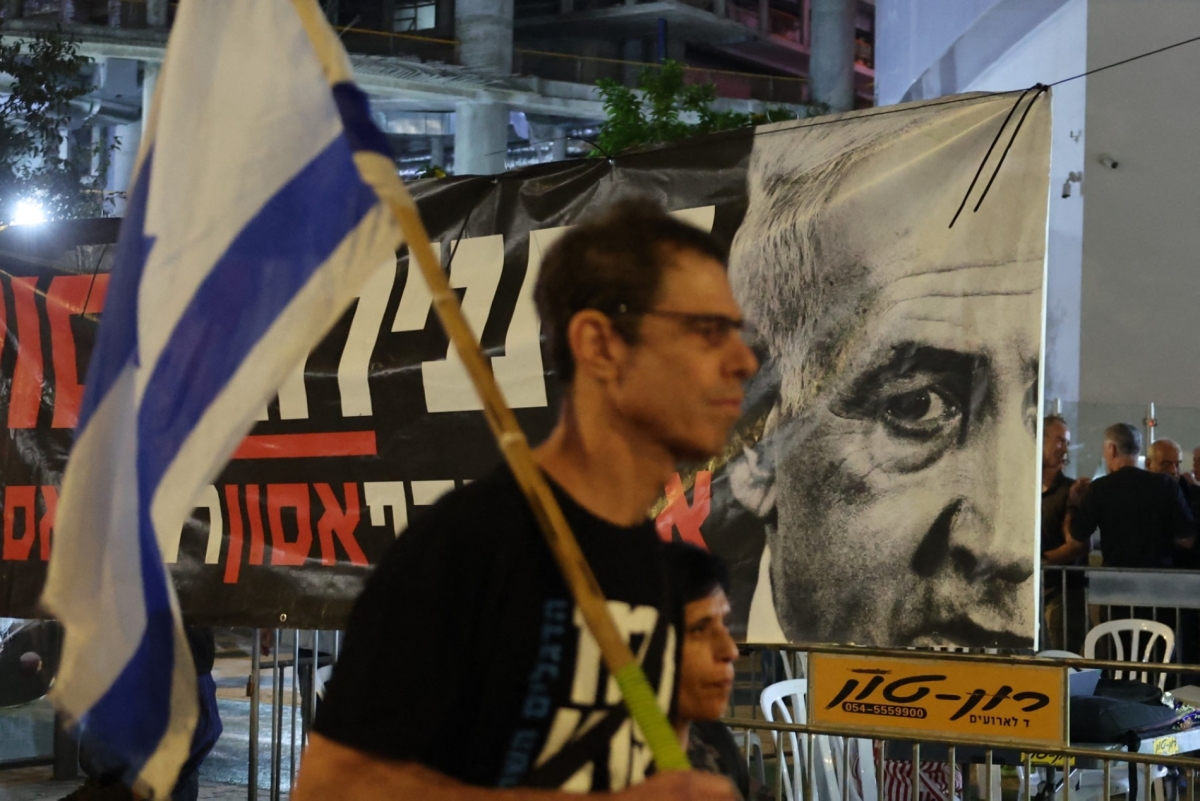
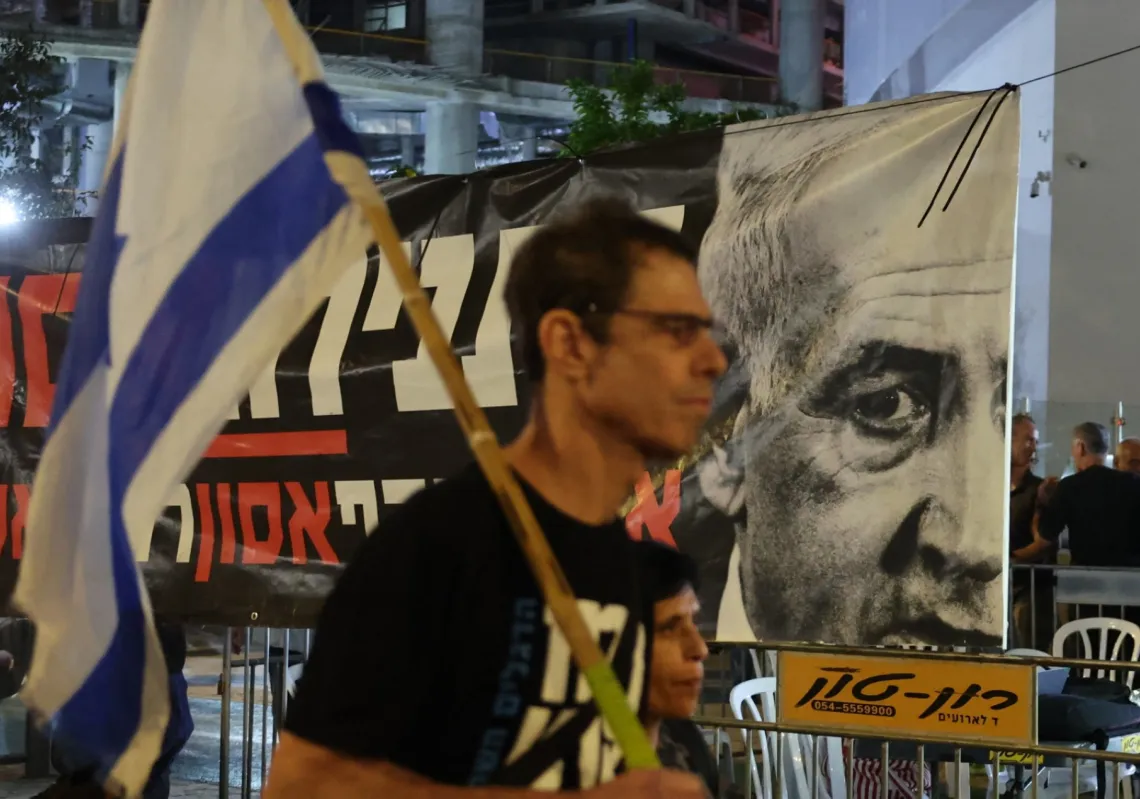
An Israeli anti-government protester holds a flag during a demonstration against Prime Minister Benjamin Netanyahu, demanding the establishment of a state commission of inquiry into the events of October 7 on 8 November, 2025.
In April 1974, a reserve captain named Motti Ashkenazi stood outside the prime minister’s office in Jerusalem with a protest sign. Six months earlier, Egypt and Syria had caught Israel by surprise in the 1973 war. Israel’s most prestigious investigative body, the Agranat Commission, had just responded by calling for the dismissal of the army’s top commanders yet clearing its political leaders. Ashkenazi’s lone protest helped spark wider demonstrations that forced then Prime Minister Golda Meir to announce her resignation on 10 April, just nine days after the report was published, in what was considered at the time a political earthquake.
Half a century later, after Hamas’s October 7, 2023 attack, Israel faces the same question under even sharper strain: when the state fails on a massive scale, who conducts the investigation, and whom do they hold responsible?
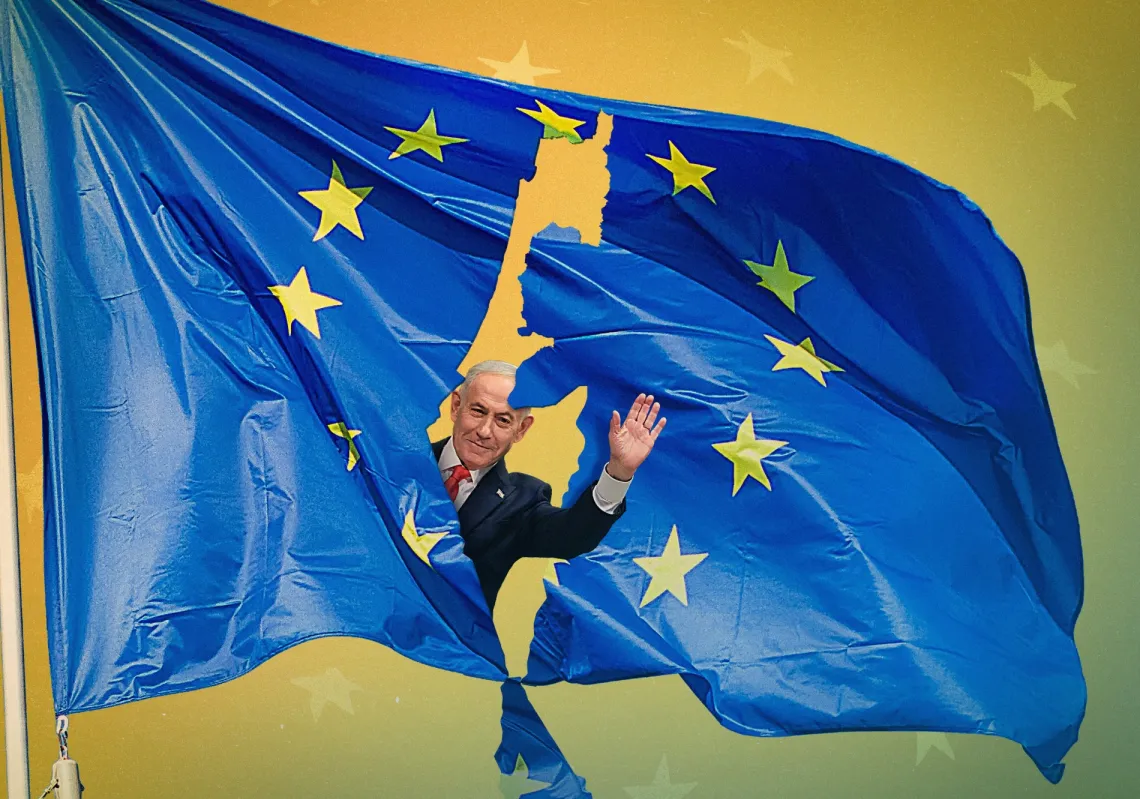
Fifty years of Israeli inquiries point to a consistent pattern: whoever chooses the investigators largely shapes what kind of blame gets assigned. Under Israeli law, the standard mechanism is a state commission of inquiry, whose members are selected independently by the president of the Supreme Court. However, the government led by Prime Minister Benjamin Netanyahu has moved in a different direction, pushing to create a government-backed "state-national" committee. Polls have shown Israelis are largely sceptical of such a tightly controlled commission and still aim for an independent one.
Over the decades, disputes over whether to convene one (or let politicians appoint a narrower alternative) have repeatedly defined the aftermath of Israel’s wars. After October 7, that dispute sits at the centre of Israeli politics. Prime Minister Benjamin Netanyahu and his rivals have spent three years fighting over who gets to appoint the panel, a conflict that has merged with Israel’s broader battle over the power of its courts.
Commanders sign orders and operational plans that leave an auditable record, while cabinet deliberations rarely establish individual culpability
The generals go first
The Agranat Commission was established on 21 November 1973 and chaired by Supreme Court President Shimon Agranat. Over that winter, it held 140 sessions and heard 58 witnesses, according to the Israel State Archives. Its interim report on 1 April 1974 called for the removal of Chief of Staff David Elazar, military intelligence chief Eli Zeira, and Southern Command chief Shmuel Gonen. It declined to judge Meir and Defence Minister Moshe Dayan, ruling that their political responsibility fell outside its mandate and concluding that a minister could reasonably rely on the generals.
The public disagreed. Elazar resigned on 2 April. Protests grew, Dayan came under fierce criticism inside his own Labour Party, and Meir announced her resignation on 10 April. Military intelligence chief Zeira would later write bitterly that "the entire blame was placed on those in uniform, and the political leadership came out clean."
Nine years later, after Israel's 1982 invasion of Lebanon, the Kahan Commission broke that pattern. Also chaired by the Supreme Court president, it investigated the Sabra and Shatila massacre, in which Lebanese Christian militiamen killed Palestinian refugees in camps surrounded by Israeli troops. The panel found Defence Minister Ariel Sharon personally responsible for failing to prevent the killings and recommended his removal. Sharon left the Defence Ministry in February 1983, remained in the cabinet, and 18 years later was elected prime minister.
Inquiries have consistently found it easier to fault commanders for operational mistakes than to hold ministers to account, leaving political consequences to voters, whose memories are rarely permanent.
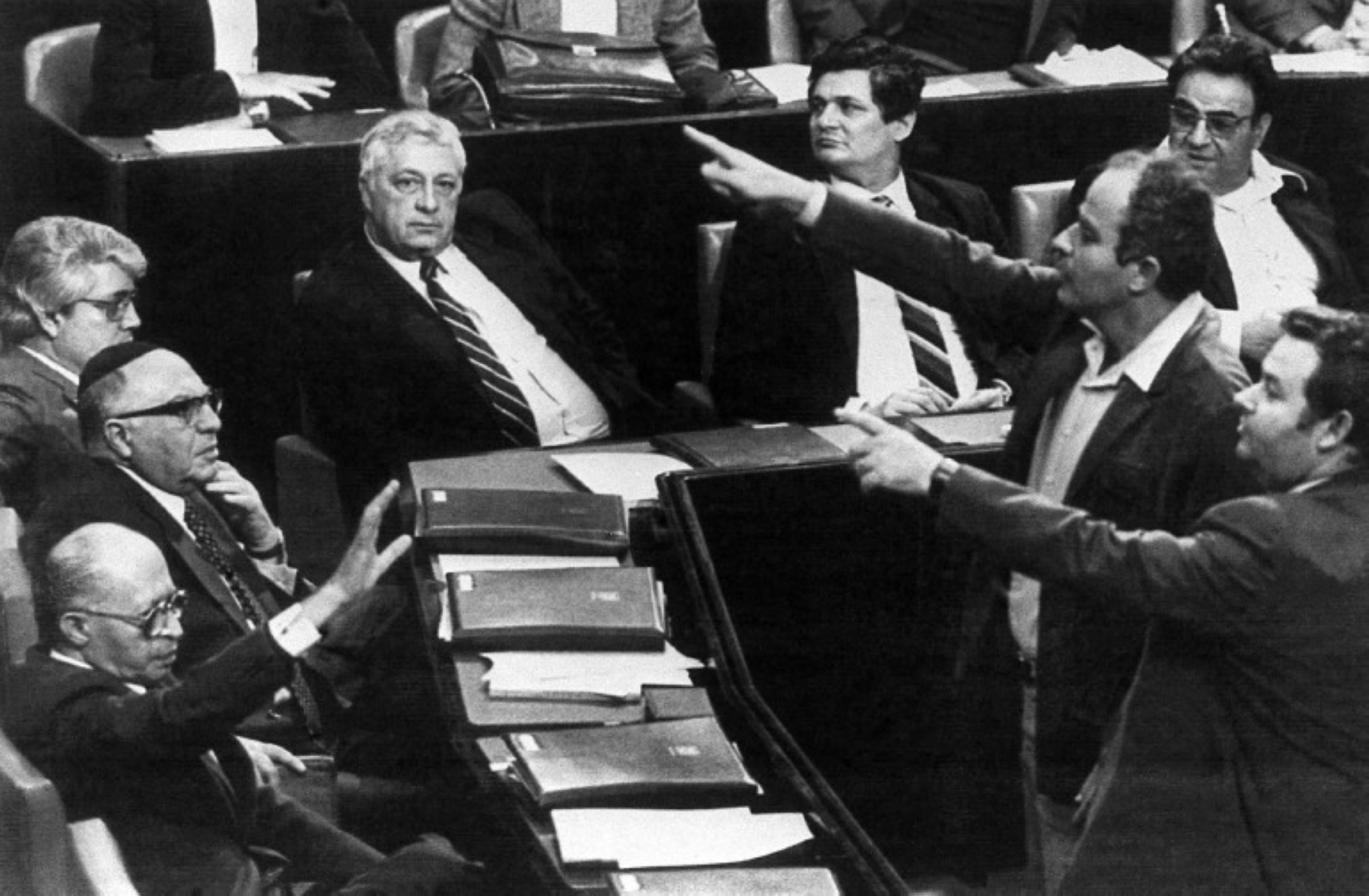
Israeli Prime Minister Menahem Begin (L) raises his hand as votes are counted 14 February 1983 as Knesset endorses removal of Ariel Sharon (C) as Defence minister.
Hardening doctrine
Agranat's most durable legacy was institutional. It warned that Military Intelligence's research division had become the state's sole judge of threats. Its remedy was "intelligence pluralism": stronger analytical units at the Mossad and the Foreign Ministry, alongside a dedicated devil's advocate cell inside Military Intelligence called Ipcha Mistabra—Aramaic for "the opposite is plausible" (a "devil's advocate" division in charge of questioning all assumptions by the military intelligence). The 1975 Basic Law: The Military, which clarified civilian authority over the army, followed in the same spirit.
The warning signs returned in September 2023. According to Israel's Channel 12, the head of that devil's advocate unit sent memos to senior decision-makers warning that Hamas was undeterred and moving toward confrontation. The unit functioned as intended; the wider system ignored it.
The Winograd Commission, formed after Israel's inconclusive 2006 war against Hezbollah in Lebanon, identified similar weaknesses. Its reports described a political leadership operating without serious staff work, a National Security Council one vice premier called "nonexistent," neglected ground forces and reserves, and an unprepared home front. Reforms followed, including the 2008 National Security Council Law and renewed attention to ground manoeuvres and reserve training. Yet by 2023, the military had drifted back to familiar habits—relying on high-tech sensors, a fortified border fence, and the assumption that Hamas was deterred.
An inquiry can create new institutions and rewrite procedures, but it cannot stop a government and military from slipping back into convenient assumptions once the shock fades.
Winograd and the appointment trap
Then-Prime Minister Ehud Olmert understood the political risks of an independent probe. After the 2006 war, he bypassed the 1968 Commissions of Inquiry Law, which lets the Supreme Court president select the members, and instead appointed a government commission headed by retired judge Eliyahu Winograd. Critics dismissed it as a panel chosen by the very officials it was meant to examine.
Winograd surprised them. Its 30 April 2007 interim report faulted Olmert for "serious failure in exercising judgment, responsibility and prudence" and also criticised Defence Minister Amir Peretz and Chief of Staff Dan Halutz. Halutz had already resigned, and Peretz soon lost his post. Olmert survived the January 2008 final report, resigning only in July 2008 amid unrelated corruption investigations.
Netanyahu took a clear lesson from Olmert's experience: a panel appointed by the government lacks public credibility and can still damage its leaders. Rather than name his own commission, he spent three years blocking any commission at all.
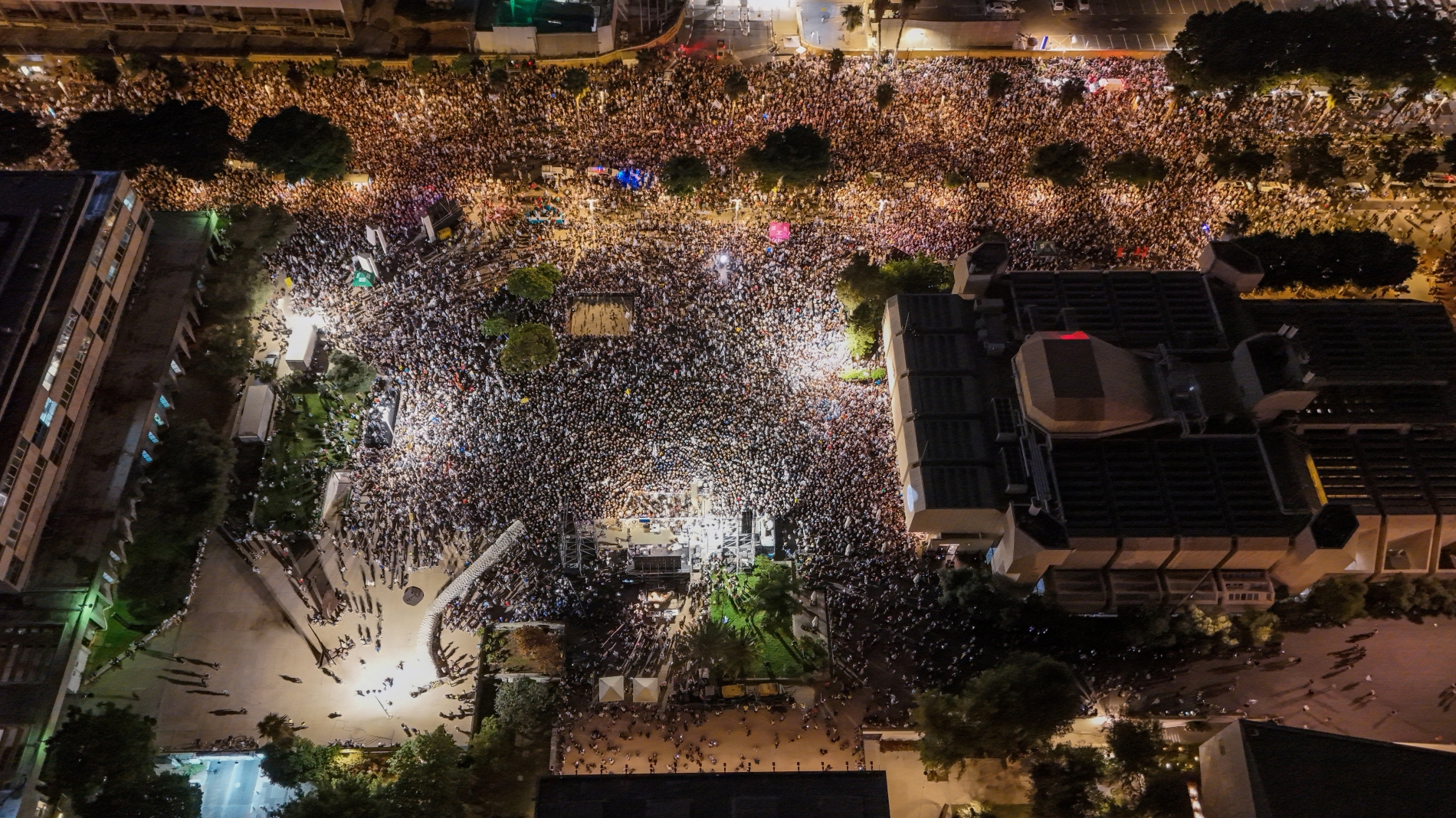
A drone photo of Israelis attending a rally to demand the establishment of an independent state commission of inquiry into the October 7, 2023 attacks on 24 October 2026.
Three years of refusal
Since October 2023, Israel's security establishment has gradually taken the blame for one of the most catastrophic days in Israel's history. Military Intelligence chief Aharon Haliva resigned in April 2024. Chief of Staff Herzi Halevi stepped down in March 2025 "in recognition of my responsibility for the Israeli army's failure on October 7," and Southern Command's Yaron Finkelman followed. Shin Bet domestic intelligence chief Ronen Bar was fired by Netanyahu. In November 2025, a review panel led by retired Maj. Gen. Sami Turgeman found that most of the army's internal October 7 probes were incomplete, prompting Chief of Staff Eyal Zamir to publicly back an external inquiry.
The political leadership has accepted no comparable reckoning. Netanyahu argued that a panel appointed by Supreme Court President Isaac Amit would be biased against him. Likud told the daily Yedioth Ahronoth it would "under no circumstances" support a state commission, calling it "a sanitised term for a one-sided and biased commission." In November 2025, the High Court issued a conditional order requiring the government to explain why it had not established one, with Attorney General Gali Baharav-Miara backing a state commission. In June 2026, the court also curtailed State Comptroller Matanyahu Englman's parallel October 7 audits, ruling that four of them exceeded his authority.
Instead, Netanyahu's coalition promoted a rival bill by Likud lawmaker Ariel Kallner for a "state-national" commission. Under his proposal, six members would be chosen by a supermajority of 80 lawmakers in the 120-seat parliament—or, if they deadlocked, split three-and-three between the governing coalition and the opposition, with bereaved families sitting in as non-voting observers. The panel could operate with just three members and barred Supreme Court justices and senior generals from serving.
The Justice Ministry warned that the rules would effectively allow the coalition to appoint the commission on its own. The bill passed its first reading 59–0 on 6 July 2026, during an opposition boycott, then lapsed when parliament dissolved for elections, allowing the government to tell the High Court that the legislative calendar had run out.
By turning a dispute over wartime accountability into a fight over the Supreme Court, Netanyahu moved the debate onto political ground where his supporters were far more willing to back him.
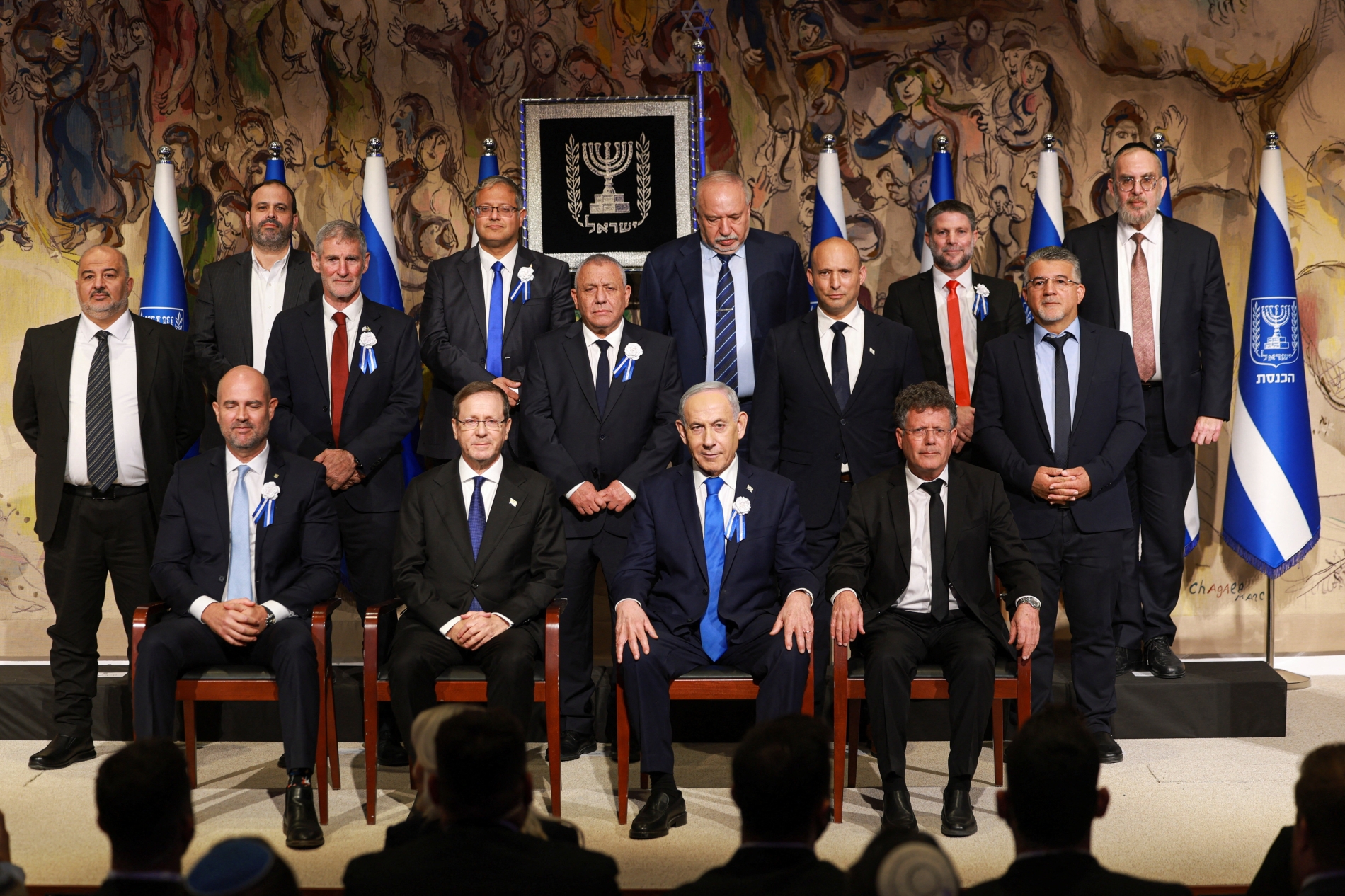
Former military chief Gadi Eisenkot, Israeli Prime Minister Benjamin Netanyahu, Israeli President Isaac Herzog and other Israeli officials at the inauguration of the 26th Knesset on 10 November 2026.
Changing math
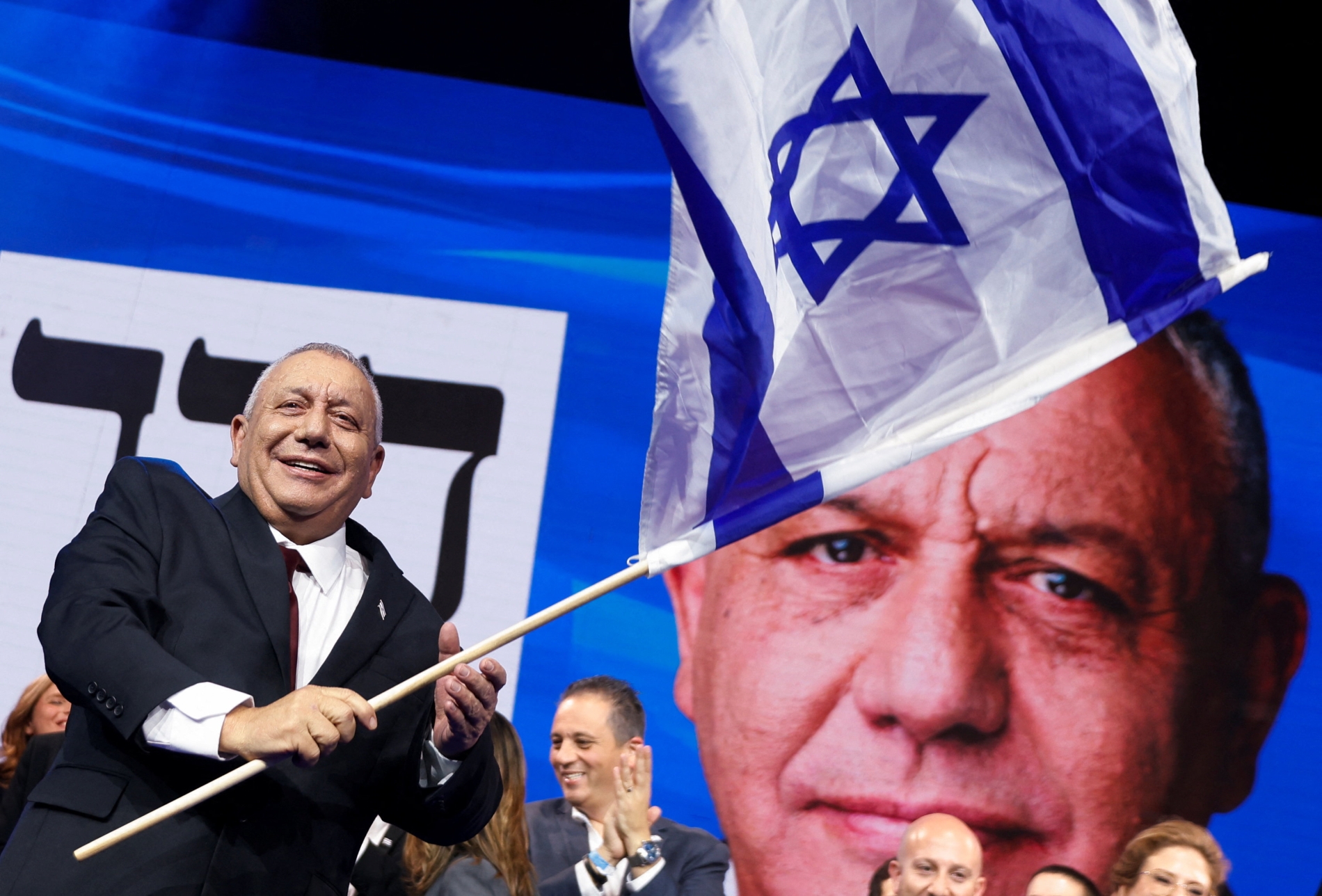
Israel's October 27, 2026 election broke the parliamentary deadlock without resolving the argument. Netanyahu's right-wing bloc fell to 53 seats (with Likud winning 27), while former army chief Gadi Eisenkot's new Yashar party won 21, anchoring a 48-seat opposition bloc alongside 19 seats held by Arab parties. With 67 lawmakers recommending him, Eisenkot received the mandate from President Isaac Herzog on 8 November to form a government by 6 December. On 17 November, the anti-Netanyahu majority elected Yashar's Matan Kahana as Knesset speaker, 66–52.
With a new majority in place, Yashar and allied factions filed a bill on 10 November to create a state commission of inquiry; Yisrael Beytenu lawmaker Rafi Ben Shitrit, whose son fell at Nahal Oz on October 7, introduced his own version a day later. Because existing law allows only the cabinet to establish a state commission, the anti-Netanyahu bloc has considered passing special legislation with a 61-vote majority. Yet in the new parliament's opening days, the inquiry bill took a back seat to repealing Netanyahu's judicial overhaul—legislation aimed at curbing the Supreme Court—whose repeal passed preliminary readings on 18 November while the October 7 probe remained on hold.
The bereaved families took note. The October Council, which says it represents 1,500 affected families, called the election "a referendum" on a state commission and warned politicians: "First, a state commission of inquiry, then your politics."
Public opinion leans in their favour. A June 2026 Channel 12 poll by Midgam, reported by the Times of Israel, found 66% of Israelis wanted a state commission selected by the Supreme Court president, with 25% opposed, while a Maariv poll found just 6% satisfied with the army's internal probes. Still, opinion is not uniform: a May 2026 Jewish People Policy Institute survey found Jewish Israelis slightly preferred a "broad consensus" commission, 48% to 42%. Netanyahu's critique has also had an effect—the Israel Democracy Institute found overall support for a state commission fell about 10 points to 55% by December 2025, largely among right-leaning voters.
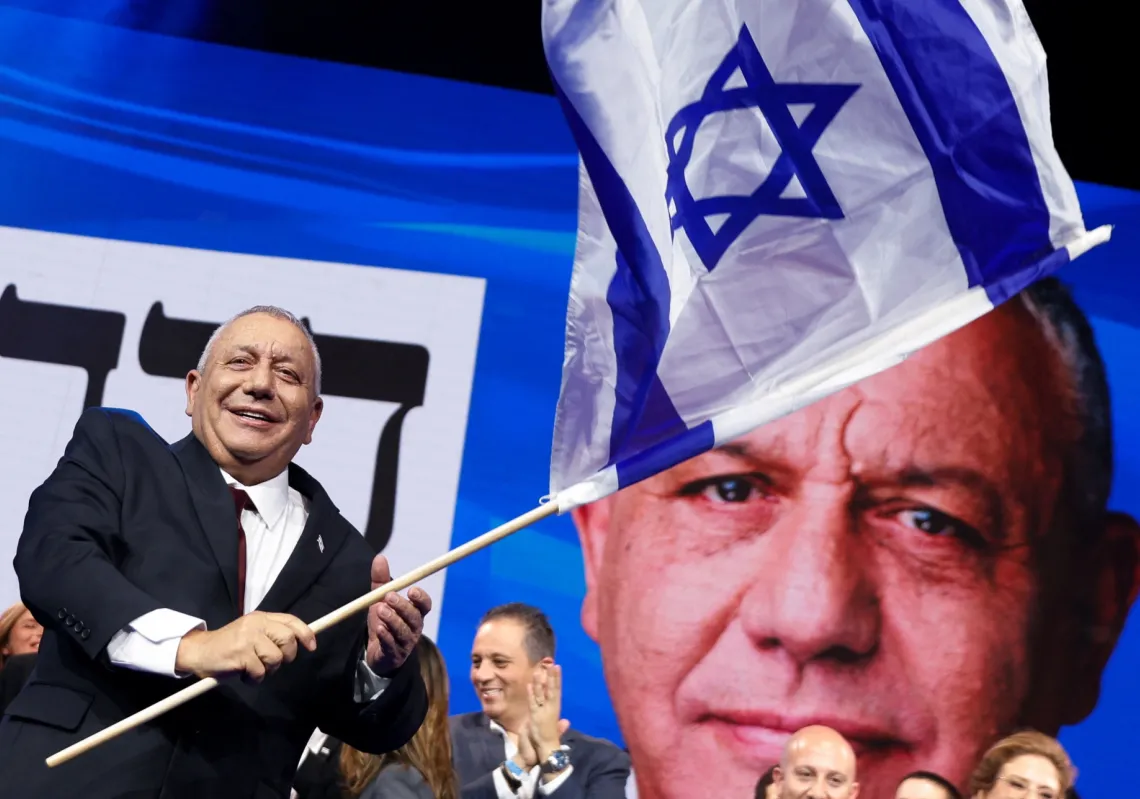
Former military chief Gadi Eisenkot, leader of the Yashar party, waves an Israeli flag following the exit polls at his party headquarters, on the evening of Israel's national election, in Tel Aviv, Israel, on 28 October 2026.
What next
Three paths are now possible as coalition talks unfold.
First, an Eisenkot-led government. If Eisenkot builds a coalition—either through an agreement with ultra-Orthodox Haredi parties or with outside backing from Arab lawmakers—his cabinet can authorize a standard state commission within weeks, as he has promised. That remains the clearest route to an inquiry with broad legal authority.
Second, coalition failure and new elections. If talks collapse and Israel heads back to the polls, the anti-Netanyahu majority in parliament will likely try to establish an inquiry through legislation, which Likud will challenge as a partisan use of the courts.
Third, a national unity government. Sources in the anti-Netanyahu camp say Likud's terms for joining a unity deal include replacing a Supreme Court-appointed inquiry with a politically balanced, Kallner-style panel. Any such compromise would provoke immediate backlash from bereaved families and the broader public, echoing the anger that brought down Meir's government in 1974.
History suggests one clear expectation. Whatever panel eventually forms is likely to fault more officers than ministers—not out of bias, but because commanders sign orders, intelligence assessments, and operational plans that leave an auditable record, while cabinet deliberations rarely establish individual culpability. Any lasting judgment on Israel's political leadership will have to come from voters, much as it did in 1974.
Israel spent five decades building a credible model for investigating its wars. What it no longer has is a consensus on who is neutral enough to run it.