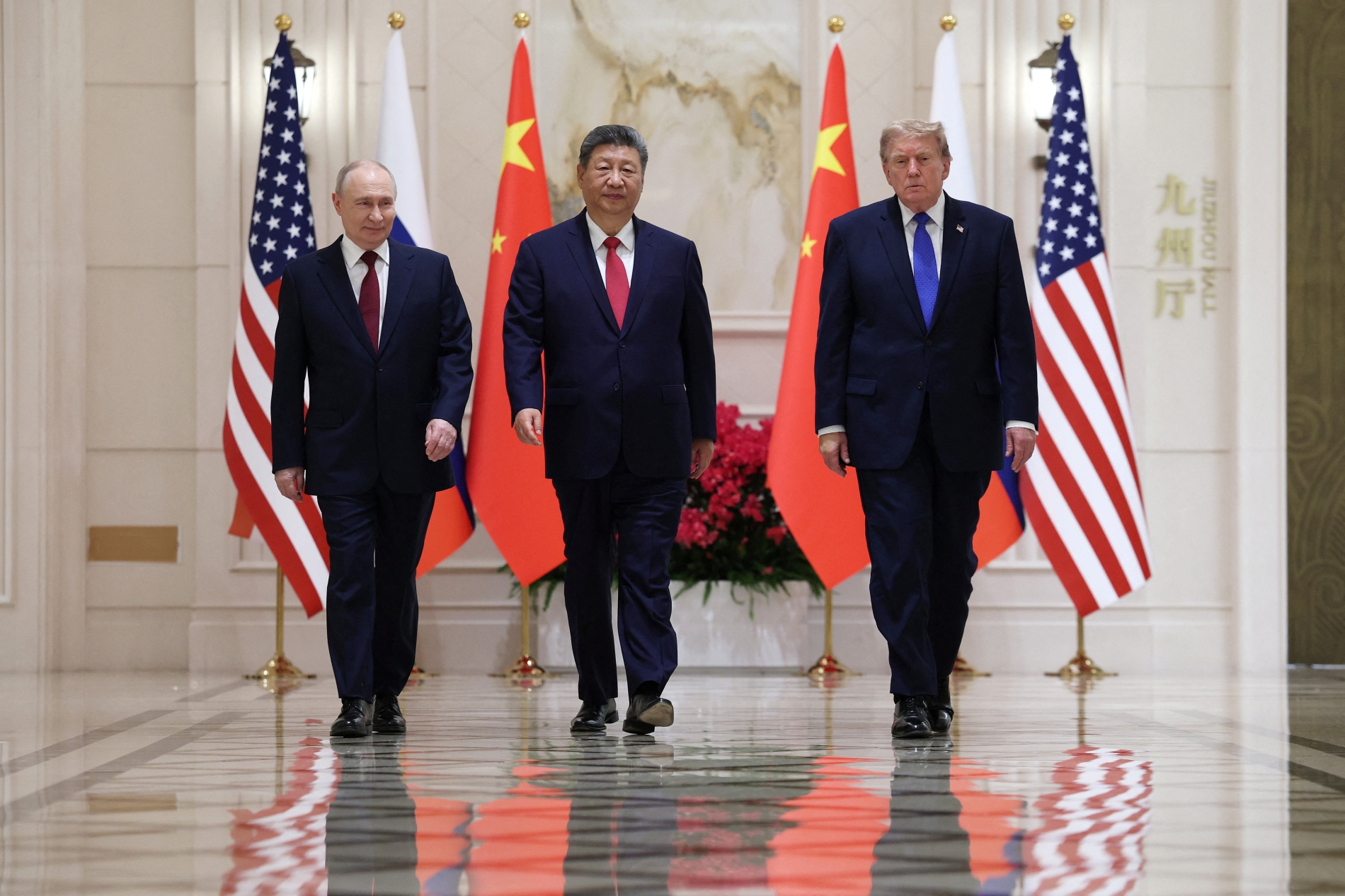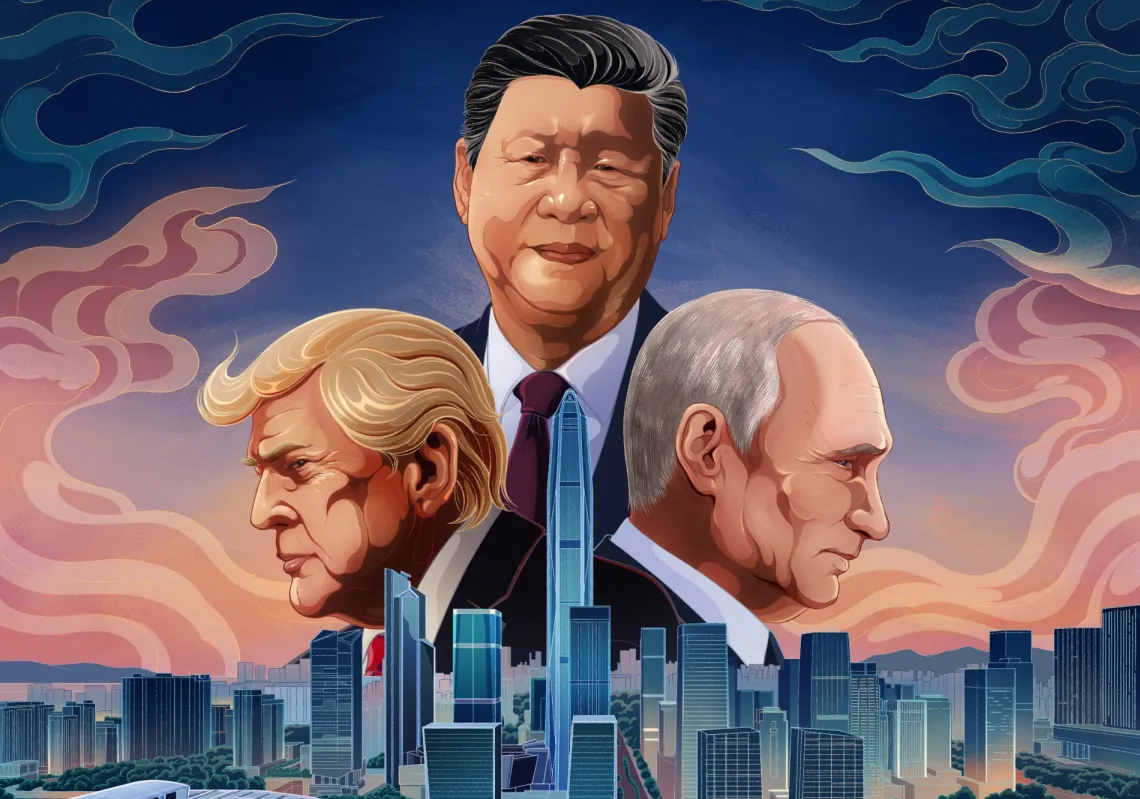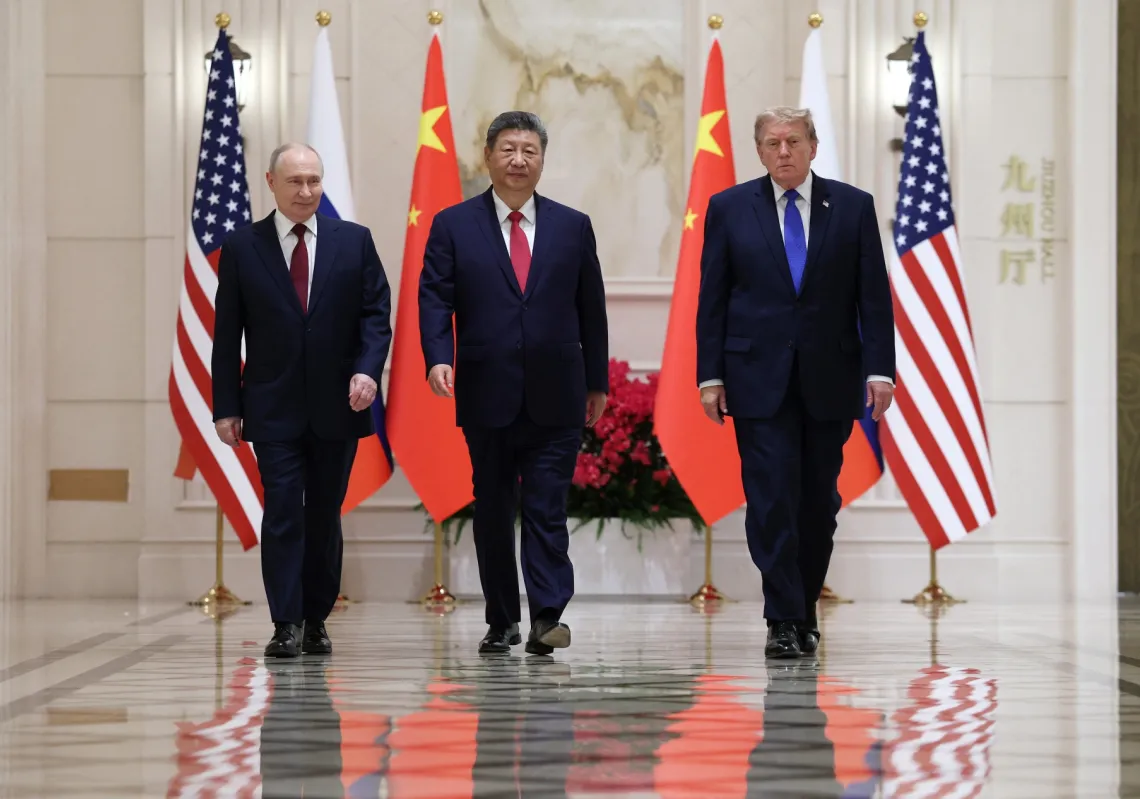
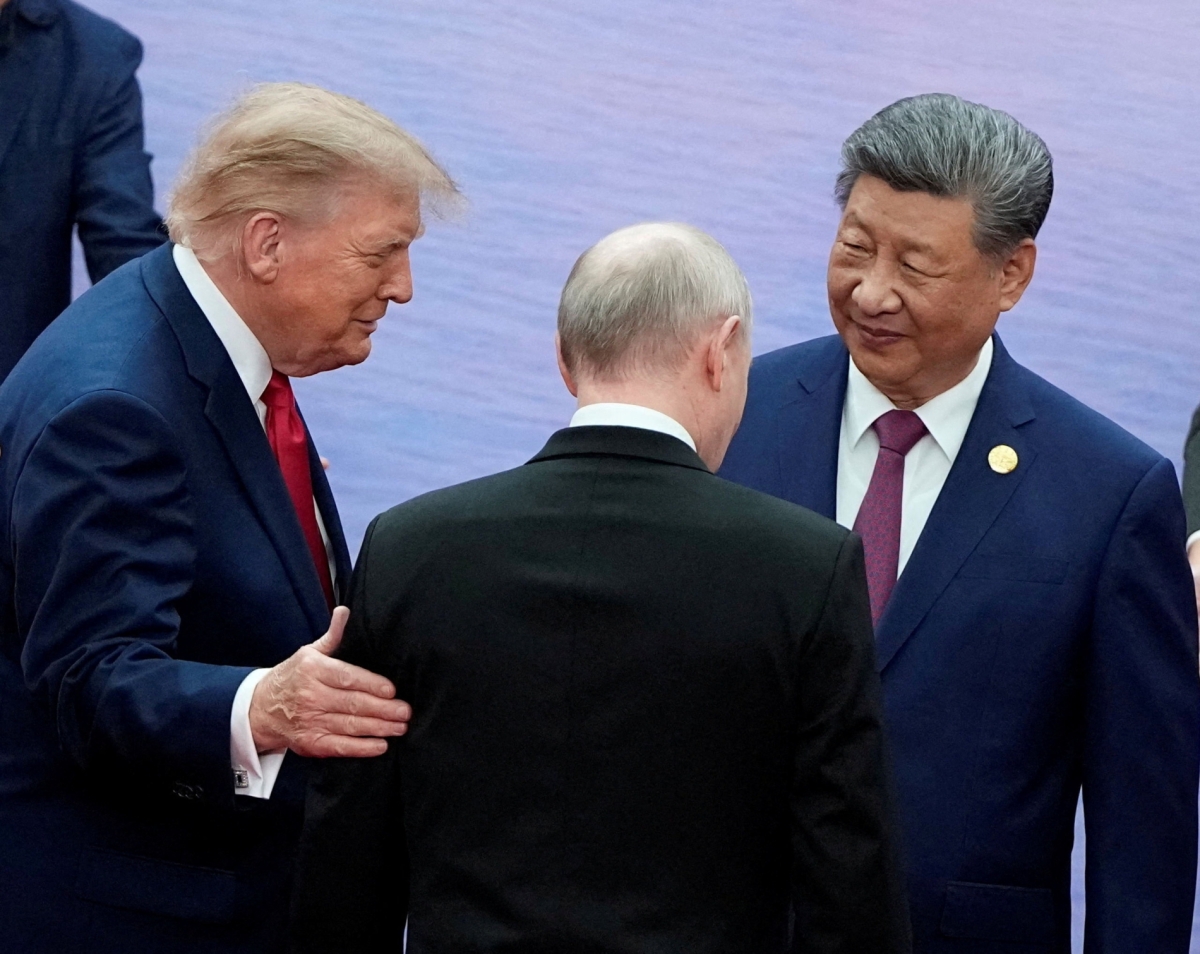

On 19 November, on the sidelines of the Asia-Pacific Economic Cooperation Summit in Shenzhen, the leaders of the world’s three most powerful countries sat down under one roof for the first time since Roosevelt, Stalin, and Churchill met at Yalta in 1945. China’s state broadcaster China Central Television said the meeting between Xi Jinping, Vladimir Putin, and Donald Trump would “go down in history”. It was probably right. But what did it actually achieve?
Although their joint communiqué was called the ‘China-Russia-US Heads of State Declaration Toward Peace,’ it completely ignored the elephant in the room: Russia’s ongoing war with Ukraine and America’s ongoing war with Iran. As such, the Declaration speaks about peace only in the abstract, while glossing over anything that might demand immediate attention. So, was it just another photo opportunity? Does Beijing get the bragging rights for facilitating it?
China has no intention of going out on a limb to mediate peace in either Ukraine or Iran. Last month, German President Frank-Walter Steinmeier asked Xi if the trilateral summit would touch on the war in Ukraine. Xi appeared irritated, replying that it was a European war, so European countries should sit at the negotiating table. For Beijing, the risks of a failed mediation far outweigh the returns of a successful one.
Mediating is not just about convincing the warring parties to sit at the same negotiating table, something Trump spent two years trying to do. It also requires the mediator to enforce compliance. Inevitably, if bombing resumes, the mediator then takes the blame. In Chinese culture, the mediator would be said to have ‘lost face’.
Mediating peace in Ukraine or Iran is challenging since two of the warring parties are superpowers. Both wars have settled into stalemates, and none of the four warring parties are willing to negotiate in good faith. When all parties believe that time is on their side—or that just one more successful offensive on their part will break the stalemate—diplomacy can only go so far.
Beijing could bring the warring parties to the table, but whether they have the political will to negotiate is another matter. Rather than risk looking like a weak mediator, China prefers to keep the wars at arm's length and pass the issue (along with the blame) to others.
A win for China, Russia and Trump
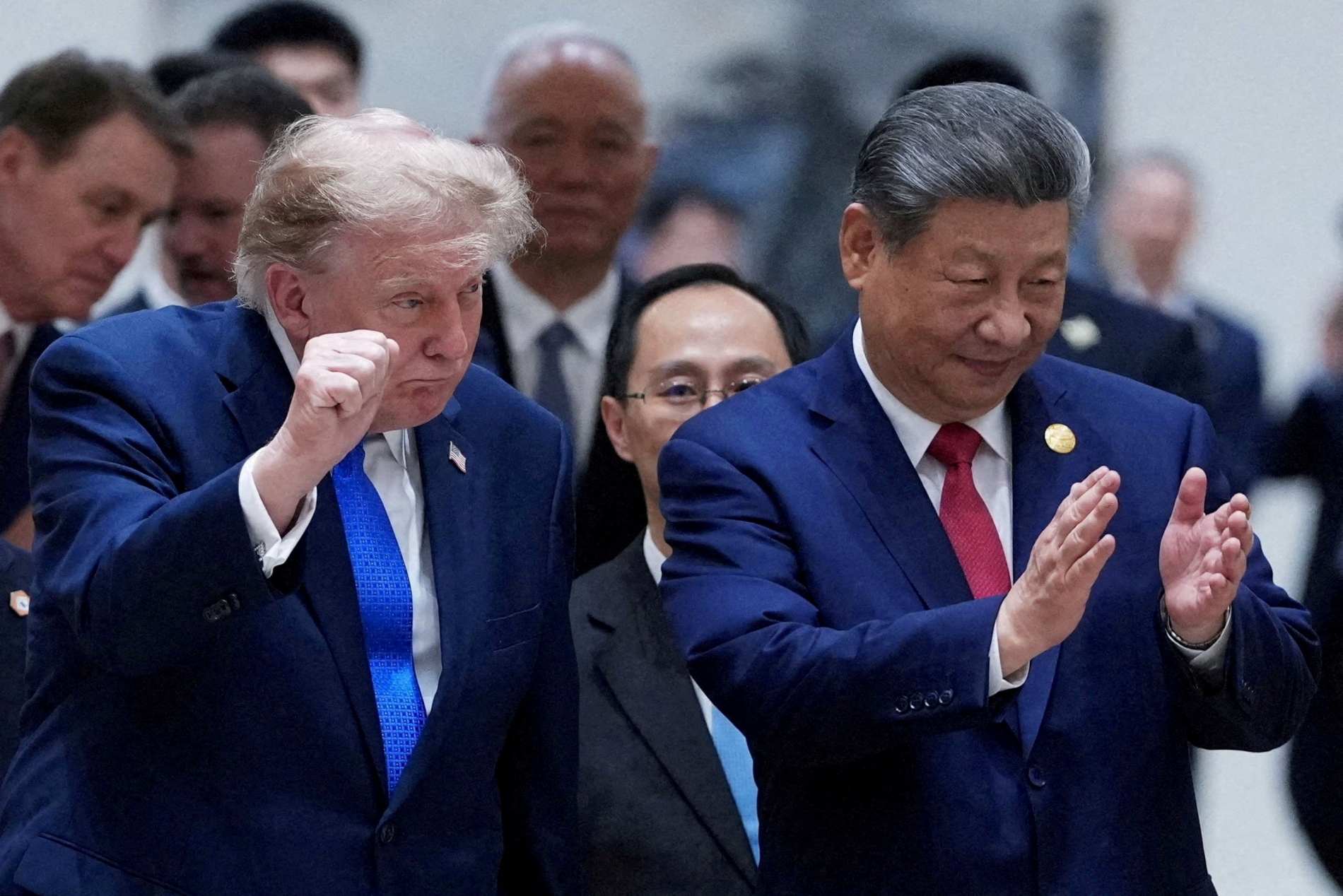
For Xi, the summit was an achievement in itself, one measured less by what it accomplished than by the fact that it took place at all. After years of strained relations between superpowers, bringing the trio to the same table was a feat in itself. And rather than pressing sensitive issues, Beijing decided a joint declaration glossing over their disagreements was preferable to none, and it knew this would happen only if everyone left with something they could present as a 'win' back home.
For Beijing, a summit held in China, hosted by China, and attended by the leaders of two of the world's most powerful countries, delivered a powerful message that the "great rejuvenation of the Chinese nation" is well underway, that the "century of humiliation" (when China suffered at the hands of the West and Japan) is in the rearview mirror, and that China is once again the "Middle Kingdom" (what China calls itself), having reclaimed its historic place at the centre of the world.