Algeria adds green hydrogen to its energy portfolio

In line with its growth strategy, Algiers is diversifying its energy offerings with an eye on exports to Europe

Al Majalla

Algeria adds green hydrogen to its energy portfolio

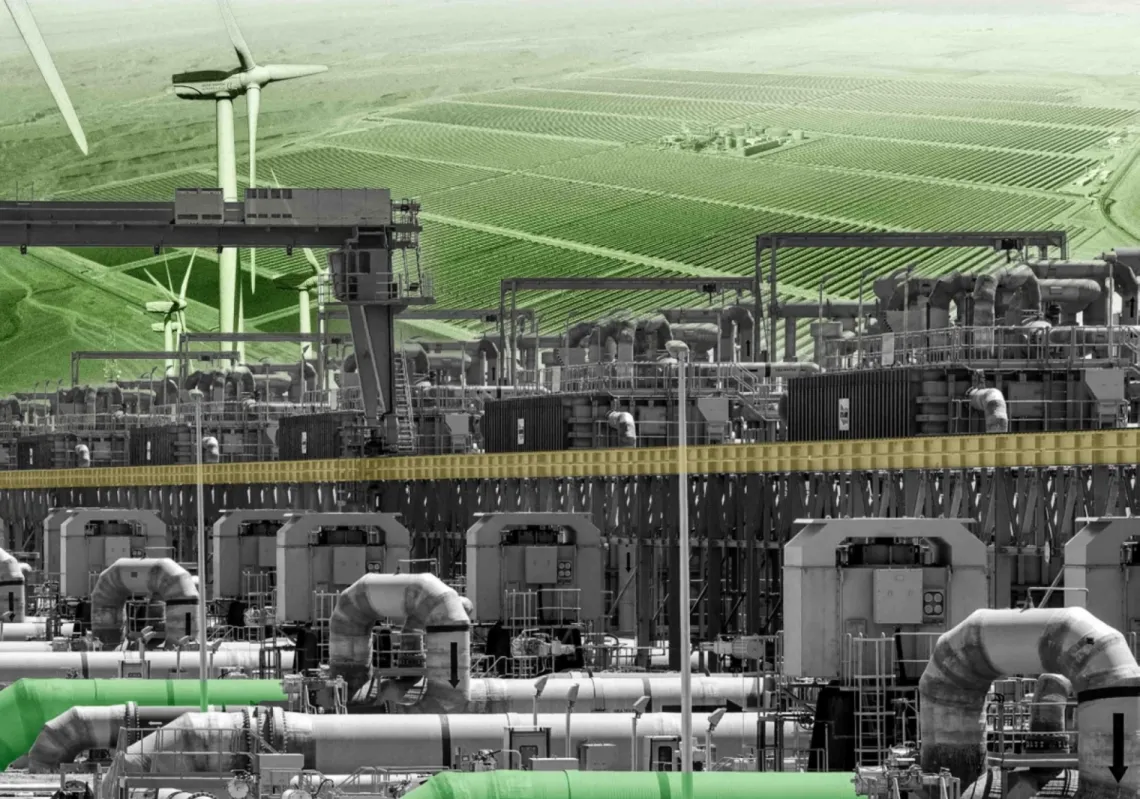
Algeria is seeking to strengthen its position in the clean energy market by making hydrogen a pillar of its diversification strategy, with an eye on exports to Europe. The country has a vast expanse of sun-drenched land, which is needed for hydrogen production, while its northern Mediterranean coast sits adjacent to southern Europe.

The production process uses renewable electricity, such as that produced from solar panels, to split water molecules into hydrogen and oxygen through electrolysis. The cheaper and more abundant the electricity, the more competitive green hydrogen projects become.

Algeria’s desert regions get around 3,500 hours of sunshine per year. Many regions also have wind energy potential, with an estimated production capacity of around 35,000 megawatts (MW). However, turning potential into production will require a realistic approach, with several structural challenges ahead and a need for substantial, sustainable financing.

The largest African country, and the tenth largest country in the world, Algeria could have a big role to play in the renewable energy market, given its geographical advantages. Key to the role of hydrogen will be the 3,300km SoutH2 Corridor project, a dedicated hydrogen pipeline network designed to take renewable ‘green’ hydrogen from North Africa to Europe.

“Algeria is not merely a potential supplier,” says Mohamed Ghazli, an Algerian international expert on the energy transition based in Germany. “It is the closest and safest option for Europe through the SoutH2 Corridor project.” The corridor will link production areas in Algeria and Tunisia with Italy, Austria, and Germany. Its backers aim to provide import capacity of more than 4 million tonnes (Mt) of green hydrogen annually, relying heavily on repurposed existing infrastructure, with operations scheduled to begin in the early 2030s.
AFP
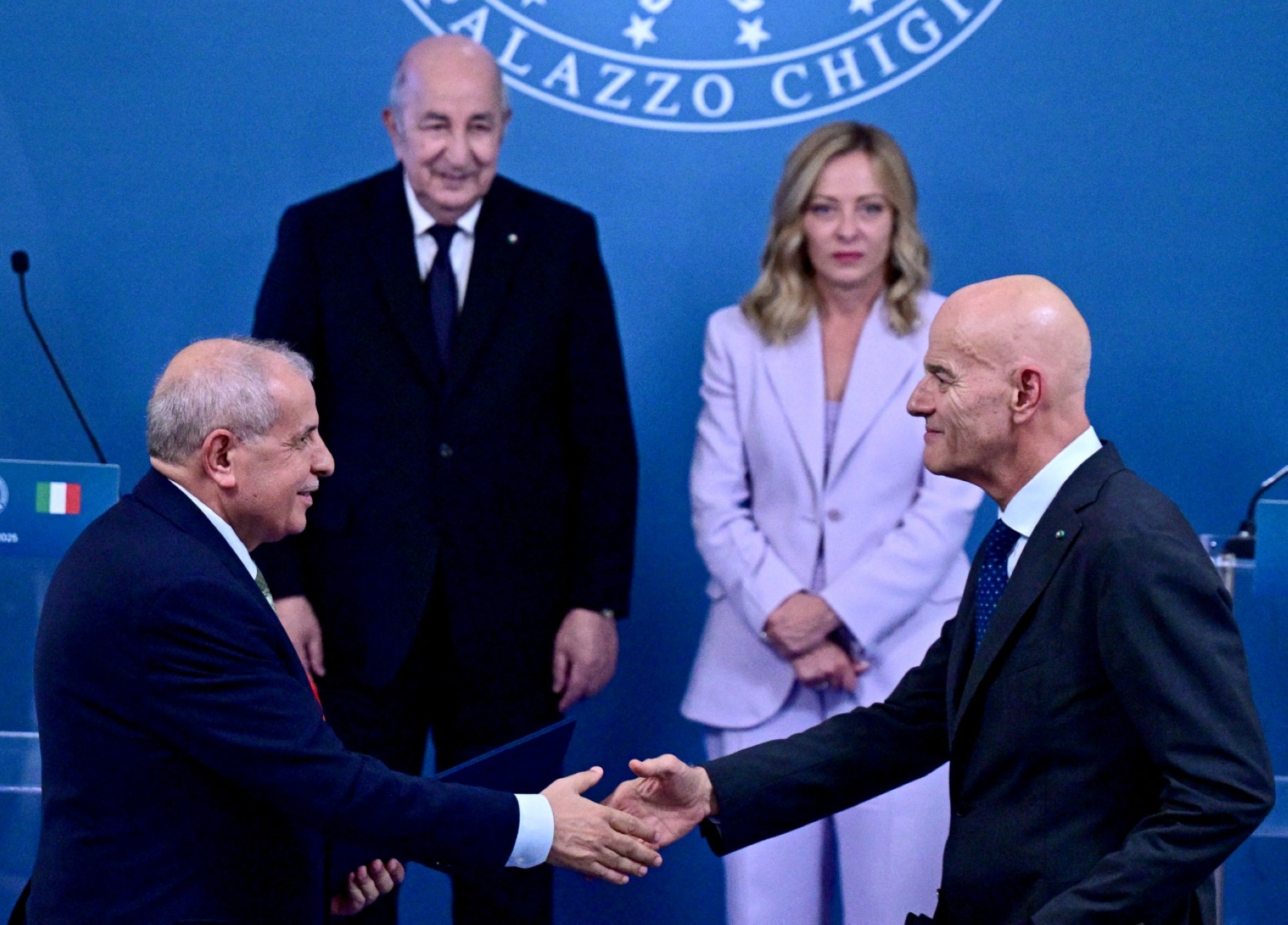
Eni CEO Claudio Descalzi shakes hands with Sonatrach head Rachid Hachichi following the signing of an agreement, in the presence of Algerian President Abdelmadjid Tebboune and Italian PM Giorgia Meloni in Rome on 23 July 2025.

The European Union has included components of the corridor among its Projects of Common Interest initiative. This capacity would represent around 40% of the green hydrogen imports targeted under the EU’s clean energy plan for 2030. REPowerEU aims for the bloc to produce 10Mt a year and import a further 10Mt from outside the EU by 2030. By 2050, the European Commission wants renewable hydrogen to meet around 10% of the EU’s energy needs.

A big structural shift is needed to reduce net greenhouse gas emissions by at least 55% by 2030 compared with 1990 levels, paving the way for climate neutrality by 2050. This will require an accelerated transition towards renewable energy sources, clean low-emission technologies, and reduced dependence on fossil fuels.

The Commission plans to increase electrolyser capacity to 40GW and annual production to 10Mt within the EU by 2030. To narrow the cost gap and stimulate investment, the Commission established the European Hydrogen Bank in 2022 to mobilise the money needed to support the renewable hydrogen market. Europe has also been developing dedicated pipeline networks to transport the fuel from production hubs to major centres of consumption.
Exporting green hydrogen opens up a new source of foreign currency and partially reduces dependence on traditional hydrocarbon exports

Houari Tighersi, economist and former Algerian MP

Early deals agreed

Algiers and Berlin are working together on a hydrogen plan, as discussed at the Algeria-Germany Economic Forum in July 2026, which brought institutions and companies from both countries together in Germany's capital and resulted in dozens of agreements and memorandums of understanding.

Two such deals were between Algeria's state-owned oil company Sonatrach and the German engineering firms Bosch and Siemens Energy, both covering green hydrogen. Other German companies expressing an interest include Thyssenkrupp Uhde, VNG, and VDA. Discussions covered engineering and infrastructure, seawater desalination, green hydrogen and ammonia, and the manufacture of related equipment (including electrolysers), and projects linked to the SoutH2 Corridor.

Likewise, Italian and Austrian firms have been engaged, as have investment institutions, with the aim of securing cross-border supply routes. Sonatrach has also undertaken joint feasibility studies with Spain's Cepsa to explore integrated production and export projects. Analysts say cost and supply pressures have led to Europe's keen interest in hydrogen.

REUTERS/Ramzi Boudina
The logo of the state energy company Sonatrach is pictured at the headquarters in Algiers, Algeria, on 25 November 2019.

Mohamed Ghazli, an Algerian international expert on the energy transition based in Germany, said several factors had "exposed the strategic vulnerability of the European market," including a 40% surge in energy costs and geopolitical tensions affecting shipping through key waterways such as the Strait of Hormuz. "It revealed the extent of Europe's susceptibility to external shocks and turned European buyers into parties seeking water and energy security to avert severe price shocks. This explains the intensive diplomatic visits and engagement with Algeria."

Gradual benefits

Some think green hydrogen could help reshape Algeria's economic and social landscape. "It opens up a new source of foreign currency," said Prof. Houari Tighersi at the University of Algiers, an economist and former parliamentarian. "It also partially reduces dependence on traditional hydrocarbon exports, particularly if gas exports are redirected towards domestic industry, and part of the energy currently exported is instead converted into hydrogen and derivative products.

"Nevertheless, the positive impact on public finances and the balance of payments will emerge gradually over time. Its decisive effect on the structure of national exports will only become apparent once large-scale commercial production reaches millions of tonnes annually, in accordance with the established timetables."

In 2022, Algeria launched its National Hydrogen Strategy, with plans to produce and export 30-40 terawatt-hours by 2040 to meet around 10% of European market needs. Under this strategy, 300,000 tonnes of green hydrogen per year would be allocated for domestic use, which would reduce natural gas consumption at domestic power plants and save up to $21bn by 2040.

The National Hydrogen Strategy is based on three stages. The first, from 2023-30, includes pilot projects with capacities ranging from 2MW to 50MW to test production and utilisation technologies. The second stage is a growth and expansion phase from 2030-40, devoted to establishing and developing domestic and international markets. The third stage, from 2040-50, focuses on global competitiveness and full-scale industrialisation, making Algeria a major producer and exporter of clean fuel.

An integrated energy mix is needed to meet the electricity needs of hydrogen production facilities. Solar power is expected to provide around 70% of the electricity required for electrolysis, with wind powering the remaining 30%. This mix should help maintain a continuous energy supply. The required investment to make it happen is estimated at around $25bn by 2040. Future revenues from hydrogen exports have been put at $10bn annually.

Reuters
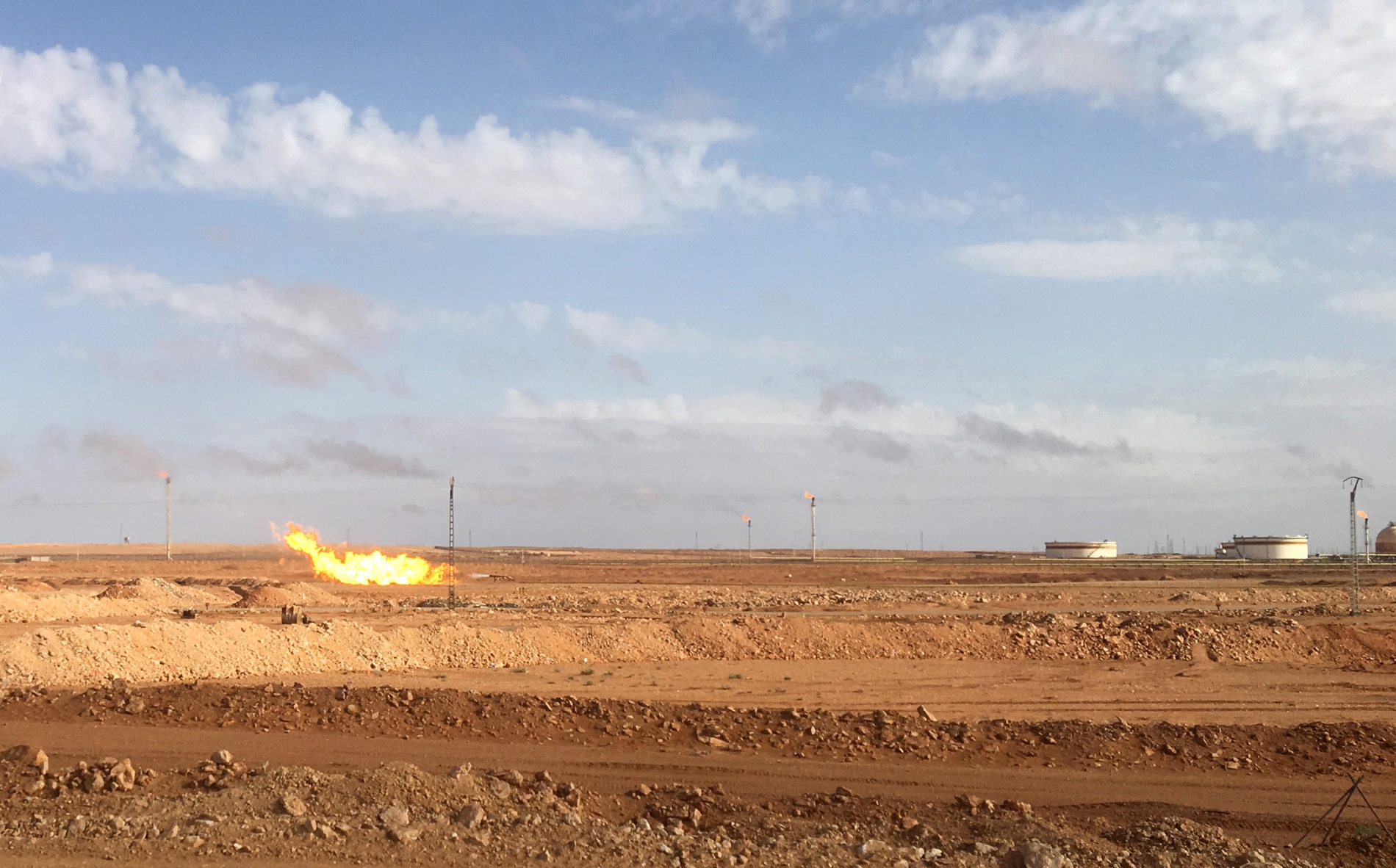
A general view of the Hassi R'Mel gas field, operated by the Algerian state-owned energy company Sonatrach, in Algeria, 16 October 2018.

Joint projects

Algiers has launched pilot facilities in cooperation with European industrial groups. Foremost among them is the Hassi R'Mel project, around 550km south of the capital. It uses solar power to produce hydrogen. The project has an annual production goal of 1.5Mt of green hydrogen by 2030, which is equivalent to removing two million polluting vehicles from the roads. Another pilot project with a capacity of up to 50MW has been launched with German financial support of around $40mn.

German firms hold patents and expertise in molecular separation technology. Algeria wants to strengthen its national workforce's skills and ultimately overcome technological dependence. Tighersi thinks Algeria must address a range of structural challenges first. Foremost among them is the cost of infrastructure for production facilities and transport networks, capital risks in the absence of long-term guarantees, and pressure from global competition.

He proposes long-term supply contracts to secure prices, diversify external markets to mitigate fluctuations in European demand, and develop a hybrid financing model that combines international capital with state funds to spread risk, safeguard the country's economic decision-making, and consolidate Algeria's new energy sovereignty. If green hydrogen can help the country become a reliable supplier of clean energy, it would be a win-win situation.

font change