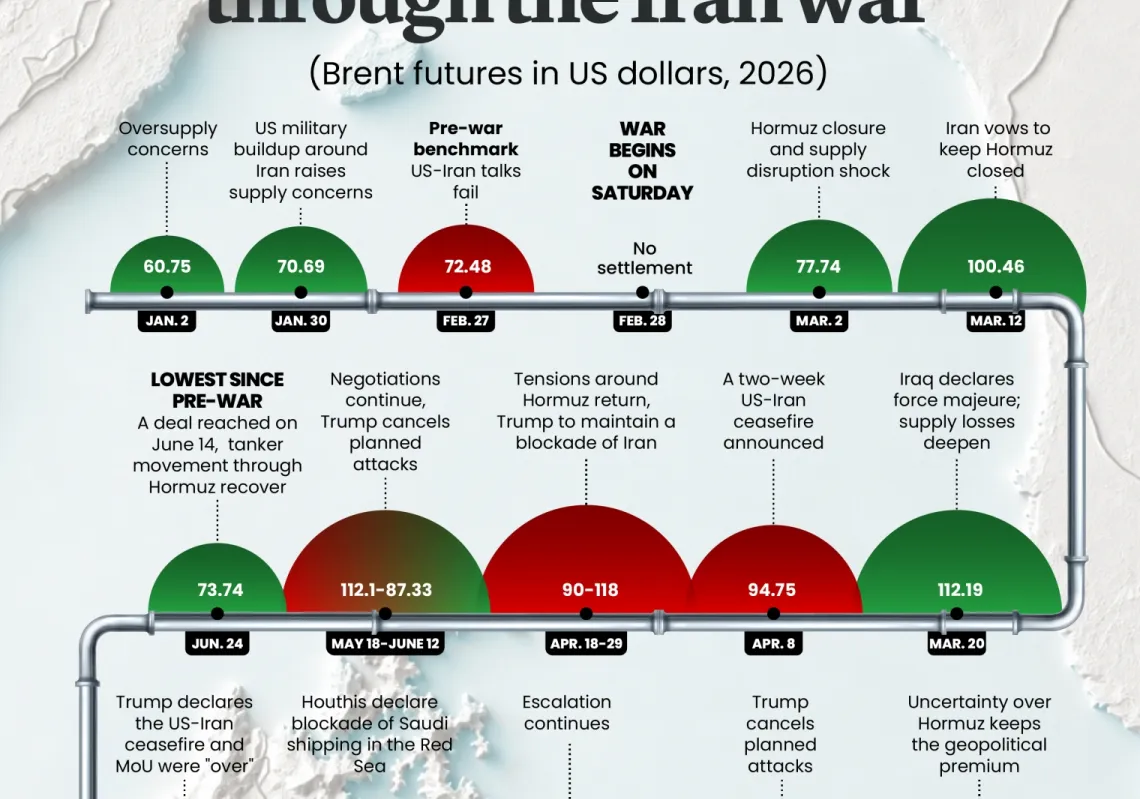

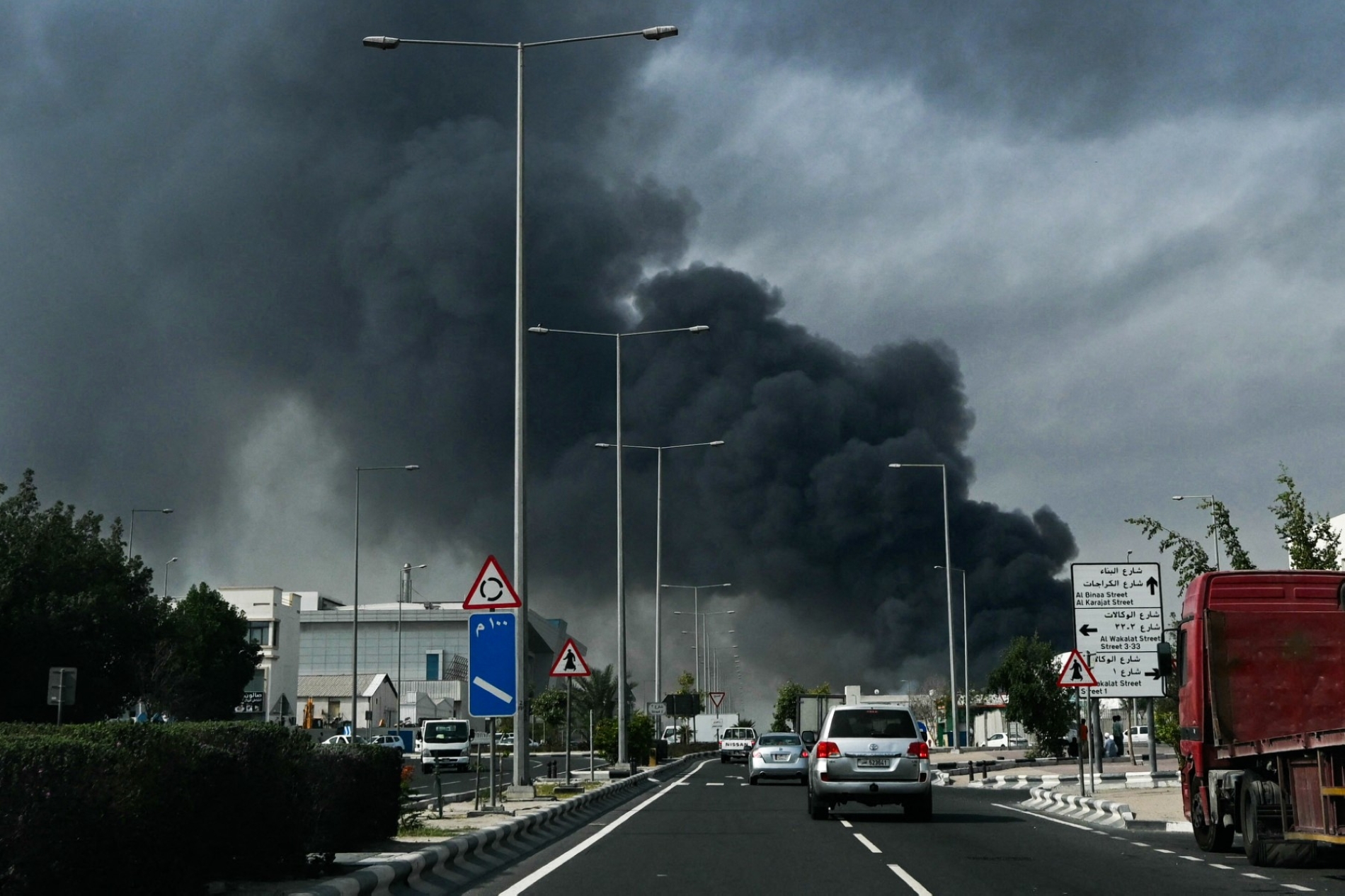
The US-Israeli war with Iran and the related closure of the Strait of Hormuz to shipping since March has disrupted energy supplies and international trade, dealing a heavy economic blow across the Middle East, North Africa, and Central Asia, not least to oil and gas exporters in the Gulf.
The closure of the vital shipping lane meant energy exporters could not ship their oil and gas, while energy importers faced much higher fuel costs, some of which came from shipping. With no export outlet, Gulf oil production plunged from 26 million barrels per day (bpd) to 16 million. The repercussions go well beyond the energy industry, affecting tourism, aviation, and logistics. It has eroded investor confidence and added to inflationary pressures.
After 3.3% growth in 2025, the World Bank now forecasts a 2.1% contraction for the economies of the Middle East, North Africa, Afghanistan, and Pakistan in 2026, while the combined economies of the Gulf Cooperation Council (GCC) are projected to contract by 4.3% this year. Others differ slightly in their assessment. In its October forecasts, the International Monetary Fund (IMF) projected a regional contraction of 0.3%, though discrepancies can stem from differences in geographical coverage.
Gulf impact
With maritime trade routes disrupted, alternative export corridors through the Red Sea and the Gulf of Oman have helped cushion the impact, particularly for Saudi Arabia and the United Arab Emirates, but these Plan-B routes only partially compensated for the economic damage inflicted by the Hormuz closure. The IMF projects that the Saudi economy—the largest in the GCC—will contract by 3.3% in 2026 but rebound 7.9% in 2027.
Figures released by the Saudi Ministry of Finance show that oil revenues were $201.8bn in 2024 and in the second quarter of 2026 revenues were $90.3bn, against expenditure of $99.5bn, leaving a fiscal deficit of more than $9bn, according to the ministry’s budget performance report, which also put total revenues for the first half of 2026 at around $160bn. OPEC+ production rose by 903,000 bpd in September 2026 from August, with Saudi Arabia and Iraq leading the charge, according to the organisation’s monthly report, suggesting a corner may have been turned.
In rankings published by the financial platform Argaam in October 2026, the IMF identified Iraq, Kuwait, Qatar, and Bahrain as among the countries most severely affected by disruptions to energy production and transport. All four are expected to contract by more than 10% in 2026, before recovering in 2027 if production, exports, and logistics return to normal. The Fund projects that Kuwait’s economy will contract by 16.7%, Iraq’s by 16%, Qatar’s by 15.6%, and Bahrain’s by 11.3%.
North Africa impact
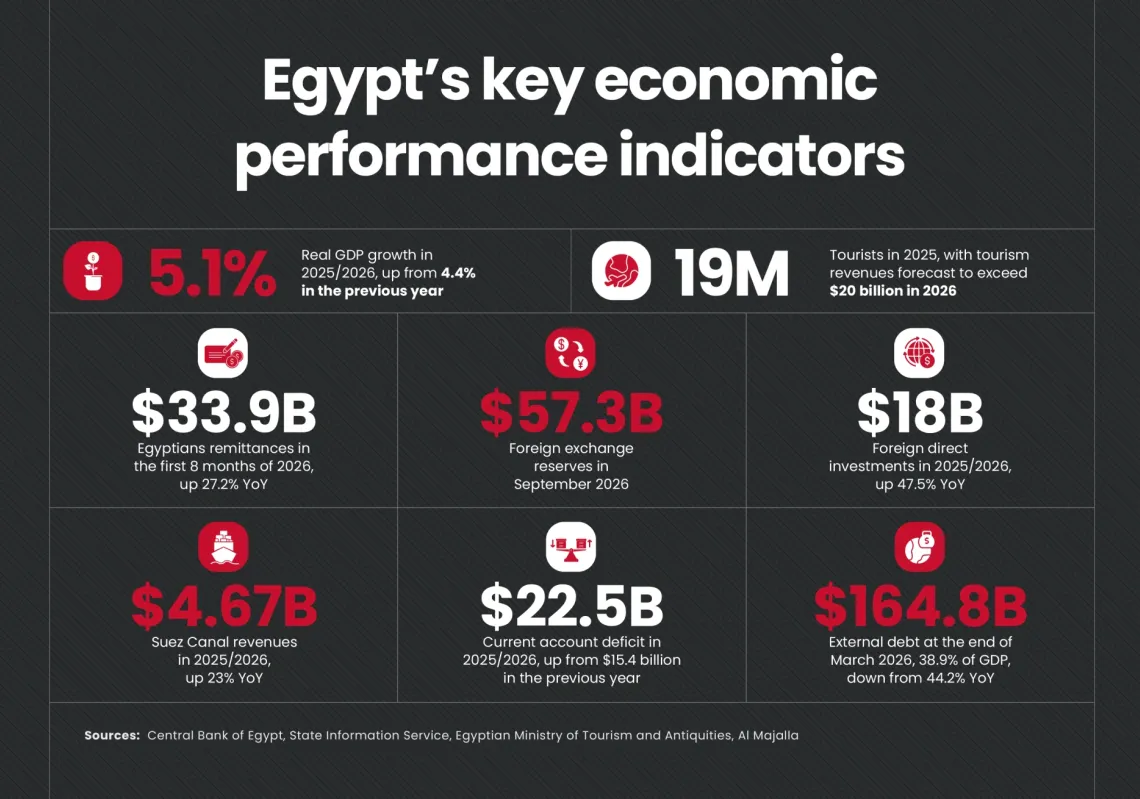
In North Africa, rising energy import bills are making eyes water, but Egypt and Morocco have cushioned the blow with foreign currency earnings from tourism and remittances. Combined revenues from these two sources reached $66bn in the first eight months of 2026, helping them withstand pressure on their balance of payments.
Morocco has a diversified export base including vehicles, aircraft parts, phosphates, and agricultural and food products. Like Egypt, it also has a thriving tourist industry. In its World Economic Outlook, the IMF forecasts Morocco's growth at 4.5% in 2026 but expects the country's current account deficit to widen to 4.9% of GDP, as import costs weigh on its external finances. Inflation is projected to remain subdued at 0.9% in 2026 (it was 0.8% in 2025).
Egypt received $46bn in foreign currency inflows in the first eight months of 2026, including $33.9bn in remittances from Egyptians working abroad and $12bn in tourism revenue. This bolstered its foreign exchange resources and eased pressure on its current account, just as disruptions to Red Sea shipping and rising energy import costs had been causing Cairo brows to furrow.
The Egyptian economy has displayed resilience as war has raged all around it, prompting the IMF to raise its growth forecast to 5.1% for 2026, followed by a moderation to 4.7% in 2027. But high public debt and large financing needs remain major challenges. Inflation is also high, although this is projected to fall to 14.8% in 2026, from 20.4% in 2025