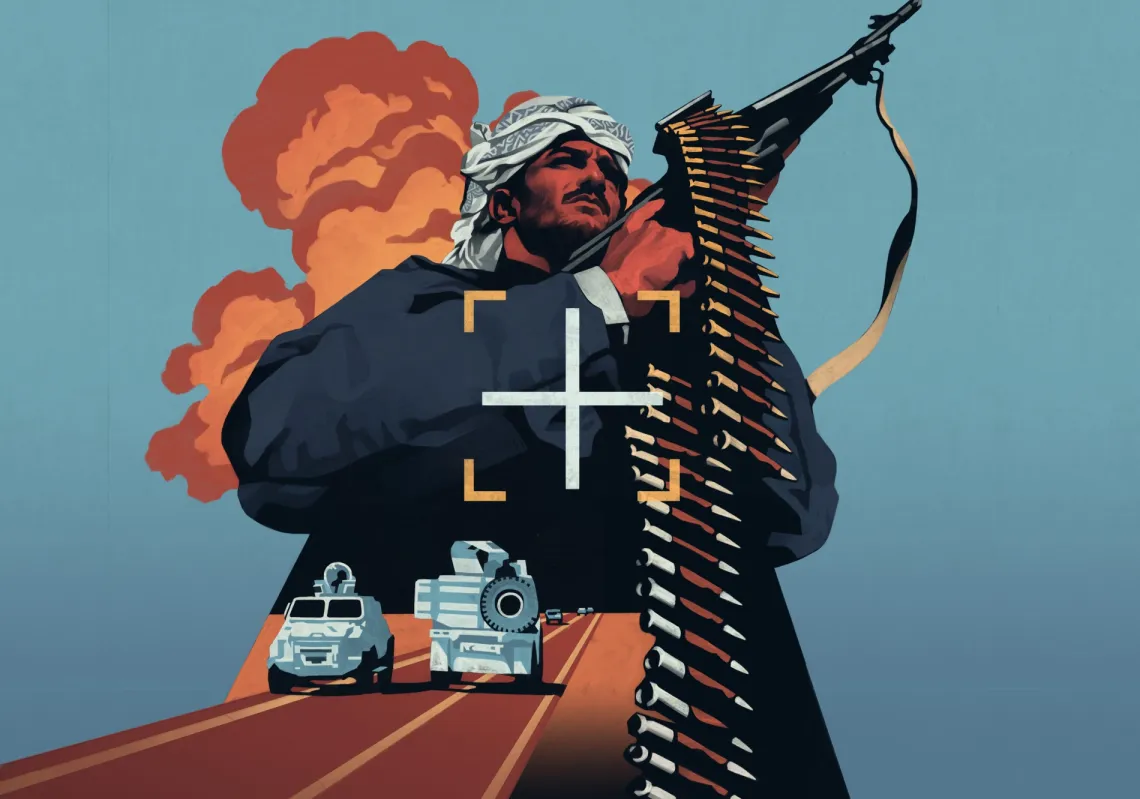

Al Majalla has learned that the Islamic State (IS) plans to dramatically step up attacks in Iraq in the coming months, to spread shock and fear following the US-led coalition’s withdrawal in late September. Attacks have already increased sharply, mostly confined to the territory separating the Kurdistan Region from the rest of Iraq.
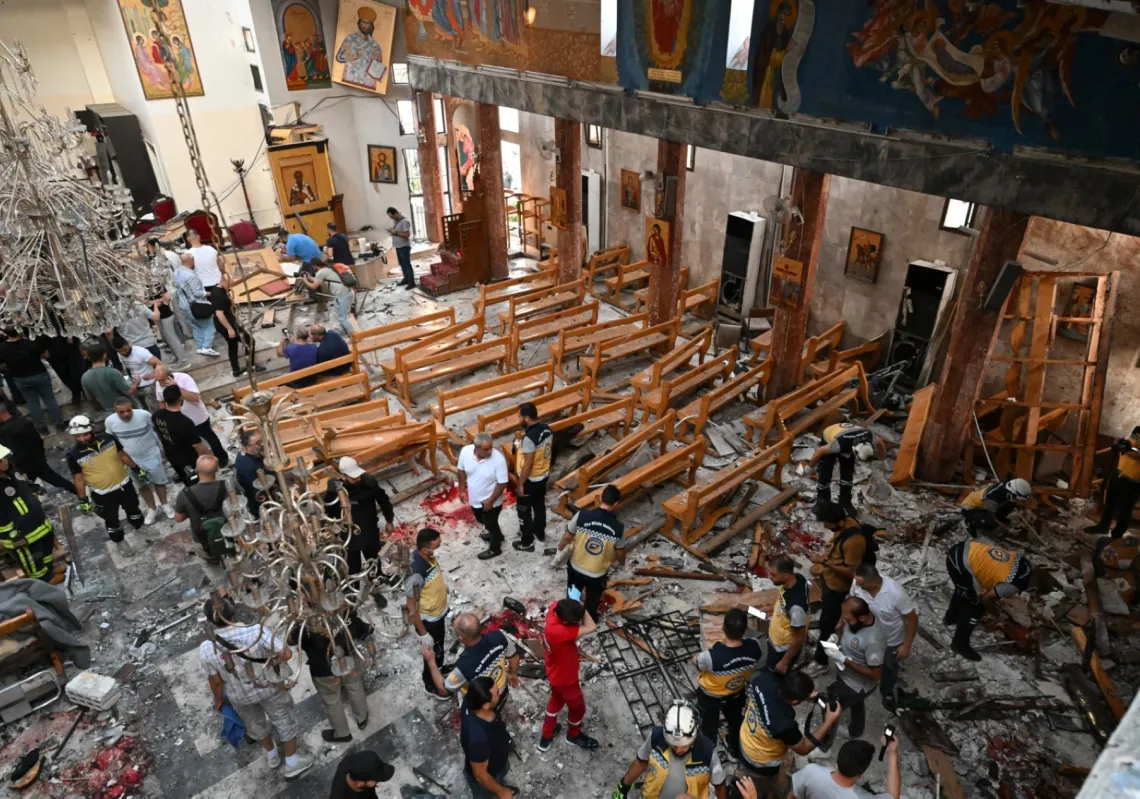
The first attempted attack occurred in the town of Pirdi on the road connecting Kirkuk and Erbil—the first such infiltration of an urban centre and attempted suicide attack by IS militants in years. Iraq’s Counterterrorism Service was able to neutralise two assailants before one of them, who was wearing an explosive vest, was able to detonate it in a crowd. During the operation, Iraqi security personnel killed two civilians, mistaking them for IS terrorists.
Less than a week later, a Federal Police regiment came under a concentrated attack near Hawija in Kirkuk province, with assailants using machine guns and sniper rifles. The following day, an Iraqi army brigadier general and a soldier were killed by a roadside bomb near Kirkuk, while another group of attackers hurled a grenade at a security patrol south of the city. A day later, the Popular Mobilisation Forces’ 61st Brigade came under heavy assault near the village of Al-Barghaliya in Hawija district.
The succession of attacks signals a major escalation in both the number and character of IS operations, which had declined sharply over the past two years. Despite reassurances from the government and security services, residents contacted by Al Majalla voiced deep concern about what the coming weeks and months might bring.
Locals refer to the arc stretching across the northern parts of Diyala, Kirkuk and Nineveh provinces as "fragile regions”. It consists largely of politically disputed territories between Baghdad and the autonomous government in Iraqi Kurdistan. For years, the international coalition failed to forge a political understanding between the two sides that could serve as the foundation for effective security cooperation. Even the joint brigades established by the Iraqi army and Peshmerga across these territories have yet to become fully operational or capable of exercising direct control over the vast areas separating their respective positions. As a result, IS cells found the region an ideal place to regroup.
Political exploitation of the region’s ethnic, religious and sectarian diversity has also created fertile ground for extremist groups to thrive. Communal identities have been inflamed, manipulated, and exploited to the point that they have hardened into political divisions, breeding suspicion and mutual distrust among local communities. Extremist organisations have repeatedly exploited these divisions, drawing on sectarian divisions in Diyala and Nineveh, including Mosul, and the parallel ethnic tensions among Kurds, Arabs and Turkmen in Kirkuk.
Geography adds to these vulnerabilities. The proximity of these territories to the Iranian and Syrian borders has long afforded Iran opportunities to intervene, while extremist organisations have repeatedly sought to cross the border with Syria, exploiting developments there.
Enhanced cooperation
In response to this renewed threat, Iraqi authorities have stepped up cooperation. A source within the Iraqi Kurdish Peshmerga told Al Majalla that senior political authorities had instructed the Peshmerga, Iraqi army, and security agencies to set aside political disagreements and work together to shore up security.
"The question of the disputed territories has remained unresolved for years because of regional interference and the insistence of Iraqi political forces on making implementation of Article 140 of the Constitution dependent on political agreements,” says Iraqi security analyst Walid al-Jalili. “This issue can no longer be deferred, as it now has a direct bearing on Iraq’s national security and its internal social cohesion.”