Ansar al-Sunna: the murky new jihadist group in Syria
A faceless new group that seeks to provoke sectarian violence is claiming responsibility for attacks that later transpire to be the work of others. Who are they, and do they matter?
LOUAI BESHARA / AFP
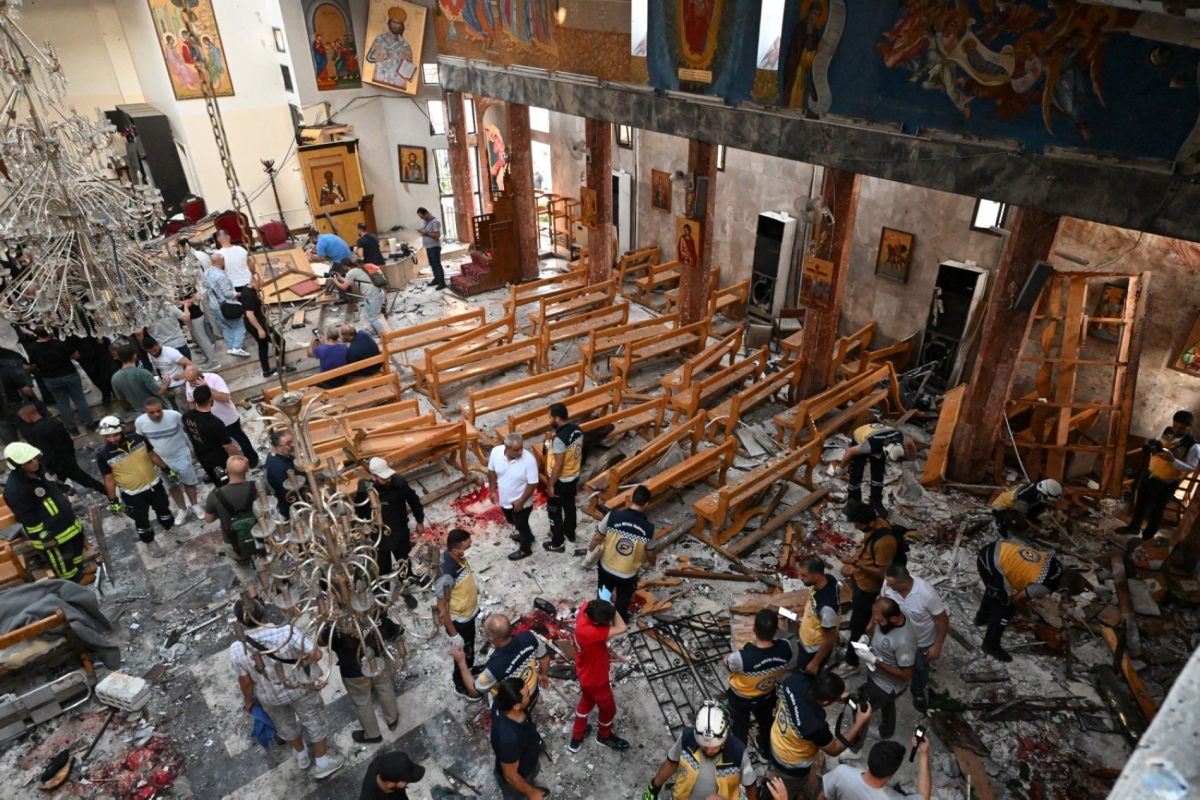
People and rescuers inspect the damage at the site of a reported suicide attack at the Saint Elias church in Damascus' Dwelaa area on 22 June 2025.
Ansar al-Sunna: the murky new jihadist group in Syria
As the recent fighting between government forces and Kurdish-led forces in Syria’s north may suggest, the last thing the country needs is more armed groups. Yet in the case of Saraya Ansar al-Sunna, that is what it appears to have. A Salafi-jihadist formation, it has emerged as a new actor on the Syrian stage over the past 12 months, garnering significant attention.
Exploiting social faultlines, Saraya Ansar al-Sunna has claimed responsibility for attacks against a range of targets in a pattern of violence designed to stir sectarian tensions during a hugely sensitive period for Syria, which has been undergoing a profound political transition following a popular uprising in 2024 that ended a brutal 14-year civil war and half a century of authoritarian rule by the Assad family.
Saraya Ansar al-Sunna has confused analysts seeking to understand its organisational identity, strategic aims, and supporters. Despite claiming responsibility for several high-profile attacks that have influenced developments in Syria, it has yet to provide evidence of its direct involvement.
This has led some to describe it as a “functional” entity, rather than a fully formed jihadist organisation. Its aims may be to recycle and redirect violence, unsettle the security landscape, or reorder the priorities of local and regional players. Yet, regardless of its true nature, most think Saraya Ansar al-Sunna has had a far bigger political and security impact than its actual size would suggest.
Tapping into frustration
The group has drawn attention, disrupted the calculations of Syrian groups, and fostered the kind of sectarianism that Syria’s interim president, Ahmed al-Sharaa, has sought to avoid. In doing so, it has tapped into frustration, resentment towards certain government policies, and the disillusionment of the post-war period, risking stability amid the steady state-building project underway in Damascus.
In its inaugural statement, the group said it was responding to what it described as the “excessive leniency” of the new administration, particularly in relation to the release and reintegration of former regime loyalists held in detention. It said it would carry out “lone-wolf attacks” targeting “Nusayris and Rawafid” (Alawites and Shiites). Al-Sharaa, by contrast, sought to incorporate all Syrian minorities in a new, inclusive state.
Saraya Ansar al-Sunna has drawn attention, disrupted the calculations of Syrian actors, and fostered sectarianism
Saraya Ansar al-Sunna made no mention of religious goals or motives, claiming instead that it was borne of anger and a desire for justice. Yet its rhetoric is unmistakably sectarian. By singling out "Nusayris and Rawafid", it conflates these communities with remnants of the Assad regime. Sectarianism, after all, remains a political construct.
On 31 January 2025, it claimed responsibility for an attack in the predominantly Alawite village of Arza al-Sharqiyya, in western Hama countryside. Nine people were killed, mostly officers or former conscripts in Assad's army. In its statement, it said "six wolves" from its ranks had carried out the operation. It also claimed to have killed five more officers in the village of Tal Dhahab near Salamiyya.
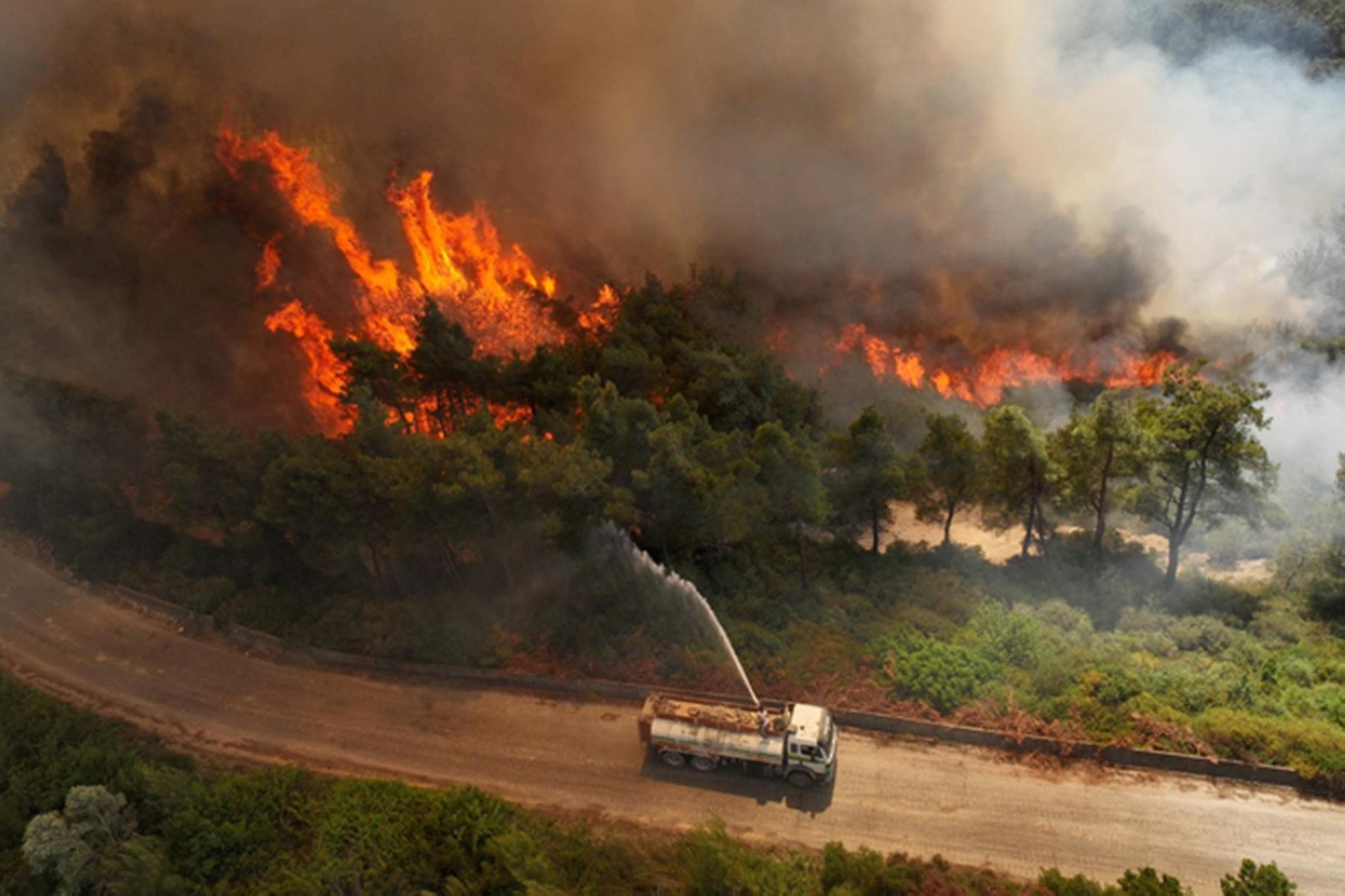
Firefighters battle forest fires in the Turkmen mountains in the al-Rabiah area of Syria's western Latakia governorate on 11 May 2025.
Building a reputation
On 5 March, Saraya Ansar al-Sunna said it had set fire to forests in Qardaha, a key stronghold of Assad-era loyalists in Latakia. It also warned Alawites that "what is coming will be far worse". The next day marked the beginning of what became known as the "Coastal Events".
On 6 March, remnants of the Assad regime launched a widespread, coordinated attack on government positions in Homs, Hama, Tartus, and Latakia. The offensive began with an ambush in Bayt 'Ana, east of Jableh in Latakia province, killing 13 personnel from an Internal Security patrol. The formation of a new Military Council for the Liberation of Syria was announced, led by Brig. Gen. Ghayyath Dalla.
There followed three days of violence and massacres, culminating on 8 March, when the Ministry of Defence declared that government forces had encircled the rebellion and restored government control.
After this, Saraya Ansar al-Sunna began issuing statements almost daily, claiming assassinations, executions, the destruction of shrines, and the capture of officers. It also claimed responsibility for targeting Hikmat al-Hajri, a prominent Druze religious figure, with a bomb at his residence.
The Saraya Ansar al-Sunna statement identified both political and religious motives. The former was evidenced by its use of words such as "remnants," "traitors," and "criminals," while the latter was invoked in words such as "infidel" and "polytheism," particularly in relation to attacks on shrines.
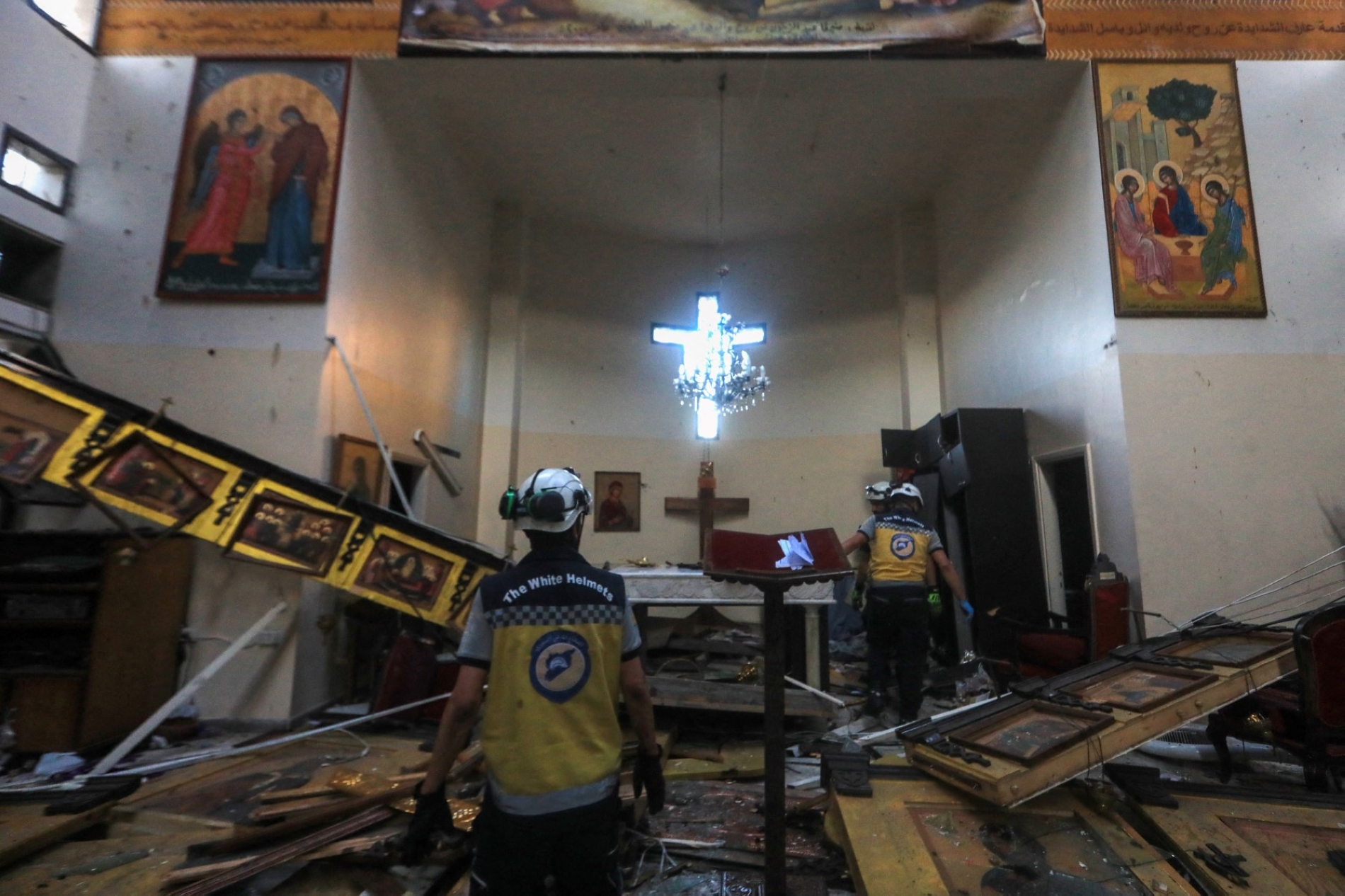
Rescuers inspect the damage at the site of a reported suicide attack at the Saint Elias church in Damascus' Dwelaa area on 22 June 2025.
Yet there is no verifiable evidence that the group was responsible for the actions it claims to have committed. Indeed, several of the alleged victims mentioned in its statements do not appear to exist. Nonetheless, the timing of the group's interventions and the nature of its claims led analysts to look at its structure, objectives, and true role.
Unanswered questions
In a statement issued by its media arm, the Dabiq Foundation, Saraya Ansar al-Sunna said it had set fire to "the forests of al-Qastal in northern Latakia" and that this had "forced the Nusayris (Alawites) to flee their homes and left several of them choking from the smoke". Yet the area is predominantly inhabited by Sunni Muslims. It made no sense to observers, who were left scratching their heads.
On 29 May, the group said it had launched a cyberattack, claiming to have infiltrated the phones and computers of over 5,000 "Alawite activists" linked to the Assad regime, adding that it had compiled a "target bank" for future operations. The extravagance of this claim suggests a deliberate myth-building strategy, issuing unverifiable assertions that imply advanced technical capabilities.
Throughout April and May 2025, Saraya Ansar al-Sunna continued to claim responsibility for sporadic, low-level operations. By June, it was announcing the appointment of officials within its operations room and the establishment of accounts affiliated with the "Saraya".
On 22 June 2025, it claimed responsibility for a suicide bombing at the Mar Elias Church in al-Duwaila near Damascus that killed 25 worshippers. It was the first time that the group had targeted Syria's Christians. It said this was in retaliation for "violations against the foundations of the dawa and those who desecrated the sanctity of the faith" (Salafi preaching in Christian neighbourhoods earlier in the year had sparked local protests, which led to government intervention). However, it later emerged that the attack was carried out by two members of the Islamic State (IS).
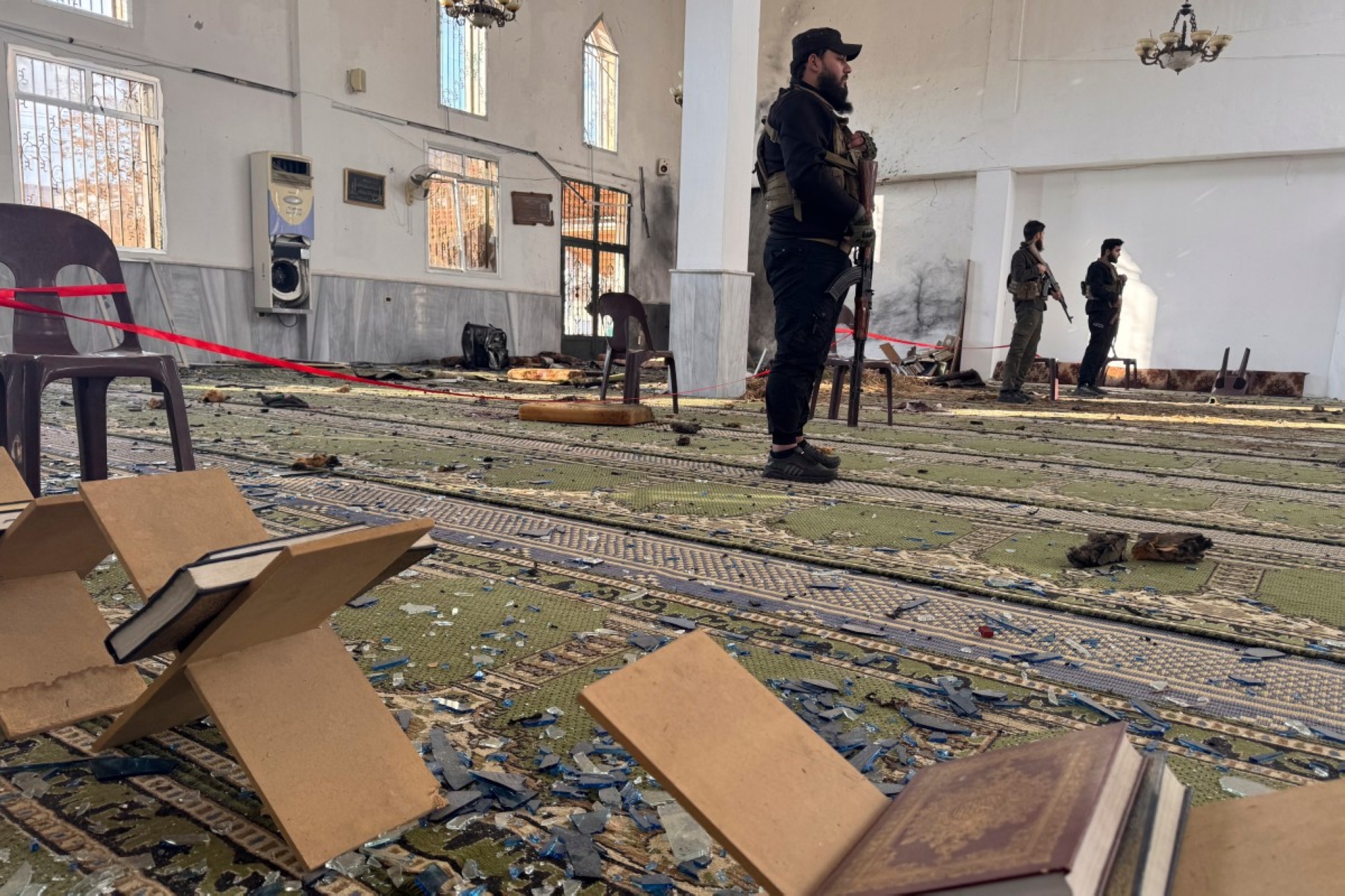
Armed men stand inside the Imam Ali ibn Abi Talib Mosque following an explosion in the Wadi al-Dahab neighbourhood of Homs on 26 December 2025.
A mosque is bombed
For much of the next four months, the group retreated almost entirely from view as it sought to reshape its image, intensifying its rhetoric against the government and President Ahmed al-Sharaa (himself a former jihadist fighter). It resurfaced on 26 December with a statement declaring that it had targeted the Ali ibn Abi Talib Mosque in the predominantly Alawite Wadi al-Dhahab district of Homs using explosive devices.
It said the operation was conducted "in cooperation with another group", which it declined to name. Again, it seemed odd. Standard jihadist practice in joint operations is to acknowledge the other party as a form of recognition. Observers noted that the mosque attack bore none of the hallmarks of IS, which usually uses suicide bombers when targeting places of worship.
The following day, Sheikh Ghazal Ghazal, who heads the Supreme Alawite Islamic Council, called for a "flood" of peaceful demonstrations to demand "decentralisation" and the creation of a special Alawite region. The call generated significant mobilisation. In an atmosphere already charged with sectarian tension and visibly supported by remnants of Assad's forces, the demonstrations veered into armed clashes, which killed three and injured several others.
The context is important. Sheikh Ghazal lives in eastern Syria under the protection of the armed and semi-autonomous Kurdish-led Syrian Democratic Forces (SDF), collaborating as part of a minorities' alliance. The mosque bombing came five days before the year's end—the deadline for implementing a March 2025 agreement between the government and the SDF to integrate the latter's armed units into the Ministry of Defence, something the Kurds have resisted.
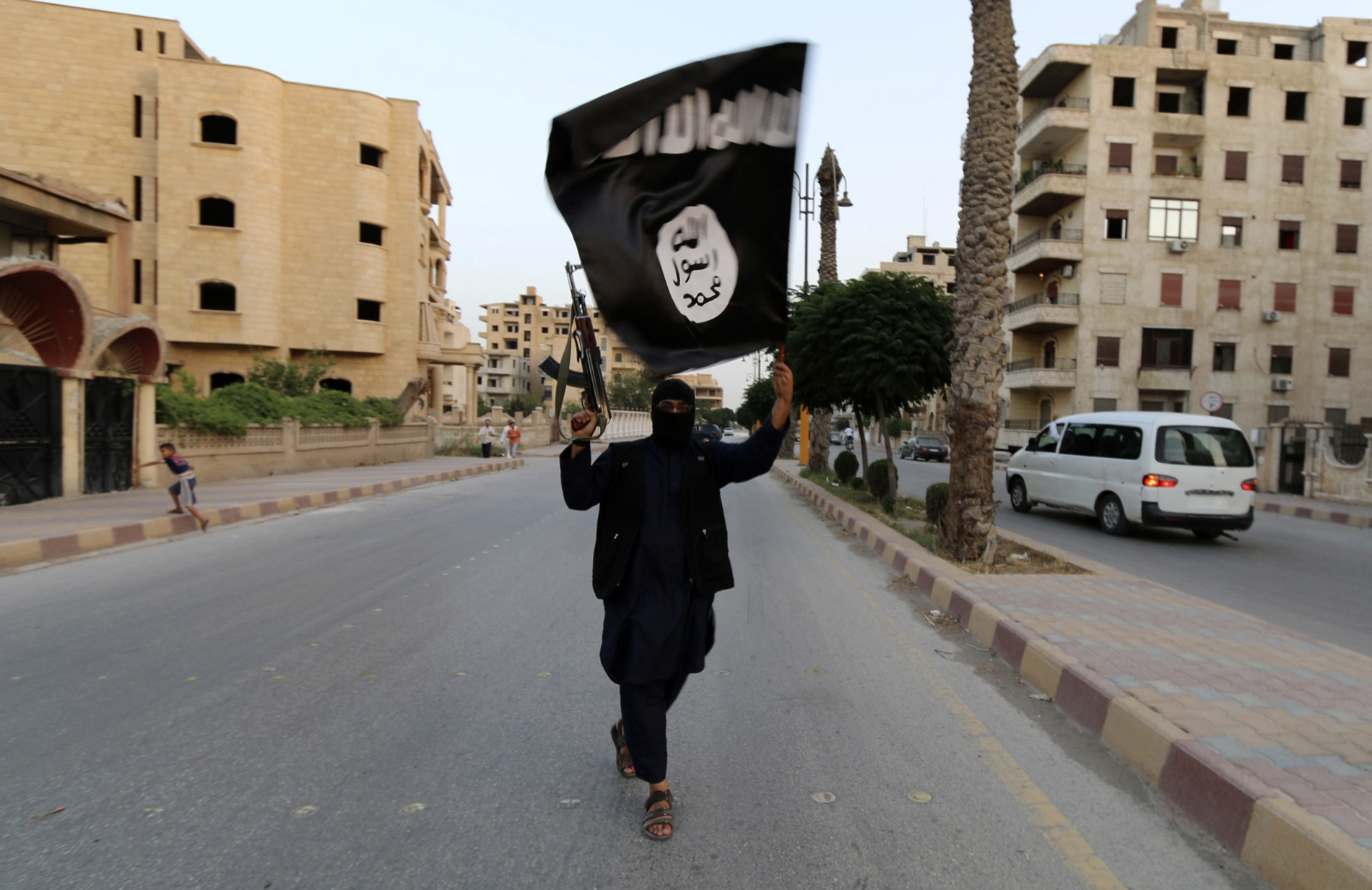
A member loyal to the Islamic State (IS) waves the group's flag in Raqqa on 29 June 2014.
Piggybacking on IS?
The non-verifiable operations claimed by Saraya Ansar al-Sunna shed light on its strategy and modus operandi, exploiting power vacuums and shaping perceptions. They appear to be exploiting Islamic State's policy of not publicly announcing operations in government-controlled areas, claiming attacks that were in fact perpetrated by IS. It also seems to be capitalising on politically sensitive moments of sectarian tension.
Alongside this, Saraya Ansar al-Sunna maintains a high level of ambiguity, obscuring its identity and leaders. The attacks it claims against Alawites and Assad regime remnants appear almost preparatory, as seen in March 2025 and with the recent mosque bombing in Homs. This lets it draw attention, exerting influence through a single Telegram channel.
In Syria's precarious transitional period, with Damascus battling Kurdish-led forces in the country's north-east while seeking to strike an understanding with Israel to the south, Saraya Ansar al-Sunna presents a political and security challenge, not necessarily because of its actual capabilities, but because of the questions it raises. From the outset, Saraya Ansar al-Sunna was keen to cast itself as an emerging force of violent disruption. With dubious claims and no coherent identity, it is yet to convince some that it is what it says it is.