Ukrainian drones in Libya change Egypt's regional calculations

For Cairo, the 22 November Benghazi naval attacks threaten to turn its western neighbour from a strategic buffer into a security liability

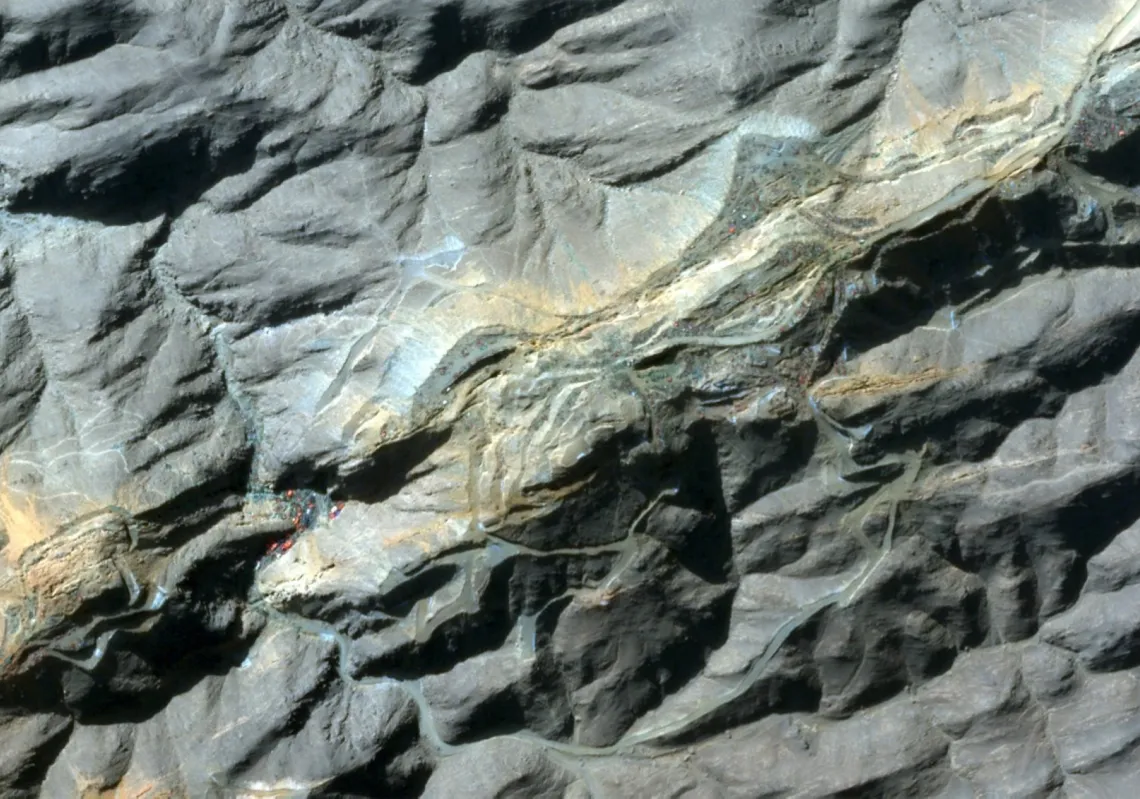
A satellite image shows smoke rising from a burning ship in the Libyan port of Benghazi on 22 November 2026.
AFP
A satellite image shows smoke rising from a burning ship in the Libyan port of Benghazi on 22 November 2026.

Ukrainian drones in Libya change Egypt's regional calculations

After the sinking of a Russian warship in the east Libyan port of Benghazi by Ukrainian naval drones, and the successful targeting of a Russian cargo ship nearby, the North African country is at risk of getting caught up in Europe’s biggest war for 80 years. For Egypt, this is a bleak scenario that could pull the Mediterranean into a conflict Cairo has strenuously sought to avoid, given that local tensions are already high.

Ukraine’s attacks against the two Russian ships in Libyan waters compound the tension caused by disputes over maritime boundaries (important, given that there are substantial gas reserves below the seabed) and the security threats Egypt faces in the Red Sea, where Houthi attacks from Yemen have targeted commercial shipping and forced operators to divert away from the Suez Canal.

For Egypt, the 22 November Benghazi naval attacks were neither coincidental nor bad luck. Rather, they represented the culmination of strategic blunders that are turning eastern Libya from a strategic buffer into a security liability. These blunders are prompting Egyptian policymakers to reconsider their stance toward the authorities in eastern Libya, where Khalifa Haftar has enjoyed Egyptian patronage since he formed the Libyan National Army (LNA) after the 2011 downfall of dictator Muammar Gaddafi.

No good news at sea

After spending two decades living in the United States, Haftar returned to Libya during the 2011 uprising, and Cairo backed the retired general in the hope that he would turn eastern Libya into a security buffer against instability, political Islam, and foreign powers such as Türkiye and Russia, who may want to gain a foothold on its border. This security buffer is so important to Egypt that in 2020 President Abdel Fattah al-Sisi threatened to intervene militarily if the Libyan cities of Sirte and al-Jufra were attacked. He had the support of Saudi Arabia, the UAE, and Bahrain.

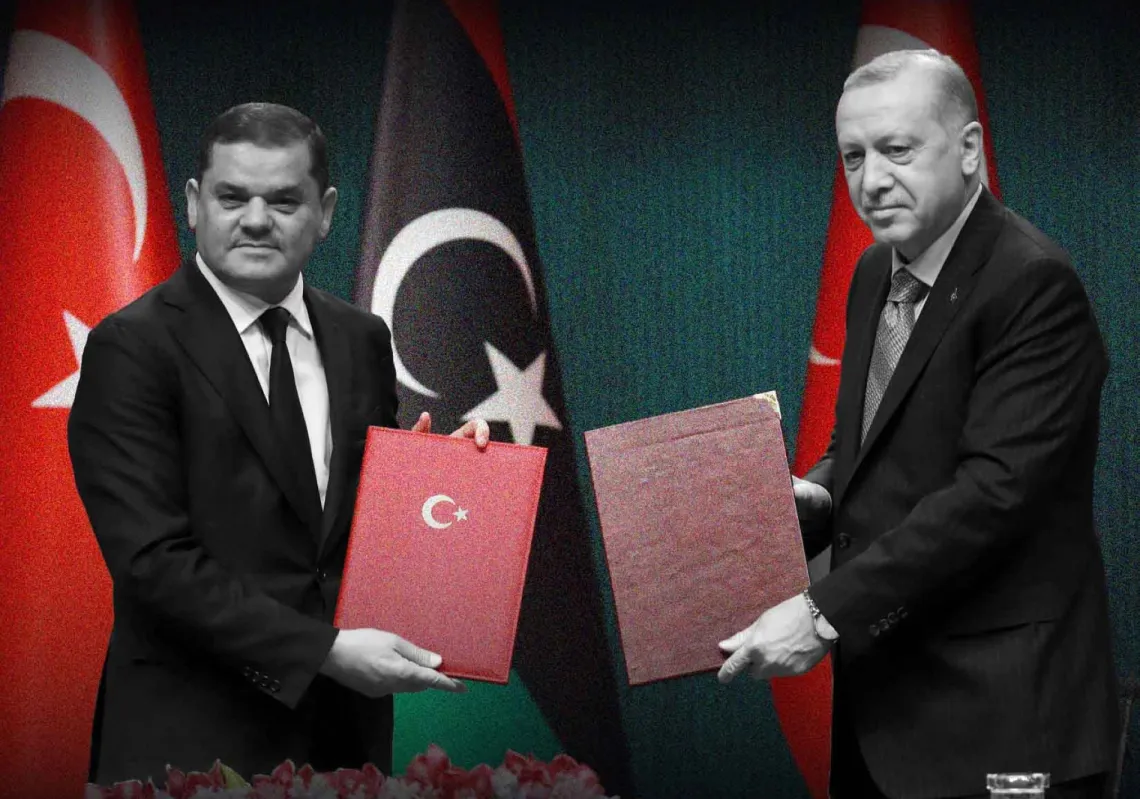
Eastern Libya authorities have acted in line with Cairo’s political, security, and strategic prerogatives over the years, including their rejection of a 2019 maritime boundary delimitation deal between Tripoli and Türkiye, but last month Haftar’s parliament angered Egypt by ratifying that very deal. This has complicated Egypt’s position in the Eastern Mediterranean, reigniting maritime boundary disputes and forcing Cairo to reassess its future energy plans.

The eastern Libya parliament’s move is seen by most analysts as being in the interests of Türkiye, and at the expense of Egypt, so the timing is unfortunate, given that Egypt and Türkiye were trying to turn the page on their old differences, a development necessitated by the region’s changing political and security landscape. The pair have drawn up ambitious joint defence industry and investment plans, along with coordination strategies across several regional spots, especially the Horn of Africa. A renewed maritime border dispute threatens to bring this good work to a screeching halt.
AFP
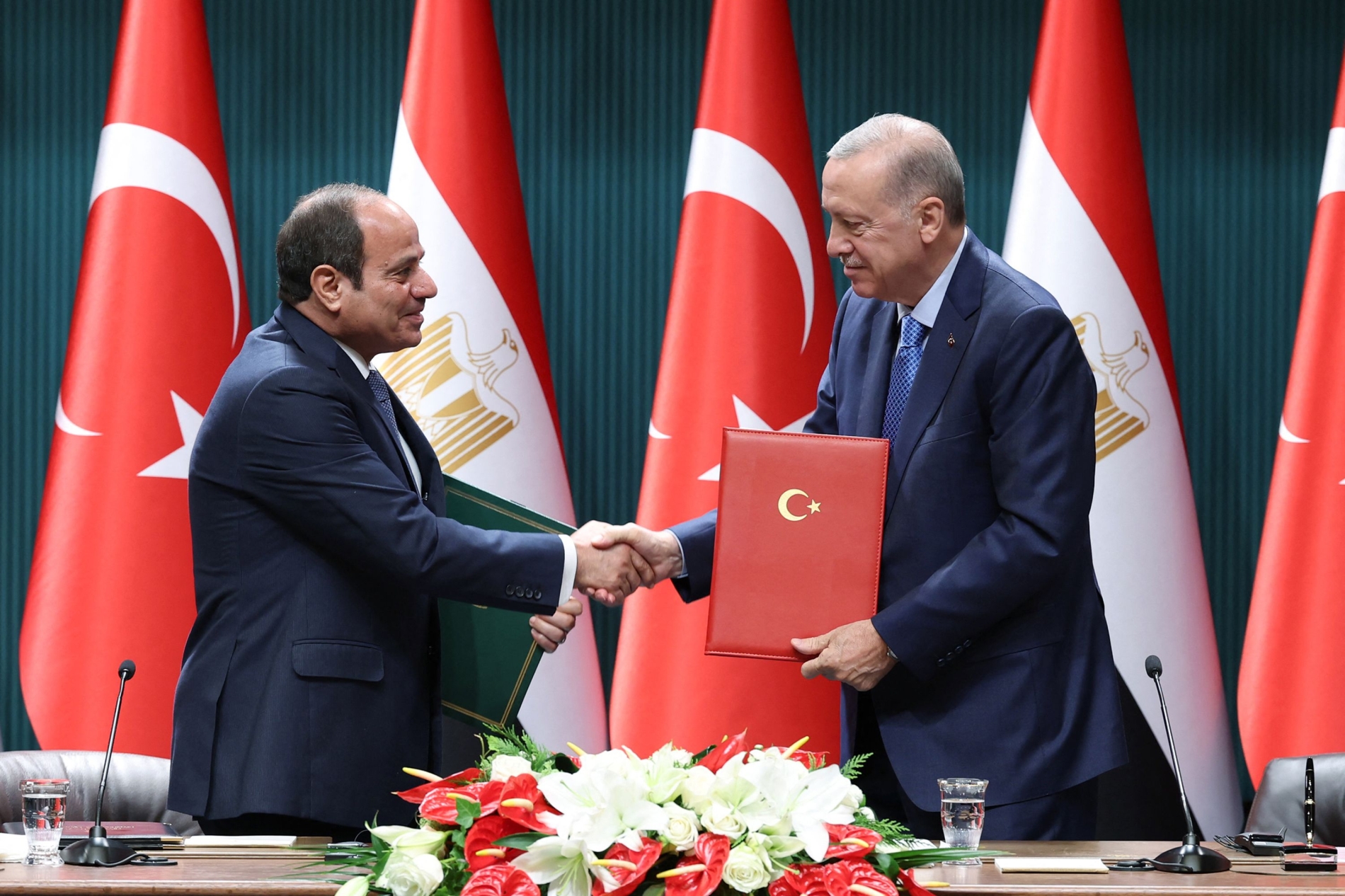
Turkish President Recep Tayyip Erdogan (R) and Egyptian President Abdel Fattah el-Sisi (L) shake hands after signing an agreement in Ankara on 4 September 2024.

Russian ambitions

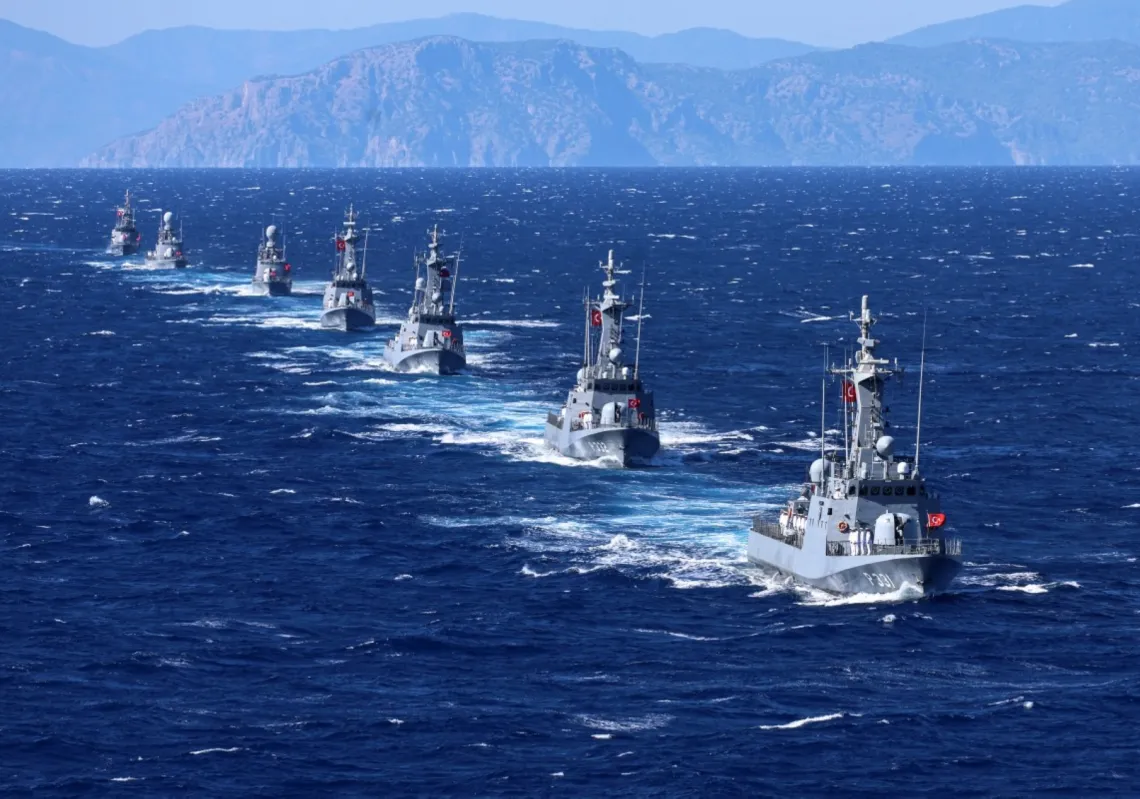
There are a deeper set of grievances driving the rift between Cairo and Benghazi. The two Russian vessels that were attacked this week included a corvette reportedly carrying guided missiles and a Ka-27 combat helicopter. The second was a sanctioned cargo ship allegedly involved in the transfer of arms. The corvette had been operating in the Mediterranean to escort Russian military cargo ships departing from the Baltic Port of Baltiysk, according to some intelligence estimates. Authorities in eastern Libya said the warship and cargo vessel were at Benghazi to refuel and resupply before heading back to Russia under existing maritime cooperation agreements.

Moscow has expanded its footprint in eastern Libya since losing access to its naval facilities in Syria following the late 2024 collapse of the Bashar al-Assad regime, relying on its ports to offload weapons for Africa Corps (formerly Wagner Group) mercenary operations. Cairo once turned a blind eye to the Russian presence, given its strong relations with Moscow, which it came to see as a counterweight to the Turkish military presence in western Libya, but Russia’s ambitions are increasingly of concern.

Moscow's militarisation of eastern and central Libya means that Egypt now sits uneasily next to a major power's military presence with no say from Cairo

Russian soldiers and Africa Corps personnel are reportedly upgrading runways, hangars, and perimeter defences across several Libyan airbases, while using the port of Tobruk, only 140km from the Egyptian border, as a heavy-materiel logistics hub. Combined with Russian naval ambitions in the Red Sea, Moscow's militarisation of eastern and central Libya means that Egypt now sits uneasily next to a major power's military presence, there at Haftar's invitation, with no say from Cairo.

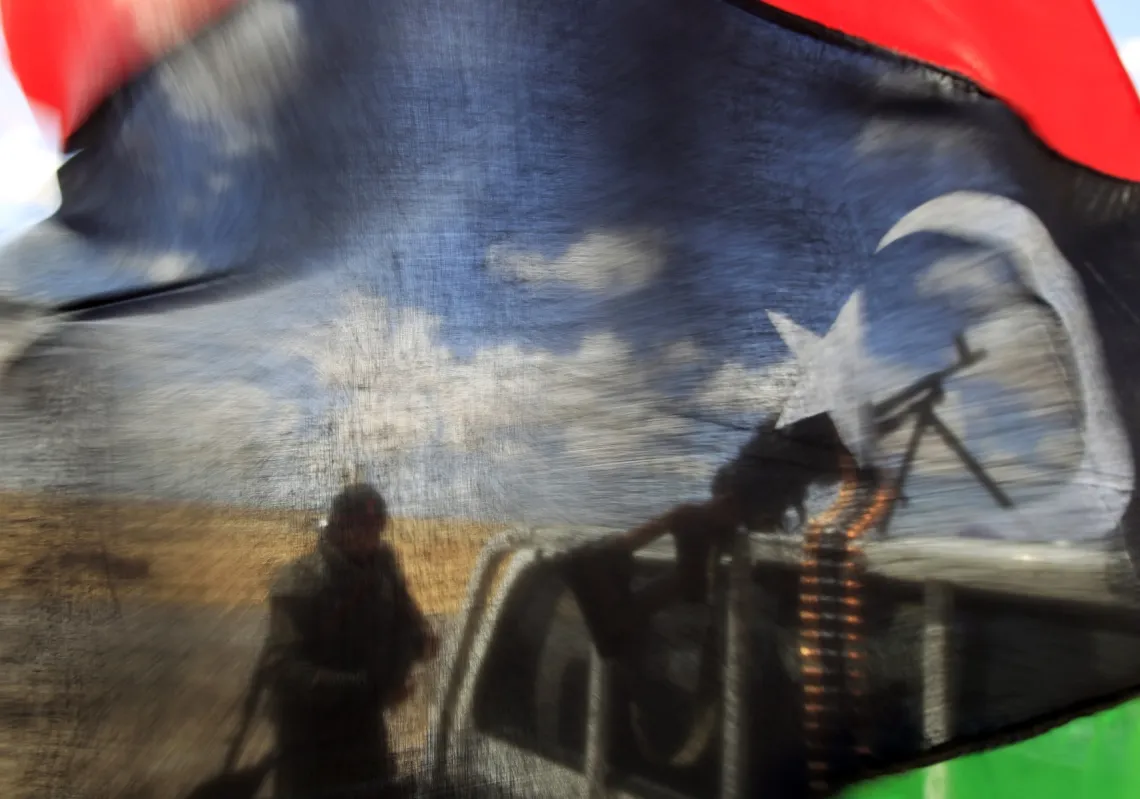
While these are all concerns, the single most urgent driver behind Cairo's policy shift on Libya is that the east of the country is becoming a logistics corridor for the Rapid Support Forces (RSF), the paramilitary group that has been battling the Sudanese Armed Forces for control of Sudan since April 2023. Haftar's LNA has reportedly been facilitating weapons, drones, and air-defence shipments to the RSF through south-eastern Libya. Alarmed, Egypt has summoned members of the Haftar family repeatedly in recent months.

A fractured Sudan on Egypt's southern border is a nightmare scenario with implications for its freshwater supplies, its interests in the Red Sea, and the security of the country's south, where fallout from the Sudanese war has already spilt over, fuelling friction along the 1,270km border. Hundreds of thousands of Sudanese refugees are already living in Egypt, adding to its economic headache. Egypt has been trying to work out a settlement in Sudan, but foreign interests, including those in Sudan's gold, have so far prevailed.

Getty
Pure Sudanese gold nuggets, one of the best in the world.

A calculated pivot

In reaction to the Haftars' maritime move, Egypt has intensified coordination with the Turkish-backed west Libyan government based in Tripoli. It has reopened its embassy there after 12 years, sent its most senior officials (including the intelligence chief and foreign minister), and signed a series of cooperation agreements, including on energy and labour. Still, observers note that Cairo has not fully closed the door to any part of Libya, which may come from its experience of the country's post-Gaddafi politics.

Although officials from western Libya and Egypt have visited and consulted one another over recent years, Cairo's accelerated contacts with Tripoli seem designed primarily to put pressure on the Haftars, whose repeated missteps have convinced officials in Cairo that, after years of unconditional backing, a reckoning is overdue. Opening a direct channel to Tripoli gives Cairo a counterweight and aligns it with Western efforts to end the conflict.

With tensions in the Strait of Hormuz complicating energy supplies from the Gulf, fuel-importing Egypt is looking for alternatives. Libyan gas, whose export corridors and major hubs are concentrated in western Libya, is easy and affordable. It could be traded for Egyptian companies' goods and infrastructure expertise.

Cairo is mindful that it must find a balanced formula when dealing with Benghazi, given the interconnections between Egyptian national security, its Eastern Mediterranean interests, and eastern Libya. A statement by the Egyptian government formally denying any tensions with eastern Libya would suggest as much. Applying too much pressure on the Haftars could break down the relationship entirely. The prevailing view in Cairo is that Egypt has invested too much time and effort in eastern Libya and the LNA to abandon them. At this stage, influencing the Haftars' decisions would be enough.

font change

Related Articles