Israel’s long October

Three years after October 7, Israeli confidence in their government has not recovered. This requires leadership willing to answer for the past and choose a direction beyond it

Israel’s long October

It has become a cliché in Israel to say the country is “stuck on October 7”: unable to move on to 8 October; unable to return to 6 October. Moving beyond that day will take time, but it will also require moments that mark a before and an after.

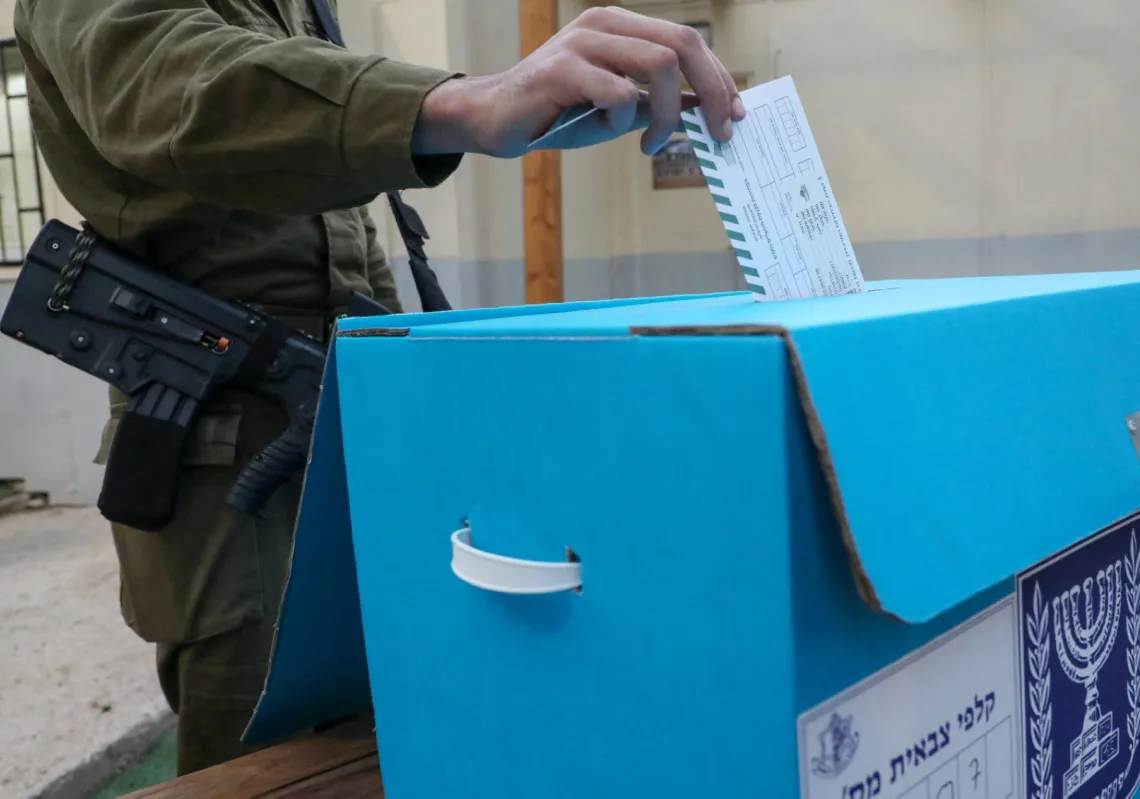
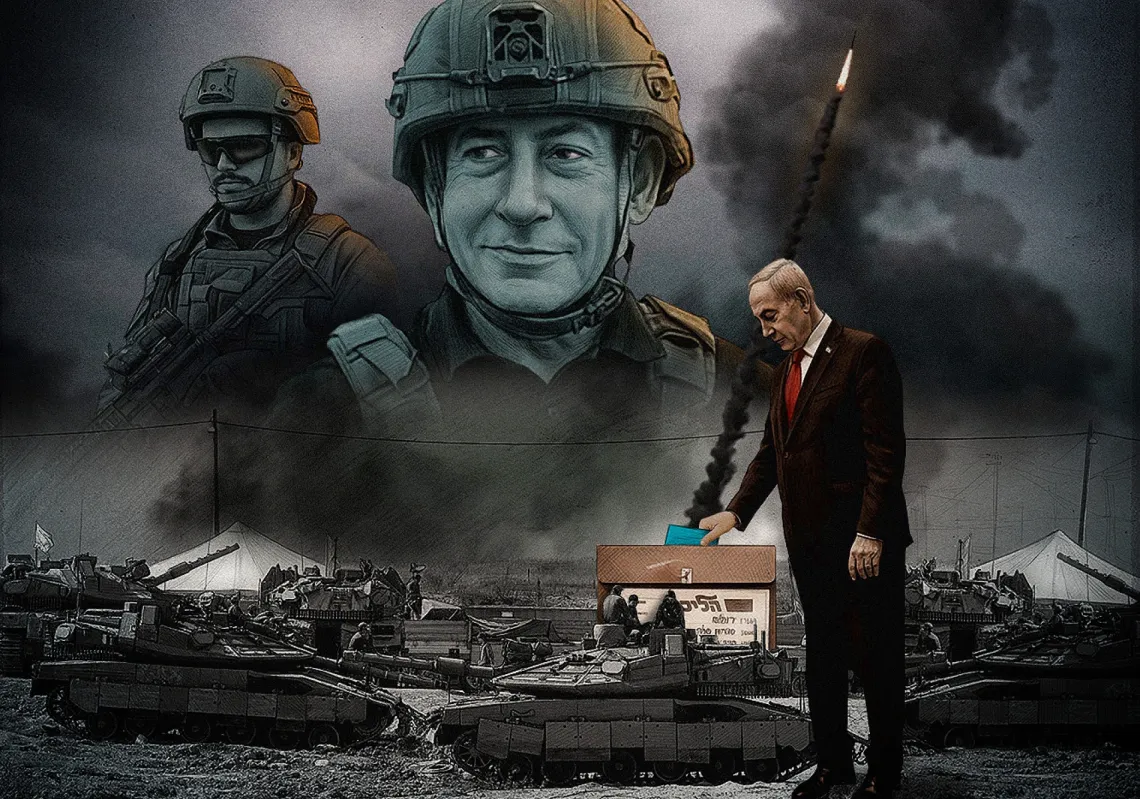
One came last year, when the last living Israeli hostages were freed from Gaza, allowing the country to breathe a sigh of relief. Another is approaching: the 27 October election. Israeli politics are complicated, but at the heart of this election are two simple questions: who is responsible for the security failures that occurred on October 7 and who can ensure such an attack can never happen again?

The 1973 war and its aftermath may offer some useful insights into how to best answer this question. On 6 October, a surprise attack by Egypt and Syria delivered a military blow that Israel hadn't experienced since its founding in 1948. Recovery took weeks, but the political reckoning took years. A year later, the Agranat Commission, established to investigate Israel’s failures, blamed senior military commanders while sparing government ministers.

However, that was not enough to appease a bitter Israeli public. Days later, Golda Meir (Israel's then-premier) resigned. While her Labour Party endured and won the election held in December 1973, it later lost to Menachem Begin’s Likud party in May 1977, ending nearly three decades of Labour rule. Israelis called it the mahapach: the upheaval.

Then came an unexpected opening for peace: In November 1977, Egyptian President Anwar Sadat visited Jerusalem. The Camp David Accords followed in 1978, and an Israeli-Egyptian peace treaty in 1979. The sequence offers a possible path: a surprise attack can trigger a military recovery, a political reckoning, and sometimes a strategic opening.

But is such a sequence possible in today's regional landscape? Three years after October 7, a political reckoning inside Israel remains uncertain, and a regional shift even more so. This is not to say that Israel, as a geopolitical actor, has remained paralysed, or that its environment has not changed. Three years after the worst terror attack Israel has ever suffered, the Israeli army is now actively operating outside of Israel’s borders in three additional areas (Gaza, Lebanon and Syria). Yet many feel none of the wars that followed October 7 have been won. A three-year survey by INSS found that only 38% of Israelis believe Israel won the war against Hezbollah in Lebanon, 27% think it won against Hamas in Gaza, and 23% think it won against Iran. The wars, in other words, are still unfinished even in the minds of Israelis.
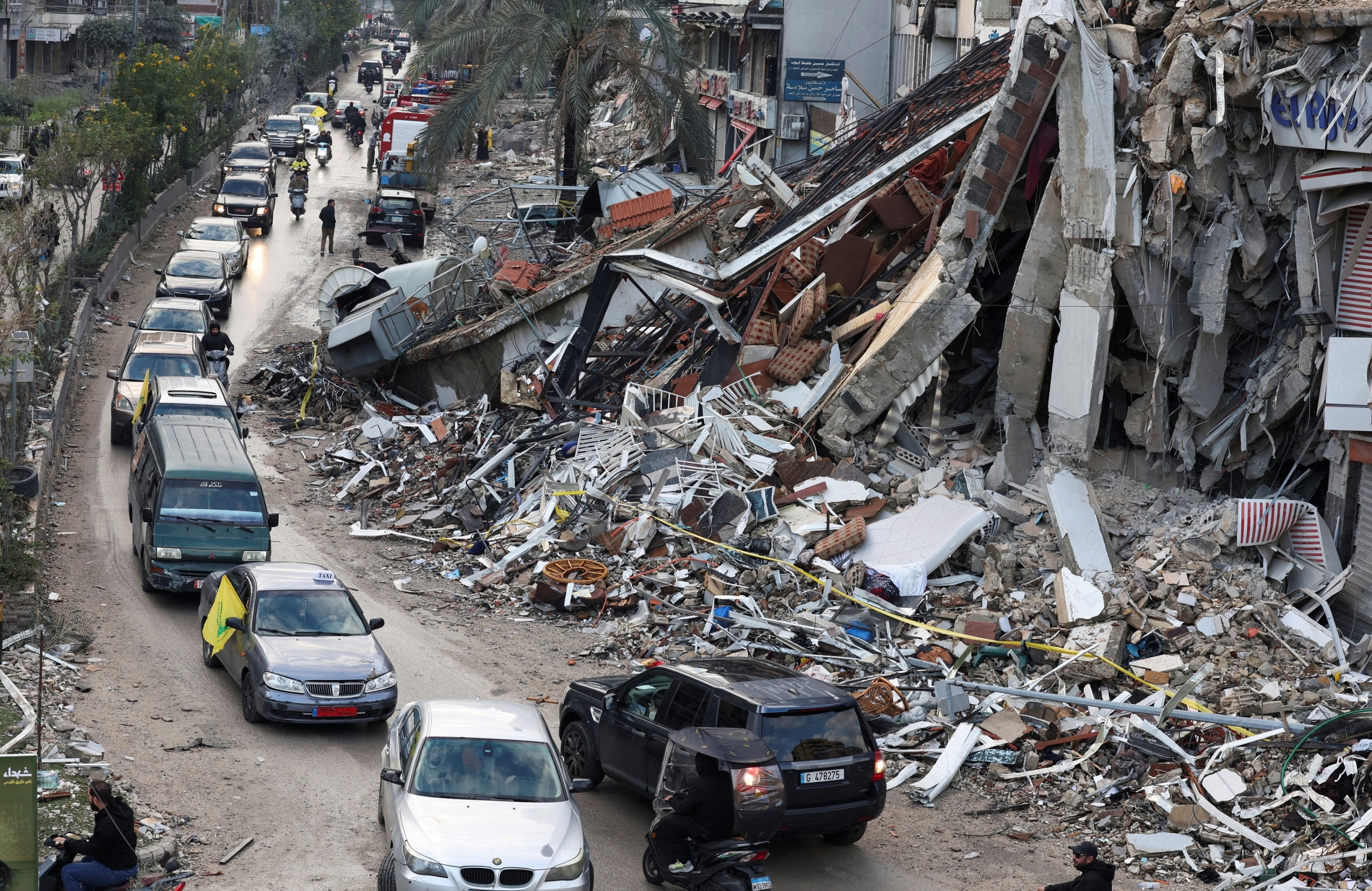
REUTERS/Mohamed Azakir
Vehicles drive near damaged buildings in Beirut's southern suburbs after a ceasefire between Israel and Hezbollah took effect, Lebanon November 27, 2024.

New lines, old problems

On a map, Israel looks like the victor. The hostage ordeal finally ended in January 2026, when the last remains were returned, and large-scale fighting in Gaza has subsided, although Israeli strikes continue. In the region, Israel has weakened Iran and its main ally Hezbollah in Lebanon.

And yet neither war is over. At the start of the ceasefire, the Israeli military held about 53% of Gaza behind the so-called Yellow Line, the boundary separating its positions from the rest of the territory. By July, it said it controlled about 60%; some estimates put the figure close to 70%. Visiting an outpost on 2 September, Netanyahu made his position plain: “We control the territory. We are not withdrawing.” Netanyahu’s vision resembles the situation in the West Bank, where Israel retains overarching security control as an alternative to a political solution.

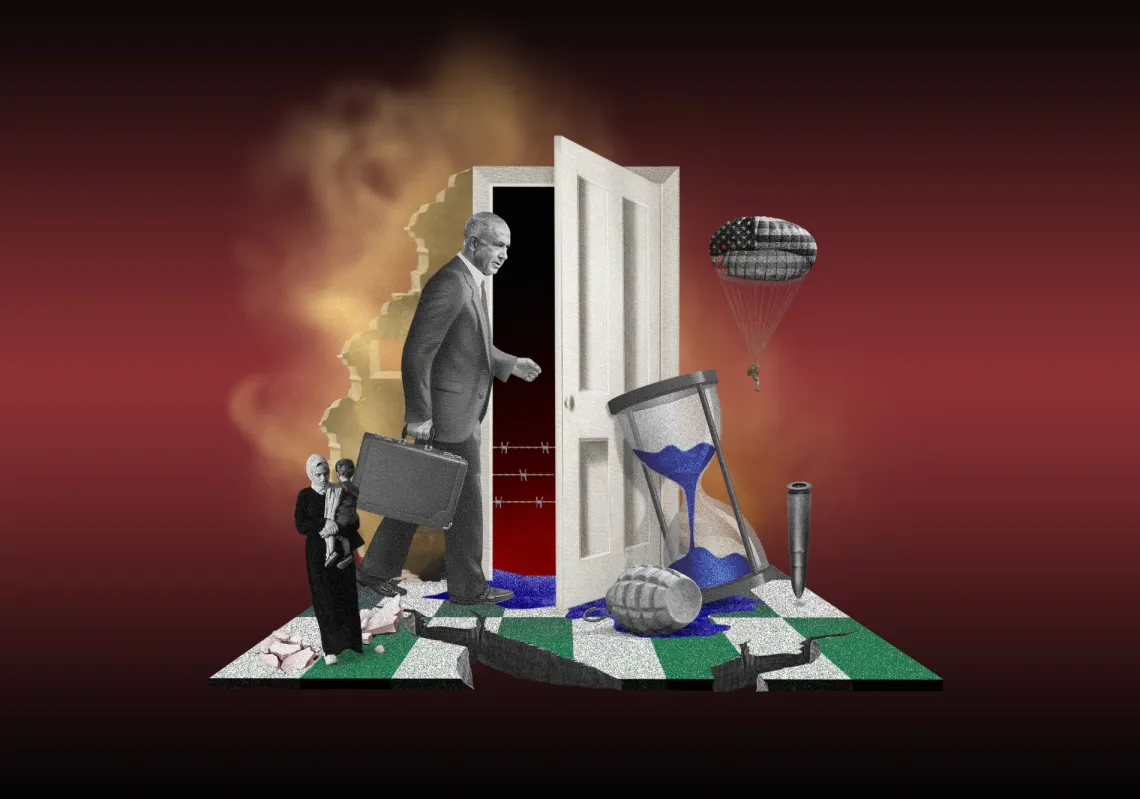
The path to a political resolution is narrow. At the end of July, Hamas accepted a 15-point roadmap proposed by the Board of Peace that called for it to disarm. Israel never signed it, saying it will only withdraw once the group actually hands over its weapons. No weapons have been handed over, the proposed International Stabilisation Force has yet to deploy, and the $2.45bn recovery plan unveiled at the UN on 23 September has yet to materialise.

The problem is one of sequence: Hamas wants Israel to withdraw before disarming, while Israel wants Hamas to disarm before withdrawing. This is “dead cat” diplomacy at its best: Both sides know the other has no intention of truly compromising. Each side seeks to bring the dead cat of stillborn diplomacy to the other’s door—blaming the other side for the failure of the talks.
Only 38% of Israelis believe Israel won the war against Hezbollah in Lebanon, 27% think it won against Hamas in Gaza, and 23% think it won against Iran

INSS survey

The same pattern can be seen on Israel's northern border with Lebanon. Hezbollah joined Iran's war on 2 March 2026, and Israel reinvaded southern Lebanon. A 16 April ceasefire opened the first direct talks between Israel and Lebanon in decades. The Lebanese government took the once-unthinkable step of outlawing Hezbollah's military wing. Israel withdrew from three designated "pilot zones," allowing the Lebanese army to move in, but says it will go no further until Hezbollah disarms.

In neighbouring Syria, President Ahmed al-Sharaa said in late September that the two sides had reached "90% of agreements" on a security pact before Israel walked away. On both fronts, a diplomatic opening has yet to produce a lasting settlement.

Then there is Iran: the confrontation Netanyahu had sought for 20 years came but brought no conclusive results. On 28 February 2026, Israel and the United States launched joint strikes that killed Iran's Supreme Leader. Since the breakdown of a Pakistan-brokered memorandum, the conflict has shifted to tankers and shipping routes around the Strait of Hormuz. The decision on how and when to end the conflict now sits largely out of Israel's control.

Taken together, these fronts suggest a doctrine no one has formally announced. The contrast is stark: Ben-Gurion's Israel sought short wars followed by diplomacy; Netanyahu's Israel increasingly holds territory in place of a diplomatic settlement. Each position offers a tactical advantage. Each also ties down reservists, exposes them to a grinding conflict, and postpones the political decision military force cannot make.

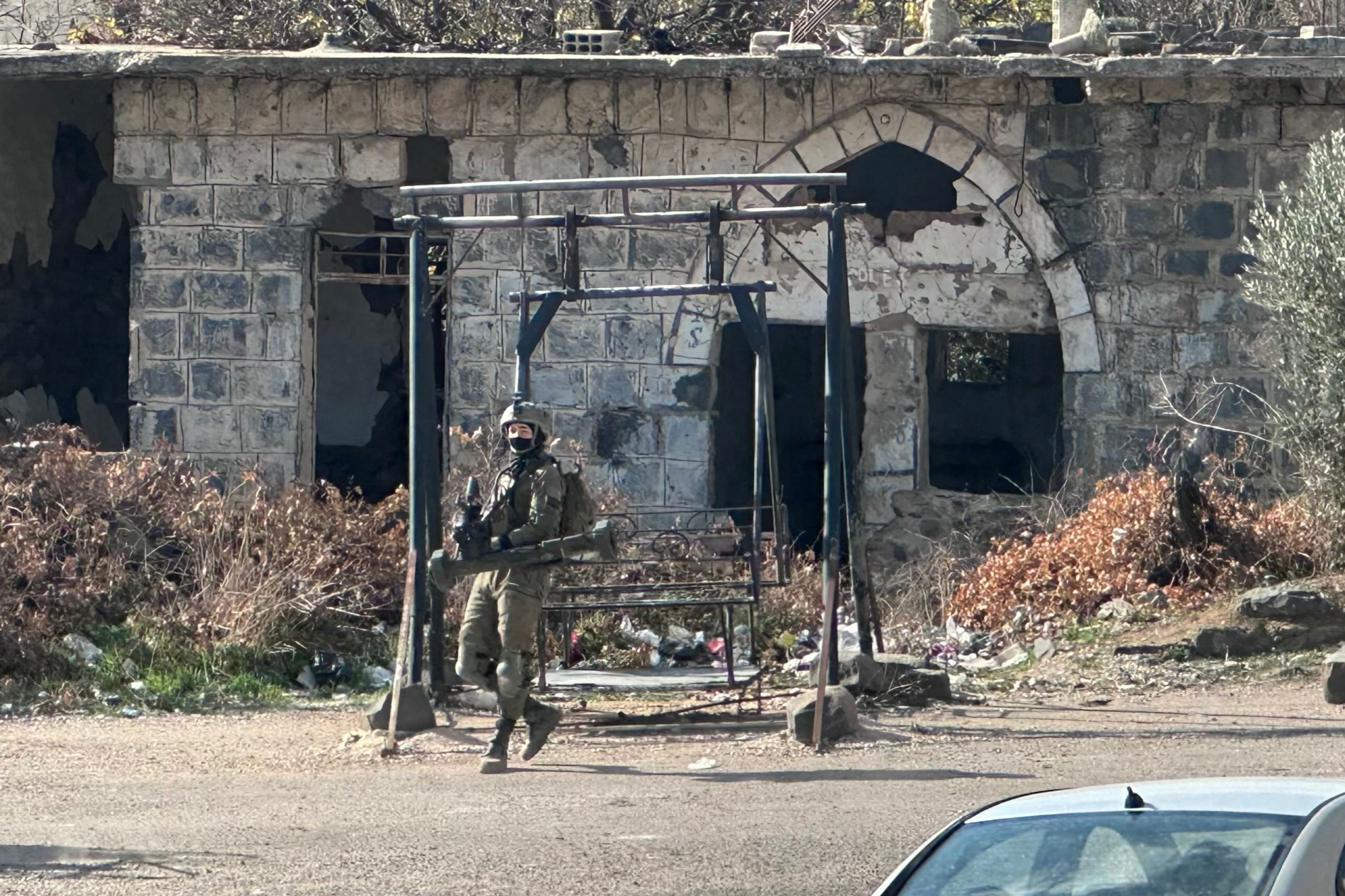
Bakr Alkasem / AFP
An Israeli soldier takes a position in the Syrian town of Jubata al-Khashab, in the UN-patrolled buffer zone in the annexed Golan Heights, on 20 December 2024.

A reckoning deferred

Israel's military lines postpone the question of how its wars will end. Its government has worked even harder to postpone the question of who should answer for how they began.

The clearest message from recent polling concerns trust. Israelis are broadly satisfied with the army's performance, yet deeply dissatisfied with the government's leadership. They distinguish between those who fought the war and those who led the country through it. Three in four want a state commission of inquiry into the failures surrounding the October 7 attack, including a majority of voters who support the governing coalition. In an Israel Democracy Institute survey conducted in early September, 68% of Jewish respondents said the October 7 attacks would be central to their vote.

Read more: Israelis' eroding trust in government is on the ballot

After the surprise attack of 1973, that demand proved impossible to resist. This time, Netanyahu has resisted it. He has blocked a state commission, proposed a politically shaped alternative that would extend the investigation back to the Oslo peace process and Israel's withdrawal from Gaza, and then allowed even that proposal to stall. The Supreme Court, reluctant to intervene on the eve of an election, has left the issue to the next government.

Meanwhile, each revelation revives questions about Netanyahu's leadership before and on that fateful day. Reports of foreign warnings have sharpened the dispute over Netanyahu's responsibility. Both Haaretz and The New York Times reported that UAE President Mohammed bin Zayed warned him in September 2023 of a major Hamas operation, but that he failed to alert his security chiefs. For their part, The Atlantic and The Wall Street Journal separately reported Egyptian warnings before October 7.

While Netanyahu denies the allegations and the UAE has declined to confirm the report, it would be naive to think the timing (just before a critical election) is incidental. The warning described by The Atlantic reportedly lacked operational details—a crucial distinction between predicting escalation and identifying an attack's timing, scale and targets. Still, it is clear that in the lead-up to October 7, trust between the military and the political leadership had eroded to the point that Netanyahu refused to meet security officials at several points before the war. Efforts to avoid setting up an independent commission also point to a lack of transparency and an effort to avoid being held accountable for one of the worst days in Israel's history.

AFP/Al Majalla
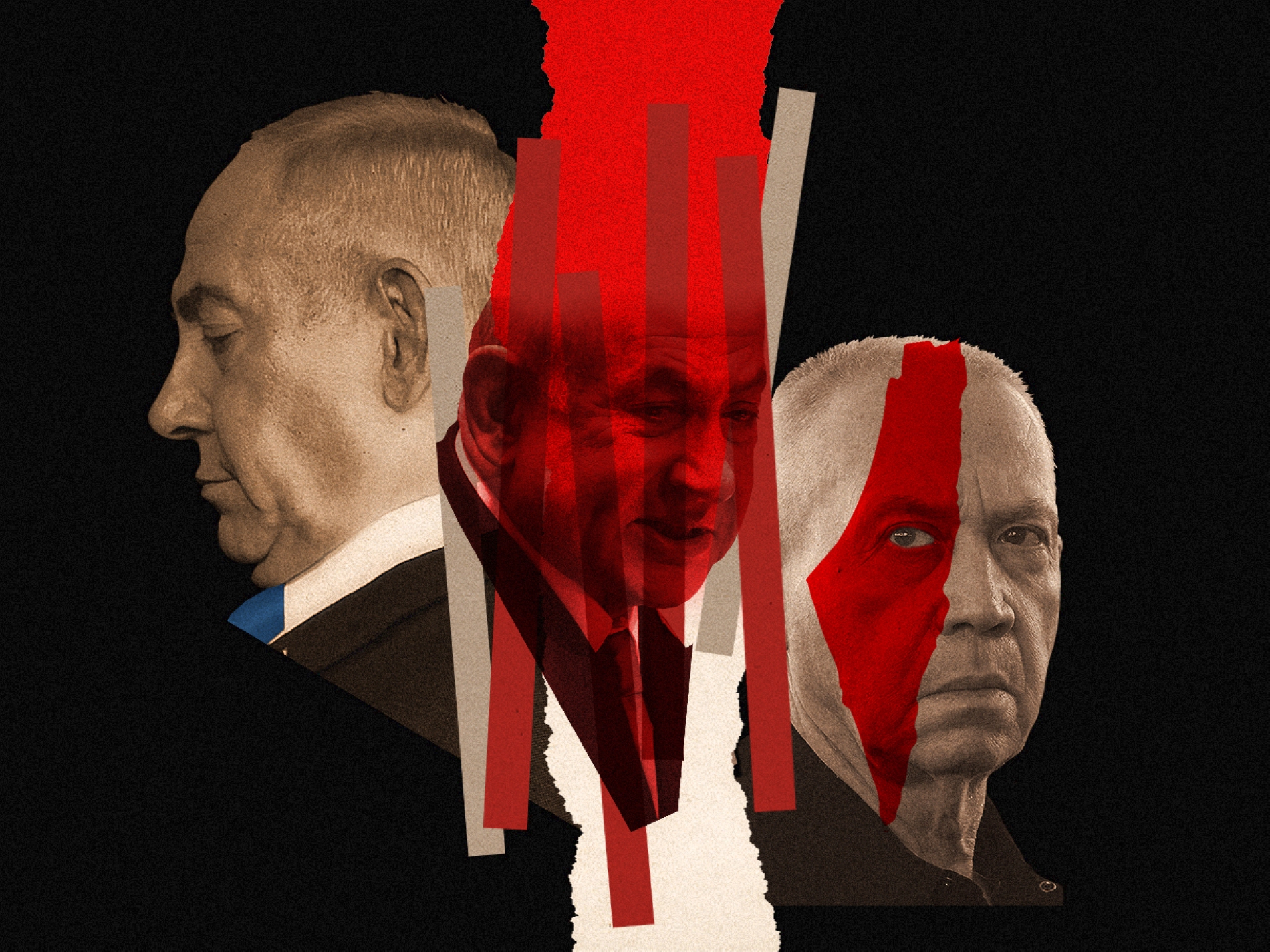
The International Criminal Court (ICC) issued arrest warrants for Israel's Prime Minister Benjamin Netanyahu and his former Minister of Defence Yoav Gallant in November 2024 accusing them of war crimes in Gaza.

The contrast with 1973 is stark. Then, the public refused to let military commanders shoulder the blame alone. Now, senior commanders have accepted responsibility, and many have resigned, while political leaders remain in office. This deferment strategy has somewhat succeeded: Israelis will go to the polls later this month without learning about the commission's findings. 

Decisions made elsewhere

For Israel, there is a little-discussed cost to its current deferment strategy: agency. Trying to resolve strategic issues through tactical measures has led Israel to lose the initiative and to have less control over the outcome.

Israel fought Iran alongside the US, but it is Washington that now leads the Gaza ceasefire process, the Lebanon talks and efforts to end the Hormuz standoff. Israelis see the shift: half say the American administration has more influence over their security decisions than their own government. But when Israel offers no plan for Gaza's future, it cannot complain if others take the initiative. When it leaves the terms for ending the Iran war unresolved, this gives Washington and Tehran the space to negotiate those terms themselves.

That dependence rests on an increasingly narrow political base. While much of the focus is on aid and weapons, dependence has also grown diplomatically. Israel has never relied so heavily on one US president while enjoying so little support among Americans more broadly.

Read more: US public opinion is decisively shifting against Israel

For the first time in a generation, there are clear signs that Israel is losing parts of the American public. Among Democrats and younger Americans, the balance has shifted further against Israel. Its alliance with the United States increasingly depends on one party. That is a fragile basis for a security strategy built around American power.

Europe, meanwhile, has begun moving from criticism toward penalties, restrained mainly by Germany and Italy. Israel is not a pariah, but its partners are reconsidering the terms of the relationship. Support once taken for granted is becoming more conditional.

The largest diplomatic prize—normalisation with Saudi Arabia—also depends on a choice Israel continues to defer. Riyadh still requires a credible path to Palestinian statehood. Israelis remain deeply divided over the Palestinians' future, with no option commanding anything close to majority support. That division leaves Israel without a clear offer to put on the table. The longer it postpones one, the more others will shape the terms.

Reuters
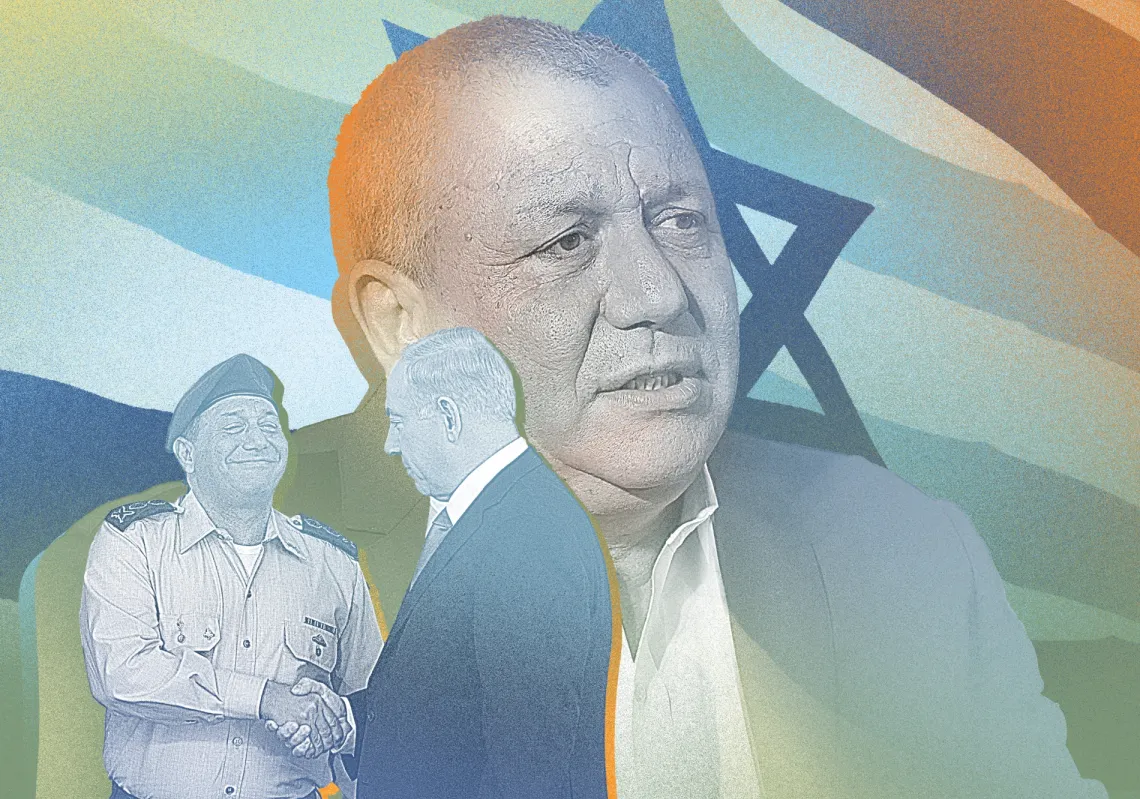
Gadi Eisenkot launches an electioncampaign for Yashar, his new political party, at an event near Hod Hasharon, Israel, on 30 June 2026.

A critical vote

All of this converges on the upcoming election. Israel approaches its 27 October vote with October 7 still acting as the country's political axis. Polls show a country divided almost evenly.

More revealing than the race's closeness is what it is being fought over: accountability more than strategy. The leading challengers, Gadi Eisenkot, Naftali Bennett and Avigdor Lieberman, are security hawks. They challenge Netanyahu over the October 7 failure and exemptions from military service, rather than Israel's current security posture and broader strategy. Israelis disagree bitterly over whom to trust more than over what to do: The country has a security consensus and a visible leadership crisis. The lack of strategic vision goes unaddressed.

That distinguishes this election from the upheaval of 1977, when Menachem Begin ended decades of Labour rule and subsequently made peace with Egypt. A change of government in 2026 may not bring a comparable change of direction. The opposition offers different leadership—and, to be sure, a different leadership may offer opportunities to fine-tune strategy. Still, the opposition has yet to lay out clearly how its strategy truly differs from the one Netanyahu leaves behind.

Three years after October 7, Israel has recovered the capacity to inspire fear in its enemies, but not enough to give its citizens confidence in what comes next

The election's likeliest immediate result is not a new government, but prolonged bargaining over one. Neither camp appears able to secure a parliamentary majority on its own. The ultra-Orthodox parties will seek protection for military-service exemptions; the Arab parties may hold crucial votes while remaining partners that other parties hesitate to embrace publicly. An inquiry into October 7, military conscription and Netanyahu's pardon request could all become bargaining chips.

Beyond those negotiations, much of the direction is already visible. Israel's military lines are likely to survive the election: no plausible government is likely to withdraw while Hamas and Hezbollah remain armed. The risk is that temporary security zones become permanent boundaries without an explicit decision to make them so. An end to the Iran war is more likely to come through negotiation than surrender, with America shaping the terms more than Israel.

Three years after October 7, Israel has recovered the capacity to inspire fear in its enemies, but not enough to give its citizens confidence in what comes next. The election may change who leads the country; yet ending its long October will require a government willing to answer for the past and choose a direction beyond it.

font change