Turmoil in Tigray: the view from Ethiopia's neighbours

While many would like to see Addis Ababa distracted, they also worry about a refugee spillover should a civil war break out. It might be a case of 'be careful what you wish for'

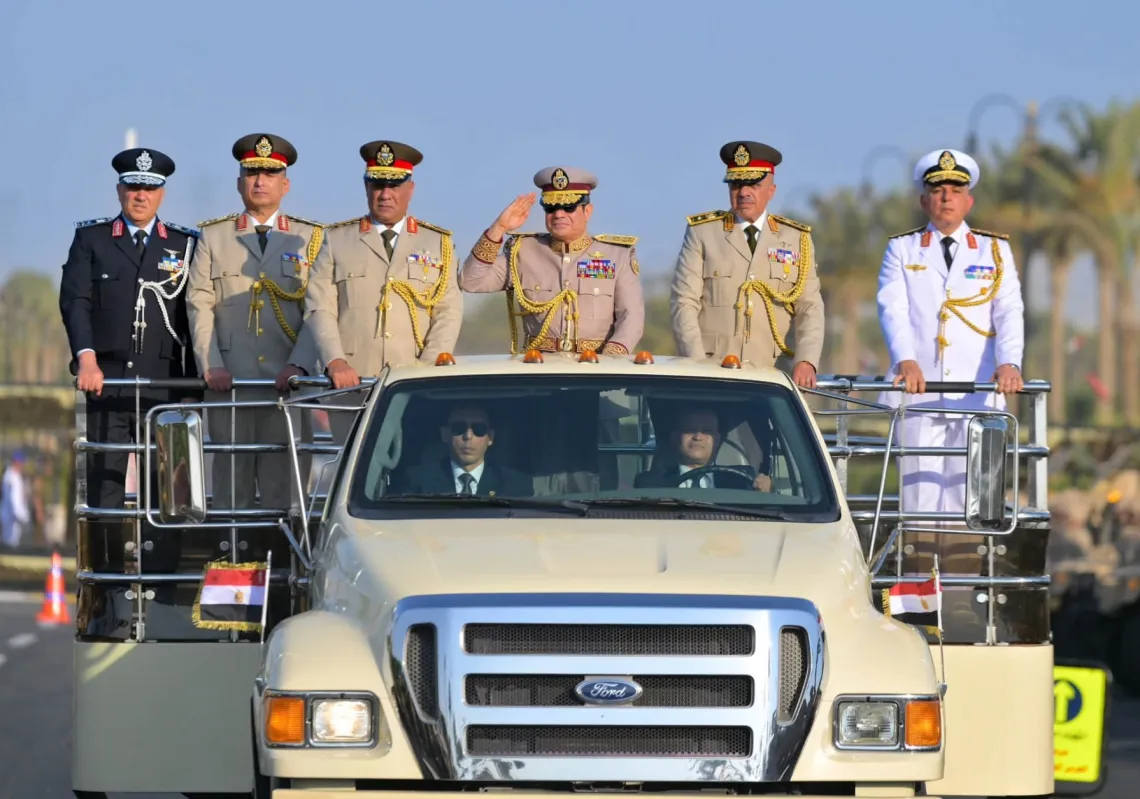
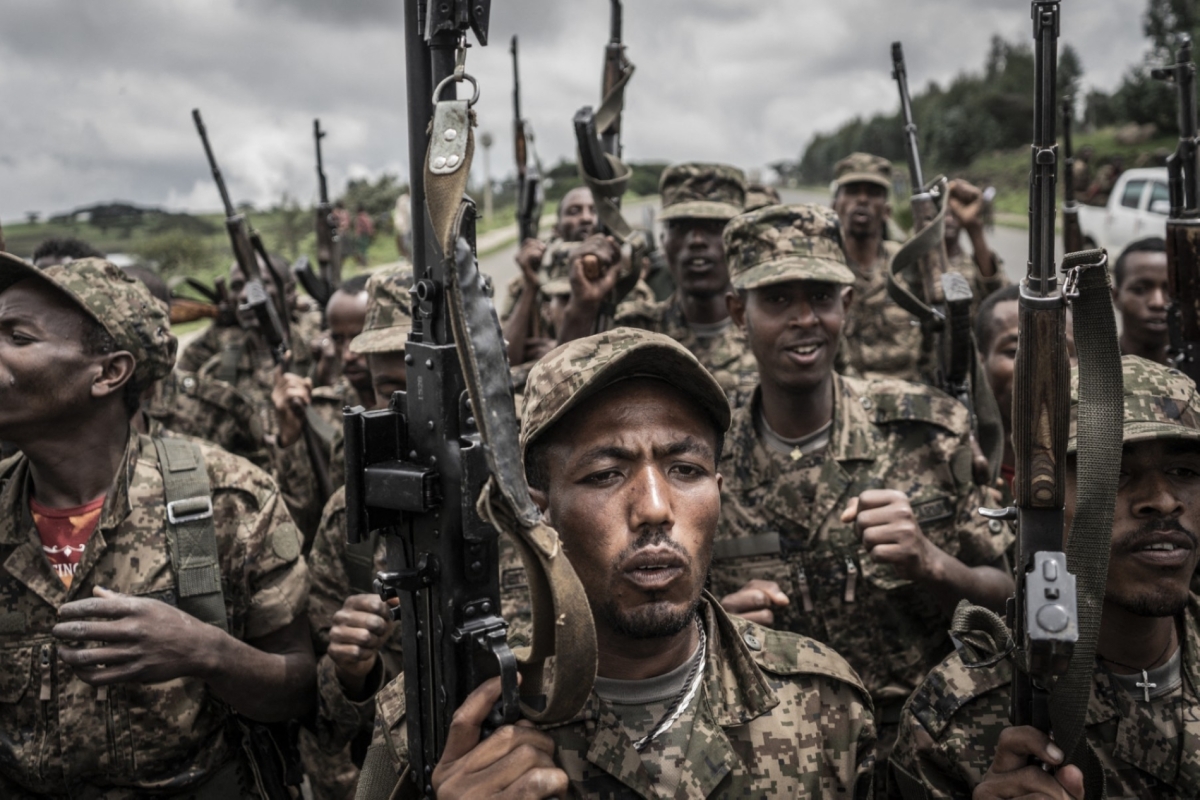
Soldiers from the Ethiopian National Defence Force chant slogans after completing their training at an officers' training ground 70 kilometres northeast of the city of Gondar, Ethiopia, on 14 September 2021.
AFP
Soldiers from the Ethiopian National Defence Force chant slogans after completing their training at an officers' training ground 70 kilometres northeast of the city of Gondar, Ethiopia, on 14 September 2021.

Turmoil in Tigray: the view from Ethiopia's neighbours

With all the talk of the Houthi militia’s advance into southern Yemen along the Red Sea’s eastern coast, it is easy to forget that a civil war in Ethiopia killed hundreds of thousands on the sea’s western flank from 2020-22, and easy to miss the signs that it may be flickering back to life.

Beyond the Horn of Africa, that civil war went barely noticed, which suited world powers with no intention of intervening. The fight back then was between the Ethiopian government of Abiy Ahmed and the Tigray People’s Liberation Front (TPLF). In recent days, they appear to have picked up where they left off in 2022.

Six years ago, the government of the neighbouring state of Eritrea and the powerful Fano militias from the Ethiopian region of Amhara (which borders Tigray) fought on the side of the Abiy government. The TPLF, which represents the marginalised Tigrayan people in the country’s far north, fought alongside several other militias and liberation groups (including the Oromo), but were outnumbered.

As the Ethiopian and Eritrean armies advanced from the south and north respectively, the TPLF suffered initial losses, but regrouped and fought back in 2021, retaking Tigray and moving into Amhara and Afar, threatening major routes into the capital, Addis Ababa. Eventually, the army rallied, and the fighting ended in a truce in November 2022.

A period of calm endured, and the United States even eased sanctions and arms embargoes on Ethiopia and Eritrea on 18 September. It may have jinxed it, because on 20 September, the TPLF and the Fano issued a joint statement through Zemene Kassie of the Amhara Fano National Movement, announcing the creation of the Ethiopian Peoples’ Forces Alliance for Survival. This included the Fano, the TPLF, and the Oromo Liberation Army (known as the ‘big three’ in terms of their fighting capabilities). The Fano and TPLF are former enemies and may harbour grievances, but for now they seem not only to be on the same side but also to be aiming to topple Abiy’s government.

Eritrea’s elderly ruler Isaias Afwerki, who previously fought alongside Abiy, has since turned against him and is believed to be helping the TPLF-Fano alliance (although he has not publicly stated a position). Cue the fireworks.
AFP
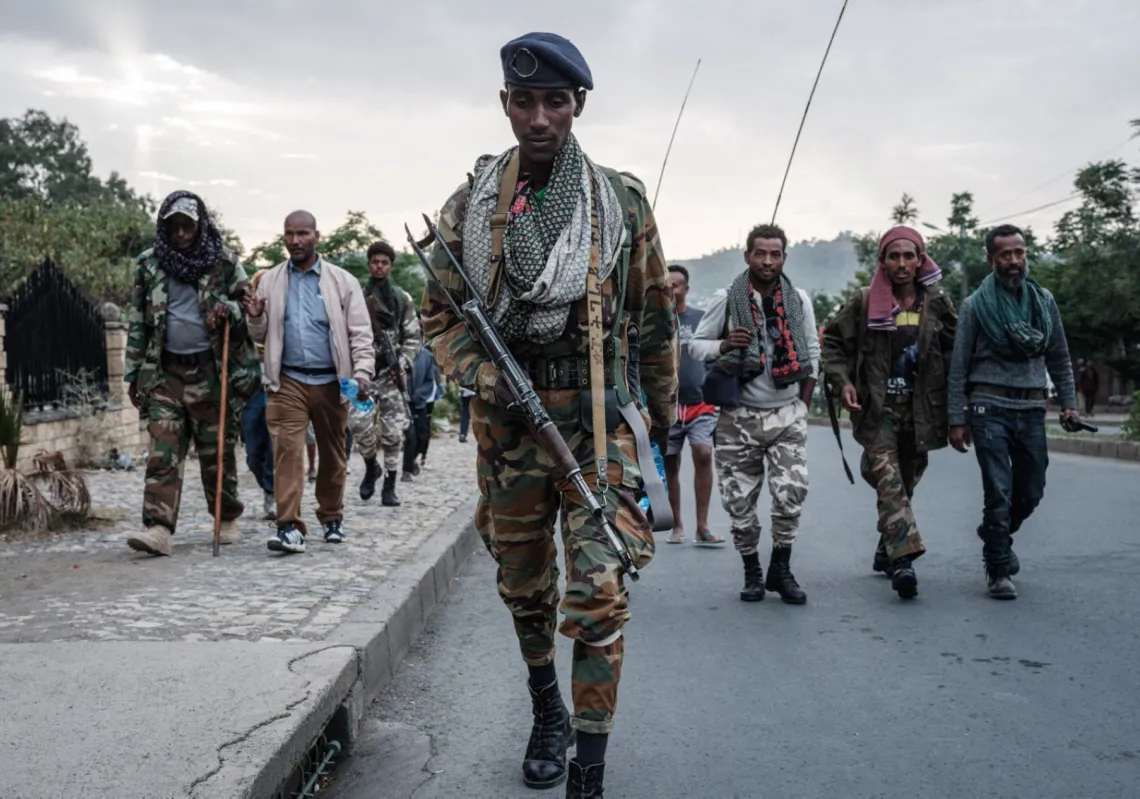
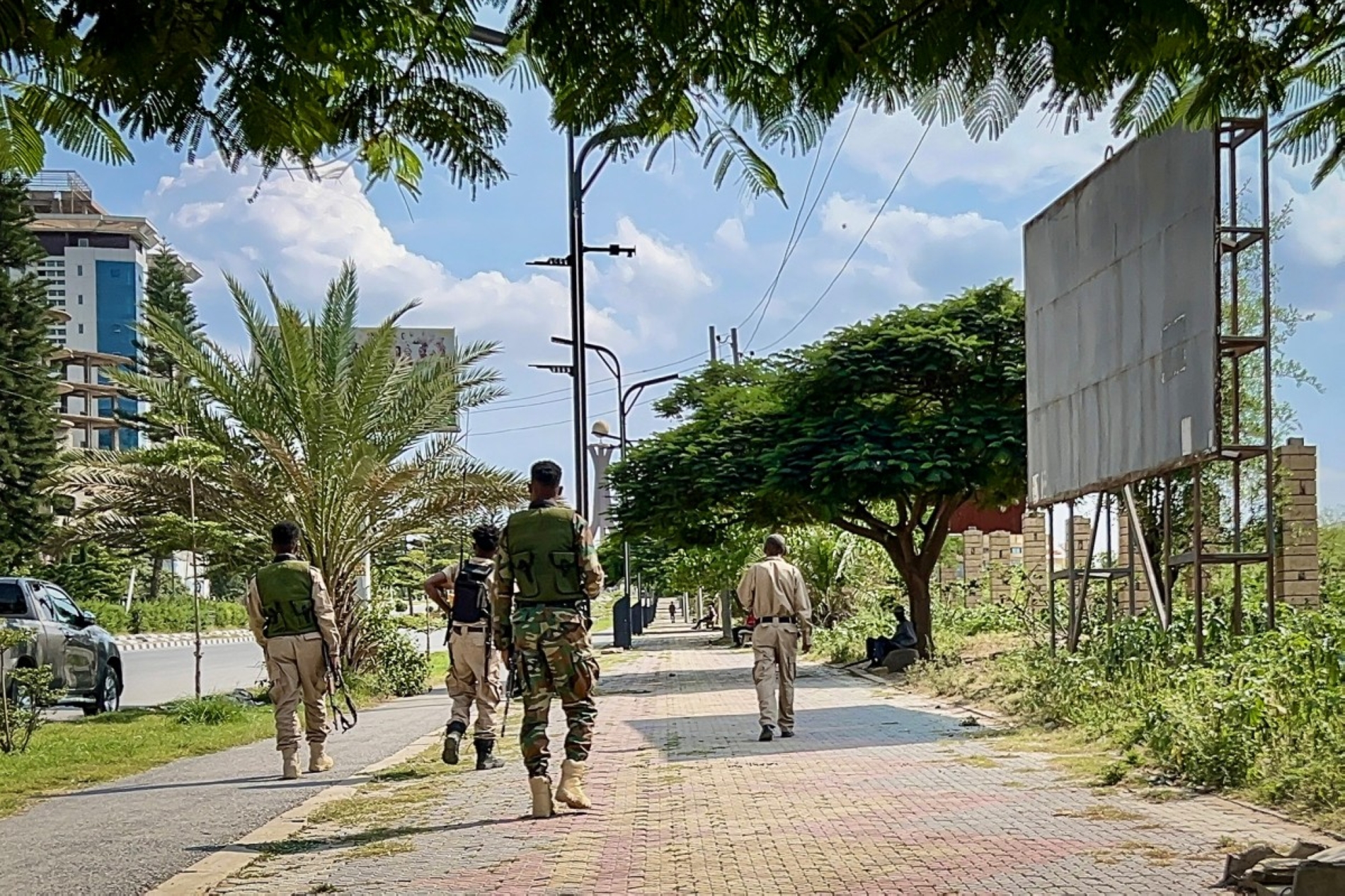
Members of the Tigray People's Liberation Front (TPLF) walk along a main road in Mekelle as tensions escalate in northern Ethiopia following the seizure of airports in the region by Tigrayan rebels on 23 September 2026.

On 23 September, the Tigray Defence Forces (the armed wing of the TPLF) seized the airports of Mekelle, Axum and Shire, with clashes reported in Afar and Amhara. The alliance claims to have support in six of Ethiopia’s 12 regions. If true, this may be no minor separatist revolt on the periphery, but the start of a nationwide war waged by an opposition that rejects the government's legitimacy (and that may have the support of Eritrea).

No one knows how many people died in the 2020-22 war. Estimates range from 10,000 to 600,000. Many died from hunger, and almost a million were displaced by the fighting, with widespread reports of sexual violence used against Tigrayan women and girls, but a communications blackout meant that accurate reporting was virtually impossible.

The 2022 Pretoria agreement halted the war in Tigray, but by the spring of 2023, the conflict had moved to Amhara, where the federal army met stern opposition as it tried to disarm the Fano. Army drones have since killed hundreds, but very few media outlets covered reports of abuses, with the government having cut local phone and internet connections in Tigray and rescinded the accreditation of correspondents from outlets such as the New York Times and The Economist. Abiy is drawing the blinds and locking the doors.
A civil war in Ethiopia would be less of a crack on the periphery than a shift in East Africa's tectonic plates

The UN's International Commission of Human Rights Experts on Ethiopia was allowed to lapse in 2023, with Addis Ababa pushing for its closure. In 2025, the country's media regulator was given direct power to suspend and revoke licences. Deutsche Welle correspondents who covered Tigray and Amhara were barred indefinitely, and La Croix reporter Augustine Passilly was told to leave the country just hours after her report from Shire on forced recruitment was published.

Internet shutdowns are common in Ethiopia, as is the use of anti-terror laws against the press, with Abiy's government far from the first to control the flow of information both within and beyond the country. His chief foreign policy ambition is access to the sea, which was lost when Eritrea became independent in 1993. Ever since, Ethiopia has been landlocked and now pays around $1.5bn annually to use Djibouti's ports for its imports and exports.

It would much rather have its own. To that end, Abiy's government signed a memorandum of understanding with Somaliland, an autonomous region of Somalia, in 2024, to use the port of Berbera on the Red Sea. Access to the sea is "a matter of survival," he says. Regarding the loss of the port at Assab to Eritrea, Abiy says: "The mistakes made yesterday will be corrected tomorrow."

Luis TATO / AFP
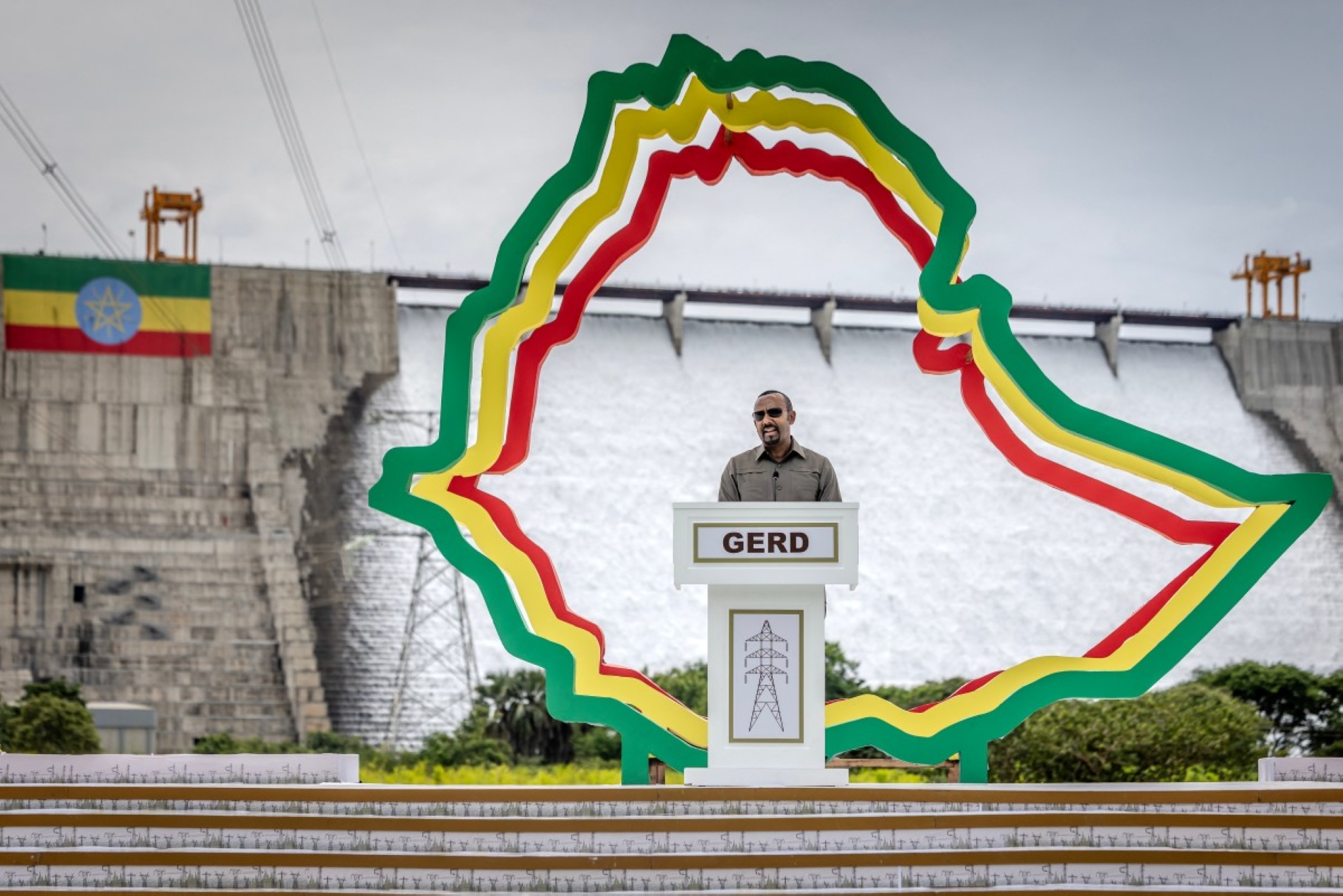
Prime Minister of Ethiopia Abiy Ahmed delivers his remarks during the official inauguration ceremony of the Grand Ethiopian Renaissance Dam (GERD) in Guba, on 9 September 2025.

Plans and enemies

If the sea is the first pillar of his ambitions, the Nile is the second. To harness the river's power for electricity, in 2025 Ethiopia inaugurated the Grand Ethiopian Renaissance Dam (GERD), built despite Egypt's downstream protests. On 24 September, Abiy was in Djibouti with its president, Ismail Omar Guelleh, and Aliko Dangote, a Nigerian tycoon, breaking ground on a $660mn fuel pipeline.

Abiy has enemies beyond Tigray. In October 2024, representatives from Egypt, Eritrea, and Somalia held a summit, united in their hostility to Addis Ababa. If Ethiopia is locked in civil war in Tigray, Amhara, and Oromia, it will not march to the Red Sea, nor will it want to lean on Egypt over the Nile, and would be reluctant to pick another fight with Eritrea. In the maelstrom, Djibouti is a quiet winner: without the port of Assab, Ethiopia remains a customer with no choice.

Ethiopia is Africa's second most populous country (with 139 million people), East Africa's second largest economy, and host to the African Union's headquarters. A stronger Ethiopia would likely seek to redraw the regional map, whereas a weaker state would likely displace millions of refugees abroad. As a result, the situation in Tigray is being monitored closely. Some would privately prefer Addis Ababa to be distracted by fighting but not so much that it collapses.

Reuters
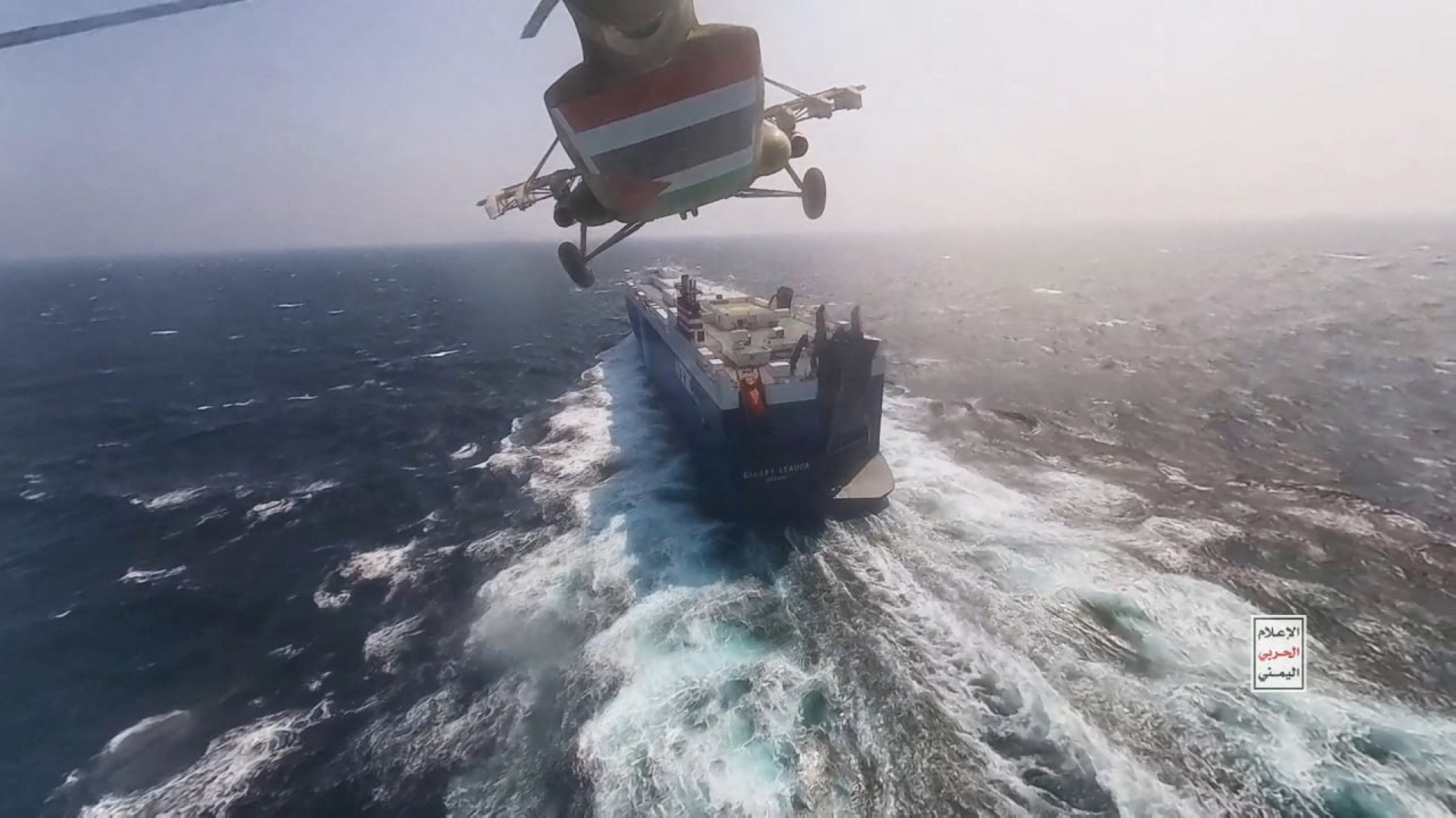
A Houthi military helicopter flies over the Galaxy Leader cargo ship in the Red Sea in this photo released on 20 November,2023.

A civil war in Ethiopia would be less of a crack on the periphery than a shift in East Africa's tectonic plates. The potential for internal war to spill beyond Ethiopia's borders is evident in other states' interests. For the Gulf states, the stakes are high; their trade and energy routes run through the Red Sea, where the Houthis are once again threatening from the east.

In July, Saudi Arabia hosted talks at which 14 states set up a multinational maritime-defence alliance for the Red Sea, knowing that the security of the waterway rests on the stability of the states surrounding it. Even wars can be managed if they do not spill over borders. Yet with Ethiopia accusing Eritrea, Sudan's army accusing Ethiopia (of supporting the RSF militia), and Egypt angered by Addis Ababa, this simmer may soon start boiling. Abiy has amassed an arsenal of weapons and a large fighting force. Before long, he may need to use them.

font change