Red Sea defence alliance: opportunities and challengeshttps://en.majalla.com/node/332420/politics/red-sea-defence-alliance-opportunities-and-challenges
Red Sea defence alliance: opportunities and challenges
Does the declaration recently signed in Riyadh indicate a gradual transition towards a regional security architecture that will assume responsibilities long borne by external naval powers?
Al Majalla
Red Sea defence alliance: opportunities and challenges
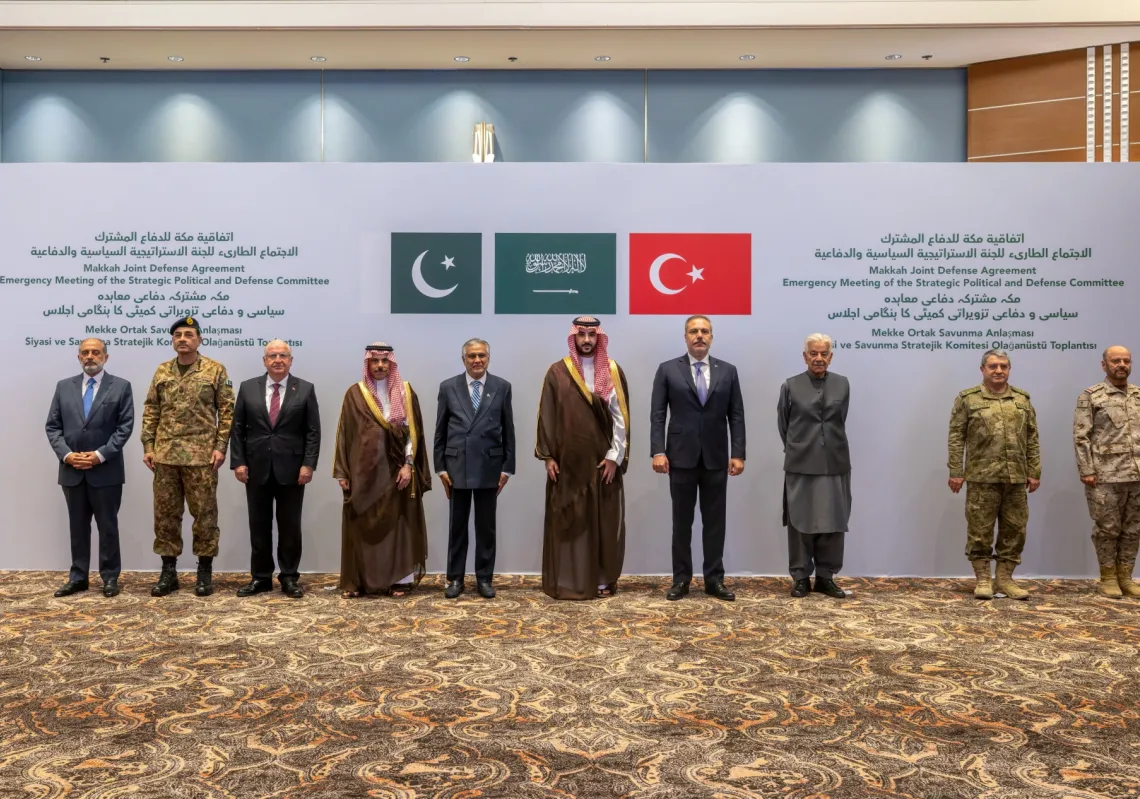
On 30 July 2026, the declaration establishing the Multinational Maritime Defence Alliance was signed in Riyadh. The signatories were Saudi Arabia, Sudan, Egypt, Türkiye, Pakistan, Jordan, Qatar, Kuwait, Bahrain, Yemen, Bangladesh, Nigeria, Djibouti and Somalia. Representatives of 43 countries attended the meeting, out of 51 invited parties.
The founding states agreed to entrust the leadership of the alliance to Saudi Arabia, itself a founding member, and to establish on its territory the permanent headquarters, joint command, command-and-control centre, combined maritime operations centre and secretariat-general. The declaration is significant because, for the first time in the region’s approach to Red Sea security, it identifies the institutions that must be first built to achieve their objectives. Earlier initiatives had failed to do so.
The declaration is a belated yet serious attempt to answer a question that has hung over the region for more than half a century: who has the authority to decide the fate of a maritime passage that carries nearly a tenth of global seaborne trade and is crossed by tens of thousands of vessels each year?
There has never been discord over the lawfulness of such an approach, but the difficulty lay in political will and the capacity to enforce it. The concept of collective security in the Red Sea is not new; it has long been discussed in strategic regional planning. However, the idea failed to be translated into a workable form capable of translating principle into action.
During the 1970s, there was collective agreement that the Red Sea should be a commercial and economic artery that allowed passage to all without discrimination. The littoral states, with Sudan at the forefront, moved towards understandings founded on that principle, but these never matured into a practical arrangement. They foundered amid the divisions of the Cold War, the wars of the Horn of Africa and the collapse of Somalia on the passage’s south-western shore.
For decades, the Red Sea moved between two incomplete models: regional and foreign. But a lack of cohesion allowed insecurity to prevail.
The Djibouti Code of Conduct was signed in 2009 and later expanded through the Jeddah Amendment of 2017 to encompass transnational maritime crime as well as piracy. It produced a sound legal framework, mechanisms for exchanging information and training programmes, but lacked the capacity for action or influence.
Riyadh subsequently hosted the signing, on 6 January 2020, of the charter establishing the Council of Arab and African States Bordering the Red Sea and Gulf of Aden. Its eight members were Saudi Arabia, Sudan, Egypt, Yemen, Eritrea, Somalia, Djibouti and Jordan. The council of ministers approved the charter in July 2021. This was a step in the right direction, but the coordinating body existed largely on paper, without an executive arm, command-and-control arrangements or an operations centre.
Alongside these regional initiatives came a succession of frameworks devised outside the region: the European Union's Operation Atalanta, active since 2008; Combined Task Force 153, established in 2022; the American-led Operation Prosperity Guardian, launched in December 2023; and, most recently, the European Union's Aspides mission, launched in February 2024.
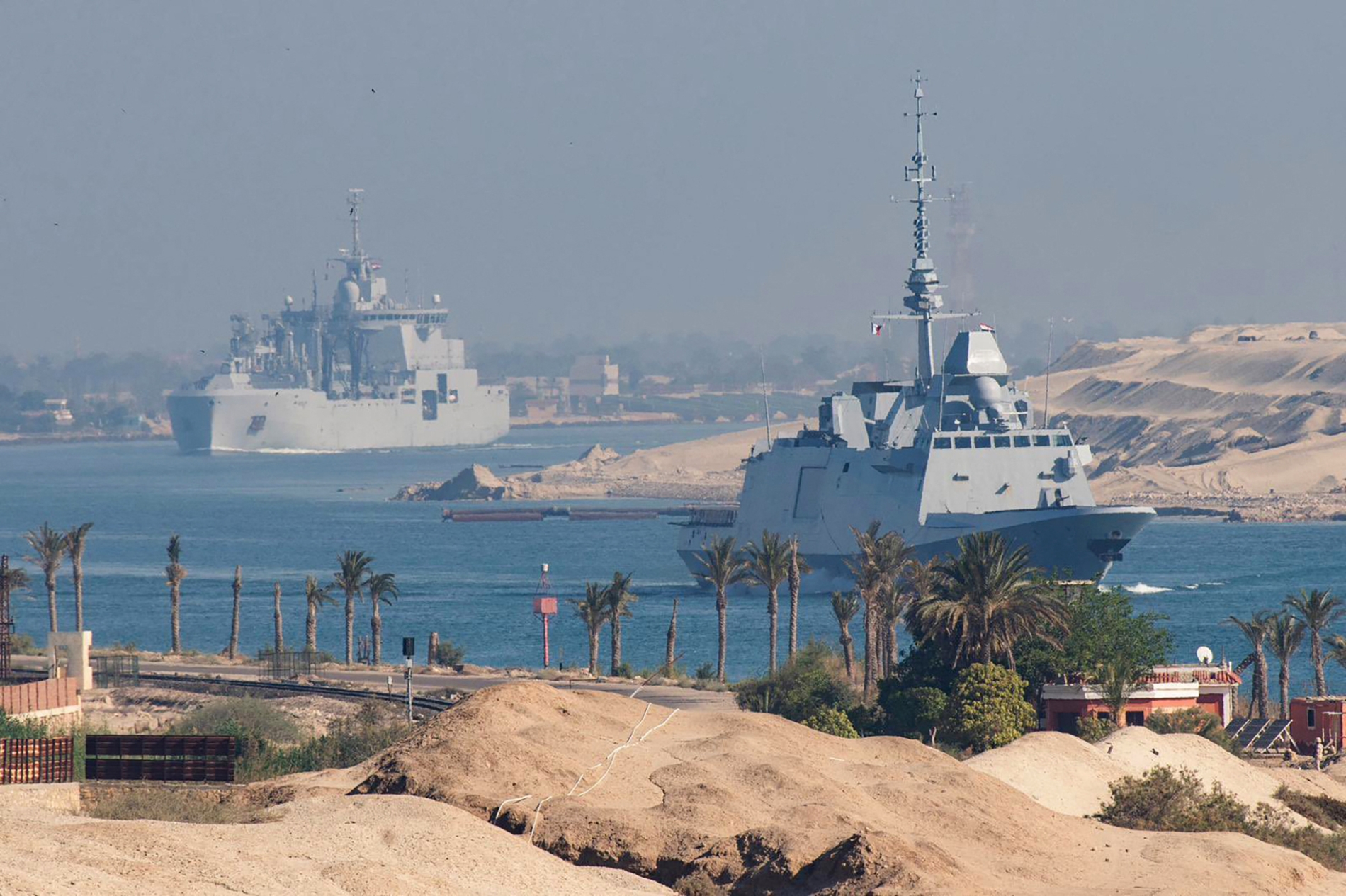
The Charles de Gaulle aircraft carrier strike group tranists the Suez Canal en route to the southern Red Sea, in preparation for a potential mission to restore navigation in the Bab al-Mandab Strait.
Lack of cohesion
For decades, the Red Sea moved between two inherently incomplete models. One was a regional model content to sign agreements and issue declarations without creating the institutions capable of action. The other model came from external players and lacked regional ownership and input.
This lack of cohesion and interoperability allowed insecurity to prevail. Between November 2023 and September 2025, approximately 100 vessels were attacked or seized. Traffic through the Suez Canal fell from 26,434 ships in 2023 to 13,213 in 2024, a decline of roughly half. Canal revenues dropped from $10.3bn to approximately $4bn, while the passage's share of global maritime traffic fell from around 12% to below 9%.
The picture was graver still for oil. In 2023, the flow of crude oil and petroleum liquids through Bab al-Mandab averaged approximately 9.3 million barrels a day. By 2024, that figure had fallen to 4.1 million barrels.
This instability hurt global trade twofold. To avoid passing through the volatile waterway, ships took a much longer route around South Africa's Cape of Good Hope, which added approximately 3,500 nautical miles to the journey, 10-14 days of travel and nearly $1mn in additional fuel costs. The second was reflected in insurance rates, which rose sevenfold on the route from Shanghai to Rotterdam between November 2023 and July 2024, and remained approximately 80% above 2023 levels throughout 2025.
Global businesses can be frightened quickly, but it takes much longer to regain confidence. For example, in early 2026, 100 days passed without a single security incident, but Suez Canal traffic remained approximately 60% below pre-crisis levels. For their part, quarterly cargo volumes were 51-64% lower than January 2024. Even after war-risk insurance premiums fell in December 2025 to approximately 0.2% of a vessel's value—their lowest level since the Red Sea crisis began—maritime activity through the waterway is still quite low.
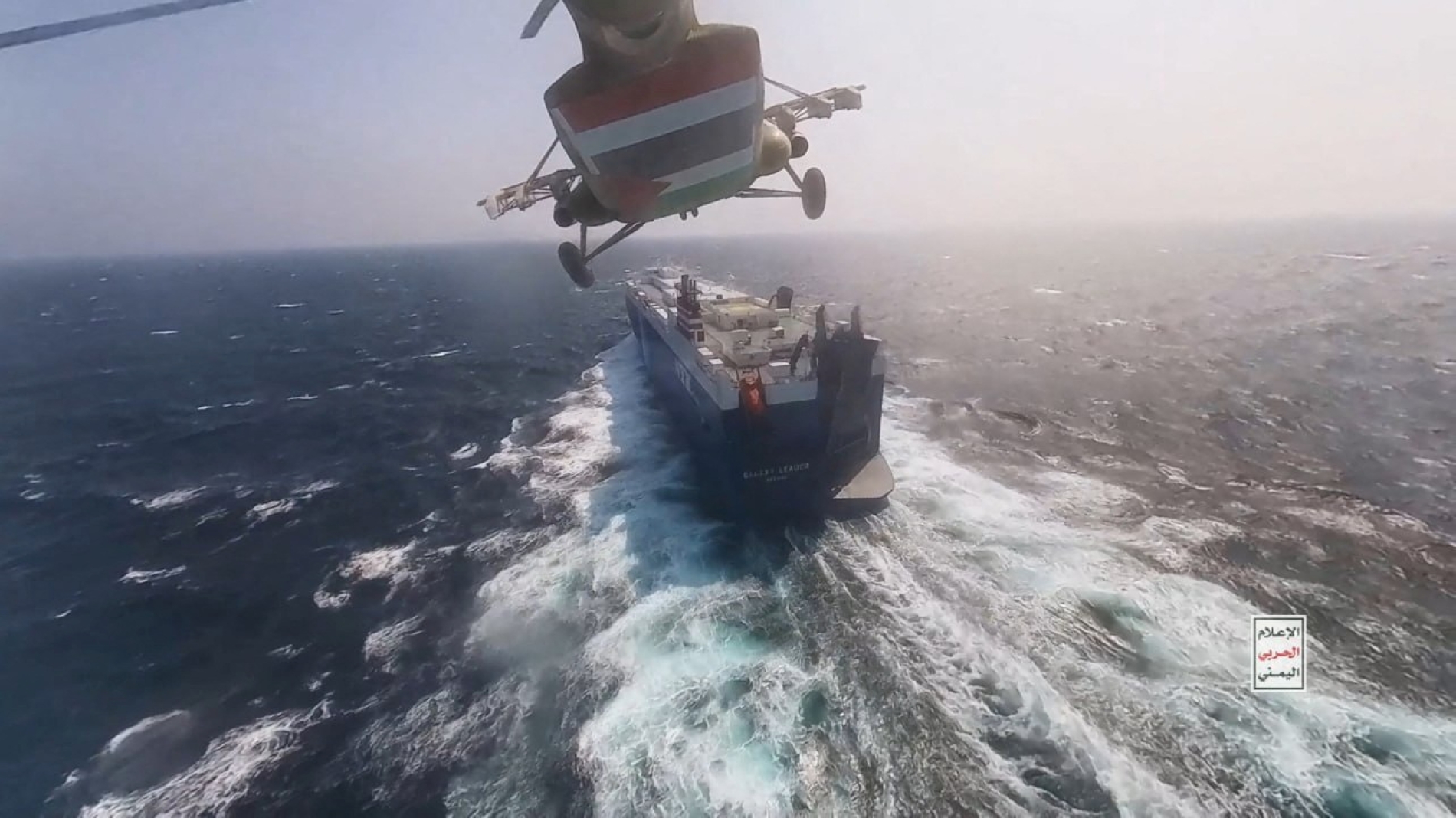
A Houthi military helicopter flies over the Galaxy Leader cargo ship in the Red Sea in this photo released on 20 November,2023.
Capability vs confidence
All this drives home an important point: even if militaries are capable of intercepting missiles aimed at commercial ships, they were still too frightened to attempt to pass through. Defence capability was not what collapsed. Confidence was.
Confidence in maritime passages rests on the certainty that those who live along their shores control what happens there, and that the security of a waterway does not depend on the calculations of a distant power whose priorities change with every electoral season. Security imported from abroad is temporary by nature.
Saudi Red Sea mega projects make it that much more invested in the waterway's security, eliciting confidence in participating states of the alliance's durability.
Three distinctions
So what makes the recently formed Saudi-led alliance different? The first distinction lies in its structure. The declaration lays the foundations of an integrated organisation. It provides for a foundational charter, an administrative structure, command-and-control arrangements and executive mechanisms, together with a permanent headquarters, a secretariat-general and a combined maritime operations centre. These are not the customary features of a temporary coalition or a passing political declaration; they are essential attributes of an institution capable of transforming coordination among states from provisional understandings into an enduring framework able to plan, take decisions and implement a joint response.
The second distinction lies in the size and stature of the country leading the alliance: Saudi Arabia. It is the largest Arab economy, a member of the G20 and the world's largest oil exporter. Figures from 2025 place its GDP at $1.275tn and its growth rate at 4.5%.
The third distinction, perhaps more important than its economic weight, is its geographical location. Saudi Arabia's Red Sea coast has become central to its Vision 2030 development ambitions. It has embarked on multiple mega projects along the Red Sea, including Neom, a much-touted city built on a straight line. These projects seek to grow the non-oil economy to account for 55% of state revenues.
All this shows just how much Saudi Arabia is invested in Red Sea security. Its stewardship of the alliance therefore elicits the confidence of participating states, who know this is not a fleeting mission, but one that intends to endure and yield tangible results. This structural interest is more durable and resilient than alliances sustained by goodwill alone.
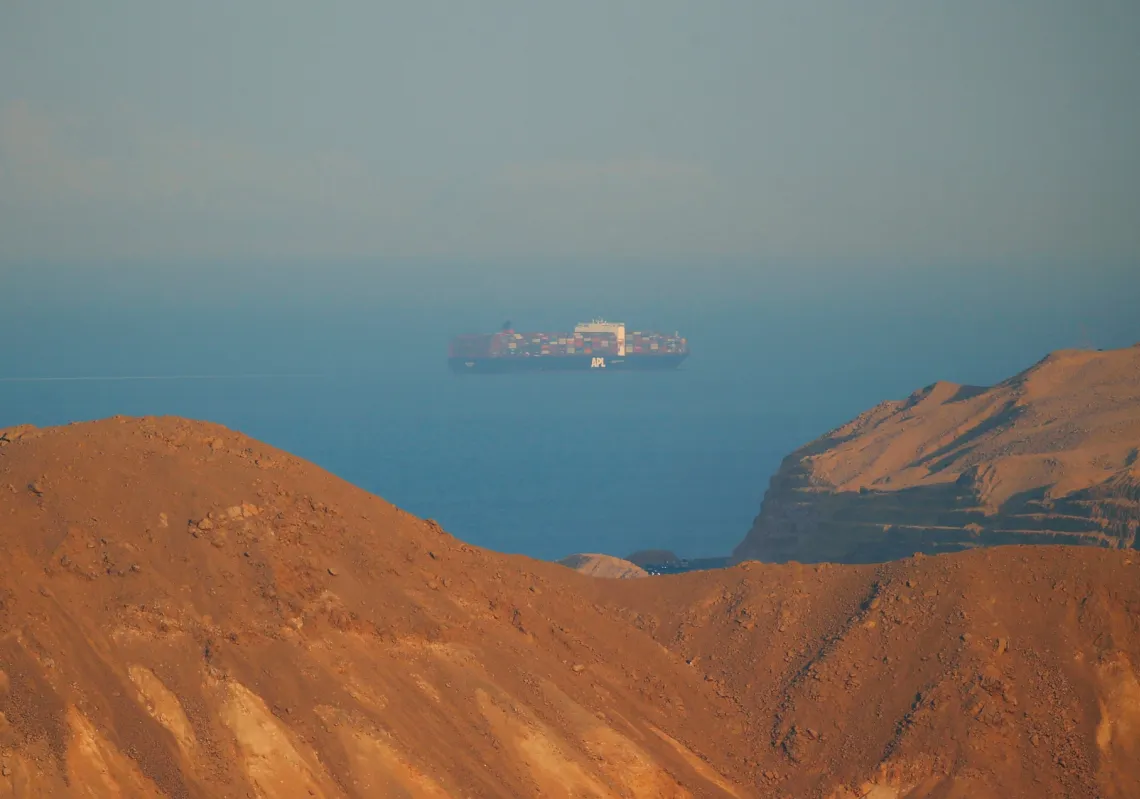
The mountains of Dahab, the Red Sea and the mountains of Saudi Arabia.
Challenges ahead
While the declaration is a great first step, the grouping of countries does present a slew of challenges that need to be carefully addressed. Interoperability requires tactical data links, common procedures, a unified language of communication and future training plans. Even the most successful alliances took years to develop such capabilities.
As things currently stand, the navies of alliance members operate differently. Türkiye follows NATO doctrine and its standards of interoperability. Pakistan draws on the traditions of the Indian Ocean and its experience in commanding multinational task forces. Egypt commands the largest Arab fleet under a doctrine centred on the Suez Canal and its strategic approaches. Meanwhile, Saudi Arabia is building a modern force based on Western systems, while the capabilities of the remaining navies range from limited coastal capacity to virtually none.
Divergent political priorities present another challenge. Each member ranks threat differently. One state may regard anything that reduces canal traffic as a threat. Another may focus on coastal security, development projects, strategic presence or strategic depth. Others' focus could be on piracy or sovereignty encroachment.
When analytical frameworks diverge, operational priorities will naturally be impacted. This runs the risk of the joint operations centre becoming little more than a room for diplomatic courtesies, rather than a chamber capable of making concrete decisions.
Funding is another important issue. The alliance must agree on a formula that clearly lays out the financial contributions of participating states. Saudi Arabia, as the steward, should not be expected to bear the brunt of spending.
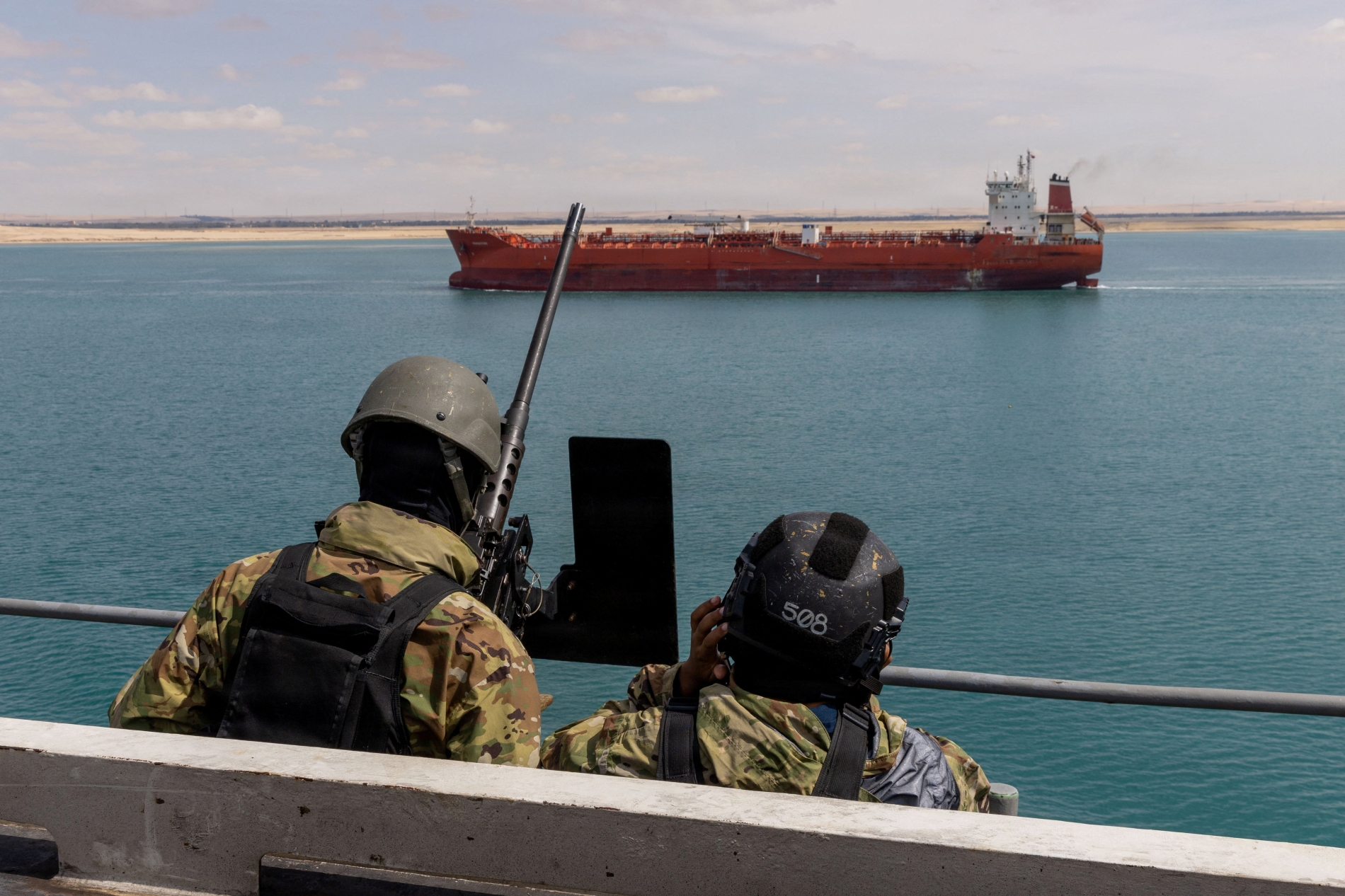
US navy sailors on a small boat monitoring team on a side passage of the aircraft carrier USS Gerald R. Ford as it transits the Suez Canal, en route to support Operation Epic Fury, on 5 March 2026.
Another potential tripping wire is the alliance's ability to operate within the existing security architecture. The United States Fifth Fleet is already present there, with the Combined Task Force 153 operating under the Combined Maritime Forces across the same theatre, extending from the Red Sea through Bab al-Mandab to the Gulf of Aden. Several founding members of the new alliance already participate in that framework. Alongside it, the European Union's Aspides mission continues to protect shipping under a limited defensive mandate.
Is the establishment of the alliance an implicit admission of the limitations, incapacity and failure of the existing security architectures? Is it intended as a complementary structure that redistributes responsibilities among the various actors? Or does it signal a new political direction, founded on a gradual transition towards a regional security architecture that will, over time, assume responsibilities long borne by external naval powers? As things currently stand, this remains unclear. In fact, the ambiguity may be deliberate at this stage. But sooner or later these questions will need to be answered.
If this alliance succeeds in transforming Red Sea security from a function performed by external powers into a responsibility assumed by the states of the region, its significance will extend beyond the creation of a new maritime alliance. It will open a new chapter in the region's history. If it falters, it will pave the way to arrangements devised by foreign powers and governed by their priorities, rather than by the interests of the Red Sea's states and peoples.