
After decades of political setbacks, Iran’s former Revolutionary Guards commander has returned to the centre of power. Is he an incidental beneficiary of war, or have observers underestimated him all along?
In 1981, a 27-year-old revolutionary named Mohsen Rezaei was appointed commander of Iran’s Islamic Revolutionary Guard Corps (IRGC). The appointment was hardly unanimous. With the intervention of Ayatollah Khomeini’s son Ahmad, Rezaei got the job.
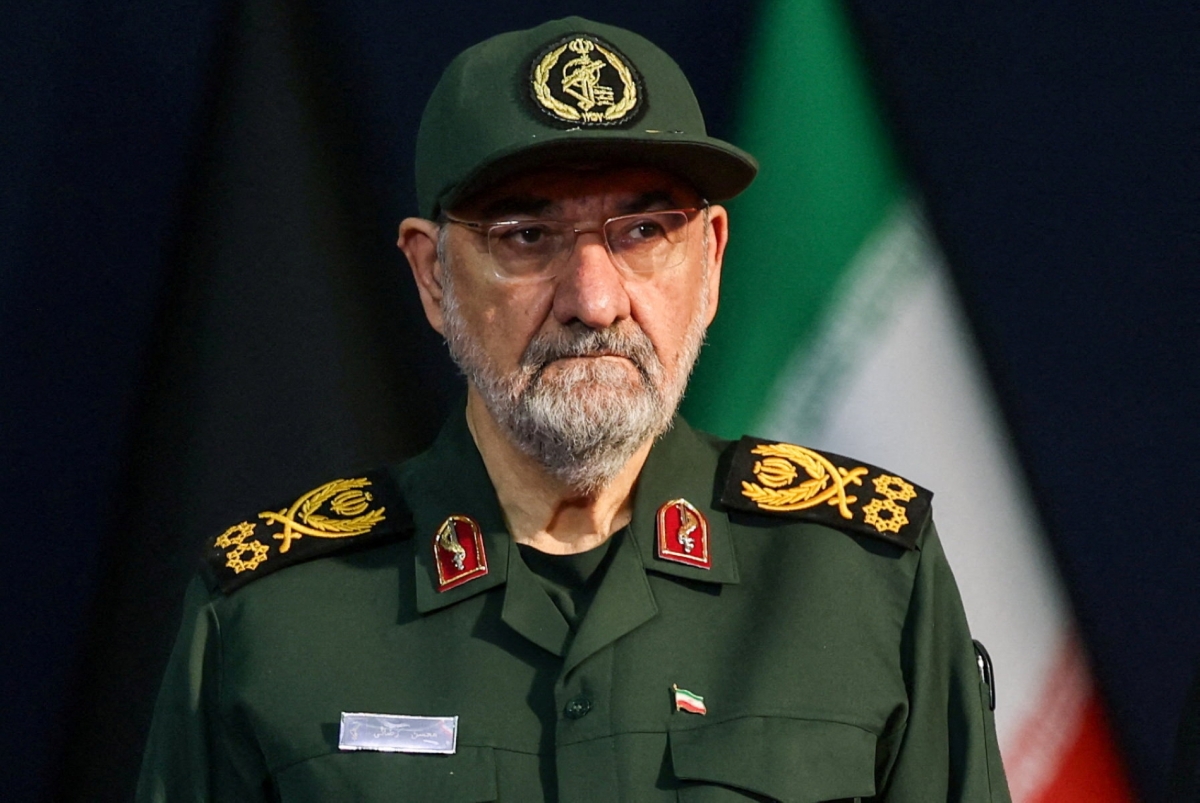
Forty-five years later, another leadership crisis has returned Rezaei to the centre of Iranian power. Now 72, the former general is secretary of the Supreme National Security Council, the principal coordinating body for national security. US Vice President JD Vance has addressed him directly in a letter seeking renewed negotiations. In Washington, intelligence officials reportedly regard him as the man best positioned to deliver an Iranian agreement.
It is an extraordinary comeback for someone whose presidential ambitions never took off and whose economic prescriptions faced public ridicule. Yet Rezaei has survived political reversals, military controversies and changes of leadership that ended many other careers. His return raises a larger question about today's Islamic Republic: does influence come from public legitimacy, or from having accumulated the right relationships over decades? In Rezaei's case, it's largely the latter.
From shepherd to general
Born into a Bakhtiari family in Khuzestan in 1954, Rezaei's own memoirs recount how, as an eight-year-old shepherd, a stranger persuaded him to attend night school. The encounter became part of his preferred political narrative: a poor provincial boy who rose through education, revolutionary struggle and personal determination.
He joined the underground Islamist group Mansouroun before the 1979 revolution and helped establish the Guards’ intelligence apparatus afterwards. His early colleagues included Ali Shamkhani, another Khuzestan revolutionary who would become a major security figure.
Under Rezaei, the IRGC evolved from a loosely organised revolutionary force into a military institution with its own ground, naval and air capabilities. The Iran-Iraq War gave him extraordinary authority and an enduring network of commanders whose careers developed under his leadership. These included men who would later occupy some of the most powerful positions in the security establishment, among them Qasem Soleimani. The relationships forged during the war would prove more politically durable than Rezaei's command itself.
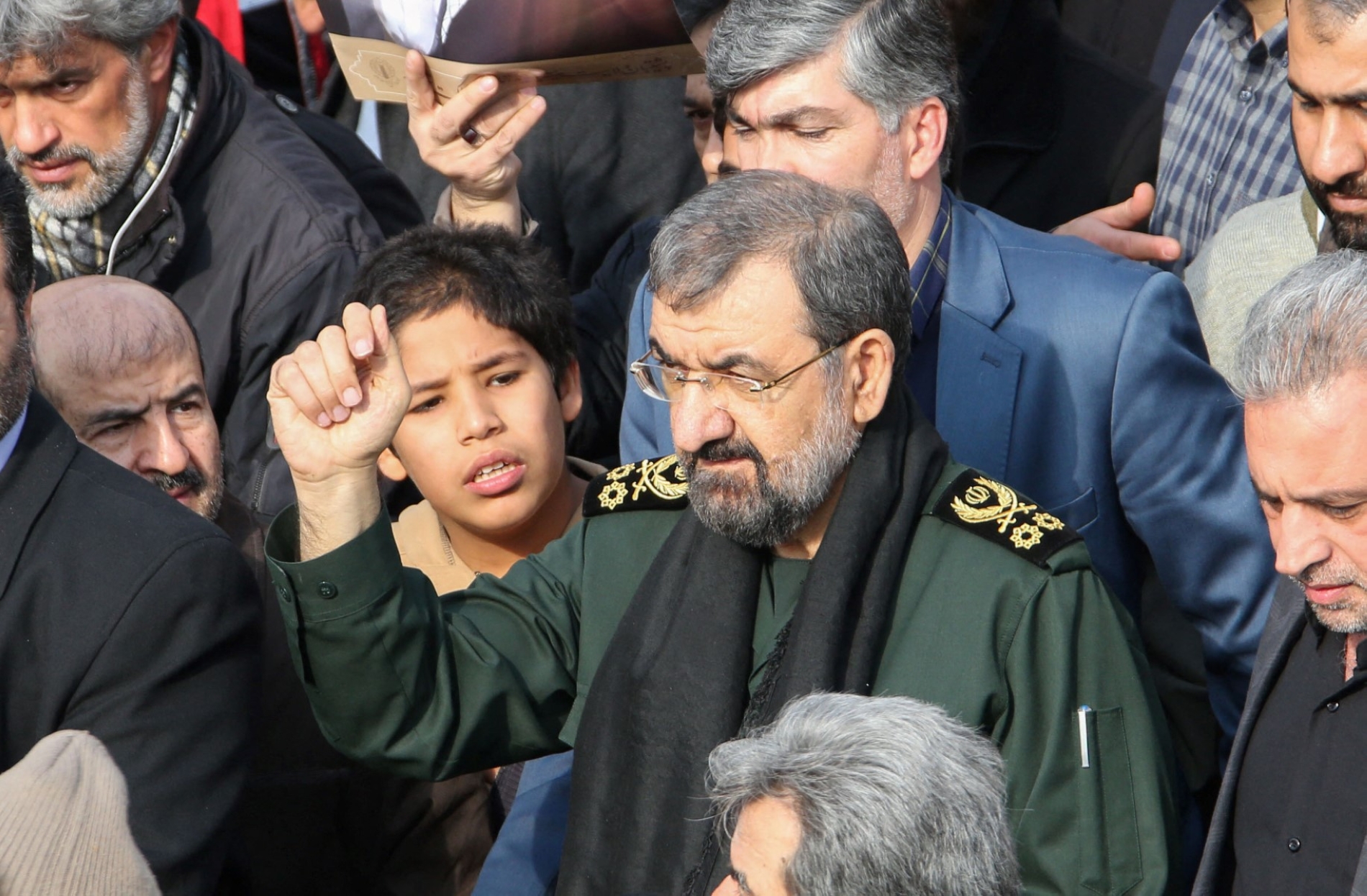
But wartime command also produced rivalries. Rezaei frequently clashed with Akbar Hashemi Rafsanjani and Hassan Rouhani over military strategy, resources and the relationship between the Guards and civilian authorities. He also competed with regular army commanders over operational control.
The disastrous Karbala-4 offensive in December 1986 remains among the most controversial episodes of his command. Decades later, his suggestion that the operation had served as a deception against Iraq provoked outrage among veterans and families of the dead. Critics accused him of retrospectively rationalising costly military decisions.
Still, his legacy was not simply one of battlefield command. His tenure helped establish the IRGC as an institution capable of projecting power beyond Iran. The early deployment to Lebanon in 1982, which contributed to the making of Hezbollah, nominally occurred under his command. He belonged to the generation that began turning revolutionary ideology into regional military influence.
Ali Khamenei replaced Rezaei with Yahya Rahim Safavi in 1997, which came shortly after reformist Mohammad Khatami's unexpected presidential victory. He had supported Khatami's hardline opponent, Ali Akbar Nateq-Nouri, and his removal was widely interpreted as a political setback. But his departure also exposed the depth of his support within the Guards. Thirty-four commanders signed a letter praising him, effectively protesting his removal. Among the signatories was Soleimani, whose subsequent rise would give the old wartime network even greater significance.
Khamenei, however, did not exile him from power. Instead, Rezaei became secretary of the Expediency Council, an institution involved in resolving legislative disputes and shaping long-term policy. He remained there for 24 years.
This distinction matters. Rezaei lost command of the organisation he had helped build, but retained an institutional position, access to the leadership and connections across the establishment. He also developed an increasingly ambitious interest in economic management.