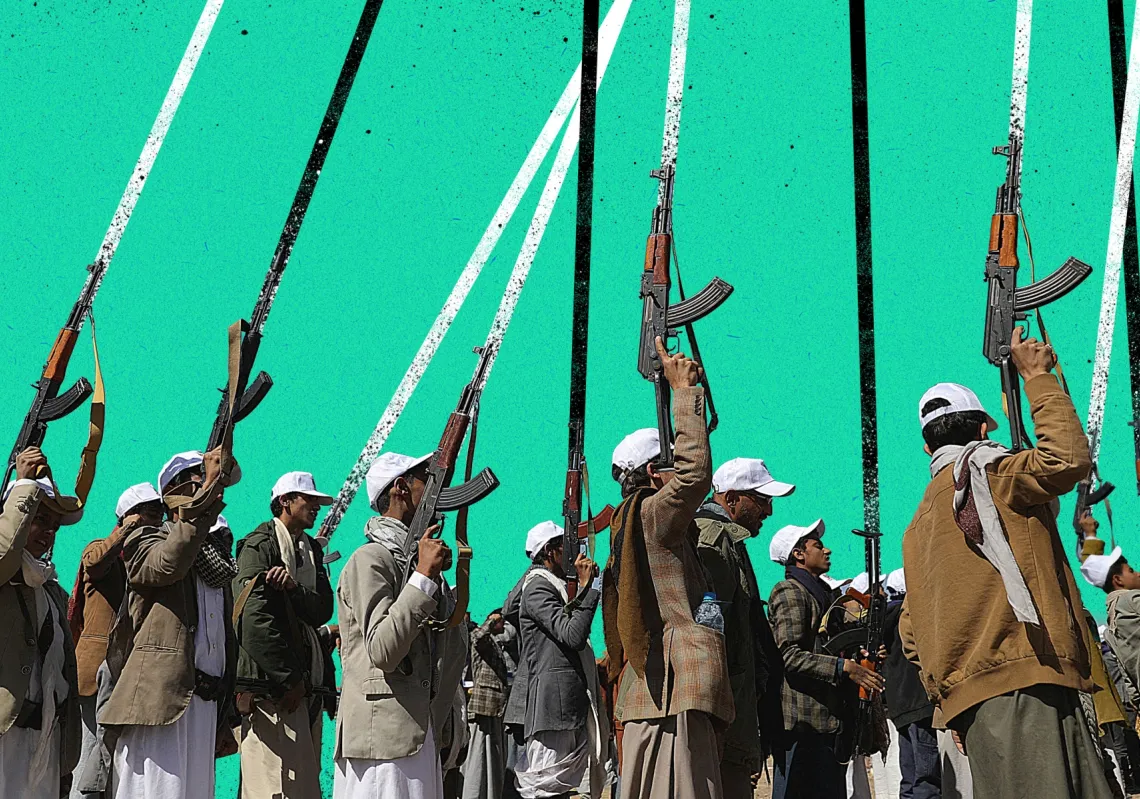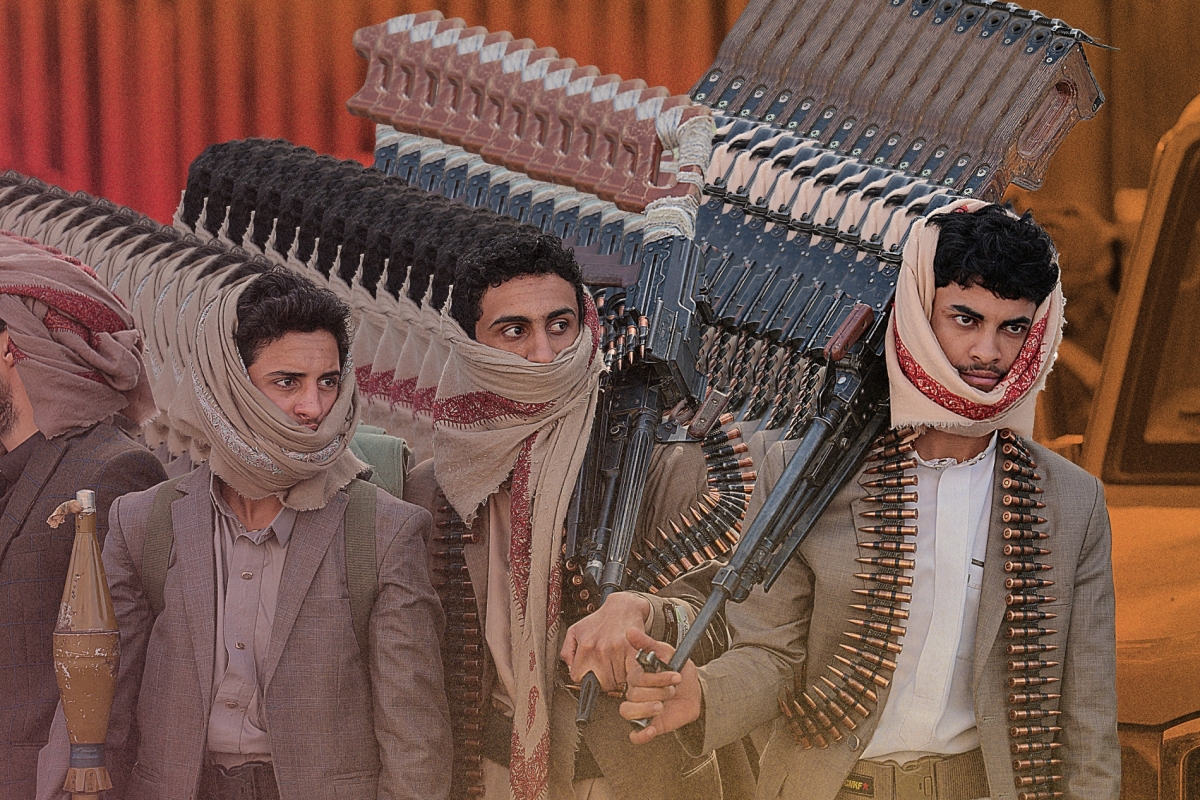

It is often forgotten that the Houthi militia dominating the world’s headlines began life several decades ago as a local movement born in the mountains of Saada, in north-west Yemen. Armed mainly with grievances, they vied with the Yemeni government. As their animosity grew, so too did their arsenal. Before long, they were an armed group waging an internal Yemeni conflict and, in 2014, took control of the capital, Sanaa. Ever since, their reach has grown. Today, they are no longer a local group.
In recent years, the Houthis have targeted both international shipping in the Red Sea and neighbouring Gulf states, having linked their military trajectory to the Israeli war in Gaza and the US-Israeli war in Iran. They are a non-state armed actor having a direct impact on maritime security and global trade. This transformation can be traced in part to the weakness of Yemen’s state institutions (including its armed forces) and the interests of foreign states in the Yemeni arena. In this context, dealing with the Houthis today is part of a wider equation: the ability of nation-states to restore their monopoly over the instruments of force in the Red Sea region.
The question of the Houthis’ identity and role has therefore acquired greater complexity. Are they a contemporary extension of political Zaydism (a major branch of Shia Islam) seeking to reproduce the historical legacy of the imamate (rule by an imam)? Do they represent a Yemeni counterpart to Lebanon’s Hezbollah in military organisation, ideological alignment, and regional role? Or are they still mainly a local phenomenon that has drawn on sectarian and tribal capital to build authority, develop their capabilities, and strengthen their negotiating position?
In reality, none of the above is sufficient on its own to explain the Houthi phenomenon. The Zaydi inheritance helps explain the movement’s symbolism, but cannot alone explain its acquisition of cross-border military capabilities. Here, the Houthis’ relationship with Iran is far more important. The best way to understand the Houthi movement is as a product of four intersecting dimensions: a sectarian memory that has been reinterpreted, the challenge of building a centralised state, a long history of local wars, and a network of regional alliances centred on Iran.
Growing a movement
As so often is the case, it helps to go back to the beginning when trying to understand something. The historical and symbolic roots of the Houthi movement, Ansar Allah, stem from Zaydism's place in Yemen’s political and social history. This helps explain Zaydism, which has been more than a school of jurisprudence or a theological current within the Shia Muslim tradition.
In Yemen, it became closely associated with theories of rule and the imamate, as well as complex networks of alliances among scholars, leading families, and tribes in the north. Although the September Revolution of 1962 ended the imamate state as a formal political entity, its cultural and social inheritance endured, as did its influence on the collective psyche in areas such as leadership, legitimacy, and authority.
Zaydism differs fundamentally from Twelver Shiism on central questions concerning the imamate. For instance, it does not embrace the direct divine designation of a closed succession of infallible imams, nor does it await a hidden imam who will return at the end of time. Instead, it treats the imamate as a practical possibility contingent on conditions on the ground and the requirements of legitimacy.
In Zaydi literature, the imam will descend from Hassan or Hussein, combine scholarly and religious competence with the ability to lead, make his claim, and take up arms against ‘unjust rule’. This conception established a close link in Yemen’s political imagination between religious legitimacy and the possibility of political and military contest for power. The imam (for Zaydis) is neither an abstract spiritual symbol nor an absent authority awaiting reappearance; he is a leader in the field whose eligibility rests on the convergence of lineage, learning, and leadership.
Over time, this provided ideological and symbolic support for the centrality of leadership and opposition to existing authorities, although it would be wrong to equate Zaydism with a single political project or to treat rebellion as inevitable. Zaydism as a school of jurisprudence and a broad social tradition formed over centuries differ from the Houthis as a modern political and military movement. The group does not represent all Zaydis, who have never constituted a homogeneous political bloc.
The Houthi movement has, nevertheless, drawn on key elements of this historical inheritance, particularly the symbolism of Hashemite descent, the concept of overarching religious leadership, and the memory of marginalisation. It has used these elements to build a political project that invokes historical symbols to consolidate leaders’ legitimacy and uses sectarian grievance as an instrument of mobilisation, culminating in wars fought against the government of President Ali Abdullah Saleh from 2004-10.
Starting young
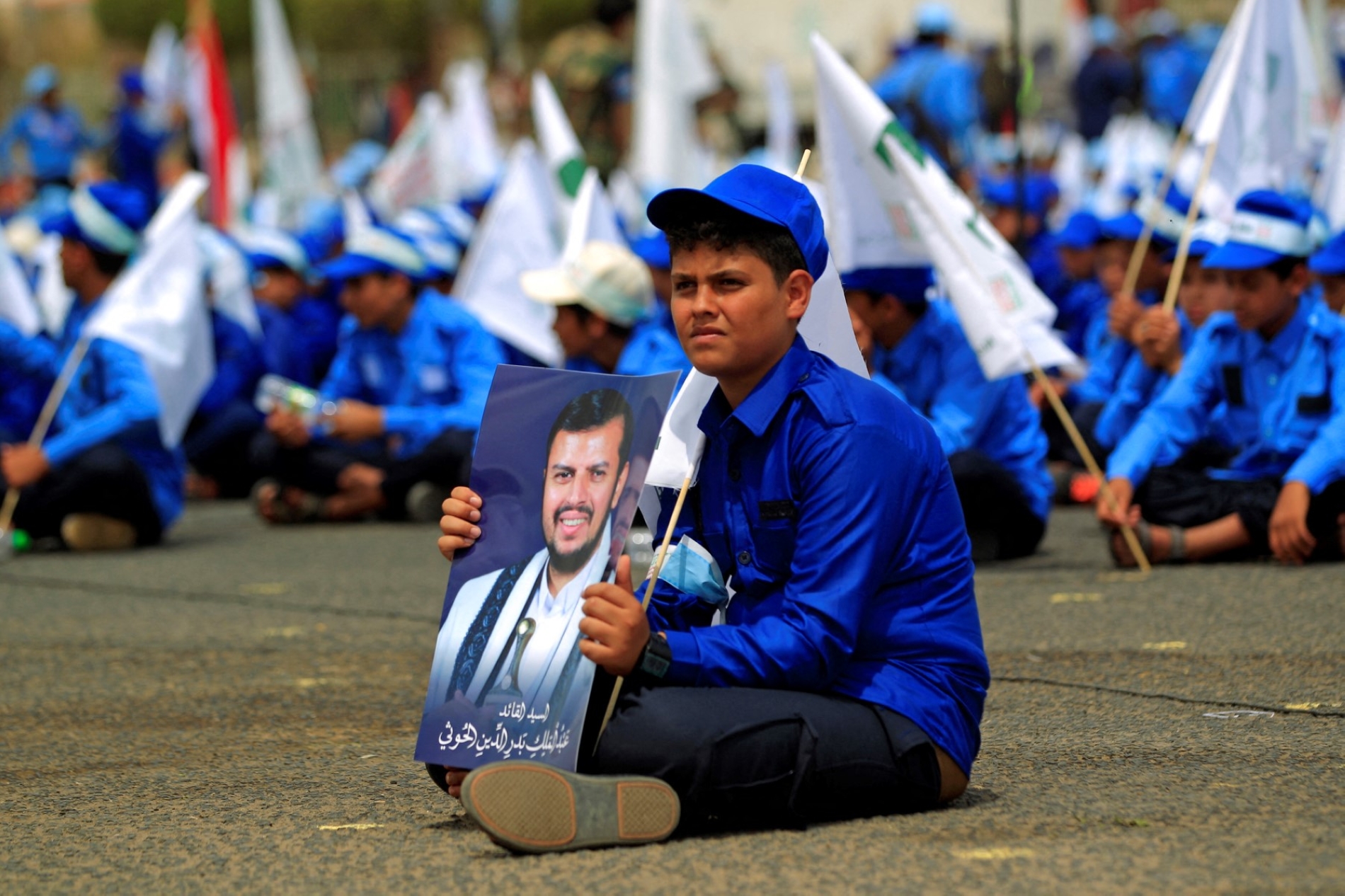
After unification in 1990, Yemen experienced profound political and religious change. Salafist activity expanded across the north, where Zaydi presence had long been strong. Educational and community centres associated with different Salafist currents became increasingly prominent, and Zaydi elites and scholars sensed a threat to their traditions. Partly in response, the ‘Believing Youth’ movement was established in Saada in the 1990s as an educational and cultural framework intended to revive Zaydi heritage in a community that felt its religious and social identity was in decline.
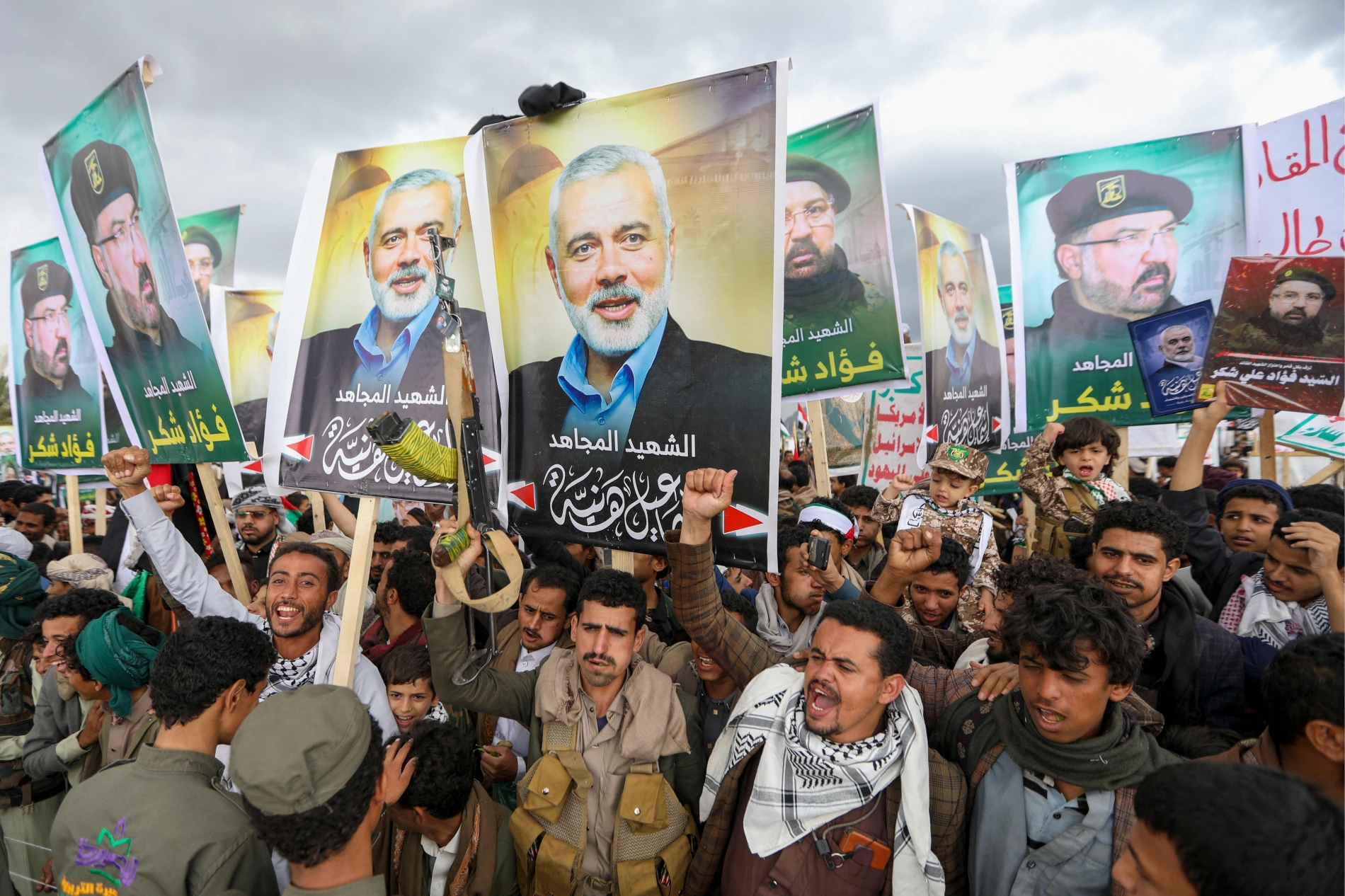
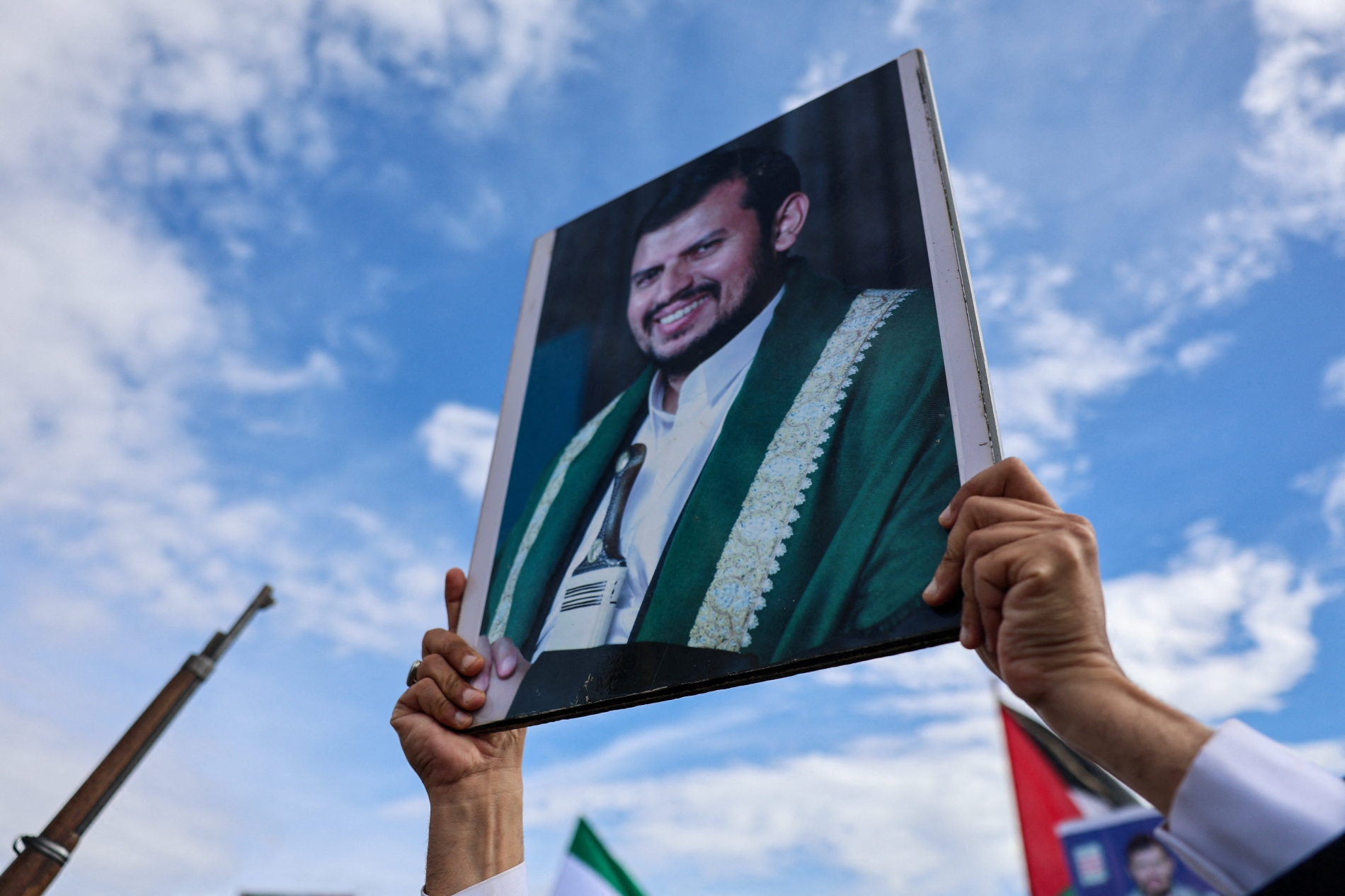
The ‘Believing Youth’ movement was more than just a conventional religious study circle, however. It became an attempt to regain the initiative, revitalise Zaydism, and reorganise young people within a structure. In this context, the sarkha (cry) acquired a significance far beyond that of a slogan; it became a political and mobilising manifesto, a clarion call, expressed in the chant: “God is great, death to America, death to Israel, curse upon the Jews, victory to Islam.”
Explicitly hostile towards the US and Israel, this mobilising formula helped build a militant political identity that connected the local struggle in Yemen to a broader system of regional and international conflict. Adherents were told that this was no longer simply the defence of a sectarian inheritance facing marginalisation.
Zaydism in Yemen was moving from traditional religious study into politics and governance (which helps explain why it is inaccurate to classify the Houthis as a traditional Zaydi group). The group not only revived sectarian elements but reformulated them within a modern discourse, combining local grievance and the centrality and authority of leadership to build a non-state actor capable of moving beyond national borders by linking its local conflict to wider regional equations.
Tradition to governance
The term ‘Houthism’ does not denote a new school of jurisprudence or theology in the traditional sense. The common designation derives from the al-Houthi family, while the group itself formally uses the name Ansar Allah. The term refers to a modern political and organisational identity formed through Zaydi heritage, the symbolism of the al-Houthi family, the discourse of the ‘Quranic March,’ shared experience of armed conflict, and the de facto authority consolidated after the seizure of Sanaa in 2014.
It would be inaccurate to suggest that the Houthis have restored the Zaydi imamate in its historical form, nor does the group present itself as doing so. The modern state's structure differs fundamentally from that of the imamate. Still, it draws on symbolic elements of that inheritance in constructing political legitimacy for its de facto authority, particularly through lineage and religious standing. In this sense, sectarian identity has shifted from a cultural to a political resource used to consolidate territorial control.
The capture of Sanaa marked a strategic turning point in the movement’s development, as the Houthis moved from armed protest on the periphery to controlling administrative, military, and security institutions, governing large population centres, and imposing their own model of managing resources and public life. From 2014, the group’s claim to legitimacy no longer rested solely on the language of opposition and resistance to corruption; it became tied to its ability to impose control, administer institutions, secure its territorial influence, and effectively replace the state.
The Houthis’ sectarian identity is therefore connected to the nature of its quest for power. Identity is not merely a religious proposition, but a political and ideological tool to entrench authority, justify military action, and frame territorial control. At the same time, it is a flexible identity that can expand beyond its original milieu. As such, the group can present itself as the custodian of a project that brings national and religious elements together within a single framework.
Iran and its allies
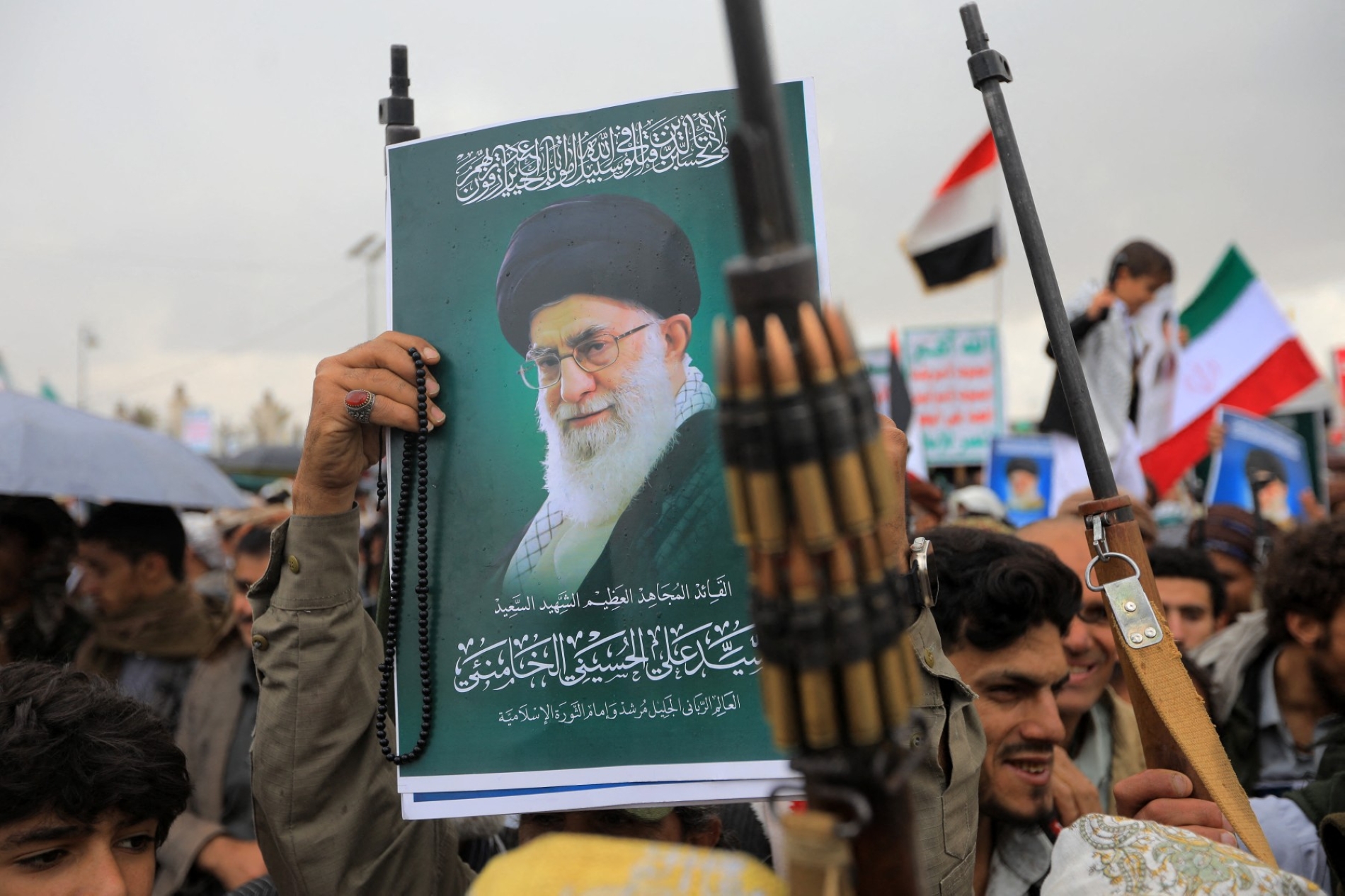
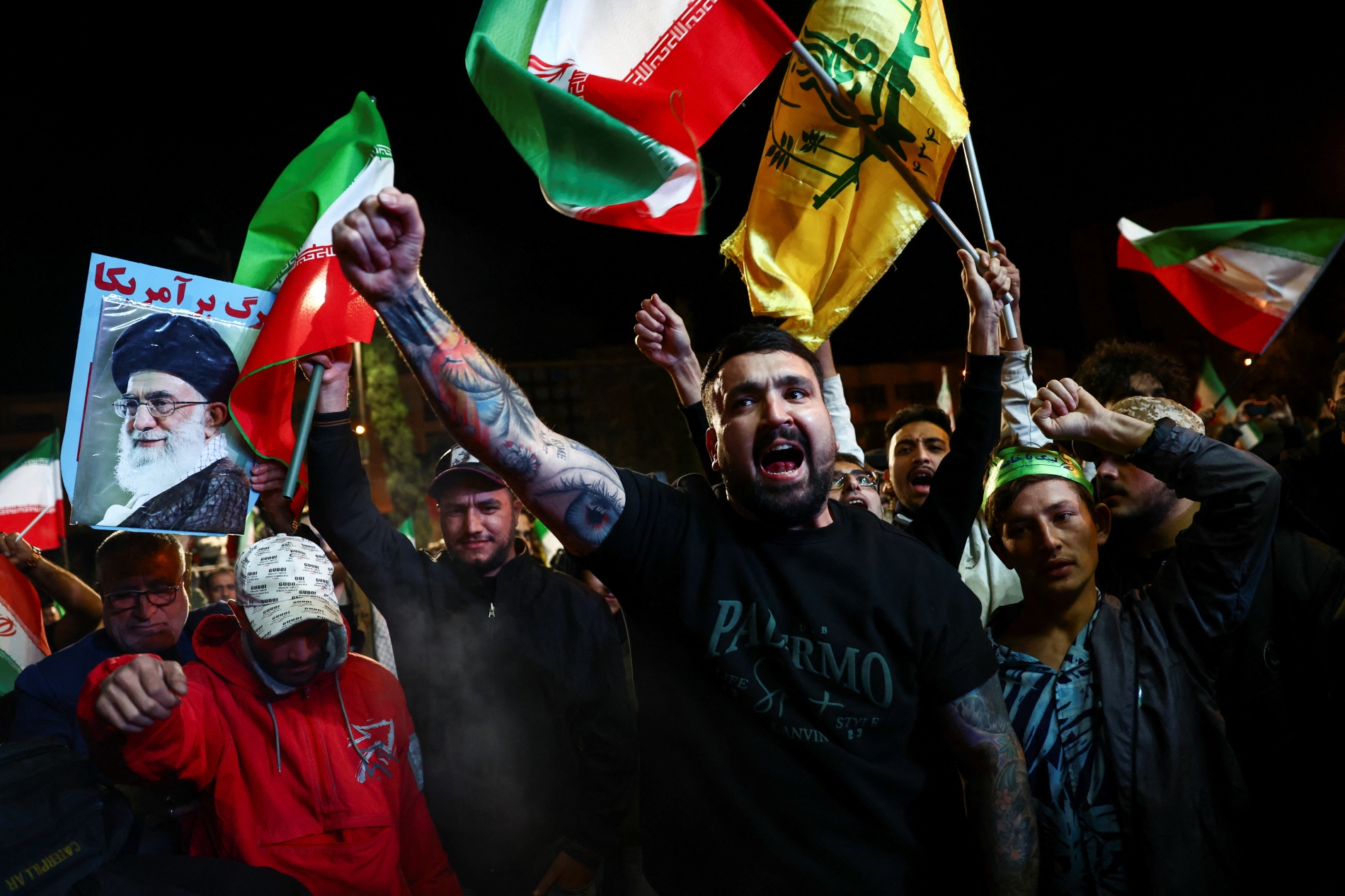
The group's structural transformation cannot be separated from the regional context. War helped reshape its military structure and increased its need for advanced technologies just as Iran was reassessing Yemen’s geopolitical importance. The Houthis offered Tehran a foothold close to a vital maritime route. In return, it could provide weapons, finance, and expertise previously unavailable to a local movement.
This was reinforced by the direct involvement of Iran’s Islamic Revolutionary Guard Corps (IRGC) and Iran’s Lebanese proxy, Hezbollah, culminating in the recent attacks aimed at taking control of the narrow Bab al-Mandab Strait, which acts as a gateway to the Red Sea. This convergence of interests, as documented in reports by United Nations experts and analysts, shows how the Houthis became an actor with cross-border capabilities while retaining a degree of local autonomy in managing their authority.