How to stop Houthi expansion in Yemen

Backed by the IRGC, the Houthis are intensifying pressure around southwestern Taiz, northern Lahj and Marib, while pro-government forces are largely on the defence

Al Majalla / Reuters

How to stop Houthi expansion in Yemen

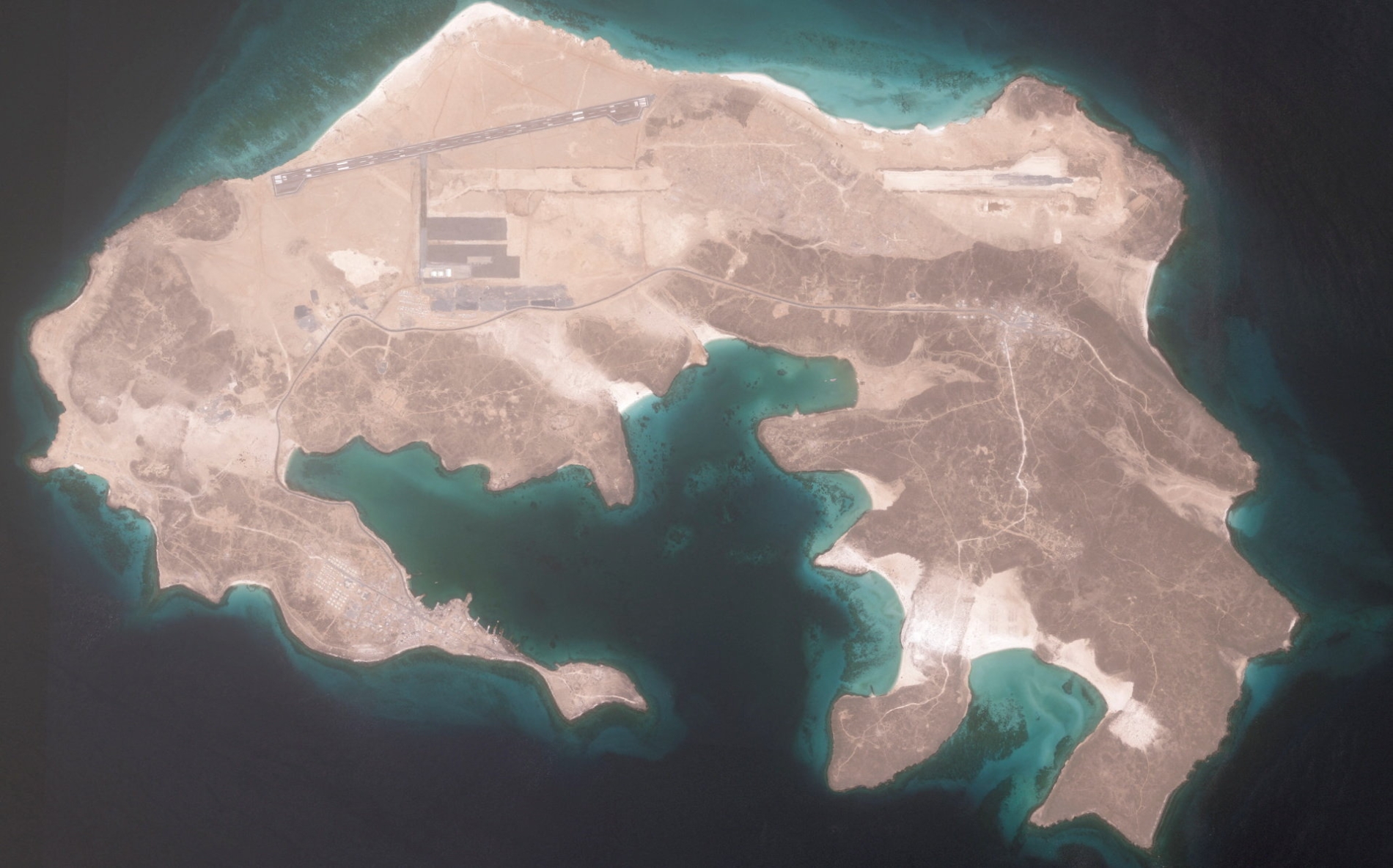
From 9-11 September, Iran-backed Houthi rebels in Yemen seized the towns of Hays, al-Khokha, al-Mokha and Dhubab, advanced onto Zuqar and Hunaish Islands, and reached Mayyun/Perim Island in the middle of the Bab al-Mandab Strait. Within days, they occupied most of Yemen’s south-western coastline along one of the world’s most critical maritime chokepoints.

The surge was the culmination of a military offensive that began on 9 August, with ground operations commencing on 3 September. By 10 September, the Houthis captured Mokha due to a culmination of overlapping factors, which included intelligence penetration, poor coordination across government-aligned formations, mediocre leadership, a lack of authenticated withdrawal orders, and insufficient air support. This contributed to the collapse of the control station at Jabal al-Nar, 18km from the frontline, manned by forces led by Tareq Saleh (deputy chairman of the Presidential Leadership Council and nephew of the late President Ali Abdullah Saleh).

This effective surrender spread panic across other government-held territories, allowing the Houthis to advance at lightning speed, capturing 120km in only two days. Their latest gains shattered the belief that Yemen's armed forces were slowly becoming a more effective military force.

Read more: Can Yemen's new drone arsenal seriously confront the Houthis?

Because of the close relationship the Houthis have with Tehran, their recent gains in Yemen mean Iran’s Islamic Republican Guard Corps (IRGC) now effectively controls the Bab al-Mandab Strait—a strategic goal it has held for decades. This doubles its coercive capability, as Iran already has effective control over the Strait of Hormuz, where it is holding global energy and Gulf exports hostage.

For those who insist Houthi actions are independent of Iran, one does not need to look far to discredit this claim. Just after the Houthi Red Sea Coast gains, Mohammad Mokhber, an advisor to Iran’s Supreme Leader, declared it a “victory,” adding that security cannot be bought through external guarantees. For his part, IRGC spokesman Hossein Mohebbi called it a “divine triumph.”

IRGC and Hezbollah experts have long supported the Houthis, and have played a critical role in the latest round of fighting along the Red Sea, Marib, and al-Jawf frontlines. Since June, the IRGC has deployed weapons, electronic warfare equipment, and experts, not least through the US-sanctioned Mahan flights to Yemen on 3 and 13 July, despite opposition from the internationally-recognised Yemeni government.
2026 Planet Labs PBC/ REUTERS
A satellite view shows a full view of Perim Island in the Bab al-Mandab Strait, Yemen, on 13 September 2026.

The recent Houthi Red Sea gains, from Hays, al-Mokha, and al-Khokha to the Bab al-Mandab Strait, remain to be consolidated as pro-government forces continue to challenge the group. However, if the group is able to hold this strategic territory, its newfound proximity to ships reduces the distance to strike targets in Bab al-Mandab Strait and the Red Sea, and shortens the warning time for ships to escape attack. It also lets them deploy direct-fire arms, including rocket-propelled grenades, heavy machine guns, anti-tank guided missiles, booby-trapped boats, naval mines, short-range drones, and even anti-ship ballistic missiles if required.

Houthi strategy

Despite the quick loss of 5,400 sq. km. in 48 hours, government-aligned forces have spent the past week halting Houthi advances eastward around al-Aradi and the strategic mountain of Kahbub, which overlooks the Gulf of Aden. Seizing this would strengthen the Houthis' ability to track and target ships. Inland highlands matter because they can shield the coastline from above, reduce exposure to artillery and air observation, and complicate any efforts to sever Dhubab and al-Mokha from inland reinforcements. To this end, Houthi forces are fighting in the coastal area of the Taiz governorate and near the strategic mountain approaches of Lajh, in a bid to outflank government forces, cut supply lines, and isolate cities gradually.
Time will tell whether international partners, together with Saudi Arabia and Yemen, will develop and execute a sustainable Yemen-Red Sea strategy once and for all

The next step for the Houthis would be to target the roads that supply the city of Taiz. This would entail pushing east from al-Wazi'iyah into al-Shamayatayn and west from Haifan approaches toward Bani Ghazi and al-Turbah. As of 16 September, government forces were still striking Houthi positions in al-Kadha.

The Houthis are unlikely to attempt a full takeover of Taiz, both because they would face fierce resistance and the fight could inflict high civilian casualties. Strategically, they do not even need to take the city; restricting its supply lines would be enough to gain leverage, as they have already cut its Red Sea access by capturing Mokha. With government forces busy defending its supply lines in southern Taiz, the road to Aden and northern Lahj, this gives Houthis the breathing space to consolidate their gains along the Red Sea coast. But if the Houthis expand into southern Taiz, they could intensify pressure in al-Madharbah in northern Lahj and on Giants and Nation Shield forces, as well as tribal resistance.

REUTERS/Ali Owidha
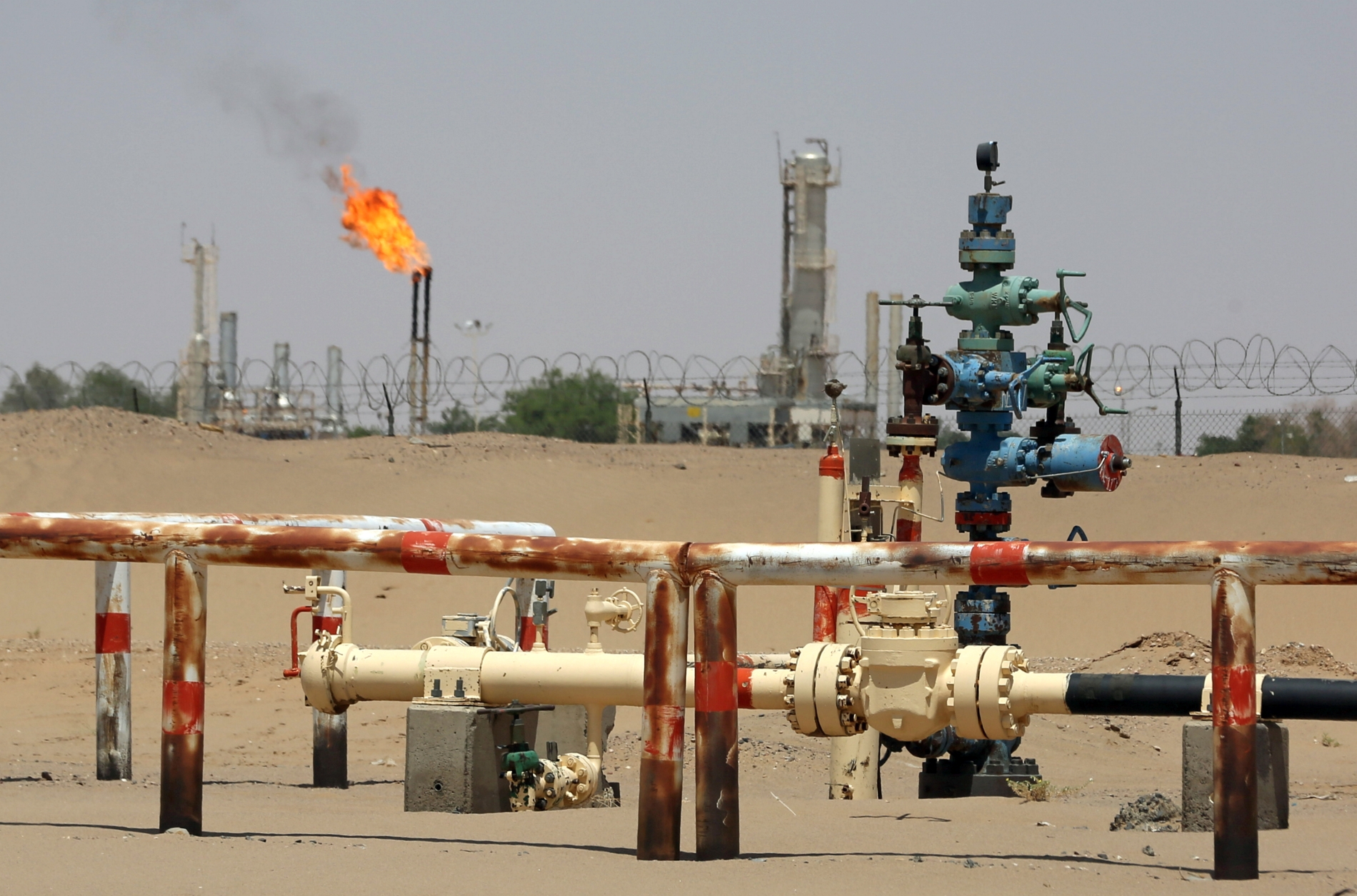
A view of the Safer oil refinery in Marib, Yemen, on 30 September 2020.

An eye on Marib

The resource-rich governorate of Marib presents a different challenge. The Houthis have not given up on their dream of capturing it since their last failed attempt six years ago. There has been Houthi tribal mobilisation and troop reinforcements, particularly around Harib and al-Jubah fronts (the frontlines north of those in al-Balaq and Raghwan), and continuing missile and drone attacks. A full Houthi assault remains unlikely, but the group is likely to continue sporadic attacks aimed at dispersing government forces, while keeping the option of a military offensive open. 

The Harib-Jubah axis merits particular scrutiny. Sustained military pressure could develop through the desert toward the FSO Safer, a supertanker converted into a floating storage and offloading (FSO) facility and moored 9km off the coast of Yemen. The FSO anchors Marib's oil and gas system and is a vital reservoir for public revenue. A sustained Houthi concentration or movement towards the facility from any direction would indicate an intent to encircle the city, avoid a high-cost war, and control the vital economic pipeline supporting the governorate.

For their part, the Yemeni Armed Forces are also trying to cut Houthi supply lines. They made limited advances in al-Yatama and lower al-Labanat toward al-Hazm and Bir al-Marazeeq, aiming to leverage public discontent against the rebels and boost security just north of Marib. Parallel (but limited) operations in al-Bayda, Hajjah and al-Dhalea could also help. With a clear strategy and enough air support, credible multi-front pressure could force a Houthi rethink.

But all the Houthis need to do is prevent the Yemeni armed forces and their allies from mobilising their troops to confront a single Houthi gain. To this end, they are focusing on command-and-control structures, logistical supplies, civilian infrastructure, military bases, and other high-value targets.

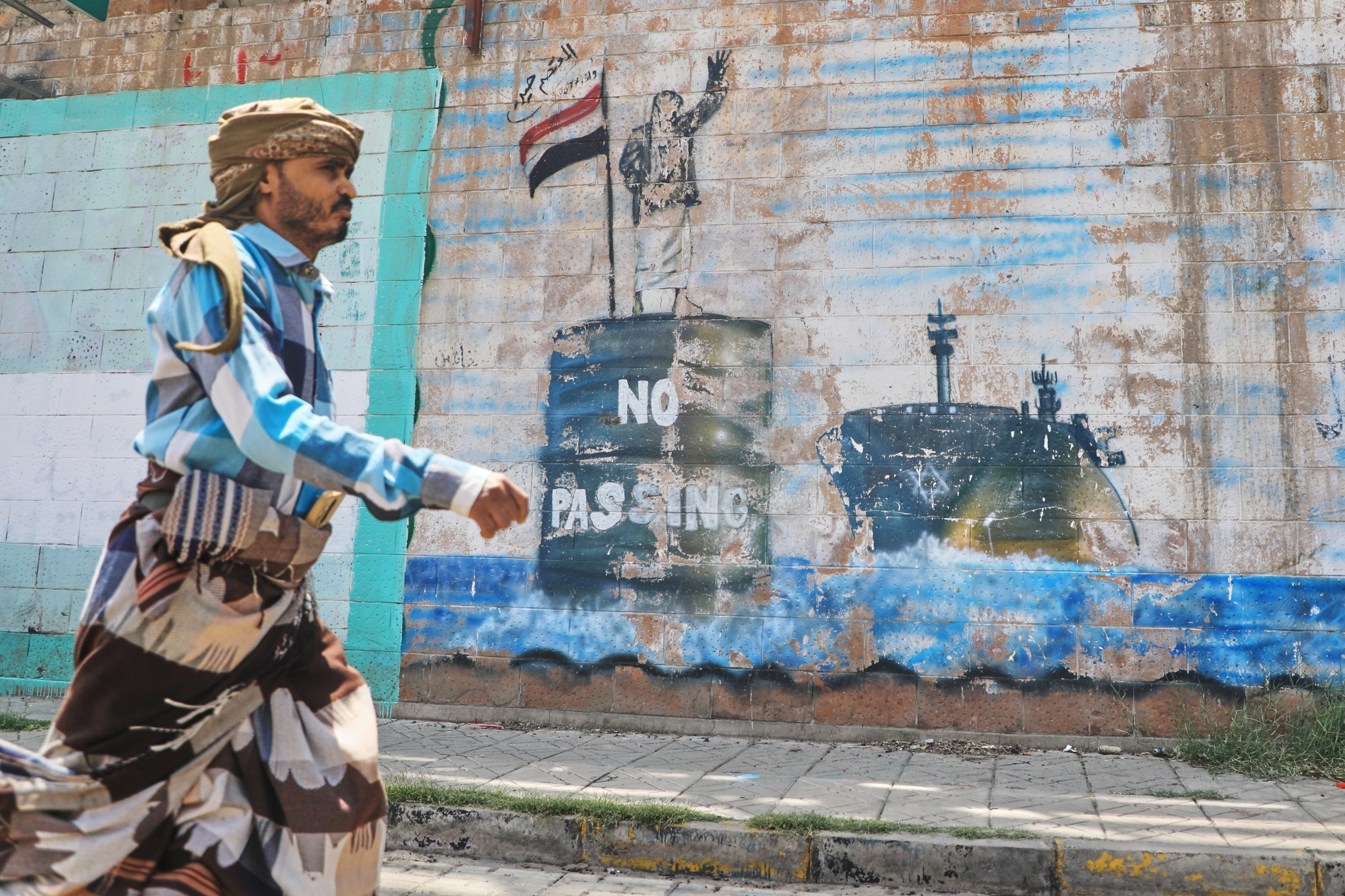
AP/Osamah Abdulrahman
A man walks in front of a mural symbolising restrictions on shipping through the Bab al-Mandab Strait, one of the world's key shipping lanes, in Sanaa, Yemen, on 14 September 2026.

Battle timeline

The Houthis' pressure on Saudi Arabia began in July. Since then, attacks on Saudi territory have increased by 233%, from six in July to 20 in September, bringing the total to 34 (of which four emanated from Iraq). Most targeted vital energy infrastructure, followed by military bases and civilian airports, killing at least 100 people.

In July, the Houthis began attacking Abha and Jizan and later expanded their strikes to Yanbu. Drone attacks carried out from Iraq targeted Saudi oil facilities in the east and in the capital, Riyadh, at the behest of the IRGC. In August, the tempo of attacks picked up, but they were concentrated on Saudi Arabia's southwest, nearest to Yemen. In September, however, the Houthis targeted airbases in Khamis Mushait and al-Taif, as well as Yanbu, Riyadh—where a Houthi ballistic missile was intercepted on 19 September—and the outskirts of Mecca, alongside several thwarted attacks targeting Farasan island in the Red Sea.

On 9 September, an Iraq-based attack struck the East-West Pipeline, shutting Saudi Arabia's principal export alternative to Hormuz. This cut around four million barrels per day (bpd), or 4% of global demand, consistent with the IRGC's intent to increase pressure on energy supplies. On 17 September, the Houthis struck an Italian Eurofighter jet at King Fahd Air Base.

At sea, the Houthis have recently demonstrated a sudden restraint after causing panic among shipping operators and insurers. Since July, they have struck at least ten vessels, sinking one tanker (killing six and injuring ten), before pausing attacks on 24 August, in preparation for their southward push towards Bab al-Mandab. Once there, Houthi representatives requested to meet US officials in the Omani capital, Muscat, to reassure Washington that they did not intend to attack ships, preserving a global trading channel even as the wider US-Iran confrontation continues and Hormuz remains choked.

Days later, IRGC commanders visited the al-Mokha, Dhubab, Zuqar, and Mayuun approaches, deploying new radars, surveillance, and strike infrastructure around the strait. At the time, US President Donald Trump reportedly called Yemeni President Rashad al-Alimi, but it is unclear what was discussed. For their part, US media reported that Trump weighed up direct strikes on the Houthis, in a departure from its previous non-engagement position. He later reversed his position, according to the same media reports.

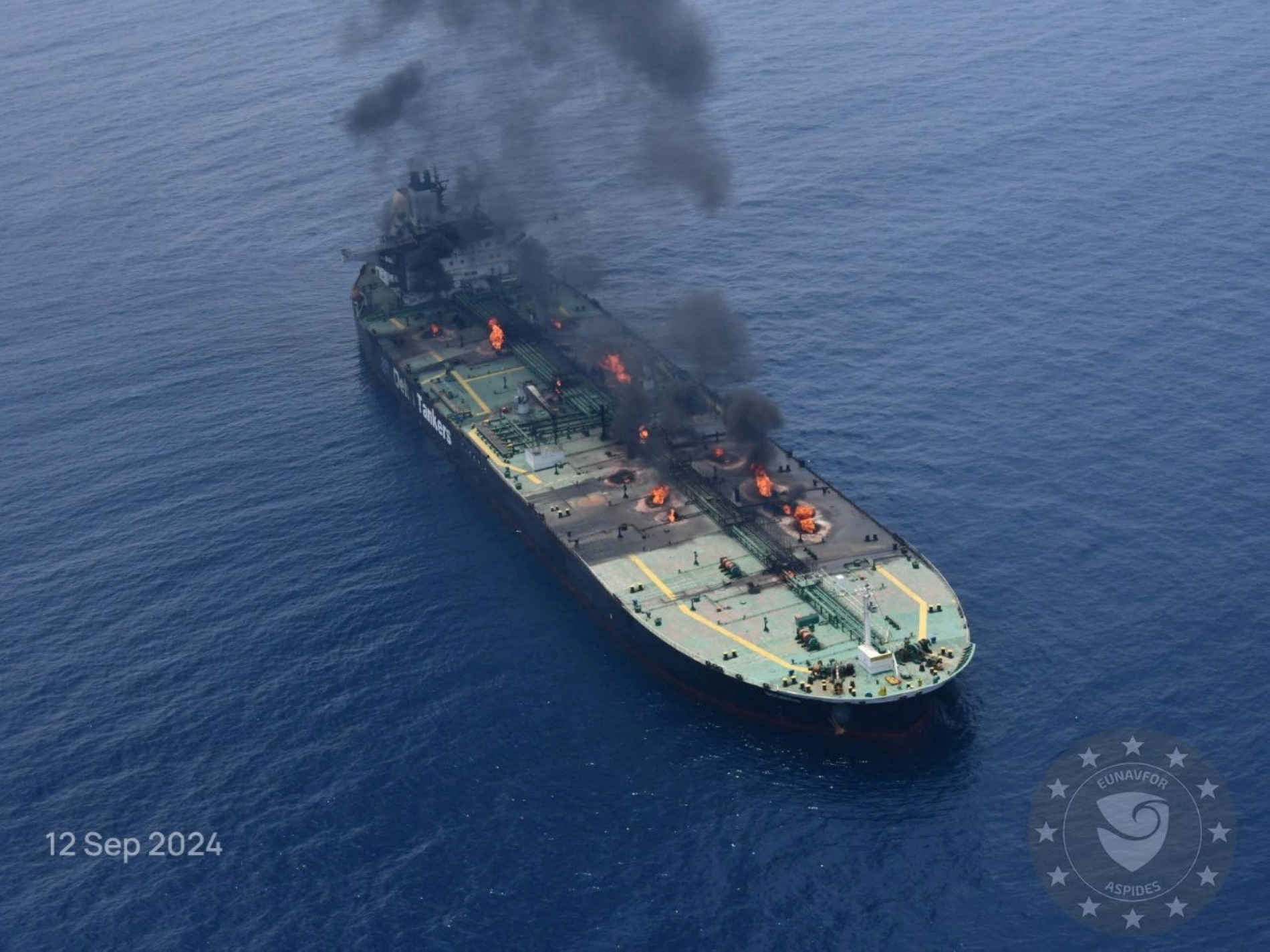
EUNAVFOR ASPIDES/Reuters
Flames and smoke rise from the Greek-flagged oil tanker Sounion after an attack by Houthi militants on the Red Sea in August 2024.

Global imperative

But signs are already emerging that global powers may now deem military engagement necessary to protect energy routes, maritime trade, and freedom of navigation. On 21 September, the UK announced it was providing an RAF Voyager to refuel Saudi jets on "defensive" missions for several weeks.

Amid the unpredictability of the Trump administration, Riyadh is seeking support from the maritime defence coalition it established and from the mutual defence agreement it signed with Türkiye and Pakistan in August. This recalibrated strategy shows that Saudi Arabia sees the cost of inaction far greater than the cost of escalation. 

Amid the renewed escalation, Israel has been notably quiet. But it is keen to galvanise regional and international players to confront the Houthis. To this end, it has embedded its intelligence services further into the region to increase the effectiveness of its early warning systems and air-defence architecture, and is working hand in hand with US Central Command (CENTCOM) toward this aim. Admiral Brad Cooper, who previously headed CENTCOM, recently met with Israeli Army Chief of Staff Eyal Zamir to deepen coordination. And while the US is not militarily engaged with the Houthis at the moment, it has reportedly boosted its support to Saudi Arabia, providing it with more intelligence and targeting data.  

Taken together, the latest developments demonstrate that control over Bab al-Mandab no longer simply affects Yemen or littoral states along the Red Sea; it has become a leverage card for Iran to pressure regional and global states amid its wider war with the US. The Houthi-IRGC strategy seeks to isolate Saudi Arabia, boost Iran's leverage, reshape the map of territorial control in Yemen, and deny the international community a common threat to coalesce around.

Time seems to be on the Houthis' side. This means that government forces must prioritise the battlefronts that could inflict the greatest cost on the Houthis

On the defence

An early reversal of Houthi coastal gains would exploit the window before the group can bolster its fortifications, build minefields, and further develop its command structures. This requires a unified command and control, protected communications and cyber protocols, sustained air support, mine-clearing and air defence capabilities, and the quick reorganisation of local forces, most notably the Tihmai Resistance and Giants Brigades. But if the same systems and structures that contributed to the collapse of pro-government forces in the southwest of Yemen are in place, it is unlikely to produce an offensive capable of confronting the Houthis in a meaningful way.

Right now, government forces are focusing on the Taiz-Lahj-Aden axis, blocking Houthi expansion through Kahbub and al-Madharbah, and intercepting their supply lines, but time seems to be on the Houthis' side, who seek to consolidate their recent gains and expand further. This means that government forces must prioritise the battlefronts that could inflict the greatest cost on the Houthis. This requires effective ground operations, as airpower can delay consolidation and destroy exposed assets, but cannot reverse territorial control.

Right now, pro-government forces are on the defence, and it remains to be seen how and when they can regroup effectively enough to go on the offence. Another key question is whether international partners, together with Saudi Arabia and Yemen, will develop and execute a sustainable Yemen-Red Sea strategy once and for all.

font change