Xi puts China into the Middle East security equation

Beijing’s multi-pronged proposal links to the new three-way ‘Mecca Alliance’ between Saudi Arabia, Türkiye, and Pakistan. What would be the parameters of this new Chinese security involvement?

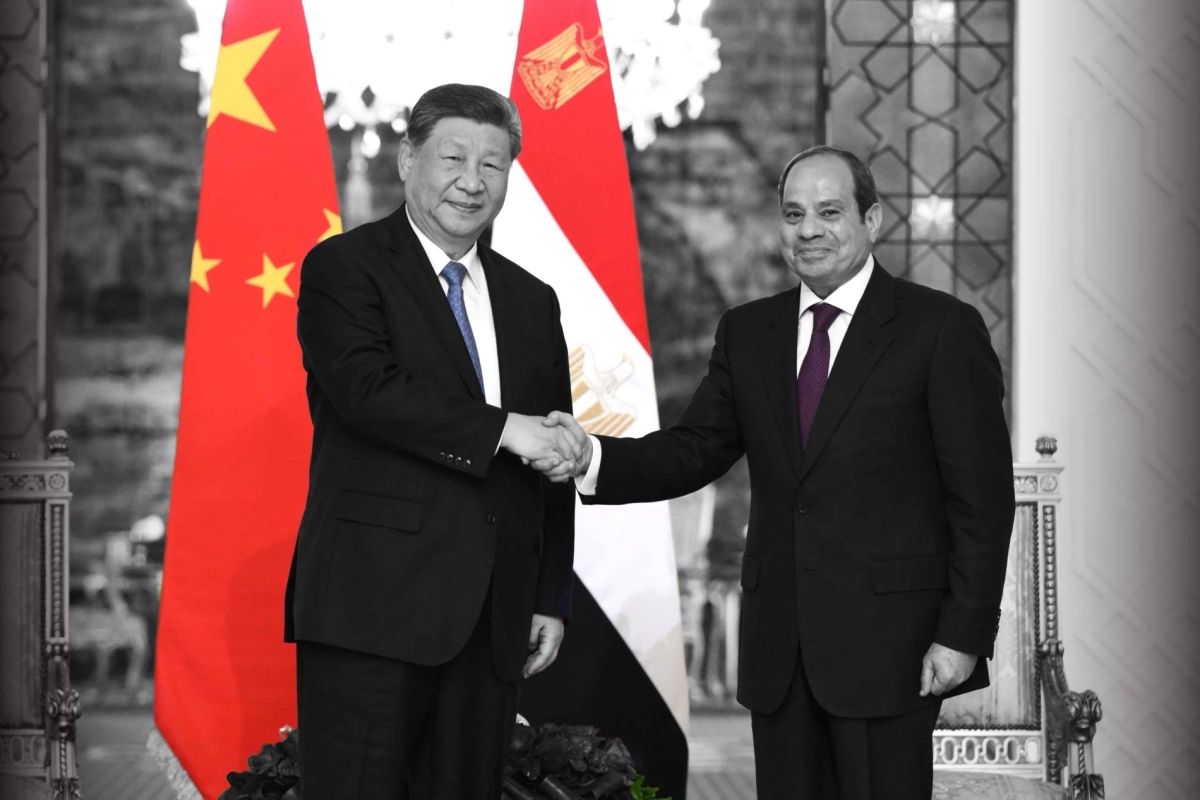
Chinese President Xi Jinping shaking hands with Egyptian President Abdel Fattah al-Sisi before their meeting in Cairo, Egypt, on 2 September 2026.
AP
Chinese President Xi Jinping shaking hands with Egyptian President Abdel Fattah al-Sisi before their meeting in Cairo, Egypt, on 2 September 2026.

Xi puts China into the Middle East security equation

Shortly after Egyptian President Abdel Fattah al-Sisi bid farewell to Chinese President Xi Jinping at Cairo Airport on 2 September, he called Saudi Crown Prince Mohammed bin Salman. The timing and substance of the call were significant. They discussed regional security and coordination between Cairo and Riyadh, with Egypt considering Xi’s proposal for a “new security architecture” for the Middle East.

In Cairo, Xi set out the contours of this future through four interconnected principles. The region's security, he argued, should be the responsibility of its own states, free from outside interference. Its crises should be addressed comprehensively and as part of an interconnected whole, with Palestine at its centre. Security should be linked to development and shared economic interests, including safeguarding maritime routes. And finally, the whole thing should rest on international law and reinforce the role of the United Nations.

The reference to maritime security will have pricked ears. Iran continues to disrupt shipping from the Arabian Gulf through the Strait of Hormuz, and the Houthis in Yemen continue to threaten navigation in the Red Sea through the Bab el-Mandeb Strait.

Xi thereby linked regional stability to the security of international trade routes. After he left, Chinese Foreign Minister Wang Yi placed the proposal more explicitly within Beijing’s broader ambitions in the region, saying that the initiative “offers a Chinese solution for achieving long-term peace and stability in the region”. Each of Xi’s four principles points to China’s growing capacity to influence political and security arrangements within a changing strategic environment.

Xi’s visit to Cairo coincided with the participation of advanced Chinese J-16 fighter aircraft in Egypt’s ‘Eagles of Civilisation 2026’ military exercises. Chinese tech giant Huawei has also proposed building large artificial intelligence (AI) data centres in Egypt. China may therefore be emerging as Egypt’s alternative in two fields traditionally dominated by US firms: defence and technology, especially semiconductors and AI.

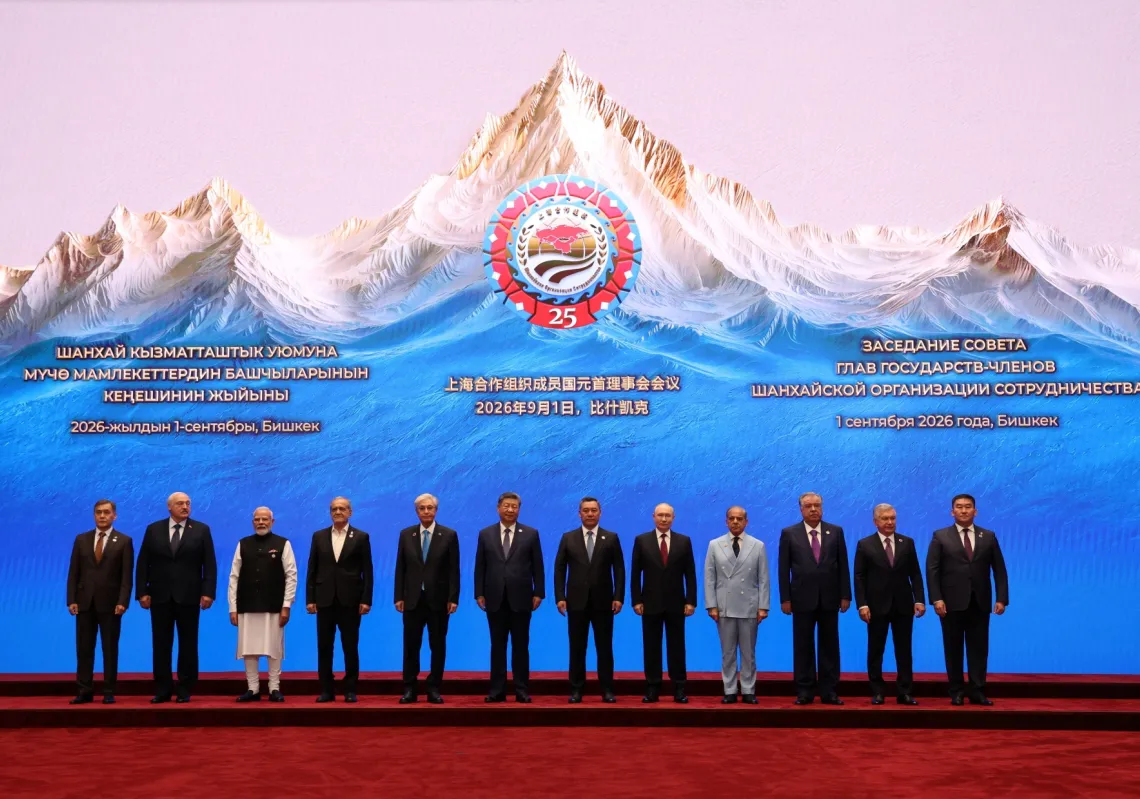
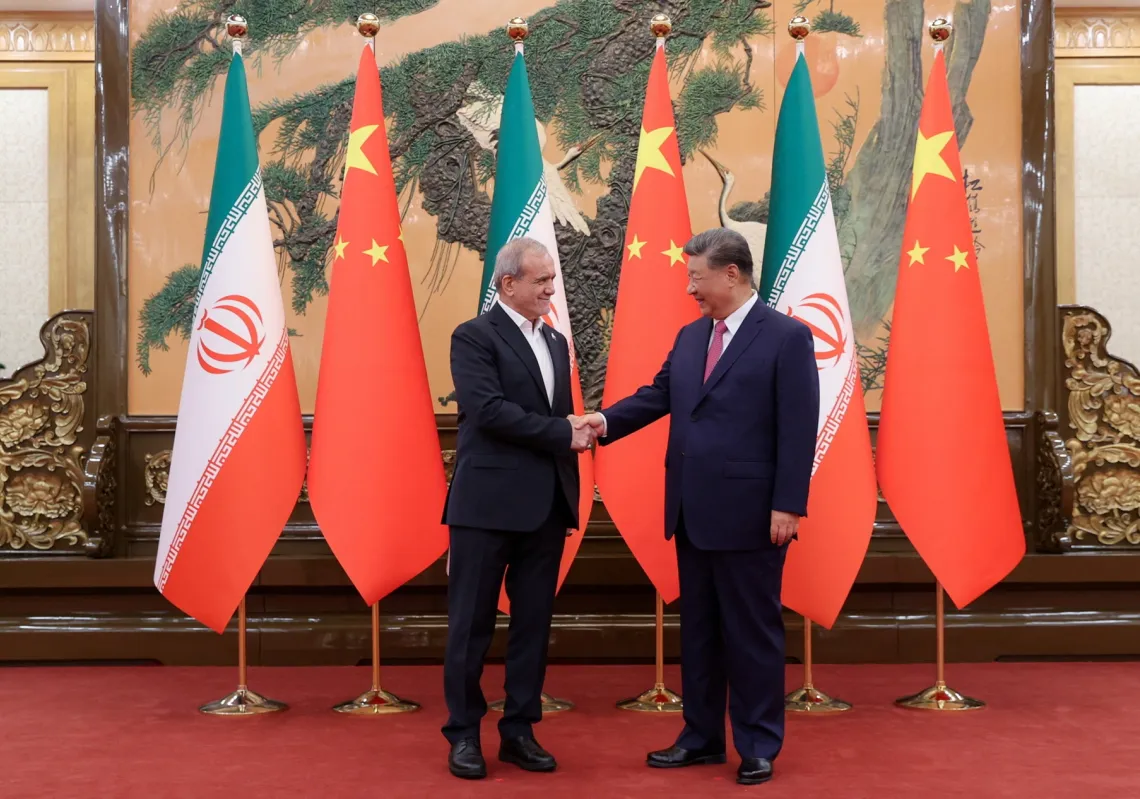
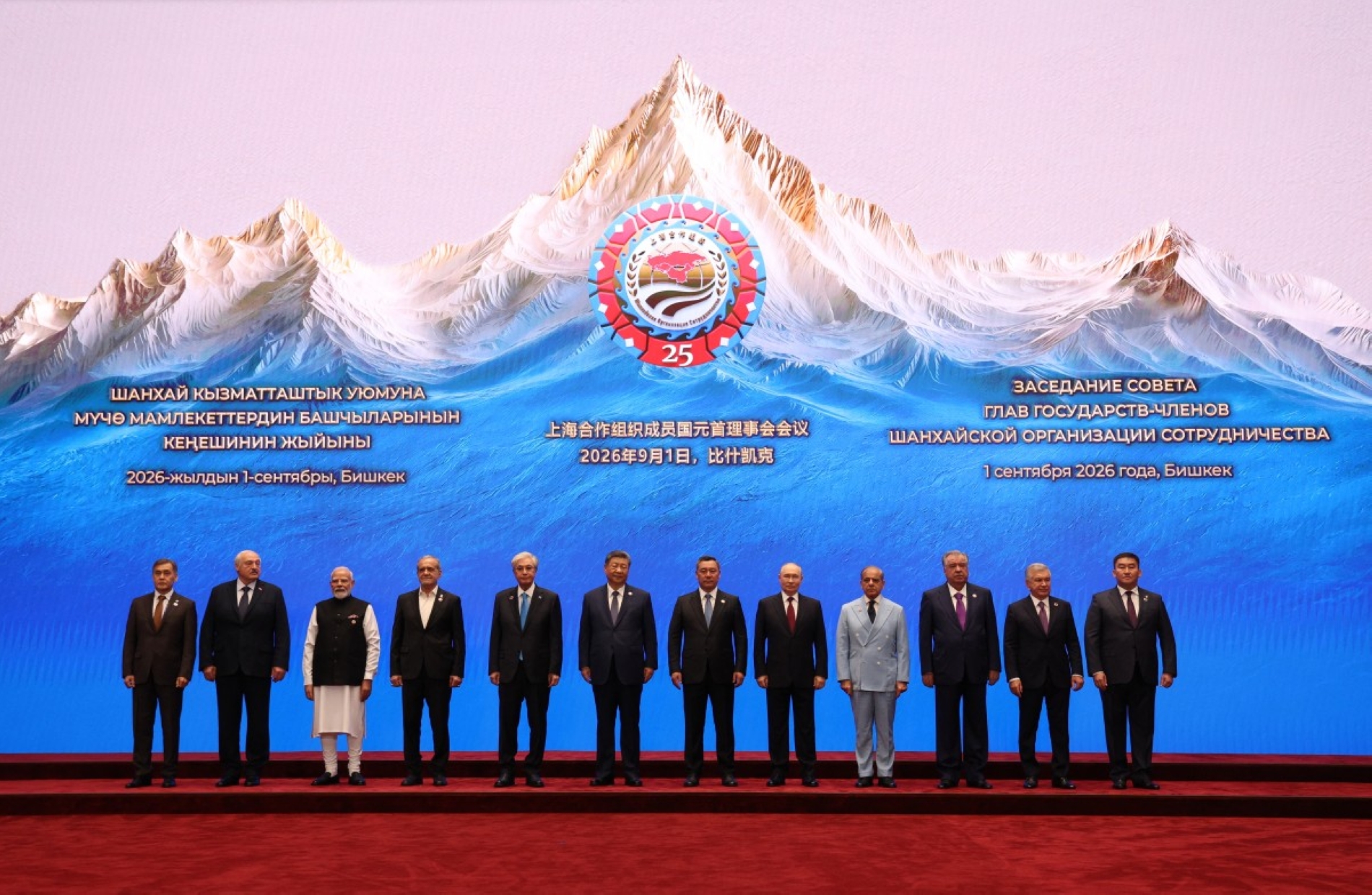
Analysts noted Xi’s brief and conspicuously cool encounter with Iranian President Masoud Pezeshkian on the sidelines of the Shanghai Cooperation Organisation (SCO) summit. Reports suggest that China is pressing Iran to reopen the Strait of Hormuz and resolve its disputes with Saudi Arabia. Most Arab states reject the recent Iranian attacks on neighbouring countries’ infrastructure and its blockage of Hormuz, so China will know that it has regional support for its stance. New US sanctions against Iran bolster Beijing’s position as it recalibrates its relationship with Tehran, to prevent it from becoming a liability to Chinese interests.
Sputnik/Reuters
Leaders of SCO member states, including Chinese President Xi Jinping, Russian President Vladimir Putin, and Iranian President Masoud Pezeshkian—ahead of a summit session in Bishkek, Kyrgyzstan, on 1 September 2026.

Turning tide

There are other reasons to think that the tide may be turning in China’s favour. For example, Turkish President Recep Tayyip Erdoğan declared at the SCO summit in Bishkek that Türkiye, a NATO member, was prepared to join the organisation as a full member. This would broaden the bloc’s presence in the Middle East and create further room for Chinese influence within any future regional arrangements.

Another factor of note was Qatar’s turn towards China, marked by Prime Minister and Foreign Minister Sheikh Mohammed bin Abdulrahman Al Thani’s visit to Beijing, the first by an Arab official following Xi’s trip to Cairo. Qatari Foreign Ministry spokesman Majed al-Ansari said that Gulf states needed to recognise that their strategic alliance with the US, whilst important, was “not sufficient” in and of itself. It was an unusually explicit comment that will have interested Xi.

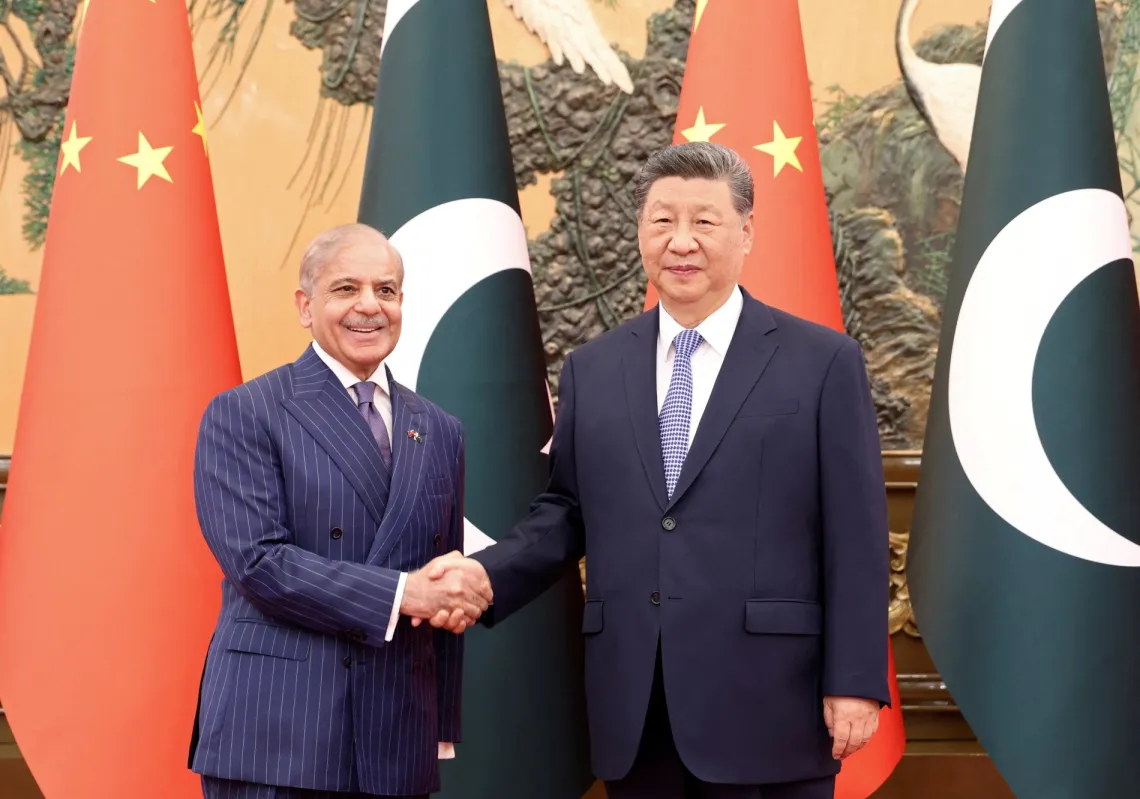
Yet the Chinese premier’s regional security proposal is difficult to examine in isolation from the Mecca Defence Alliance, a three-way mutual defence pact between Saudi Arabia, Pakistan, and Türkiye. This is partly because of the expanding political, diplomatic and commercial ties between China and Saudi Arabia, the scale of Chinese investment in the Gulf, and Beijing’s close military relationship with Pakistan, which Chinese officials describe as an “iron brotherhood”.
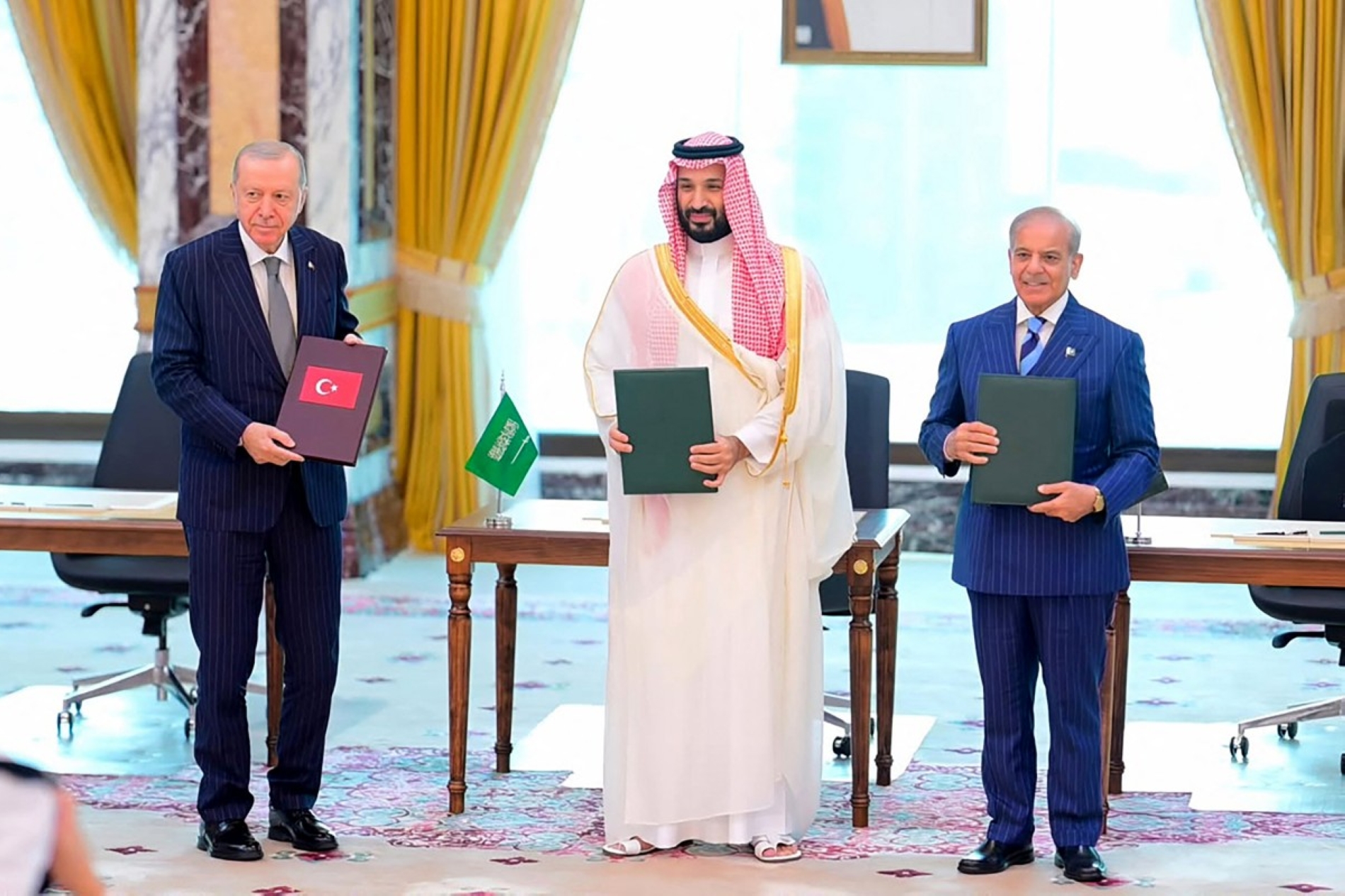
The Mecca alliance aims to build security capabilities locally, rather than leaving security to outside powers. This principle lies at the centre of Xi's initiative

Common principles

The points of convergence between the Chinese proposal and the Mecca alliance are striking, even though they do not suggest direct coordination. The first concerns security within the framework of international law. From the outset, the Mecca alliance has said it will operate legally, bound by international treaties and established norms. Xi put the UN and international law at the core of the security architecture he proposed for the region.

The second concerns the Palestinian population as an integral part of regional security. Saudi Arabia, Türkiye, and Pakistan all attach central importance to this issue, although their approaches differ slightly (Riyadh insists upon concrete steps towards a Palestinian state before it normalises relations with Israel). In practical terms, this means that Israel's integration into a regional security structure is impossible if there is still no mutually agreed solution to the Palestinian quest for statehood. Washington wants Riyadh to normalise relations with Tel Aviv before a Palestinian settlement.

The third point of convergence is that regional security should begin with the region's states themselves. The Mecca alliance aims to build security and defence capabilities locally, rather than leaving security to outside powers. This principle lies at the centre of Xi's initiative. He wants the countries and peoples of the Middle East to be "masters of their own affairs," conduct their own dialogue on peace and security, and reshape their security architecture free from external interference.

Tang Zhichao, director of the Division of Political Studies at the Chinese Academy of Social Sciences and vice-president of the Chinese Association for Middle East Studies, thinks the Mecca alliance embodies the principle of "regional ownership" advocated by China. Speaking to Al Majalla, Tang said the alliance's defensive character, and the fact that it is not directed against any one state (such as Iran), are consistent with Beijing's opposition to military blocs built around confrontation. Its openness to further members, he adds, also accords with China's concept of common and collective security.

PAKISTAN PRIME MINISTER'S OFFICE / AFP
Saudi Crown Prince Mohammed bin Salman (C), Turkish President Recep Tayyip Erdogan (L) and Pakistani Prime Minister Shehbaz Sharif posing after signing the Mecca Joint Defence Agreement in Mecca, Saudi Arabia on 7 August, 2026.

Open to others

Egypt has not joined the three-way Mecca alliance, but has discussed a regional quartet comprising Egypt, Saudi Arabia, Türkiye, and Pakistan, so it is closely involved in the debate over the region's emerging security arrangements. Beijing's decision to unveil its proposal in Cairo was noteworthy and may have been intended to narrow the distance between the two concepts. China sees the Mecca alliance as one element within a broader regional security architecture, not the architecture itself. This leaves room for countries like Egypt to participate in new regional arrangements without formally joining a military alliance, which could allow them a continued degree of balance.

Ahmed Kandil, deputy director of the Al-Ahram Centre for Political and Strategic Studies who specialises in Asia, told Al Majalla that Egypt is at the intersection of several regional security theatres, including Palestine, the Red Sea, the Suez Canal, the Eastern Mediterranean, and Gulf security. He says Egypt carries political and military weight, has balanced international relations, and partnerships with Gulf states, so it would be a useful participant in any new grouping. Kandil believes that the Middle East is moving towards a more polycentric order in which the Mecca alliance, the Chinese initiative, and the US will coexist, giving Egypt greater room to manoeuvre.

The US is yet to comment publicly on Xi's four-point proposal, but President Donald Trump welcomed the Mecca agreement. Saudi Arabia, Türkiye, and Pakistan all have close ties to Washington, but Trump has repeatedly called on regional states to shoulder a greater share of the burden of their own defence. It is not clear whether the president's views are echoed in the US State and Defence Departments.

The points of convergence between the Chinese proposal and the Mecca alliance are striking, even though they do not suggest direct coordination

To some, the military pact reflects an erosion of confidence in American security guarantees. Tang said this model "has clearly become outdated and is no longer capable of playing a positive role". It illustrates the space that has opened for China, but Beijing knows that the US-Israeli war with Iran from February to April this year has strengthened defence ties between Arab states and Washington, and that these countries show no sign of abandoning the US security umbrella.

Xi's Cairo initiative therefore sketches out another path for Chinese involvement, such as by supporting regional mechanisms. This allows China to expand its security influence without assuming the American guarantee and without committing Chinese forces to a permanent military deployment.

In this context, Xi will arrive at the White House in a few weeks' time, offering a markedly different proposition. In 2014, Barack Obama described China as a "free rider" on the US-led security order and urged Beijing to become a "responsible partner". It is now doing so, moving steadily into the centre of the debate over the Middle East's stability while gaining a reputation as a dependable partner.

font change