A blanket US arms embargo on Sudan is not the answer

An American envoy has advised the UN Security Council to treat each warring Sudanese party equally, while Washington relaxes restrictions on the RSF militia's main foreign backer

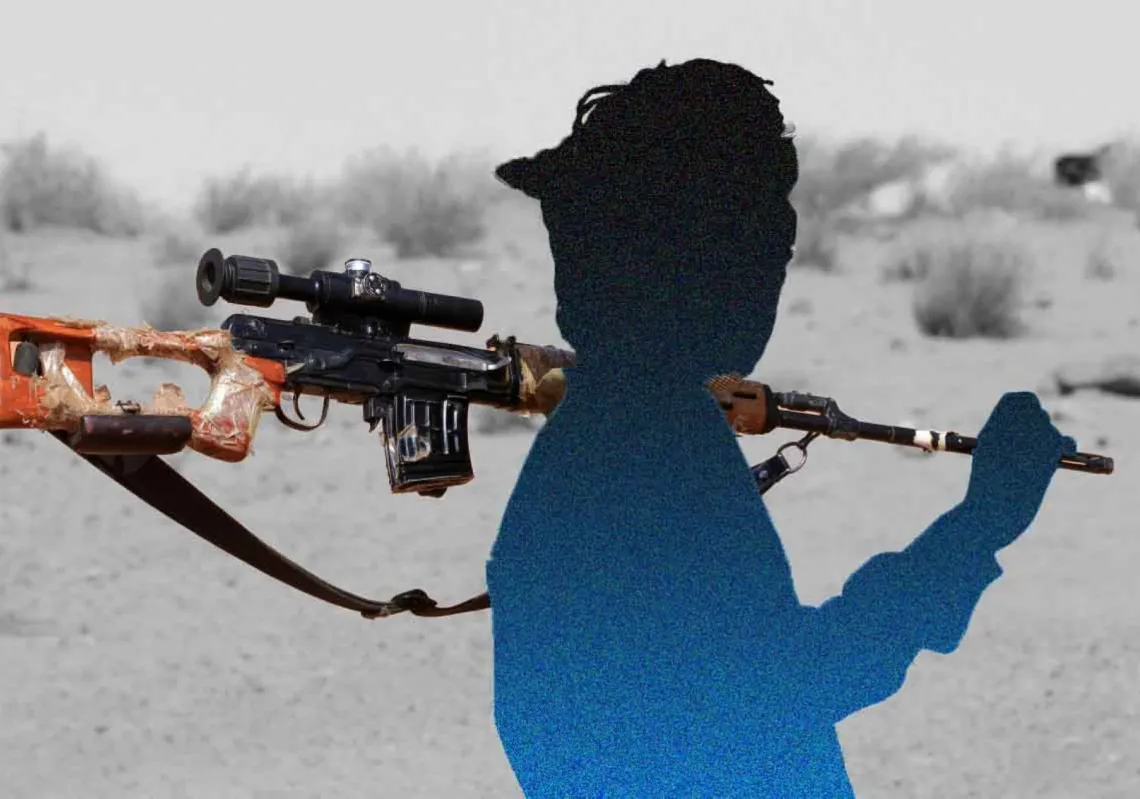
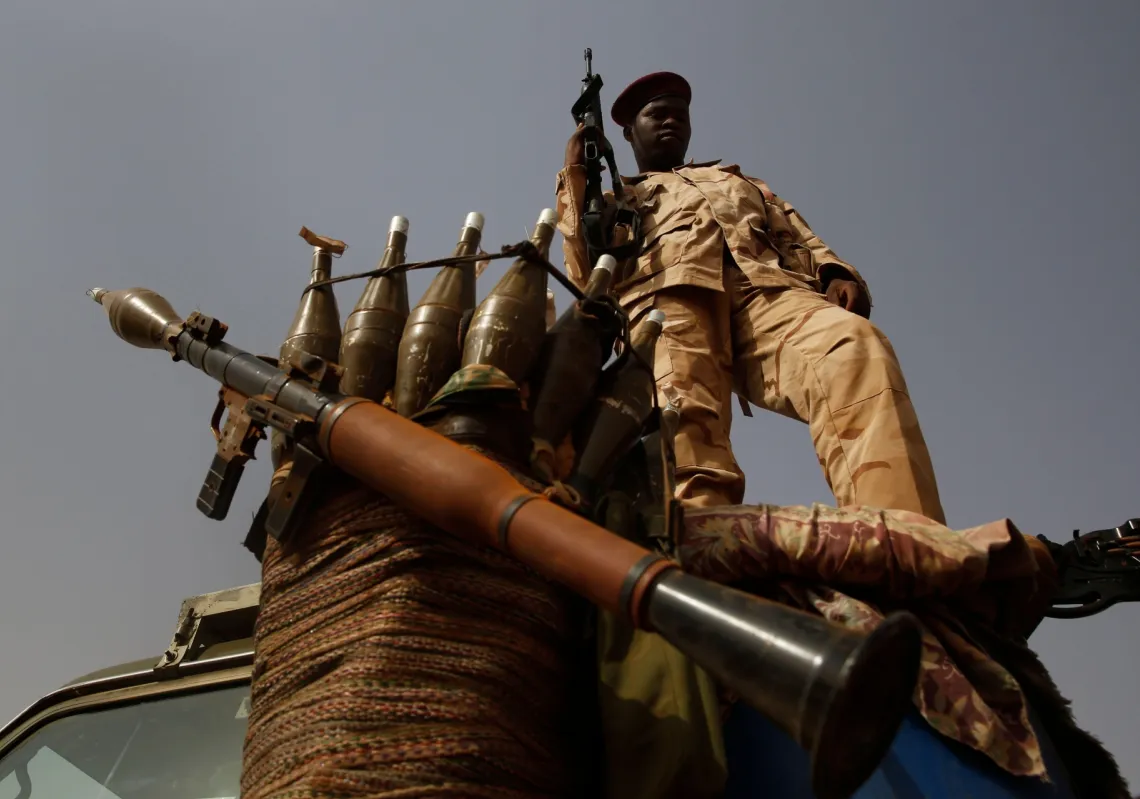
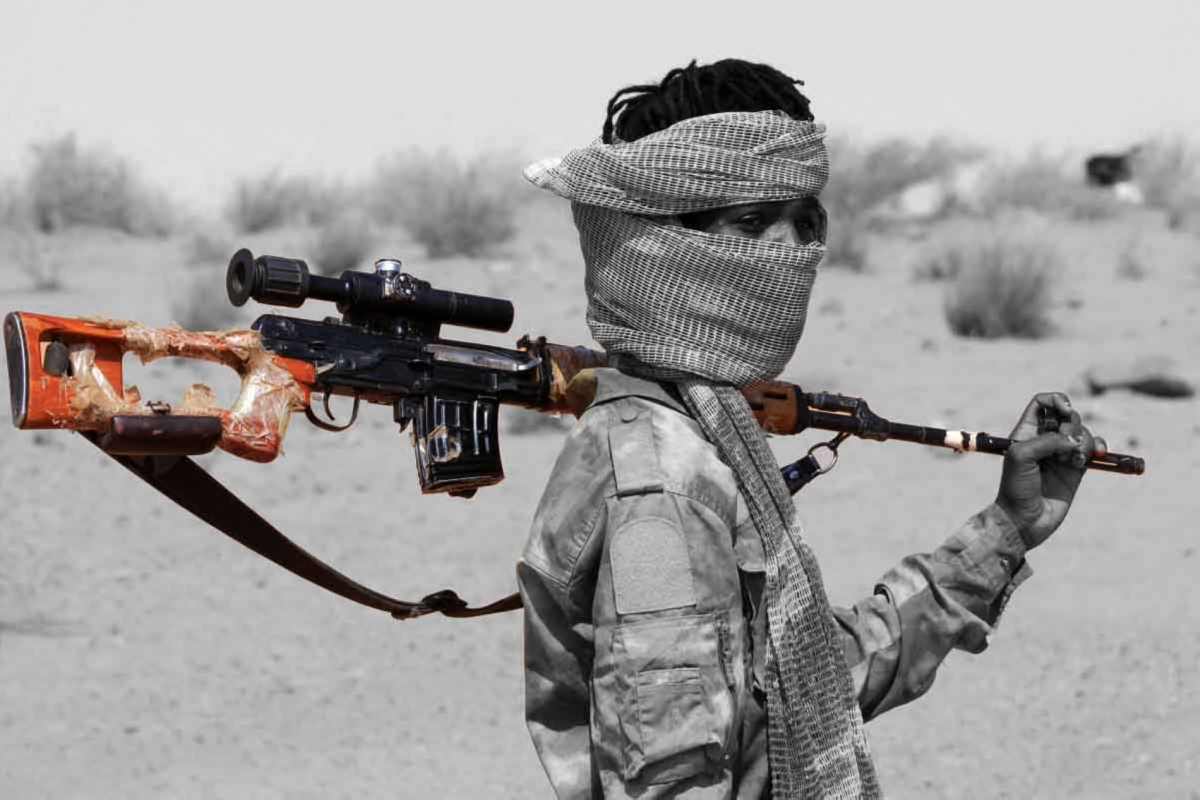
An armed defector from the paramilitary Rapid Support Forces (RSF) arrives, believed to be surrendering to the Sudanese military, in the west of Omdurman on 19 August 2026.

A blanket US arms embargo on Sudan is not the answer

Three centuries ago, in 1729, author Jonathan Swift used the cold language of arithmetic to suggest that Ireland’s poor sell their children as food for the tables of English gentlemen. The horror he outlined in his book, A Modest Proposal, lay not just in the idea itself but in the tone: a bureaucratic composure that turns massacre into procedure, asks victims to be more reasonable about the manner of their dying, and expects them to remain equidistant from those who kill them.

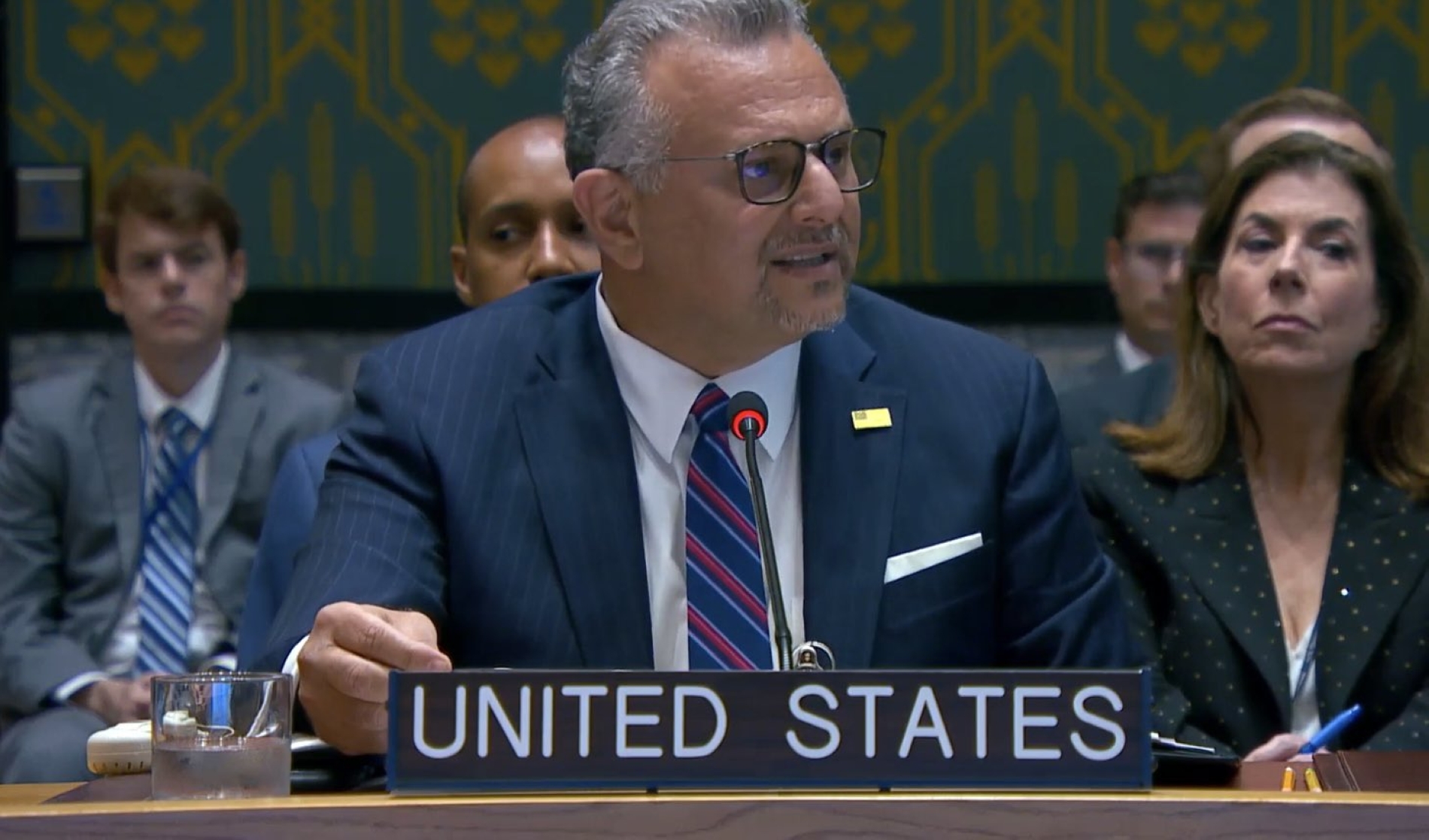
Massad Boulos, an advisor to US President Donald Trump, struck much the same note before the United Nations Security Council on 24 August when he presented a four-part proposal to end the three-year civil war in Sudan: extend the Darfur arms embargo imposed under Resolution 1591 across the whole of Sudan; apply it to all; include drones; and increase the number of experts on the sanctions committee.

With a familiar bureaucratic composure, he explained that the measures he had outlined would not advantage one side over the other. Yet the proposal has a history, and that history reveals its purpose. Calls for it grow louder whenever the Sudanese Armed Forces (SAF) advances on the battlefield against the UAE-backed Rapid Support Forces (RSF) militia and subside whenever the army falters (Boulos did not originate the idea; the Sumoud alliance, headed by former prime minister Abdalla Hamdok, had already advocated it. Hamdok lives in the UAE, where he looks for Emirati investment opportunities in Africa).

Asymmetrical conflict

The problem lies in the structural design of the embargo itself: a formal symmetry imposed upon a conflict in which no such symmetry exists, whether in the conduct of the parties, their access to weapons, or their observance of international law. The proposal was not introduced as a new standalone resolution (even though Washington had that option). Instead, it was inserted into discussions over the renewal of Resolution 1591, the very embargo that the UAE has continued to violate since April 2023 by supplying the RSF with weapons and mercenaries through Chad and Libya, as well as through military aircraft landing at airports in Darfur.

When condemnation of these violations reached Congress, the proposal did not seek to restrain an ally's conduct. Boulos instead took the embargo and its monitoring mechanisms hostage by extending its mandate across the whole of Sudan until the vote scheduled for 12 September.
@US_SrAdvisorAF
Massad Boulos at the UN on Sudan, 24 August 2026.

If Resolution 1591 is not renewed, the Council’s choice will come down to an embargo that constrains the Sudanese state’s ability to defend its citizens, or the collapse of the sanctions regime in its entirety, including, above all, the Panel of Experts that monitors and documents Emirati violations.

Russia, China, Pakistan, and the African Group object, but the US, UK, and France are standing firm, meaning that the sanctions regime is likely to collapse unless a technical extension is introduced during the consultations. The result is a Kafkaesque paradox. A debate about tightening an embargo ends by dismantling it, while a mechanism created to protect civilians becomes one that enables genocide. The value of a law is measured by its enforceability against its violators, rather than by the elegance of its wording.

The Sudanese state has ports, banks, a legal personality, and a seat at the United Nations, so it is subject to international procedures, meaning its ships can be inspected, its transactions traced, and its accounts frozen. The RSF is not a state, so its arsenal does not pass through regular channels, but through unregistered airstrips and smuggling routes using forged end-user certificates and intermediaries operating beyond the formal commercial system.

These are the channels the UAE has exploited to breach the existing embargo for three years. A restriction that appears symmetrical on paper may produce a profoundly asymmetrical effect in practice. Its force falls upon the legal capacity to acquire weapons. It therefore punishes the actor that can be monitored but fails to reach the actor whose power is built upon circumventing the rules.

Function, structure, and outcome

Boulos told the UN Security Council that both the SAF and RSF were equally illegitimate. That is not true. The distinction between them extends beyond the scale of their violations; it is a distinction of function, structure, and outcome.
AFP
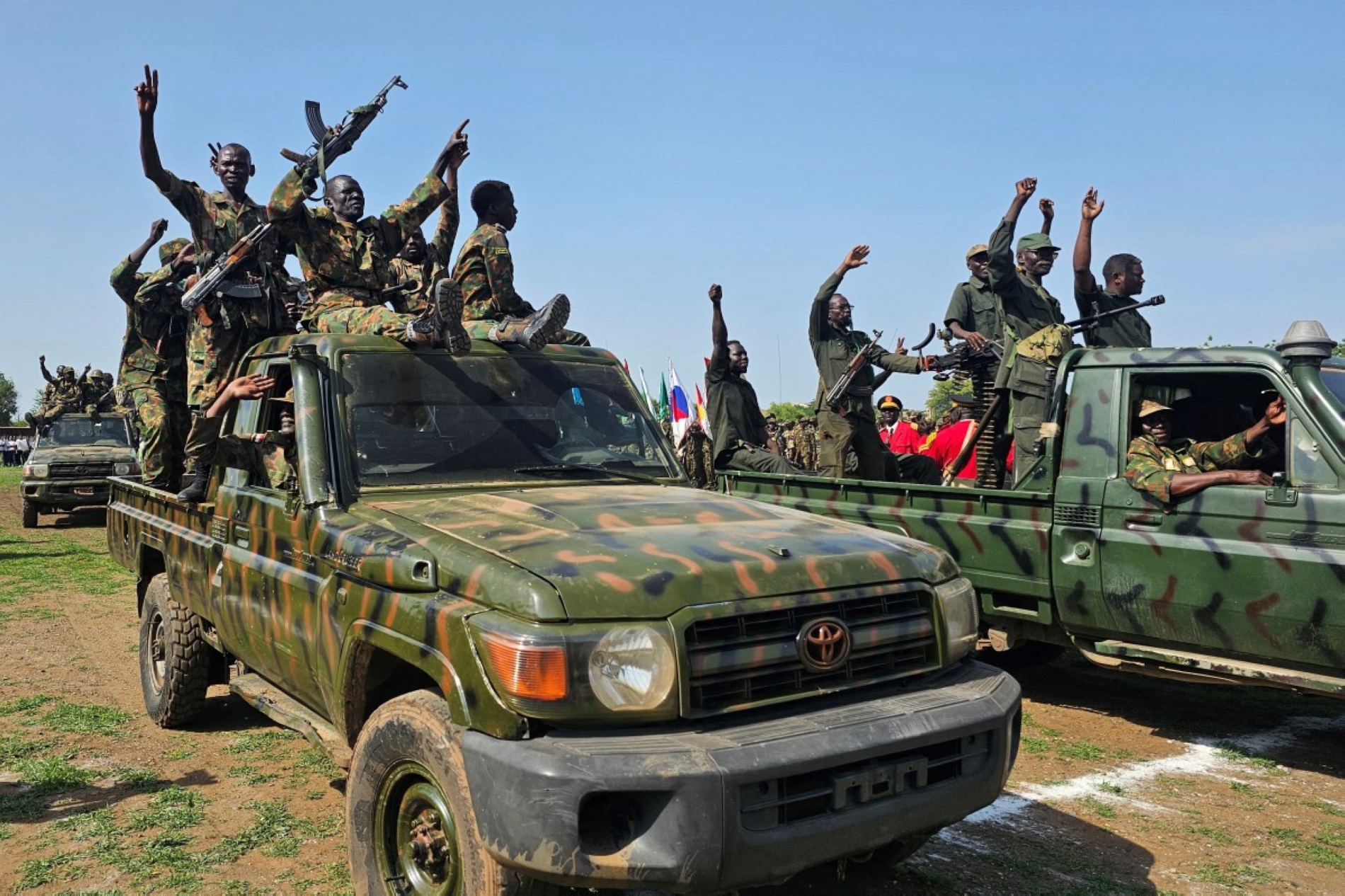
Sudanese army soldiers take part in a military parade on 17 August 2026, in the city of Gedaref in eastern Sudan during celebrations to mark the 72nd anniversary of the Sudanese Armed Forces.

In terms of function, the army is an institution within a state. Its budget comes from the public treasury; it is subject to law and the courts, and the state bears responsibility for its actions as a party to the Geneva Conventions. Behind it stands, despite everything, a state that pays teachers and doctors, operates ports and banks, and provides protection. The militia, by contrast, practises violence and terror, holding civilians hostage to documented acts of raw brutality.

In terms of structure, the militia is no parallel army. It is a predatory system of violence, financed by smuggled gold. The promise of plunder drives its recruitment, while looting, ransom, and rape sustain its rule. Plunder is the RSF’s modus operandi. To demand that such a militia protect or serve civilians is to demand that it cease to be what it is.
The distinction between the Sudanese Armed Forces and RSF militia is a distinction of function, structure, and outcome

As for the outcome, the test is simple: what happens to civilians when either side takes control? In El Fasher, after a siege lasting more than 500 days, the militia stormed the city in October 2025 and wrested control from the army. The Office of the United Nations High Commissioner for Human Rights drew on 140 interviews with survivors and satellite imagery to estimate that more than 6,000 people were killed in three days before adding that the true toll was probably higher.

At the Saudi Maternity Hospital, the last functioning hospital in the city, 460 patients and accompanying family members were killed, according to the World Health Organisation. Sexual violence was systematic and directed against Zaghawa women. When Yale researchers looked for evidence of a mass exodus from a city of 250,000, they found remarkably little movement. Most had been killed, captured, or driven into hiding. The army's resistance delayed that fate for 500 days. 

AFP
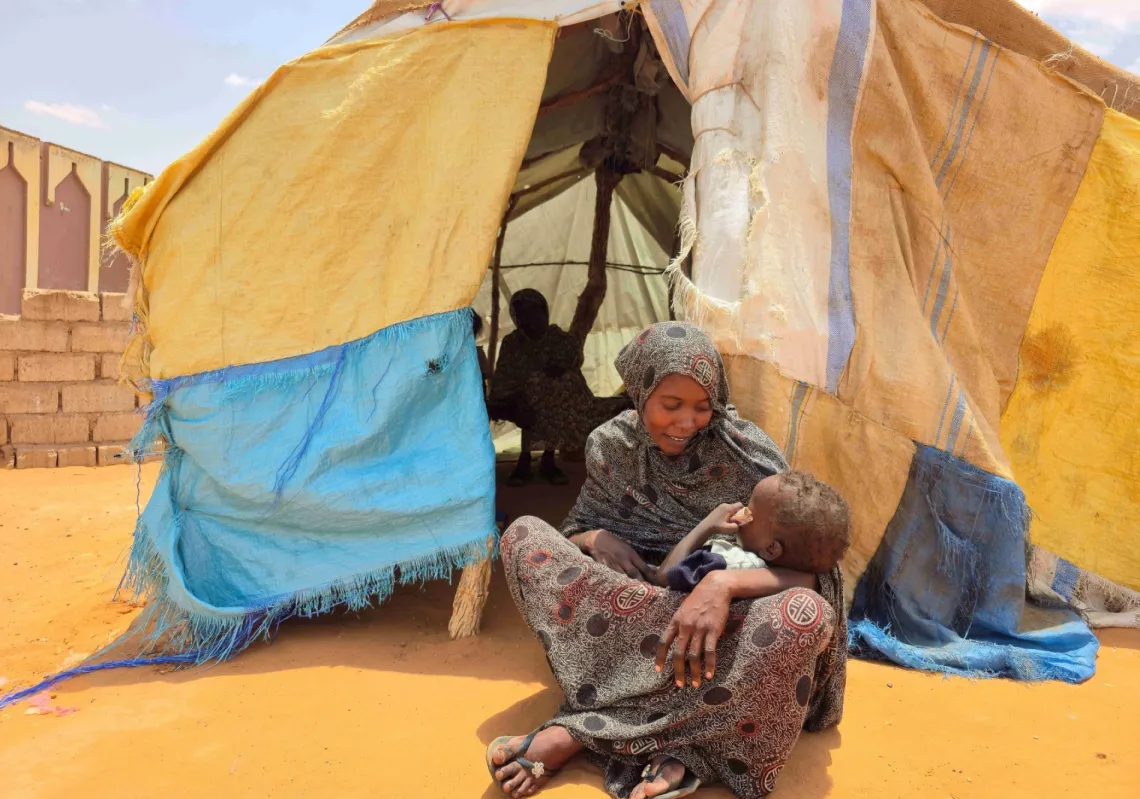
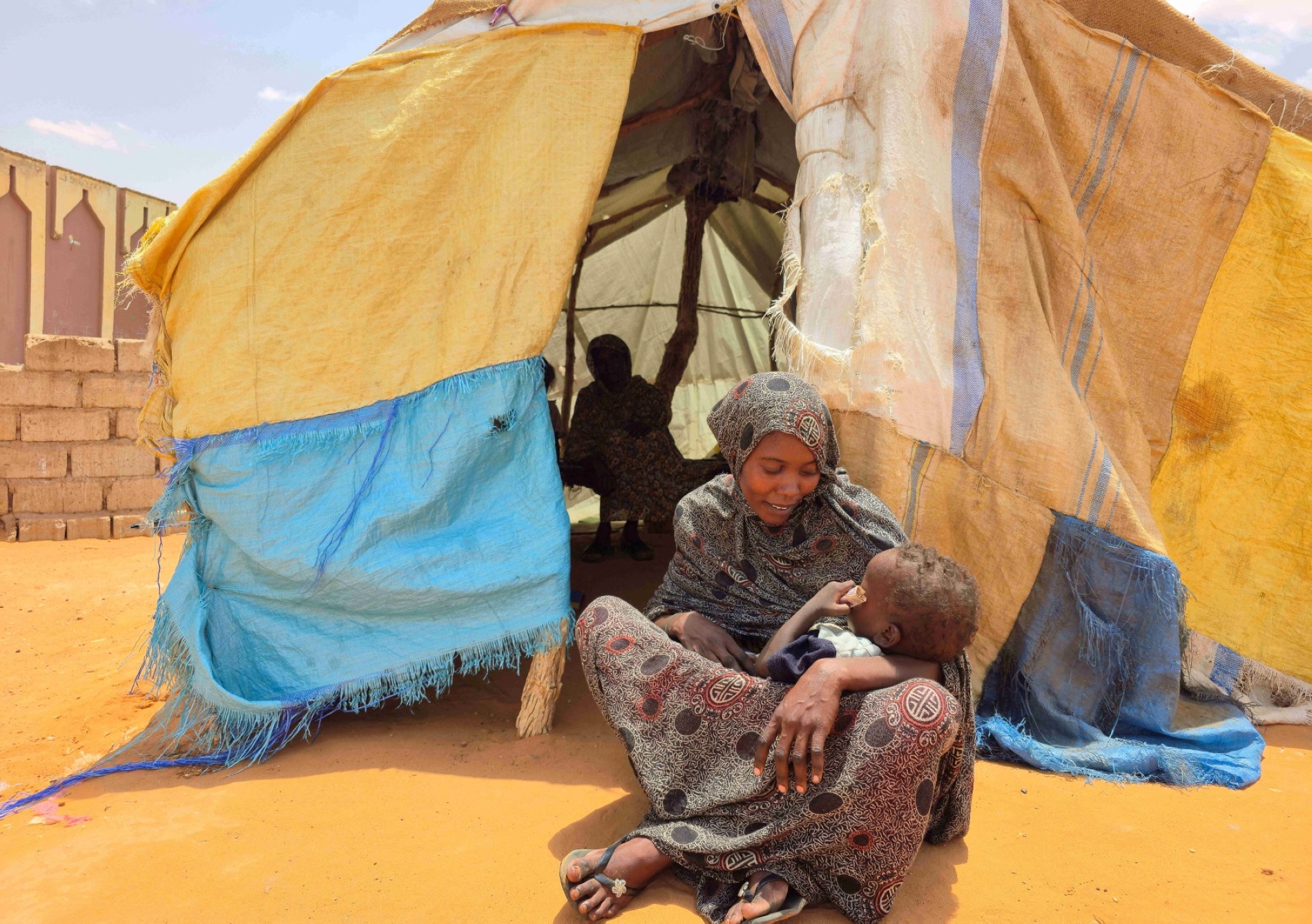
A Sudanese woman sits with her child at the Al-Rahmaniya camp for displaced persons, near the city of El Obeid in the South Kordofan region of Sudan, on 25 June 2026.

The next El Fasher

In El Obeid, where the RSF cannot storm the city, the siege is enforced by drones. The thermal power station was struck in January 2026, followed by the main transformer in June. This cast the city into darkness. Water pumps stopped working, and drones struck 18 health facilities in just a few weeks. The pattern is eerily consistent with El Fasher: starvation, darkness, then assault.

By contrast, the International Organisation for Migration has documented the return of nearly five million displaced people and refugees to areas retaken by the army. This is the 'voting with their feet' described by Charles Tiebout in A Pure Theory of Local Expenditures: when argument fails, movement reveals preference. People return to places where schools reopen, and birth certificates are issued.

The RSF drones that plunged El Obeid into darkness were not manufactured in Nyala. Since January 2024, the Panel of Experts has documented "credible" evidence that Abu Dhabi supplied it with weapons through Chad. This means that the conflict cannot be understood as a purely internal civil war, because it involves a state using force through an armed proxy operating inside another.

In Nicaragua in 1986, the International Court of Justice held that arming a group to fight within another state constituted an unlawful use of force. It reaffirmed the principle in Democratic Republic of the Congo v Uganda in 2005. Article 51 describes self-defence as an "inherent" right that predates the Charter, rather than derives from it. No resolution bestows that right, and no resolution can take it away.

Poorly learned lessons

In 1936, Britain and France established the Non-Intervention Committee during the Spanish Civil War. The principle appeared neutral: no weapons for either side. Yet the Republic was the recognised legitimate government, and like any sovereign state, it had the right to buy arms. The arrangement therefore suspended a right it already enjoyed, while Franco got planes and troops from Germany and Italy (both signatories to the same agreement). As a result, Spain fell under fascist rule for 36 years.

In September 1991, the UN Security Council imposed an arms embargo on all of Yugoslavia under Resolution 713, at Belgrade's own request. The text was geographically symmetrical, yet the federal army had one of the largest arsenals in Europe and an extensive military-industrial base, whereas Bosnia had nothing comparable, so it remained constrained by an embargo imposed on a state (Yugoslavia) that had ceased to exist by 1992. Bosnia argued that the embargo impaired its rights under Article 51, and the restrictions were eventually lifted, but not until 1996, when it was too late for Srebrenica. 

Andrej ISAKOVIC / AFP
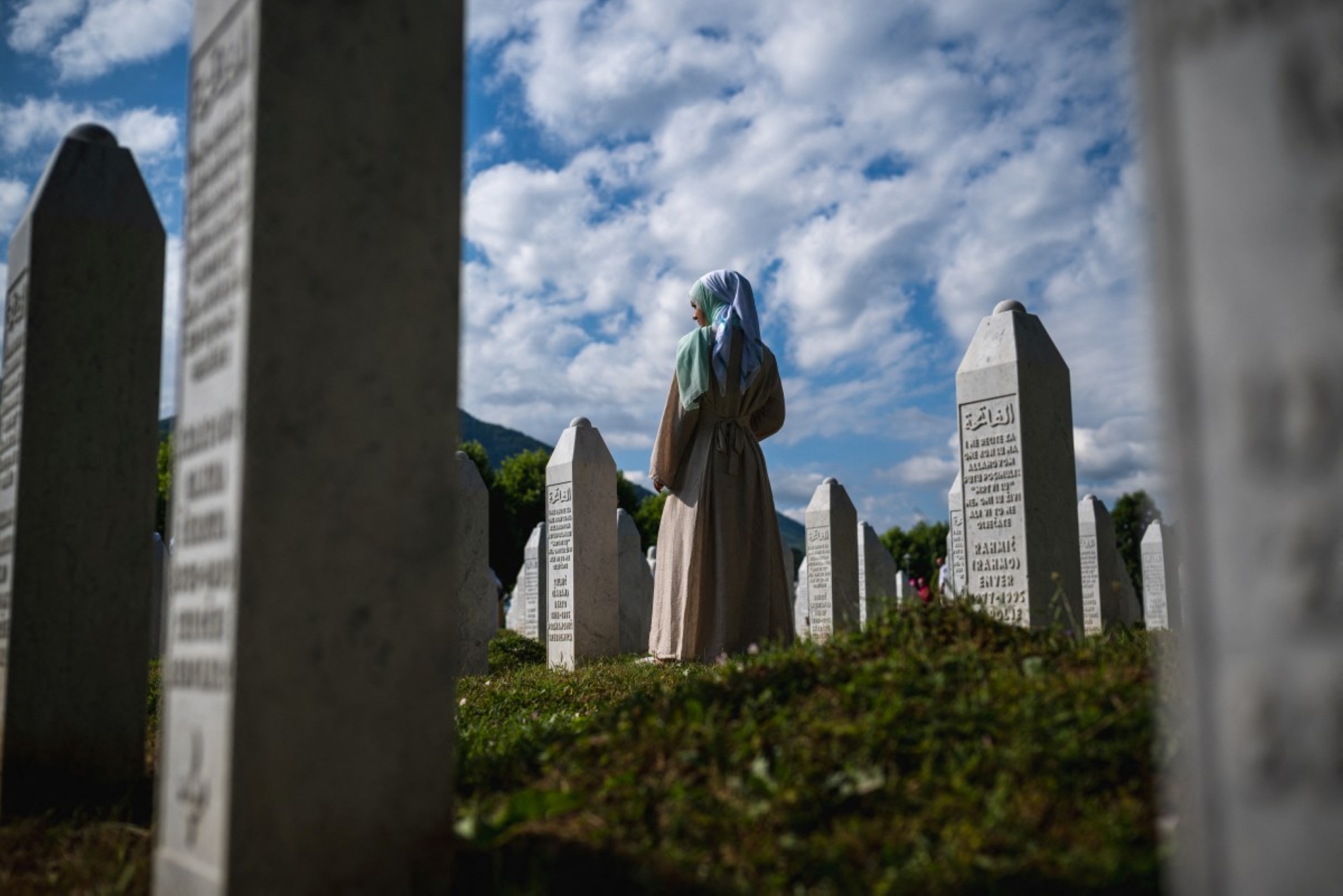
A woman stands in front of a gravestone at the memorial cemetery in the village of Potocari, near the eastern Bosnian town of Srebrenica, on 11 July 2025, on the 30th anniversary of the Srebrenica massacre.

While Boulos warns of drones and calls for their explicit inclusion in the embargo, the US government decided on 10 July 2026 to remove the UAE from country groups D:3 and D:4 under the Export Administration Regulations and reclassify it under group A:5. D:4 countries are subject to controls on missile technology and delivery systems, including drones. The UAE's removal therefore eases restrictions on support for Emirati drone programmes. Reclassification under A:5 also opens the door to broader arrangements under the Strategic Trade Authorisation for items subject to US export controls, meaning that the freedom extends to the technological and supply environment that underpins the UAE's drone capabilities.

The UK's record raises the same contradiction. Between 2020-24, it licensed more than $1bn in military exports to the UAE. Of this, $300mn was in aircraft (a category that includes helicopters and drones) while $150mn was in targeting and weapons-control systems. After 18 months of fighting in Sudan, the UK's arms exports to the UAE rose. London licensed $250mn in sales to Abu Dhabi in the final quarter of 2024, followed by $235mn in the second quarter of 2025. London cannot plead ignorance. UK records show that 21 of 22 individual export-licence applications involving the UAE were refused between 2015-24 because of the risk of diversion to a prohibited destination.

New prescription needed

Sudan does not need a new arms embargo; it needs the existing one enforced. The measures under Resolution 1591 should be extended on 12 September, with the Panel of Experts' mandate (which runs until 12 October) preserved in full. The renewal process cannot be used to engineer the paralysis of the sanctions regime.

Further, the centre of gravity must shift from geography to actors. States, intermediaries, carriers, and financiers should be pursued and listed, while supply routes should be subjected to mandatory inspection. Drones and their associated technologies must be incorporated into the embargo at the supply-chain level, not at the point of impact. End-user certification must be tightened, equipment marked and tracked, and re-exports verified.

Sudan does not need a new arms embargo; it needs the existing one enforced

The Panel of Experts should be empowered to investigate third countries and smuggling routes, publish the names of violators, and extend its mandate to cover the leakage of weapons into the Sahel and the Lake Chad Basin. Importantly, the legal distinction between the state and the militia must be preserved. That distinction grants no immunity; the state remains responsible for violations committed by its forces, and every attack on civilians must be investigated, but there is a fundamental difference between holding a state accountable and stripping it of the capacity to defend its citizens.

The Security Council faces two choices: stop the weapons at their source by confronting financiers, intermediaries, ports and licences (which means dealing with wealthy allies) or stop defence at its destination by targeting the only party with a legal address that can readily be punished (which just means elegant drafting). The second course amounts to neither neutrality nor gradualism or political realism. It is Swift's proposal in modern dress: a logic flawless in its internal consistency and wholly detached from the world it claims to repair.

When the history of this war is written, the Security Council will not be judged by what it said in session, but by what its text allowed to happen in the next El Fasher.

font change

Related Articles