Is Sudan heading for partition?

The establishment of the Tasis government, a governing authority in RSF-controlled territory, could be the first institutional building block of eventual secession

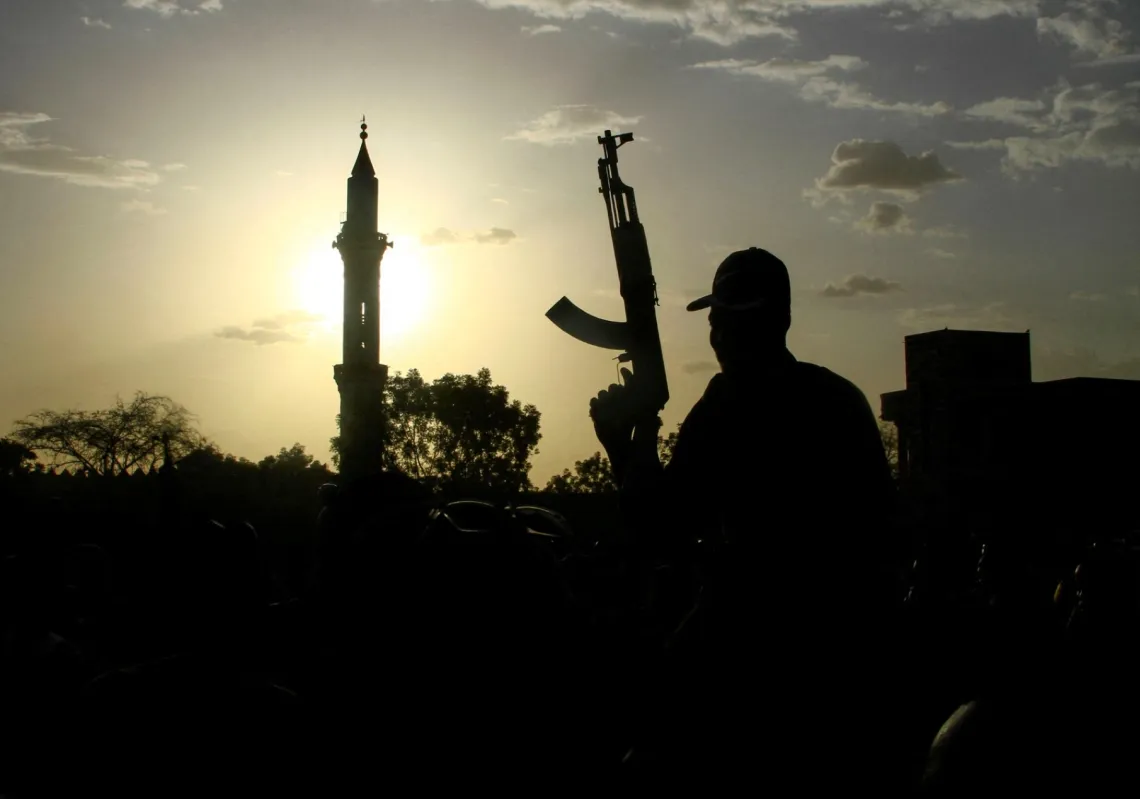
An armed defector from the Rapid Support Forces—believed to be on his way to surrender to the Sudanese Army in western Omdurman amidst the war between the Army and the RSF—arrives on 19 August 2026.
AFP
An armed defector from the Rapid Support Forces—believed to be on his way to surrender to the Sudanese Army in western Omdurman amidst the war between the Army and the RSF—arrives on 19 August 2026.

Is Sudan heading for partition?

Just over 15 years ago, on 9 July 2011, South Sudan declared its independence. Today, the spectre of partition looms over Sudan once again. Its western and south-western regions, controlled by the Rapid Support Forces (RSF), are pressing ever more forcefully towards separation. Fragmentation would have grave consequences.

The contest over sovereignty, legitimacy, and the right to represent the Sudanese people is a defining feature of the civil war that began in April 2023. The map of territorial control changes daily, but the RSF now claims virtually all of Darfur (apart from limited areas along the border with Chad) and, together with its ally, the Sudan People’s Liberation Movement (SPLM), holds extensive parts of North and South Kordofan.

The Sudanese Armed Forces (SAF) control east, north, and central Sudan, but the army's or central government's sovereignty over Sudanese territory is incomplete. Across vast areas, it has no authority. The civil war has thus evolved into a struggle between two governments: one in Khartoum, the other in Nyala, in the west. Sudan has now entered a state of administrative division that can no longer be denied, deepening fears that the country may once again fracture into two states. Some now openly advocate partition as the solution to the crisis.

Harnessing history

The RSF, both militarily and politically, has sought to capitalise on the long history of marginalisation endured by regions under their control. There is a bitter irony here, given that the RSF was originally created to suppress the armed movements that rebelled against former President Omar al-Bashir in response to precisely such marginalisation. The demand to reclaim political and economic rights has become a central element of RSF wartime discourse. The group uses this to encourage mobilisation.

Two developments have lent greater depth to this language of grievance. The first was the alliance between the RSF and the SPLM faction led by Abdelaziz al-Hilu, an armed movement that has spent two decades fighting to redress the marginalisation of communities in the Nuba Mountains. The alliance gave the RSF access to a language of political demands, co-opting credibility from elsewhere, even though the RSF was itself a creation of the former regime and had never made the grievances of the periphery its cause; instead, it had been an instrument of suppression.
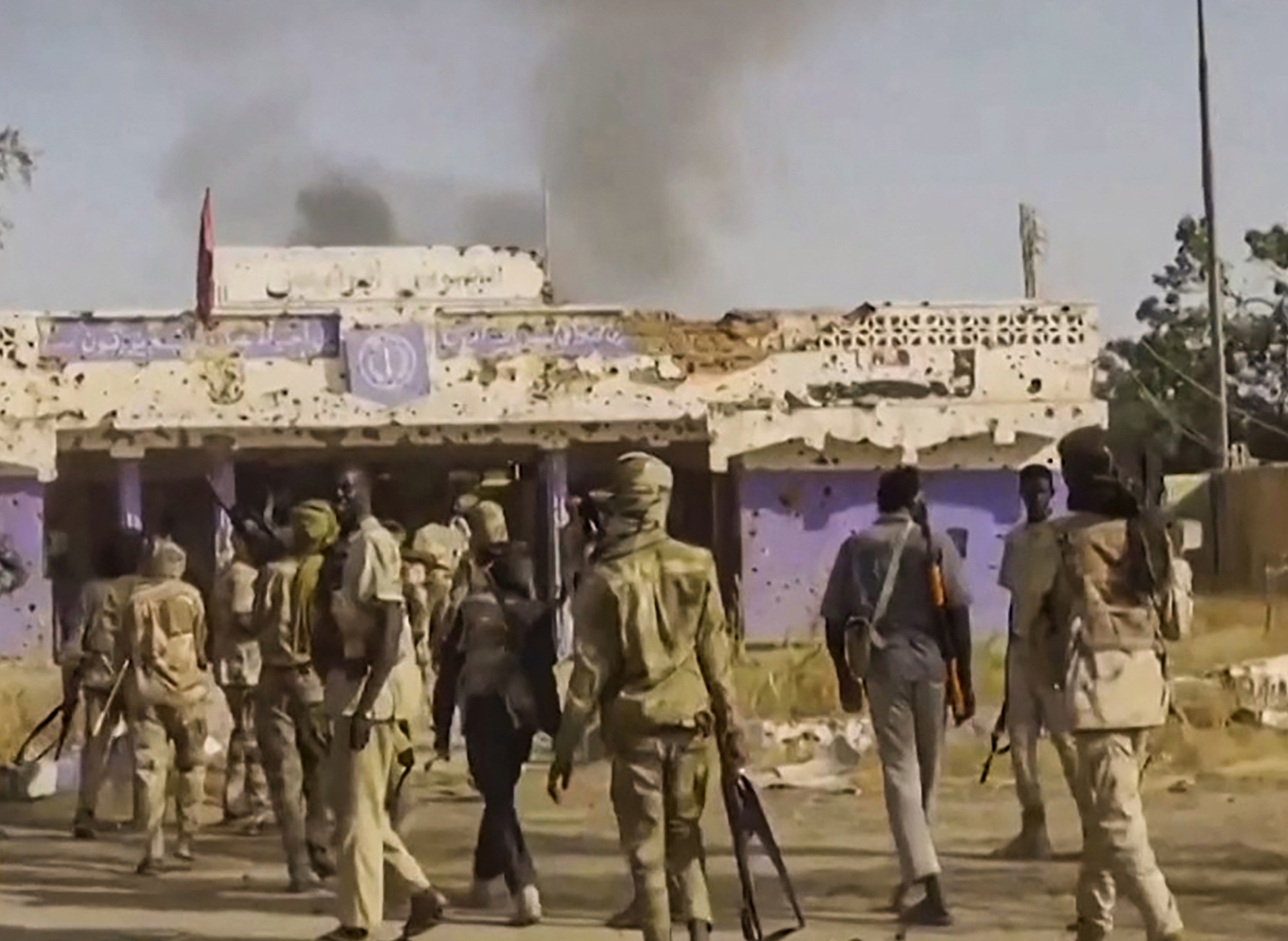
AFP
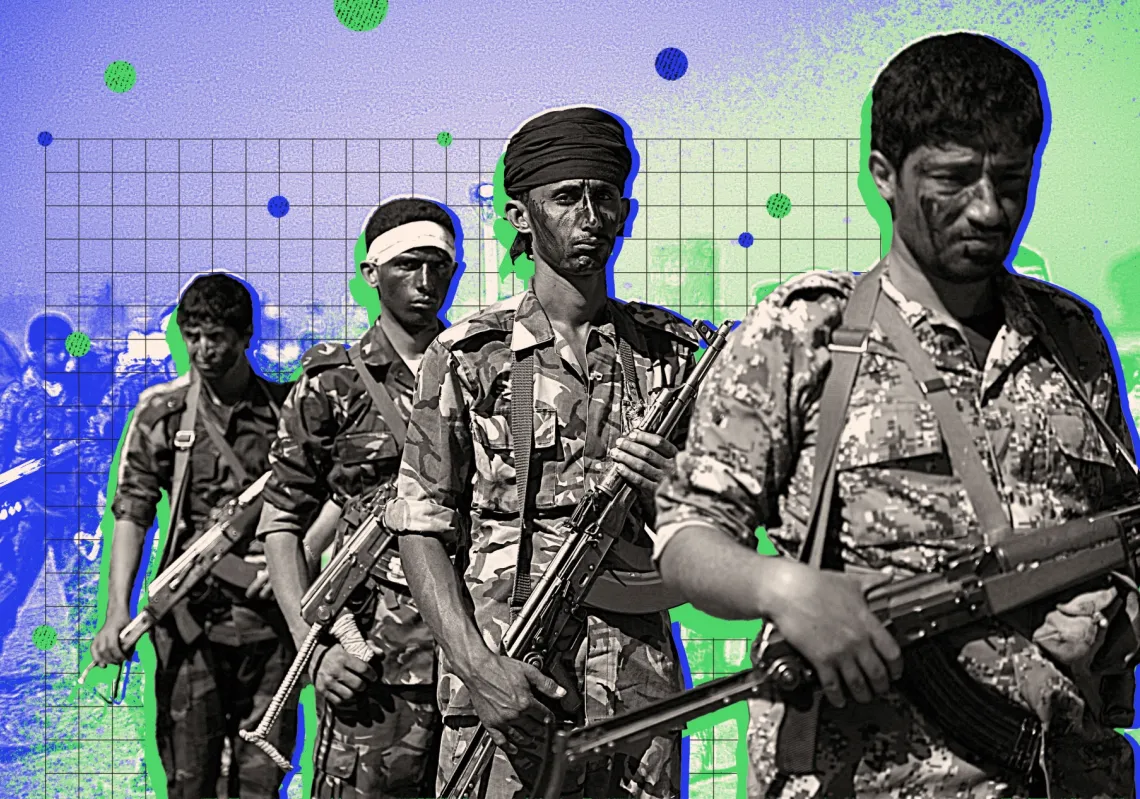
Fighters from the Rapid Support Forces (RSF) carry weapons and celebrate in the streets of El Fasher, Darfur, Sudan, on 26 October 2025.

The second development was the establishment of a governing authority in RSF-controlled territory, known as the Tasis government. It has institutions, administrative structures, and ministries that parallel those of the central government. The Tasis government therefore constitutes a form of administrative separation and could be the first institutional building block of eventual secession.

Al Majalla spoke to leaders in the Tasis government and to supporters of the RSF and SPLM, asking if they favoured Sudan’s partition. All supported Sudan’s unity, but conditioned that on ditching the old governance model, with a dominant centre dictating to underdeveloped, poverty-stricken peripheral regions. They criticised the idea that a narrow elite drawn from particular regions should be able to pass power and wealth among themselves. “The politics of the horse and rider must come to an end,” one said. If ruling elites were unwilling to change, people in Darfur and the Nuba Mountains would prefer to govern themselves, according to those Al Majalla spoke to.
If rejecting the old governance model means secession and partition, some Sudanese seem prepared to pay the price.

Numerous proposals have been advanced for a new system of government. Among them is decentralisation based on states that administer their own affairs and benefit first from their own resources, before the centre (based in the capital, Khartoum) swallows them up, as has happened throughout Sudan's modern history. Yet the civil war has created a new reality.

If rejecting the old governance model meant secession and partition, some seemed prepared to pay the price. This reflects the reality of the war, which is now the most geographically extensive in Sudan's history. Unlike others, this civil war erupted in the centre, rather than the periphery. The RSF has mounted the country's most powerful and sustained armed challenge to the authority of the Sudanese army. 

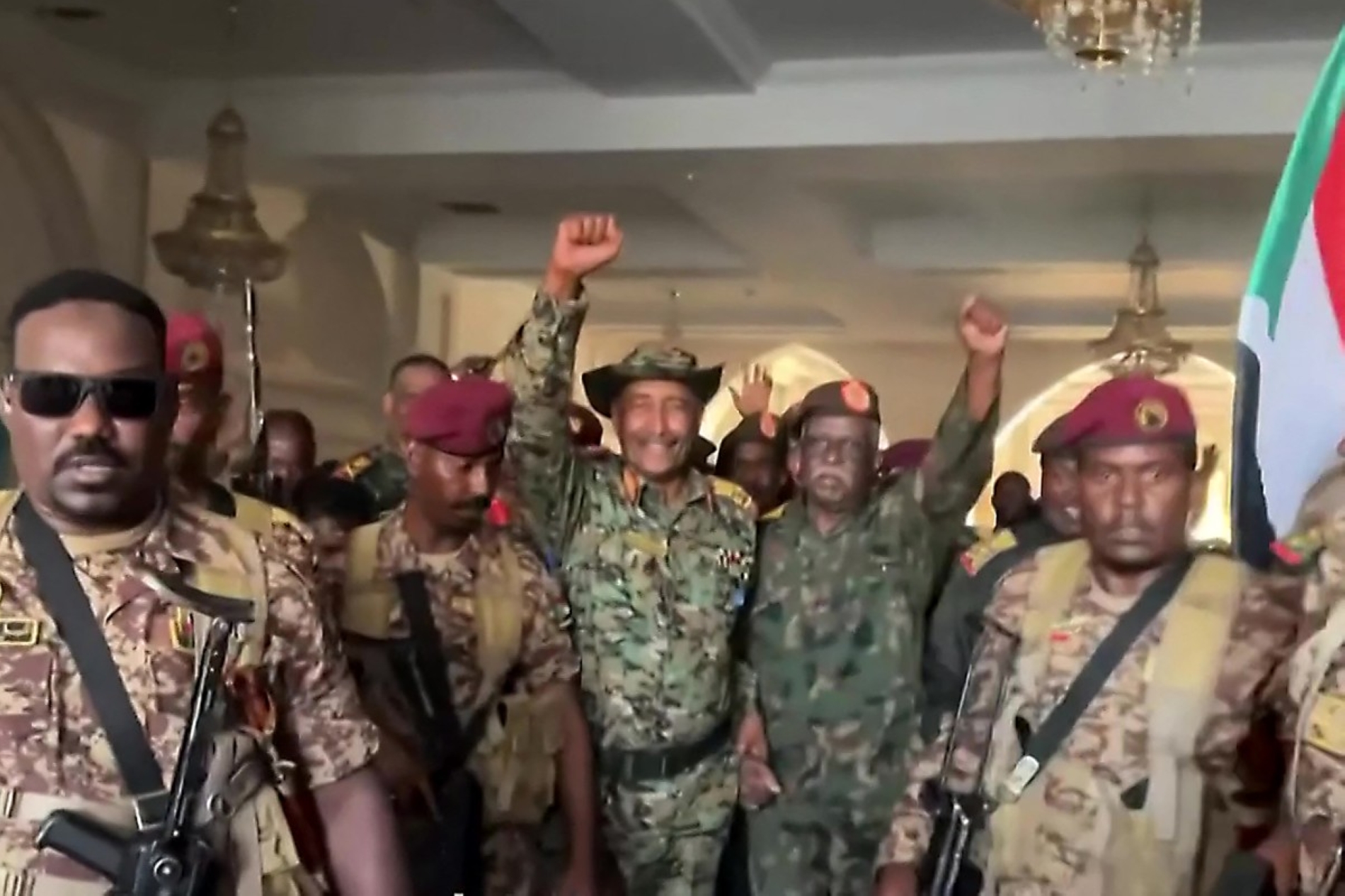
AFP
On 26 March 2025, Sudanese Army Commander Abdel Fattah al-Burhan arrived at the recaptured Presidential Palace in Khartoum, declaring the capital "free" of the Rapid Support Forces after nearly two years of war.

Spectre of partition

The war has forced many Sudanese, including politicians and civil society activists, to align themselves either with the army or the RSF. Both sides have promised their supporters a crushing victory. By adopting the rhetoric of war, politicians are entrenching the idea of partition. Those who reject war, including most of the Civil Democratic Alliance of the Revolutionary Forces (known as Sumoud), favour the unity of Sudan, but these anti-war forces (which have themselves splintered after disagreements) have limited influence over the course of the conflict.

Among the arguments advanced by Tasis is that civilians in Darfur and large parts of Kordofan have been deprived by the SAF of basic rights, including access to identity documents and education. They also argue that Darfuris were collectively treated as an RSF social constituency and subjected to SAF attacks. Such efforts to deepen Sudanese political and social tensions could culminate in separation and partition.

In a recent speech marking Army Day 2026, SAF commander Gen. Abdel Fattah al-Burhan announced an initiative for reconciliation and dialogue, but he said this did not extend to the RSF (or its Tasis political arm), whom he pledged to eliminate. It therefore appeared limited to his allies and those who reject war. Excluding those who control Darfur and Kordofan would amount to a stark entrenchment of division and invite a reaction, reinforcing the RSF areas' sense of marginalisation.

The army has given tacit approval to the use of racist and regionalist language against communities regarded as close to the RSF. This only aids those calling for secession and self-determination, mirroring the dynamic that took hold in South Sudan, whose citizens ultimately chose separation from the north and from the centre (Khartoum). The RSF also employs racist and regionalist language, which helps prepare the ground for the country's eventual division.

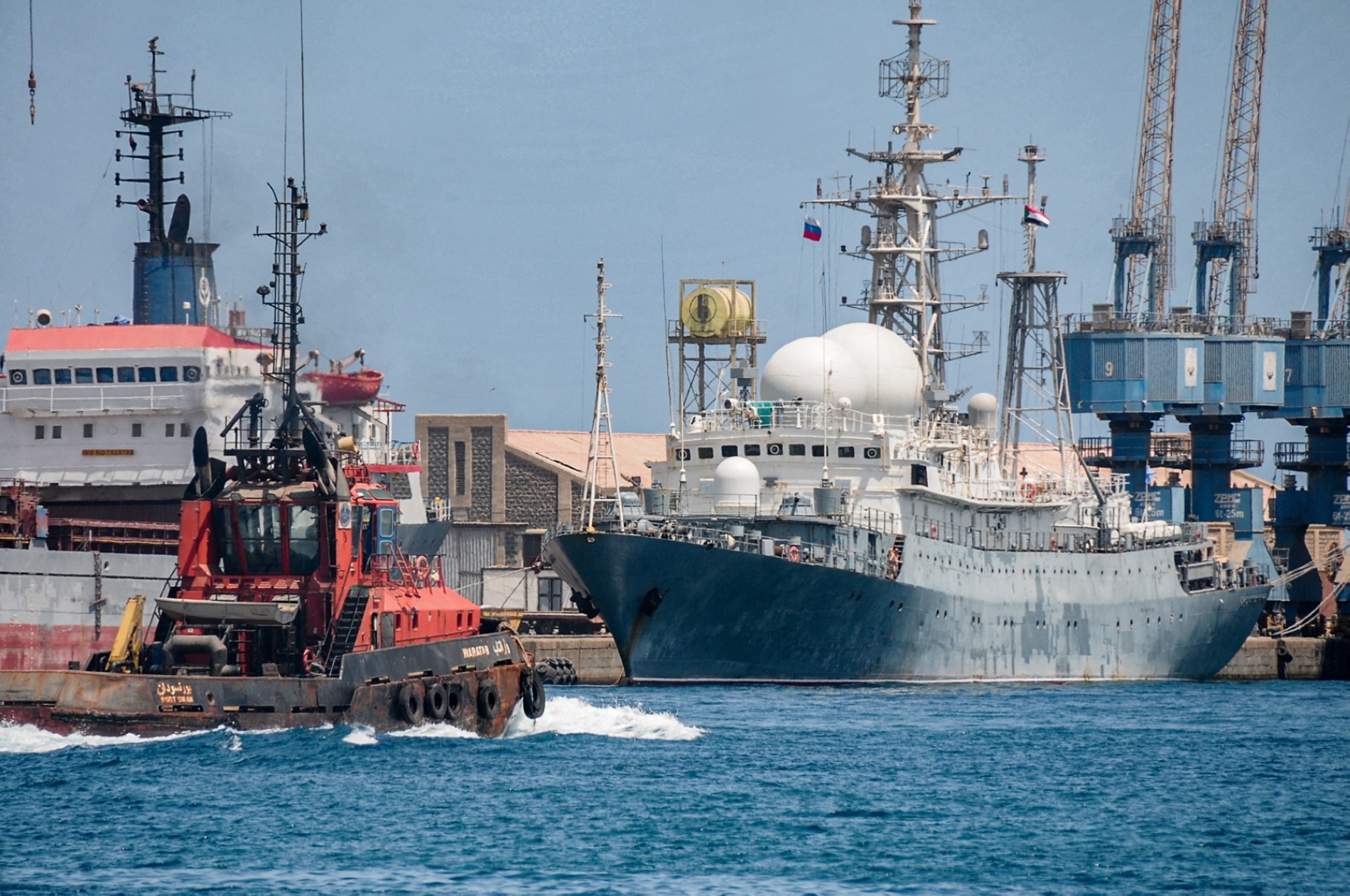
Ibrahim Ishaq / AFP
A Russian navy ship docked at the port of the Sudanese city of Port Sudan on 27 April 2021.

Incentives to split

Foreign intervention in Sudan's war is ongoing. States' interests are shaped above all by Sudan's geopolitical position. It borders eight countries across largely open natural frontiers, with a 1,000km Red Sea coastline. The sea is an increasingly important maritime corridor, given the recent closure of the Strait of Hormuz. Every state is guided by its own interests, whether Sudan fragments or remains united. Egypt, to Sudan's north, wants to secure its southern border. Countries to Sudan's west have overlapping tribal interests. Countries bordering the Red Sea want to safeguard navigation.

Sudan's neighbours are concerned about the prospect of partition given its consequences for security. If Sudan becomes a zone of chronic fragility, this could breed terrorism and fuel wider regional conflicts. Yet partition is a familiar outcome of armed conflict, with past examples throughout the world. The prospect of Sudan's breakup is closely tied to the war's outcome. The danger of secession can be averted only by ending the fighting and addressing its consequences, including the rhetoric of mobilisation, incitement, racism, and regionalism.

Some have an interest in the war continuing. Commanders, politicians, and businessmen aligned with the warring factions have acquired material and political stakes in the conflict. Their gains may even expand in the event of partition, particularly in western Sudan, a region rich in minerals with good agricultural land. These interests and networks of influence could cross borders.

To avoid partition, a danger that draws nearer every day, Sudan urgently needs a peace that rests on consensus and accommodates the interests of all sides. This cannot come from the outright victory of one party over the other. An outcome of that kind would leave the prospect of renewed war once the defeated side had recovered its strength.

South Sudan provides a warning. Fighting ceased for roughly a decade after the 1972 Addis Ababa Agreement, only to resume in 1983. That renewed war ended in secession. If Sudan is to avoid the same fate, it must reach political understandings broad enough to satisfy Sudanese society, address historical grievances, and open a genuine path towards reconciliation. Easier said than done.

font change