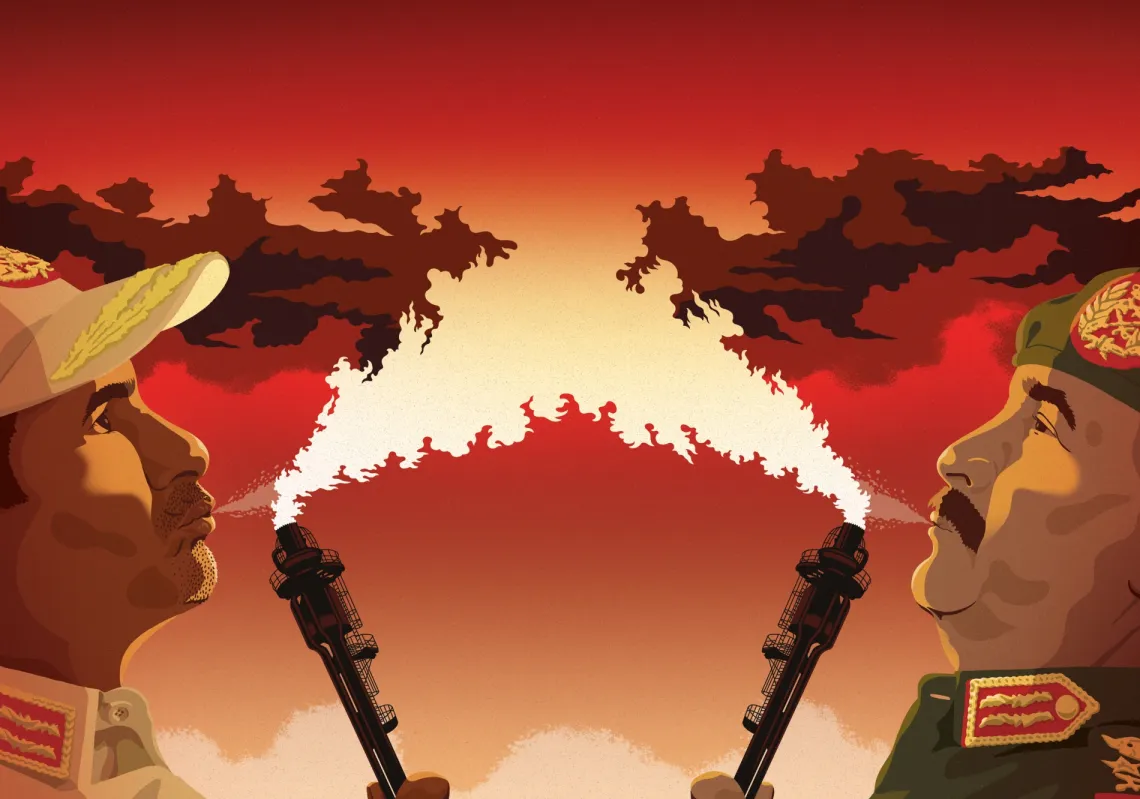
The army and the RSF rely on the assets at their disposal to sustain governance and fund their war efforts, while trying to win over the international community by seizing larger swathes of Sudan
Several factors contributed to the Sudanese Armed Forces finally reclaiming the country's capital from the RSF paramilitaries who seized it two years ago at the outbreak of civil war.
Establishing military peacekeeping missions has always been a fraught process, triggering discussions on sovereignty. But the Sudanese people need our help now before it's too late.
The world remains distracted by other conflicts and crisis, but with this large African country on the brink of famine and no end in sight to the fighting, there are warnings that Sudan could splinter
Emotionally-charged words from the RSF leader from the start of the war remain relevant in a country mired in five months of conflict, which must guard against past mistakes
Veteran Sudanese political and religious leader Al-Sayid Mohamed Othman al-Mirghani arrived in Khartoum from Egypt on Monday, throwing his clout against a possible agreement between pro-democracy…
The military and political tension between Sudan and Ethiopia has recently escalated amid an acceleration of events and growing internal conflict in Ethiopia.
Ethiopia’s recent escalation may be…
Recent reports in the US about the exploding African population, and future estimates of Africans becoming a third of the world population by 2100, mentioned the Sudanese capital Khartoum as one of…
While all the effects of this conflict may take time to fully realise, short and medium-term signs expose the limits of US power and see America's rivals benefiting
Closing the Strait of Hormuz has shown how the Gulf should shift from an oil-export model to a digital and distribution hub. Will this trigger the long-delayed free trade agreement with China?
Building on the ten-day ceasefire announced by US President Donald Trump, time will tell if these talks are a one-off or the beginning of a different path for Lebanon.
Egyptian heritage researcher Haytham Abu Zayd sheds light on how the art form grew, excelled, and then declined over the years and ends by offering a path to revival