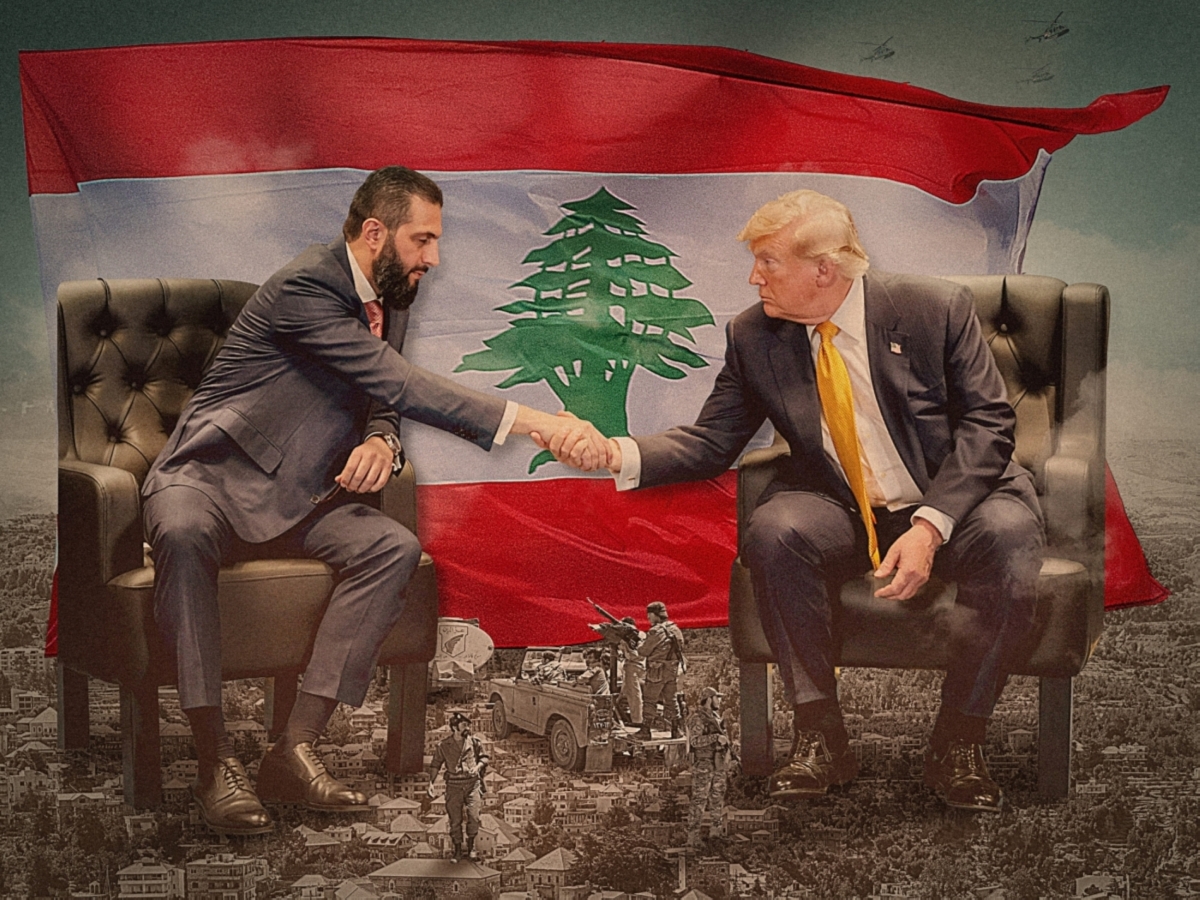
Is an Israel-Syria pincer attack on Hezbollah in the works?
The experience of Lebanon and Syria in the 1970s is more useful as an analytical lens for understanding the thinking behind US calls for al-Sharaa to intervene than as a practical blueprint for action
Al Majalla
Is an Israel-Syria pincer attack on Hezbollah in the works?
There was understandable intrigue raised by US President Donald Trump’s suggestion that the Syrian army may be best placed to disarm Hezbollah in Lebanon. Historians of the Middle East were quick to recall events half a century ago, when thousands of Syrian soldiers and scores of Syrian tanks crossed into Lebanon in 1976.
The White House had an ally (Israel) approaching Lebanon from the south (culminating in an invasion in 1978) and an amenable partner in Syria (thanks to the shuttle diplomacy of US envoy Henry Kissinger) coming from the north and east. For Lebanon and the armed Palestinian groups based there in the 1970s, this was a pincer movement. Is Washington contemplating a similar approach to Hezbollah in 2026?
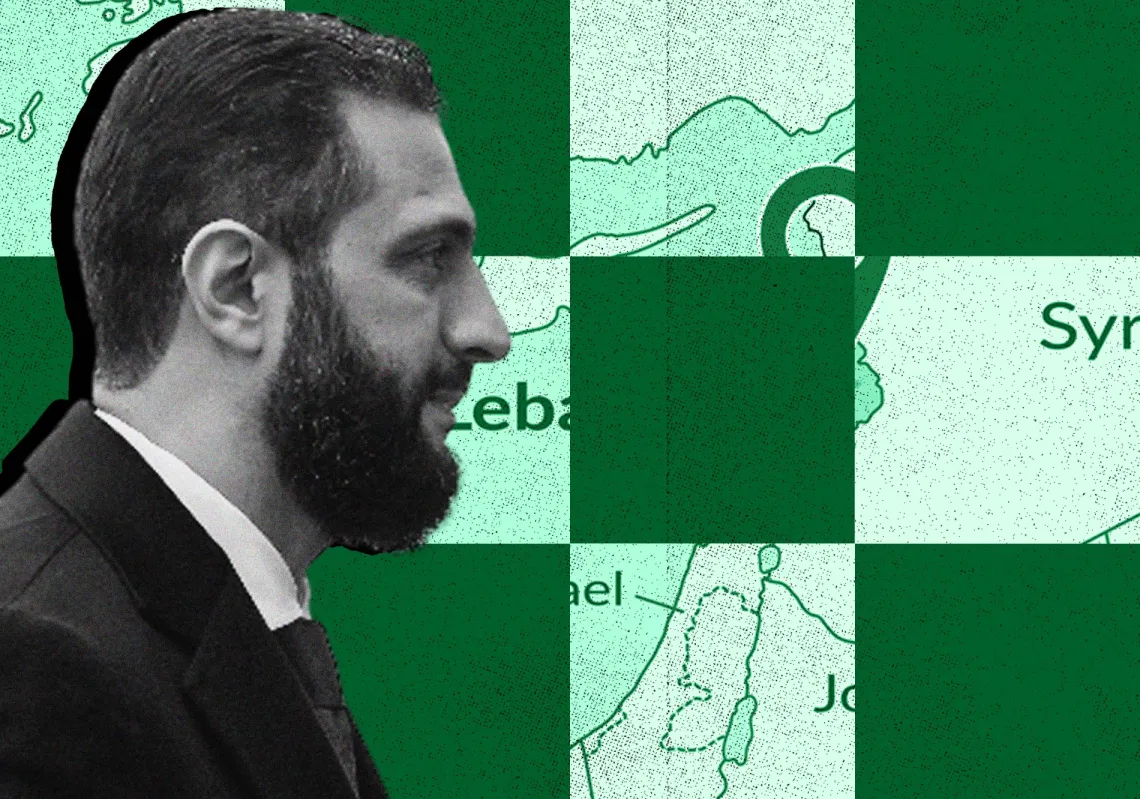
A literal replay of that historical period is not on the cards, given how much the political and military conditions have changed over time, but observers wonder whether some of its mechanisms may be adapted to the new regional context. For Washington, Hezbollah is the clearest embodiment of Iranian influence in the Levant, and Trump has formed a good relationship with Syria’s new interim president, Ahmed al-Sharaa. For the Americans, Syria may now be ‘repositioned’ and put to strategic use to encircle Iran’s principal proxy along two parallel axes: one Israeli, one Syrian.
Squeezing Arafat
Back in 1976, it is widely understood that Damascus gained America’s tacit approval to enter Lebanon militarily, where civil war had broken out a year earlier. Syrian troops had initially been urged in by the Christian militias, who were facing losses at the hands of the Palestinians and the secular socialist factions led by Druze leader Kamal Jumblatt. In 1978, Israel launched Operation Litani, its invasion of southern Lebanon with the stated aim of driving Palestinian fighters north to create a security belt by the border.
Yasser Arafat’s Palestine Liberation Organisation (PLO) found itself squeezed or ‘pincered’ between the Israelis from the south and the Syrians from the north and east. While the PLO had some initial success against the first Syrian advance in 1976, the tide soon turned. The consequences went far beyond the encirclement of the Palestinians, reshaping Lebanon’s political and military landscape for decades.
Türkiye will know that Syrian involvement in a proxy war with Iran could have far wider repercussions.
The relationship between Syria and the PLO was not black-or-white; at times they cooperated, and at others they clashed. But when the Syrian army invaded Lebanon, fighting broke out, culminating in the battle for the Palestinian refugee camp of Tel al-Zaatar east of Beirut. This illustrated the complexity of the relationship, with Syrian forces directing the camp's siege, and ultimately its fall. The assassination of Jumblatt, a Palestinian ally, in March 1977 further complicated matters, and the PLO's presence in Lebanon became increasingly fragile.
Damascus assumed a bigger role in managing Lebanon's internal balances as the civil war continued and saw the Palestinian factions as something to be contained. Israel's 1979 peace treaty with Egypt ushered in a new reality. Israel was gradually being freed from the constraints imposed by Arab unity. It prompted Damascus to recalibrate its relationship with the Palestinians. As the 1982 Israeli full-blooded invasion of Lebanon approached, Syrian and Palestinian interests converged.
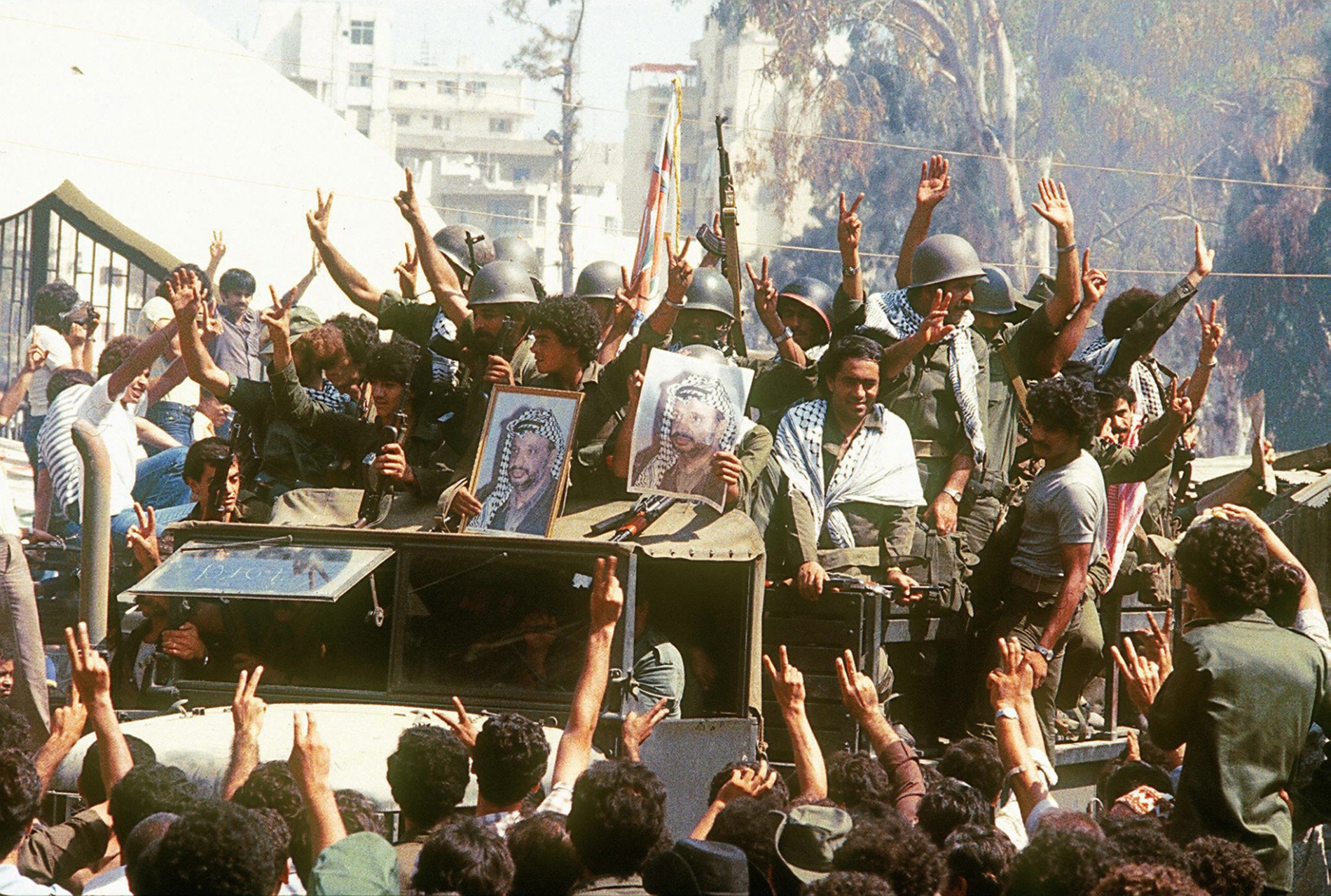
Both sought to confront Israel, though Syria continued to operate according to its own calculations. Syrian President Hafez al-Assad feared that an Israeli occupation of Beirut might be a stepping stone to Damascus, so he ordered an increase in support for the militias in Lebanon, until the Israeli army withdrew from Beirut and Palestinian fighters left for Tunisia. This changed the equation again, and when Yasser Arafat later tried to return to Lebanon through Tripoli, his one-time ally Assad forced him out in another evocation of the pincer strategy.
Palestinian fighters raise the victory sign and carry pictures of Yasser Arafat, on a military truck as they leave Beirut for Tunisia, on 22 August 1982.
Different landscape
Today, Syria and Lebanon are very different countries. The Assad regime is no longer, and Hezbollah (which did not exist in the 1970s) is a dominant player in Lebanon. The Syrian army of 2026 is still in a formative phase, after commencing a complete rebuild early last year, so it lacks the organisational structure and cohesion of Hafez al-Assad's forces in the 1970s, and its capacity to deploy to Lebanon is uncertain. Any prospective Syrian operation inside Lebanon may require local assistance, which in turn would carry considerable security risks, not least those posed by infiltration. Syria's supply lines and the security of its troop movement could both be targeted.
Perhaps the most consequential factor in this complex picture is Türkiye, which was simply not a factor 50 years ago. In 2026, however, Turkish support for the new Syrian regime is evident and deep. Likewise, Türkiye's regional rivalry with Israel is well-known and firmly embedded. Ankara is supporting the rehabilitation of Syria's new army with training, but that support does not necessarily imply a willingness to provide political and military cover for Syrian intervention in Lebanon.
For years, Ankara has emphasised managing problems to avoid escalation and conflict. It understands that Syrian involvement in a proxy war with Iran could have far wider repercussions, and is also deeply suspicious of Israeli intentions in Syria and Lebanon, yet it knows that Israel is a key ally of the United States and of President Donald Trump, as is Türkiye's President Recep Tayyip Erdoğan.
Ankara is therefore trying to preserve a delicate balance among several competing considerations. Keen to avoid friction with Washington, it nevertheless regards Israel's creeping reach in Syria and Lebanon unfavourably, and seeks to avoid an open confrontation with Iran and its regional allies (such as Hezbollah). Israel's bombing of Abu al-Duhur airbase in the Syrian province of Idlib on 18 August therefore assumes particular significance.
The airfield is relatively close to the Turkish border. Israeli leaks indicated that the attacks were aimed at disrupting efforts to rehabilitate the Syrian air force with Turkish assistance. Israeli Prime Minister Benjamin Netanyahu's office later said Israel would not allow any Turkish military deployment in Syria.
The strikes, which may have had prior approval in Washington (as Israeli officials have hinted), are seen as a message to both Erdoğan and Syrian President Ahmed al-Sharaa. They may even have been intended to exert further pressure on Damascus to adopt a clearer position in its dealings with Hezbollah. Israel wants to shape the security environment inside Syria and is drawing its red lines for Türkiye.
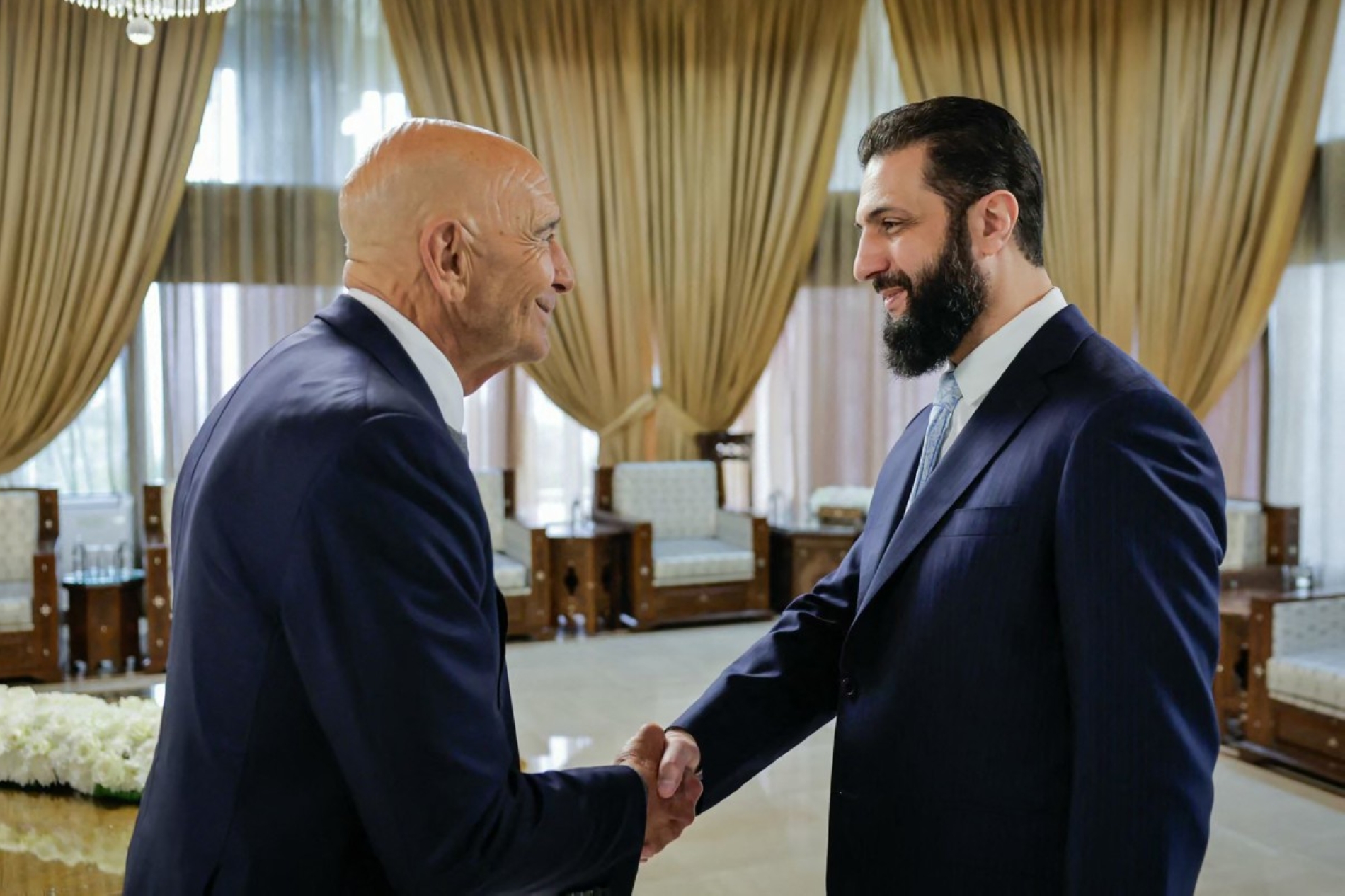
Syrian President Ahmed al-Sharaa and US envoy Tom Barrack at the presidential palace in Damascus on 18 January 2026.
Where does Washington stand in all this? Senior US envoy Tom Barrack recently said his country was working on a mechanism to prevent war between Israel, Türkiye, and Syria. Al-Sharaa is understood to have relayed Syria's progress in stopping Iranian equipment supplies to Hezbollah via Syria to Donald Trump. The question is whether Washington considers such measures sufficient. Will Trump see the severing of Hezbollah's supply lines as an adequate objective, or does he genuinely seek a more extensive Syrian role inside Lebanese territory?
A shifting strategy
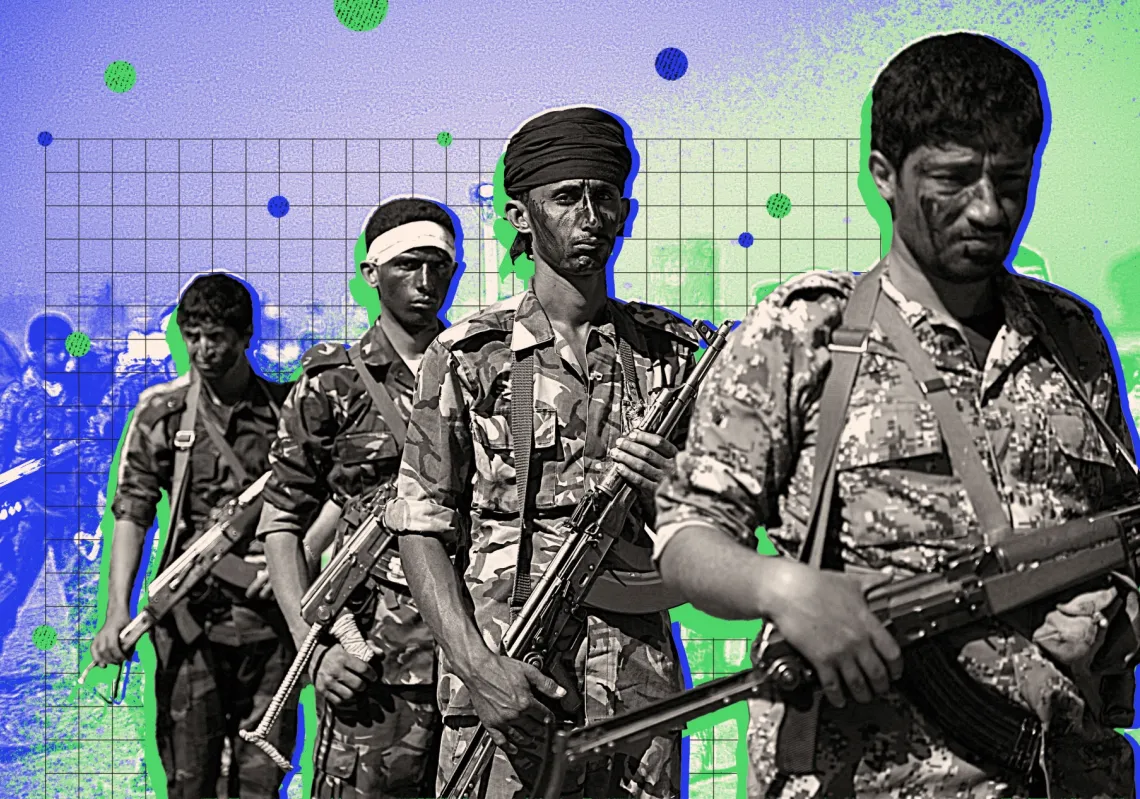
Following Iran's truce with the US in April, some see signs of a shift in Iranian strategy, from a defensive outlook to an offensive posture. Iran-allied groups in Yemen and Iraq have increased their activity and attacks in recent weeks, as the US continues its blockade of Iranian ports, and this strategy may soon extend to Syria, where Iran has the assets to cause trouble along the long Syria-Iraq border (using its Iraqi-based militias) and along the Syria-Lebanon border (using Hezbollah).
Whether Tehran would push its allies in the Levant into a pre-emptive attack on the Syrian army is another matter. Unverified reports suggest that Iran has informed several regional capitals, including Ankara and Riyadh, that it may strike strategic sites in Syria if Damascus decides to intervene against pro-Iranian groups in Iraq or Lebanon. Other reports suggest Iranian military mobilisation inside Iraq.
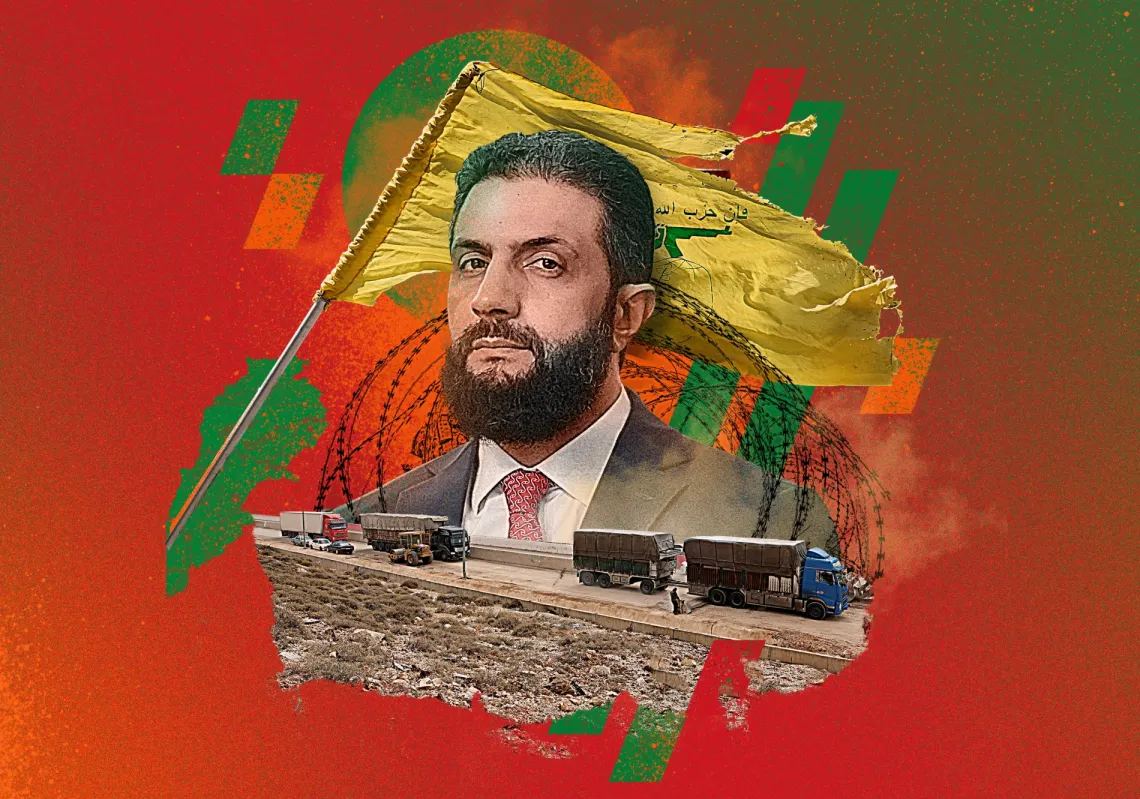
Hezbollah has been weakened by sustained Israeli strikes targeting its military infrastructure and leadership, so its ability to take on the Syrian army is uncertain, but military reinforcements are nevertheless believed to have been dispatched by Hezbollah towards the Bekaa Valley and the Lebanon-Syria border.
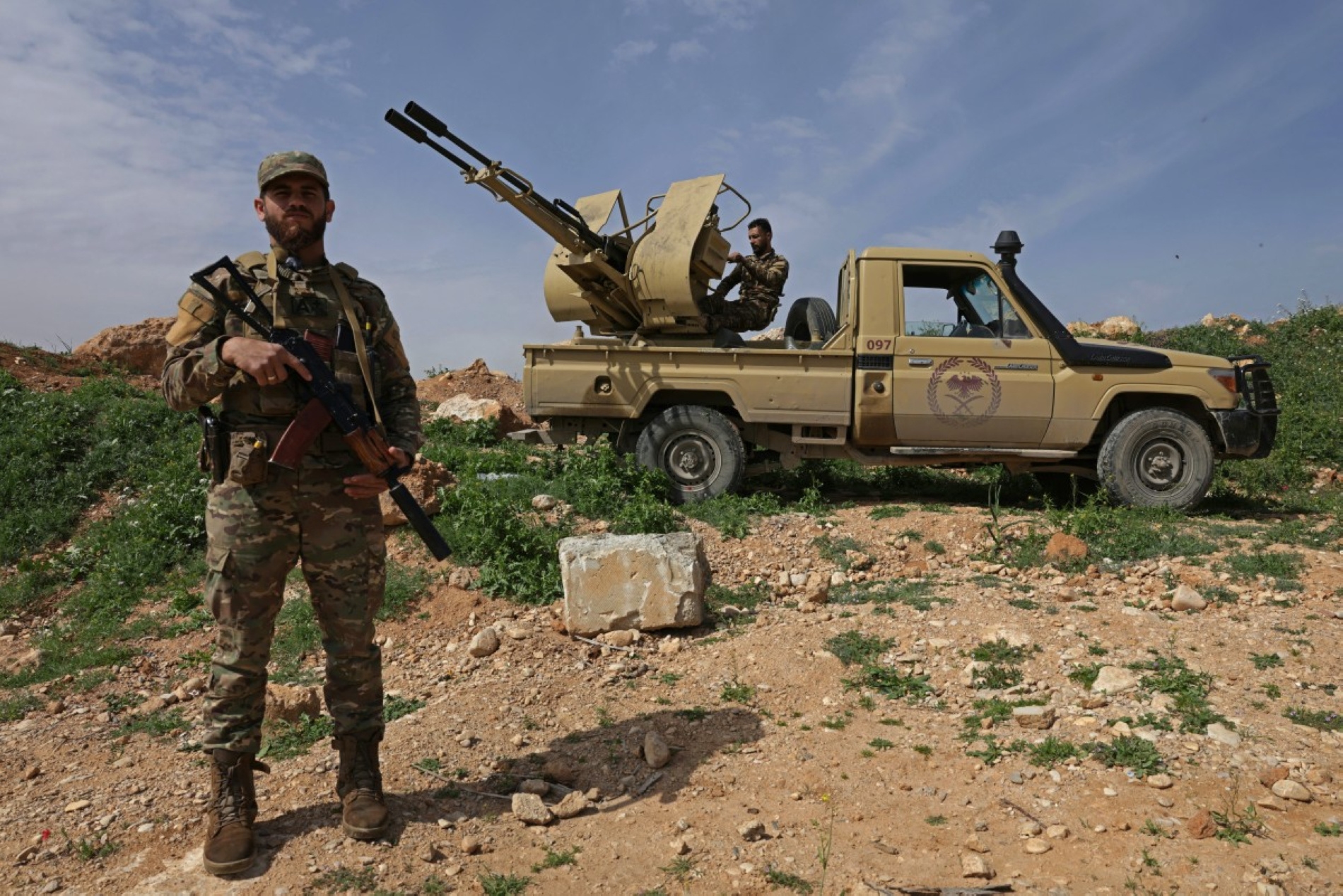
A Syrian army soldier stands guard next to an armoured vehicle positioned along the Syrian–Lebanese border in the rural area of Al Qusayr on 1 April 2026.
Potential scenarios
The region's militaries will be scenario-planning. Any Hezbollah-Syria confrontation would present Israel with a choice: expand its own operations against Hezbollah inside Lebanon, or help Syrian forces do so. Another possible scenario is direct Iranian strikes against Syria. This would change the nature of the conflict entirely—from a battle over supply lines to a battle for Syria itself.
It is not known whether Iran would be prepared to attack the 'new Syria', nor how far the US and others may go in defending Damascus. Some regional capitals regard any Iranian attack on Syria as an attempt to turn the clock back, prompting them to provide support, but American commitment to defending Syria would be tested, while its main ally, Israel, would face a complex strategic dilemma of its own. Israel sees Syria as a potential threat, but may quietly agree to coordinate with al-Sharaa's government under US auspices for pragmatic reasons.
The debate about Syrian intervention in Lebanon is therefore to some extent also a debate about Syria's future and its place in the new regional order. Some feel that its border with Lebanon could become a flashpoint— the point at which the Iranian project meets the wider regional perspective. Having invested in its interests for decades, Iran will be hugely reluctant to allow the collapse of its network of influence.
If Syria attacks Hezbollah in Lebanon and Iran attacks Syria in return, the conflict's nature will entirely change—from a battle over supply lines to a battle for Syria itself.
The experience of Lebanon and Syria in the 1970s is more useful as an analytical lens for understanding the thinking behind US calls for al-Sharaa to intervene in Lebanon than as a practical blueprint to be reproduced in 2026. The environment has changed, as has the structure of the Syrian state and the balance of power within Lebanon.
Yet 20 months after the Assad regime was finally removed, Syria is once again assuming a central place in the struggle to reshape the Middle East. Its future cannot be fully separated from Lebanon or from the Iran-Israel war. Syrian military intervention against Hezbollah remains one of the region's most complex issues. The last thing Lebanon, Syria, or the Middle East needs now is another war. Others may see the benefits in a fight. Who wins the battle of wills could determine more than a border.