
Microdrama series are rapidly reshaping the entertainment landscape. Their rise has been accelerated by Artificial Intelligence (AI), which makes it easier than ever to produce content using ready-made templates and formulaic storytelling. The result is an almost limitless capacity for production, but also urgent questions about artistic authenticity and creativity in an age defined by speed, convenience, and prefabricated forms.
Microdramas are scripted, short-form vertical series that first appeared in China before spreading through platforms such as Instagram and TikTok. Also known as ‘vertical dramas’—a name derived from their 9:16 frame ratio—they are designed specifically for mobile viewing and are heavily commercialised.
Technically, dramatically, and in terms of marketing, they are governed almost entirely by commercial considerations. Their subjects, for example, must assume a melodramatic character, with emotion placed above all else.
They also draw on clearly defined cinematic genres, such as romantic comedy, family melodrama, and suspense. Episodes usually last between one and three minutes. Product placement is also built into the form, with goods marketed throughout the episode by being incorporated into the scene itself.

Ultimately, microdrama platforms depend heavily on scale, with a large slate of series helping them to maximise the chance of breakout hits, even as quality and retention remain essential to sustained growth. Their target audiences are Generation Z (those born between 1997 and 2012) and younger adults, who are drawn to short, mobile-first stories built around rapid pacing and emotional hooks.
The impatient viewer
Since art is more closely allied with experimentation than with rejection or denial, every new medium and technology should be approached with a spirit of understanding rather than outright refusal. Nor should the culture of an entire generation be patronised or stigmatised. The challenge, instead, is to find a way of adapting that allows innovation and artistic integrity to coexist.
However pessimistic or sceptical an artist may be about microdramas and AI, such views will not alter reality, for progress has a habit of imposing itself. History also shows that technological change can be harnessed in the service of art. It is no enemy of the artist, except perhaps one whose horizons are narrow.
The problem, however, lies elsewhere, with the element that matters most: the viewer. Nor is the contemporary viewer confined to the youngest generations. Older audiences, too, have succumbed to the same impatience. Increasingly, viewers struggle to sit through a two-hour film, however enjoyable it may be.
Accordingly, we have begun to see the same reactions to films, even commercial, productions designed for mass appeal. What fate, then, awaits art films so often described as ‘slow’? By today’s standards, even the thought of screening them can seem risky, given how audiences might respond. The familiar complaints soon follow: ‘boring’, ‘monotonous’, ‘pretentious’, and ‘pointless’. Yet this revives an old question: are ‘slow’ films truly slow, and what do we mean by ‘slow’ in the first place?
Slow cinema and fast cinema
In his book The Major Film Theories, the theorist and critic J. Dudley Andrew argues that cinematic rhythm within a scene passes through three stages. The first is the viewer’s recognition of the scene’s nature, its characters, and its elements. The second is the grasping of meaning, by which the viewer understands the scene’s purpose and its place within the plot. Then comes the third stage: the decline of attention, which Andrew describes as the point at which the scene no longer offers the viewer anything new. At that moment, Andrew believes, the cut becomes necessary, carrying the film into the next scene before the viewer lapses into boredom.
From Andrew’s formulation, cinematic rhythm is measured neither by the speed of camera movement, the pace of montage cutting, nor even the length of a scene. Rather, it is an intellectual process, shaped by the components of the shot and the scene, and to the way meaning unfolds for the viewer.
Strictly speaking, then, there are no ‘slow’ of ‘fast’ films, only films with slower or faster rhythms. That rhythm is determined not by technique alone, but by meaning itself and by the manner of its gradual disclosure.
In Stalker, by the Russian director Andrei Tarkovsky, one scene is often criticised for its excessive length. Lasting around 15 minutes, almost nothing happens. We see a medium shot, then a close-up of the Stalker’s face, as he moves deeper into a strange territory known as the ‘Zone’ on a trolley travelling along an old railway track. Nothing new occurs until the trolley stops.
In The Turin Horse, the final film by the late Hungarian director Béla Tarr, we see an old man driving his horse while a narrator recounts the story of the German philosopher Friedrich Nietzsche and the crisis of the Turin horse. For six minutes, almost nothing changes in either the image or the plot.
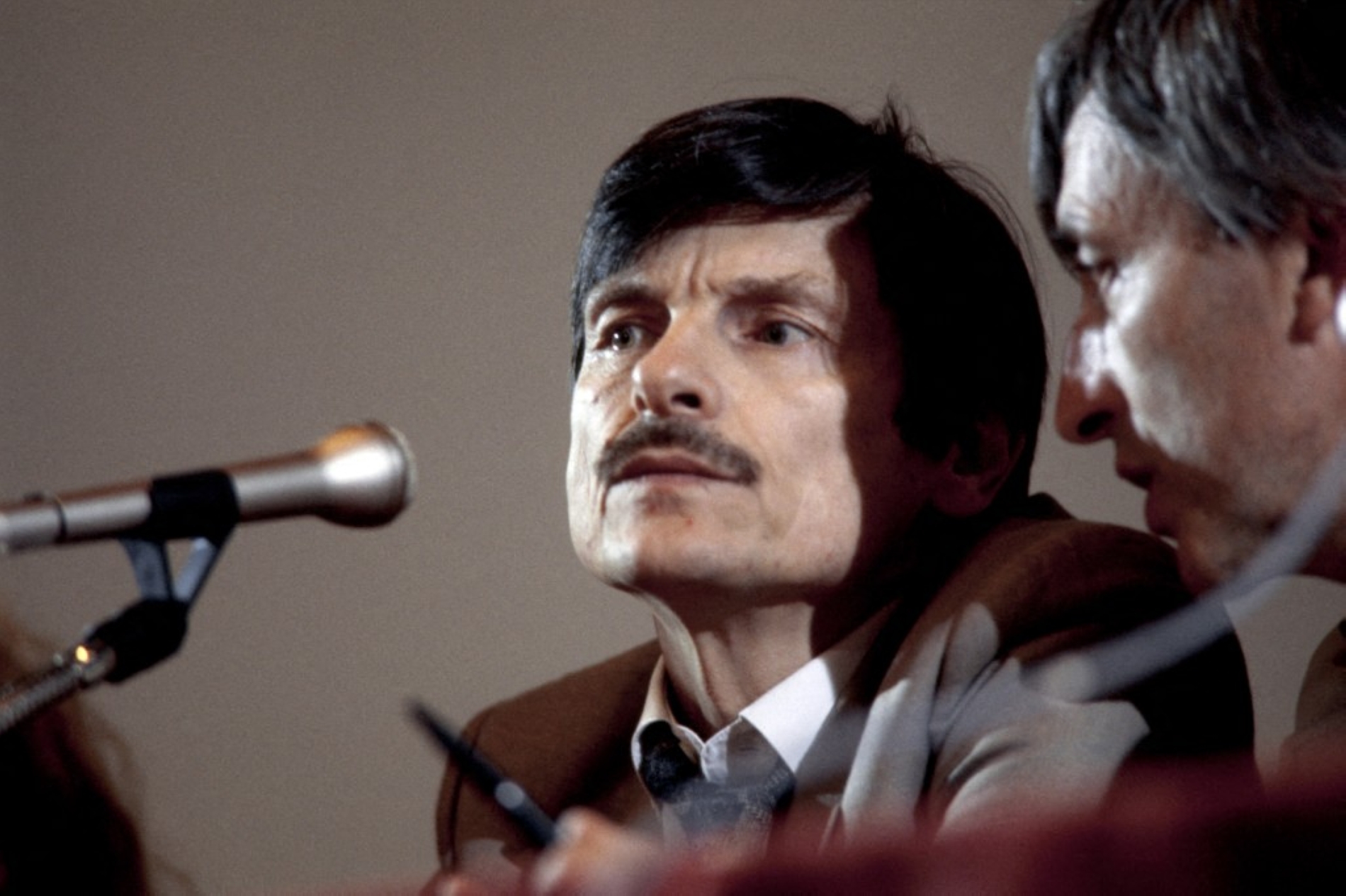
A third example comes from Eternity and a Day, by the Greek director Theo Angelopoulos. As Alexander walks with the young Albanian boy who accompanies him throughout the film, their conversation about an Italian poet gives way to an extended encounter with the poet himself. Past and present momentarily collapse into one another.
What do these three scenes have in common, and is there any difference between them? The familiar answer is that such scenes exist ‘so that the viewer may feel real time’. Yet that answer is reductive and ultimately incomplete.
The philosophy of slowness
Modernist cinema emerged as a response to the aftermath of the Second World War, giving rise, especially in Europe, to individual voices and styles that expressed the vision of the auteur in contrast to genre cinema. Genre films rely on familiar, predetermined narrative formulas designed to capture the viewer’s attention, their primary purpose being commercial.
By contrast, auteur cinema was less concerned with the viewer than with discourse itself: its nature, its texture, and the manner of its formation. Accordingly, the post-war period witnessed a marked interest in theories of discourse, whether in cinema or literature, while theories of reception did not attract comparable attention until the late1960s. Modernist cinema positioned itself against classical cinema. Its pioneers moved away from traditional themes towards contemplation of the nature of things and of the world, while its style developed a slower rhythm and its structure rejected the familiar three-act form.
This become a defining characteristic of directors such as Tarkovsky, Angelopoulos, and Béla Tarr belong, whose films favour slow rhythm, scant information, and plots that unfold gradually. Outwardly, at least, one might argue that the essence of modernist cinema lies in the ‘decline of attention’.
A return to Andrew, however, reveals something new: his condition is less concerned with information than with signification. If we look again at the three scenes, we find meanings that unfold gradually. These are chiefly psychological, rooted in the inner lives of the characters and in time itself, the cornerstone of modernist cinema.
Time, in scenes such as the Stalker’s entry into the Zone, or even the old man driving his horse in The Turin Horse, is ‘total’ rather than sequential or linear. It is time in the Hegelian sense, in which past and present converge into a single moment. This is even more apparent in Alexander’s encounter with the poet in Eternity and a Day.
Accordingly, ‘slowness’ becomes the means by which that experience of time is expressed. It is psychological because it is bound to the inner lives of the characters. Béla Tarr’s old man, Tarkovsky’s wanderer and woman, and Alexander are all trapped in the past, clinging to a particular moment within it. They exist in the present but cannot fully inhabit it, even as life compels them to interact with the world around them.
The slowed apprehension of the external world thus becomes a gateway to their inner rhythm, preventing them from keeping pace with the present or engaging with it naturally. Across modernist cinema, such figures recur: neurotics and dreamers submerged in nostalgia, all defined, in one way or another, by the loss of any true sense of time.
Slowness is neither mere affectation nor an attempt to bore the viewer. It is a means of approaching time philosophically, while also serving a dramatic purpose, embodied in the way these bewildered characters experience the world around them. Rhythm thus becomes a form of resistance against a cinema that has accustomed viewers to the passive reception of information rather than contemplation, or immersion in the nature and meanings of things.
Resistance against forgetting
At the beginning of June, the Nobel Prize-winning novelist Olga Tokarczuk said that the world was moving away from the long novel and that the form best suited to the present moment was the short story, which she therefore intended to write.
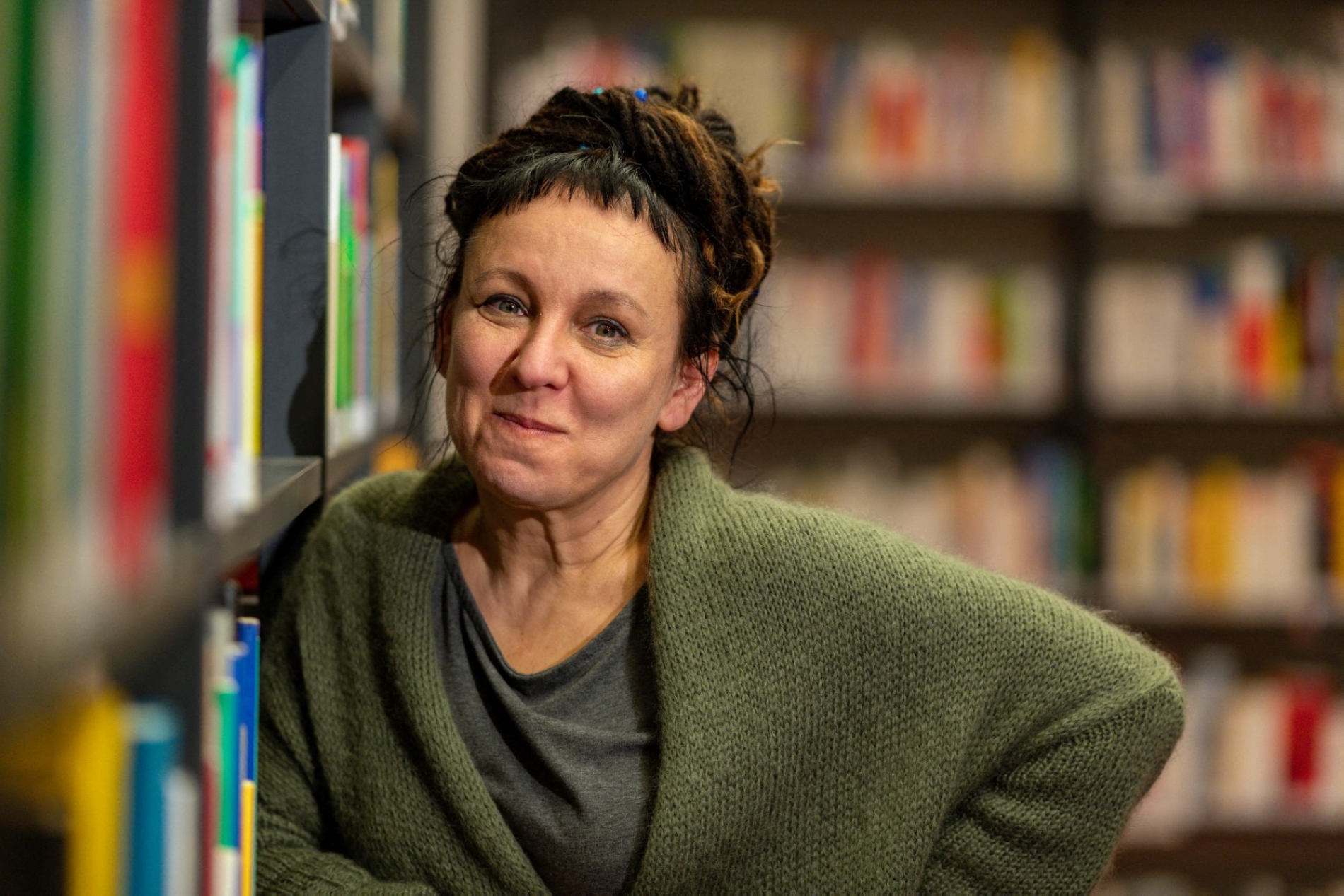
From this perspective, we may better understand why cinema audiences have come to prefer the shorter and the faster: condensed versions of films and works of art, and platforms that repeatedly restate the plot and purpose to keep viewers engaged. All this points to one thing: diminishing patience and an increasingly fragile memory.