Daoud Abdel Sayed and the cinema of quiet rebellion

Throughout his career, the renowned Egyptian film director challenged authority, rejected easy answers, and remained rooted in lived experience

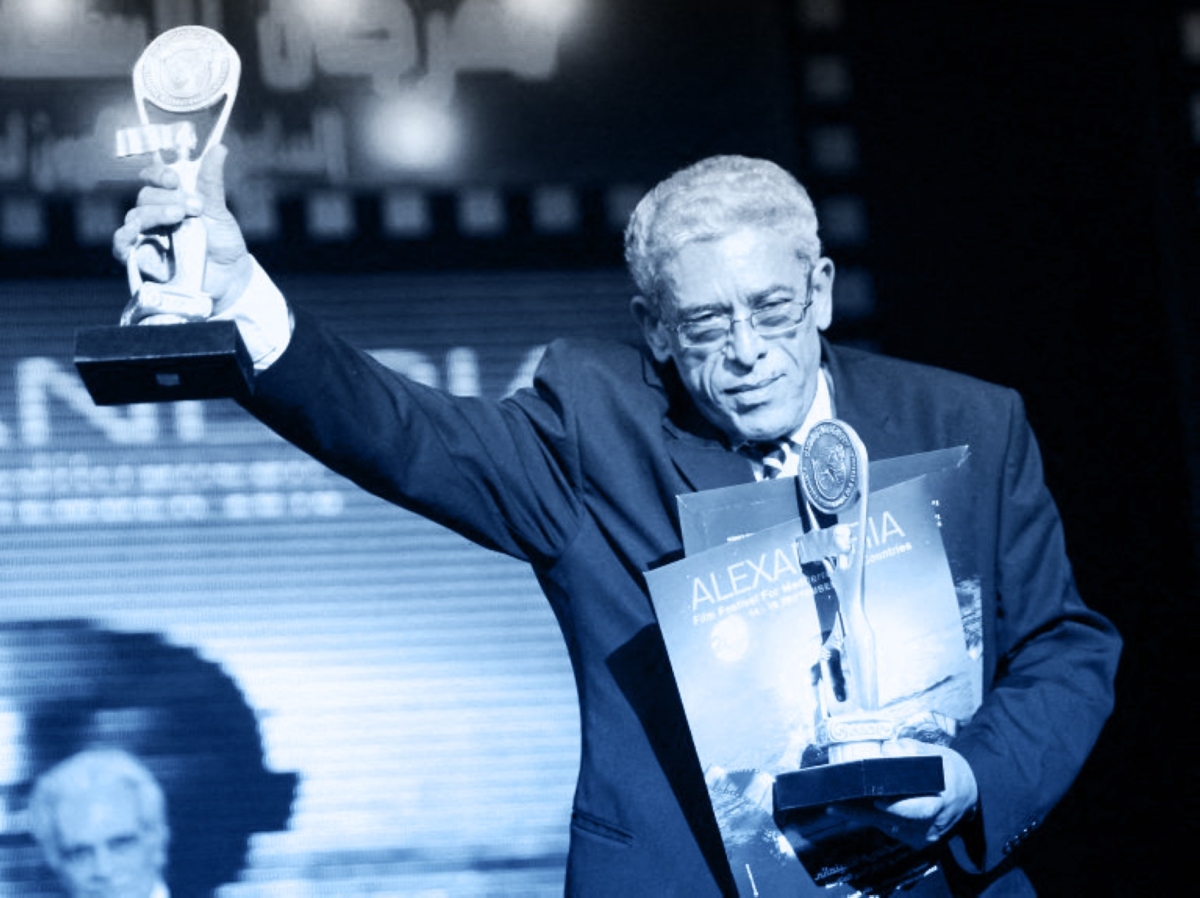
Egyptian director Daoud Abdel Sayed holds two awards during the opening ceremony of the Alexandria Film Festival for Mediterranean Countries in the Egyptian port city of Alexandria, late on 14 September 2010.
AMR AHMAD / AFP
Egyptian director Daoud Abdel Sayed holds two awards during the opening ceremony of the Alexandria Film Festival for Mediterranean Countries in the Egyptian port city of Alexandria, late on 14 September 2010.

Daoud Abdel Sayed and the cinema of quiet rebellion

Despite his relatively small body of work, the late Egyptian film director Daoud Abdel Sayed left behind a cinematic legacy defined by a singular vision. His films reflected the human experience in all its complexity and were marked by philosophical depth, neo-realism, and a unified artistic vision that blended social critique with poetic style.

His death nearly four months ago shocked his many admirers, some of whom had formed an almost personal relationship with the maker of The Vagabonds, Searching for Mr Marzouk, and Kit Kat. Year after year, film after film, their bond with Abdel Sayed had intensified, until his body of work became, for young filmmakers and lovers of cinema alike, a cinematic model that challenged weaker conventions and inspired a different, ever-renewing form of cinema.

Perhaps the key to Abdel Sayed’s work lies in recognising that he did not make films about people, but with them: a cinema that engages rather than instructs.

For those of my generation—the generation of the 1990s—our introduction to the work of Abdel Sayed was most likely Kit Kat, the kind of film that draws one in as a child through its songs, as a teenager through its irony, and as a young adult through a partial identification with Youssef, played by Sherif Mounir, the true protagonist of the novel Malek al-Hazin. Youssef struggles not only with the weight of having Sheikh Hosni, played by Mahmoud Abdel Aziz, as his father, but also with another inheritance: that of the novel’s author, Ibrahim Aslan, and his generation.

A different kind of drama

Abdel Sayed belonged to that same generation, yet he chose to make a different kind of drama. In Malek al-Hazin, Aslan created an enchanting world that transformed the old district of Imbaba into something resembling Gabriel García Márquez’s Macondo in One Hundred Years of Solitude. At the heart of the novel’s satirical events stands Youssef, the intellectual who serves as Aslan’s counterpart. It was a generation caught between the popular movement of 1972 and the student uprisings preserved in memory. The present, by contrast, bore witness to the collapse of its dreams, the fall of its heroes, and the ruin of what remained of the past.

The present in which the novel unfolds ends with the events of the 1977 uprising, a spontaneous reaction to rising prices and the government’s removal of subsidies on basic goods. It marks the return of a certain kind of hope, when authority fell, if only for a single day, in the face of confrontation. The circle of tragedy in which Youssef had been trapped—the circle of helplessness—was broken. Perhaps that was the thread Abdel Sayed picked up in shaping and adapting Malek al-Hazin.

The brilliance of Abdel Sayed’s inventive adaptation lay not only in capturing the spirit of the work, its setting, and the broad outlines of its characters without being bound to a literal reproduction of events, but also that it revealed something deeper about lived experience, even if he may not have fully intended it.

In Kit Kat, Youssef embodies the young Egyptian man of the early 1990s, dreaming of escape and a better life but trapped in an infernal cycle of frustration. We know little about him except that he plays the oud, owns many books, is unemployed, and appears to be educated and recognised as such. By the film’s end, however, that passivity and helplessness give way to a quiet recognition: that leaving will not resolve the deeper condition he inhabits. Youssef, then, is the character who develops, not Sheikh Hosni. It is his trajectory that anchors the film and gives meaning to its central drama.

In this, Abdel Sayed returns to a familiar structure: a character suspended in routine is pushed into an experience that turns his life upside down, only to return altered, with a new awareness of himself and his limits. In Kit Kat, this transformation is handled with unusual restraint, emerging through the shared experience of Youssef and Sheikh Hosni. Between Aslan’s novel and Abdel Sayed’s film, two versions of Youssef take shape, each reflecting its creator, and each articulating a different response to the same condition.

Abdel Sayed defended a vision of cinema that respects the artist's freedom and spirit of rebellion

In 1994, Al Kitaba al Okhra published a dossier on cinema featuring directors across generations, including Raafat El Mihi, Khairy Beshara, Yousry Nasrallah, Khaled El Hagar, and Daoud Abdel Sayed. The latter contributed an angry article on the crisis in cinema, first published in Al Ahali in 1994, in which he outlined his vision of a cinema that sides with the ordinary human being, with their virtues and flaws: a cinema that looks at them with love, rather than through the gaze of a policeman, judge, or preacher.

Abdel Sayed defended a vision of cinema that respects the artist's freedom and spirit of rebellion. He sought to express human experience in ways that challenge authority, whether intellectual, political, or even within the film industry itself. His was a cinema that asserts its role as both art and human expression, resisting the simple calculations of the market, profit, and loss.

AFP
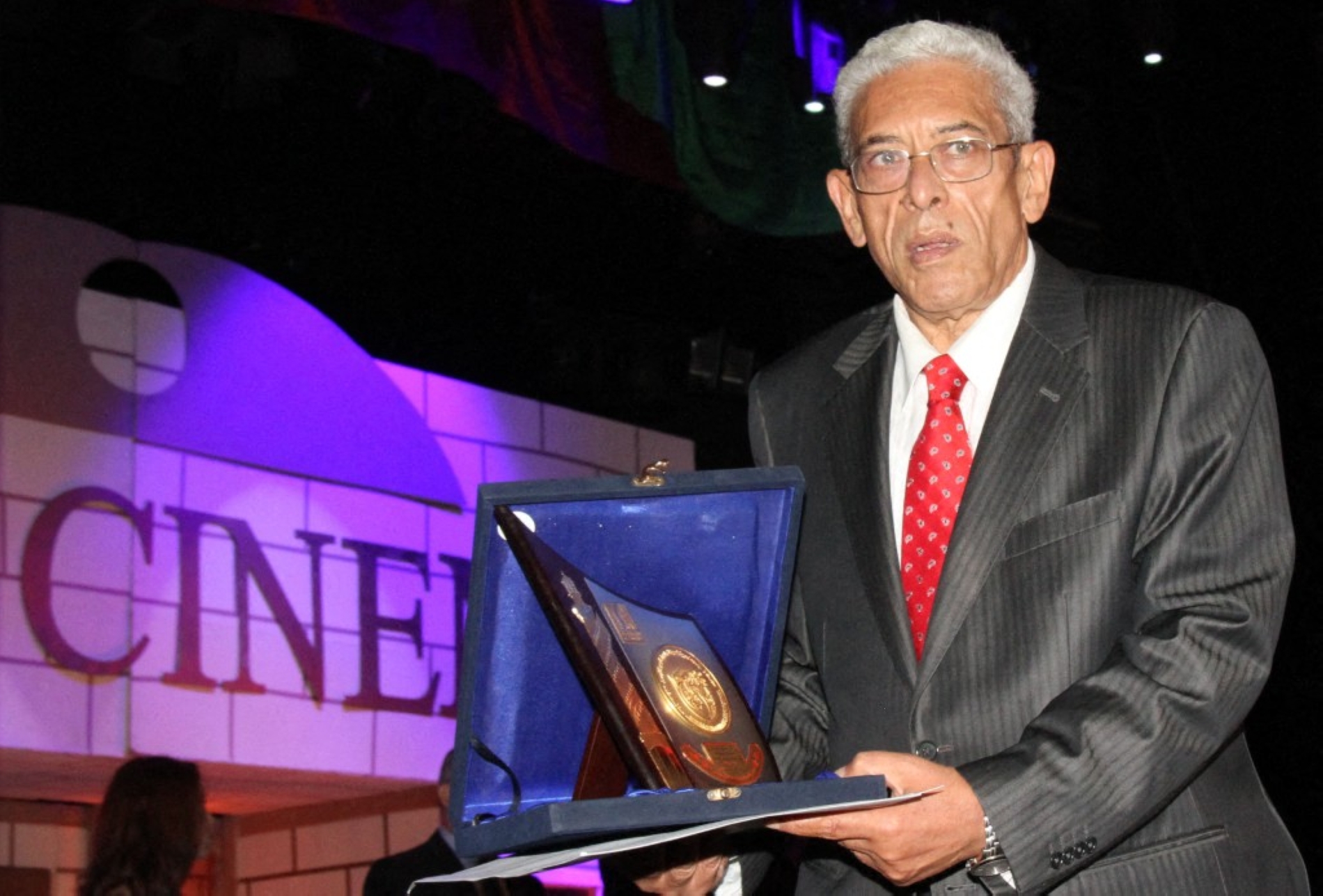
Egyptian director Daoud Abdel Sayed holds his award at the 30th Alexandria film festival in Egypt's northern coastal city of Alexandria on 10 September 2014.

Years passed, circumstances changed, and in his later conversations, especially after retirement, the same problems, concerns, and questions resurfaced, as did the same dreams. Abdel Sayed's retirement was a declaration of frustration, perhaps at the failure of a different kind of cinema to take hold on a broader public level—an ambition that predates 1994 and reaches back to the New Cinema Group and its first manifesto in 1968. That manifesto, born in direct response to the 1967 war, called for a revolutionary cinema rooted in Egypt's social realities.

Just as the worlds of Aslan and Abdel Sayed intersected through the character of Youssef, so too did those of Gallery 68, the voice of the angry generation of the 1960s, and Al Kitaba al Okhra in the 1990s. Each was an attempt at rebellion and independence. Yet the differences are largely superficial. At their core, the same questions persist—about dreams, fear, and the possibilities latent within ordinary lives. 

Magical vision

For understandable reasons, this vision had an almost magical effect on those of us who grew up in the 1990s and loved the films of Abdel Sayed. The structuring experience at the heart of his work intersects with the personal experience of this generation, whose dreams, identity, and social consciousness were shaped by an exceptional event: 25 January and the beginning of the 2011 Revolution.

Just as the films of Abdel Sayed intersected with the experiences of that generation, they also remained one of its great unanswered questions. None of those films told us what the next day would look like. How does Yehia, played by Ahmed Zaki, carry on while longing for Land of Fear, except in fleeting fragments? The answer lies elsewhere: we have to dig within ourselves to find it.

Some remain in denial, as though nothing has happened, while others are left with a lingering sense of helplessness. Is that helplessness rooted in a deeper, more pervasive loss? Perhaps the 'next day' is where our films ought to begin, if they are to express even one side of that experience.

In 2014, the cinema club at the university where I was studying in Cairo screened Abdel Sayed's first film, A Wise Man's Advice on Village Affairs and Education. What was striking about the documentary, filmed in 1975, was that it had lost none of its freshness or immediacy. It remained provocative and worthy of discussion. Yet, like his later films, it offered no clear answer to what the next day might look like.

The obvious question is how the world could change so much while the same problems endure. Did it really change, or merely turn in circles? And does context triumph over Abdel Sayed's dream in his absence? Perhaps he did not really leave. His films remain an enduring imprint—both an inspiration and a set of questions that continue to shape our present, still waiting for the next day.

font change