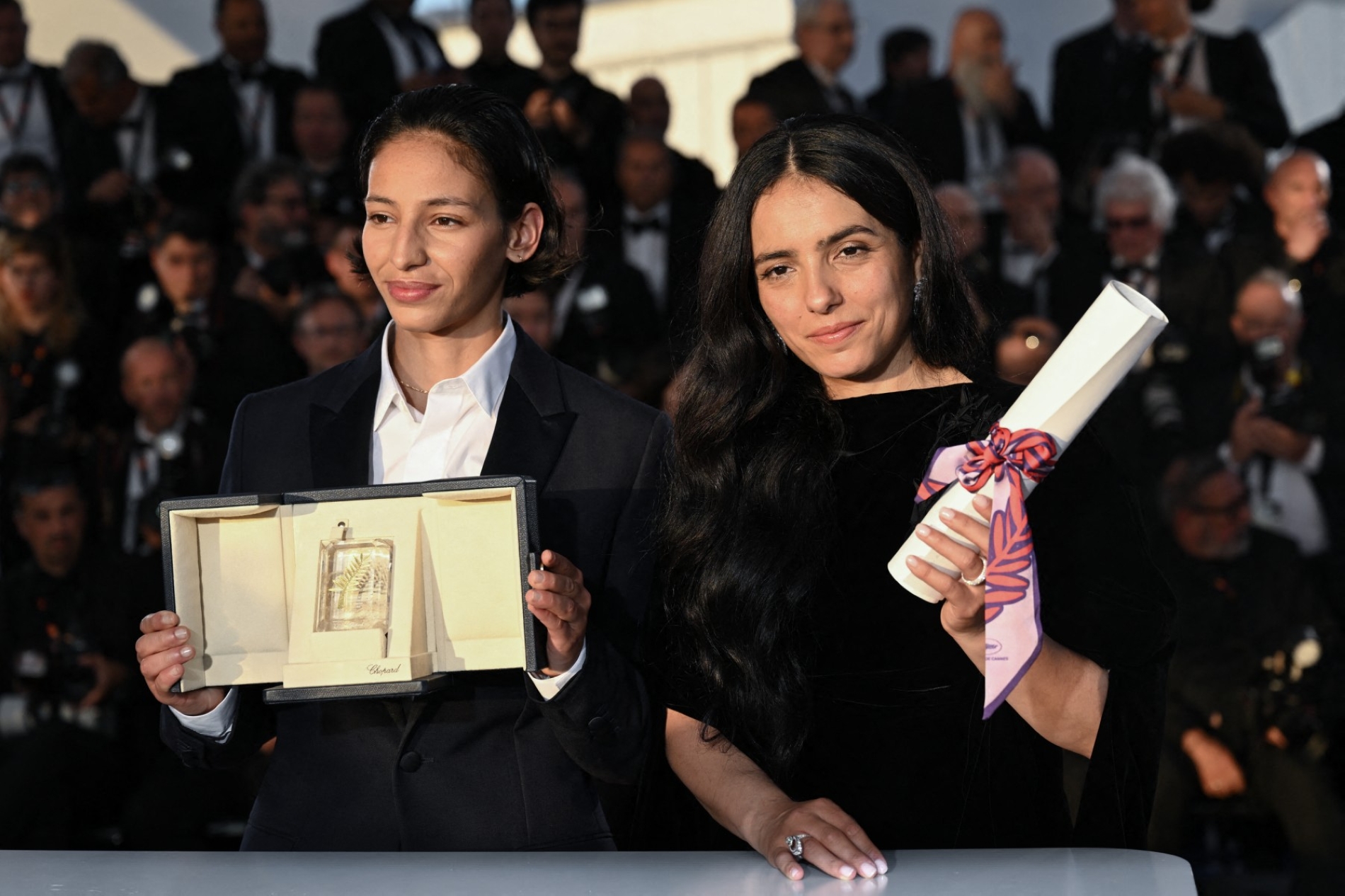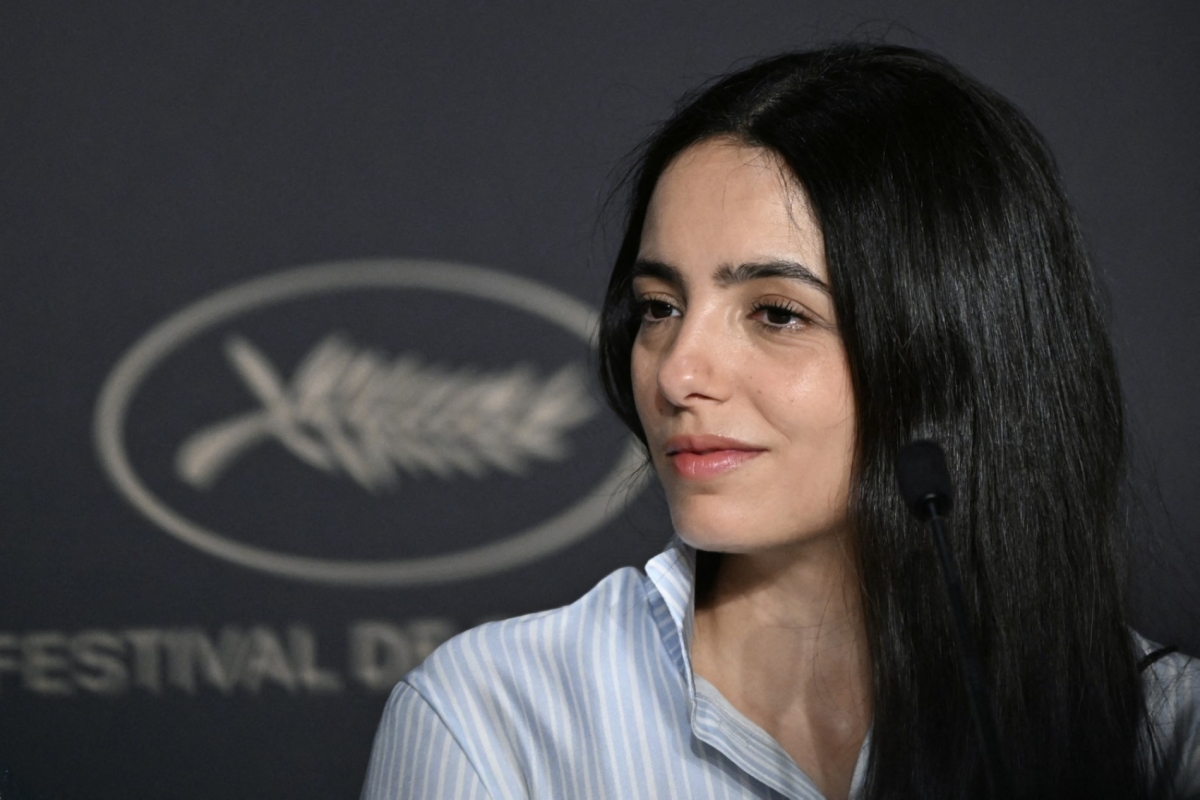

Once again, Hafsia Herzi has solidified her unique bond with the Cannes Film Festival. This year, the French-Tunisian-Algerian actress and filmmaker appears in two of the festival’s most anticipated films: Words of Love by Rudi Rosenberg and The Birthday Party by Léa Mysius, presented in the Official Competition and adapted from the thriller novel by award-winning writer Laurent Mauvignier. The two films are radically different in tone and aesthetics, yet in both she plays a mother willing to do anything to protect her children.
In Words of Love, Hafsia Herzi plays a woman helping her daughter search for the father who abandoned her. Rudi Rosenberg’s film, warmer and more emotionally resonant, explores the wounds left by absence and the possibility of rebuilding family ties. By contrast, The Birthday Party descends into a much darker tension. Adapted from Laurent Mauvignier’s novel, Léa Mysius’ film, also starring Monica Bellucci, unfolds in a suffocating atmosphere in which the family home becomes a place of fear and resistance. Yet in both films, Herzi portrays women who refuse to surrender to danger or abandonment.
“When Rudi offered me the role of Erika in Words of Love, this mother accompanying her daughter in the search for the father who left them, he told me: ‘She’s not a good mother, she’s a bad mother,’ as a reference to my film Good Mother. And I told him, ‘No, no—you chose me, so she’s a good mother!’ I really wanted to defend my character because she’s a woman who would do anything for her children, even when she disagrees with their choices,” the actress explains.
Rudi Rosenberg adds: “Hafsia made me cry once again. I’ve seen the film 200 times, but I was still overwhelmed during the screening here in Cannes.”
This maternal figure naturally echoes Bonne Mère (Good Mother), Herzi’s second feature film as a director. Presented at Cannes in 2021 in the Un Certain Regard section, the film followed a working-class Marseille woman exhausted by social hardship yet determined to keep her family together. Even then, Herzi was already drawn to these discreet heroines, often invisible in French cinema: working-class North African women, strong despite fatigue and sacrifice. She likely found inspiration in her own mother, who raised four children alone after the death of Herzi’s father when Hafsia herself was only one year old.
Unlikely rise
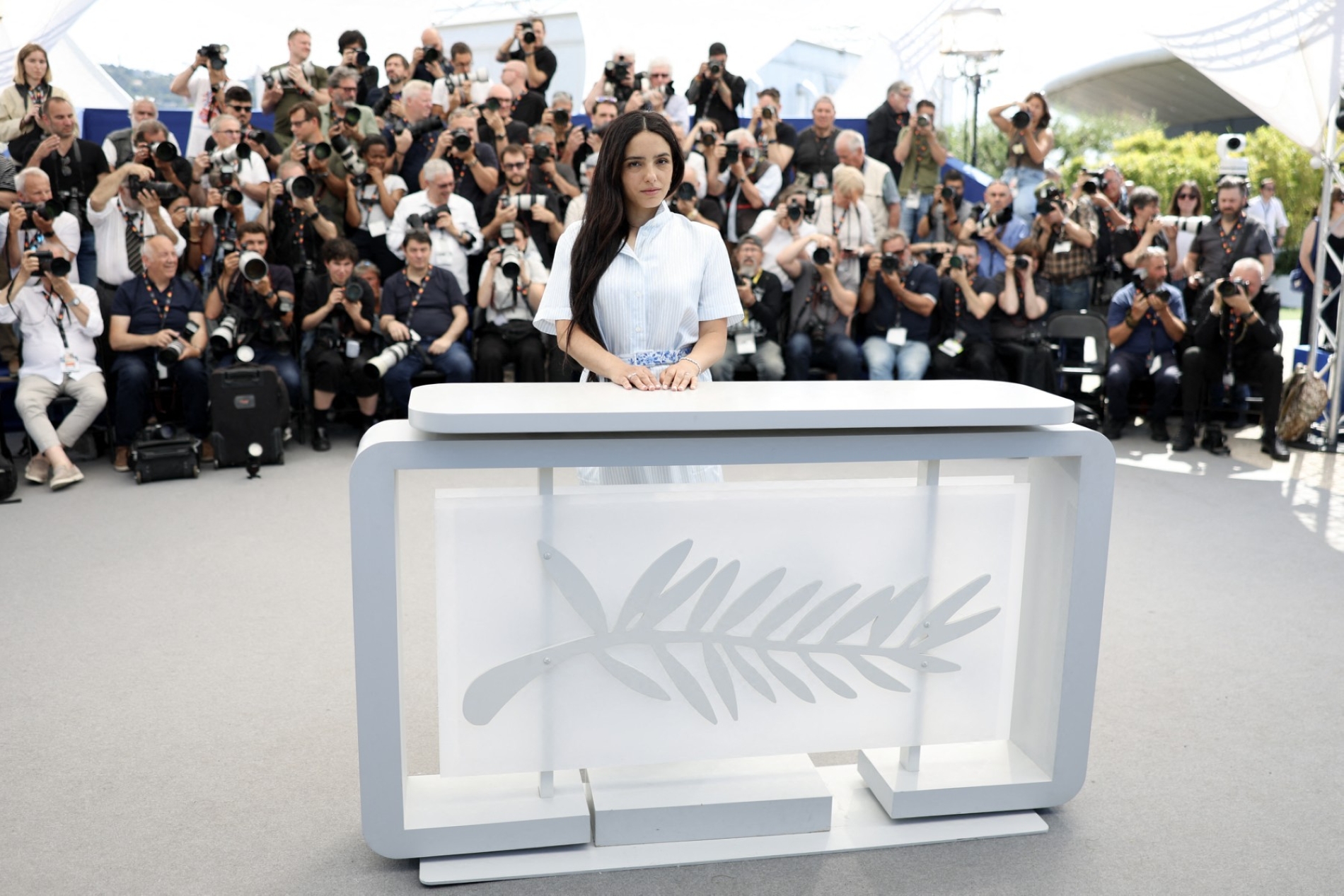
While Cannes now seems to have become Herzi's natural habitat, nothing initially destined her for such a trajectory. Born in Manosque to an Algerian mother and a Tunisian father, she dreamed of becoming an actress from the age of 12, despite the near-absence of North African representation on screen at the time.
“It makes you want to succeed and fight for it in a way,” she says.
She grew up in Marseille in a modest environment, far removed from Parisian cinema circles.
“I didn’t know anyone in the film industry, and we all know it’s not easy. Most importantly, I never really believed I would make it one day, so I took every role as a chance, telling myself that even if I never worked again afterward, at least I would have fulfilled my dream of cinema once in my life,” she admits humbly.
As a teenager, she dreamed of acting but had no idea how to enter the industry. Her life changed when she met Abdellatif Kechiche, who offered her her first major role in The Secret of the Grain in 2007.
The impact was immediate. At just 20 years old, Hafsia Herzi stunned audiences with her raw naturalism, emotional intensity, and ability to embody a character without artifice.