Why Syrian action against Hezbollah is unlikely

Syrian military intervention in Lebanon is nowhere near a priority as Damascus grapples with enormous economic, social, and political obligations at home

Reuters / Al Majalla

Why Syrian action against Hezbollah is unlikely

When Hezbollah began attacking Israel on 2 March shortly after Israeli and American bombers killed Iran’s Supreme Leader Ali Khamenei, Israel hit back. Their sparring, which has continued ever since, is nothing new—the pair are sworn enemies who have fought several wars in recent decades. What was new was the question many asked this time round: will Syria wade in? Syria’s military finally left Lebanon in 2005 after a 30-year occupation. The thought that it might go back in sent a shudder down several spines.

The new Syrian government is no supporter of Hezbollah; quite the opposite. In this, it has found common ground with Lebanon’s new leadership, notably President Joseph Aoun (a former army chief) and Prime Minister Nawaf Salam (a former judge). For the first time in years, it appears that Tel Aviv, Damascus, and Beirut are on the same page when it comes to Hezbollah. Interests aligned, the rumour mill went into overdrive.

Some suggested that Hezbollah may be caught in a pincer movement, whereby Israel would encircle the group from the south, Lebanon’s army would approach from the north, and the Syrian army would come from the east via Lebanon’s Bekaa Valley. This scenario gained currency after Israel linked its positions in southern Syria to those in southern Lebanon, and after the Syrian army deployed units along the border.

Most still assumed that this was fanciful until US President Donald Trump said Syria could replace Israel in confronting Hezbollah inside Lebanon. Speaking to Fox News on 21 June, he said he was “frustrated that Israel cannot eliminate Hezbollah,” adding: “I’m close to handing the matter over to Syria.” Days earlier, at the G7 summit in France, he praised Syrian President Ahmed al-Sharaa, adding: “If Israel cannot get the job done against Hezbollah without killing everyone, he (al-Sharaa) will take care of it, Syria will do the job.”

Trump’s comments suggested that the matter had already been discussed and agreed upon, but it soon became clear that Damascus was not on board. Al-Sharaa denied that Syria sought to intervene militarily in Lebanon, saying: “Our proposal with the United States is based on the necessity that the war must stop.”
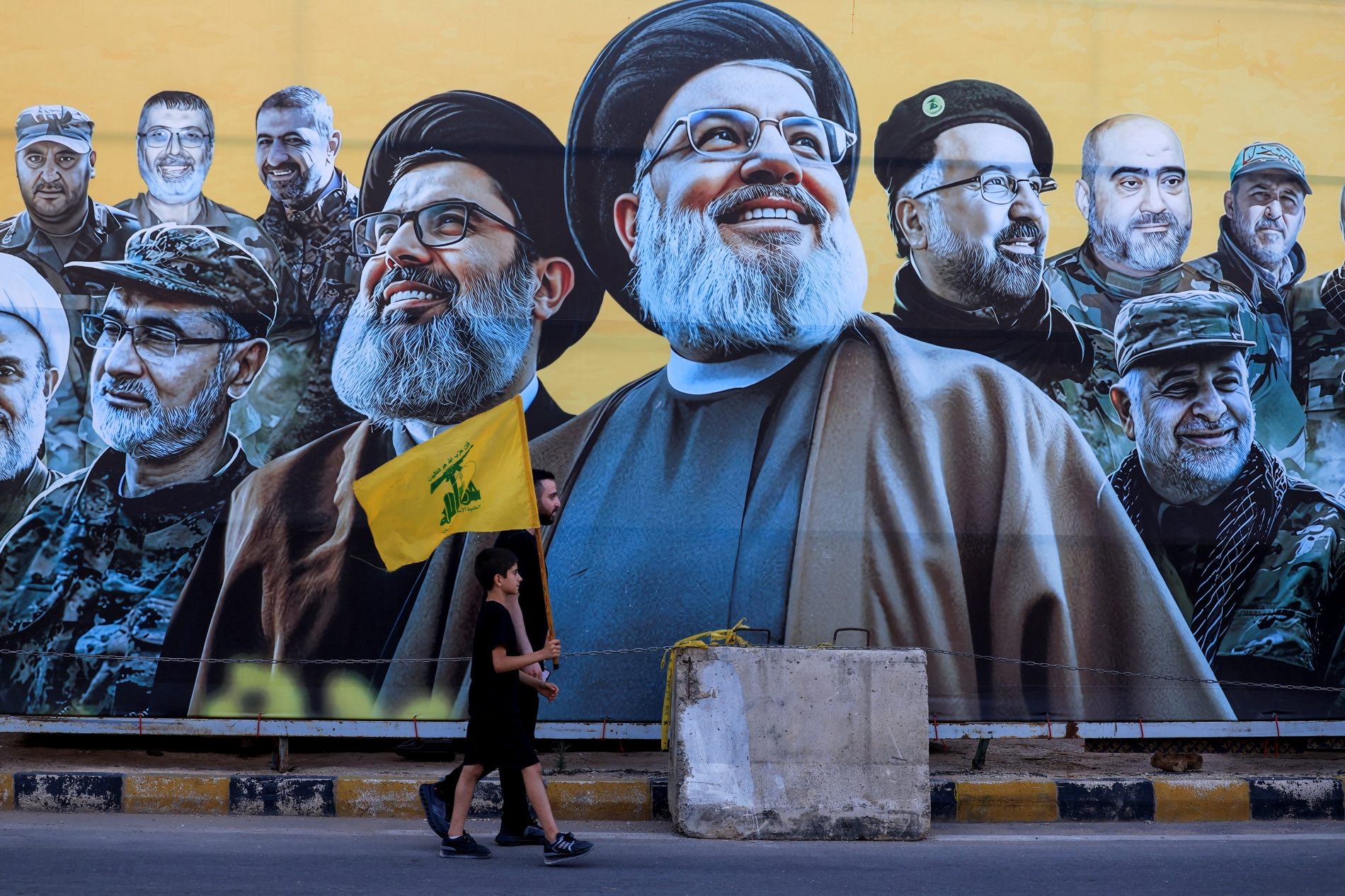
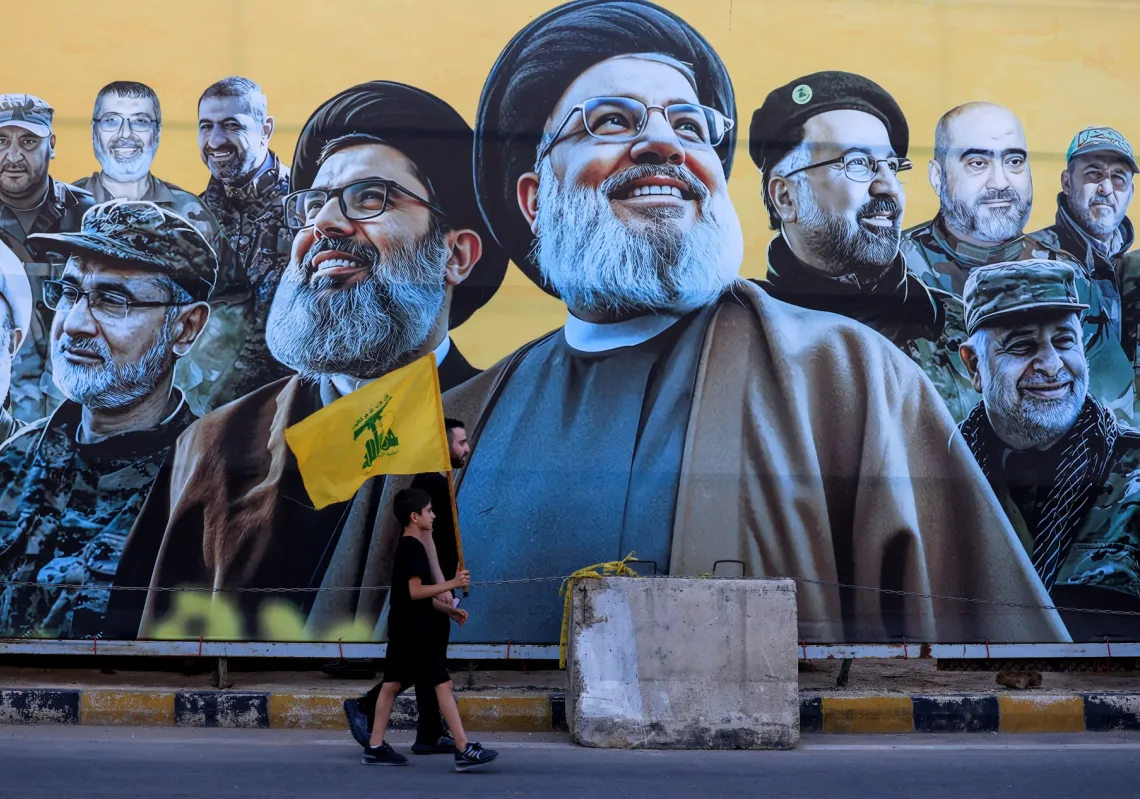
REUTERS/Mohamed Azakir
A man walks with a boy past a mural in Beirut depicting former Hezbollah leader Hassan Nasrallah and other senior figures, on the day Hezbollah chief Naim Qassem delivers a televised speech on 17 June 2026.

Key focus

The president’s remarks show that Hezbollah remains a key American focus in the Middle East, especially given that Iran has made a ceasefire in Lebanon a condition of its own ceasefire with the United States. Yet to analysts, the significance of Trump’s mooted idea lies more in the political message it carries.

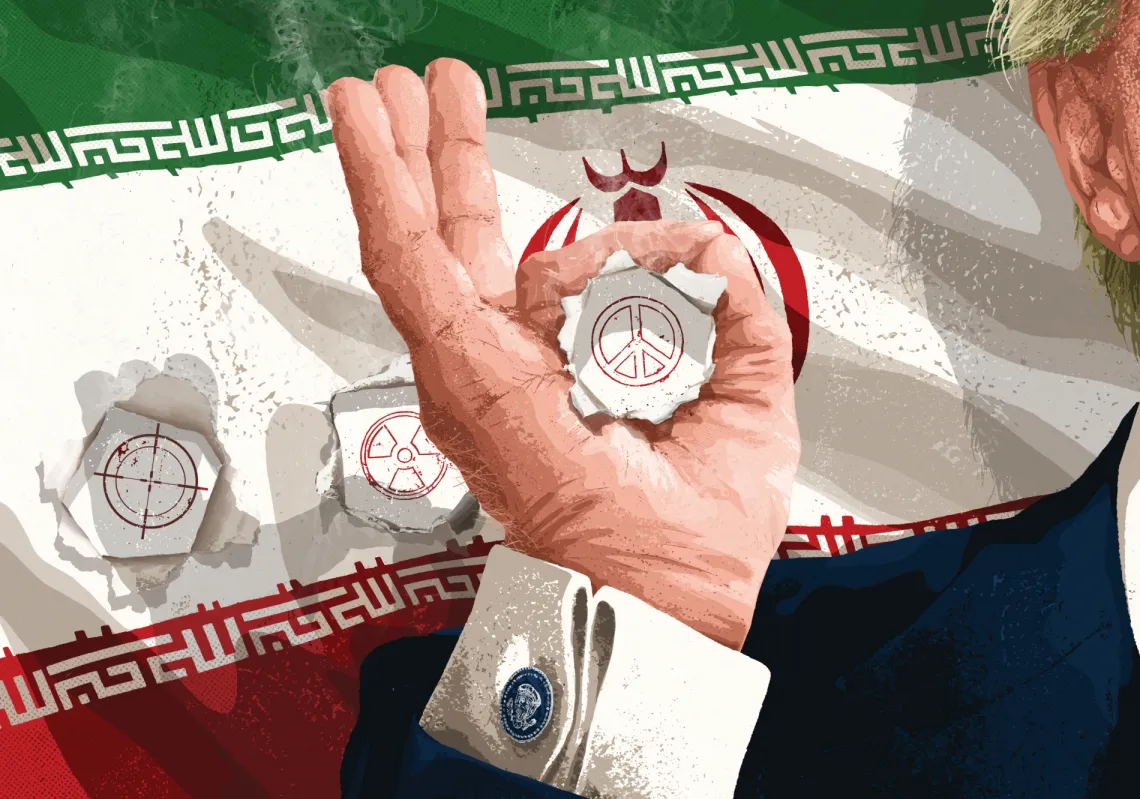
Washington wants Iran to know that any agreement will not compromise Israel’s security, which is threatened by Hezbollah, so the issue cannot be deferred to a later stage. If the Iranians felt that Washington might overlook Hezbollah’s weapons to secure a nuclear agreement, they would be mistaken.
Some believe a pincer movement, whereby Israel would advance from the south, the LAF from the north, and the Syrian army from the east, is the ultimate aim

Although limited, Israeli and Lebanese representatives have held several discussions over recent weeks, and there are suggestions that there may be a trilateral mechanism involving the US, Iran, and Lebanon to help consolidate the ceasefire in Lebanon and monitor its implementation, as US Vice President JD Vance and Secretary of State Marco Rubio reportedly told Lebanese President Joseph Aoun.

This points to a different approach: an attempt to fold the handling of Hezbollah's disarmament into a new regional architecture within a broader US-Iran framework. Such an arrangement would end (or radically reduce) Hezbollah's threat by decommissioning its weapons in parallel with the withdrawal of the Israeli army from occupied Lebanese territory. 

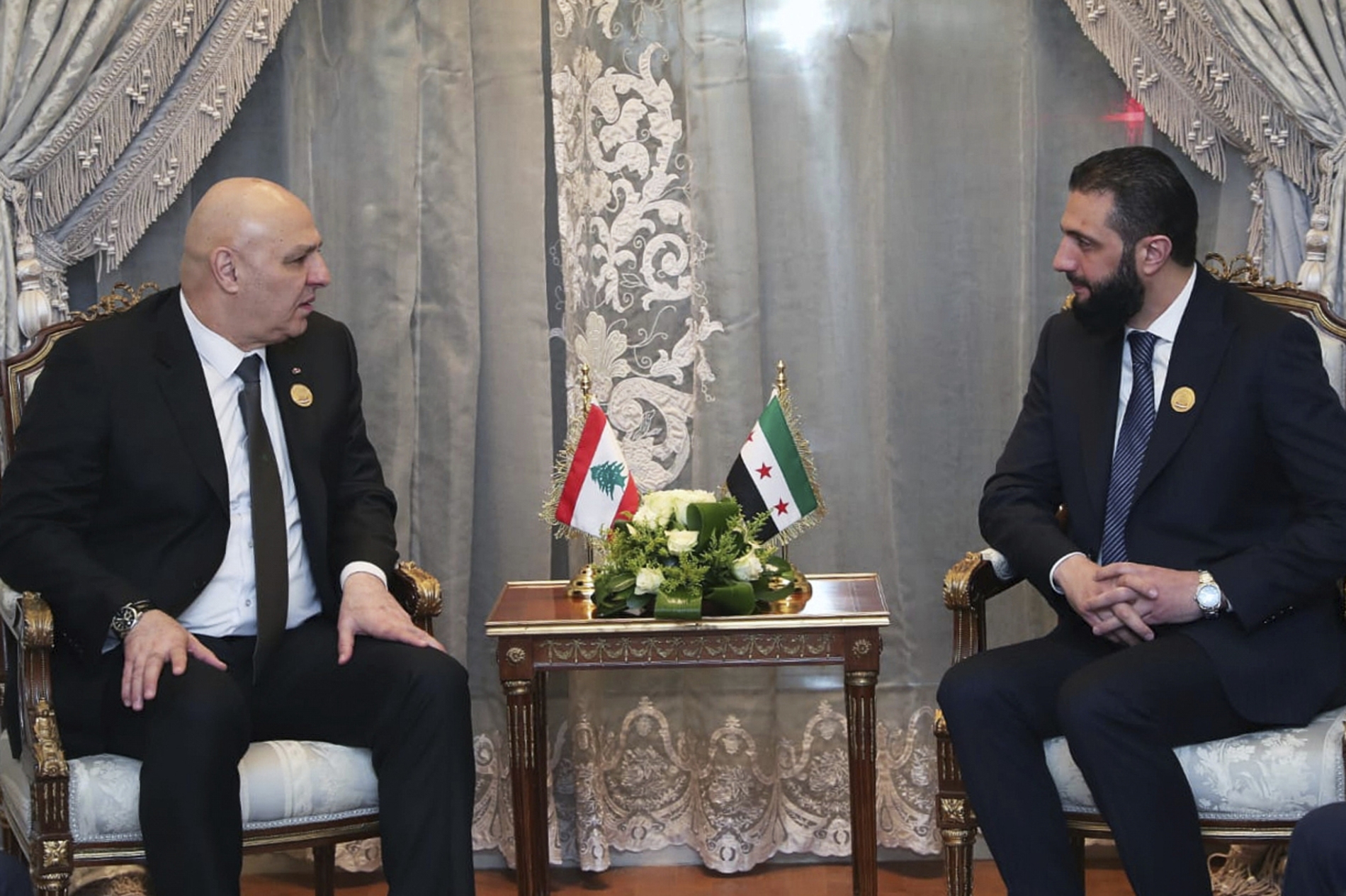
AP
A meeting took place between Lebanese President Joseph Aoun and Syrian official Ahmed al-Sharaa on the sidelines of the emergency Arab summit in Egypt's New Administrative Capital on 4 March 2025.

A different vision

Washington's acceptance of a coordination framework that includes Iran and Lebanon suggests that it is relying on Iran to regulate Hezbollah's conduct and redefine its future away from armed conflict. In this context, al-Sharaa's position takes on particular significance. He says that Syria is looking for "economic lines between Lebanon and Syria, not military lines".

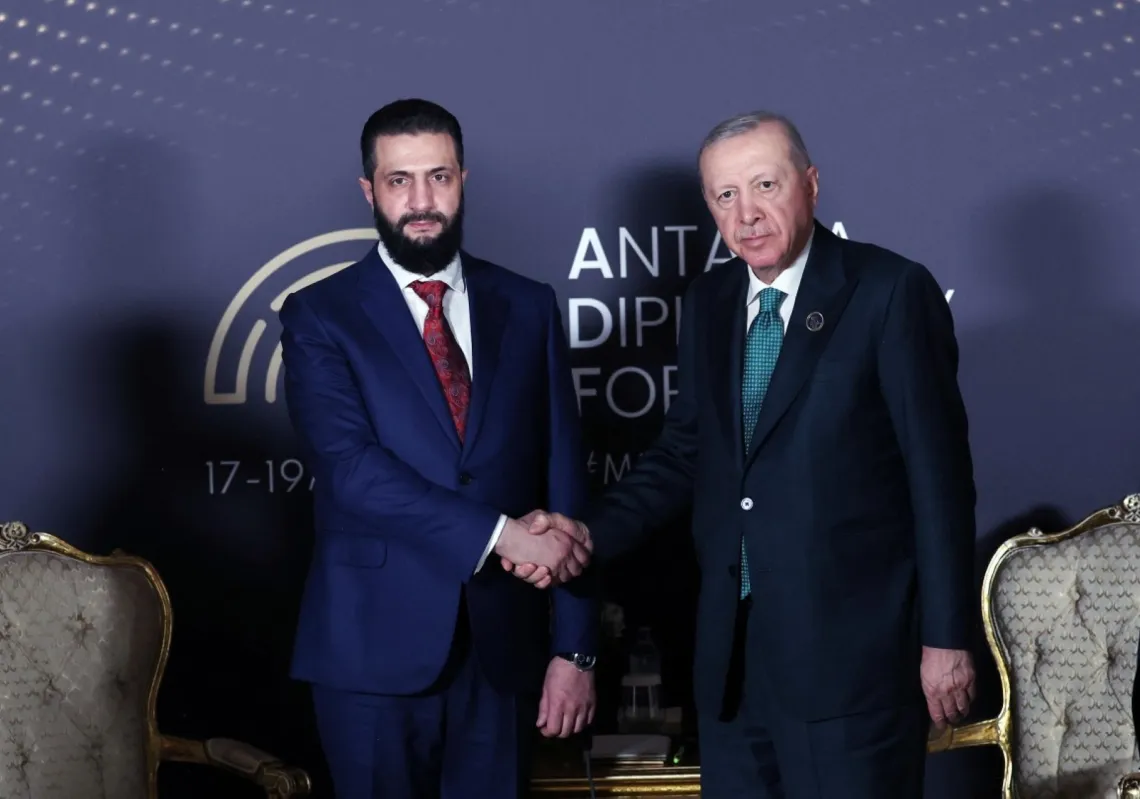
Al-Sharaa is not just denying the idea of Syrian military intervention in Lebanon; he is offering a vision of Syria's role through trade, energy, transport, investment, and reconstruction, rather than through the security and military influence that governed Syria-Lebanon relations for decades. In this, he is aligned with other regional capitals, where Arab and Turkish leaders see Syria as part of a broader project of economic and geographic stabilisation from the Gulf to the Mediterranean.

After 14 years of brutal civil war in Syria, al-Sharaa would much rather speak about economic arteries and regional connectivity than entanglement in new wars. Part of the solution involves reconnecting the Lebanese and Syrian economies, but that requires flexibility. He even declared a readiness to engage Hezbollah in dialogue if needed.

To rebuild the country, Syria's leaders need investment, which flows from stability and the government's international recognition. To this end, disarming Hezbollah next door without disorder and bloodshed is a Syrian priority. Yet Hezbollah is known for its intransigence, so although Syrian military intervention may be off the table today, it remains a possible future scenario should circumstances change. For now, the White House would prefer a diplomatic outcome.

If Syrian intervention is ultimately needed, this would not be a unilateral Syrian decision; it would form part of a broader framework, structurally akin to the coalitions once formed against the Islamic State (IS). Under international management, the Syrian army would act as the principal infantry force on the ground, the objective being to encircle Hezbollah militarily, terminate its combat capabilities, and redraw the region's security balance in the process.

This scenario remains unlikely. A French proposal to establish a new international force that would replace UNIFIL in southern Lebanon (whose mandate will soon expire) offers an alternative, but it rests on implementing a security agreement, the effective deployment of the Lebanese army, and a mechanism for Israeli withdrawal. If this were to succeed, it would negate the need for direct Syrian military intervention.

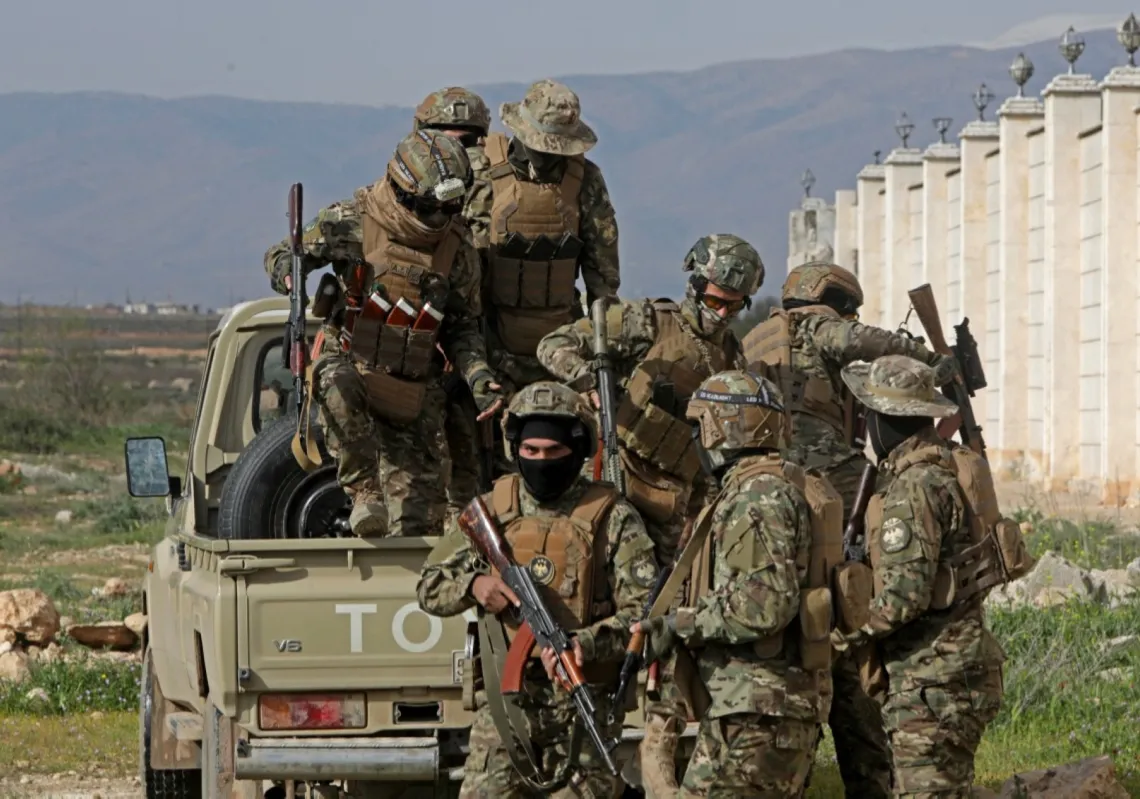
There remains the possibility that extremist military formations that have emerged on the margins of the Syrian army could openly confront Hezbollah. These formations are ideological enemies of Hezbollah, and there have been simmering grievances ever since the Lebanese militia participated in the Syrian civil war on the side of Bashar al-Assad. This would be a catastrophic sectarian scenario and should be avoided.

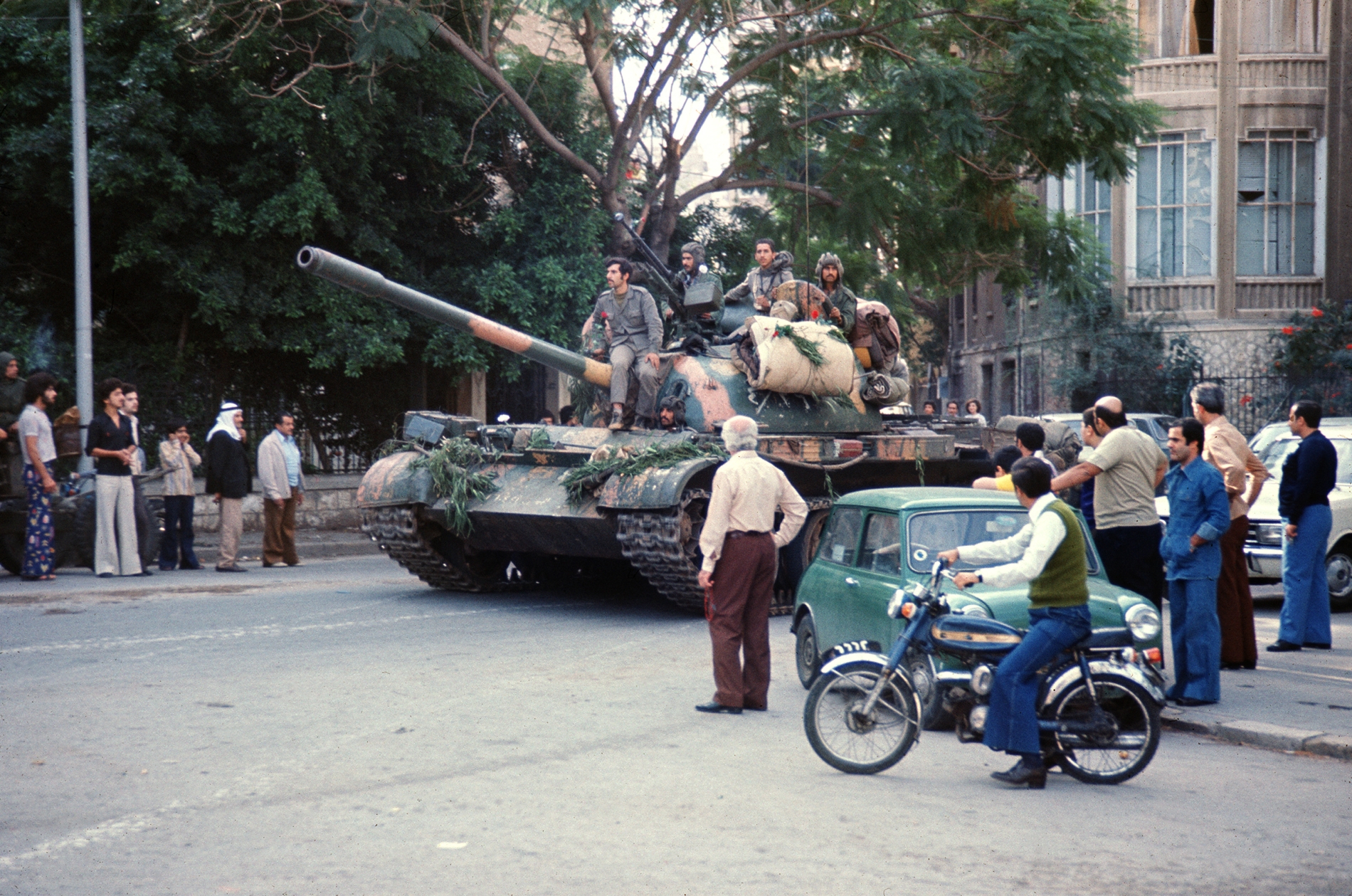
AFP
The entry of Syrian forces into Beirut on 1 November 1976.

Different times

It has been half a century since Syria's army entered Lebanon in 1976. At the time, it entered a broad convergence of regional and international interests and enjoyed American and Arab cover that was later translated into the framework of the Arab Deterrent Force, the backbone of which was formed by Damascus. For some observers, this amounted to the export of the crisis of Syria's Baathist regime to Lebanon (so that it would not explode inside Syria).

In the 1970s, the Syrian regime led by Hafez al-Assad was still cementing its legitimacy, so intervention in Lebanon offered an opportunity to enhance its standing at home. Today, Syria faces an entirely different reality, confronting enormous economic, social, and political obligations. Intervention in Lebanon against Hezbollah does not, therefore, top the Damascus agenda. Any military adventure beyond the borders would be an additional burden if it were not necessary.

The reality of Syria's situation in 2026 thus constitutes an important restraint on Syrian military intervention in Lebanon. It also fits the prevailing mood. The principal Arab states, along with Türkiye, have for years been working to build a regional order more inclined towards containing crises and preventing their escalation, including managing rivalry and disputes with Iran. It is therefore difficult to imagine Arab or Turkish enthusiasm for Syria's army to engage Hezbollah in a new round of fighting.

Syria faces enormous economic, social, and political obligations, so intervention in Lebanon against Hezbollah is nowhere near a priority.

Even so, ruling out this scenario may be premature. Syria under al-Sharaa has reintegrated into the region, but within this new order, al-Sharaa understands the limits of movement available to him, just as he understands the gains tied to Syria's integration. Should it be decided in foreign capitals that Hezbollah's dismantlement will only come from Syrian involvement, Damascus may have no choice but to agree.

The wider context includes US interests in the region, and increasingly in Iraq over recent months, where pro-Iranian militias also operate. Furthermore, there are oil disputes between the Iraqi government in Baghdad and the Kurdistan Region. In some ways, the issues in Iraq and Syria are linked. Iraq's stability and the maintenance of the balance of power within it will help secure Syria's eastern flank and reduce Iran's militias' ability to influence events and put pressure on Damascus. Containing Iranian military influence has always been tricky—and remains so.

font change