
New laws will embed Israel in US security agencies

Legislation to fund the American military and intelligence services will include requirements that Israeli defence firms be involved in sensitive projects and that classified information be shared

Al Majalla

New laws will embed Israel in US security agencies

Friends of Israel are getting creative at designing new policies in Washington to strengthen the Jewish state, despite growing American public resentment after the war against Iran sent fuel prices soaring. The existing aid agreement, which expires in 2028, provides Israel with $3.3bn annually, enabling Tel Aviv to buy both American and homemade military equipment. It also gives an additional $500mn specifically for Israel’s missile defence, where there is deep cooperation between the two states.

What comes after this agreement expires in two years’ time is now a big question in Washington, because public opinion is turning against the big American aid programme. A poll of registered voters by The New York Times last month showed 57% did not support more military and economic aid to Israel, yet this is just the latest survey evidencing American public scepticism about Israeli actions, including declining support for Israel among Republicans, especially the young.

The debate around the aid will get a lot of attention. In Israel, there is growing recognition that Americans are turning against it. Some Israeli politicians think that American aid is no longer needed, and that it restricts Israel’s freedom to act. Yet Israeli Prime Minister Benjamin Netanyahu has suggested a change in the bilateral military relationship so that the American and Israeli defence sectors work together directly across a broader range of military systems and equipment.

Using budget bills

Backed by US-based lobby groups and think-tanks such as AIPAC (American Israeli Public Affairs Committee), the Federation to Defend Democracies, and the Heritage Foundation, some members of the US Congress have introduced a new strategy to use American resources to strengthen Israel.

The new 2027 legislation to finance the Defence Department budget would integrate Israeli defence firms into the Pentagon’s technological research and development programmes. This Article 219 in the legislation, if approved, would create a new office in the Pentagon to manage joint projects in areas such as air defence, Artificial Intelligence (AI), cyber warfare, and biotechnology. This would force Israeli companies to enter new and highly sensitive American technologies.

The US already has joint production agreements with some countries on important military projects, such as the F-35 fighter jet, where selected external companies manufacture parts of the plane under American guidelines, with Washington retaining overall control and intellectual property rights. In this way, Washington can eject countries like Türkiye (after the latter bought Russian military equipment).

The Article 219 proposal for Israel is different. It would mean the Pentagon financing Israeli companies, alone or with American partners, to research and develop technology and systems, and then buying them for American use. The Israeli companies would own the developed technology as well as the production facilities used to manufacture the systems. In a sense, it would make Israeli defence firms part of the US military-industrial sector. It would therefore allow Israeli firms to sell their weapons to American military customers.

Said Khatib/AFP
An Israeli quadcopter drone flying over Palestinian demonstrations near the border with Israel east of Khan Yunis in the southern Gaza in 2018.

A way to hide aid

Writing in The Washington Post, Aaron Kaplowitz of the US-Israel Business Alliance recently pointed to the US Border Patrol Agency using Israeli drones as an example of how Israeli technology can improve American military capabilities (Kaplowitz is an investor in some Israeli defence companies). But not everyone is convinced.

Josh Paul, a former official at the State Department’s military assistance office, says Article 219 is a way to hide aid to Israel inside the huge Pentagon budget for research and weapons. He warns that integrating Israeli-controlled technology and production facilities into Pentagon weapons acquisition processes could let Israel delay US weapons acquisition or deployment if ever Washington and Jerusalem disagreed.
Article 219 would mean the Pentagon financing Israeli companies to research and develop technology and systems, then buying them for American use

He also argues that Israeli companies could even use jointly developed technology to compete with US companies in export markets. Others have emphasised that replacing the annual military aid with Pentagon purchasing contracts for Israeli companies and joint Israel-American projects would diminish US influence over Israeli policy and Palestinian rights, given that there are currently American laws directing that countries that violate human rights cannot receive American weapons.

Ending the annual cash transfer for military purchases would mean Washington could not, in theory, halt aid flows in response to Israeli actions on the ground (as some Democrats called on Joe Biden to do amidst accusations of genocide in Gaza). It will be harder for  Congress to target Israeli company research and production agreements, especially if they are joint projects with American companies, which supply the Pentagon and contribute to American military power.

Reuters
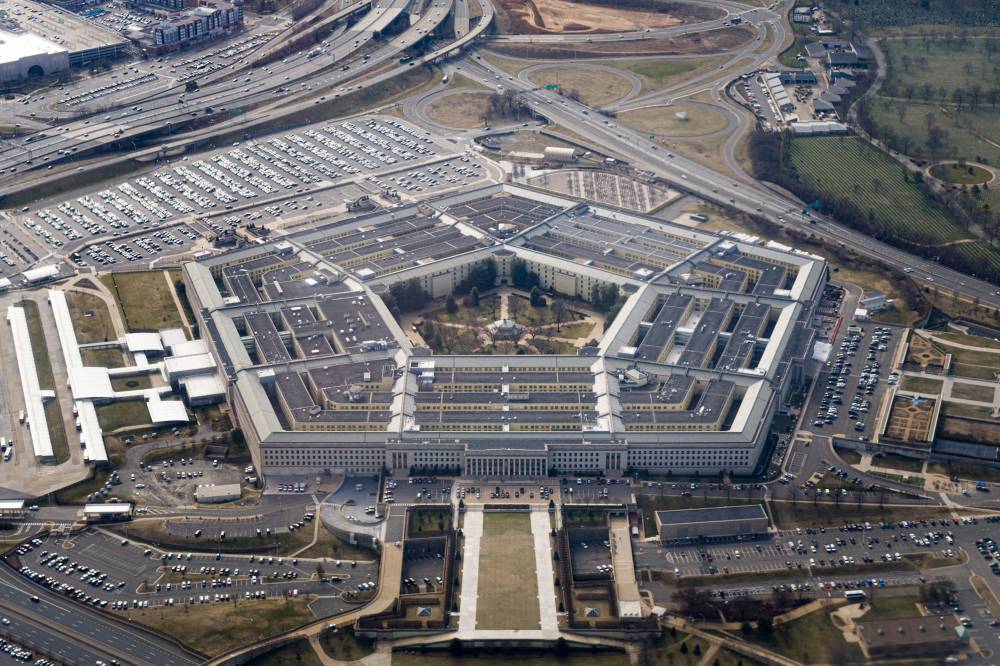
The Pentagon is seen from the air in Washington, US, 3 March 2022.

Fighting over the future

Writing in Responsible Statecraft, former Obama administration National Security Council official Steve Simon said new Israeli-owned production facilities in the US set up to supply the Pentagon would create American jobs, meaning that politicians would want to protect those jobs over and above foreign policy disagreements with Israel.

Kaplowitz felt that any decision on Article 219 would show whether American defence policy was being decided by military or political considerations. Defending Israeli companies regardless of Israeli actions on the ground, he argued that national security should be prioritised over American public opinion.

In parallel, the US Senate is considering legislation that would require the Director of National Intelligence (DNI) to share US intelligence with Tel Aviv on issues like drone and missile technology, terrorism, sanctions evasion, and the plans of non-state actors. Section 622 of the Intelligence Agencies' budget legislation would prohibit any suspension or reduction of intelligence sharing unless authorised and justified by the President, giving two weeks' notice.

The United States already shares intelligence with allies, but it is not legally required to do so for any specific country, nor is it subject to Congressional monitoring. Interestingly, this element of the budget for the intelligence agencies reached the Senate immediately after the Defence Intelligence Agency at the Pentagon said Israeli intelligence had been trying to collect information about American policy deliberations, and had deemed this to be a 'critical threat'.

AFP
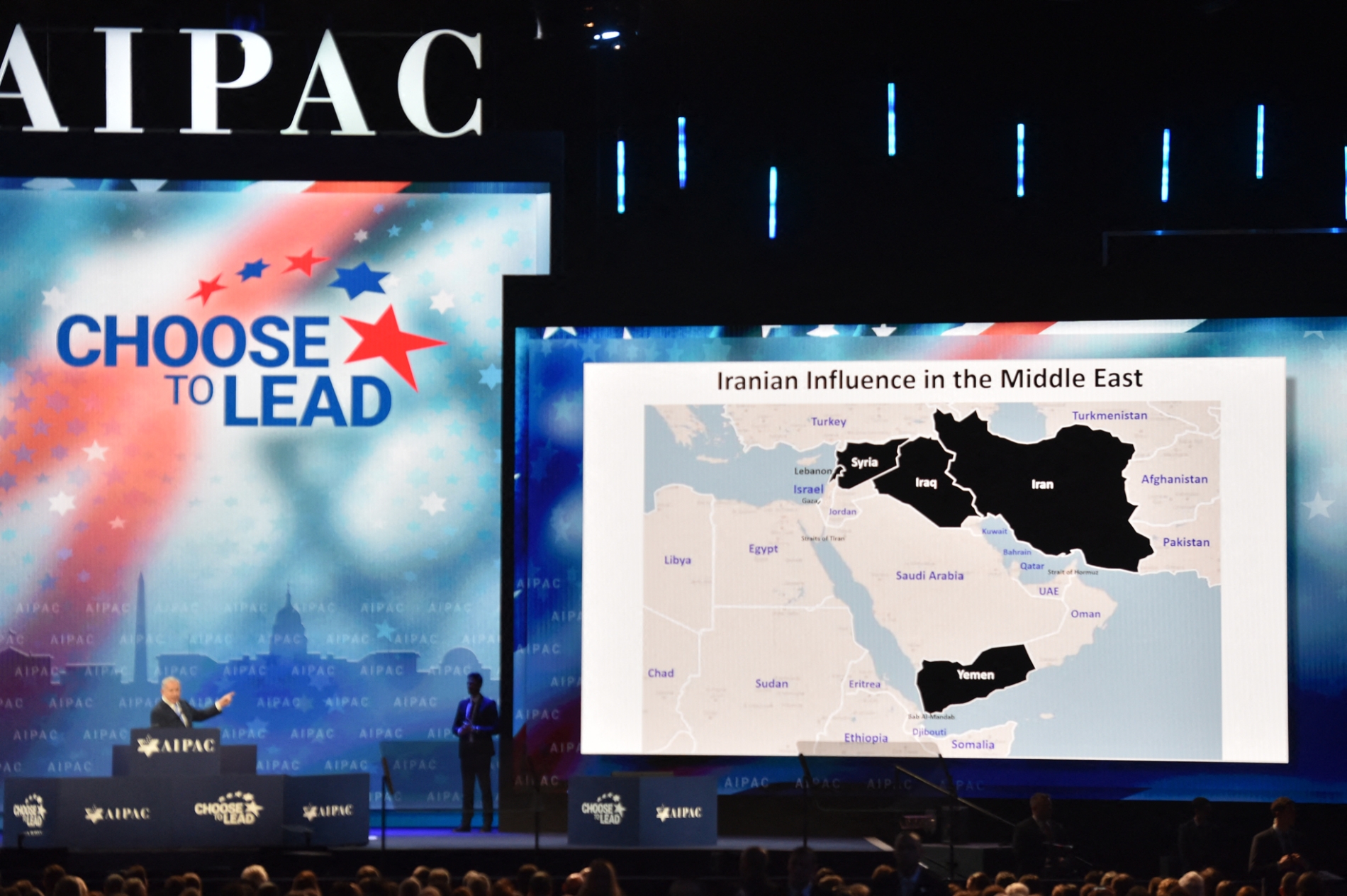
Israeli Prime Minister Benjamin Netanyahu speaks during the American Israel Public Affairs Committee (AIPAC) policy conference in Washington, DC, on 6 March 2018.

A losing battle

In recent months, the pro-Israel lobby in Washington has received unprecedented criticism from both sides of the aisle, but despite that, the proposed defence industry integration and expanded intelligence sharing measures are moving ahead easily in Congress. Only a few Democrats, such as California Representative Ro Khanna, argued against Article 219 in the House of Representatives Armed Services Committee deliberations of the Pentagon budget legislation.

Khanna got little support in his effort to cut Article 219 from the draft Pentagon budget legislation, so the bill now will go for a final vote in the House, where a few representatives—including Khanna and Republican Thomas Massie—will again try to remove Article 219 from the Pentagon budget law. They are not expected to succeed. The Pentagon and intelligence agencies' budget legislation must be approved by both chambers by September. It is possible that the Democrats will object to the bills and that a few Republicans (such as Massie) will join them, but the Israel-related elements of the budgets will receive little attention in the broader debate.

In large, vital bills like the annual Defence Department budget, it is not unusual for members of Congress to include their favoured special projects. For example, the Syrian-American community convinced Congress to include a law creating sanctions on the Assad regime in the 2019 Defence Department budget. Even opponents of closer bilateral relations with Israel will find it difficult to vote against a Pentagon budget bill that has economic benefits for every state in the country.

Military cash aid to Israel may be cut by the Congress in the upcoming State Department budget debates, but the defence sector integration and intelligence sharing are likely to pass. Members of Congress sensitive to criticism of military aid to Israel can vote to cut that direct aid and satisfy the many critics of Israel. At the same time, they can also vote for legislation that expands American-Israeli defence industry integration and greater intelligence sharing, thus pleasing the pro-Israel lobby. Israel's friends in Washington will not mind the unfavourable polls if they can secure new and powerful tools to boost Israeli power in the region.

font change

Related Articles