From first-timers to semi-finalists: Arab teams in the World Cup

Fans of Saudi Arabia, Algeria, Egypt, Iraq, Jordan, Qatar, and Tunisia have made their way across the Atlantic to watch their teams play

Al Majalla

From first-timers to semi-finalists: Arab teams in the World Cup

Four years ago, in Doha’s Souq Waqif, thousands gathered night after night in the colours of their national teams, supporting their countries in the 2022 Qatar World Cup. Speaking in the many accents of the Arab world, chanting and mingling, theirs was an unplanned harmony among supporters of Arab sides whose World Cup ambitions had often gone no further than surviving the first round. The players that did would enter history, able to earn a living from their exploits long after they finish playing.

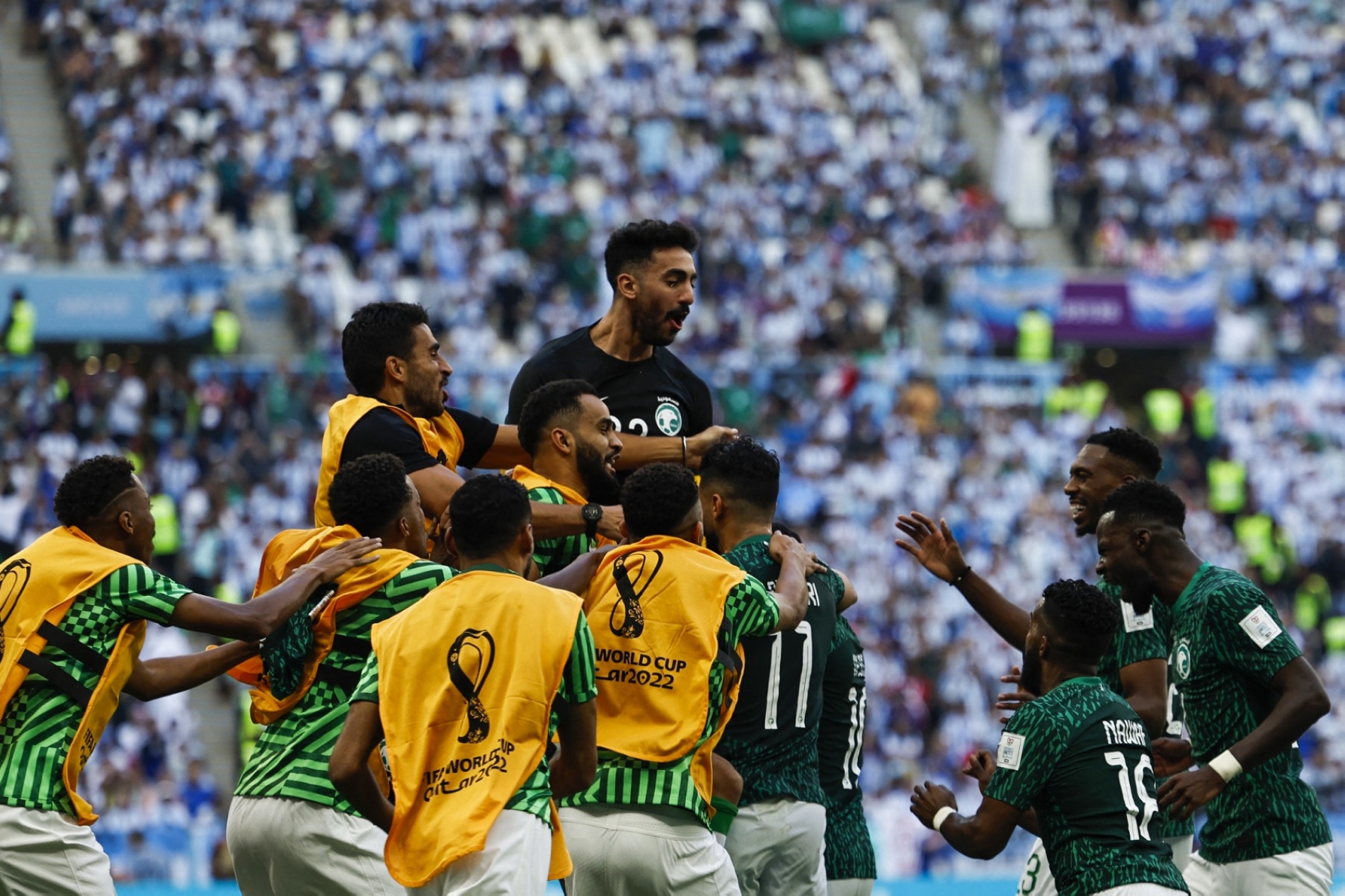
Qatar was the host nation, but it often felt like it was not alone in doing so. The tournament threw up a succession of magical moments, some of which would never have even been dreamt, such as Saudi Arabia’s win against Argentina, the eventual winners, at the golden Lusail Stadium on the afternoon of the tournament’s third day. Argentina’s team included Lionel Messi, perhaps the world’s best-ever player.

Likewise, the Tunisian supporter—frustrated by their team’s defensive approach in its first two matches—saw their country’s historic victory over a French side in the last group game. France were the defending champions and would progress to the 2022 final to meet Argentina. Tiny Qatar, meanwhile, was left with the triumph of organisation, one that went unmatched by the performance of its national team.

Morocco’s remarkable 2022 World Cup run captivated fans, with the team reaching the semi-final against France before playing Croatia for third place. For years, Arab football fans had grown weary of the phrase ‘honourable representation’ to describe their spirited lack of progress. Morocco’s run defied that, prompting a spontaneous Arab parliament to convene in that market.

An Arab team had confronted the giants of the game to reach the last four in the first World Cup to be held on Arab soil. It marked the moment when Arab ambition began to change on football’s greatest stage. Moroccan fans will be hoping to replicate the success of four years ago, when it became the first African team to reach the last four.
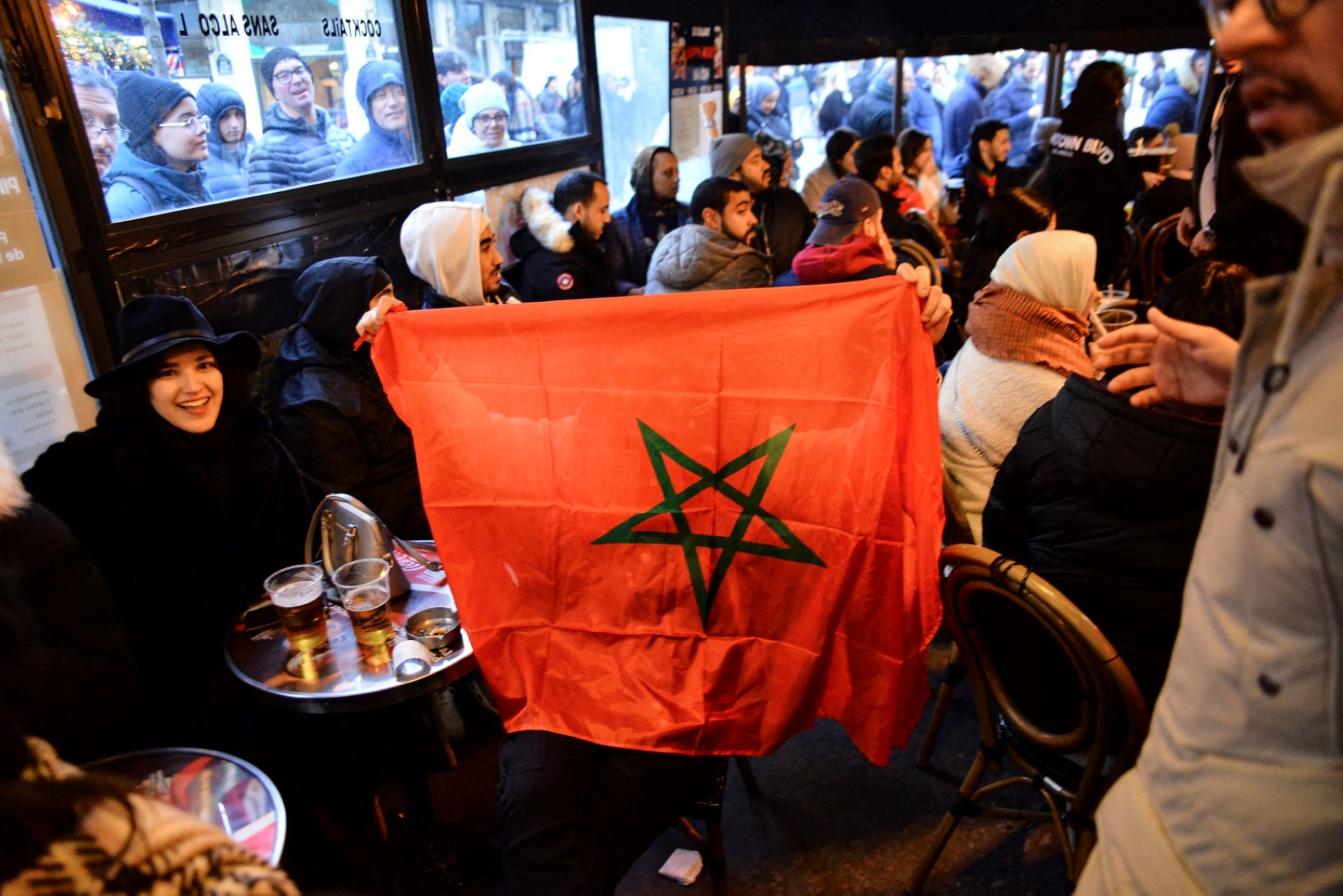
MARTIN LELIEVRE / AFP
Fans hold a Morocco flag as they watch the third-place football match of the Qatar 2022 World Cup between Croatia and Morocco on a screen at 'Le Galant' bar in central Paris on 17 December 2022.

The side that has just travelled to North America reached the final of the Africa Cup of Nations, which Morocco hosted just a few months earlier. Unfortunately, the final with Senegal was marred by an on-field dispute over refereeing decisions that prompted the players to walk off in protest. The issue is now before the Court of Arbitration for Sport.

That tournament marked the end of Walid Regragui’s journey with the national team after he had led it into World Cup history. It also offered a glimpse of Morocco’s reservoir of talent, built through sustained investment in footballing development. His successor, Mohamed Wahbi, delivered the Under-20 World Cup title the previous year.

A defensive instinct defined Regragui's style in recent years, so the new team will be analysed at length, not least because it brings together two generations. There are young players such as Bilal El Khannouss, Ismael Saibari and Ayyoub Bouaddi, alongside more established players such as goalkeeper Yassine Bounou, full-back Noussair Mazraoui, and midfielder Azzedine Ounahi. The younger players will assume centre stage when Morocco co-hosts the 2030 World Cup with Spain and Portugal.

Team captain Achraf Hakimi has had more success than most Arab players, having recently celebrated a second consecutive UEFA Champions League title with Paris Saint-Germain (PSG), which beat Arsenal of England in the final in May. All of this makes Morocco the Arab side most likely to travel furthest in this competition, even if its first test is against five-time world champions Brazil—one of the 2026 favourites.
Al Majalla

Returning teams and newcomers

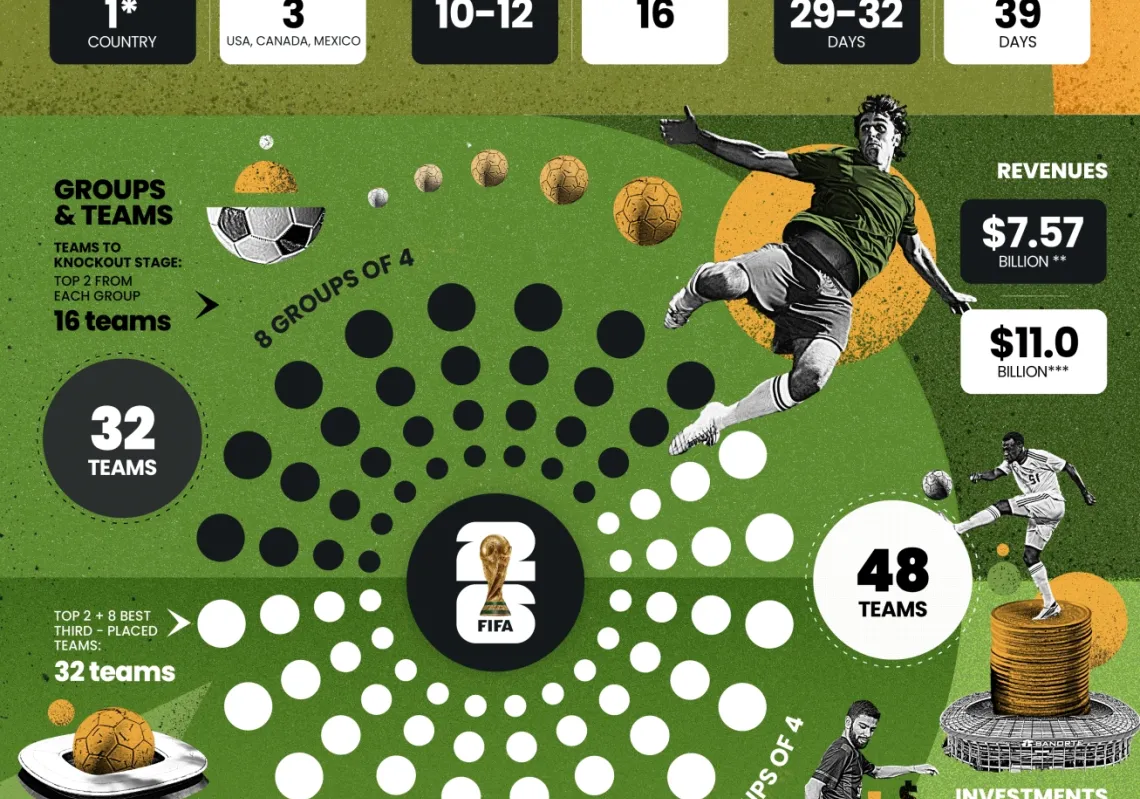
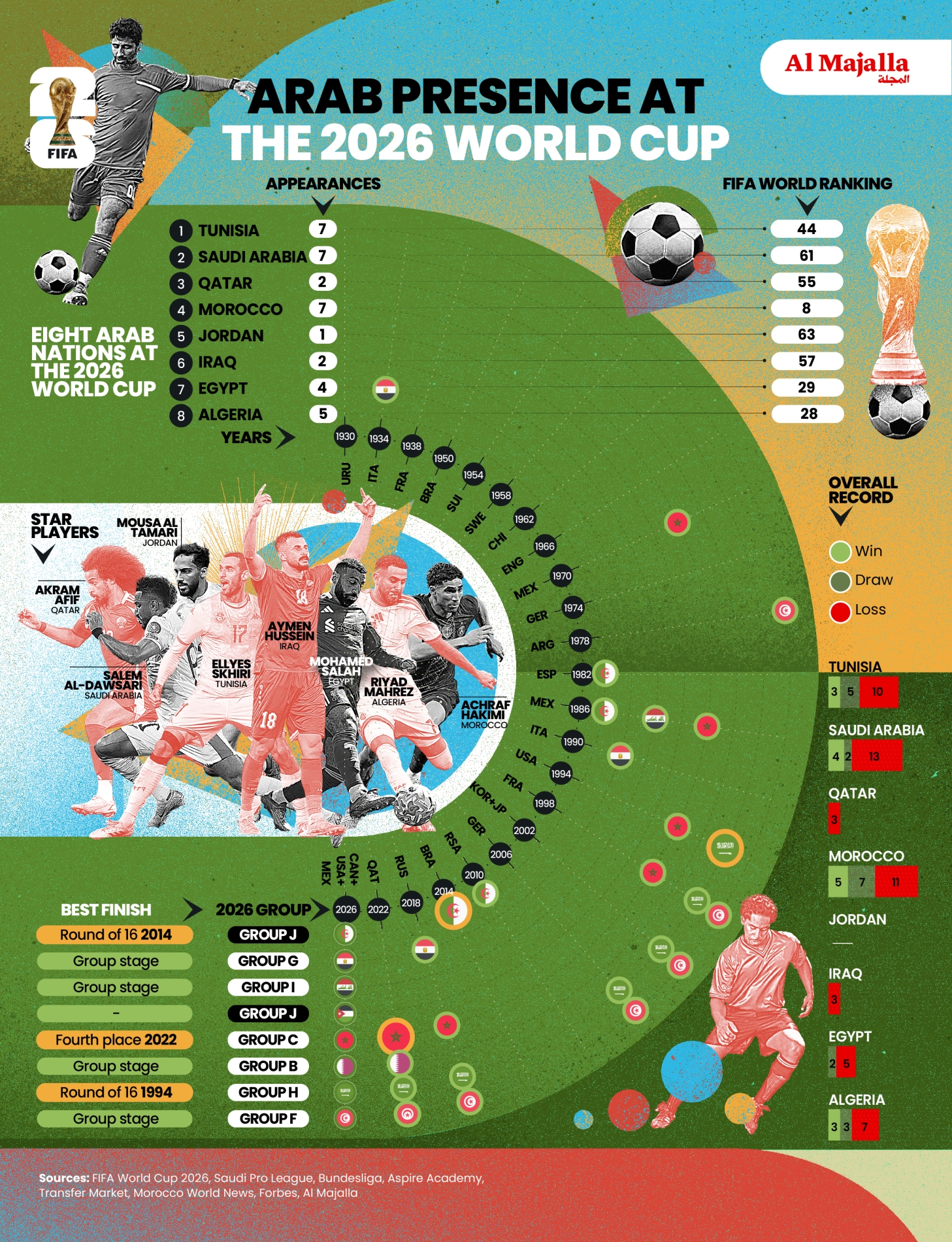
This year, eight Arab teams are among the 48 competing nations—a record number (although the tournament has expanded in 2026, from 32 teams previously). Fans of Algeria, Egypt, Iraq, Jordan, Morocco, Qatar, Saudi Arabia, and Tunisia have made their way across the Atlantic to watch their teams play. Egypt and Algeria were disappointed not to qualify for the 2022 World Cup in Qatar, as it would have been the closest thing to a home World Cup. After decades, Iraq appears at the tournament for only the second time, having secured its place through the global play-off in Mexico. Iraq’s only previous World Cup appearance came in 1986, also played in Mexico.

Qatar and Jordan each qualified through the preliminaries for the first time, Qatar having already had World Cup experience as the automatically qualifying host nation in 2022. For Jordanian fans, however, this is a welcome new experience, and although expectations are low.

Algeria deeply regretted missing out on qualification for Qatar 2022, not least because its team had the talent and public backing needed for the kind of tournament progress Morocco made. Cruelly, qualification was in Algerian hands until the final minute at home against Cameroon. 'Les Verts' have been absent from World Cup action since 2014, when they reached the second round for the only time in their history.
Morocco's remarkable 2022 World Cup run captivated fans, with the team reaching the semi-final against France before playing Croatia for third place

Algeria's relationship with the World Cup has always carried a certain noise and drama, whether or not the national team is present. Algeria took part in its maiden tournament in 1982 and promptly defeated Germany, who were then European champions. The pair were drawn together again in 2014, and Algeria took the match to extra time, Germany finally emerging 2-1 winners in a hard-fought battle, before going on to win it that year.

The Algerian domestic league has produced heroes such as Rabah Madjer, Salah Assad and Lakhdar Belloumi, and Algeria won the Africa Cup of Nations in Cairo just six years ago, so there is no lack of talent in the country. The team travels to this year's World Cup in North America with experienced captain Riyad Mahrez, 35, who has won the English Premier League title with both Leicester City and Manchester City, as well as the European Champions' League with the latter.

This could be his last tournament, but the likes of Ibrahim Maza, Adel Boulbina and Anis Hadj Moussa are ready to assume command as the rebuilding continues. Their first game is against Lionel Messi's world champions Argentina on 17 June. The draw also gives Algeria the chance to close the circle with Austria, who denied them in 1982.

Reuters
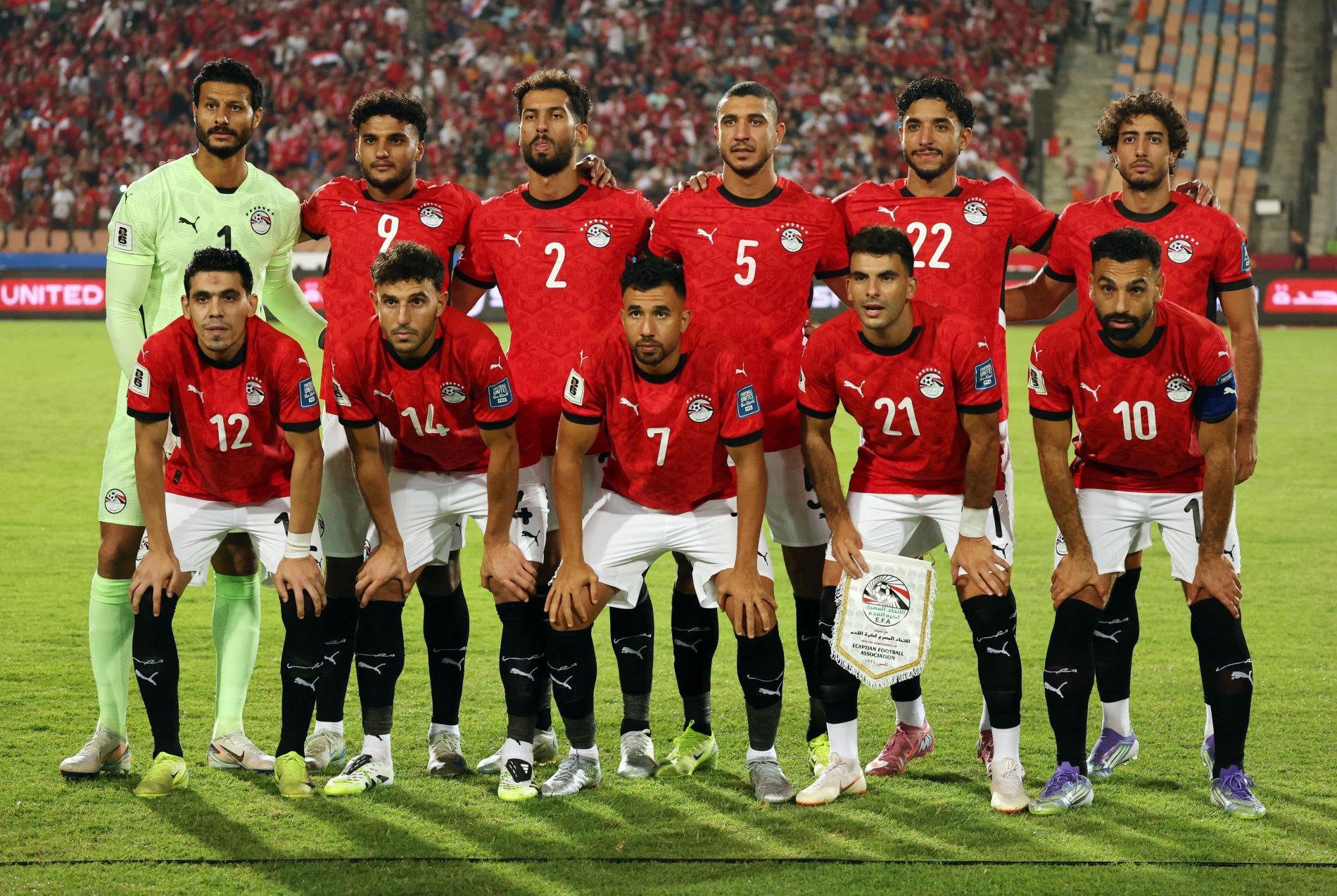
Egyptian national team players in the African Football Confederation qualifiers, Egypt, on 5 September 2025.

Unrealised dreams

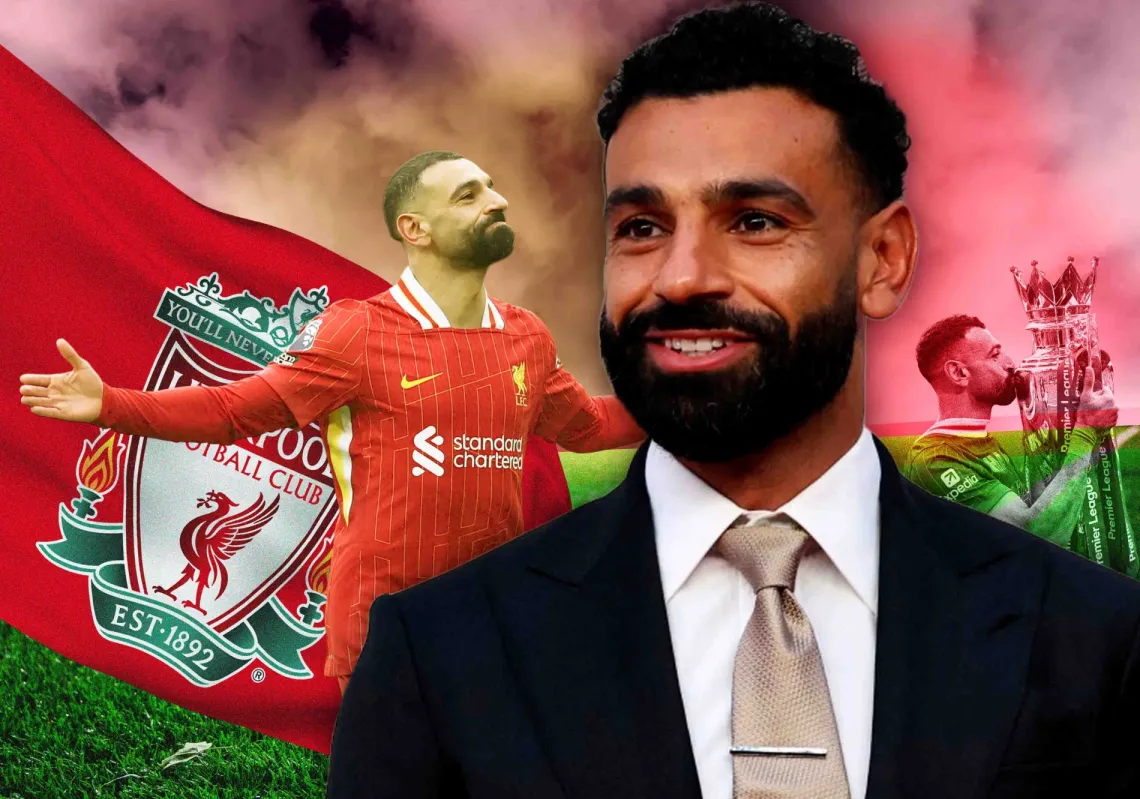
More than 100 million Egyptians have a passion for football and deep traditions in the game, having been crowned African champion seven times, but the team is yet to win a single match at the World Cup, despite having one of the world's best players, Mo Salah, who has just left the English team Liverpool after nine years there. Even when 'the Pharaohs' qualified for the 2018 World Cup, they only managed three defeats.

Egypt appears in a World Cup this year for only the fourth time in its history, still searching for a performance worthy of its standing. Its draw against the Netherlands at the 1990 World Cup is one of the most replayed in Egyptian television. Hossam Hassan was one of the heroes of that match, and the national team's all-time top scorer. Now the team's head coach, he can rally the players with his fervent personality.

With the World Cup returning to American soil for the first time since 1994, Saudis cannot forget the sight of 'the Green Falcons' soaring in that distant summer, when they announced themselves on the world stage by reaching the second round. Later appearances fell short of expectations, except for the day Salem Al-Dawsari and his teammates stunned Messi's Argentina in 2022.

Saudi Arabia will host the 2034 World Cup, so investment in the Saudi league has surged, bringing in some of the world's biggest stars, including Cristiano Ronaldo and Karim Benzema. Whether that translates to a strong national team remains to be seen, with Saudi players yet to offer a convincing answer. Success in the first Asian Cup to be hosted by the kingdom early next year begins with a positive showing in 2026.

Saudi fans hope that the team can produce another magical moment to stand beside the goal that shook Argentina's net in Doha, in one of the greatest upsets in World Cup history. For many, it has been too long since Saeed Al-Owairan scored against Belgium at Kennedy Stadium in the American capital 32 years ago.

KHALED DESOUKI / AFP
Saudi Arabia's midfielder #10 Salem Al-Dawsari (C) celebrates with teammates after scoring his team's second goal during the Qatar 2022 World Cup match between Argentina and Saudi Arabia on 22 November 2022.

Tunisia became the first Arab and African team to win a World Cup match, beating Mexico in 1978. Its five subsequent appearances have passed without much success, apart from the final-match victory over France in Qatar. A team that always seems to master qualification whatever its circumstances, Tunisia will hope to summon the same boldness with which its players approached their final match at the last World Cup.

A few months ago, the country appointed a new coach, Sabri Lamouchi, a Frenchman of Tunisian origin. By bringing in a group of young players, he is trying to draw a line under years of frustration, including administrative disputes and financial crises.

Whether they make it to the second round or not, this World Cup remains a special occasion for Iraq, Jordan, and Qatar. The latter's current generation seems to have already completed its mission, having put Qatari football on the map by winning the Asian Cup twice in succession. In 2026, the team appears to be under less pressure.

Jordan has given its supporters the achievement they had long awaited by getting into the World Cup, after two adventures in the Asian Cup and the Arab Cup in which 'Al-Nashama' reached the final. Expectations are low for this first-time participant. It will be an all-Arab affair when Jordan plays Algeria in San Francisco on 23 June. Jordanians will be hoping for a surprise result that would live long in memory.

Iraq returns to the World Cup for the first time in 40 years. After decades of war, its 2007 Asian Cup triumph is remembered as one of football's most enduring epics.

Long hiatus

Iraq returns to the World Cup for the first time in 40 years. The intervening decades have been scarred by war, which turned its 2007 Asian Cup triumph into one of football's most enduring epics. It now faces possibly the toughest group, with France, Norway, and Senegal. Each of the three teams has some of the world's best players, including Kylian Mbappé of France, Erling Haaland of Norway, and Sadio Mané of Senegal, the latter having played alongside Mo Salah at Liverpool for several years.

Few think Iraq will emerge from this group to reach the later stages. A more realistic aim may be to allow the players on the pitch to fashion an image of a country returning to what it once was: a regional footballing power. Like elsewhere in the Arab world, new generations can reclaim the right to dream after several lost decades. The time is now.

font change