
Has FIFA oversold the World Cup's economic promise? 

Days before kick-off, ambitious economic projections for the FIFA 2026 World Cup are colliding with weaker-than-expected demand in the hospitality sector

Pete Reynolds

Has FIFA oversold the World Cup's economic promise? 

Football fever is building ahead of the world’s biggest sporting event. After years of preparation, billions in investment, and promotional campaigns, only days remain until the FIFA 2026 World Cup kicks off. Jointly hosted by the US, Canada, and Mexico, it will be the largest tournament in the competition’s history, featuring more teams, more matches, and more host nations than ever before.

Yet, away from the stadia, star players, and tactical forecasts—and despite its billing as a historic event that would inject tens of billions of dollars into the North American economy—figures reveal a less-than-rosy reality.

A week before the opening whistle on 11 June, indicators from the hospitality sector, one of the industries expected to benefit most from the tournament, show far less demand than anticipated. A May report by the American Hotel and Lodging Association (AHLA) found that around 80% of hotel owners in host cities said bookings were well below expectations, with some cities, including Kansas City, recording occupancy rates even lower than those of an ordinary summer season.

The reasons for this lower-than-expected demand are varied. However, between 65 and 70% of respondents across host markets said visa restrictions and broader geopolitical concerns were having a significant impact on the decline in international demand, according to the report. These factors consistently ranked among the main obstacles preventing fans from travelling to the tournament.

Although US consulates have recently opened urgent fast-track pathways to accelerate visa processing for holders of confirmed tickets, these measures have come too late to fundamentally alter international flight plans.

FIFA’s advance reservation of hotel rooms also created misleading early signals of heightened demand before estimates returned to more realistic levels. Around half of the respondents in host cities reported significant releases of room blocks, while in some cities 90% of reserved inventory was eventually returned to the market.

“Hotels in host cities have spent years preparing for the World Cup, and while there is still genuine excitement, the data point to a more complicated outlook than many had hoped,” said Rosanna Maietta, president and chief executive of the AHLA. Although a number of factors have tempered the early optimism, she added that unnecessary increases in visa costs and transport to and from matches must be avoided if the tournament’s remaining potential is to be realised.

Reuters
A replica of the World Cup trophy during the tournament in Panama City, Florida, on 26 May 2026.

Low global demand

The deeper problem is the composition of demand itself. Domestic visitors dominate current bookings, while international interest has remained far weaker than expected. Some analysts believe both FIFA and hotel operators overestimated the US market's ability to attract large numbers of international fans, leaving many host cities with far more rooms than demand could absorb.

The combination of weak international demand and the release of previously reserved room blocks has created an oversupply, triggering a price war. Traditional hotels have entered into competition with short-term rental platforms such as Airbnb, which continue to attract families and groups of young travellers thanks to their flexible pricing. Hotels, in turn, have been forced to offer released rooms at steep discounts, up to 20%, to clear inventory quickly.
Domestic visitors dominate current bookings, while international interest has remained far weaker than expected.

The cost of accommodation is not the only thing that has sparked criticism. In late May, authorities in New York and New Jersey opened an investigation into certain World Cup ticket-selling practices, including complaints about dynamic pricing and discrepancies between the seats assigned and the categories fans had booked. While the investigation is not focused on overall demand, it has highlighted fans' sensitivity to rising costs.

The shortfall in bookings goes beyond weak early demand. Several interlocking factors have contributed, foremost among them the high cost of tickets, travel, and accommodation. Combined, these factors have made attending the tournament more expensive than ever. Inflation, coupled with hotels' early price hikes in anticipation of a surge in demand, has also played a role in deterring visitors. Fierce competition among the 16 host cities has further fragmented demand. 

As a result, domestic and regional visitors are expected to account for the bulk of attendance. Analysts in the hospitality sector believe this could reduce the average length of stay per visitor compared with previous World Cups, such as Qatar 2022 and Russia 2018, both of which relied more heavily on long-haul international visitors.

AFP
Sofia Stadium is among the stadiums that will host World Cup events in Los Angeles on 24 May 2026.

Match distribution and cost

e and $620mn. This impact depends primarily on visitor spending on hospitality, transport, restaurants, and retail. While Kansas City appears to be suffering more than others, Miami and Atlanta seem relatively better placed. Major cities such as New York and Los Angeles, meanwhile, expect limited growth below initial ambitions. Boston, in particular, has shown a relative improvement in bookings of between five and 11% compared with last summer.

In Canada, where matches are being held in Toronto and Vancouver, the tournament is expected to deliver a tangible economic impact. An assessment prepared by Deloitte for FIFA indicated that the event is expected to generate around $2.75bn in economic output, add approximately $1.44bn to GDP, produce $940mn in labour income, and generate roughly $505mn in government revenue.

The event is also expected to support around 24,100 jobs. Vancouver, which will host seven matches, is expected to be the larger economic beneficiary of the two Canadian host cities. The economic impact associated with hosting the tournament is estimated at approximately $1.2bn in British Columbia, with expectations that the event will support or create roughly 13,700 jobs. Toronto, by contrast, will host six matches. 

ALFREDO ESTRELLA / AFP
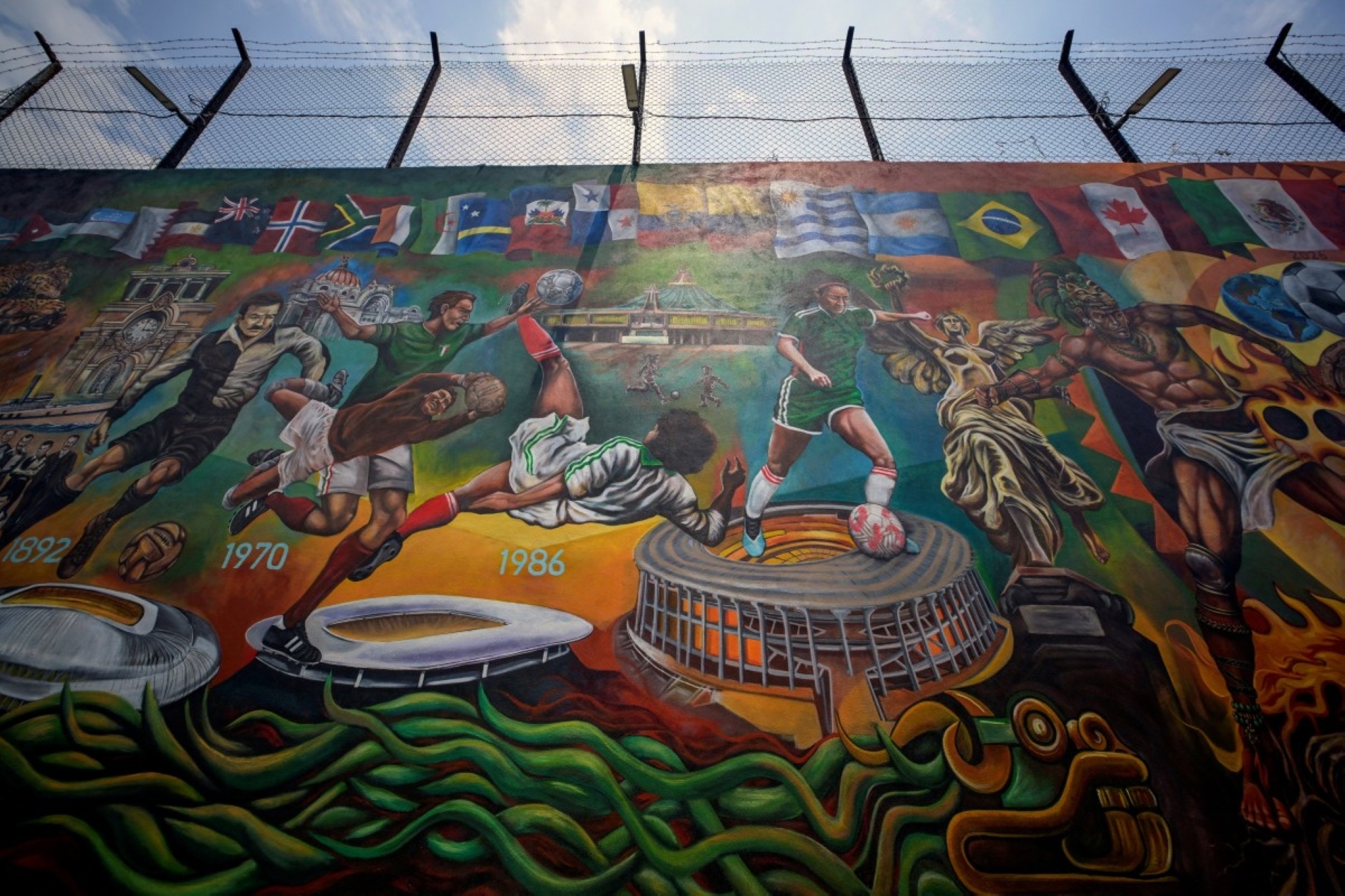
A hand-painted mural featuring 2026 World Cup motifs is pictured in Mexico City on 25 May 2026.

Bigger economic impact

Although the number of matches to be held in Mexico City, Monterrey, and Guadalajara is limited, the economic impact is expected to be more visible in relative terms than in the larger US and Canadian economies. According to Deloitte, the tournament is expected to generate around $4.05bn in economic activity, including $2.25bn in additional consumption and $1.8bn in infrastructure investment. It is also expected to add around $2.73bn in value to the Mexican economy, equivalent to 0.14% of GDP, and support around 112,200 temporary jobs. The restaurant, hospitality, and transport sectors are expected to be among the main beneficiaries, with accommodation spending projected at around $614mn and food and restaurant spending at roughly $728mn.

Mexico's lower costs and appeal to Latin American travellers could make it a more attractive base for some supporters than many US cities. Even so, much of the economic impact will remain temporary, with longer-term benefits likely to depend on infrastructure upgrades and sustained growth in tourism.

Many have compared the 2026 FIFA World Cup to the 1994 tournament, which the US hosted alone. Economic estimates at the time, including projections by the Anderson Centre at the University of California, Los Angeles, pointed to an economic impact of nearly $4bn. Some cities recorded notably positive results. Los Angeles registered gains of $623mn, while other cities, including New York, Boston, and San Francisco, benefited by more than $1bn combined, as hotels and restaurants saw revenues rise by 10 to 15%. The tournament also helped pave the way for the launch of Major League Soccer in 1996, creating a long-term sporting legacy in the US.

Yet subsequent academic studies conducted after the event, most notably the work of economists Robert Baade and Victor Matheson, questioned the scale of the actual gains once operating costs and government spending were taken into account. The 1994 tournament was also smaller in scale, with 24 teams and 52 matches. By contrast, the 2026 World Cup will involve 48 teams and 104 matches, while facing more complex challenges, including its organisation across three countries, higher costs, and barriers to international travel.

Despite a slew of challenges, more than five million tickets had already been sold, putting the tournament on course to break the World Cup attendance record

Record-breaking attendance?

Despite these challenges, more than five million tickets had already been sold by the final weeks before kick-off, according to FIFA, putting the tournament on course to break the World Cup attendance record. 

The final week before kick-off may bring a recovery in bookings as prices adjust and travel plans firm up. Yet the evidence so far suggests that the tournament's economic impact may fall short of the most optimistic projections. As the largest World Cup ever staged prepares to begin, the real test may not be attendance or television audiences, but whether the event delivers lasting benefits for the cities and communities hosting it.

font change