
Four years ago, in Doha’s Souq Waqif, thousands gathered night after night in the colours of their national teams, supporting their countries in the 2022 Qatar World Cup. Speaking in the many accents of the Arab world, chanting and mingling, theirs was an unplanned harmony among supporters of Arab sides whose World Cup ambitions had often gone no further than surviving the first round. The players that did would enter history, able to earn a living from their exploits long after they finish playing.
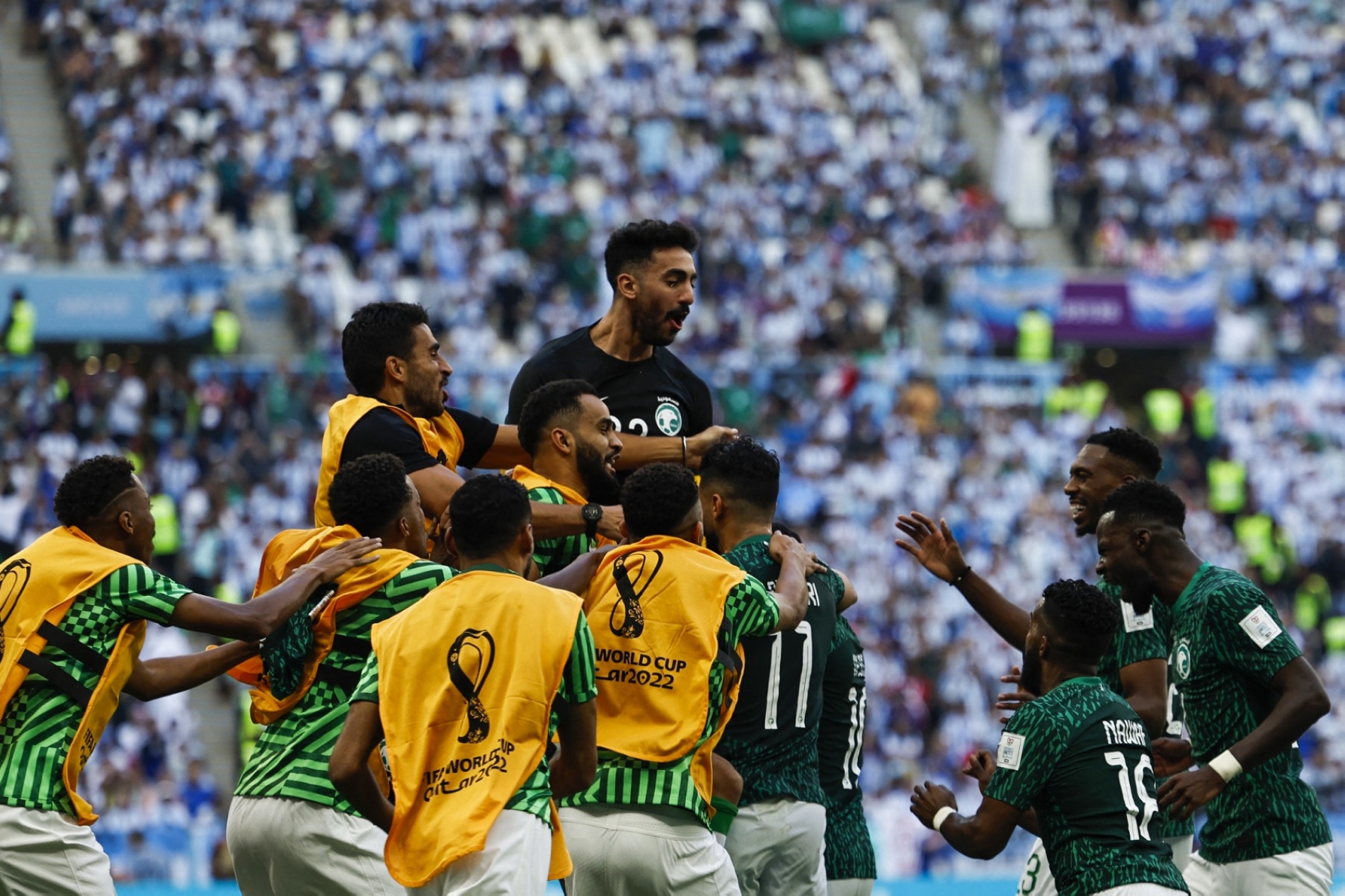
Qatar was the host nation, but it often felt like it was not alone in doing so. The tournament threw up a succession of magical moments, some of which would never have even been dreamt, such as Saudi Arabia’s win against Argentina, the eventual winners, at the golden Lusail Stadium on the afternoon of the tournament’s third day. Argentina’s team included Lionel Messi, perhaps the world’s best-ever player.
Likewise, the Tunisian supporter—frustrated by their team’s defensive approach in its first two matches—saw their country’s historic victory over a French side in the last group game. France were the defending champions and would progress to the 2022 final to meet Argentina. Tiny Qatar, meanwhile, was left with the triumph of organisation, one that went unmatched by the performance of its national team.
Morocco’s remarkable 2022 World Cup run captivated fans, with the team reaching the semi-final against France before playing Croatia for third place. For years, Arab football fans had grown weary of the phrase ‘honourable representation’ to describe their spirited lack of progress. Morocco’s run defied that, prompting a spontaneous Arab parliament to convene in that market.
An Arab team had confronted the giants of the game to reach the last four in the first World Cup to be held on Arab soil. It marked the moment when Arab ambition began to change on football’s greatest stage. Moroccan fans will be hoping to replicate the success of four years ago, when it became the first African team to reach the last four.
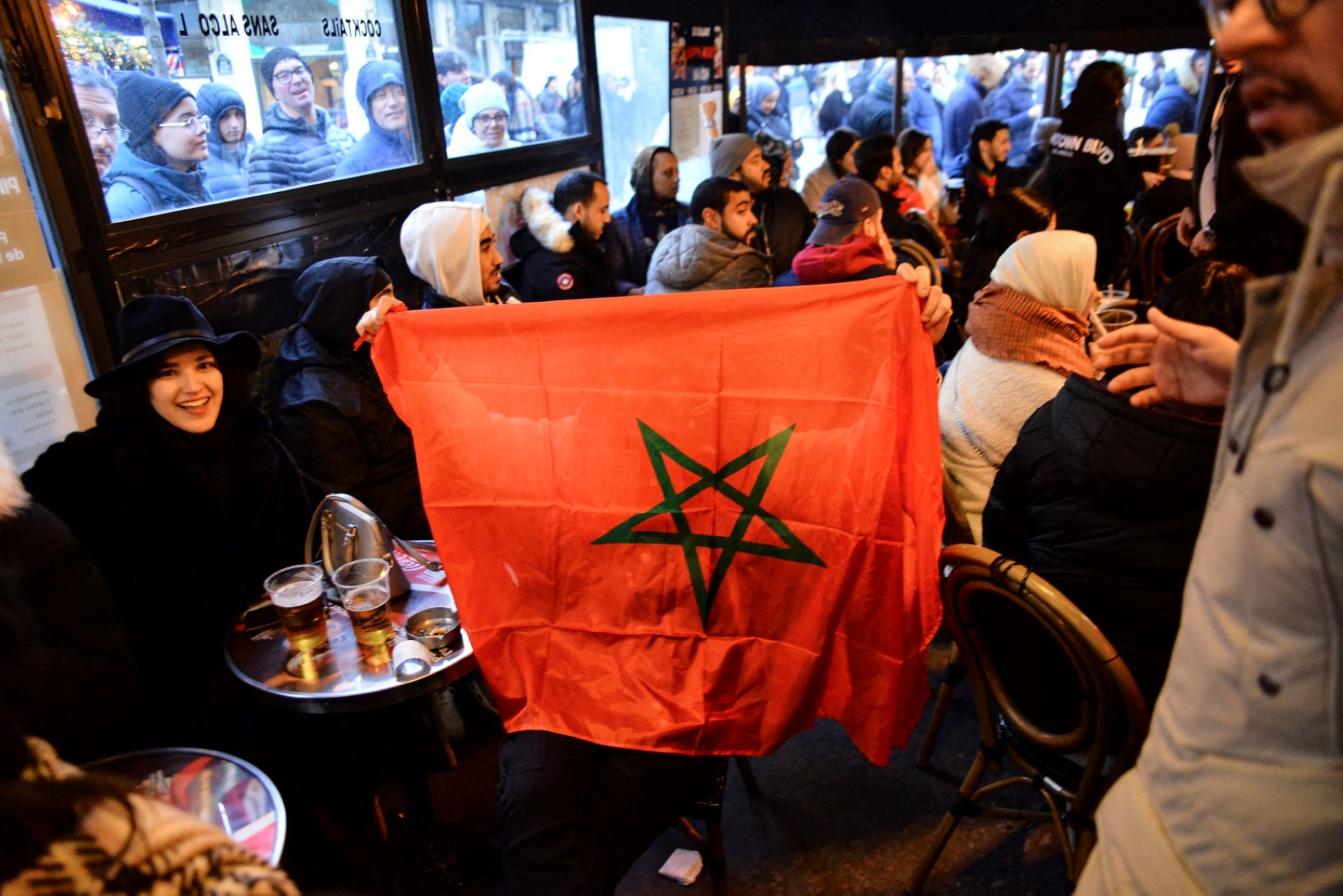
The side that has just travelled to North America reached the final of the Africa Cup of Nations, which Morocco hosted just a few months earlier. Unfortunately, the final with Senegal was marred by an on-field dispute over refereeing decisions that prompted the players to walk off in protest. The issue is now before the Court of Arbitration for Sport.
That tournament marked the end of Walid Regragui’s journey with the national team after he had led it into World Cup history. It also offered a glimpse of Morocco’s reservoir of talent, built through sustained investment in footballing development. His successor, Mohamed Wahbi, delivered the Under-20 World Cup title the previous year.
A defensive instinct defined Regragui's style in recent years, so the new team will be analysed at length, not least because it brings together two generations. There are young players such as Bilal El Khannouss, Ismael Saibari and Ayyoub Bouaddi, alongside more established players such as goalkeeper Yassine Bounou, full-back Noussair Mazraoui, and midfielder Azzedine Ounahi. The younger players will assume centre stage when Morocco co-hosts the 2030 World Cup with Spain and Portugal.
Team captain Achraf Hakimi has had more success than most Arab players, having recently celebrated a second consecutive UEFA Champions League title with Paris Saint-Germain (PSG), which beat Arsenal of England in the final in May. All of this makes Morocco the Arab side most likely to travel furthest in this competition, even if its first test is against five-time world champions Brazil—one of the 2026 favourites.
Returning teams and newcomers
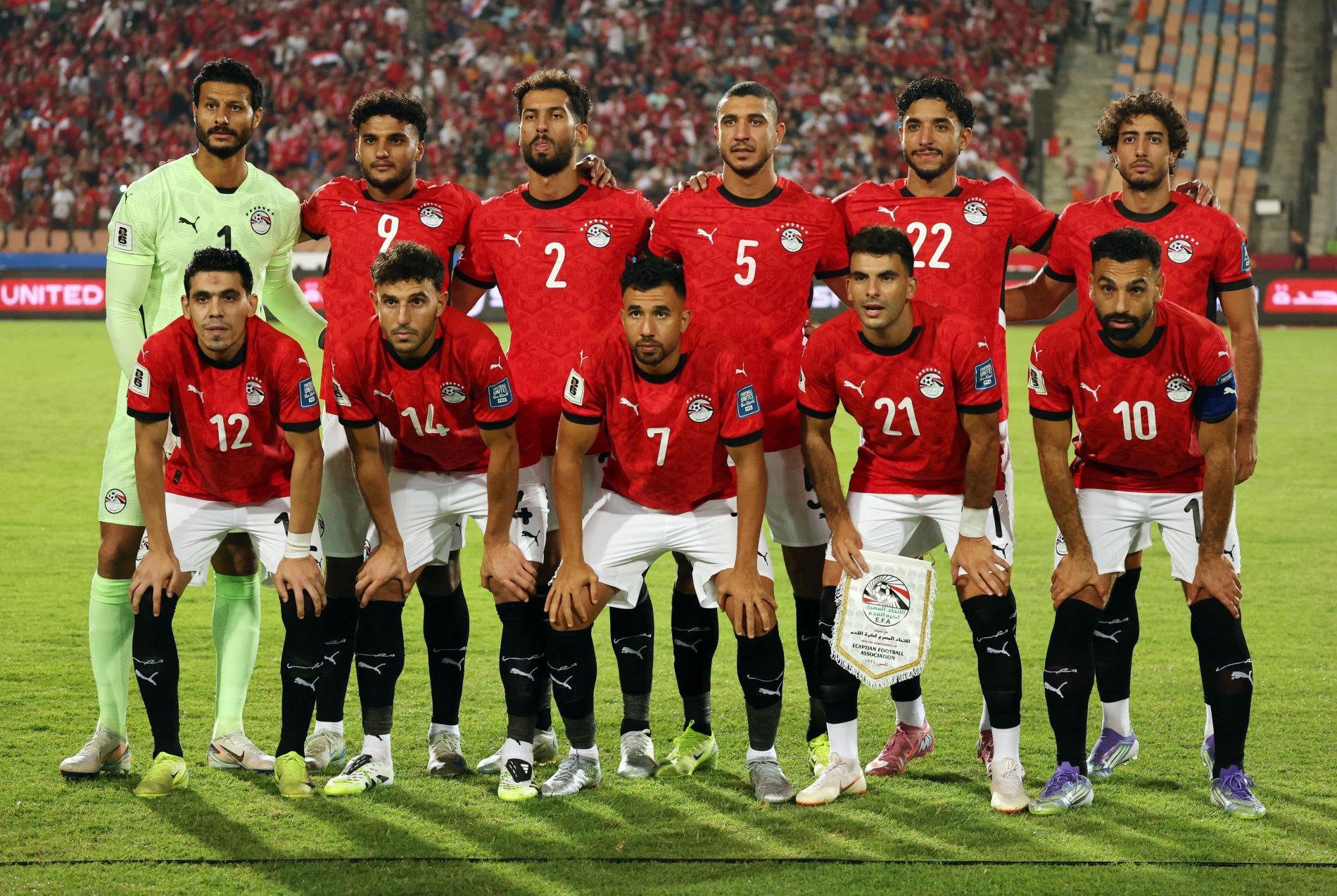
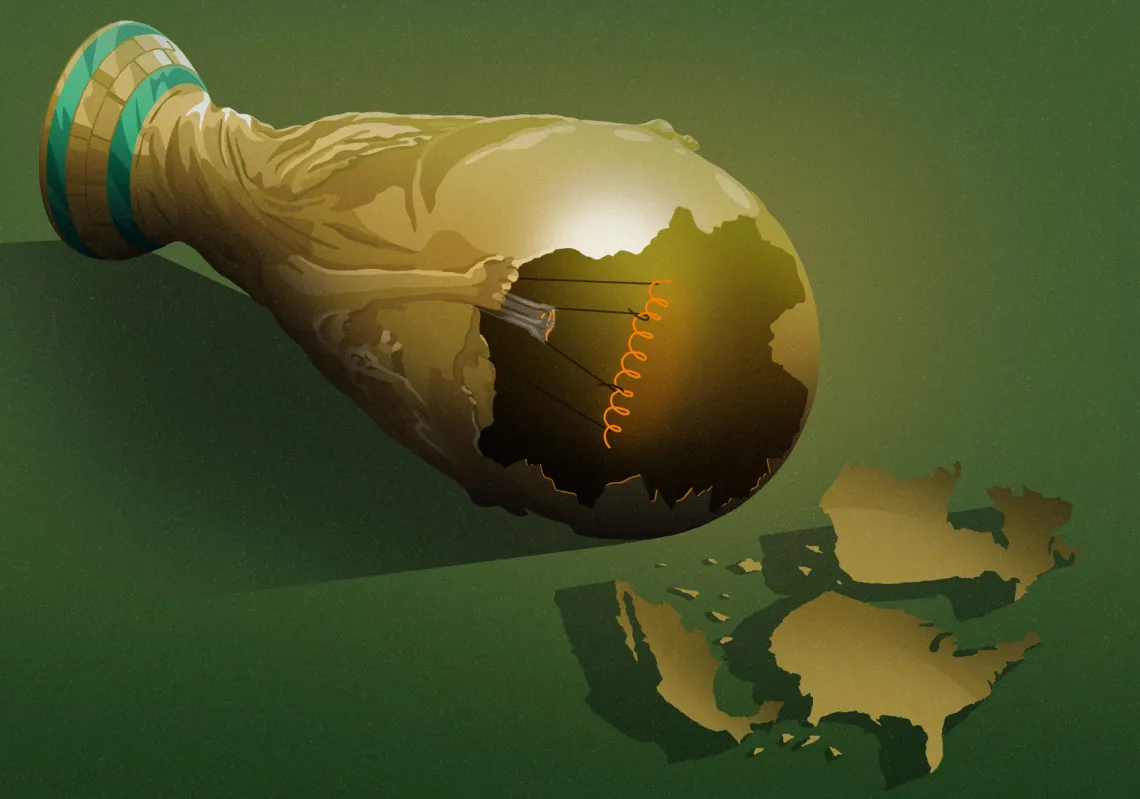
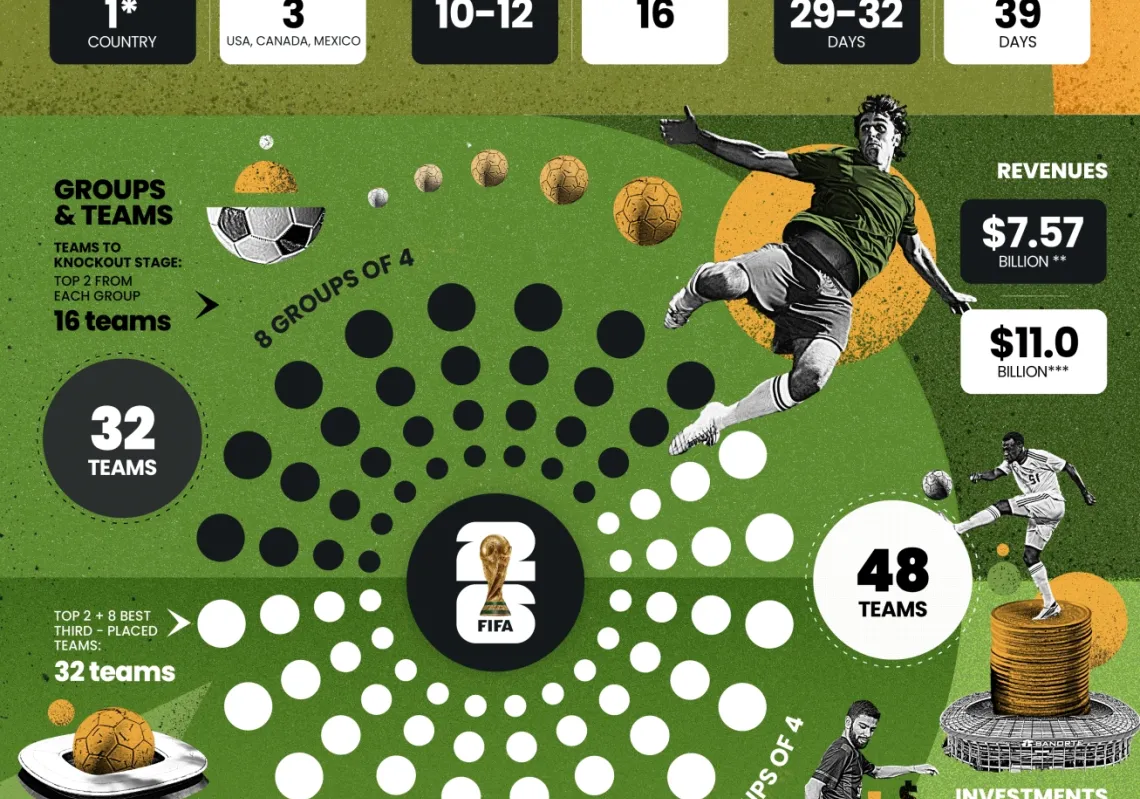
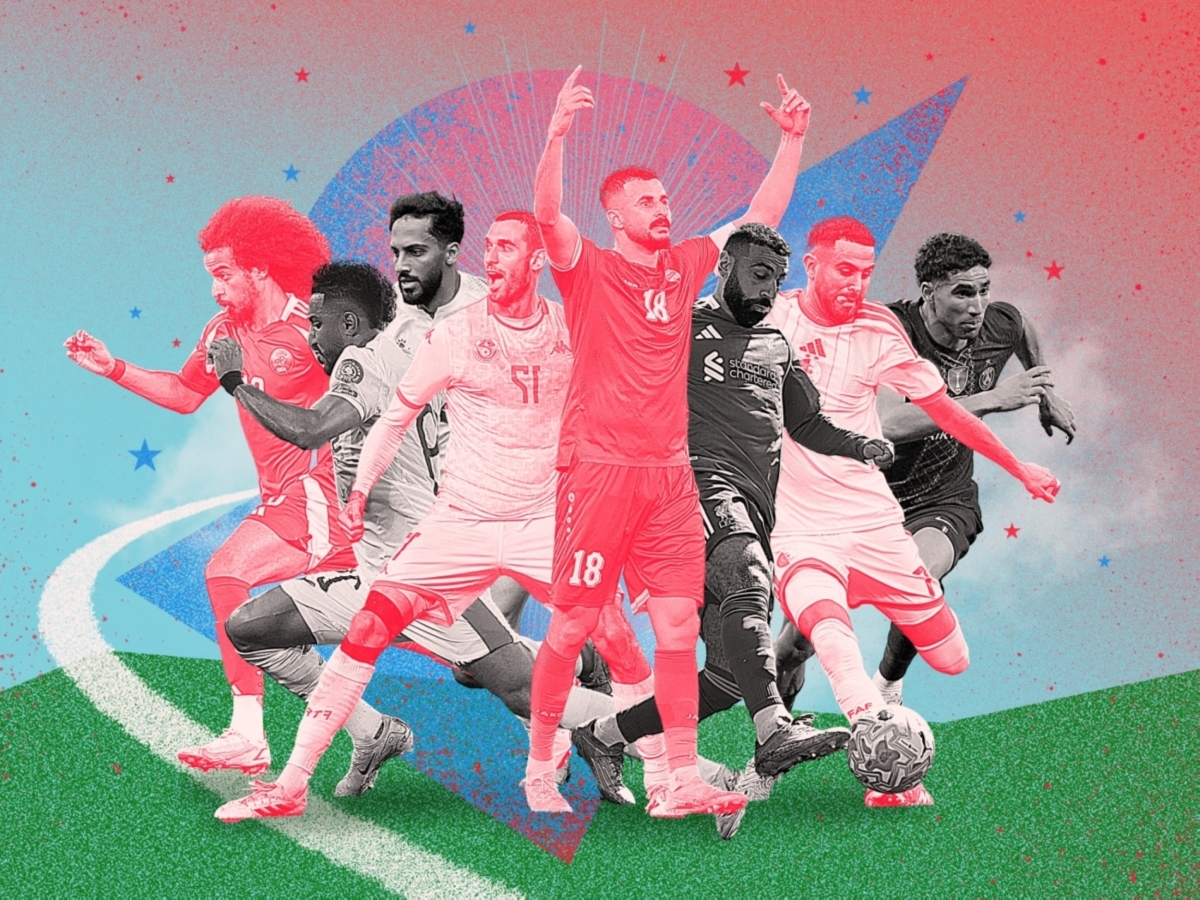
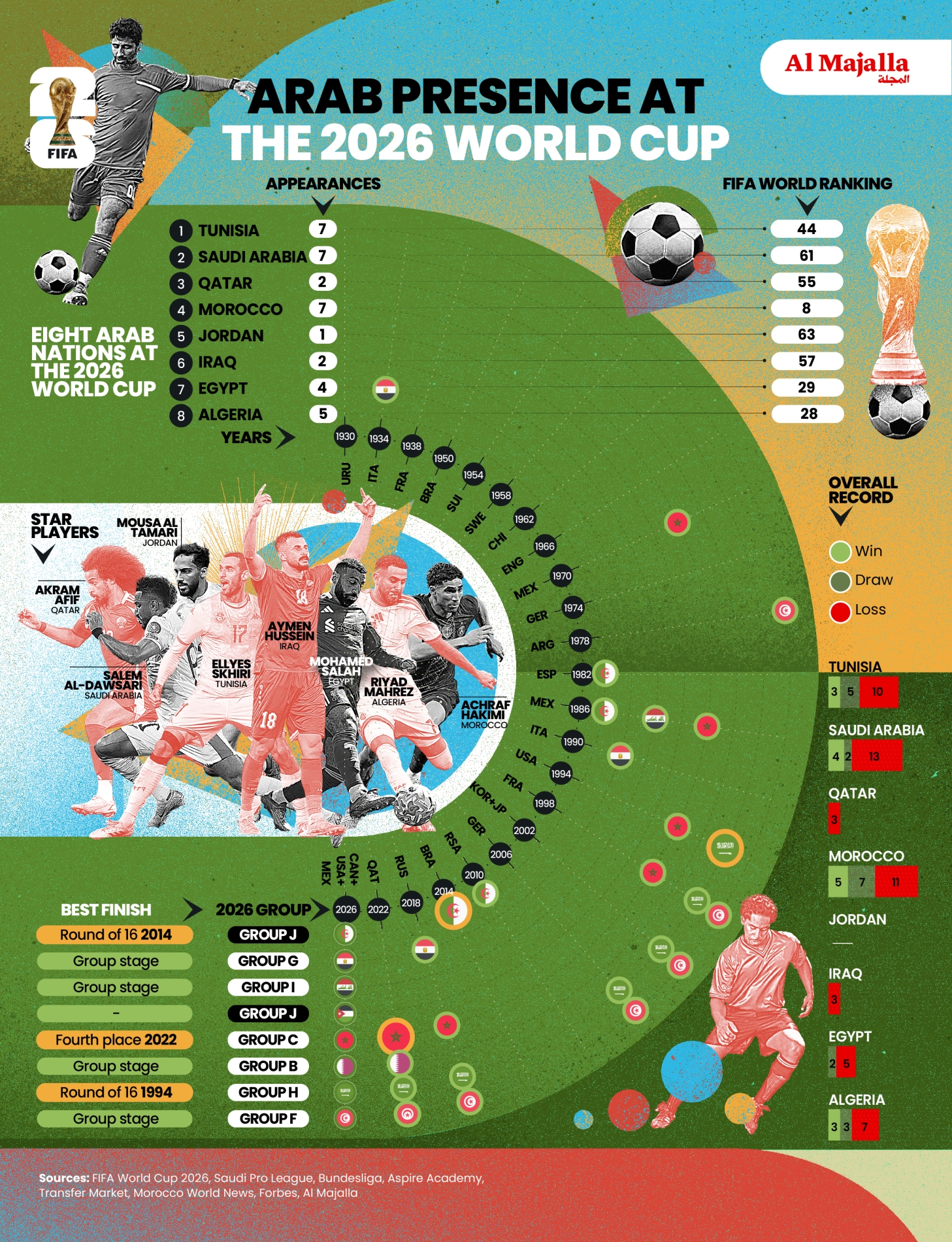
This year, eight Arab teams are among the 48 competing nations—a record number (although the tournament has expanded in 2026, from 32 teams previously). Fans of Algeria, Egypt, Iraq, Jordan, Morocco, Qatar, Saudi Arabia, and Tunisia have made their way across the Atlantic to watch their teams play. Egypt and Algeria were disappointed not to qualify for the 2022 World Cup in Qatar, as it would have been the closest thing to a home World Cup. After decades, Iraq appears at the tournament for only the second time, having secured its place through the global play-off in Mexico. Iraq’s only previous World Cup appearance came in 1986, also played in Mexico.
Qatar and Jordan each qualified through the preliminaries for the first time, Qatar having already had World Cup experience as the automatically qualifying host nation in 2022. For Jordanian fans, however, this is a welcome new experience, and although expectations are low.
Algeria deeply regretted missing out on qualification for Qatar 2022, not least because its team had the talent and public backing needed for the kind of tournament progress Morocco made. Cruelly, qualification was in Algerian hands until the final minute at home against Cameroon. 'Les Verts' have been absent from World Cup action since 2014, when they reached the second round for the only time in their history.