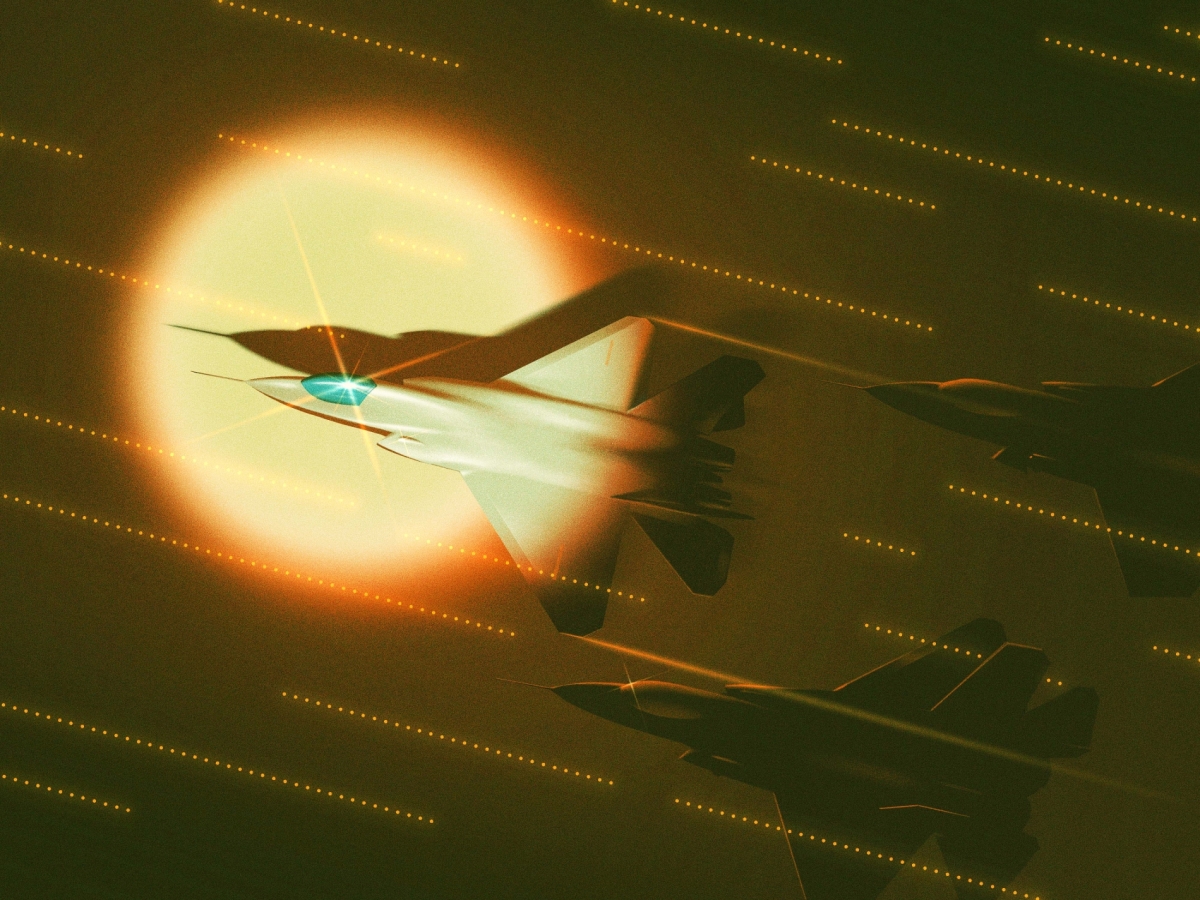

In early May, Chinese state television aired footage of the export version of China’s J-35AE fighter jet, in a display that carried more weight than routine military publicity. For many observers, the message was deliberate: Beijing wanted to show that its new stealth fighter was no longer confined to the laboratory or the exhibition hall, but was moving closer to becoming a viable export platform.
The timing added to its significance. Reports have linked the aircraft to Pakistan, widely regarded as the leading candidate to become the first foreign buyer of the J-35AE. If those assessments are borne out, this would be more than another arms deal. It could carry Chinese stealth technology into the centre of South Asia’s air-power balance. Pakistan is not an average customer of China, but a close military partner whose defence arsenal depends heavily on Chinese systems. Any sale would therefore mark a further elevation in the defence relationship between Beijing and Islamabad.
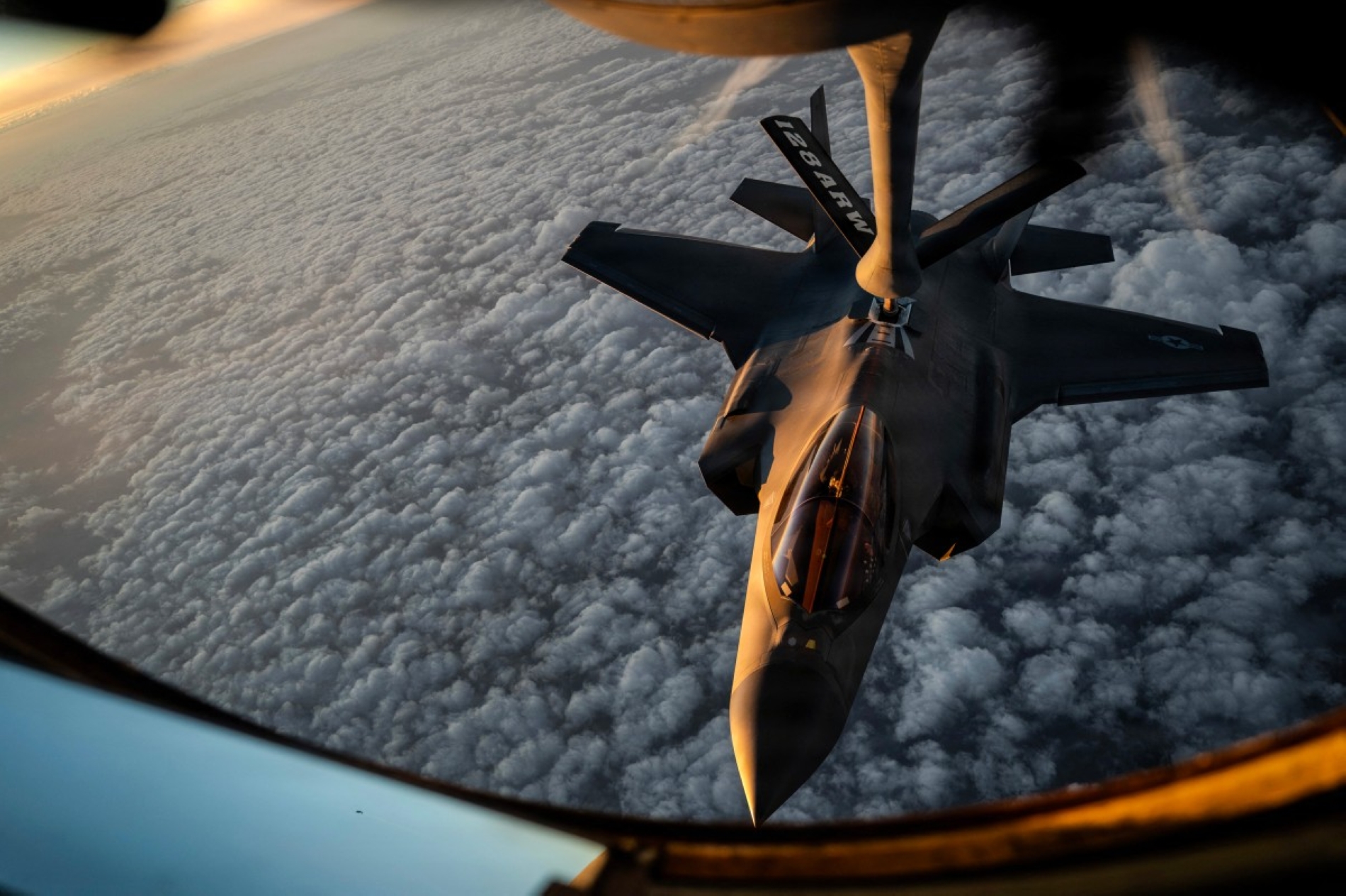
The larger question, however, is whether the J-35 can become a serious rival to the American F-35. A similar silhouette, or even the broad category of ‘stealth fighter’, tells only part of the story. The F-35 is more than an aircraft designed to evade radar. It is a full combat architecture built around sensors, data fusion, electronic warfare, and integration with a wide network of allied forces and military systems.
The J-35 family belongs to a different stage of development. It represents China’s accelerating effort to develop a multi-role stealth fighter, with an air force version (the J-35A), a carrier-borne naval variant, and an export model in the form of the J-35AE.
What is the J-35 fighter?
The J-35 is China’s latest effort to develop a family of fifth-generation stealth fighters, smaller and more adaptable than the country’s heavy J-20. Beijing is no longer looking to build its stealth air power around a single aircraft. It wants a platform that can serve with the air force, operate from aircraft carriers, and, in time, possibly be sold abroad. The J-35, therefore, should be understood as a family rather than a single aircraft.
The specifications presented so far place the J-35 in the medium-sized stealth fighter category. Powered by the WS-13 engine, it can reportedly reach Mach 1.8, with a combat range of about 1,200km and a flight ceiling of 16,000m. Its weapons configuration is designed to alternate between stealth and load capacity: internal weapons bays for missions requiring a lower radar signature, and external hardpoints for when heavier firepower is needed. Its advertised arsenal includes medium-range air-to-air missiles, supersonic air-to-ground missiles, and deep-penetration bombs.
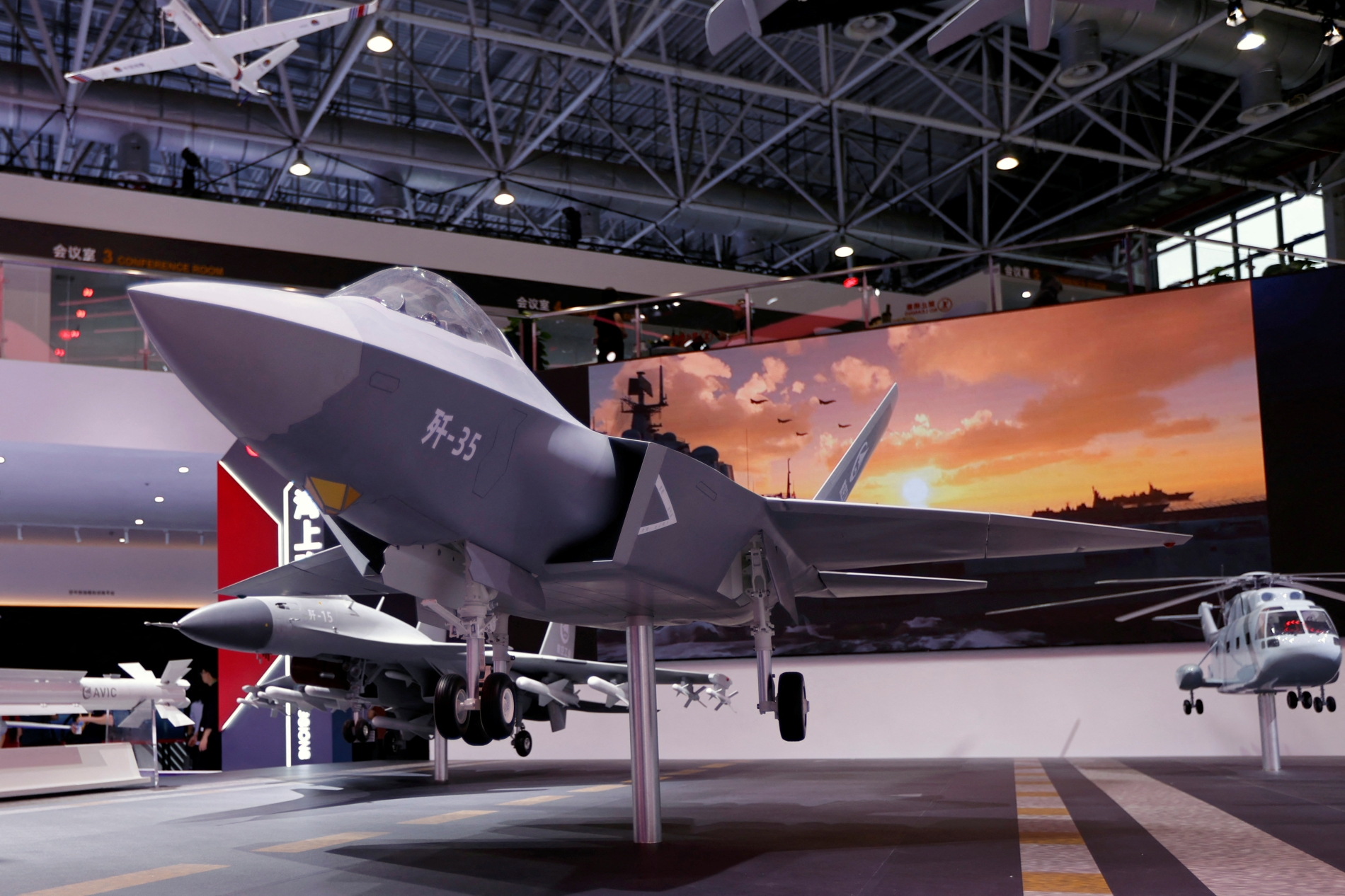
China is also presenting the aircraft as more than a low-observable airframe. In addition to enhanced stealth, the J-35 incorporates systems associated with fifth-generation combat, including AESA radar, an electro-optical targeting system, known as EOTS, and a distributed aperture system, or DAS, for optical early warning. These features are meant to give the aircraft a role as an integrated platform for combat, targeting, and situational awareness, rather than a stealth design carrying conventional avionics.
The J-35A matters because it would give the Chinese air force a second stealth fighter alongside the J-20. That points to a division of labour inside China’s future stealth fleet: a heavy, long-range aircraft on one side, and a medium-sized multi-role fighter on the other. Even so, the aircraft’s real capabilities remain difficult to assess from the outside. Key questions remain open, including the final engine choice, radar performance, data-fusion capacity, electronic warfare systems, and the degree of stealth it can maintain in combat conditions.
The naval version may prove the most strategically consequential. It is tied to China’s aircraft carrier ambitions, especially the Fujian, which is equipped with an electromagnetic catapult. Once operational, the carrier-borne J-35 will allow China’s navy to move beyond reliance on the non-stealth J-15 and towards a more advanced naval air wing, potentially combining stealth fighters with early-warning aircraft such as the KJ-600.