Amid US-China competition in the Gulf, there is room for cooperation

The Strait of Hormuz has emerged as a fragile space of competitive geopolitical coexistence between the US and China. But it should be carefully managed.

Pete Reynolds

Amid US-China competition in the Gulf, there is room for cooperation

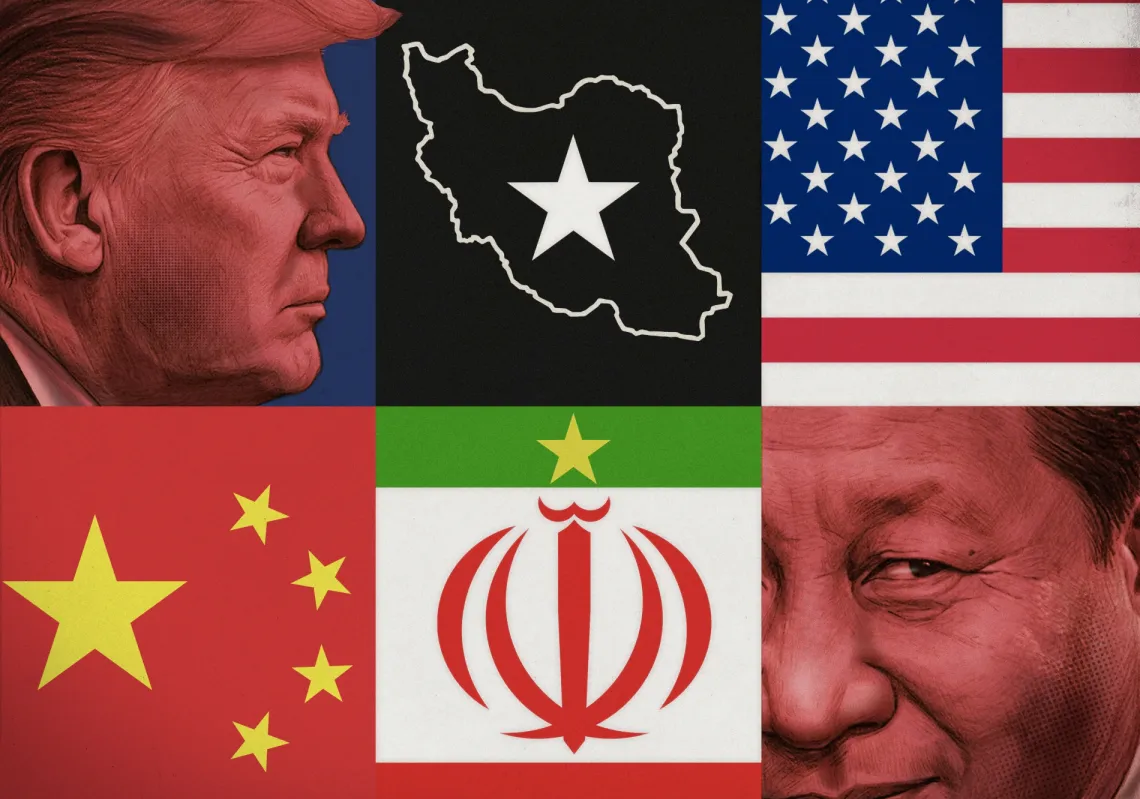
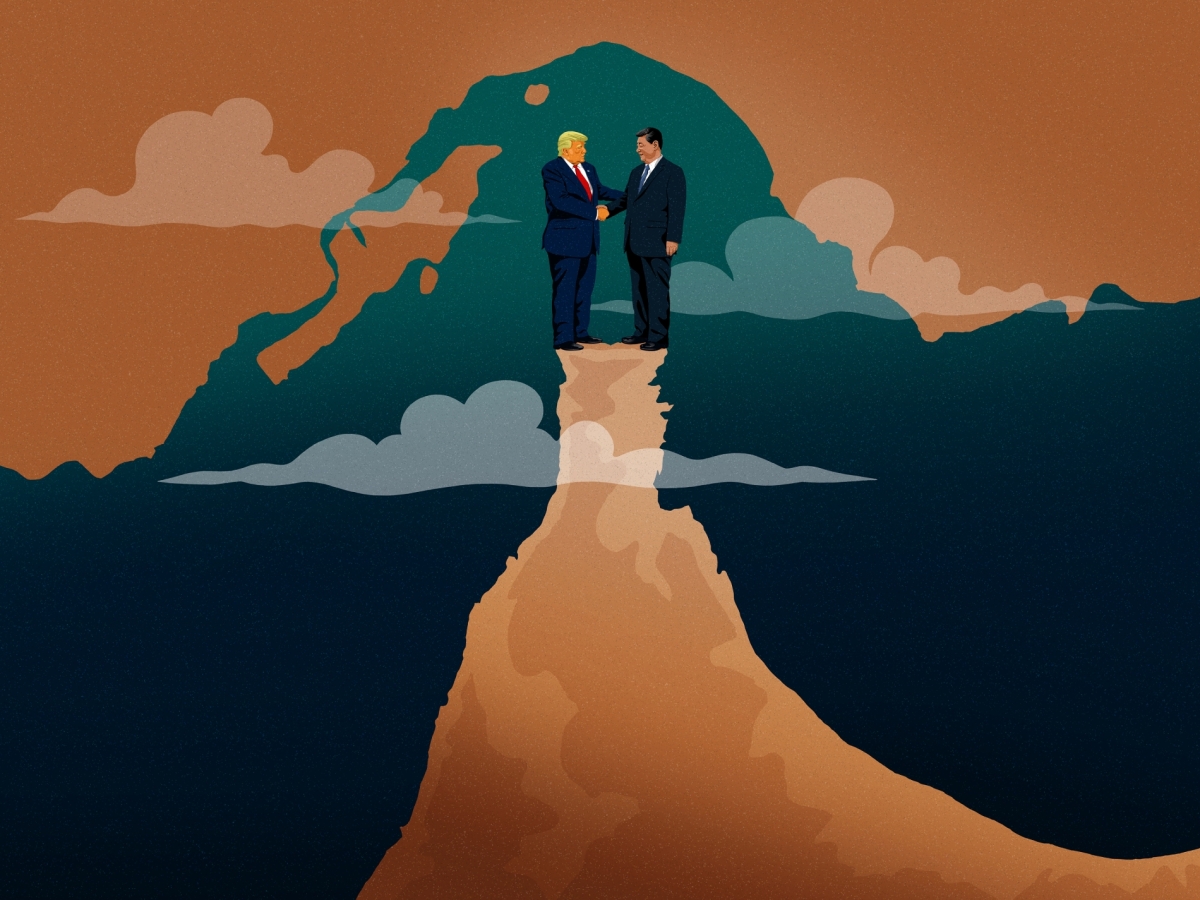
The last time US President Donald Trump and Chinese President Xi Jinping met before this week’s state visit to China was in Busan, South Korea, at the end of October 2025, when they agreed to lower tariffs. In a sense, it was an American retreat, as Beijing used its control over the rare-earth minerals Washington knows it needs for key technologies. It forced Trump to temporarily abandon his trade war and instead seek a truce that has endured ever since.

Against the backdrop of military and diplomatic stalemate in the Iran war—described by some as the Third Gulf War—Trump is meeting Xi for the seventh time, and the second of Trump’s current term. Yet, although Washington requested a postponement last month, observers think that Trump is more eager to meet, as he seeks an international achievement and commercial gains ahead of November’s US mid-term elections, when the China trade truce is set to expire.

In recent months, the US president has pursued a series of measures designed to wrest the initiative back from Beijing on several fronts, whether from Panama and Greenland to Iran and the closure of the Strait of Hormuz. It is part of a wider strategic trajectory with interlinked objectives: exerting greater control over the energy market and denying China access to cheap oil; reducing US dependence on China’s rare earths; and gaining leverage over Chinese trade by controlling maritime straits that serve as vital chokepoints.

Trump's war on Iran hasn't led to the swift, decisive victory that he sought. Rather, it exposed the limits of US military action and economic blockade in securing American objectives. At the same time, China showed that it was highly prepared for such an eventuality, particularly in dealing with disruptions to energy supplies, having stockpiled four months’ worth of fuel. By securing several gains, it strengthened its ability to deter a broad range of coercive US measures.

US sanctions have helped accelerate China’s development of successful domestic alternatives in core technologies, especially semiconductors and Artificial Intelligence (AI). In parallel, China’s leadership is now more experienced at handling Trump’s tactics and anticipating his responses. The now-famous TACO, which stands for ‘Trump Always Chickens Out,’ is not regarded in Chinese circles as mere political mockery, but as evidence that a forceful response can push Trump back to the negotiating table rather than towards escalation, making Beijing more confident and more daring.
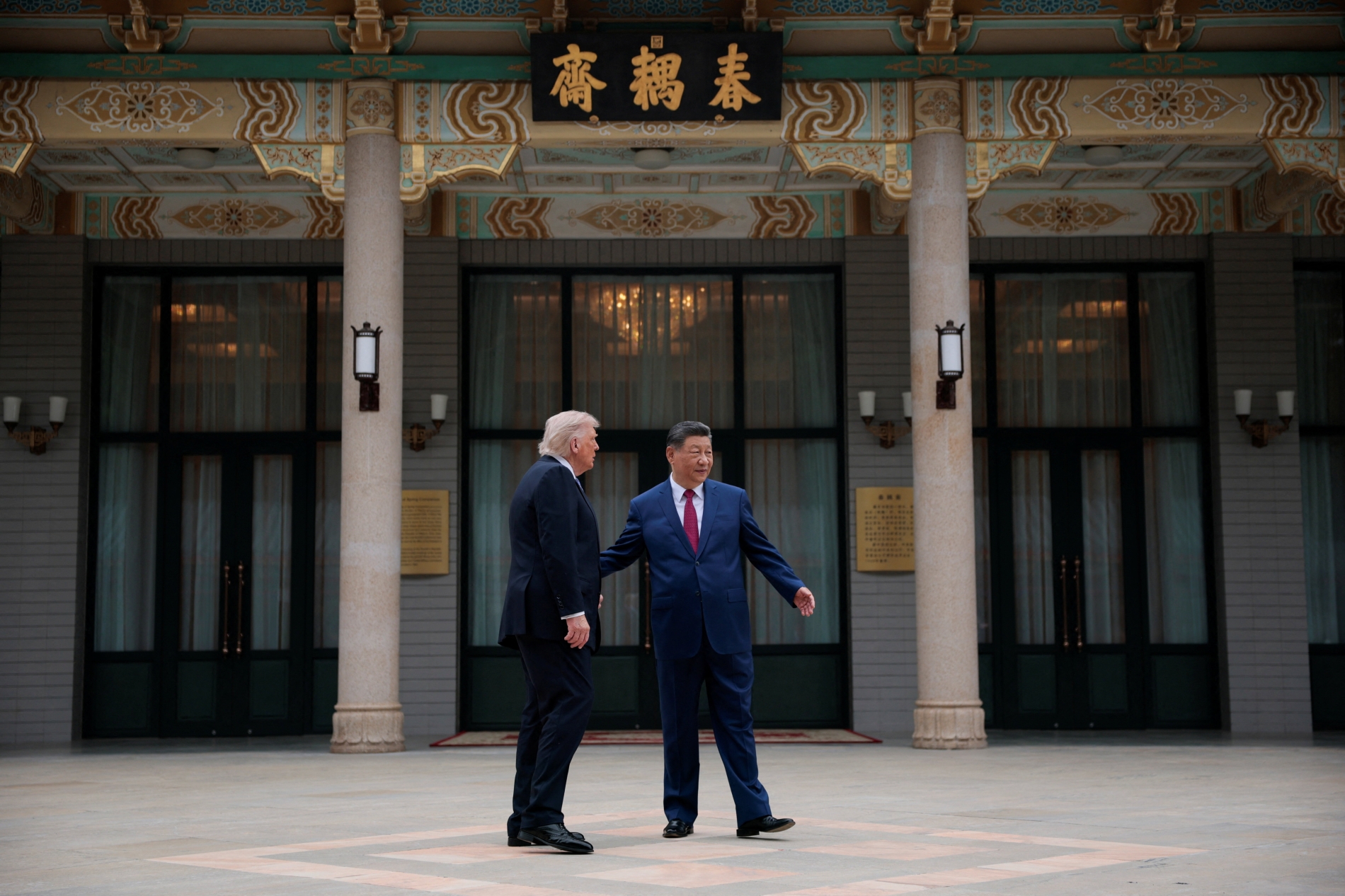
REUTERS/Evan Vucci
Chinese President Xi Jinping guides US President Donald Trump during a visit to the Zhongnanhai Garden in Beijing, China, on 15 May 2026.

A third source of strength, described by The Wall Street Journal as the start of an era of “regulatory aggression,” is Beijing’s recent use of its formidable legal arsenal against sanctions. This includes blocking Meta’s acquisition of Manus, a Chinese AI start-up, and encouraging Chinese companies to challenge US sanctions on oil refineries dealing with Iran. This may constrain Trump at the summit, while giving Xi greater flexibility to make (or not make) concessions.

It increases Beijing’s ability to raise the cost of any US demands and widens its scope to press its own demands on sensitive issues such as Taiwan. Chinese assistance in extricating the US from its Iranian impasse could reinforce this trend. Where, then, does the Gulf feature on the agenda of the Xi-Trump summit?

Focus on the Gulf

Tang Zhichao, an academic at the Institute of West Asian and African Studies and the Chinese Academy of Social Sciences, thinks the Middle East will be a major talking point but not a crucial one. “It will not become the central axis of the Chinese-American meeting, nor should it form part of Trump’s core agenda,” Tang said.

For her part, Lin Jing, a researcher at the Middle East Institute at the National University of Singapore, said bilateral economic relations, technological decoupling, and Taiwan remain the pillars of Beijing’s strategic agenda and the structural lines that govern US-China relations. Lin believes, however, that the Gulf crisis will be discussed, with emphasis on its impact on oil prices and supply chains.

Researcher Zhao Zhijun says the two leaders have little choice but to address a crisis that has damaged both their interests, adding that America’s “strategic failure” to achieve its objectives in Iran had directly harmed China’s interests owing to the subsequent disruption of maritime trade—especially oil—through the Hormuz Strait. Meanwhile, Iran's imposition of transit fees in Chinese yuan threatens the dominance of the US ‘petrodollar’.

From Beijing’s perspective, the disruption in Hormuz has distracted it from discussing the issues it had hoped to tackle at the summit. China wanted to discuss easing US restrictions on technology and investment, shifting Washington’s position on Taiwan, and cementing broader economic cooperation on more balanced terms.
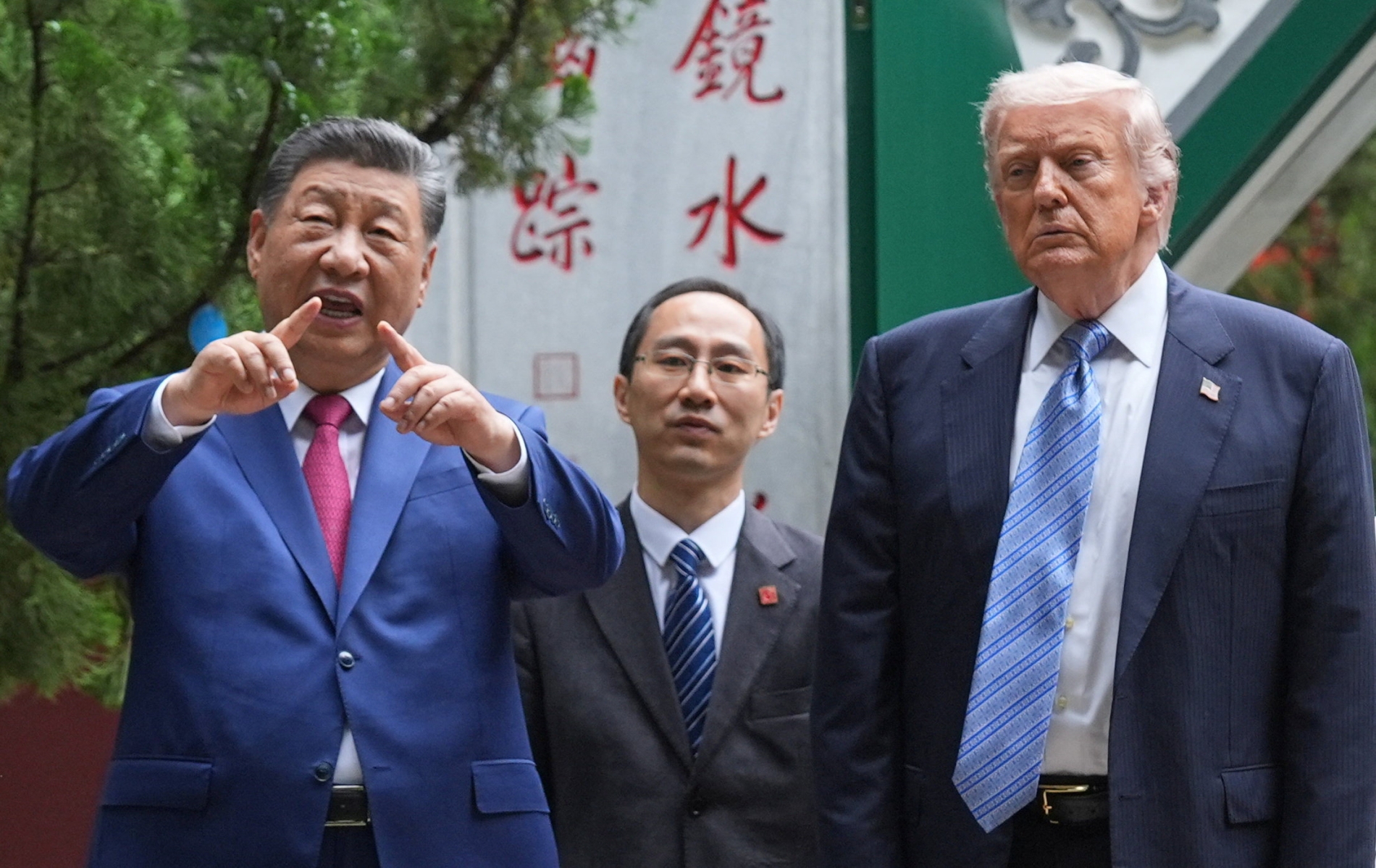
Mark Schiefelbein / Reuters
President Donald Trump talks with China’s President Xi Jinping at the Zhongnanhai leadership compound, Friday, on 15 May 2026, in Beijing.

But the US war on Iran has also unexpectedly handed Beijing new leverage. As the only great power not directly engaging in war, China strengthens its image as a responsible state advocating peaceful solutions that respect both core interests and international law.

Regionally, the war has shaken the confidence of Arab Gulf states in Washington’s security guarantees. Zhao says this could push them eastward in search of a new security pillar, citing the Crown Prince of Abu Dhabi’s visit to Beijing last month. Lin, meanwhile, notes that the US war on Iran forced Washington to divert strategic assets from the Indo-Pacific, giving Xi additional leverage in trade and over Taiwan. The New York Times has similarly noted that the depletion of US munitions stockpiles during the Iran war is eroding Trump’s bargaining power.
The US war on Iran forced Washington to divert strategic assets away from the Indo-Pacific, giving Xi additional leverage on trade and Taiwan.

Still, these were not unqualified gains for China. Iran's aggressive conduct towards the Arab Gulf states limited Beijing's ability to deepen Washington's predicament or exploit it to the fullest. Regional security is important to China, given its extensive economic partnership with the Gulf Cooperation Council (GCC) states, who are major suppliers of energy, chemicals, and fertilisers. Any disturbance therefore reverberates across the world economy, said Tang.

Beijing's position is clear in its rejection of Iran's obstruction of international maritime navigation through the Strait of Hormuz. More broadly, it opposes turning maritime straits into instruments of pressure in geopolitical conflicts. China is equally wary of any precedent that would allow transit fees to be imposed in maritime straits, given the impact this could have on shipping costs and international trade.

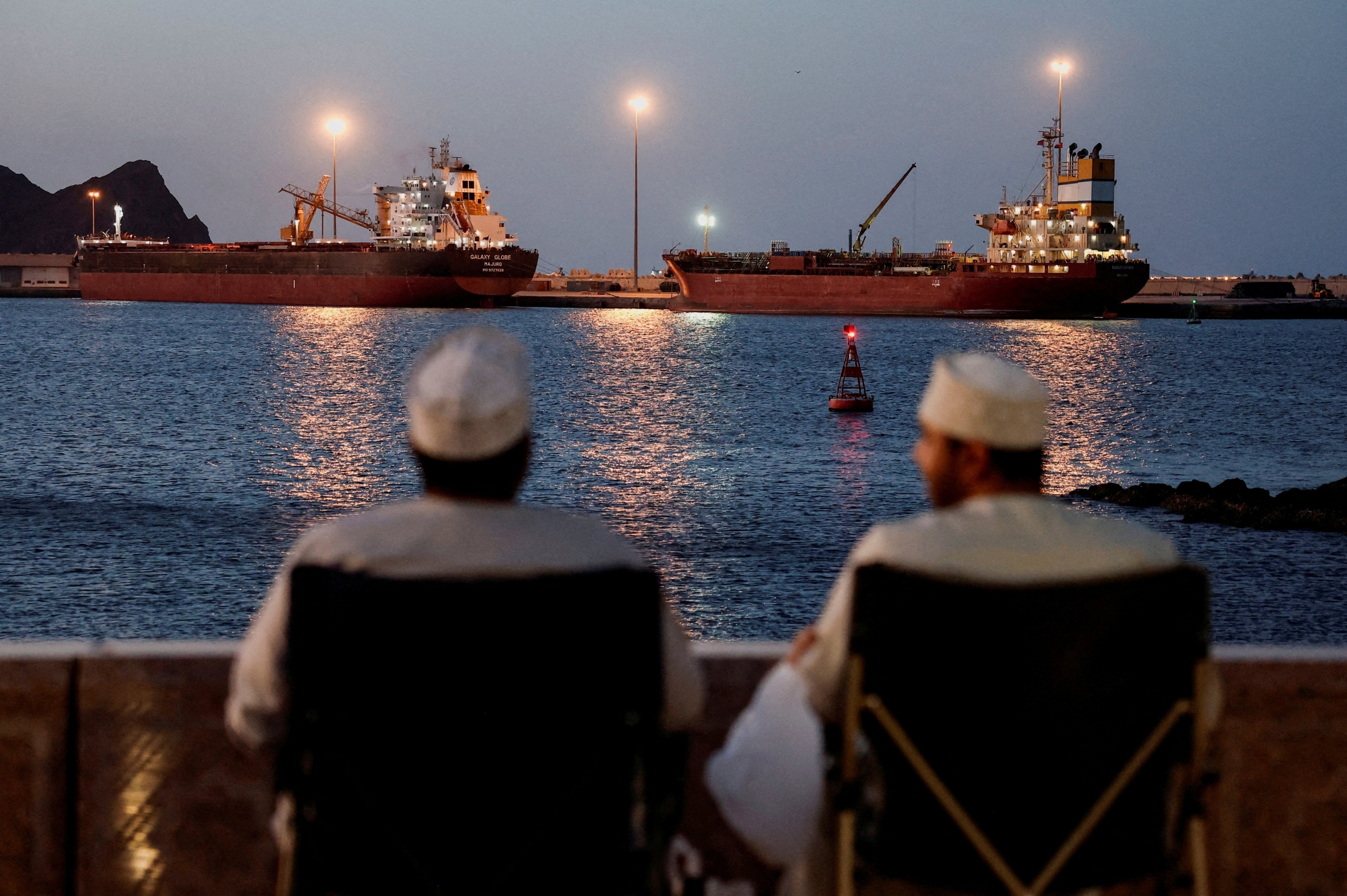
REUTERS/Benoit Tessier
The Galaxy Globe bulk carrier and the Luojiashan tanker sit anchored in Muscat, Oman, on 9 March 2026, amid the US war on Iran.

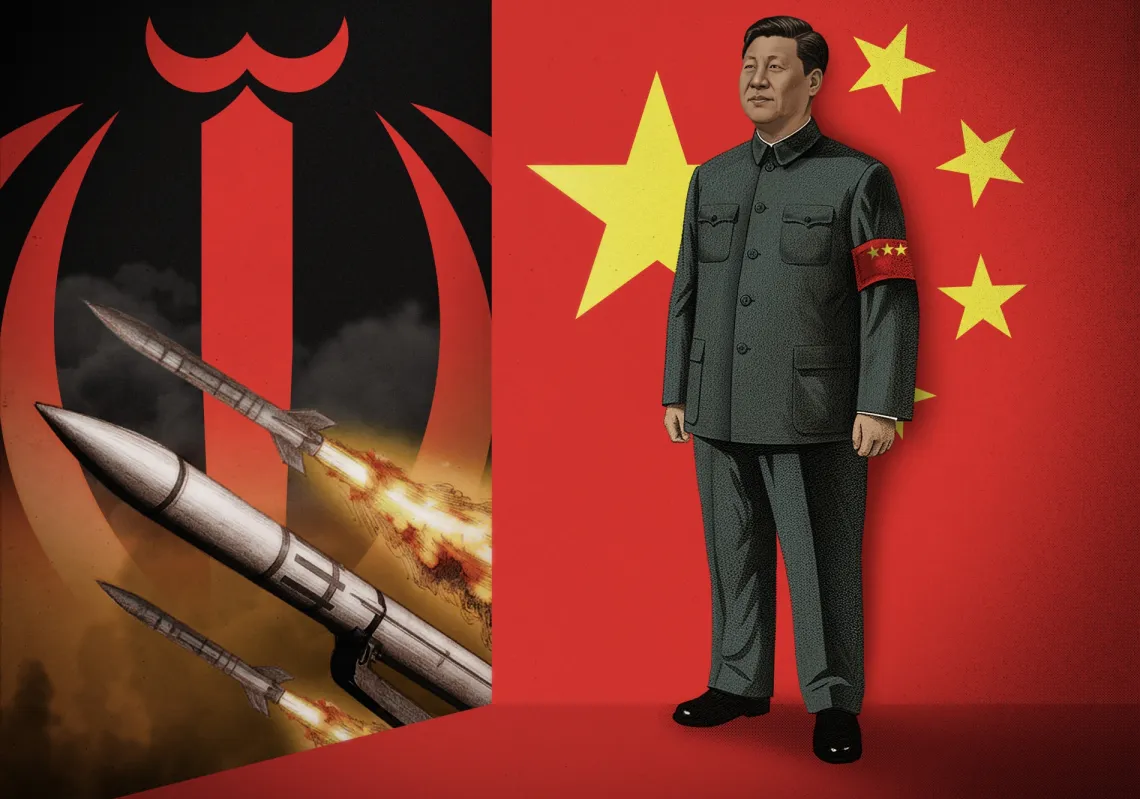
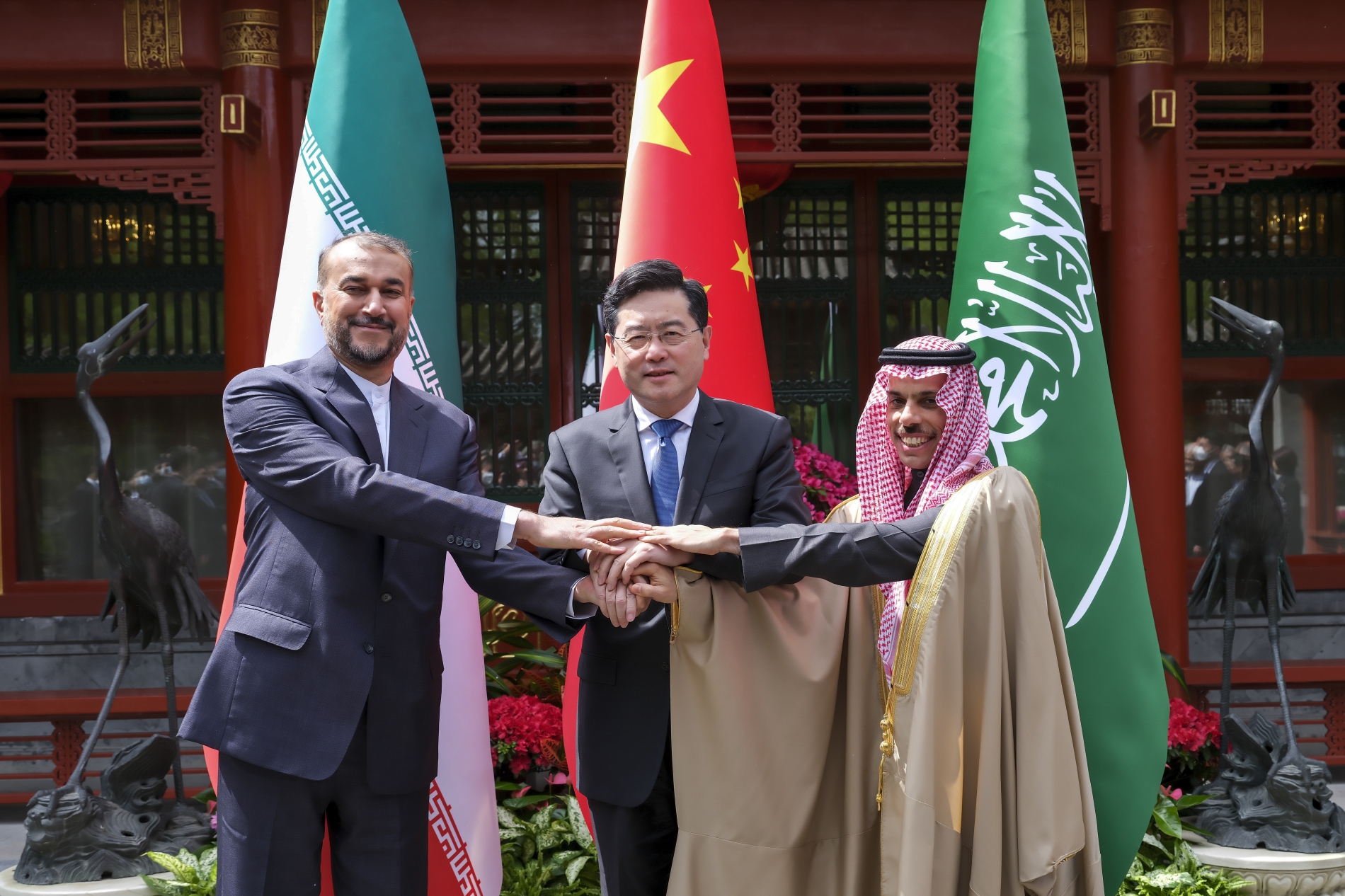
This uneasy balance, between the limits of America's war and the constraints on China's room for manoeuvre, has revealed a shift in the interdependence between Washington and Beijing. The US administration, accordingly, has been muted on China's military support to Iran. Trump even suggested a Chinese security role in the region, calling on Beijing to send its warships to Hormuz, but China supports mediation by its ally, Pakistan, and has kept communication channels open between Tehran and Riyadh, having sponsored the reconciliation agreement between them in March 2023.

Whilst not directly engaging, China has nevertheless played a role in several decisive moments during the war. It helped pass UN Security Council Resolution 2817, condemning Iran's aggression against the Gulf states; it pushed Tehran towards the 8 April truce, sparing the region further targeting of energy and water infrastructure; and it helped persuade Trump to postpone a campaign to open the strait by force.

In practical terms, Trump has sought to neutralise any Chinese military support for Iran, press Beijing to rein in its ally, and impose restraints on Iran by clearly defining Washington's red lines, the biggest of which is around Iran's nuclear programme. Trump and his officials have also suggested that Beijing persuade Tehran to offer negotiating concessions that could lead to an agreement, sparing all parties a return to war.

Iran, meanwhile, hopes that Beijing can persuade Trump to abandon what Tehran describes as 'the logic of diktats' in negotiations. This has opened the door to speculation about a 'grand bargain' at the Beijing summit. Tang expects Trump to ask Xi for "certain things to help him out of the Hormuz impasse", though he believes China is likely to remain committed to its principled positions.

Zhao does not rule out the possibility that Beijing may link its position on the Iran war to commercial gains, meaning that the form and scale of its potential cooperation with Washington on resolving the Gulf crisis will depend on what it secures in the trade negotiations. Lin believes that Beijing is more likely to keep using its unique position as a major trading partner of both the GCC states and Iran, acting as a diplomatic bridge.

AFP
Iranian Foreign Minister Hossein Amir Abdollahian with his Saudi counterpart Prince Faisal bin Farhan Al Saud, right, and former Chinese counterpart Qin Gang in Beijing on 6 April 2023.

China's current position has allowed it to secure almost cost-free gains, and it is unlikely to do anything to change that, but it could help establish a framework agreement to end the war and could pass a new US-Gulf resolution on Hormuz to pass at the UN Security Council, especially given the American-Chinese consensus against Iran imposing fees on passage through the strait.

This week's summit may or may not produce a clear initiative to end the US-Iran war or sketch the broad outlines of US-Chinese coordination towards a settlement. Either way, the Gulf states appear well placed to provide an expanding space for cooperation between Washington and Beijing. This comes amid growing talk of an international détente that may, in some respects, resemble the thaw between the United States and the Soviet Union during the 1960s and 70s.

The form and scale of China's potential cooperation with the US on resolving the Gulf crisis will depend on what it secures in the trade negotiations.

Zhao stresses that the region will remain an arena of intense competition, though with growing possibilities for coordination. The decisive factor, in his view, lies in the GCC states' adoption of dual-track diplomacy—continued security cooperation with the United States, alongside an expanded economic partnership with China.

As GCC states move towards greater strategic independence and accelerate their economic transformation after the shock of the Hormuz closure, the region may evolve into a fragile space of competitive geopolitical coexistence. Such a formula would depend on the careful management of US-China rivalry, as the two powers seek to reshape the international order from opposing vantage points. For the Gulf states, the issue is less about alignment than management: how to handle the contradictions of two great powers operating in the same arena, where competition is widening even as the margins for decisive victory are narrowing.

font change