The Iran war is reshaping the China-Gulf economic modelhttps://en.majalla.com/node/330721/business-economy/iran-war-reshaping-china-gulf-economic-model
The Iran war is reshaping the China-Gulf economic model
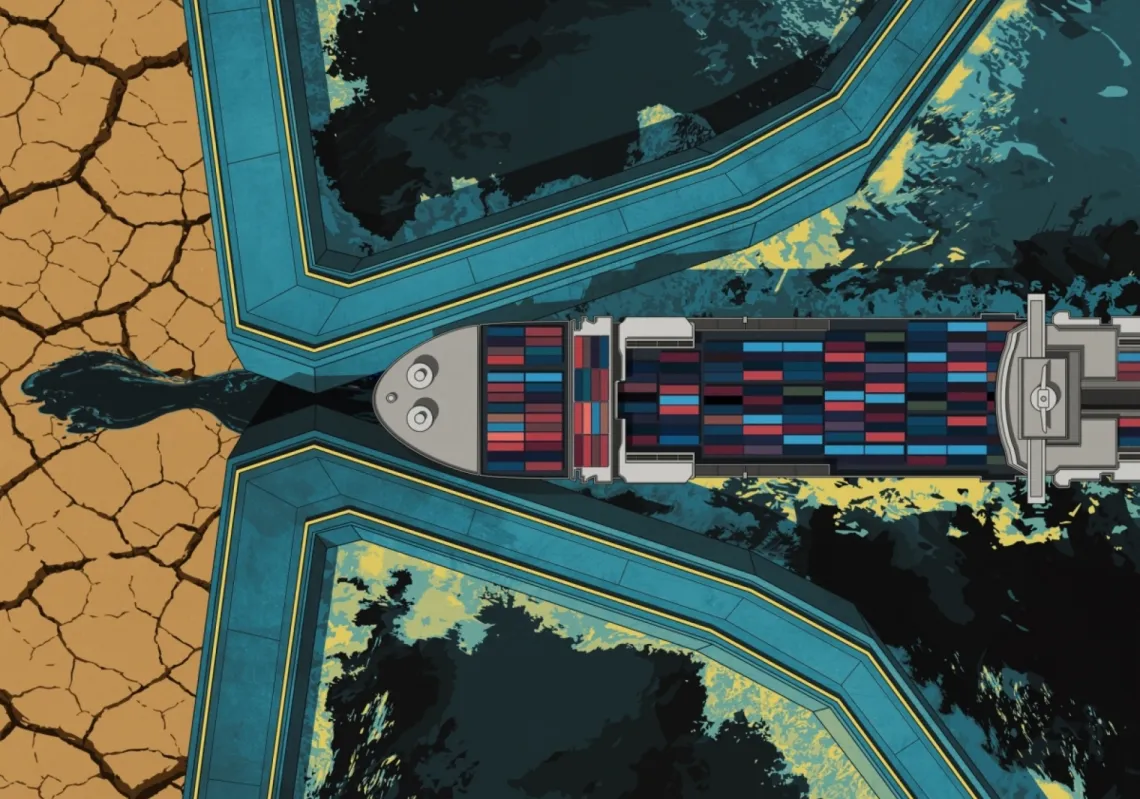
Closing the Strait of Hormuz has shown how the Gulf should shift from an oil-export model to a digital and distribution hub. Will this trigger the long-delayed free trade agreement with China?
Jason Lyon
The Iran war is reshaping the China-Gulf economic model
The US-Israeli war against Iran has thrown up a concoction of geopolitical and economic issues, especially in the field of oil and gas, where there has been a big impact on Asia’s major oil importers. With Iran’s closure of the Strait of Hormuz maritime route having halted the export of Gulf oil, and with Russian oil still largely sanctioned, Iranian oil—together with American oil—has, in theory at least, become some of the most readily available on the market.
With US President Donald Trump urging all affected countries to buy American crude, high energy costs mean that China and the Gulf states have common ground, and testing times can test relations. Economics professor Xu Mingzhi of Peking University says geopolitical crises do not bring down major economic relationships, but instead reveal their true structure. In the case of Gulf-China ties, he says, the relationship appears structural rather than situational.
The Gulf is a core pillar of China’s energy security, while China is seen as a long-term economic partner for the Gulf states, not only as an energy importer but also as a market, an investor, and an industrial partner. The war, Xu argues, has not altered the essence of the relationship so much as altered its management. A world that assumed oil would move along relatively stable routes is now shaped by shipping risks, higher insurance costs, volatile supply chains, and rising geopolitical tensions.
Beijing is not seeking to reduce its exposure, but rather to re-engineer it, shifting from direct crude oil trade to a more interconnected system based on long-term contracts, integration in storage and logistics services, expansion in downstream industries, and institutional mechanisms for sharing risk. In this sense, China does not see the crisis as a reason to move away from the Gulf. It sees it as a reason to deepen the relationship on firmer foundations.
China's reliance on importing about 72% of its crude oil makes Gulf stability a strategic matter, not a commercial one
Xu thinks that China will continue to diversify its energy sources, but not at the Gulf's expense. It does not want to replace one supplier with another, but reduce dependence on a single, highly sensitive route. Despite the war, Xu explains that the Gulf's importance has not lessened. If anything, it has been clarified. In moments of instability, a supplier is not judged by cost alone, but by the ability to provide vast quantities on a continuous basis. This is an advantage the Gulf still holds over others.
For analysts like Xu, the most important shift lies in the nature of the partnership itself—from a traditional trade exchange to a deeper network of interests that includes refining and petrochemicals, liquefied natural gas (LNG), shipping infrastructure, and storage and logistics coordination. As this non-oil fabric expands, the energy partnership becomes more stable, because it no longer stands on its own, but forms part of a wider economic system.
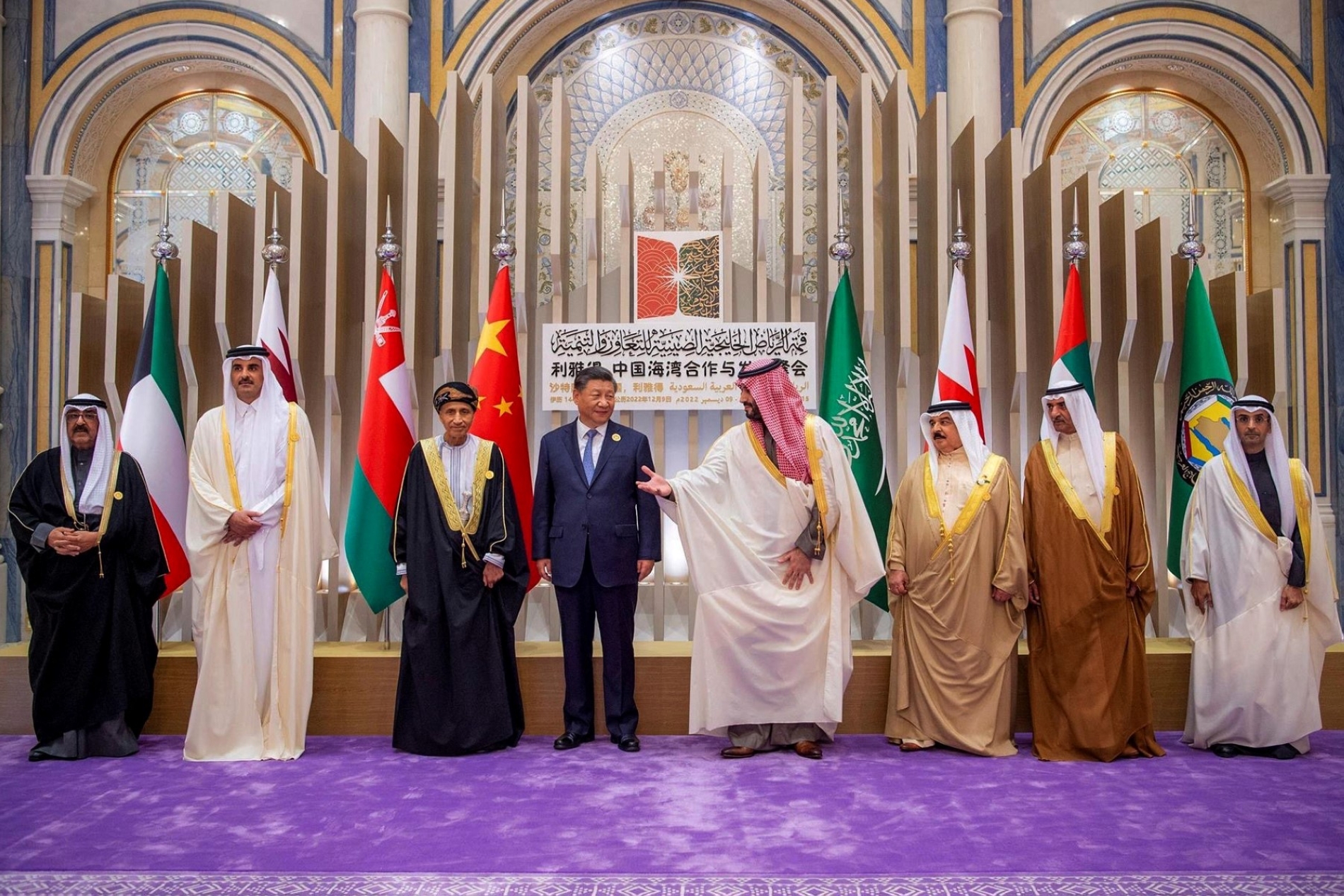
A group photo of the leaders and heads of state during the conclusion of the China-Gulf Summit, in Riyadh, on 9 December 2022.
Strategic hub
From this perspective, Beijing no longer sees the Gulf merely as an energy region but as a hub for a set of strategic interests: sovereign capital, trade corridors, infrastructure, and rapid industrial transformation. This, Xu says, helps explain why China regards the Gulf Cooperation Council (GCC) states as long-term, multidimensional partners, able to plan strategically, deliver vast projects, restructure their economies away from oil, and reposition themselves within global trade and investment networks.
Wang Xiaoyu, a researcher at Fudan University, argues that in the short-term, costs related to shipping, insurance, and security will prompt greater caution. In the medium-term, cooperation will continue but with a stronger focus on supply security, adjusting transport routes, expanding renewable energy, and strengthening existing cooperation mechanisms, rather than simply launching new projects.
The most important shift, in her view, is the move from quantitative expansion to structural improvement, improving the partnership's ability to absorb shocks. She believes the second Arab-Chinese Summit, scheduled for this year in China, will offer a fresh political opportunity to support these adjustments.
Chinese political researcher Zhao Zhijun argues that the war does not weaken China-Gulf energy ties but drives a radical shift from a buyer-seller relationship to something closer to an energy security community. He believes that China's reliance on importing about 72% of its crude oil, with almost a quarter coming from the Gulf, makes Gulf stability a strategic matter, not a commercial one.
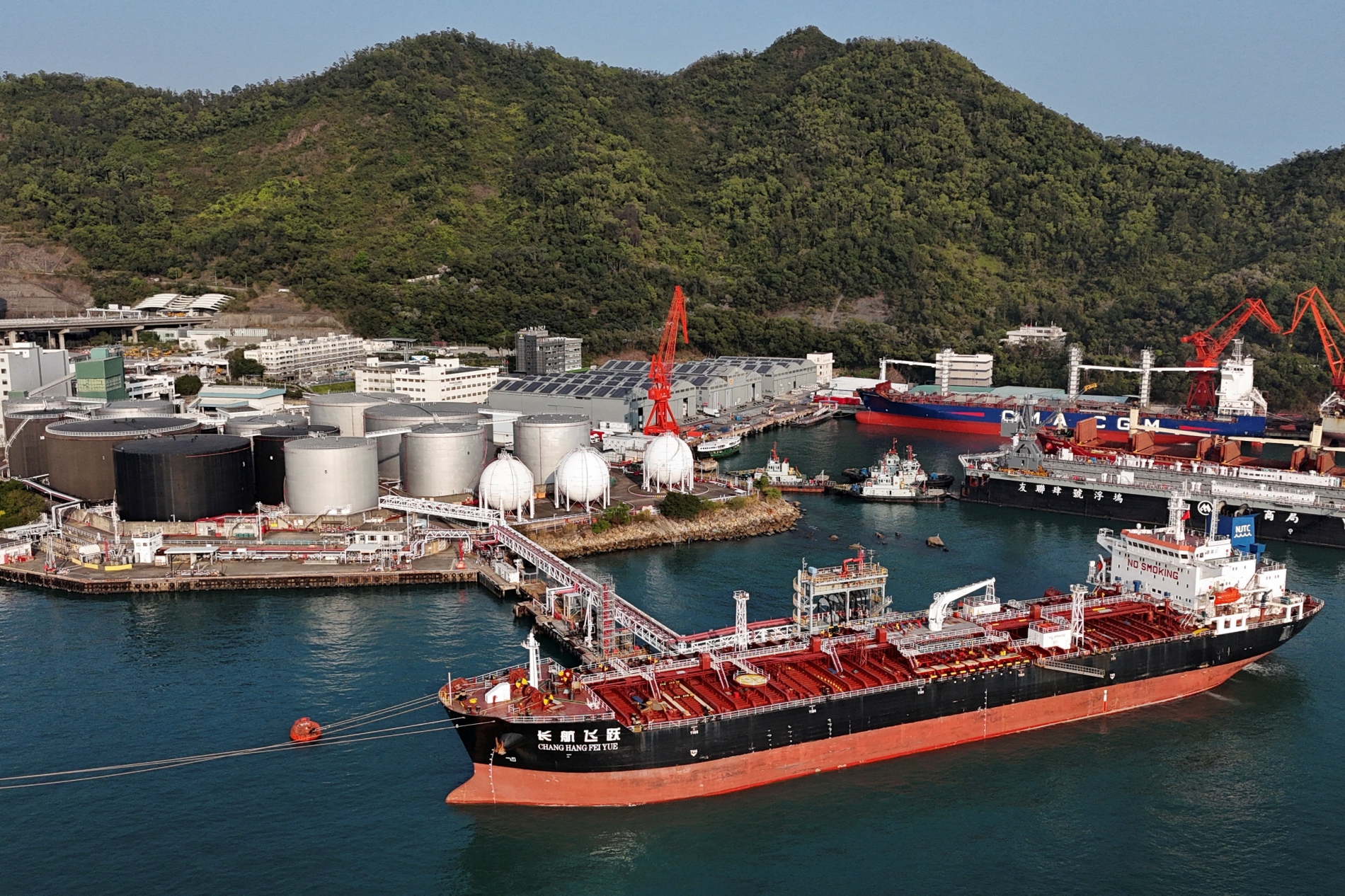
Oil tankers docked in Hong Kong port, China, on 19 March 2026.
Reducing exposure
China, as the world's largest stable industrial market, offers long-term demand that is not subject to sudden political swings, while its vast strategic reserves give it space to manoeuvre. Zhao says the war has accelerated the use of tools such as local currency settlements and currency swaps (especially between Saudi Arabia and China) to reduce exposure to the Western financial system, a trend likely to continue.
Asked about repairing damage at Gulf energy plants targeted by Iranian attacks, which Rystad Energy has estimated at $25bn, Zhao argues that Chinese companies are likely to play a larger role, not only because of cost, but also because they can offer integrated packages that include financing, engineering and supply chains, at a time when global firms face long production and delivery delays. All of this makes a China-GCC free trade agreement more of a strategic necessity, he adds.
The war has exposed the fragility of supply chains, raised prices, and highlighted the Gulf's need to move from oil exports to a 'logistics and digital hub' model. Citing Chinese data, Zhao says a China-GCC free trade agreement would lift non-oil GDP growth in the Gulf states by about 2.1%, creating a free trade zone with near-zero tariffs that would reduce the cost of materials linked to energy infrastructure repair projects and give the Gulf states a more stable base for growth.
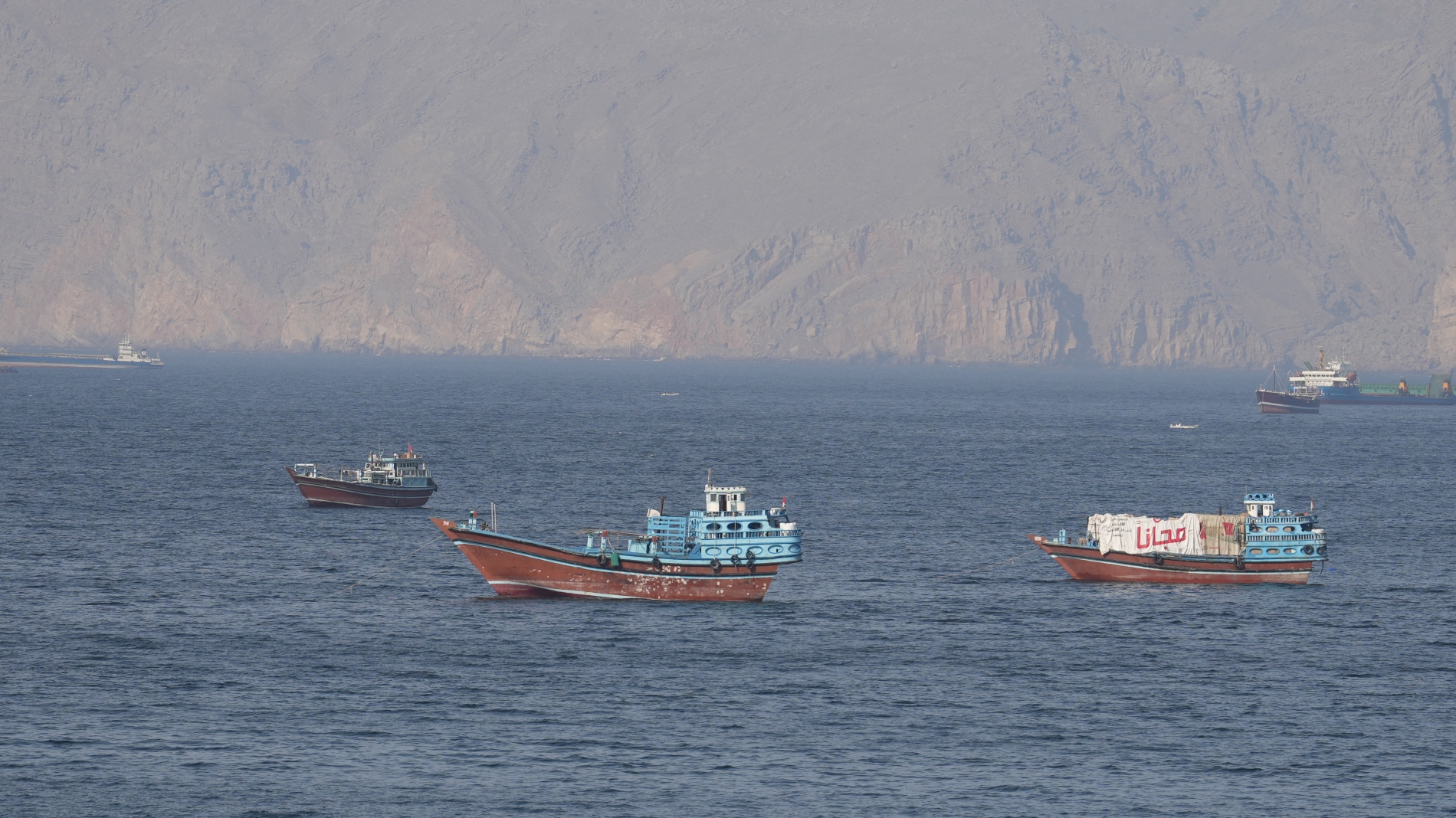
Boats and cargo ships in the Strait of Hormuz, off the coast of Muscat, Oman, on 18 April 2026.
Re-engineered partnership
In terms of China-GCC relations, war is a test exposing a deeper shift in the environment in which that relationship is managed. A relationship long reduced to its energy dimension is now emerging as a wider network of interests. Yet, under the pressure of successive crises, it is being driven to seek firmer, more organised rules in a world that no longer offers the stable umbrellas it once did.
What gives these shifts their real meaning, however, is US President Donald Trump's 'America First' approach. Washington has bullied its NATO allies and restructured its commitments, sending a clear signal that past relationships are under review. In this context, Gulf-China relations look different—part of a broader repositioning in which the Gulf states seek to balance their relationships and build partnerships more closely tied to direct interests, and less exposed to political swings.
On the other side, China's approach looks more like a quiet investment at a time when confidence in America's role is waning. As part of this, China is positioning itself as a long-term partner the Gulf can rely on. A bigger issue is the declining reliability of the old system. As major powers reorder their priorities, Gulf states now face a different kind of test: to reshape their concept of economic security in a world where umbrellas are shaped by interests, not commitments.