Latest drones drive down the cost of warfare

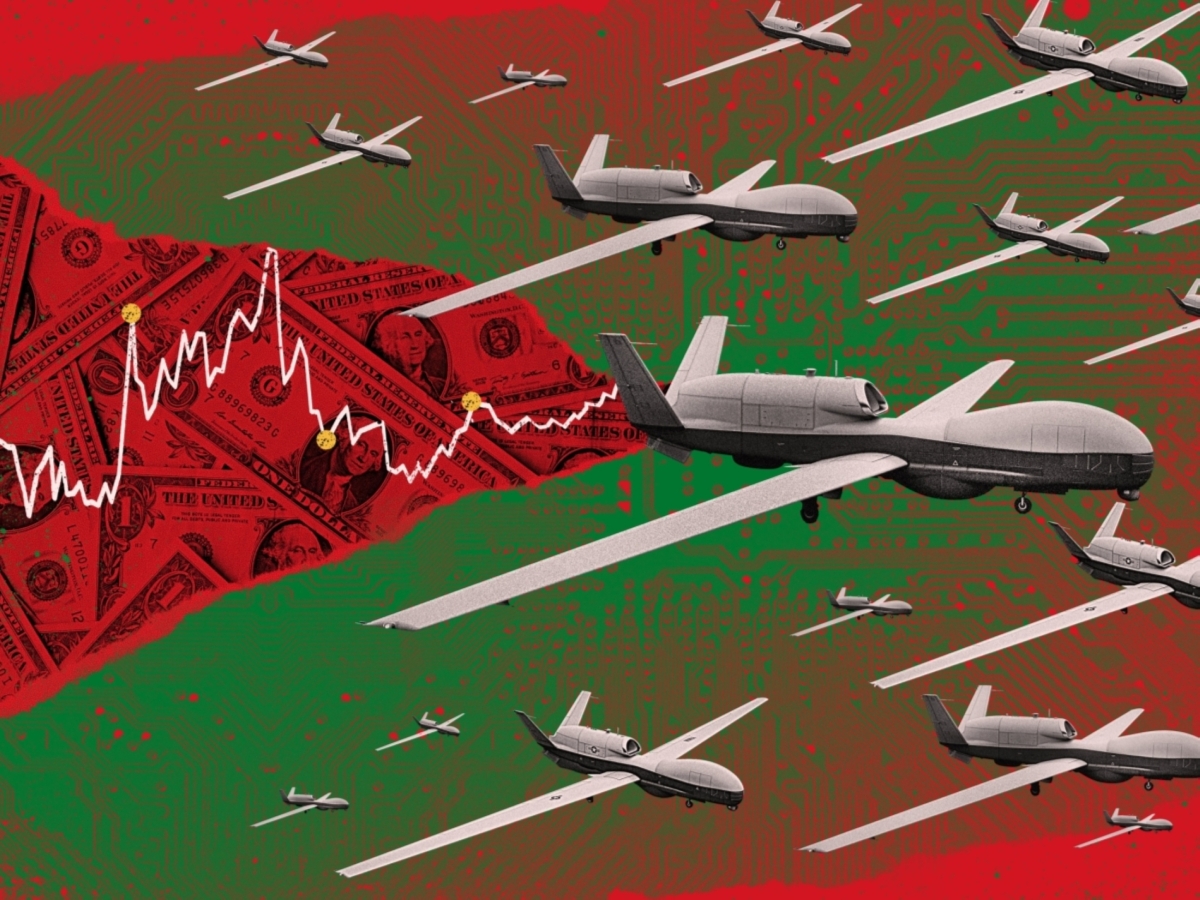
Cheap unmanned aerial vehicles cost only a few thousand dollars to make, but are costing millions to defend against, turning the economics of war on its head

Al Majalla

Latest drones drive down the cost of warfare

In 1896, US inventor and businessman Thomas Edison published a short science fiction story titled In the Deep of Time, in which he described advanced automated flying technologies resembling what we now know as drones. A similar idea was present in The War in the Air, a 1908 book by English writer H. G. Wells, who imagined a world with “aerial torpedoes” capable of striking targets autonomously.

A year later, British audiences watched the silent film The Airship Destroyer, which depicted an unmanned flying machine launched from the ground to collide with its target and explode. What was once pure fantasy has now become an accurate description of a weapon that is changing the face of war and its economic costs. Attack drones have altered the tools and financial logic of warfare.

During the First World War, the first serious attempts to develop unmanned aerial weapons emerged, including the American Kettering Bug project. It revealed an important shift in military thinking: separating the combatant from the battlefield. During the Second World War, this developed further with Germany’s V-1 buzz bombs, primitive cruise missiles, while the US developed the TDR-1 system, an attack drone that saw operational use in the Pacific. Even so, these systems were limited in accuracy and relied on rudimentary guidance.

The real transformation came with the digital revolution in the second half of the 20th century, especially the development of microprocessors and the miniaturisation of electronics. Machines no longer required huge and complex mechanisms; they could now be equipped with small electronic ‘brains’ capable of calculation and limited decision-making.

These ‘drone predecessors’ evolved from projectiles fired towards a target into systems capable of flying for hours over long distances, observing their surroundings and waiting for the right moment to attack. This transformation gave new meaning to what are now known as loitering munitions, weapons that combine reconnaissance with the ability to strike targets, acting as a link between information and firepower.
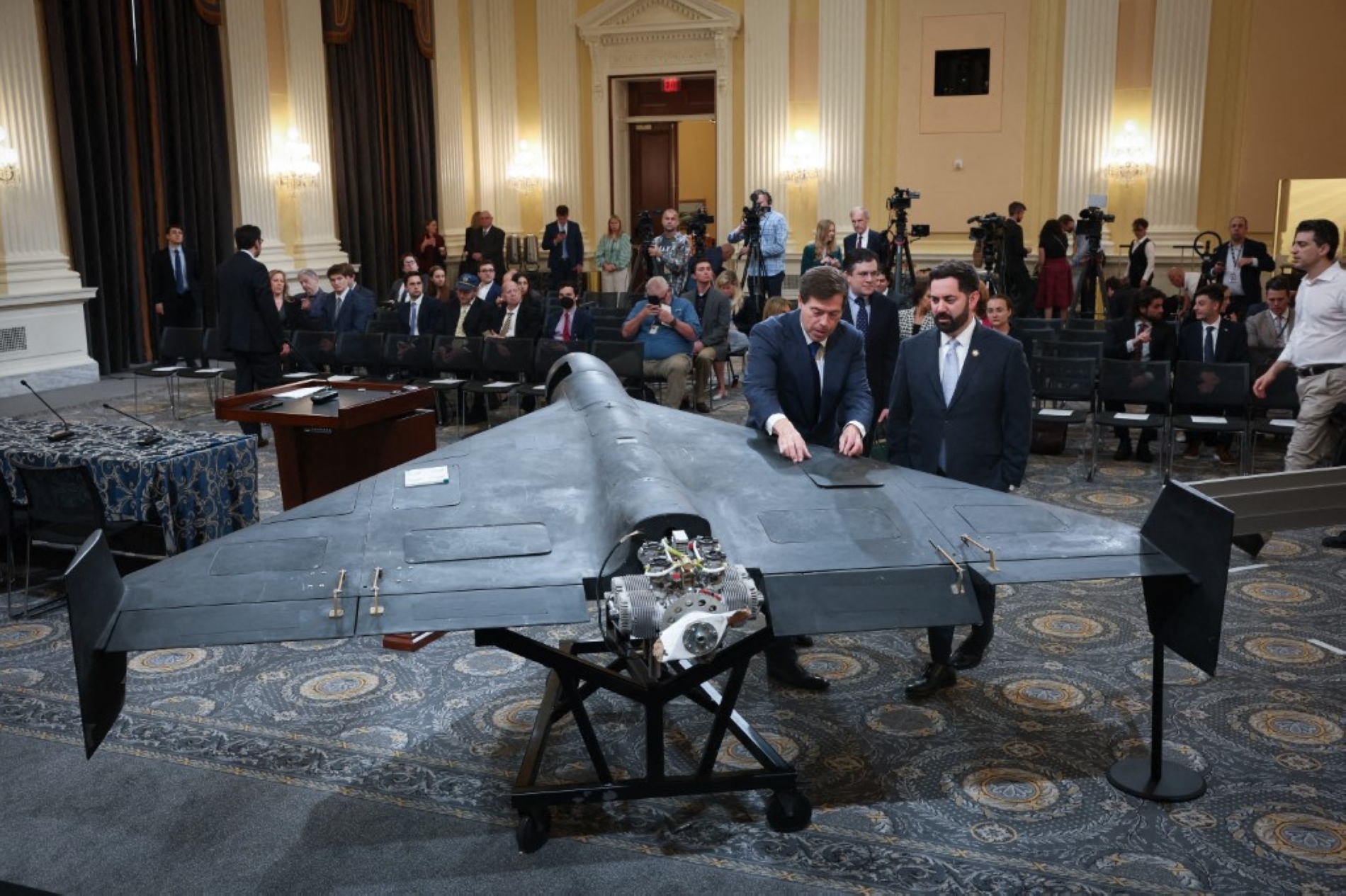
WIN MCNAMEE / AFP
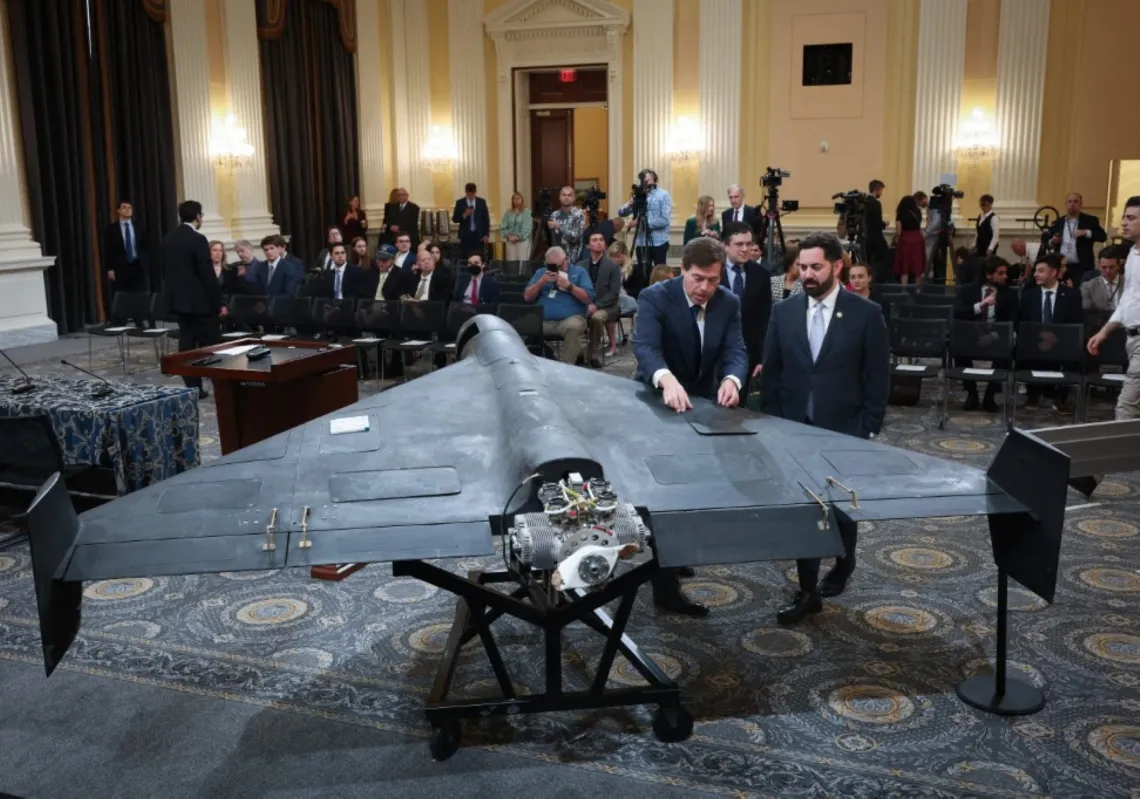
Mark Wallace (L), CEO of the non-profit United Against Nuclear Iran, talks with Rep. Mike Lawler (R) (R-NY) next to a Shahed 136 military drone during a press conference on Capitol Hill on 8 May 2025 in Washington, DC.

Low-cost predators

This autonomous aerial weapon has become a thriving global industry, in which states compete over technology, costs, and combat capability. Israel has led the field since the late 1980s, when Israel Aerospace Industries developed the Harpy drone in 1989 to destroy air defences as the first anti-radar weapon. It was followed by the Harop in 2009 and upgraded versions in 2016.

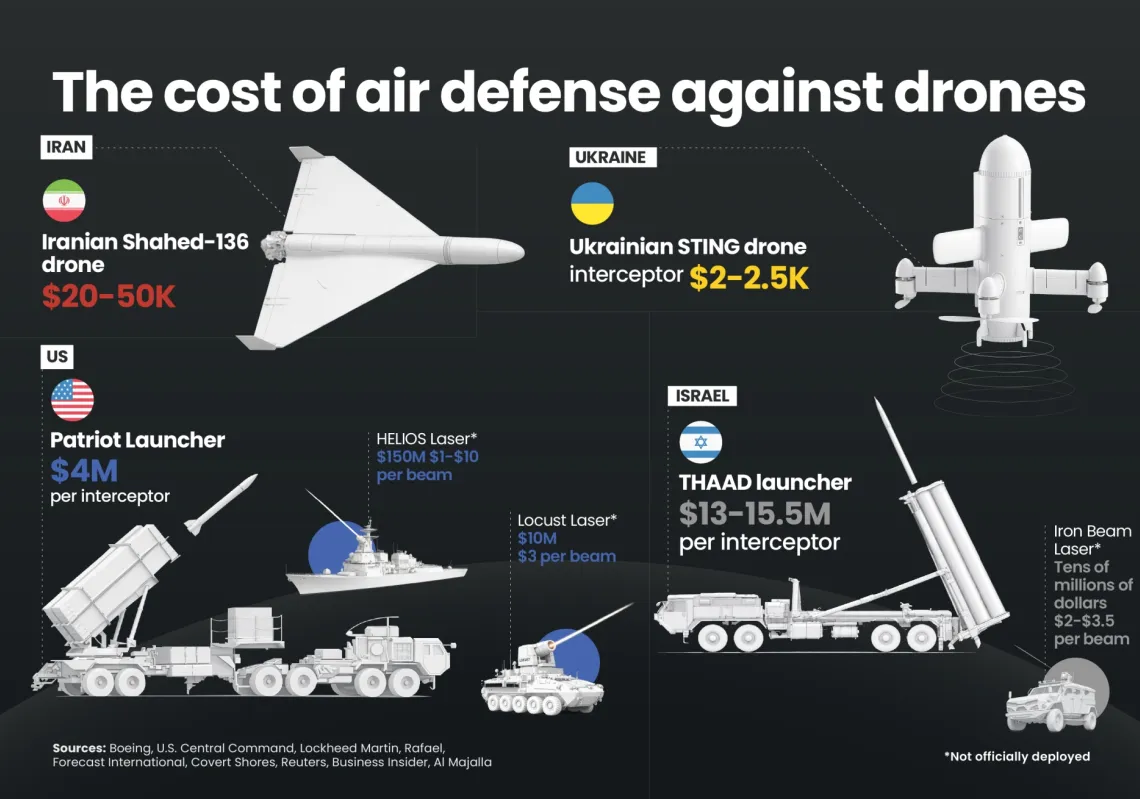
In the US, AeroVironment developed the Switchblade system in 2011, which was widely used in Ukraine and Afghanistan. Iran emerged with a low-cost, mass-production model through Shahed Aviation Industries. It produced the Shahed-136 in the early 2010s at a unit cost ranging from $20,000 to $50,000.

Türkiye also entered the field. STM, the Turkish defence firm, developed its KARGU model (operational between 2018 and 2020) and the lightweight ALPAGU, weighing less than 2kg. Baykar, which makes the famous Bayraktar drone, announced recently that it had developed the K2 Kamikaze model, reportedly among the largest and most powerful loitering munitions in its class, equipped with Artificial Intelligence (AI). This enables it to operate in swarms, even in GPS-denied environments. The company also announced the launch of the first interceptor drone, the Skydagger HUNTER.

Faced with a Russian invasion since 2022, Ukraine has turned to locally made suicide drones costing anything from $500 to $2,000. Originally civilian technology was converted into weapons, showing the extreme democratisation of weaponry, with almost anyone able to manufacture effective weapons from simple materials. This raises the risk of proliferation among armed groups and militias.
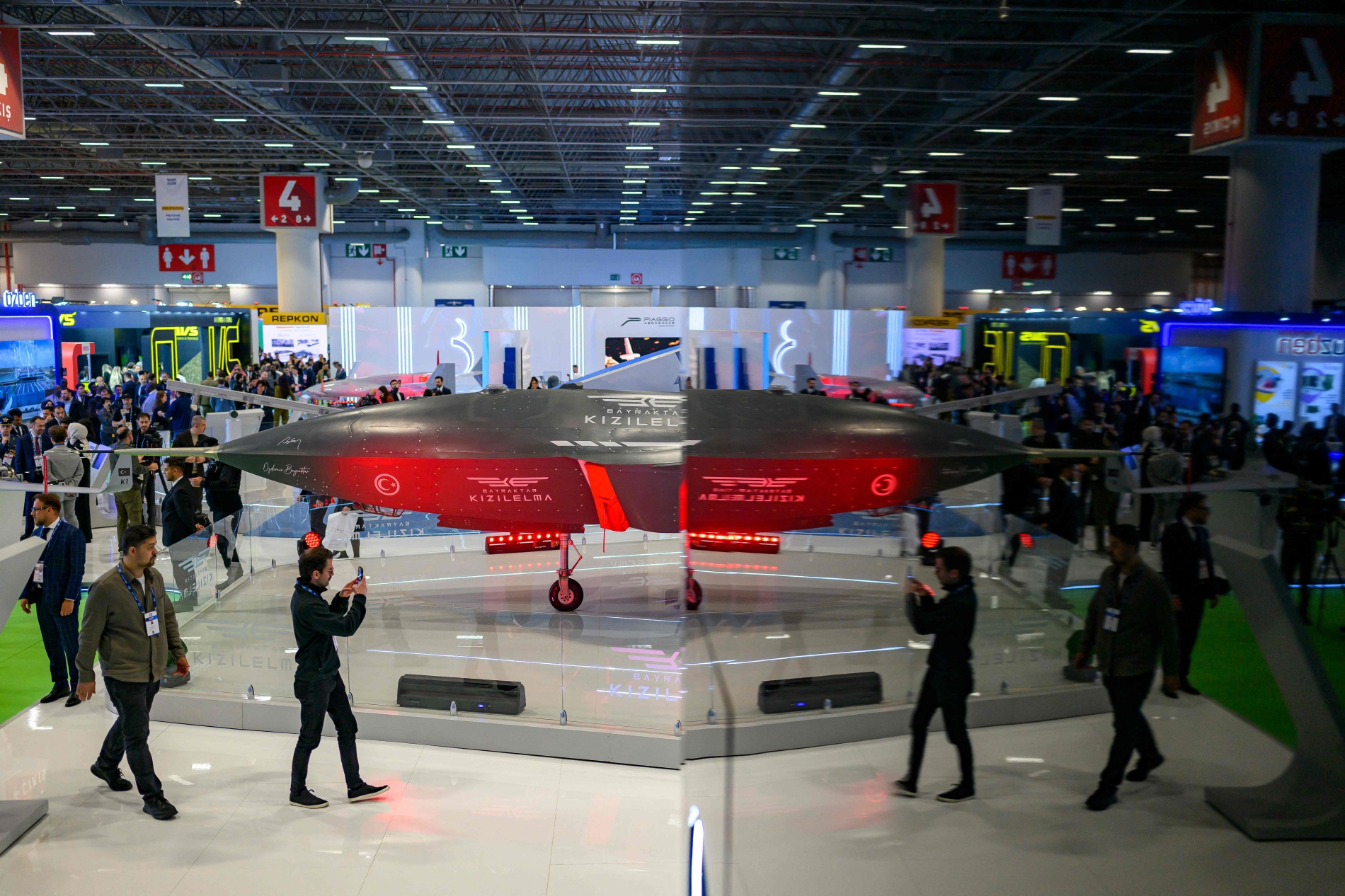
Yasin AKGUL / AFP
The KIZILELMA Unmanned Combat Aircraft made by Türkiye's defence company Baykar on a stand during the opening day of the SAHA EXPO in Istanbul on 5 May 2026.

Changing the market

These systems have become a flourishing economic industry. Israel, Türkiye, and the United States are leading exporters, while Iran and China are active in low-cost production on a vast scale. Wars in Ukraine and Iran have helped drive this growth and have forced states to rethink the economics of war. A single drone costing tens of thousands of dollars can have a greater impact than a missile costing $2mn.

According to estimates, the market was worth $5.3bn in 2025 and is expected to reach $13.2bn by 2030 and $29bn by 2035. This growth is being driven by the spread of AI and autonomous swarms, increased demand, and the development of low-cost counter-drones such as the American LUCAS, which costs around $35,000 per unit, but advances in laser defence systems and jamming technologies may lead to a slowdown in demand if states reduce the cost of interception.
Drones have become a thriving global industry, in which states compete over technology, costs, and combat capability

The economics of war is rapidly transitioning from less hardware at greater cost (such as tanks and manned aircraft) to the rapid industrial production of millions of cheap units that often cost far more to intercept than to build. The Shahed-136 or suicide FPV models cost around $20,000 but are often shot down with advanced air defence missiles such as Patriot or IRIS-T, each of which costs between $2mn and $4mn.

This vast cost disparity means that drones' impact could be less through direct destruction than through financial exhaustion. Dense drone swarms can empty costly air defence stocks and force governments to spend huge sums countering low-cost threats, turning the battlefield into an economic sinkhole and consuming funds that would otherwise be spent on offensive weapons. Iran's drone waves in the early days of the 2026 war cost its enemies tens of millions of dollars in defence.

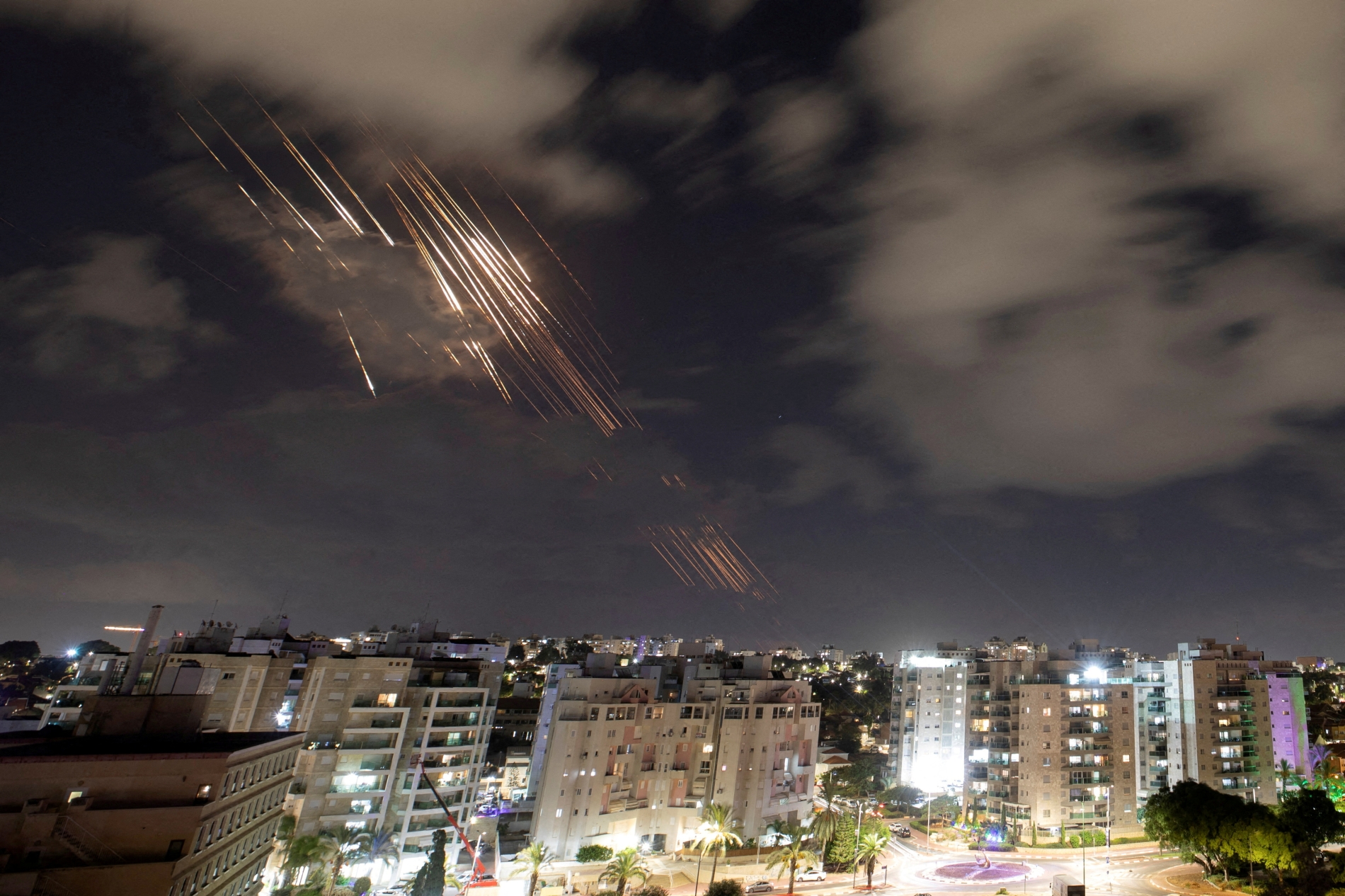
REUTERS/Amir Cohen
Israel's Iron Dome anti-missile system intercepts rockets after Iran fired a salvo of ballistic missiles, as seen from Ashkelon, Israel, on 1 October 2024.

Off-the-shelf offence

Offensive drones are cheap because they are simple to design and draw on what may be called parallel supply chains. Unlike fighter jets, which require rare metals and complex proprietary technologies, modern loitering munitions depend on dual-use components available in civilian markets. They are built using radio-controlled aircraft engines designed for hobbyists, electronic chips used in children's toys or smart washing machines, and sensors available in mobile phones.

This shift from strictly military components to abundant consumer components has created a major geopolitical dilemma, making economic sanctions on their production almost impossible to enforce, since it would involve banning the export of simple electronic chips or small engines used in thousands of household products. Because civilian components sit at the core of the weapon, the economy of aerial attrition can endure. Production lines still run even under the harshest embargoes.

Every video clip of a successful strike or a failure to penetrate an opponent's defences is data that engineers and programmers at manufacturing companies can analyse. This visual review provides precise answers to complex technical questions such as those relating to a drone's algorithmic effectiveness (how well it responded to electronic jamming, for example) or its computer vision (how well it identified the target).

Iran's saturation tactics depleted American money and time. In response, the US unveiled the cheap LUCAS drone inspired by the Shahed design.

Instead of waiting for intelligence reports, the engineers behind the screens now carry out software updates almost instantly, based on what they have seen. In this way, the marketing display becomes an accelerated development cycle. Every visually documented success is translated into improvements in the next generation of algorithms. High software flexibility is therefore beneficial in the arms race.

Increasing usage

Drones do not just strike major military targets; they have become a preferred tool for targeted assassinations because they can fly for many hours, wait above a target, and dive with high precision, while reducing risks to attacking forces by removing the need to deploy soldiers on the ground. In several recent conflicts and wars, they have helped alter the balance of power.

The 2020 Nagorno-Karabakh war is generally regarded as the first modern war in which drones helped tip the outcome. Azerbaijan used Israeli Harop drones and Turkish Bayraktar drones, alongside other loitering munition models, to destroy more than 500 Armenian armoured and air defence targets, which led to a swift victory.

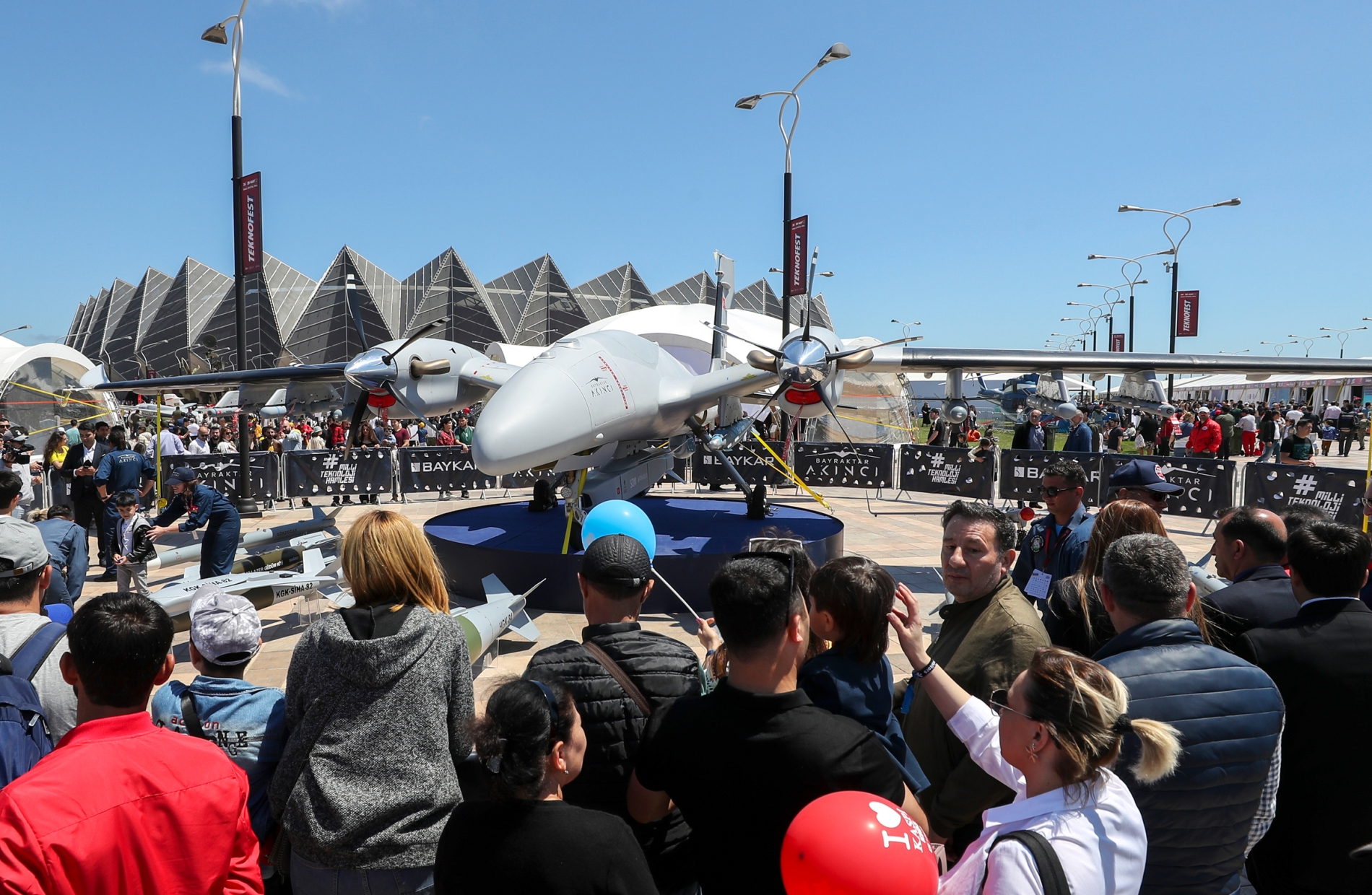
AFP
The Bayraktar TB2 drone, manufactured by Türkiye's Baykar, is presented during the opening of the aerospace and technology festival 'Teknofest Azerbaijan' at Baku Crystal Hall in Baku, on 27 May 2022.

When Russia invaded Ukraine in 2022, it launched thousands of Shahed-136 or Geran-2 drones each month, striking infrastructure, while Ukraine used the American Switchblade and modified Russian Lancet systems, from which it has developed locally made versions and other models similar in form and function. It has also used locally produced First Person View (FPV) drones, which effectively target tanks and artillery.

In Israel's ongoing war against Hezbollah, loitering munitions have played a prominent role on both sides; Hezbollah has used Iranian-made drones such as the Shahed-101 and Sayyad-107, while Israel has relied on its Harop and Harpy drones. In the 2026 US-Israeli war against Iran, the conflict appeared to move from the principle of advanced precision to that of lethal numerical saturation, the Gulf becoming one of the largest live laboratories for suicide swarm tactics. Iran relied on saturation tactics to achieve drone penetration while forcing air defence systems such as Patriot, THAAD and others to expend costly interceptor missiles.

Saturation tactics draw the enemy's money, time, and the focus of its defensive AI systems, creating openings for larger targets. In response, the US unveiled the cheap LUCAS loitering drone, inspired by the Shahed design. This introduced the concept of drone-on-drone warfare to preserve valuable defensive missiles for larger targets.

In summary, loitering munitions have rewritten the deterrence equation, making defence more expensive than attack. In today's armed conflicts, superiority depends on industrial capacity, financial flexibility, and the ability to sustain a long war, not just on advanced technology or firepower.

With AI, wars may become more frequent and less decisive, with victory measured less by a single knockout blow than by endurance. Cheap, relatively simple unmanned aerial vehicles have compressed the distance between the factory and the battlefield. Those best able to keep producing such inexpensive weapons, therefore, have the advantage.

font change