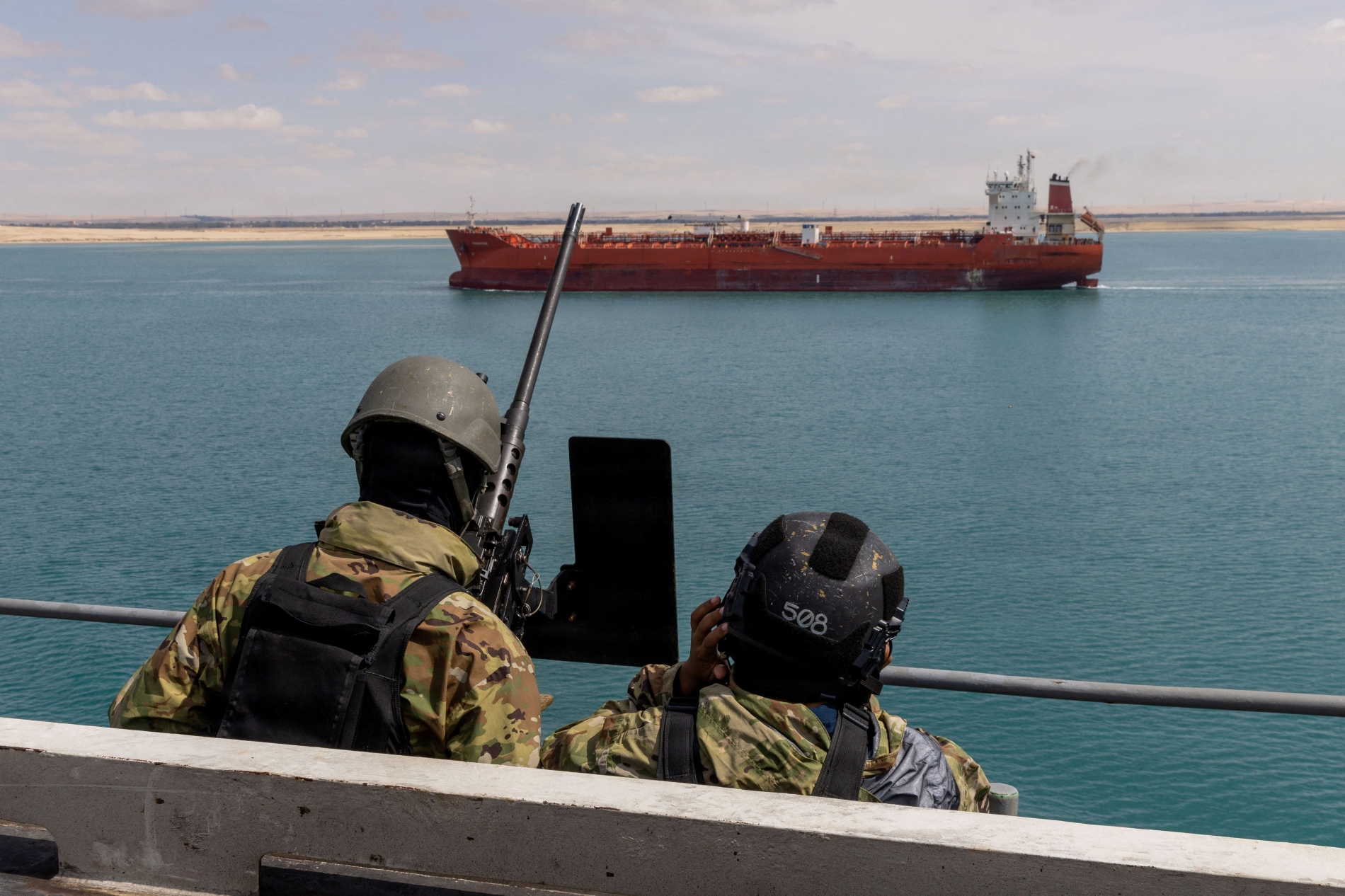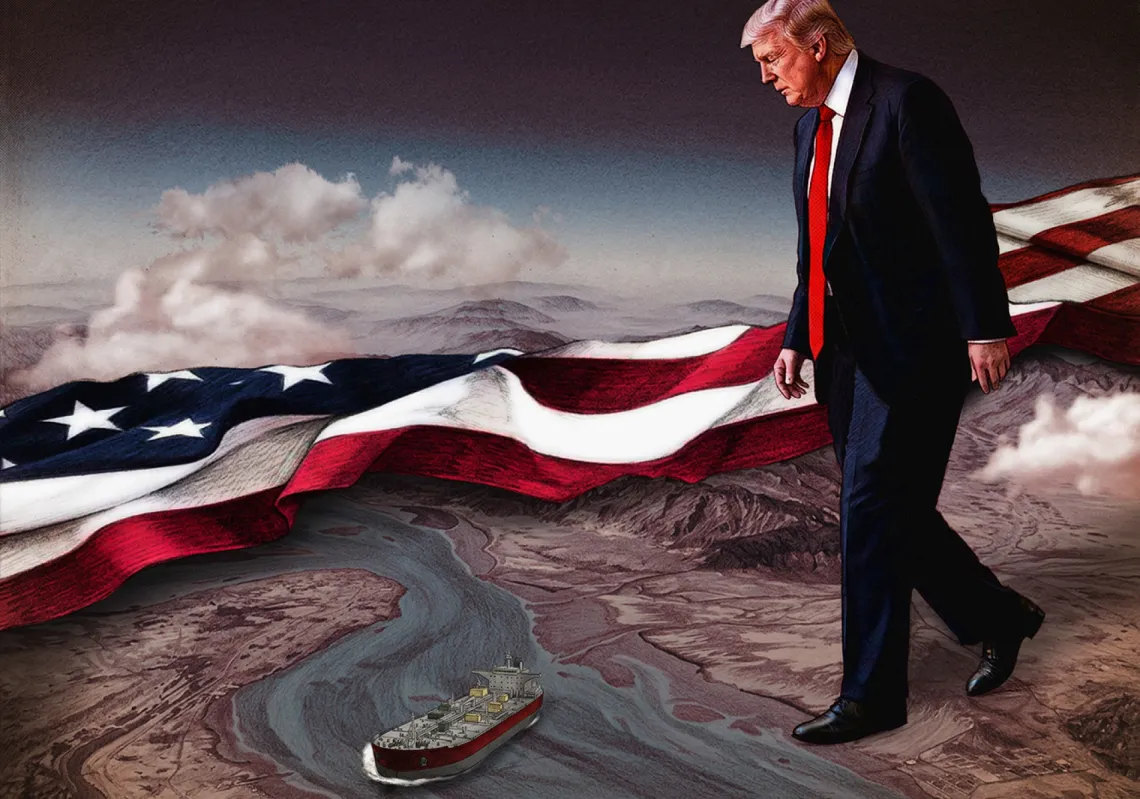

As US-Iran negotiations inch forward at a snail's pace, tensions are rising in the Arabian Gulf and the Arabian Sea, amid a growing American military buildup. These tensions have already manifested into attacks on and seizures of commercial vessels, with both sides trading threats of heightened violence.
In these waters, a new status quo appears to be taking shape, governed by a delicate equation that balances measured escalation against efforts to avert a full-scale conflagration. The maritime arena is now poised to become the prime arena of confrontation, with Iran leaning on unconventional tactics to confront a more powerful adversary: the US navy.
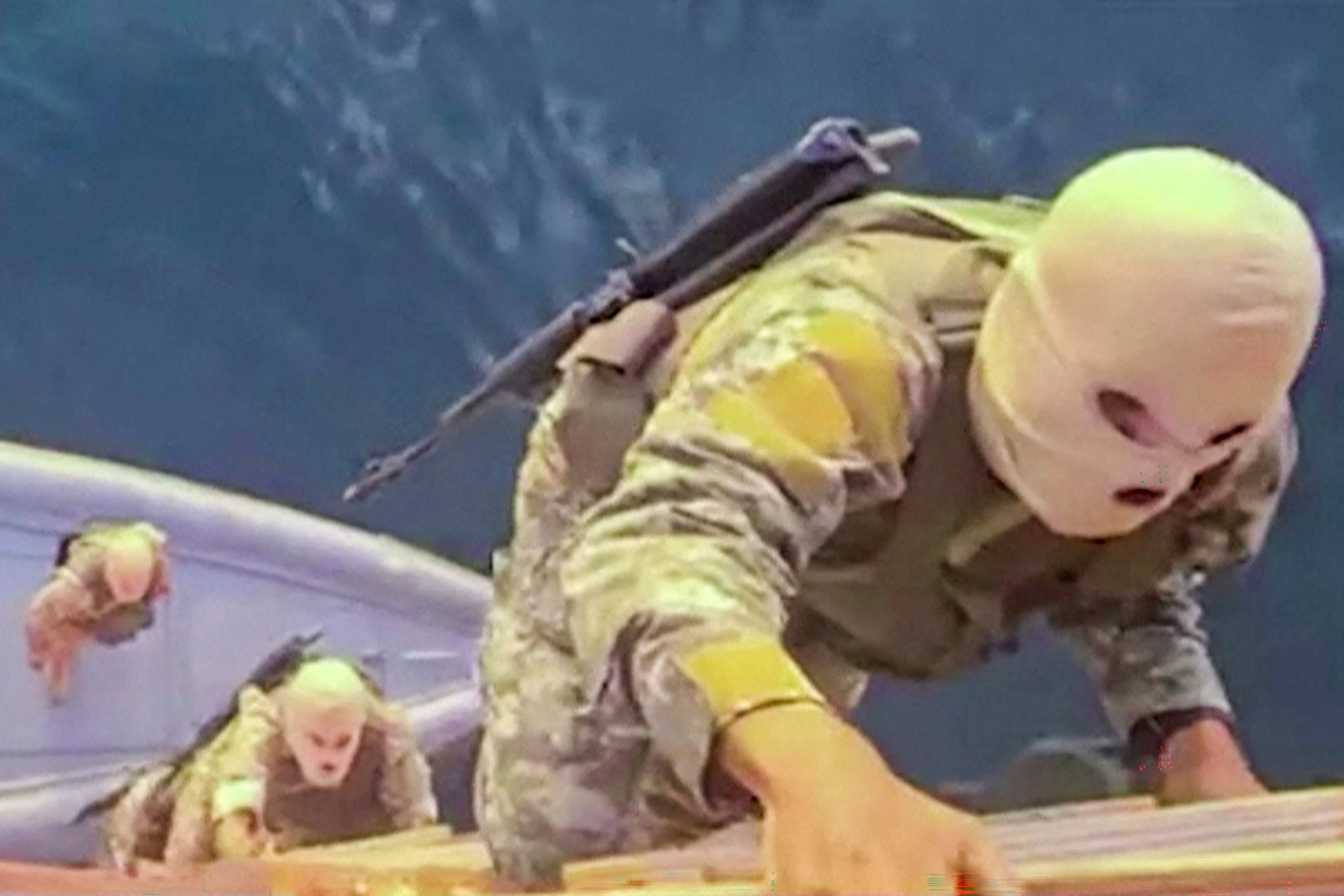
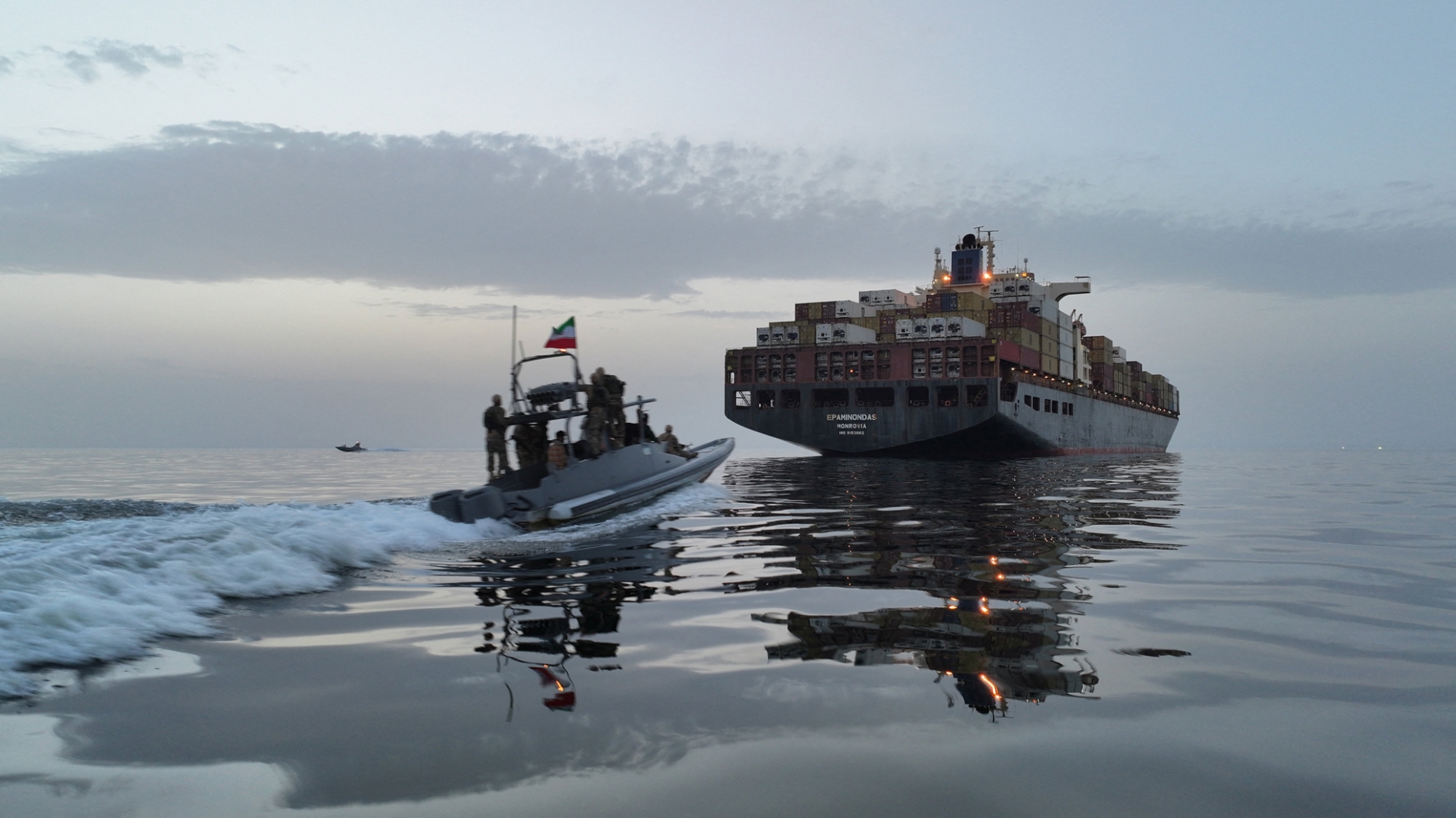
Iran's maritime guerrilla warfare relies on a fleet of speedboats designed to carry out quick, coordinated, and precise attacks in the Strait of Hormuz, one of the world's most important maritime trade chokepoints. These boats have become a central pillar of Iranian naval thinking, especially after the US destroyed much of its conventional naval hardware.
These boats have been dubbed the "mosquito fleet", a term that describes a tactic built on numerical density and high speed, with attacks simultaneously launched from several directions to confuse the adversary, disperse its defences, and deliver a decisive blow. Its value lies less in the firepower of each individual boat than in its cumulative effect when operating as a fast-moving swarm.
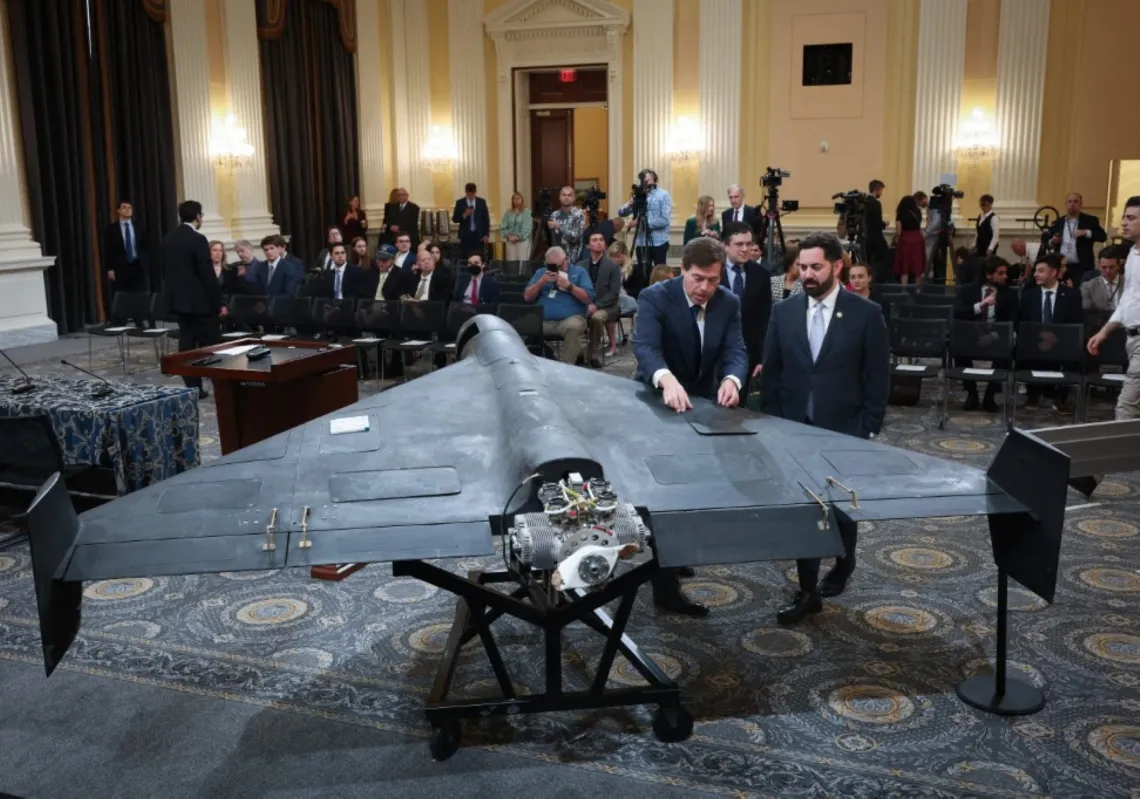
The strategy depends on light, rapid vessels, usually fitted with relatively simple weapons such as heavy machine guns and rocket launchers, and sometimes anti-ship missiles. Although their armament is limited compared with that of destroyers and frigates, their effectiveness stems from their ability to deploy quickly, manoeuvre with agility, and conduct surprise attacks in large numbers.
A hidden armada
Iran is believed to have hundreds, or even thousands, of these boats, hidden in coastal facilities or tunnels, and sometimes concealed amid civilian maritime traffic, which makes them harder to detect in advance or neutralise pre-emptively. They are concentrated chiefly in the Arabian Gulf, particularly around the Strait of Hormuz, through which roughly a fifth of the world’s energy supplies pass. This geography gives them a significant tactical advantage: they can surge towards their targets, whether commercial or military vessels, then withdraw before opposing forces can respond effectively.