Is the United States succeeding in Iran? It depends on who you ask. A Pew Research survey published last week found that 61% of Americans disapproved of US President Donald Trump’s handling of the conflict, while 37% expressed approval. The numbers mirror support for Trump in general, suggesting a divide in opinion based largely on partisan predispositions. Tellingly, seven out of every 10 Republicans but only one out of every 10 Democrats approve of how the White House is executing the war so far.
Another way of examining the success of the joint US and Israeli assault on Iran could be the scale of damage. On this metric and after one month of conflict, the United States and Israel have imposed far more costs on Iran than the other way round. Several top Iranian political and military leaders have been killed, including the supreme leader, Ayatollah Ali Khamenei; Iran’s air force and navy have mostly been destroyed; its nuclear programme has been further set back; its ability to launch ballistic missiles has been degraded; and one of Iran’s key allies, the Lebanon-based militant group Hezbollah, has faced intense bombardment.
On the other side of the ledger, the main headline is that Iran has succeeded in shutting down key routes of travel and commerce without inflicting much lasting damage so far.
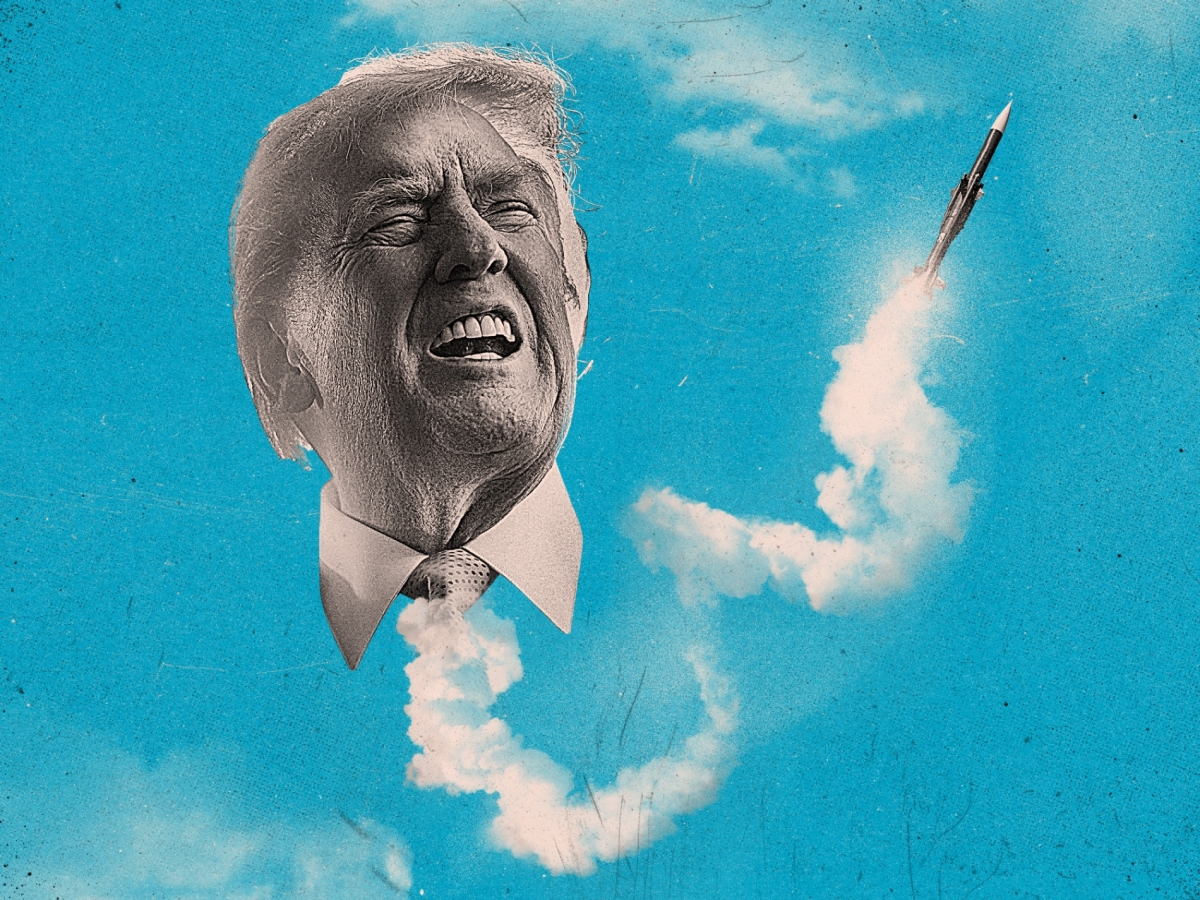
Why, then, does it feel like the US is winning the battle but losing the war? The answer here may have to do with expectations. And on this front, the mere survival of Iran’s regime and its ability to hurt the global economy and enrich US adversaries suggest the Islamic Republic is emerging with a better hand. Survival and disruption were always Tehran’s strategic goals in the event of a war. Trump’s visible frustration makes it clear that he’s being denied the quick operation he wished for.
The first reason the United States could be seen as losing is its maximalist aims at the start of the war. In a video posted on Truth Social on 28 February, Trump seemed to suggest that he was hoping for regime change, as well as to end Iran’s ability to build missiles, ensure its proxy groups can no longer destabilise the region, and prevent Iran from obtaining a nuclear weapon. None of those objectives have been met so far.
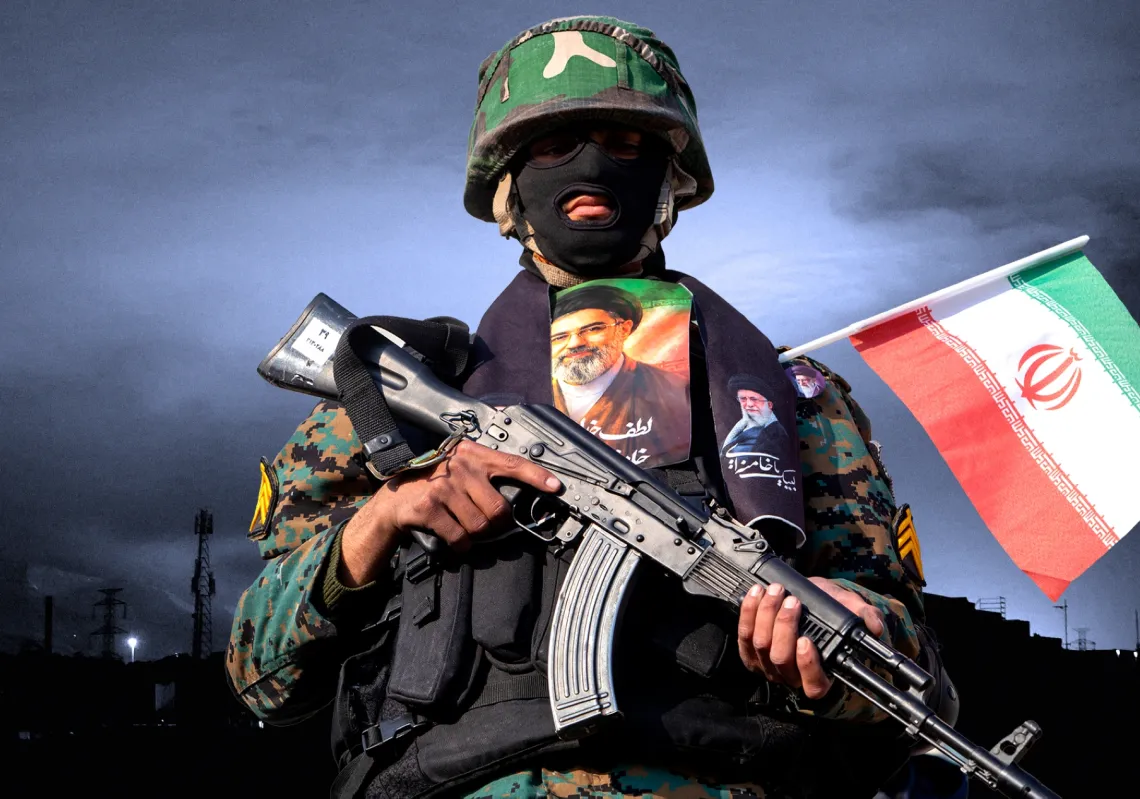
As several analysts in Foreign Policy suggested at the start of the war, the Islamic Republic had carefully selected replacements for key political and military roles to guarantee the regime’s survival. Its ability to launch missiles has indeed been degraded, yet it continues to fire them at Israel and at US allies in the region. Tehran has previously displayed an ability to rebuild its missile programme in the space of a few months, as it did after US and Israeli attacks last June, and it will likely rush to do so again as soon as this war is over.
Only 18% of GeoPoll respondents blame Iran for the conflict and its global costs. Instead, 29% blame the United States and 38% blame Israel
Likewise, Hezbollah is decimated but survives. And, as evidence that Iran has a layered plan for prolonging the conflict, the Houthis in Yemen have only just entered the war, firing missiles at Israel over the weekend. Finally, some 440 kilogrammes of highly enriched uranium still exist somewhere in Iran, ready for a new crop of leaders—and a more vengeful one at that—to return to.
A second reason for seeing the war as a US failure would be the immense economic costs that Iran has imposed on the world so far. The price of jet fuel has risen by 120% this year. Brent crude, the key benchmark for global oil prices, has risen by more than 87% in the same period.
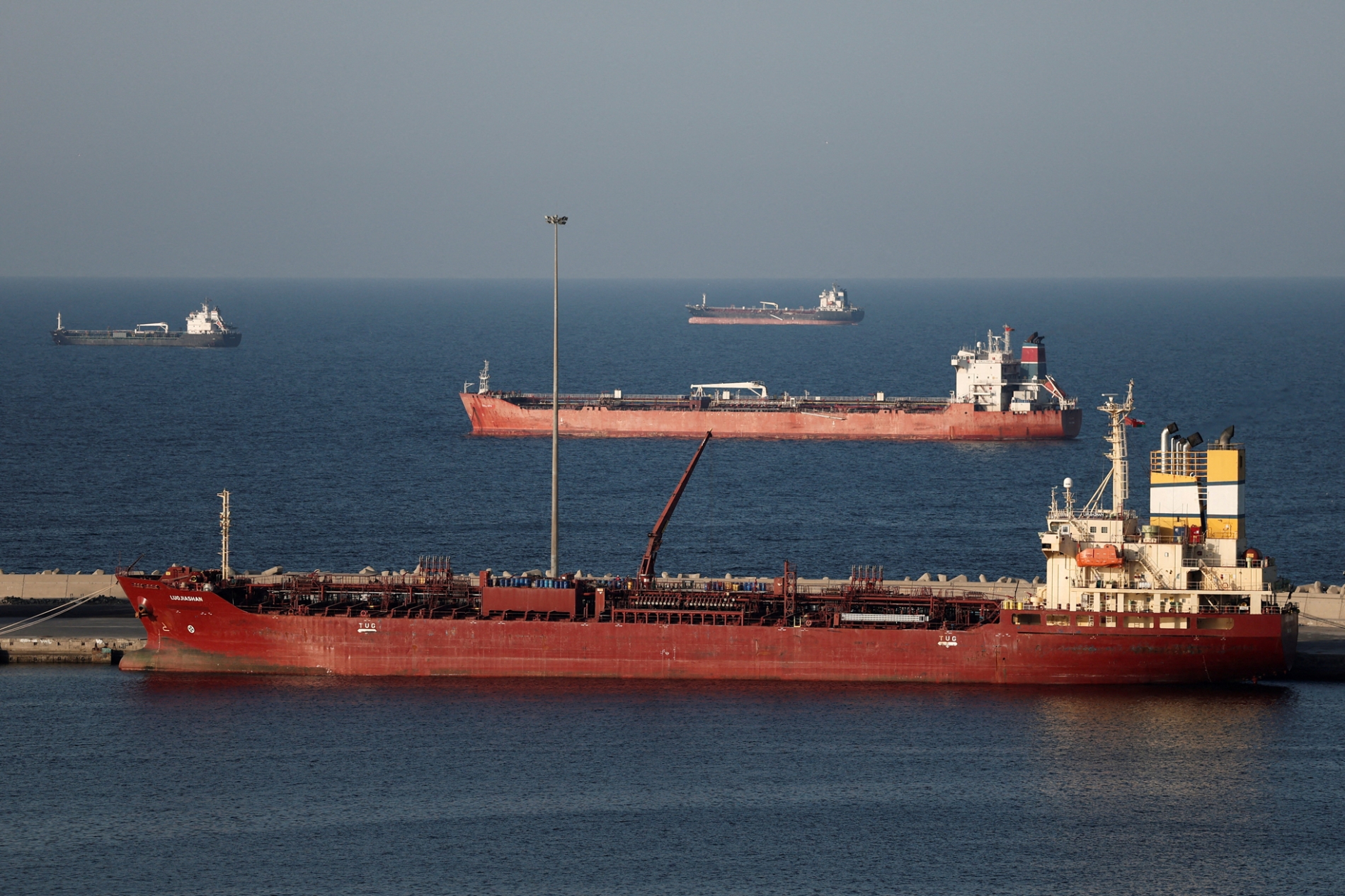
An oil tanker docked in Muscat port, Oman, amid Iranian threats to close the Strait of Hormuz, on 7 March 2026.
Much of this is because Iran has largely shut off the Strait of Hormuz, through which a fifth of global crude usually passes every day. So, too, does 20% of all liquefied natural gas (LNG). The supply disruption in LNG, coupled with damage to a major Qatari gas field from an Iranian missile strike, has led natural gas prices to surge by more than 70% in Europe this month.
The Strait of Hormuz also serves as a conduit for a third of global helium supplies—a key component not only in children's balloons but also in the manufacturing of semiconductors—and a third of global fertiliser sales. The longer the blockade goes on, the more likely the world will face a chip and food crisis in addition to an energy. These ripple effects are essentially the Islamic Republic's way of reminding the world that it won't go quietly into the night.
And according to GeoPoll, which conducted a survey in Egypt, Kenya, Nigeria, Pakistan, Saudi Arabia, and South Africa, only 18% of respondents blame Iran for the conflict and its global costs. Instead, 29% blame the United States and 38% blame Israel. Some of this could be because the attacks took place amid diplomatic talks that neutral observers saw as promising.
A third reason why the United States is emerging as a loser from the current war is the fact that, unlike its misadventure in Iraq under President George W. Bush, it sought neither domestic nor international approval. This time, there were no shibboleths about democracy promotion or a rules-based order. The only real ally the United States has in this war is Israel, which itself has become more isolated and unpopular globally than it has been in a generation.
Trump faced acute embarrassment by first calling on NATO allies for help and then, after realising that no assistance would be forthcoming, denying that he needed a hand. The trans-Atlantic relationship emerges weaker from this war. So, too, does Washington's ability to portray itself as the leader of a system whose rules it is actively trashing.
Fourth, the war is having the unexpected outcome of enriching US adversaries. In a bid to check rising oil prices, the US Treasury rescinded existing oil sanctions on both Iran and Russia. As a result, Tehran is now raking in more daily crude revenue than it did before the war began. Moscow, meanwhile, is gaining an additional $150mn in oil revenue every day the conflict goes on—money that it will no doubt use in its war in Ukraine.
The picture is more mixed for China, which gets more than half of its oil from the Gulf. While Beijing faces some supply constraints, its foreign policy is relatively unencumbered by the entanglements that the US routinely finds itself in. In all likelihood, Chinese military leaders are closely following how rapidly the US is using up missile interceptors, leaving it less able to deter attacks in other arenas.
Finally, the war is shaking support for Trump among Republican lawmakers. The US Defence Department has suggested it will request $200bn in additional funding to support its ongoing engagements in Iran, but has yet to submit a formal proposal, likely because there are growing doubts about whether there will be enough support on Capitol Hill.
Just walked out of a House Armed Services briefing on Iran. Let me repeat: I will not support troops on the ground in Iran, even more so after this briefing.
"Let me repeat: I will not support troops on the ground in Iran," said Rep. Nancy Mace, a Republican lawmaker from South Carolina, on X after attending a classified House Armed Services Committee meeting on Iran last week. "Even more so after this briefing."
A full accounting of the war can only be conducted after its conclusion. The United States may yet inflict further damage to Iranian military infrastructure that could change this assessment. Already, we can imagine how each side might spin the results: Iran will tout standing up to the world's greatest military superpower and a regional hegemon; Israel will say it decimated the capabilities of its enemies, even if temporarily; and the United States could simply point to its demonstration of overwhelming brute strength.
But even if the war were to end in the next few days, the reality is that whatever is left of the Iranian regime will be vindicated simply by its survival. Its leaders will be infused with a sense of revenge that they could take out either domestically or internationally. Future leaders of Iran will study the conflict and realise that their greatest deterrent is the ability to impose immense costs on the global economy. That could mean postwar leadership will move quickly to rebuild an arsenal of attack drones and missiles. It may also abandon its old nuclear fatwa and decide a bomb would be its best form of security, as it is for North Korea. What would the conflict have been for?
It may be Israel's strategy to repeatedly mow down adversaries in the region, but it should not be Washington's. Trump has long railed against expensive, protracted wars in the Middle East. It's likely that he misjudged the nature of Iran's regime, as well as how its size and geography make it significantly different than Venezuela, a country whose leader the United States captured in a single overnight mission.
A family stands next to a fire outside their tent, at a temporary encampment for displaced people in Beirut, on 30 March 2026, amid Israel's war on Lebanon.
Spare a thought for the long-suffering residents of the region. In Iran and Lebanon, thousands of people have been killed, and more than a million have been displaced. In Israel, one sees a population that has spent the better part of two years rushing to bunkers at the first pitch of sirens. And in the Gulf states, expats and migrant workers have had to contend with an instability they never imagined when they moved to Dubai or Doha. If all of this is only to return to a future war, then what was it all for?