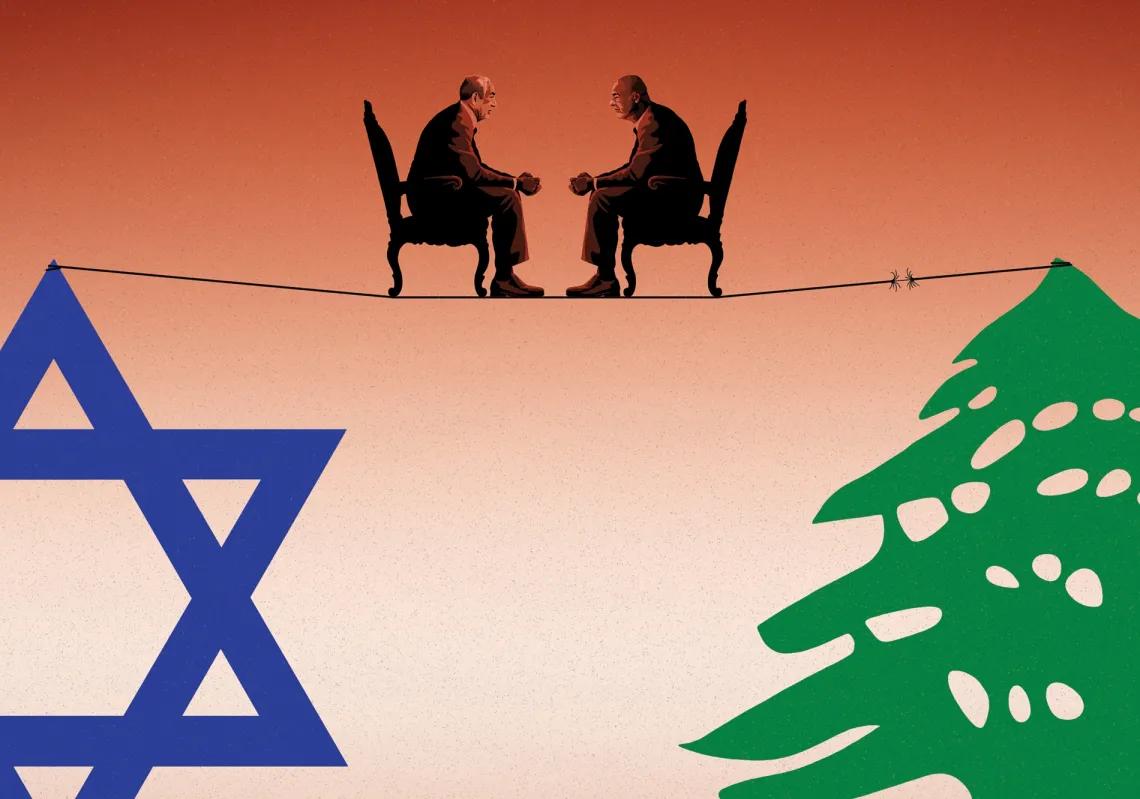
Largely forgotten by history, leaders in Beirut and Tel Aviv shook hands on a plan for normal bilateral relations 43 years ago, after yet another Israeli occupation of southern Lebanon.
Lebanon’s ongoing direct negotiations with Israel in Washington this week would have been impossible to envisage were it not for the transformations that have reshaped the region since October 7 2023, not least Israel’s war against Hezbollah in September 2024, which ended in a ceasefire agreement two months later.
That agreement didn't prevent Israel from continuing to bomb Lebanon at will. It killed Hezbollah fighters and sites, leaving the group weakened, particularly after the assassination of its leaders, including the group’s influential Secretary General Hassan Nasrallah. And when, in December 2024, the Syrian regime of Bashar al-Assad fell, this deprived Hezbollah of a key ally next door. Taken together, these developments altered Lebanon’s political and security equation.
Since then, the Lebanese government hasn't disarmed Hezbollah as stipulated by the 2024 ceasefire agreement. In fact, the group attacked Israel on 2 March this year, in response to the US-Israeli war against Iran that began on 28 February.
A historic moment
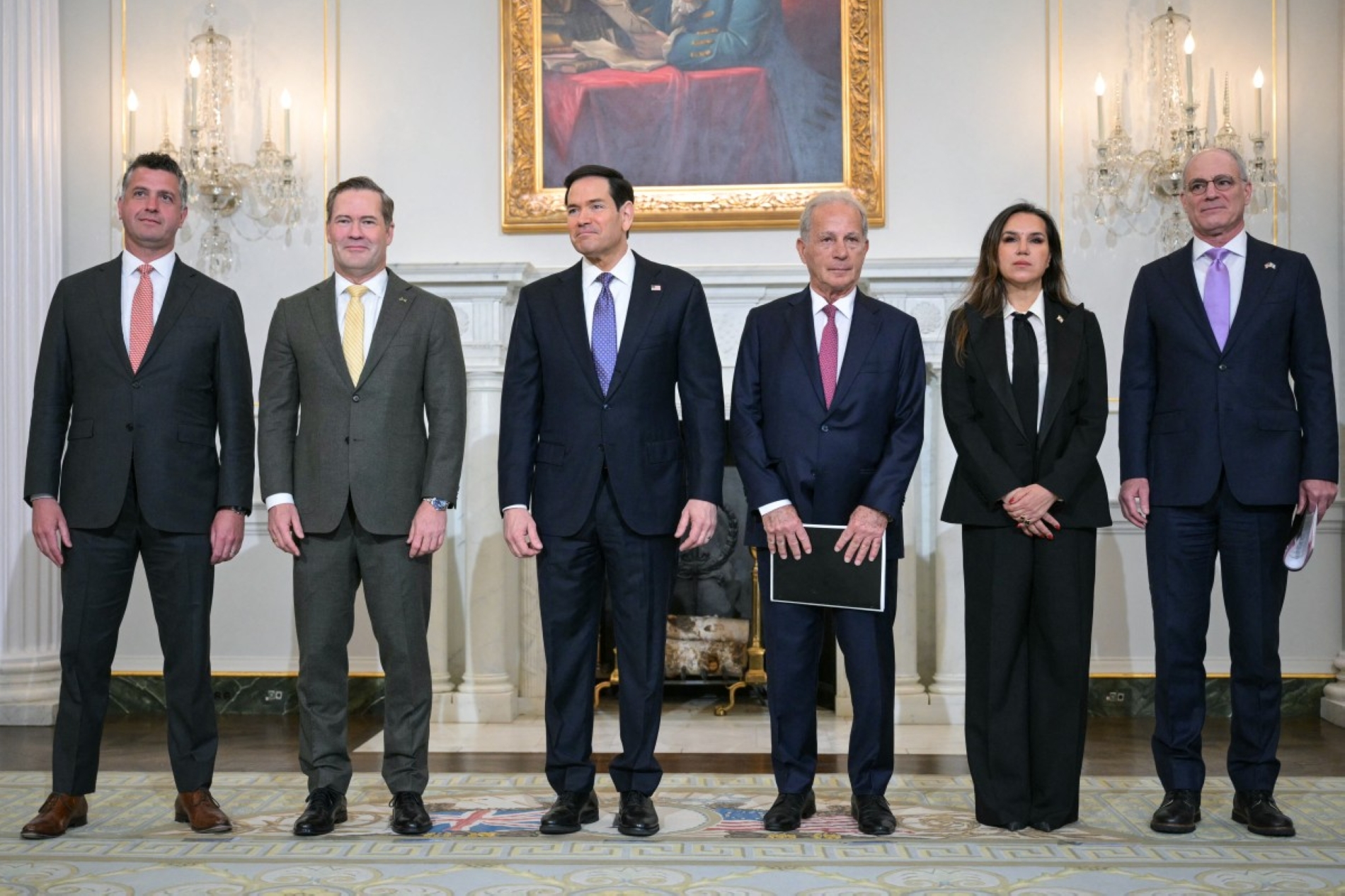
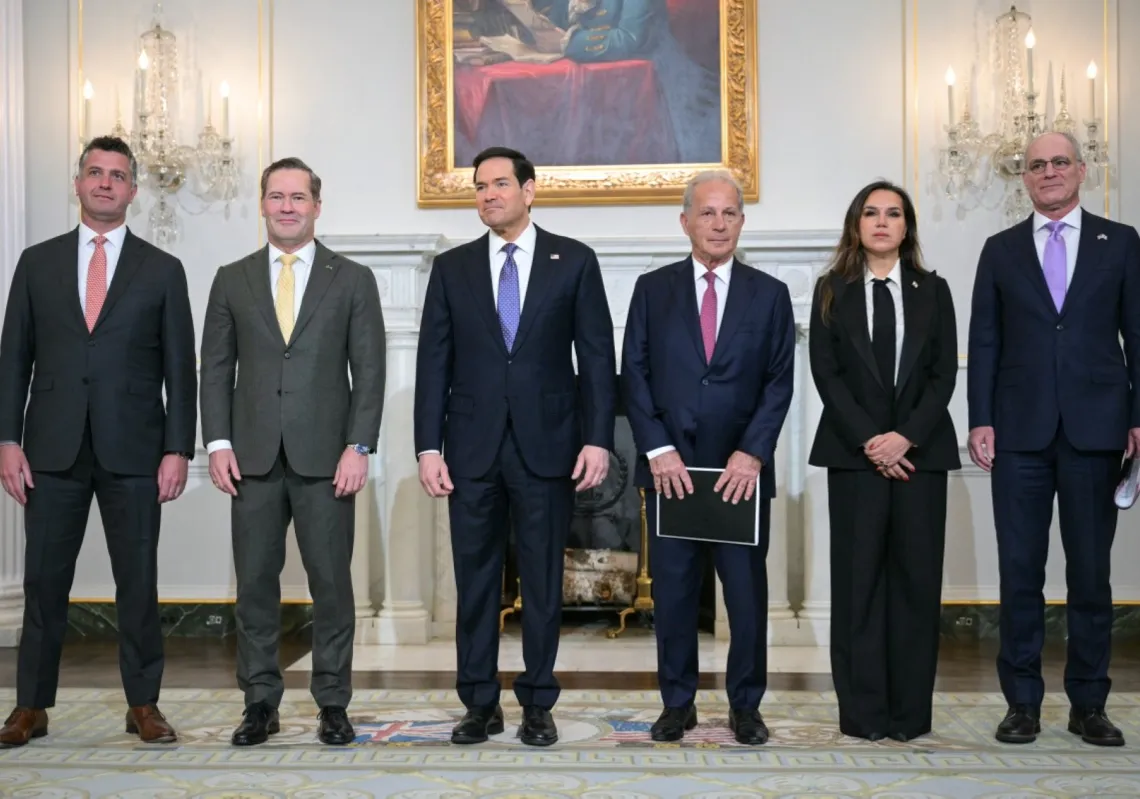
Direct talks between the Lebanese and Israeli ambassadors to the United States first took place on 14 April under American mediation at the US State Department, in the presence of US Secretary of State Marco Rubio. It was the first official head-to-head talks between the two countries since the Madrid Peace Conference of 1993.
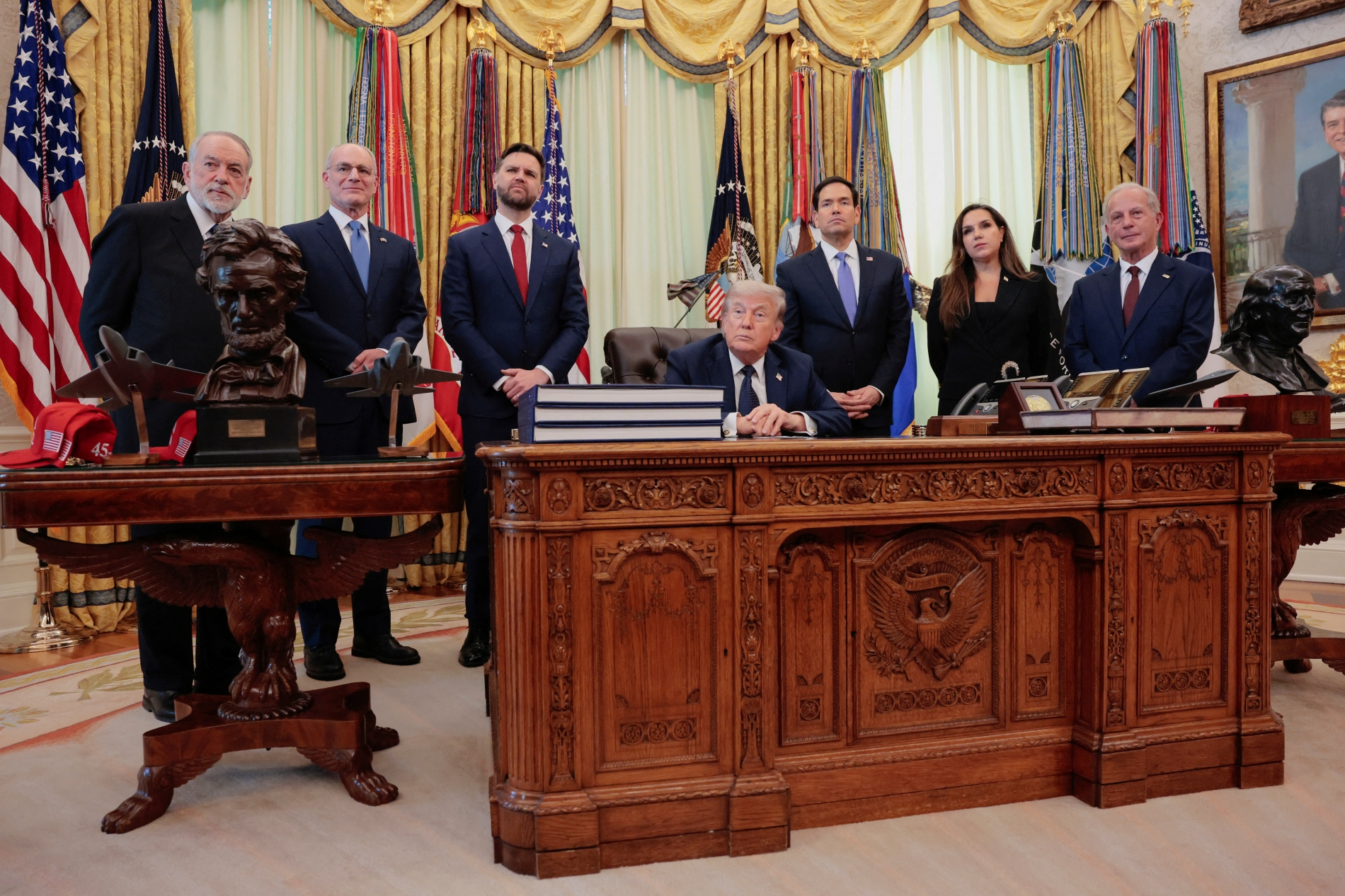
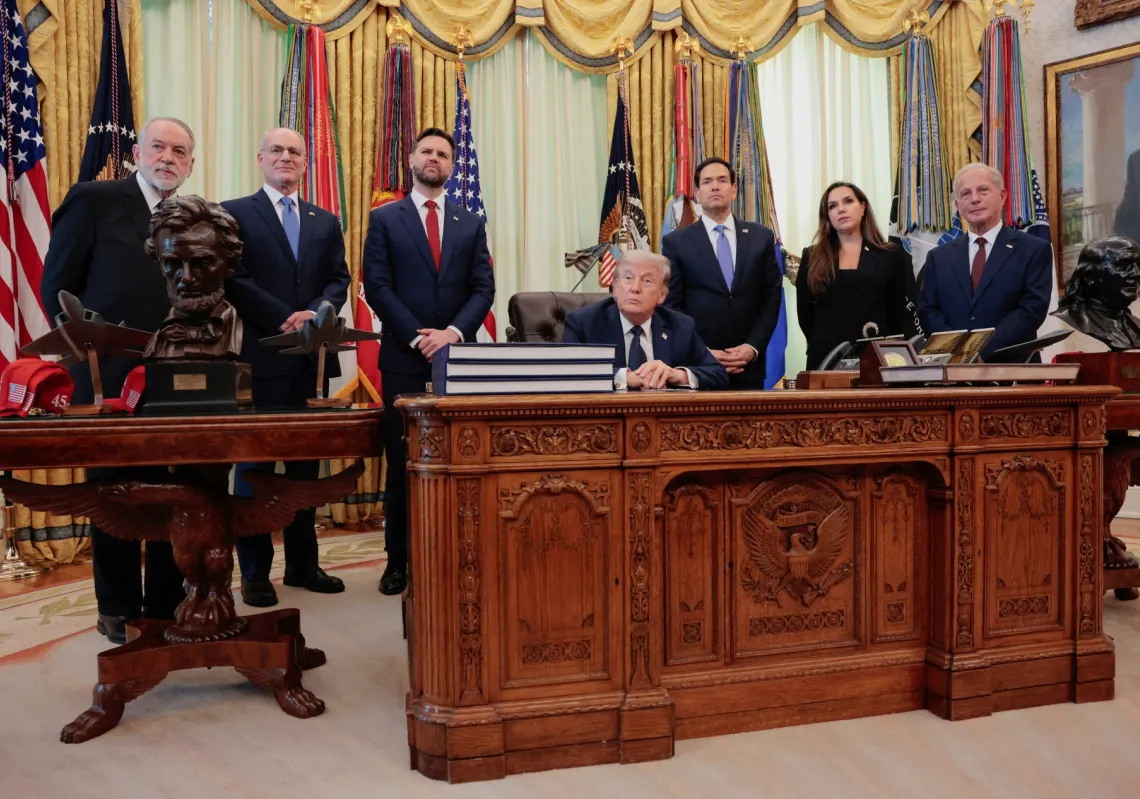
A second round of talks began on 23 April. Although scheduled for the State Department, they were moved to the White House at the last minute, with US President Donald Trump personally meeting the representatives and then confirming that the 10-day ceasefire would be extended for an additional three weeks.
Israel Ambassador to the US Yechiel Leiter, US Ambassador to Lebanon Michel Issa, President Donald Trump and Secretary of State Marco Rubio in the Oval Office at the White House on 23 April 2026.
While the US has one eye on Lebanon-Israel talks, the other is firmly on its separate talks with Iran aimed at resolving their ongoing conflict. Some think the fact that direct Lebanon-Israel talks are going on at all demonstrates Hezbollah’s waning domestic influence, given that its parliamentary supporters oppose such dialogue. Others think Hezbollah is reluctant to torpedo the initiative at this stage because a temporary cessation in hostilities gives it time to restock.
Will it compromise, though? Under the step-for-step principle outlined by French President Emmanuel Macron at his recent meeting with Lebanese Prime Minister Nawaf Salam, Israel would withdraw in exchange for Hezbollah’s disarmament, but whether the group is willing to do so remains doubtful. In the unlikely event that Hezbollah agrees to disarm, few think Israel genuinely intends to fully withdraw from the territory it currently occupies.
In the unlikely event that Hezbollah agrees to disarm, few think Israel genuinely intends to fully withdraw from the territory it currently occupies.
Unclear parameters
At this stage, it is difficult to foresee the parameters of the talks' political and security dimensions. To an extent, it will depend on the future balance of power in the region, which will undoubtedly be determined by the outcome of the US-Iran war. In the meantime, observers have debated the end goal, such as a truce similar to that of 1949, as Druze leader Walid Jumblatt proposes, with the backing of Lebanon's Speaker of Parliament Nabih Berri, who heads a big Shiite movement. Questions abound. Will it produce limited security arrangements, or lay the foundation for a broader settlement that could ultimately culminate in a peace agreement?
US Ambassador to the UN Mike Waltz, US Secretary of State Marco Rubio, US Ambassador to Lebanon Michel Issa, and Israeli Ambassador to the US Yechiel Leiter at the State Department in Washington, DC, on 14 April 2026.
Getting the Israelis and the Lebanese in the same room has been a personal achievement for US President Donald Trump, whose ultimate aspiration is to host Israeli Prime Minister Benjamin Netanyahu and Lebanese President Aoun in the Oval Office to sign a historic peace agreement between the two countries. Trump is believed to have put pressure on Netanyahu to agree to the initial ten-day ceasefire in Lebanon, with the White House seeking a bigger deal with Tehran at talks facilitated by Pakistan. Ideally, Trump would want Lebanon to join the Abraham Accords, his signature foreign policy achievement in the Middle East, though the prospect is extremely unlikely.
Netanyahu's government seems less than impressed by all this, however, which has put the Israeli prime minister in a bind. Polls show that most Israelis actually favour a return to the fighting in Iran and Lebanon. Supporting the perception of itchy Israeli trigger fingers, reports suggest that the Americans twice had to demand that Tel Aviv halt its bombing of its northern neighbour. Israel has pretty much conducted daily attacks on Lebanon, while smaller in scale. Much, therefore, depends on Trump's continued ability to curb Israeli violations of the truce.
Parallels in history
In these negotiations with Israel, Lebanon is by far the weaker party, a point exacerbated by Washington's bias towards Tel Aviv. Yet if the two countries were to strike a deal, it would not be for the first time. On 17 May 1983, they reached an agreement that provided for a phased Israeli withdrawal (on the condition that the Lebanese Armed Forces take over in the south) and a framework for the establishment of normal bilateral relations, formally ending their declared state of war. Back then, the threat to Israel was posed by Yasser Arafat's Palestine Liberation Organisation (PLO). Today, it is posed by Hezbollah.
The 1983 agreement was concluded under American mediation, but in Lebanon, it was overturned domestically by forces opposed to the rule of Lebanese President Amin Gemayel, foremost among them the Amal Movement led by Nabih Berri. Complicating matters, Syrian President Hafez al-Assad was determined to maintain influence over direct Lebanon-Israel negotiations (he even closed a newspaper for reporting them, lest it gave the impression that Lebanon was negotiating independently of Syria).
This was the Cold War, and Syria was not alone in maintaining an interest in Lebanon. The attacks on the American embassy and US Marine forces in the country around this time were understood to have had their genesis in Moscow, but with Syrians and Iranians involved in the actual operations. Fast forward 43 years, and Iran is still involved in Lebanese affairs, albeit with far less input from Russia and Syria.
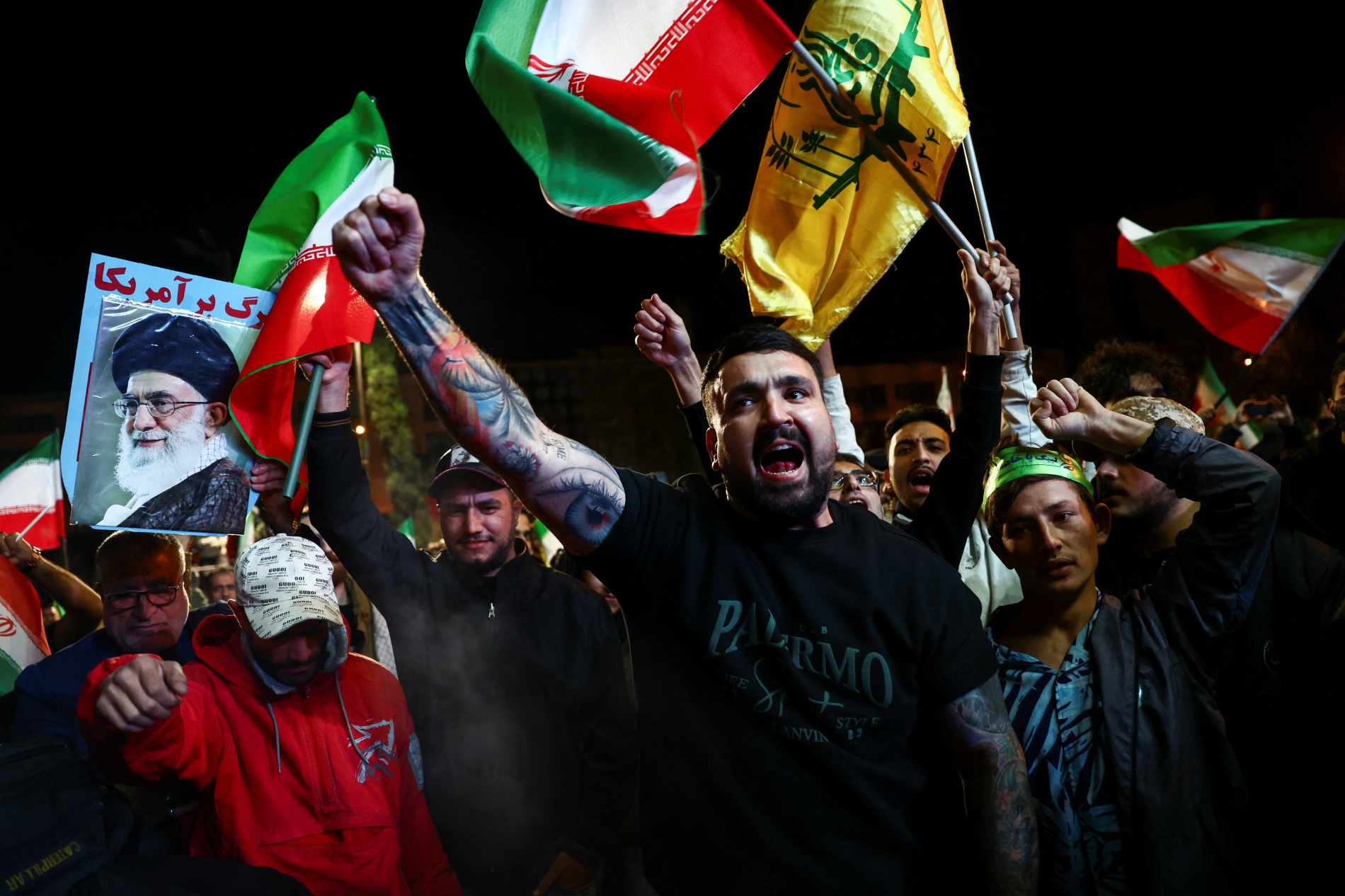
People shout slogans as they gather after a two-week ceasefire in the Iran war was announced, in Tehran, Iran, 8 April 2026.
Determining factor
Should the US deliver a further devastating blow to Iran in its ongoing war, this could affect Tehran's ties to its regional allies. Some believe a weakened Iran could prioritise its own survival and agree to sever or scale back its support for key regional allies, or press them to transform their orientation. This scenario could compel these groups to enter both domestic and regional settlements, with Iran even possibly playing a facilitating role.
Lending credence to this possibility is the fact that the shift from indirect to direct negotiations between Lebanon and Israel coincided with the shift from indirect to direct negotiations between Iran and the United States. It is also notable that Tehran hasn't criticised Lebanon's decision to pursue this path, except for former foreign minister Ali Akbar Velayati's warning to Beirut not to adopt "Rafik Hariri's approach," a reference to Lebanon's former prime minister, who was close to Saudi Arabia and the West (who was assassinated in 2005). The implied threat was to Lebanon's current Prime Minister, Nawaf Salam, who has repeatedly said that Hezbollah needs to disarm.
It is still too early to foresee the new balances and settlements that may emerge in the region, given the high level of flux created by the US-Israeli war on Iran. Lebanon alone cannot define the contours through an agreement with Israel, particularly if Arab states remain cautious, and other parties today have a more nuanced role. Türkiye, which now wields influence in Syria, is wary of Israeli expansionism. Its foreign minister, Hakan Fidan, recently stated that Israel was trying to impose a "new reality" in Lebanon.
For that reason, the ceiling of the negotiations between Lebanon and Israel may prove to be no more than a security agreement, echoing the ceiling Ahmed al-Sharaa set for Syria-Israel negotiations (Israel is occupying land in Syria, too). The question is whether Israel really wants to withdraw from the 'security belt' it is establishing in southern Lebanon on the ruins of 55 villages whose residents have been displaced from. So far, every indication suggests that the Israelis plan to stay. Whether an agreement with Lebanon can secure an Israeli withdrawal remains to be seen.