Has Iran's ideology actually hardened?

The change in tone and presentation of policy isn't a fundamental redirection, but rather the consolidation of a system under pressure

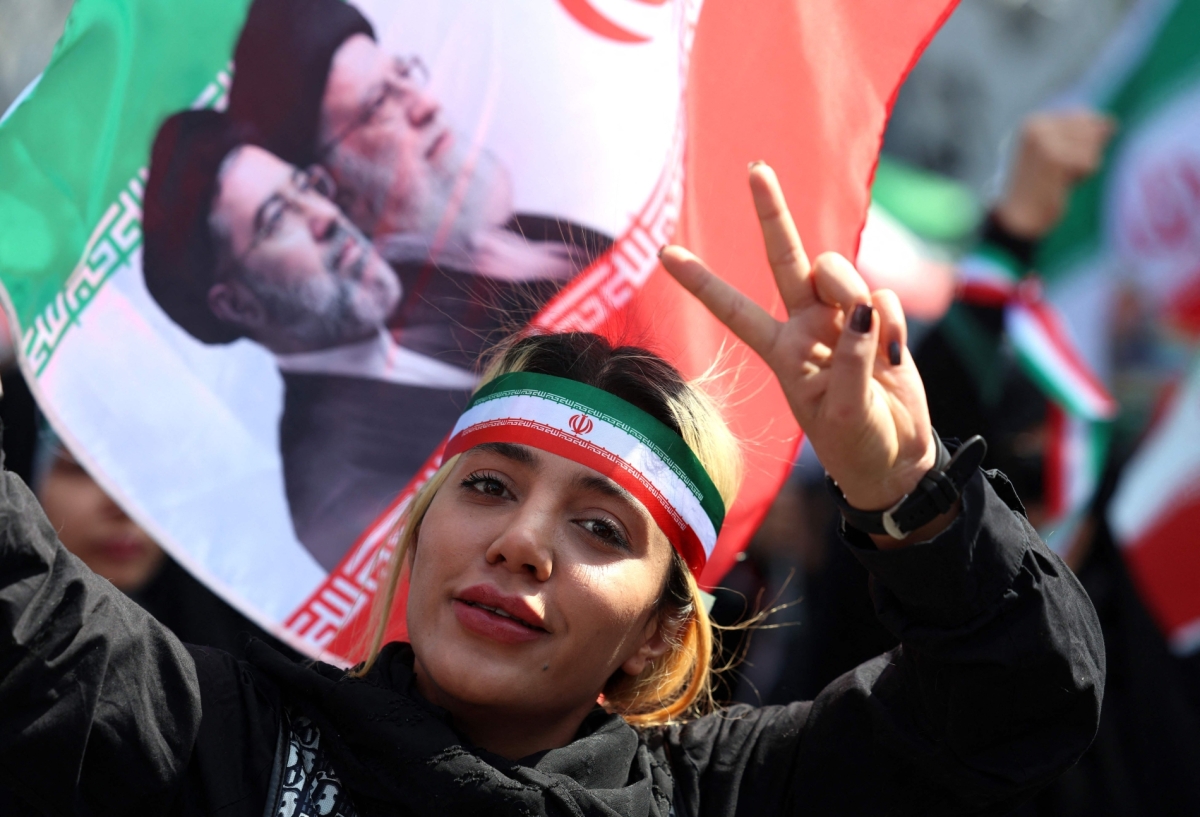
An Iranian woman flashes the V-sign as she takes part in a rally to pay tribute to women killed during war, in Tehran on 17 April 2026.
AFP
An Iranian woman flashes the V-sign as she takes part in a rally to pay tribute to women killed during war, in Tehran on 17 April 2026.

Has Iran's ideology actually hardened?

Israel’s killings of Ali Larijani and Kamal Kharazi were meant to do more than remove two senior figures from the Islamic Republic’s political landscape. Within Tehran’s political and analytical circles, they were interpreted as an attempt to erase something less visible but more consequential: the regime’s ability to speak the language of compromise. They were also part of a broader pattern: the disappearance of the men who once helped Tehran speak to the outside world.

Larijani had long served as a translator between Iran’s hard power and the diplomatic idiom required to manage it abroad. Kharazi, a former foreign minister with decades of experience, acted as a gatekeeper of strategic signalling. Both men had, for years, served as top foreign policy advisors to the late Supreme Leader, Ayatollah Ali Khamenei. Their killing, at first glance, appeared to confirm a shift toward a narrower, more rigid order, one in which diplomacy would be eclipsed by the logic of the battlefield.

And yet the regime did not break. Decision-making did not stall. The war continued, but so did indirect channels, signalling, and the careful calibration that has long defined Iranian statecraft. The immediate aftermath revealed something essential about the Islamic Republic: its resilience is institutional, not personal. Authority resides not in any single individual, however prominent, but in a layered structure designed to absorb precisely this kind of shock.

The Supreme National Security Council (SNSC), the Revolutionary Guards (IRGC), and the broader security-political nexus remain the core engines of strategy. The assassinations of Larijani and Kharazi might, in time, alter the tone and presentation of policy. It did not fundamentally redirect it.
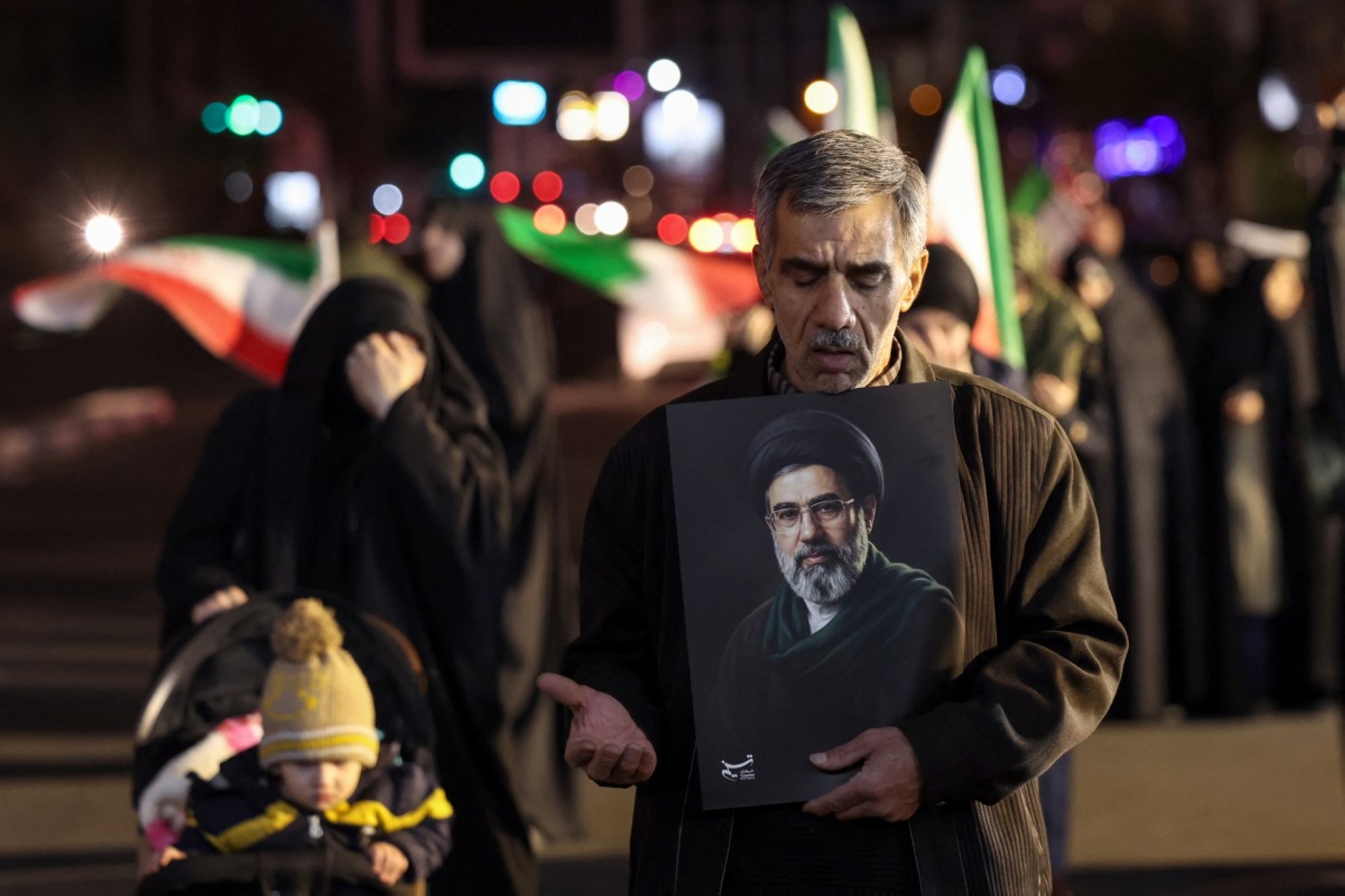
AFP
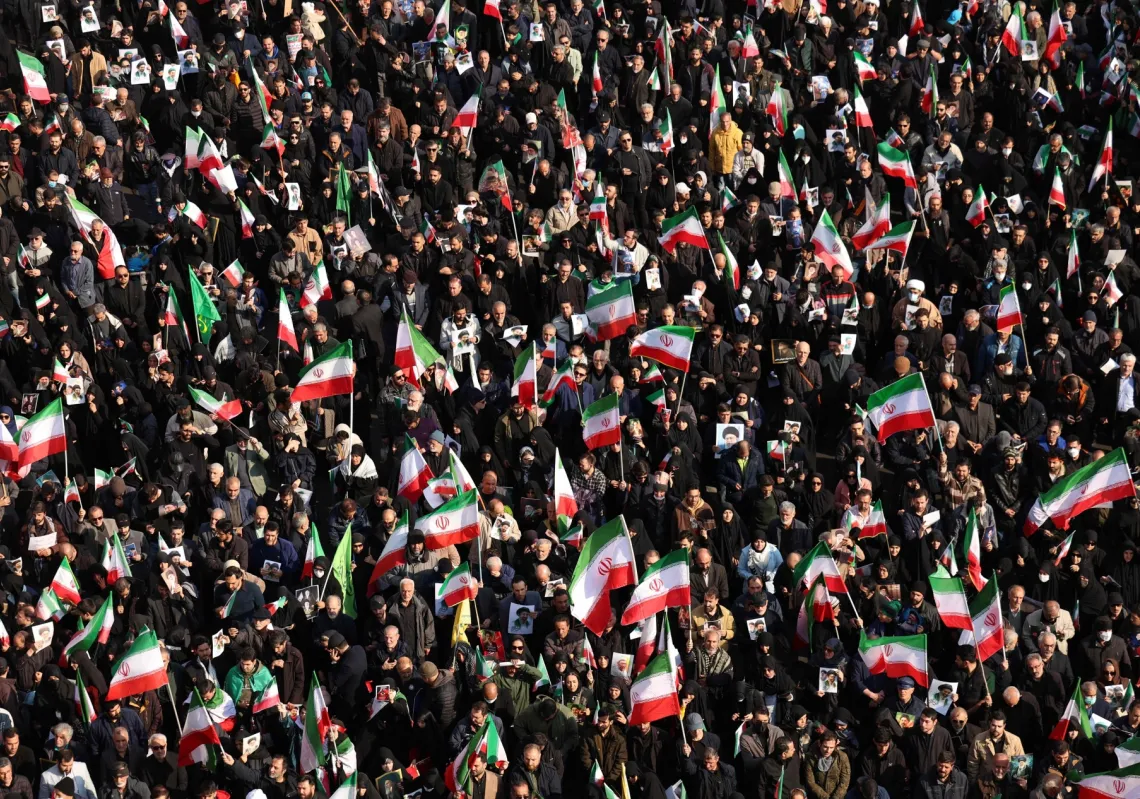
A man reacts as he holds a portrait of Iran's supreme leader Mojtaba Khamenei as people march in support of the Iranian armed forces in central Tehran on 25 March 2026.

Consolidation not transformation

This is where the current moment risks being misread. It is easy to mistake wartime toughness for ideological transformation. The optics are stark: a new supreme leader, Mojtaba Khamenei, with far less independent authority than his late father—a condition likely to persist as he attempts to fill his father’s role. A political class thinned of its most experienced political and military figures.

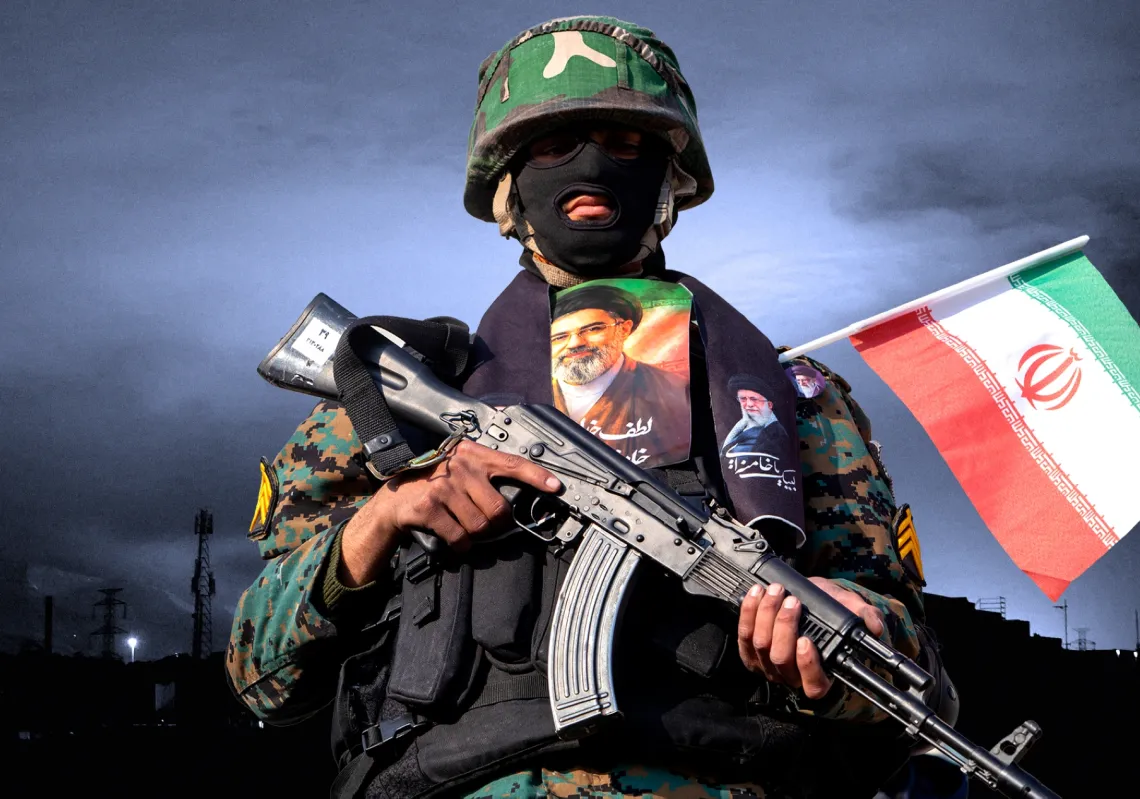
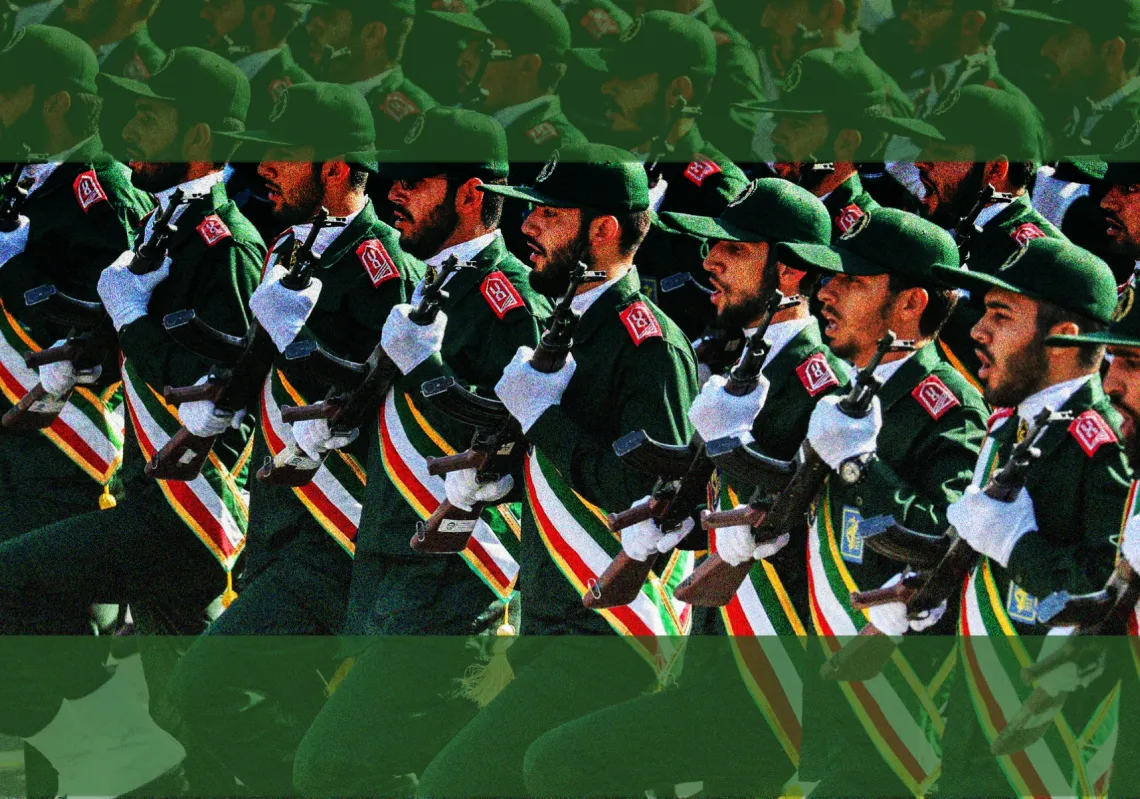
Security institutions, such as the Revolutionary Guards, are more influential in decision-making and are likely more assertive. Public messaging of the regime is more disciplined, less forgiving of ambiguity or concession to outside powers. It is tempting to interpret this constellation as evidence of ideological hardening: a regime becoming more Islamist in its self-definition, more repressive at home, more uncompromisingly anti-Western and anti-Israeli.

But the evidence, so far, does not fully support that conclusion. What it points to more clearly is consolidation under pressure. The war and the succession have strengthened the institutions most capable of ensuring continuity—the Revolutionary Guards, the intelligence services, and those political figures aligned with them. This has produced a narrower governing environment, in which fewer actors can openly articulate alternative approaches. The language of compromise has not disappeared. It has been compressed, controlled, and, above all, depersonalised.

Whatever the validity of Donald Trump’s claim of “regime change” in Tehran, the distinction matters because the ideological core of the Islamic Republic has not undergone a transformation. Its defining elements—resistance to Western dominance, hostility toward Israel, and a conception of sovereignty rooted in an Islamist order—were firmly in place long before the current war and continue to be.
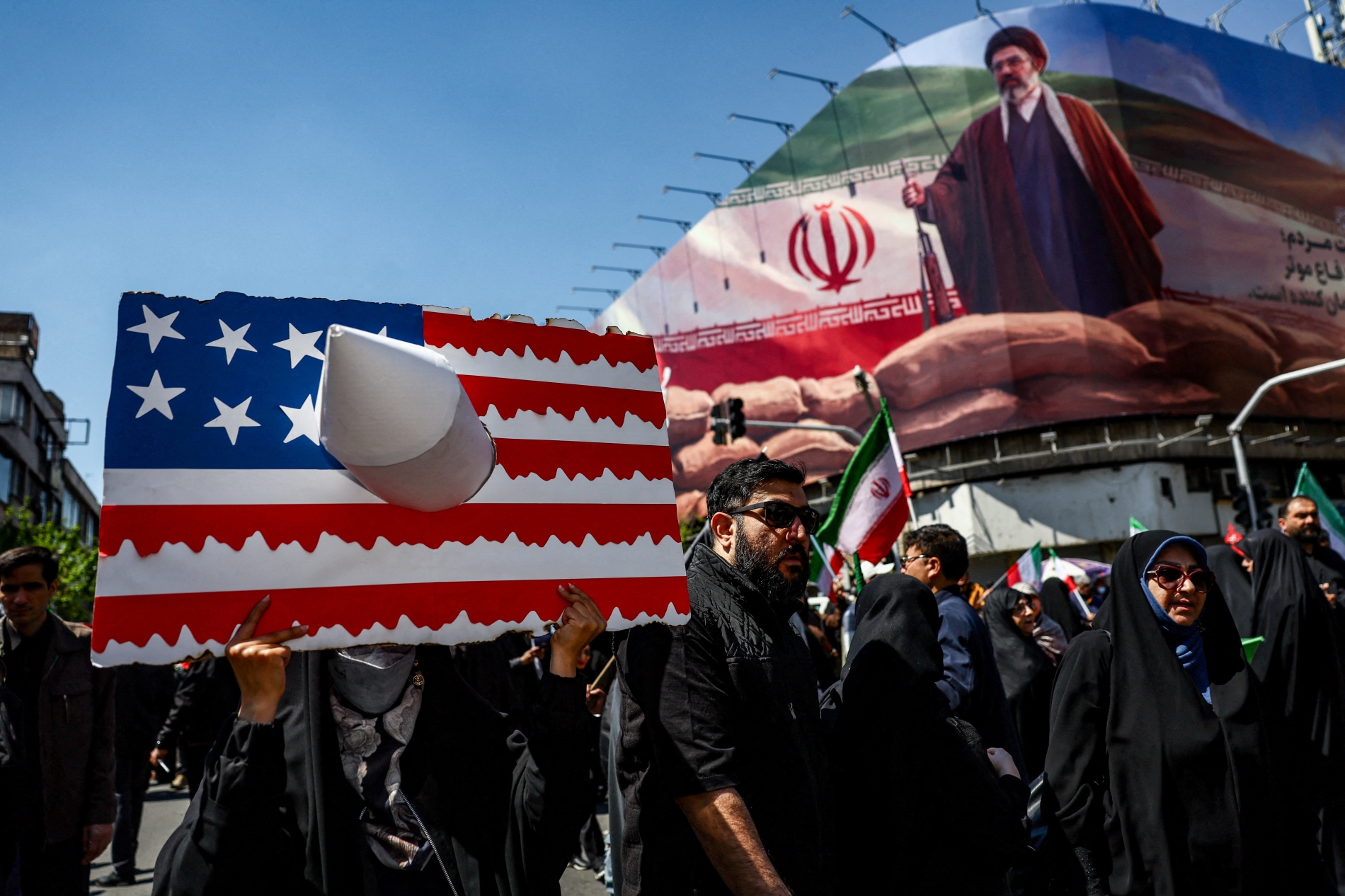
Majid Asgaripour / AFP
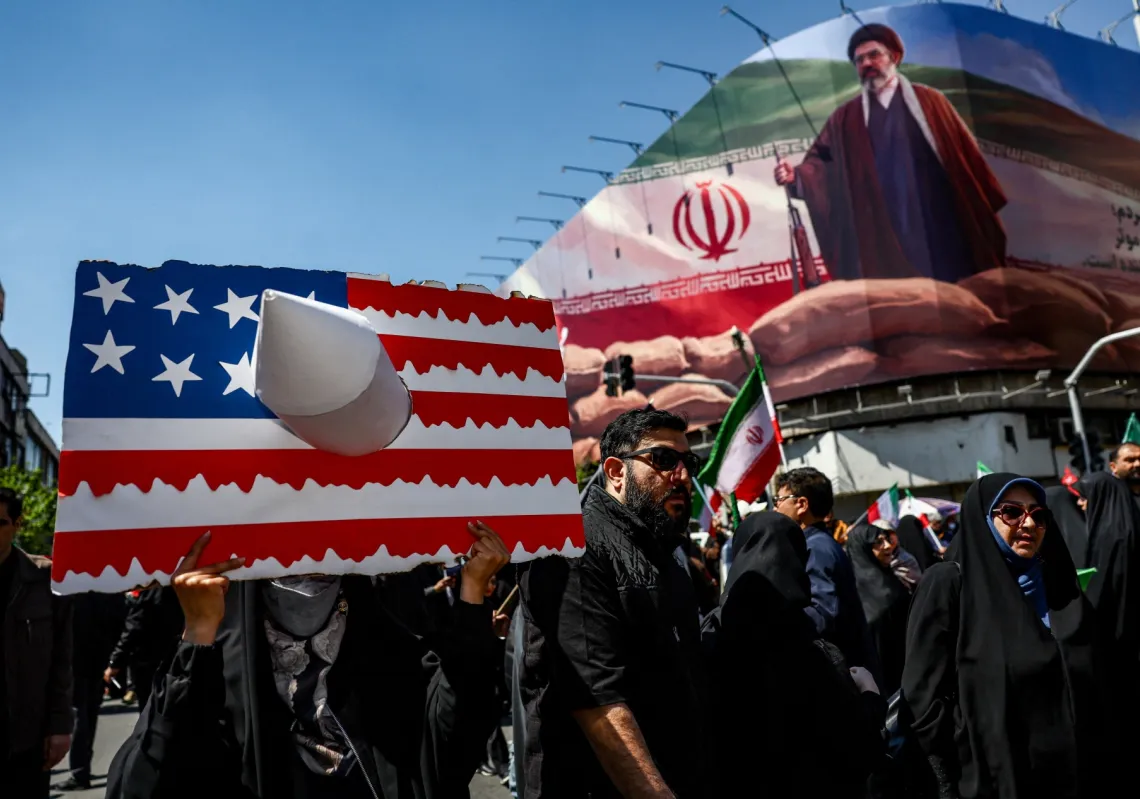
Iranians mark 40 days since Ayatollah Ali Khamenei was killed in US-Israeli strikes at a demonstration in Tehran on 9 April, 2026.

Embedded principles

These are not new doctrines emerging from the crucible of conflict. They are inherited principles, embedded in the system since 1979 and reinforced over decades of confrontation and adaptation. What may be changing is not the content of that ideology, but the conditions under which it is expressed—and under which the regime is willing to make compromises, both at home and in the face of foreign pressure. Today, Iran’s reliance on controlling the Strait of Hormuz leverage, its cyber pressure, and asymmetric military escalation reflects the tools of a state at war—not necessarily a shift in its ideological core.

The rise of Mojtaba Khamenei illustrates this shift. Unlike his father, whose long tenure endowed him with unmatched authority across factions, Mojtaba is far more dependent on the Revolutionary Guards and closely tied to the security establishment that facilitated his ascent.

This does not make him inherently more ideological. But it does mean that the articulation of ideology is now more closely tied to institutions whose identity has so far been rooted in messaging discipline, population control, and resistance to external adversaries. In such an environment, flexibility becomes harder to display, even if it still exists in practice.
The war has strengthened the institutions most capable of ensuring continuity, like the IRGC, but the language of compromise has not disappeared

Narrowing space

The treatment of President Masoud Pezeshkian reinforces the point. His early attempt during the war to soften tensions with Gulf states—hardly a radical departure from Iran's past efforts at regional diplomacy—was met with swift backlash. The episode revealed how narrow the permissible space for rhetorical adjustment has become. In earlier periods, such gestures might have been absorbed into the regime's broader repertoire of signalling.

Today, they risk being interpreted as a sign of weakness. As is often the case, ideological systems reveal themselves not only in what they proclaim but in what they forbid. This is not necessarily evidence of a deeper ideological transformation. It is evidence of a regime under pressure, closing ranks and tightening its boundaries.

The loss of people like Larijani and Kharazi further accentuates this dynamic. Both men were insiders, deeply embedded in the Islamic Republic's power structures. But they also represented a particular tradition within the system: one that valued managing conflict through diplomacy, even while maintaining a posture of resistance. Their absence does not eliminate that tradition.

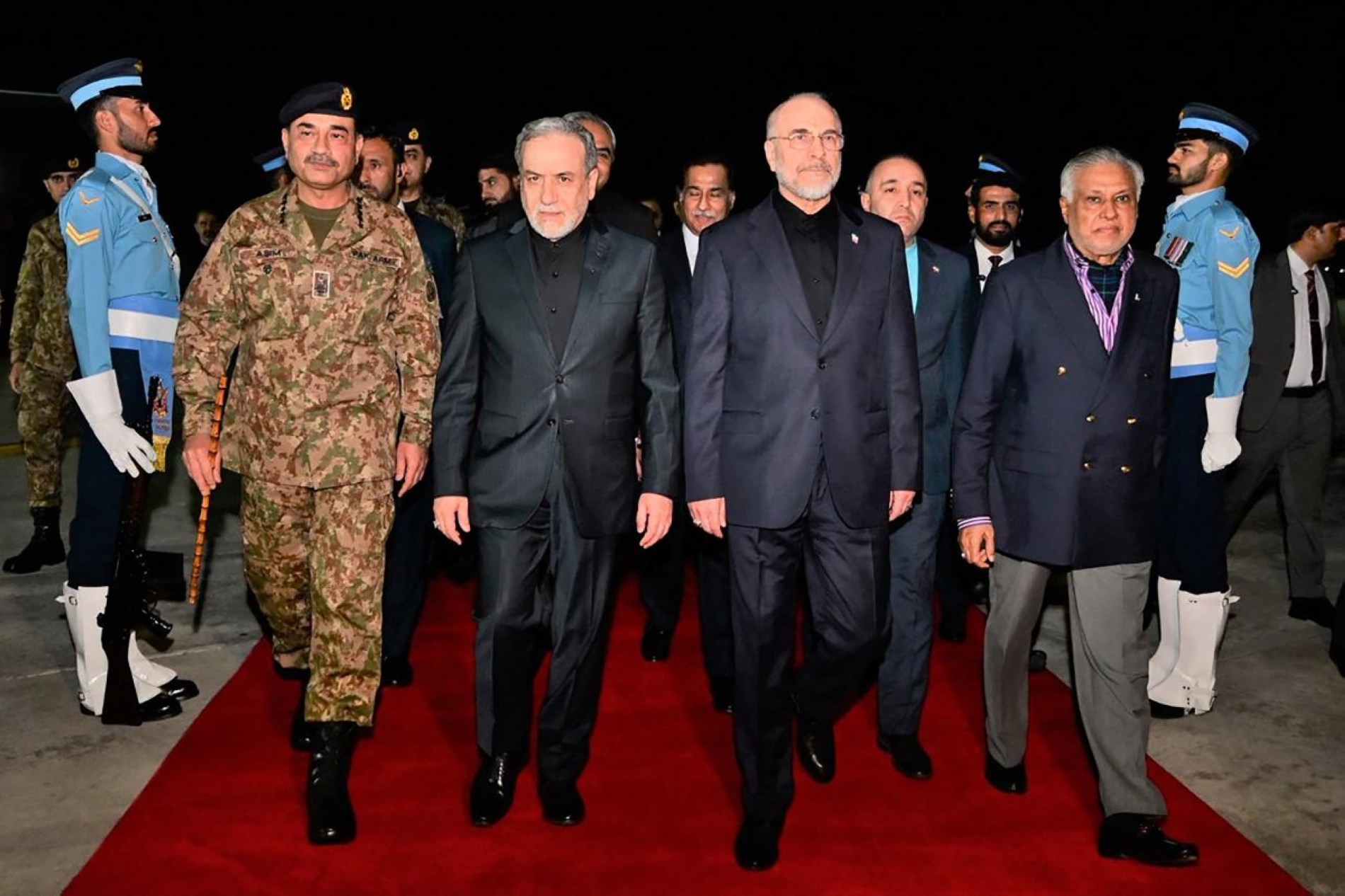
PAKISTAN'S MINISTRY OF FOREIGN AFFAIRS / AFP
Pakistan's Foreign Minister Ishaq Dar and Army Chief Syed Asim Munir with Iran's Foreign Minister Abbas Araghchi and Parliament Speaker Mohammad Bagher Ghalibaf upon their arrival in Islamabad on 11 April 2026.

A natural tilt

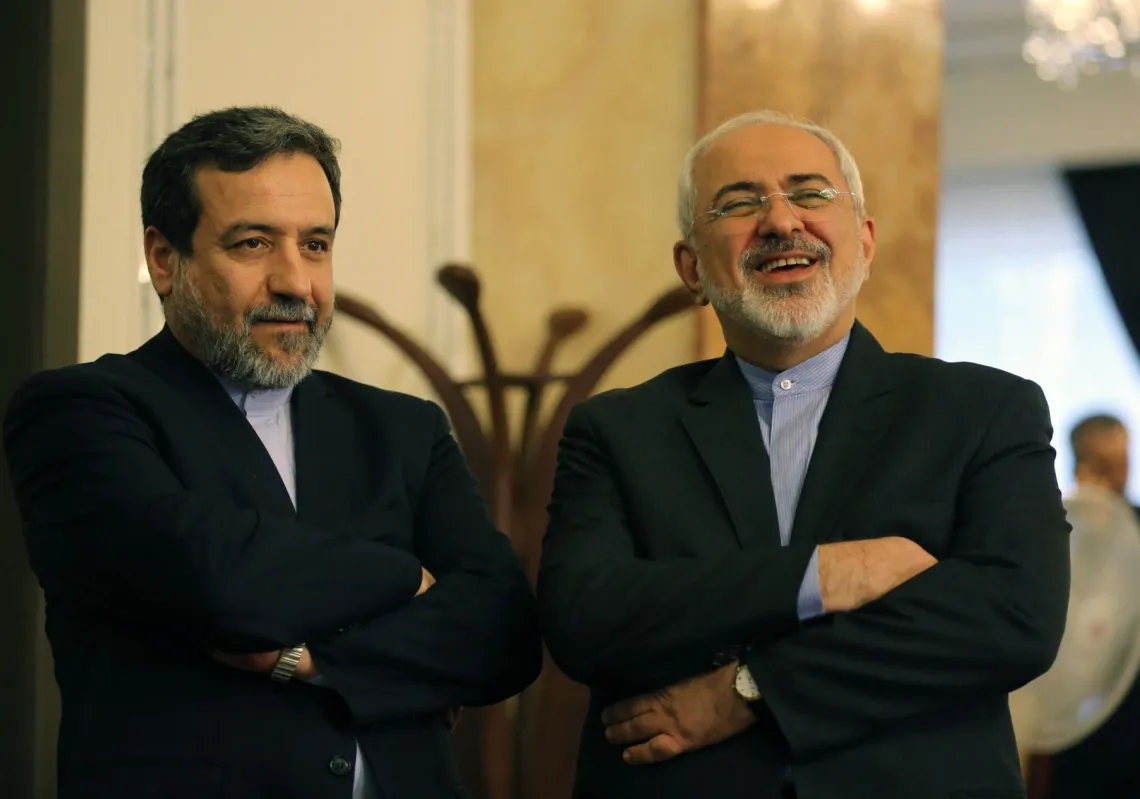
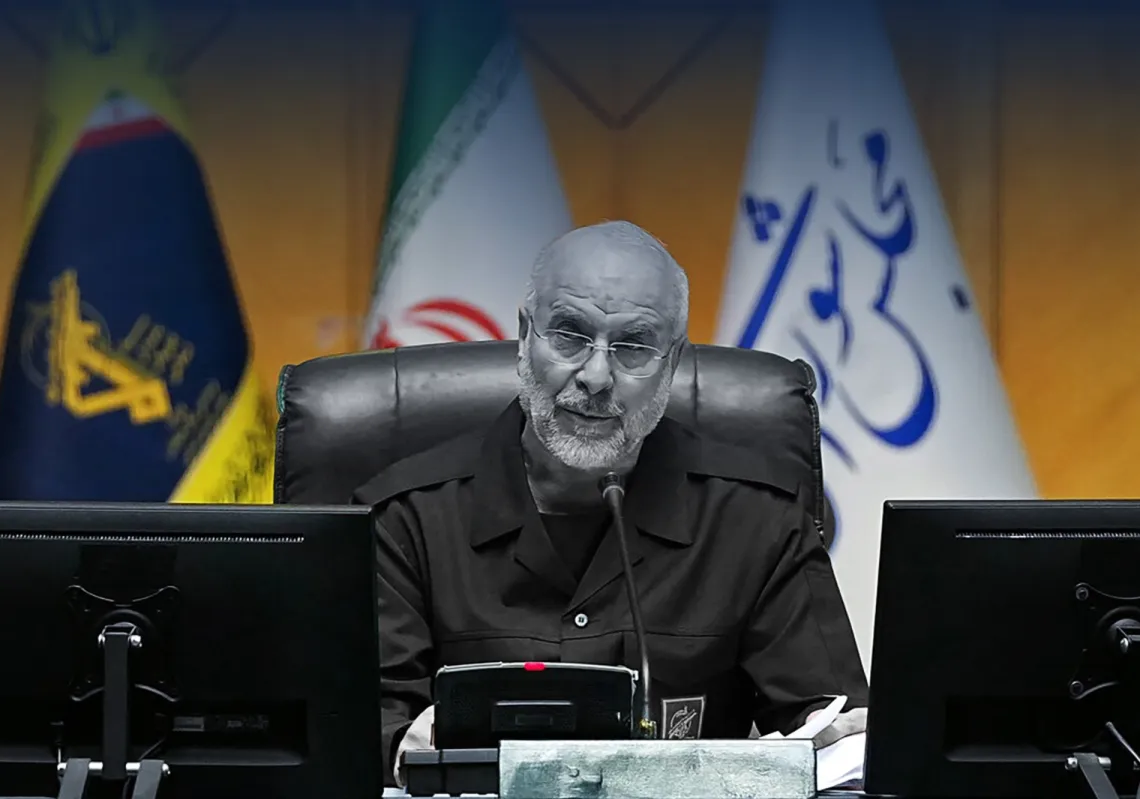
Figures like Foreign Minister Abbas Araqchi remain. Others, such as Mohammad Baqher Ghalibaf, the Speaker of the Parliament (Majlis), combine security (IRGC) credentials with political pragmatism.

But the balance has shifted. The political class that was the prime face of the regime's diplomacy has been thinned, and with it, the visible expression of flexibility. As that ballast disappears, the system naturally tilts toward its heaviest remaining components.

What emerges in its place is not the absence of diplomacy, but its transformation. Negotiation, where it occurs—such as in the recent US–Iran talks in Islamabad—is increasingly conducted by what might be called military-diplomatic hybrids: figures who operate comfortably within both the security and political spheres. For them, compromise is not framed as a concession but as an extension of strength. The vocabulary changes. The underlying calculus does not.

This helps explain the paradox of the current moment. On the surface, the regime appears harder: more repressive, more centralised, maybe even more resistant to external engagement. Beneath that surface, however, the strategic logic shows continuity. Iran still operates within a framework of constraint. Economic pressure, military asymmetry, and regional entanglements all impose limits on what pure resistance can achieve. Survival remains the overriding imperative, and survival has always required a degree of calibration. This view is supported by the dispatch of a senior and large Iranian delegation to negotiate with the Americans in Pakistan.

What may be changing is not the content of the Islamic Republic's ideology, but the conditions under which it is expressed

Procedural not doctrinal

This is why it is too early to conclude that the regime has entered a phase of ideological radicalisation. The signs of hardening are real, but they are best understood as institutional and procedural rather than doctrinal. The system has become more security-dominated, less tolerant of rhetorical deviation, and less balanced by figures whose identity was tied to diplomacy. These changes give the appearance of a more ideological state. But appearances, in this case, may obscure continuity. Narrower, however, is not the same as transformed.

There is, however, a longer-term risk embedded in this trajectory. Systems that narrow their internal space too far can lose not only flexibility of expression but also flexibility of thought. The marginalisation of diplomatic voices, the elevation of security actors, and the increasing sensitivity to perceived softness all create conditions in which adaptation becomes harder over time. What begins as wartime consolidation can, if prolonged, harden into something more permanent.

For now, though, the more sober assessment is this: the Islamic Republic has not clearly become more ideological in its core beliefs. It has become more concentrated in how those beliefs are managed and communicated.

In short, the killings of Larijani and Kharazi and the many other officials did not dismantle the system's capacity to negotiate. They altered who performs that function. The real shift since 28 February is not toward a new, harder ideology—it's that the same ideology is now being enforced and expressed by fewer, tougher actors.

font change

Related Articles