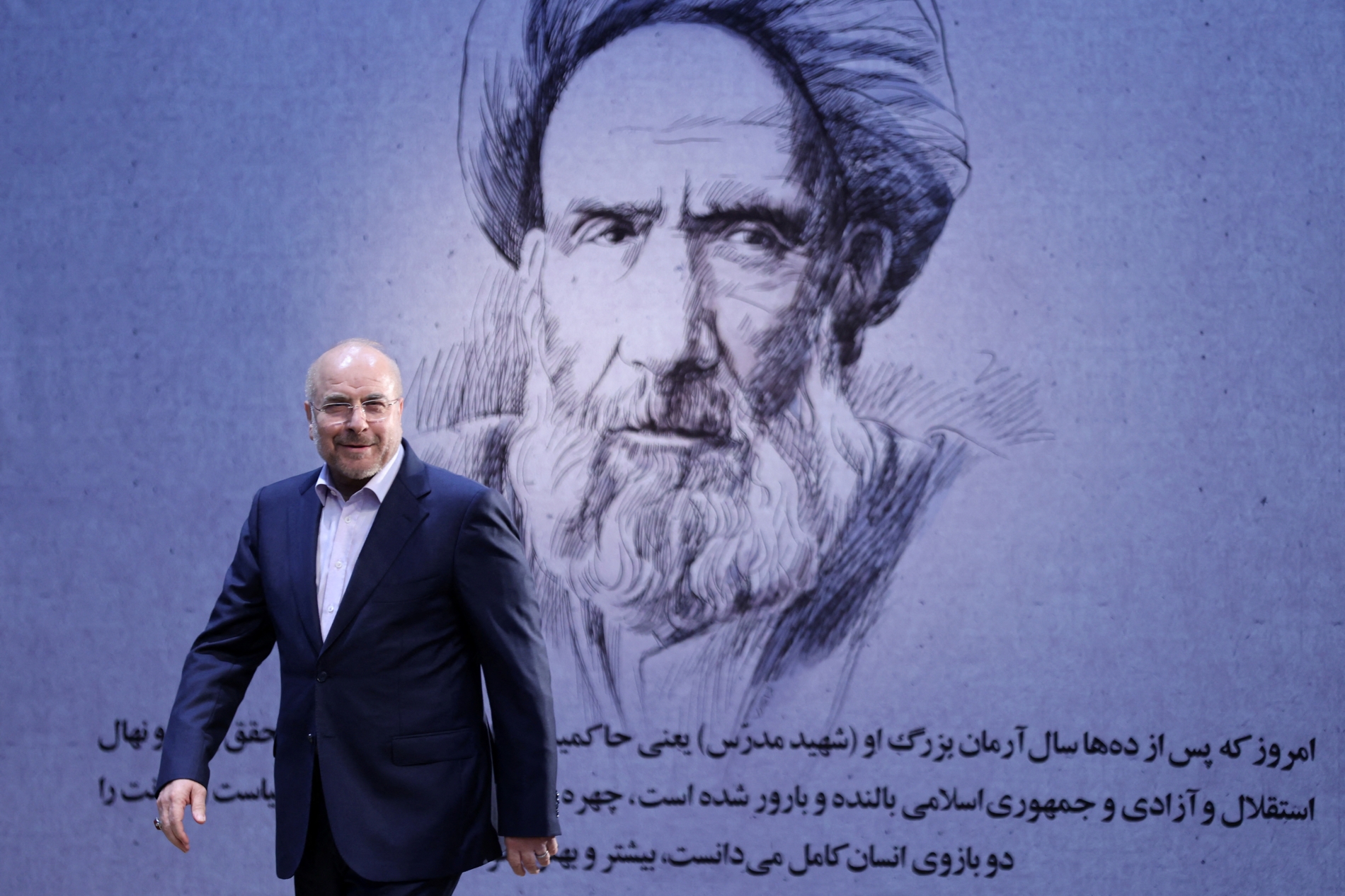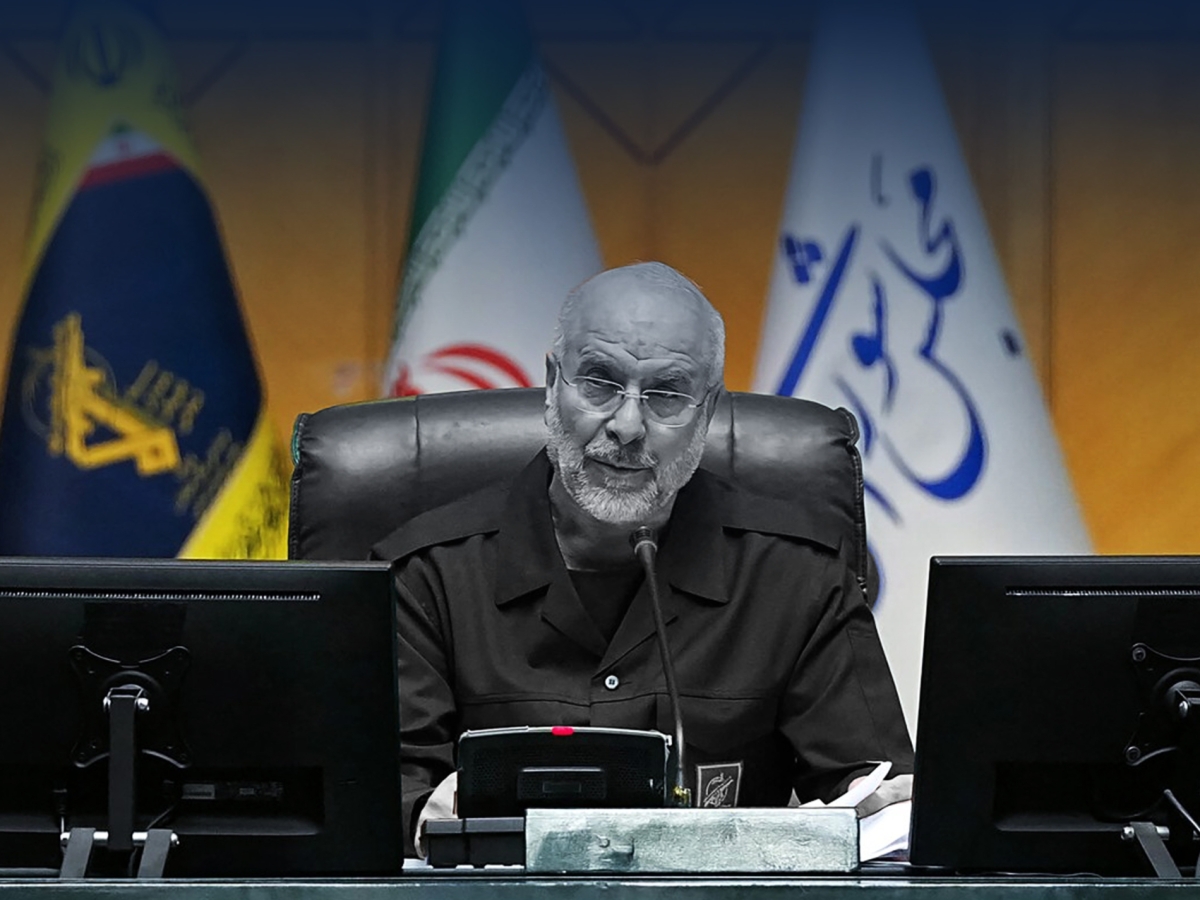

The latest twist in Mohammad Bagher Ghalibaf's long career says a great deal about the man and the system that made him. When reports surfaced this week that he was being floated as a possible US partner akin to Delcy Rodriguez in Venezuela, Ghalibaf moved quickly to deny them. There had been no talks with the United States, he insisted. The reports were “fake news,” designed to manipulate oil and financial markets and distract from the trap in which America and Israel had found themselves.
Even more telling was the line pushed by Iranian outlets close to the system: attaching Ghalibaf’s name to such a story was not just false, but malicious—an effort to discredit him at home, sow division inside the regime, and perhaps even set him up for physical elimination.
That reaction was revealing. In today’s Iran, to be portrayed as a man open to a deal with Washington is not necessarily an asset. It can just as easily become a liability, especially in wartime.
And yet the reason Ghalibaf’s name surfaced at all is equally revealing. For all his hardline rhetoric, for all his long record in the security state, he is one of the few senior figures left in Tehran who can plausibly be described as both a regime insider and a functioning political operator. He belongs to the Islamic Republic’s military elite, but he has also spent years trying to translate that pedigree into broader governing authority. That combination is what makes him matter.
From Iran's war generation
Born in 1960 in Torghabeh near Mashhad, Ghalibaf comes from the war generation that produced so many of the Islamic Republic’s later power brokers. His origins matter. He is not a cleric, and unlike some of the regime’s more doctrinaire ideologues, he did not rise through hawza (religious) seminaries or theological networks. His route was different: mosque activism before the revolution, then experience in war with Iraq while in the Revolutionary Guards, then the broader state machinery. That trajectory gave him something more valuable in the Islamic Republic than polished ideological theory. It gave him revolutionary credentials of the most bankable kind: sacrifice, command experience, and institutional loyalty.
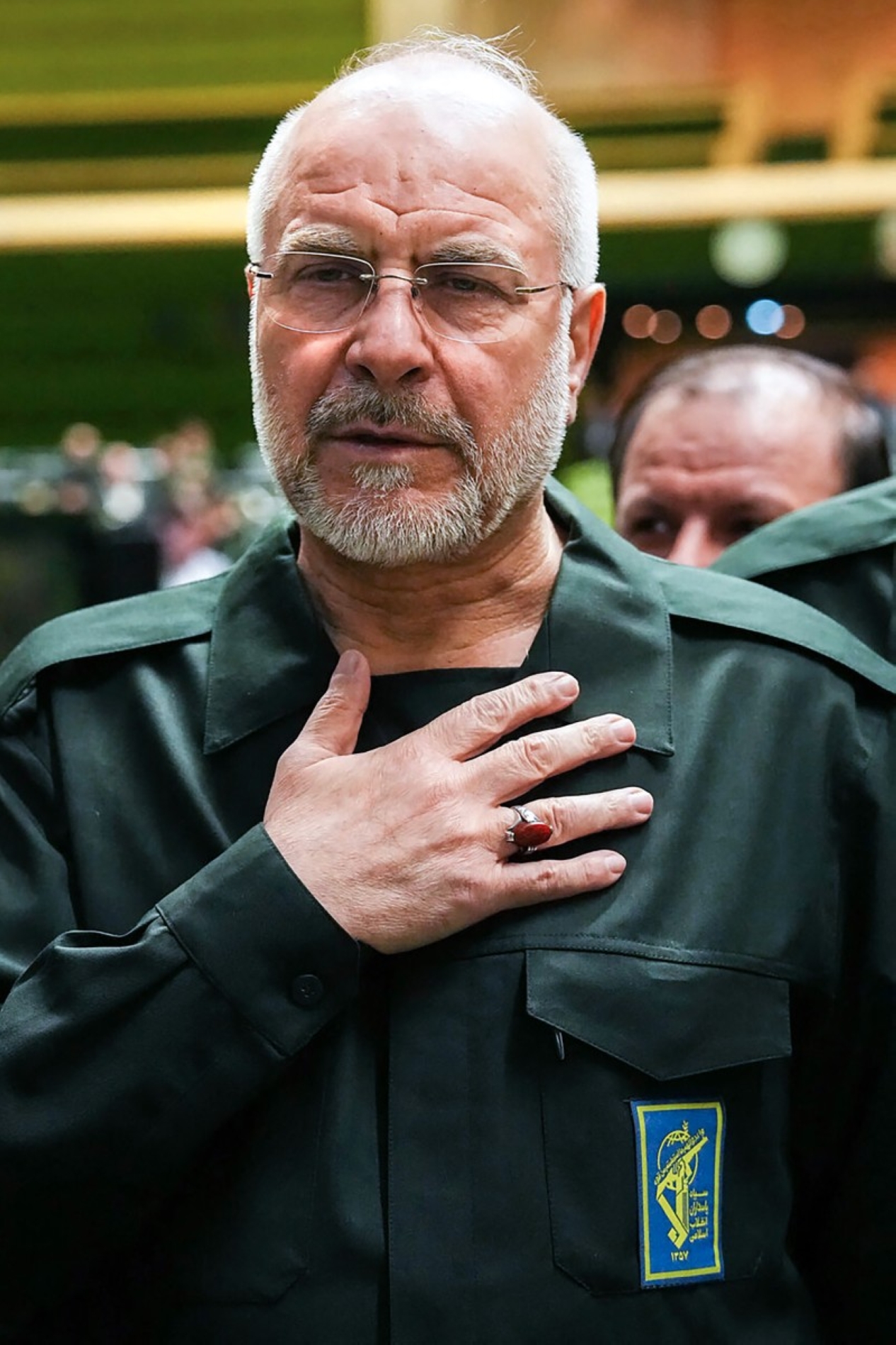
He joined the Iran-Iraq war effort early and rose fast. By his early twenties, he was already commanding major formations, including the Imam Reza brigade and then the 5th Nasr Division, one of the main Khorasani units in the Iran-Iraq War. In an Islamist system that still romanticises wartime service, those years remain the bedrock of his legitimacy.
They also explain much about his style. Ghalibaf was formed in an environment that rewarded discipline, operational thinking, and ruthlessness. He has spent decades trying to soften that image with the language of management and development, but the older imprint never disappeared.
After the war, he followed a path that, in many ways, prefigured the broader evolution of the Revolutionary Guards. He moved into Khatam al-Anbia, the Guards’ engineering and construction arm, at a time when the IRGC was beginning its transformation from a military force into an economic empire.
That period is often overlooked in casual profiles, but it should not be. It placed Ghalibaf at the intersection of military authority, state contracting, and the emerging business interests of the postwar IRGC. He was not merely a battlefield commander looking for a second career. He was part of the generation that helped turn the Guards into a state within a state.
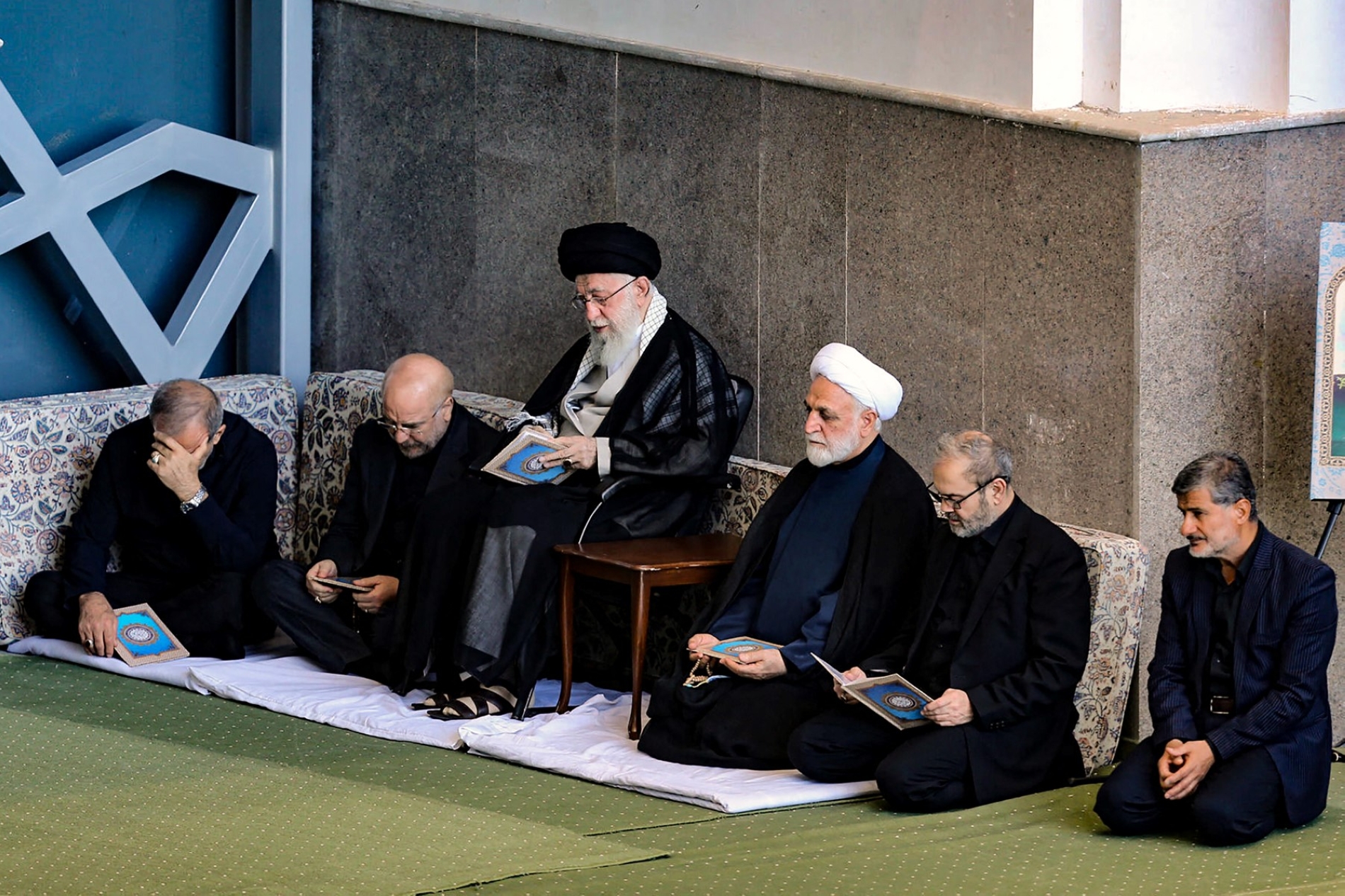
From there came a string of appointments that said less about popular appeal than about trust from above. In 1997, Ali Khamenei appointed him commander of the IRGC air force. In 2000, Khamenei again elevated him, this time to chief of the national police. This pattern is central to understanding Ghalibaf. His rise was not accidental. It was sponsored. Like Alireza Arafi in clerical circles, Ghalibaf has been one of those men whose careers make sense only when placed alongside Khamenei’s long effort to build a dependable cadre of loyalists across every major arm of the state.
Supremely trusted
The Mashhad connection is part of this story. In Iran, such regional ties are never the whole explanation, but they matter. Ghalibaf and Khamenei both come from the broader Mashhad milieu, and there has long been a sense in political circles that Khamenei sees him as one of his own: reliable, disciplined, ambitious but not uncontrollable. Over the years, Ghalibaf has been entrusted with too many sensitive posts for this to be dismissed as coincidence.
That trust was reinforced during moments of internal crisis. One of the defining episodes in Ghalibaf’s career came during the 1999 student unrest. He was among the IRGC commanders who signed the famous letter to President Mohammad Khatami warning that if the government did not restore order, the Guards would intervene. Years later, Ghalibaf himself boasted that he and Qasem Soleimani had drafted that letter and collected the signatures. He also claimed that he had personally been in the streets with a baton, ready to “clear” the unrest. Those remarks were not slips. They were the language of a man reminding the system what he had done for it. In the Islamic Republic, internal repression is not a stain on a career. In the right circumstances, it is a credential.
His years as police chief added a second layer to his public image. On the one hand, he cultivated a reputation as a moderniser. He pushed the use of the word “police” over the more cumbersome “law enforcement force,” introduced the 110 emergency phone system, expanded police service offices, and made a point of upgrading equipment and projecting efficiency. On the other hand, he remained a security man to the core. He was later quoted as boasting that in the 2003 campus unrest, he had secured permission for armed police intervention at the university if necessary. The contradiction was striking but also typical of Ghalibaf: he wanted to be seen as both the man who could streamline institutions and the man willing to break skulls when the system felt threatened.
This dual image—manager and enforcer—became the central theme of his political life. When he entered electoral politics, he did not present himself primarily as an ideologue. He presented himself as a “managerial” conservative, a doer, a man of action. He wrapped himself in technocratic language without ever really severing ties to the security state.
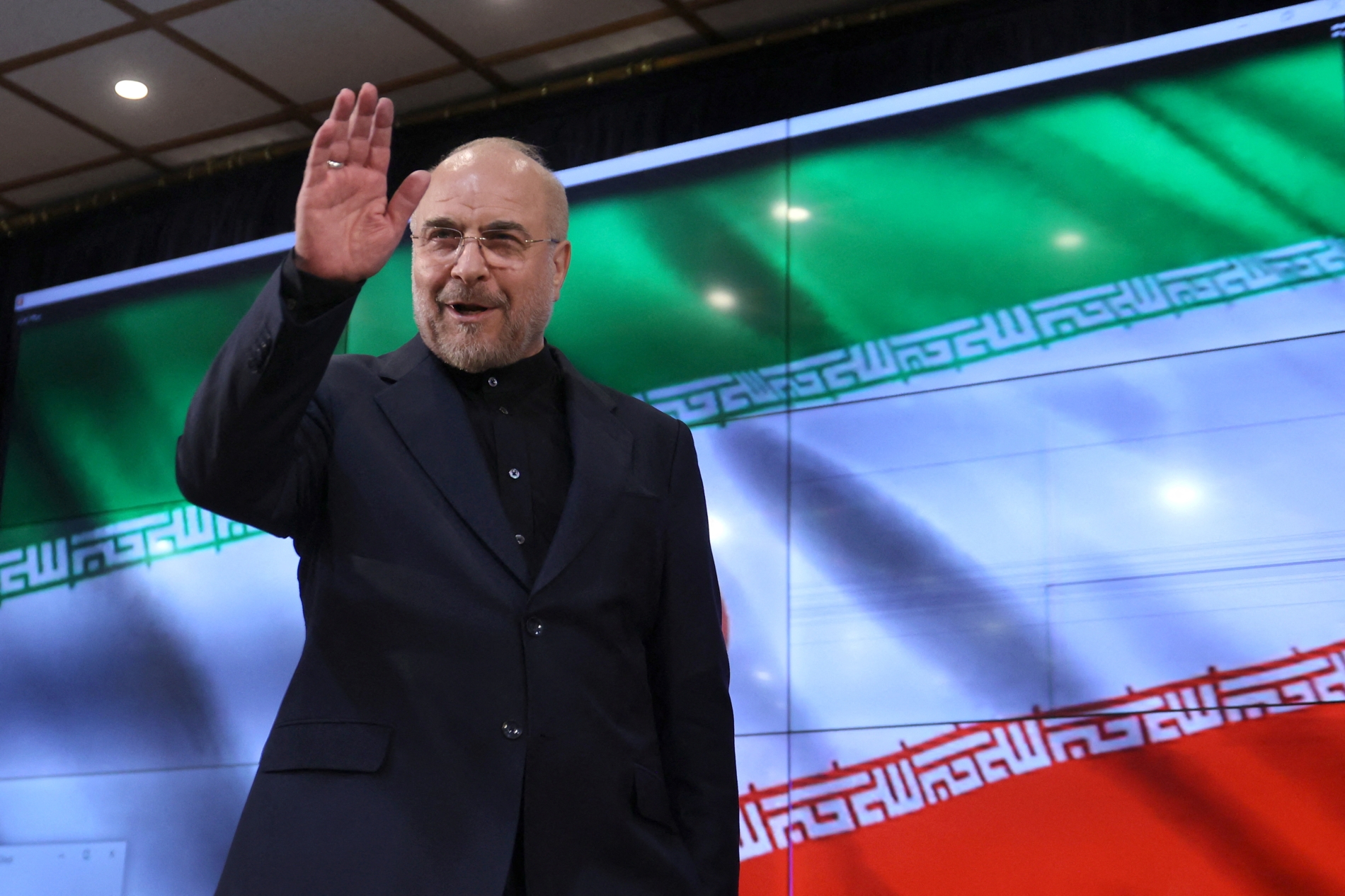
His first presidential run in 2005 captured both his ambition and his limitations. Ghalibaf tried to market himself as a modern conservative: polished, educated, a pilot, a commander who could also wear a suit and talk about efficiency. For a while, he looked like a plausible frontrunner. But the branding backfired. Too sleek for parts of the conservative base, not credible enough for reform-minded voters, he was overtaken by Mahmoud Ahmadinejad, whose cruder but more authentically populist image proved more potent. Ghalibaf lost, and the system handed him a consolation prize of enormous importance: the Tehran mayoralty.
12-years a mayor
That office became his political bridge. For twelve years, from 2005 to 2017, he ran the capital and used it to build what he hoped would be a presidential platform. These were the years in which he most successfully crafted his public myth. He could point to visible projects: tunnels, highways, bridges, metro expansion, and urban redevelopment.
He portrayed himself as the executive the country needed, someone who got things done while others talked. Among conservative voters exhausted by factional bickering and reformist voters disillusioned by ideological rigidity, this image had some appeal.
But his mayoralty also exposed his weaknesses. First came the corruption allegations, which over time became too numerous to dismiss as mere partisan sniping. The “astronomical properties” scandal, accusations involving city contracts, questions surrounding the Imam Reza charity linked to his wife, the role of his associates, the YAS holding case centered on his deputy Issa Sharifi, and later the humiliating “Sismoni-gate” controversy involving family shopping in Türkiye—all of this created a picture of a man whose networks were too comfortable with privilege, opaque transactions, and political protection. No single allegation destroyed him. That was precisely the point. In the Islamic Republic, survival often depends less on innocence than on insulation.
Then there was Plasco. The deadly 2017 collapse of the building in Tehran did not by itself end his career, but it damaged his carefully cultivated aura of competence. A mayor who had spent years presenting himself as the embodiment of managerial efficiency now faced accusations of negligence and institutional failure. The timing was particularly bad. It came as he was again trying to position himself for the presidency.
Ghalibaf ran again in 2013 and 2017. In 2013, he came closer than before, finishing second to Hassan Rouhani. But the campaign also laid bare one of the enduring problems of his political persona. He could not escape the sense that beneath the language of management stood a security officer. Rouhani’s cutting line—“I am not a colonel, I am a lawyer” — stuck because it captured a truth many voters felt.
Ability to adjust
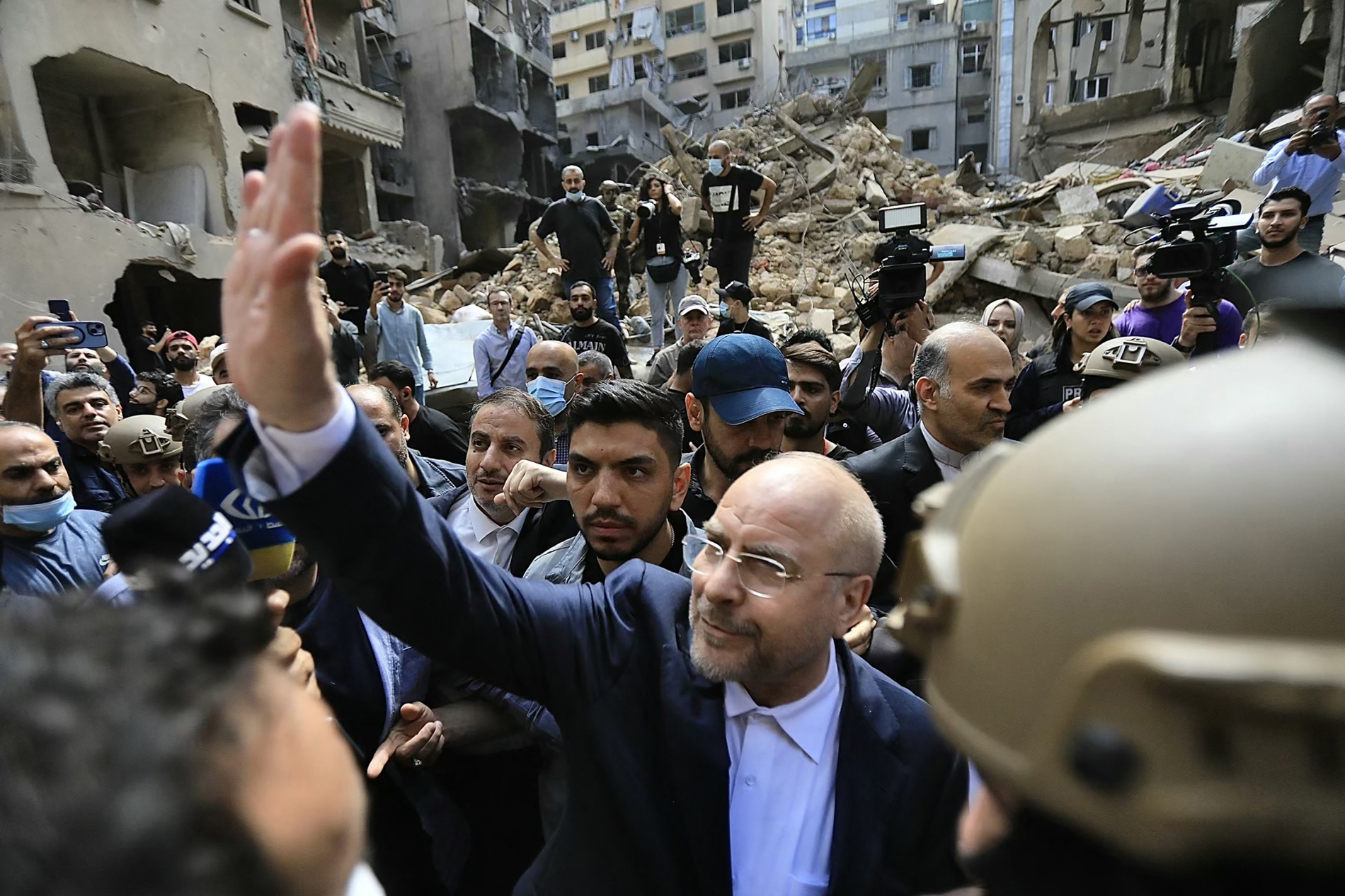
Ghalibaf wanted to be seen as an administrator; many still saw him as a commander. In 2017, he did not even make it to the finish line, withdrawing in favour of Ebrahim Raisi. It was a humiliating but rational move. The system was consolidating around other figures, and Ghalibaf once again adjusted.
That ability to adjust is one reason he remains standing. After failing repeatedly to win the presidency, he shifted to parliament. In 2020, he entered the Majlis in a low-turnout election heavily tilted in favour of hardliners (reformists were basically prevented by Khamenei from running) and quickly secured the speakership.
It was not the office he had wanted most, but it gave him something he had long lacked: a national political role rooted in direct electoral office, however constrained the electoral environment had become. It also placed him among the senior institutional heads of the state and offered him a platform from which to remain relevant in succession politics and wartime decision-making.